Silver Sagebrush Artemisia cana
Also called Dwarf Sagebrush, Silver Wormwood, Hoary Sagebrush, pȟeží ȟóta tȟotȟó (Lakota)
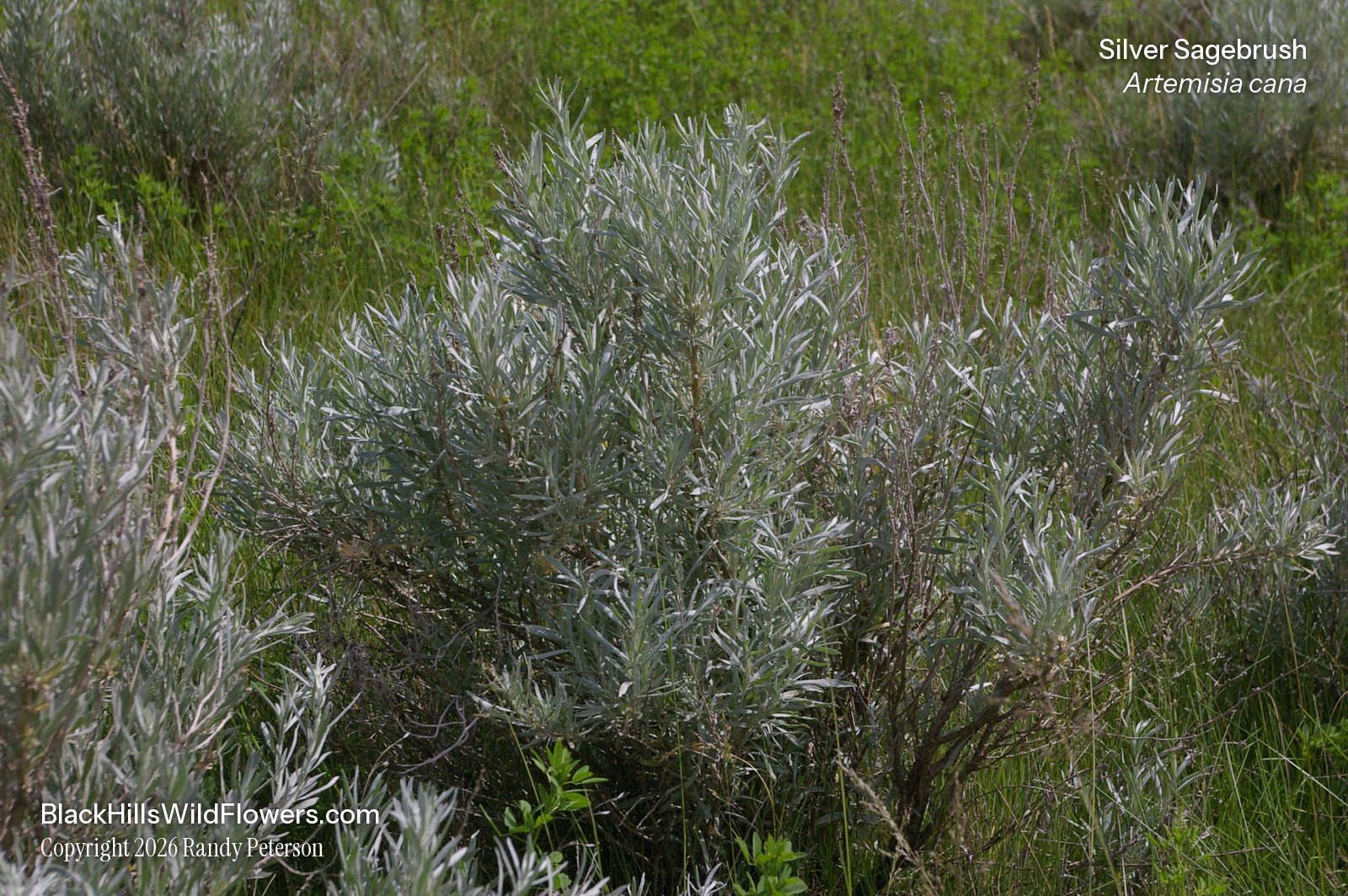
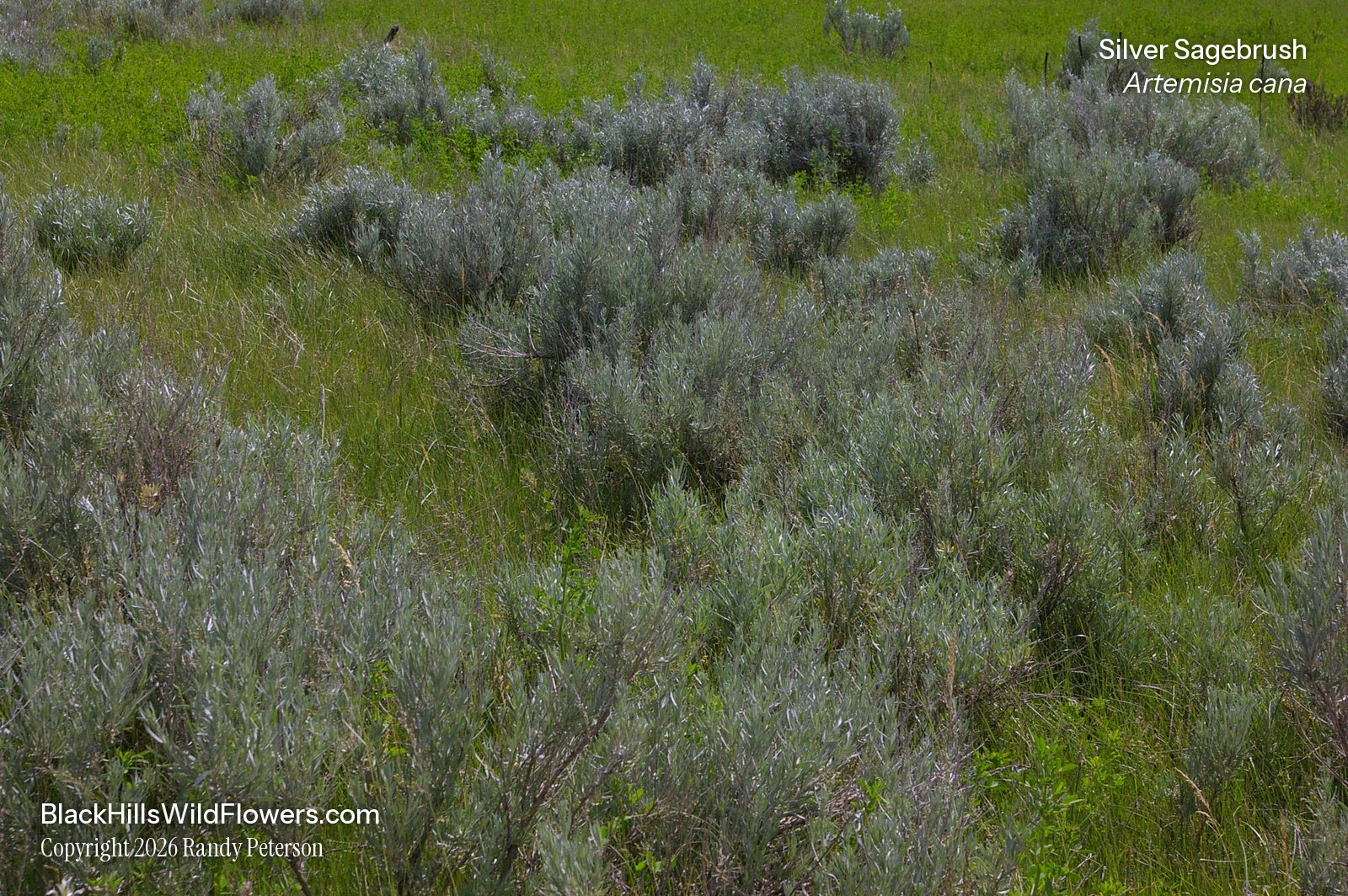
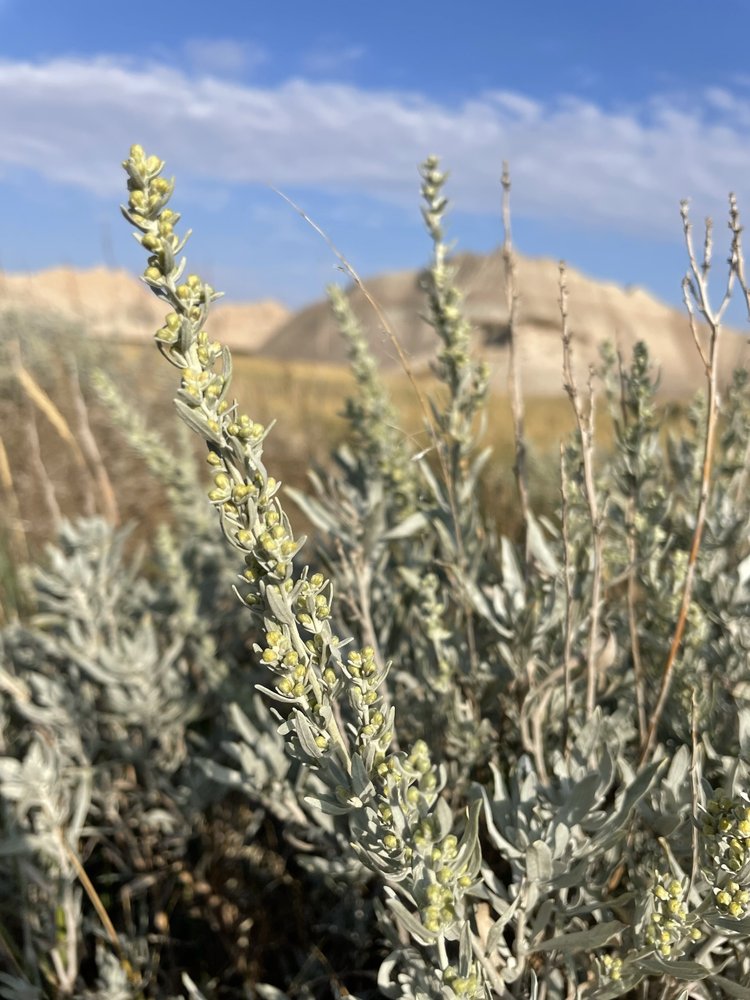
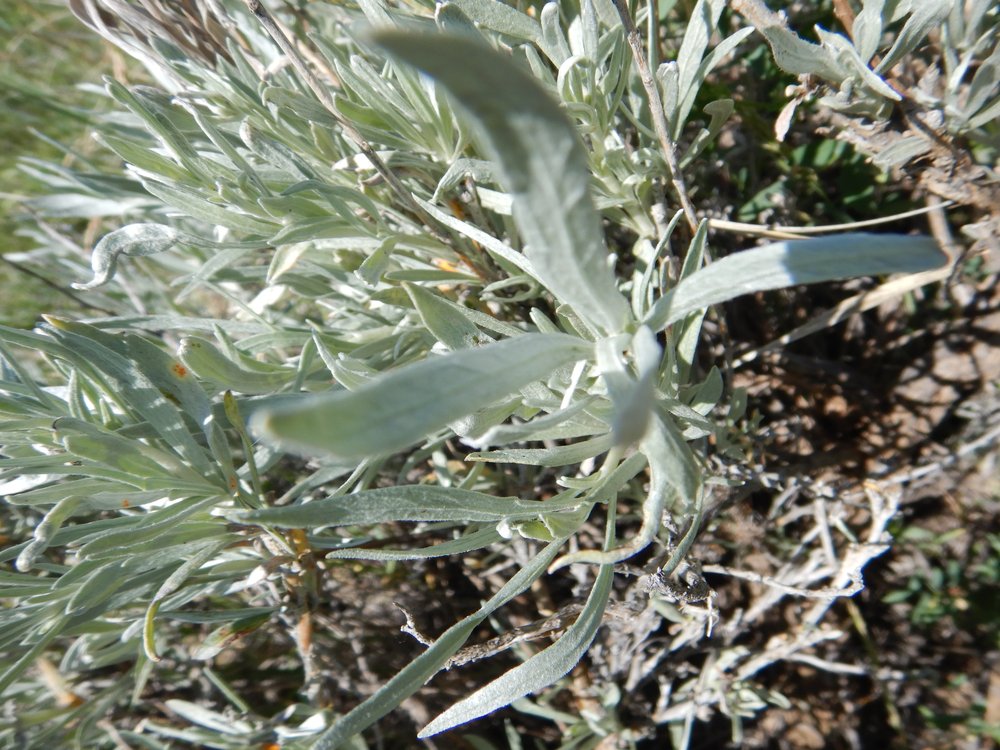
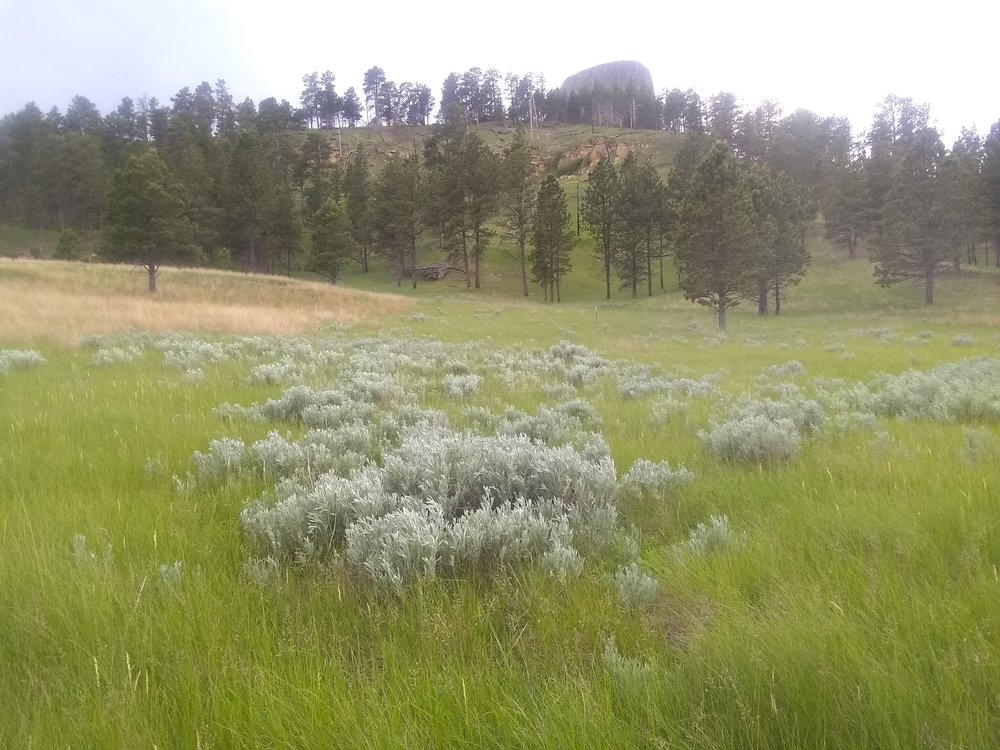
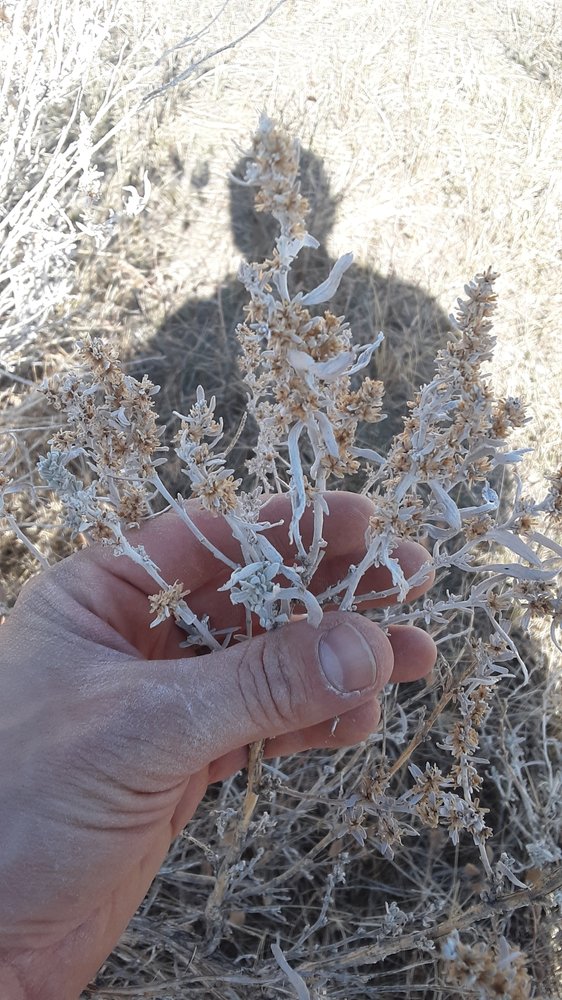
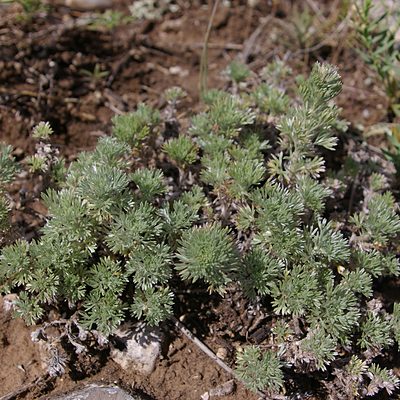
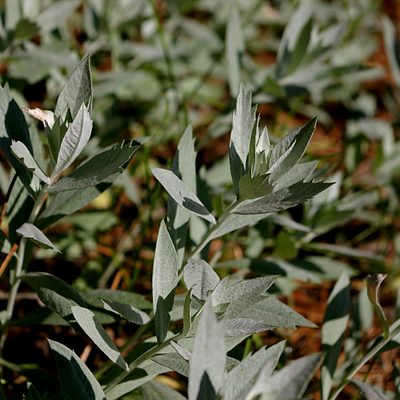
Silver Sagebrush (Artemisia cana) is a native, freely branched shrub 0.5–1.5 m (1½–5 ft) tall with narrow, silvery-gray, untoothed leaves and a strong smell, and narrow spikes of tiny yellowish flower heads in August and September. Around the Black Hills it grows in stands on grassy flats, meadows, and stream terraces and floodplains, often just below the pine forest, and the National Park Service lists it at Wind Cave, Jewel Cave and Devils Tower. Photographed in the Black Hills.
Free photos from other sources
| Family | Asteraceae · Aster |
|---|---|
| Status | Native shrub |
| Blooms | August and September |
| Height | 0.5–1.5 m (1½–5 ft) |
| Where | Grassy flats, meadows, stream terraces and floodplains, often just below the pine forest |
| Also called | Dwarf Sagebrush, Silver Wormwood, Hoary Sagebrush, pȟeží ȟóta tȟotȟó (Lakota) |
| Synonym | Seriphidium canum |
| Traditional use | Black Elk and Flying By record that the Lakota consider it the best sage for winter browse for game and livestock, and burn the leaves and stems to keep insects away. The Fire Effects Information System also notes that the Blackfoot and Lakota used it as winter horse browse. |
Roots, seeds & germination
Root: A taproot with side roots, plus shallow rhizomes (underground stems) a few inches below the surface; in Montana the rhizomes averaged about 1.1 m (3½ ft) long and carried up to 52 sprouts each. It sprouts back strongly from the roots and rhizomes after fire kills the top.
Seed: Each tiny fruit, about 1–2.5 mm long, is sticky and holds a single seed. Most fall from September through November, though some stay on the plant until winter or spring. Most land under the shrub; the sticky fruits also cling to passing animals, and wind, snow crust and water carry them farther, since the seeds float.
Germination: Seed can sprout as soon as it's shed, but does best after a spell of cold while still on the plant. It sprouts with or without light at 5–25 °C (41–77 °F), best about 2.5 mm deep and not at all below 7.5 mm, and seed left on the surface dries out. SDSU suggests sowing outdoors in fall, or soaking the seed for 24 hours before a spring sowing. Few seedlings survive; they need open ground without competition.
How do you identify Silver Sagebrush?
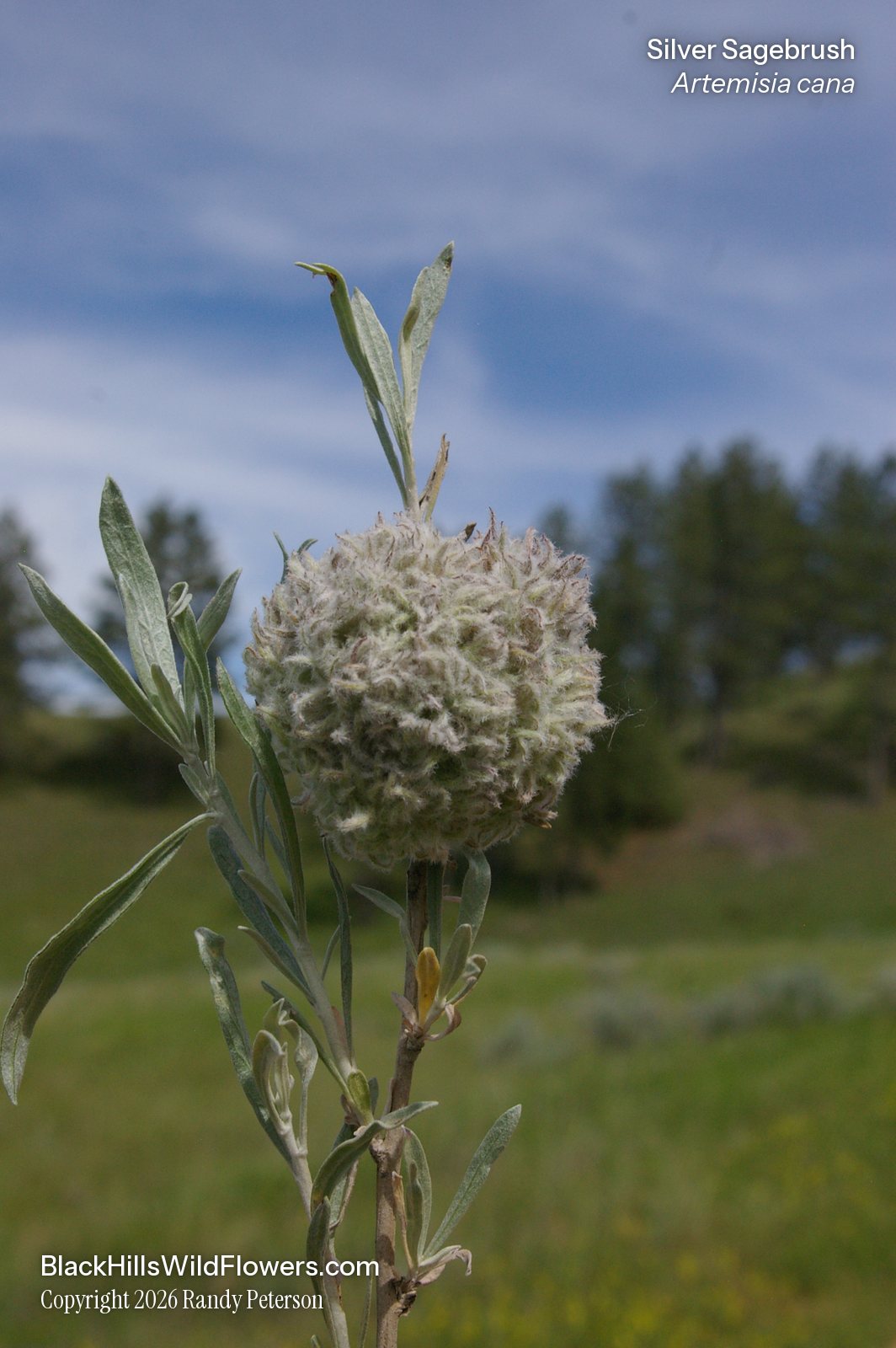
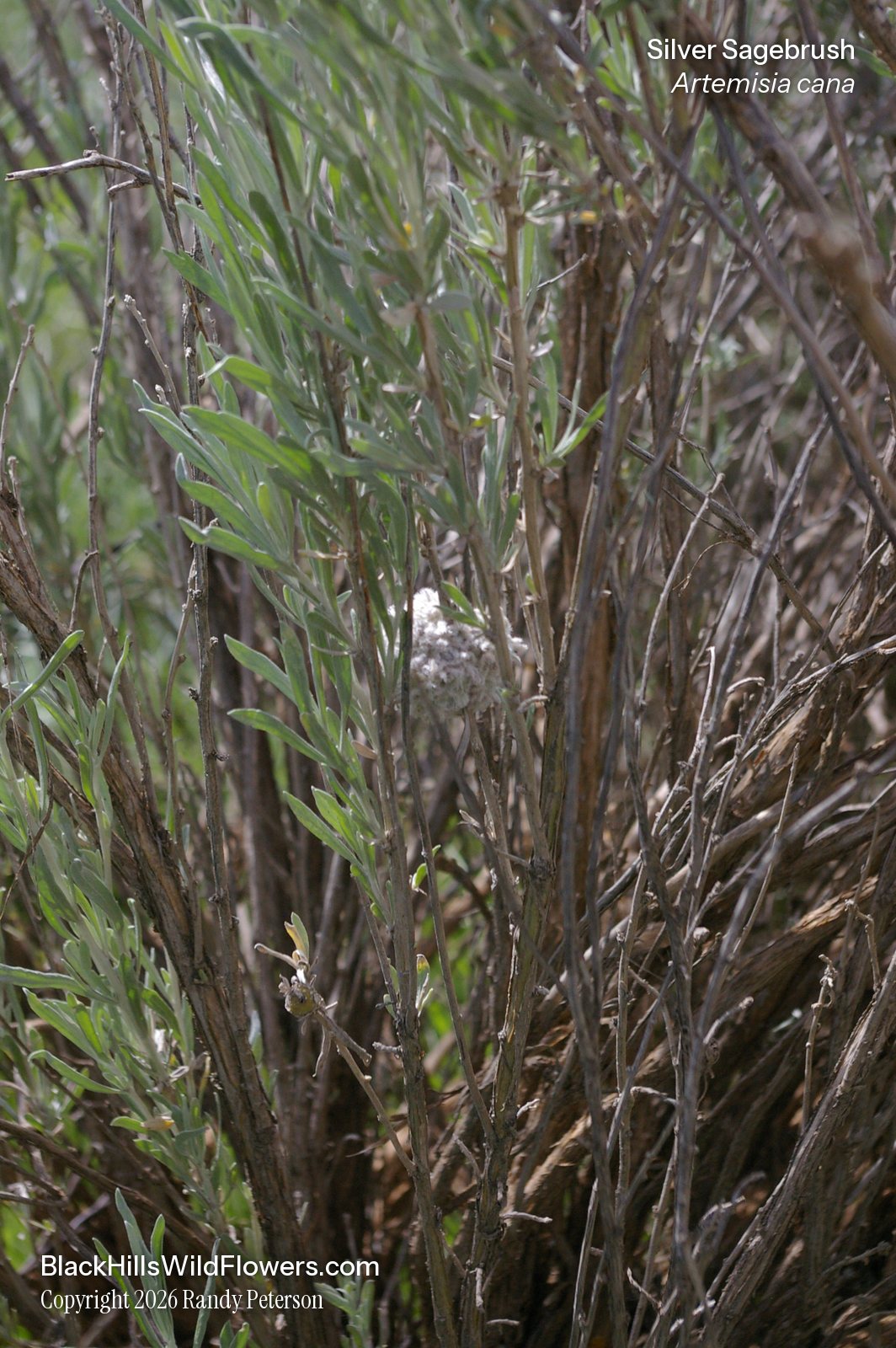
Look for a rounded shrub branched from the base, often growing in stands, with woody stems whose older bark is gray-brown, twisted and peeling in long strips. The leaves are narrow and lance-shaped, 2–8 cm (¾–3 in) long and usually under 1 cm (⅜ in) wide, silvery gray with short, soft hairs on both sides, and usually have no teeth, though occasionally one or two lobes develop. The plant has a strong smell. In August and September tiny yellowish flower heads crowd narrow, leafy spikes at the branch tips. Missouri State University's plant guide notes that Big Sagebrush (Artemisia tridentata) has slightly wider leaves with three short teeth at the tip, and that Fringed Sagewort (Artemisia frigida) has no lasting woody stems and much smaller, finely divided leaves.
When does it bloom?
August and September.
Where does it grow?
Grassy flats, meadows, stream terraces and floodplains, and open slopes just below the ponderosa pine forest, on sandy, loamy or clay soils. The Black Hills National Forest's 2023 assessment describes silver sagebrush on floodplains in its lower-elevation streamside shrublands. Herbarium labels describe the first terrace of a river at the base of Devils Tower, open grassy slopes just below the pine forest on an outlying ridge, a sagebrush flat bordering ponderosa pine, dry open meadows, and a rocky ridge with ponderosa pine and fringed sagewort in Lawrence County. The 1986 Jewel Cave survey lists it, the National Park Service lists it at Wind Cave, Jewel Cave and Devils Tower, and Black Hills specimens come from Lawrence and Fall River counties in South Dakota and Crook and Weston counties in Wyoming.
Other sagebrushes and sageworts in this guide
Aster family (Asteraceae): 62 other plants in this guide
- Aromatic Aster
- Arrowleaf Balsamroot
- Arrowleaf Sweet Coltsfoot
- Bachelor's Button
- Balsam Ragwort
- Black-eyed Susan
- Blanket Flower
- Blue Lettuce
- Broom Snakeweed
- Bull Thistle
- Canada Hawkweed
- Canada Lettuce
- Canada Thistle
- Chicory
- Common Burdock
- Common Dandelion
- Common Sunflower
- Common Tansy
- Common Yarrow
- Curlycup Gumweed
- Cutleaf Coneflower
- Dotted Gayfeather
- Drummond's Thistle
- Easter Daisy
- False Boneset
- Fetid Marigold
- Field Pussytoes
- Fringed Sagewort
- Hairy Golden Aster
- Heart-leaved Arnica
- Hooker's Townsend Daisy
- Horseweed
- Jerusalem Artichoke
- Lambstongue Groundsel
- Maximilian Sunflower
- Missouri Goldenrod
- Mountain Dandelion
- Musk Thistle
- Oxeye Daisy
- Pearly Everlasting
- Pineapple Weed
- Prairie Coneflower
- Prairie False Dandelion
- Purple Coneflower
- Rocky Mountain Blazing Star
- Rosy Pussytoes
- Rubber Rabbitbrush
- Rush Skeletonplant
- Scotch Thistle
- Smooth Blue Aster
- Spotted Joe-Pye Weed
- Stemless Four-nerve Daisy
- Stiff Goldenrod
- Stiff Sunflower
- Threenerve Fleabane
- Wavyleaf Thistle
- Western Ragweed
- White Hawkweed
- White Prairie Aster
- White Sagebrush
- Woolly Groundsel
- Yellow Salsify
Sources: SDSU Open PRAIRIE: Asteraceae: Artemisia cana (R. Neil Reese); Flora of North America Vol. 19-21: Artemisia cana, eFloras; Flora of North America Vol. 19-21: Artemisia cana subsp. cana, eFloras; USDA Forest Service Fire Effects Information System: Artemisia cana; NDSU Dickinson Research Extension Center, Range Research Report DREC 06-1065: Chemical Management of Silver Sagebrush (Manske, 2006); Missouri State University, Plant Identification (P. B. Trewatha): Silver Sagebrush; USDA PLANTS Database: Artemisia cana, silver sagebrush (ARCA13); Black Hills National Forest Revised Forest Assessment: At-Risk Species, draft October 2023; Culturally Important Plants of the Lakota (Black Elk and Flying By, 1998), filed with the South Dakota PUC; Marriott and Hartman 1986, A Survey of the Vegetation of Jewel Cave National Monument; NPSpecies checklist, Wind Cave National Park vascular plants; NPSpecies checklist, Jewel Cave National Monument vascular plants; NPSpecies checklist, Devils Tower National Monument vascular plants; GBIF occurrence search: Artemisia cana herbarium specimens, South Dakota and Wyoming; GBIF specimen 2512333518: Crook County, WY, 1947, first river terrace at the base of Devils Tower; GBIF specimen 4912216550: Crook County, WY, 1988, open grassy slopes just below the ponderosa pine community; GBIF specimen 1987020008: Weston County, WY, 2009, sagebrush flat bordering ponderosa pine; GBIF specimen 4068959567: Lawrence County, SD, 2017, rocky ridge with ponderosa pine and fringed sagewort; GBIF specimen 2890632787: Fall River County, SD, 1997, dry open meadow.