Sagebrushes and sageworts of the Black Hills
All 3 sagebrushes and sageworts in this guide, side by side, A to Z. Compare the photos, bloom time, height and where each grows, then open the one that fits for more photos and the full ID notes. Each plant's page lists its sources.
| Plant | Color | Blooms | Height | Where | How to tell it apart |
|---|---|---|---|---|---|
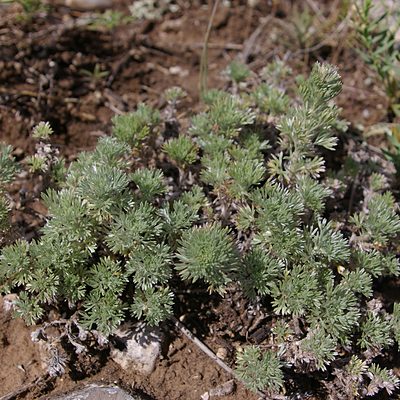 Fringed SagewortArtemisia frigida | Green & Brown | July into October, a few plants into early November | 10–40 cm (4–16 in) | Dry, open, stony or sandy ground in full sun: prairie, pastures, rocky ridges, roadsides and open pine woods | Look for a low silver-gray mat or mound 10–40 cm (4–16 in) tall rising from a tough, woody base, with tiny leaves 0.5–1.5 cm (¼–½ in) long, divided once or twice into threes, with thread-like lobes less than half a millimeter wide, densely white-hairy on both sides; crushed, they have a strong, pungent smell. From July the slender upright stems carry loose leafy sprays of small round nodding heads about 5 mm across with yellow florets. White Sagebrush can look similar from a distance, since both are covered in dense, silky white hairs, but White Sagebrush has broader, flat leaf blades where Fringed Sagewort has short, wispy, fringe-like leaves, and White Sagebrush spreads into colonies by rhizomes rather than forming clumps. |
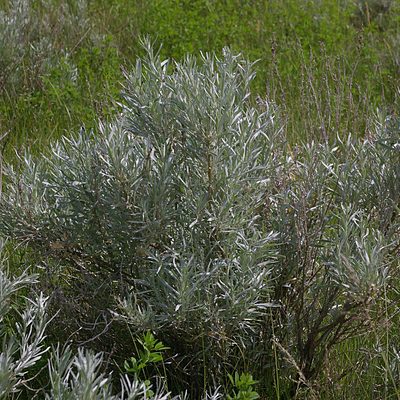 Silver SagebrushArtemisia cana | – | August and September | 0.5–1.5 m (1½–5 ft) | Grassy flats, meadows, stream terraces and floodplains, often just below the pine forest | Look for a rounded shrub branched from the base, often growing in stands, with woody stems whose older bark is gray-brown, twisted and peeling in long strips. The leaves are narrow and lance-shaped, 2–8 cm (¾–3 in) long and usually under 1 cm (⅜ in) wide, silvery gray with short, soft hairs on both sides, and usually have no teeth, though occasionally one or two lobes develop. The plant has a strong smell. In August and September tiny yellowish flower heads crowd narrow, leafy spikes at the branch tips. Missouri State University's plant guide notes that Big Sagebrush (Artemisia tridentata) has slightly wider leaves with three short teeth at the tip, and that Fringed Sagewort (Artemisia frigida) has no lasting woody stems and much smaller, finely divided leaves. |
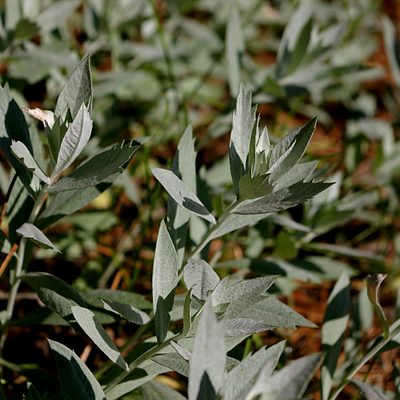 White SagebrushArtemisia ludoviciana | Green & Brown | August into September, with heads lingering into October | 30–100 cm (12–39 in) | Prairies, meadows, roadsides, open pine woods and rocky slopes, foothills to high ridges | The whole plant, stems and both sides of the leaves, is silvery white to gray-green with a dense felt of matted hairs, and a crushed leaf smells strongly of sagebrush. Upright stems rise in loose patches from creeping rhizomes, not from a woody base. The leaves alternate up the stem and are narrow, lance-shaped, 3–11 cm (1¼–4½ in) long, mostly smooth-edged, with the lower ones sometimes toothed or with a few lobes near the tip. Tiny nodding, button-like heads without petals crowd a narrow, spike-like cluster at the top. Fringed Sage is just as silvery and fragrant but low, 10–40 cm, growing in tufted mats from a woody base, with small leaves finely cut into thread-like segments. |
Other look-alike groups: 38 groups
- Anemones (4)
- Asters (4)
- Beardtongues (5)
- Buttercups (3)
- Cacti (4)
- Cinquefoils (7)
- Clovers (6)
- Coneflowers (4)
- Currants and gooseberries (5)
- Daisies (5)
- Dandelions (3)
- Docks and buckwheats (4)
- Evening primroses (4)
- Ferns (4)
- Gentians (4)
- Grasses (11)
- Groundsels and ragworts (3)
- Lilies (5)
- Mayflowers and false Solomon's seals (3)
- Milkvetches and locoweeds (12)
- Milkweeds (6)
- Mints (8)
- Mustards (11)
- Orchids (8)
- Paintbrushes (3)
- Pines (3)
- Raspberries and thimbleberries (3)
- Sedges (3)
- Speedwells and kittentails (3)
- Sunflowers (4)
- Thistles (6)
- Vervains (3)
- Vetches (4)
- Violets (7)
- Wild lettuces (3)
- Wild onions (3)
- Wild plums and cherries (3)
- Willows (3)