Mustards of the Black Hills
All 11 mustards in this guide, side by side, A to Z. Compare the photos, bloom time, height and where each grows, then open the one that fits for more photos and the full ID notes. Each plant's page lists its sources.
| Plant | Color | Blooms | Height | Where | How to tell it apart |
|---|---|---|---|---|---|
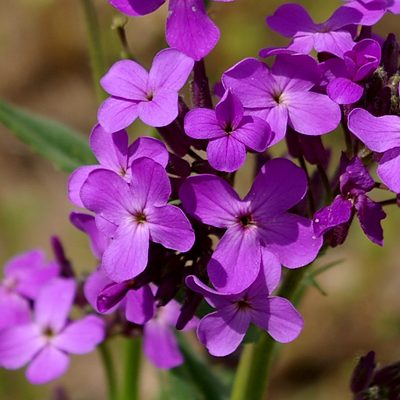 Dame's RocketHesperis matronalis | Purple | May and June | 50–100 cm (20–39 in) | Roadsides, thickets, open woods and woodland edges | Count the petals. Dame's Rocket has 4, while the native phlox it resembles has 5. Stems are densely hairy, leaves are alternate, sharp-tipped and toothed, and the seed pods are long and thin, 5 to 14 cm. |
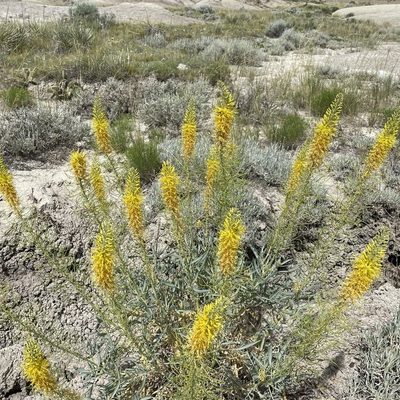 Desert PrinceplumeStanleya pinnata | Yellow | Mostly June and July in the Black Hills area | 30–120 cm (12–47 in) | Dry prairie hills, shale and clay slopes, road ditches and disturbed ground | Look for tall, erect stems with thick, waxy, bluish-green leaves that are sometimes cut into lobes, topped by a dense, plume-like spike of yellow flowers 10–35 cm (4–14 in) long. Each flower has 4 yellow petals about 1–2 cm (½–¾ in) long, hairy on the inside, and 6 stamens that stick out past the petals, which gives the spike its feathery look. The slender pods, 3–9 cm (1–3½ in) long, spread out or curve downward as the spike lengthens. |
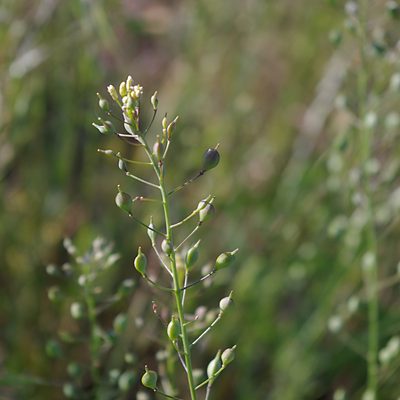 False FlaxCamelina microcarpa | Yellow | May into July | 20–80 cm (8–31 in) | Roadsides, fields, dry prairie hillsides and clearings in open pine woods | Look at the pods: pear-shaped, 3.5–5 mm (about 1/6 in) long, with a narrow rim and the old style left as a pointed beak, each on a slender stalk 4–14 mm (1/6–1/2 in) long that angles up and out from the stem. The flowers are about 4 mm (1/6 in) across, with four pale yellow petals, at the tips of loose clusters that keep lengthening as pods form below. Stem leaves are narrow and mostly toothless, with two small lobes at the base that may clasp the stem, and the lower stem is rough with long, simple hairs. Large-seeded false flax (Camelina sativa) has bigger pods, 7–13 mm (1/4–1/2 in), with a strong midvein, and a lower stem that is hairless or has only tiny branched hairs. Montana State University Extension notes that Hoary Alyssum can be mistaken for it, but False Flax has pale yellow flowers. |
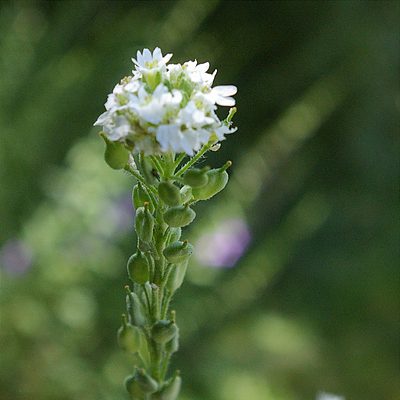 Hoary AlyssumBerteroa incana | White | April into October | 30–80 cm (12–31 in) | Roadsides, meadow edges, lawns and other dry, disturbed ground | Look at the flowers first: each is about 6 mm (1/4 in) across, with four white petals cut so deeply at the tip that they look like eight. Below the flowers the stem is lined with small oval pods 5–8.5 mm (about 1/4 in) long, finely hairy and tipped with a short style, held upright close to the stem. Tiny star-shaped hairs cover the whole plant and give it its gray-green, hoary look, and the narrow stem leaves have smooth edges and no stalk. Montana State University Extension says it can be confused with False Flax, which has pale yellow flowers, and with field pennycress, which has toothed leaves and a winged pod. |
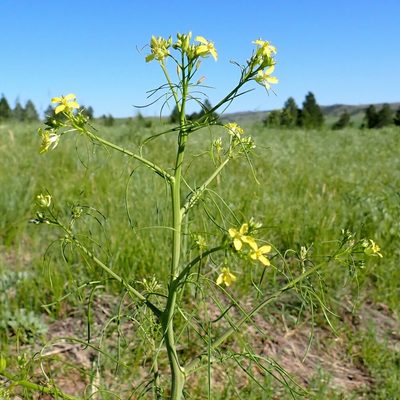 Mustard TumbleweedSisymbrium altissimum | Yellow | June into August | 20–100 cm (8–40 in) | Roadsides, fields, waste ground and other disturbed soil, including open grassland | Look for a many-branched plant, 20–80 cm (8–32 in) tall, whose branches spread in all directions and look open and thread-like. The lower leaves are deeply cut into narrow lobes and hairy on the edges, and the upper leaves are cut into thin, linear segments and mostly hairless. The flowers are small, about 8 mm (1/3 in) across, with 4 creamy-white to pale-yellow petals. The slender pods are 4–8 cm (1½–3 in) long and stick out straight from the stem on stalks as thick as the pods. |
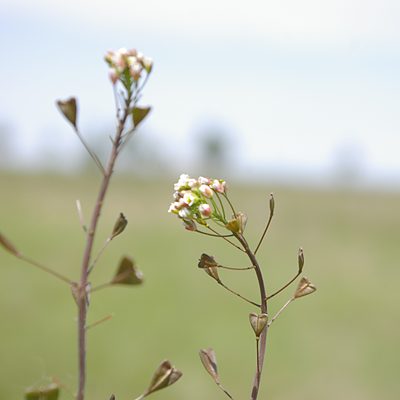 Shepherd's PurseCapsella bursa-pastoris | White | April into September | 10–50 cm (4–20 in) | Lawns, gardens, roadsides, fields and other disturbed ground | The seed pods give it away: flat, triangular to heart-shaped, notched at the top and 4–9 mm (about 1/4 in) long, each on a thin stalk 0.5–1.5 cm (1/4–1/2 in) long that sticks out nearly straight from the stem. Tiny white flowers with four petals, up to 6 mm (1/4 in) across, keep opening at the tip while pods ripen below. Most leaves sit in a rosette at the base and are toothed to deeply lobed; the few stem leaves are small, arrow-shaped and clasp the stem. Cornell's weed profile says field pennycress has hairless leaves with wavy edges, while Shepherd's Purse leaves are toothed or lobed, and that Virginia pepperweed and field pepperweed have leaves all the way up the flowering stem, while Shepherd's Purse has them only near the bottom. |
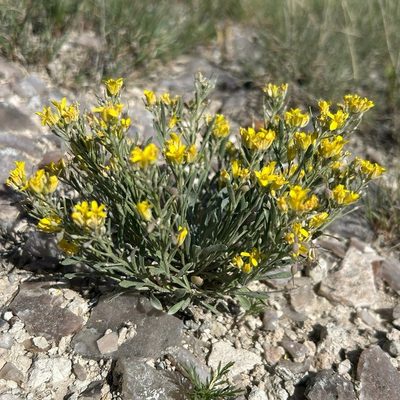 Sidesaddle BladderpodLesquerella arenosa var. argillosa | Yellow | May into June | Stems up to about 30 cm (12 in) long, lying flat to upright | Open, barren grassland and badlands with clay or sandy-clay soil from limestone; in the Black Hills, dry limestone slopes and ridges, some under ponderosa pine | Look for a low plant whose stems lie flat, sprawl or stand up, up to about 30 cm (12 in) long, with yellow flowers that often dry to red or lavender, and a fruit that is a silicle, a short mustard-family pod (Lady Bird Johnson Wildflower Center, describing this variety). Herbarium labels for this variety give the flower color as yellow on two sheets and cream-white on one collection. A 2024 herbarium label from a badlands butte where both varieties grew together says var. argillosa has broader golden-yellow petals than the pale yellow ones of var. arenosa, and flowers later. No source opened for this guide gives a full key to the two varieties. The photos here are of plants identified on iNaturalist as var. argillosa, from the plains. |
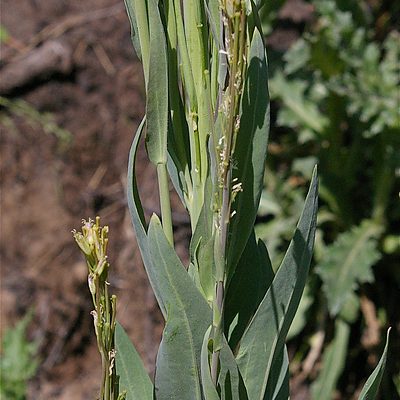 Tower RockcressTurritis glabra | White | May into July | 40–120 cm (16–47 in) | Dry prairie, woodland edges, open pine and spruce woods, creek banks and roadsides | Look for the pods: long and thin, 4–10 cm (1 1/2–4 in) long and only about 1 mm wide, held straight up and pressed close to the stem, so a fruiting plant looks like a narrow tower. The stem leaves are lance-shaped, smooth and blue-green with a waxy coat, and two lobes at the base of each leaf wrap around the stem; the leaves of the first-year rosette are spoon-shaped, toothed and hairy. The flowers are small, with four white to cream petals that often barely open, and the stem is hairy near the base and smooth above. Minnesota Wildflowers says the clasping leaves and the upright pods close to the stem make it hard to mistake for anything else. |
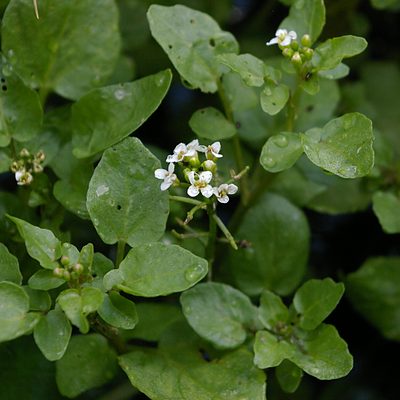 WatercressNasturtium officinale | White | May into October; Black Hills herbarium specimens are in flower from mid-May to late October, a few into early November | Stems 10–110 cm (4–43 in), mostly floating or sprawling | Cold, clear streams, springs and spring-fed creeks, ponds and ditches, including warm spring water | Look for a hairless plant growing in or at the edge of cold, moving water, with stems that float or lie on the mud and root at the joints. Each leaf is divided into 3 to 9 leaflets, sometimes more: the end leaflet is the largest and often nearly round, and the side leaflets are smaller and oval to lance-shaped, with smooth or slightly wavy edges. The flowers are about 6 mm (¼ in) across, with 4 white petals and yellowish stamens, in clusters at the stem tips that stretch out as the pods form. The pods are slender and slightly curved, 1–2.5 cm (⅜–1 in) long with a short beak, held out on spreading or drooping stalks, and the seeds sit in two rows inside. One-row Watercress (Nasturtium microphyllum), which Flora of North America records in Wyoming but not South Dakota, is nearly impossible to tell apart without fruit; Minnesota Wildflowers says its pods are longer and slimmer, with the seeds in a single row. |
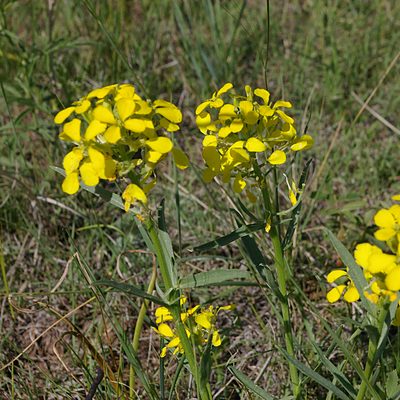 Western WallflowerErysimum asperum | Yellow | May into August | 12–65 cm (5–26 in) | Dry open prairie, pastures, sandhills, roadsides and road cuts, bluffs, ridges and open ponderosa pine | Look for one upright, ridged, rough-hairy stem, usually unbranched below the flowers, with narrow leaves densely covered in short, branched hairs that can make them look gray-green; the basal leaves have a few teeth and often wither by the time the pods form. The flowers crowd into a dense cluster at the top, each with four rounded yellow to orange-yellow petals 13–22 mm long and six stamens, about 2 cm (¾ in) across. The best mark comes after bloom: narrow, hairy, four-angled pods 5–12 cm (2–5 in) long that stand out sideways from the stem on short slender stalks, as the cluster stretches into a long spike. Minnesota Wildflowers says the large flowers and long pods set it apart from two other wallflowers on the Black Hills park lists, Wormseed Mustard and Small-flowered Wallflower. The Forest Service says the closely related Erysimum capitatum, which it also calls western wallflower, has erect pods, and that this plant replaces it on the Great Plains and differs mostly in its longer pods that spread sideways when ripe. |
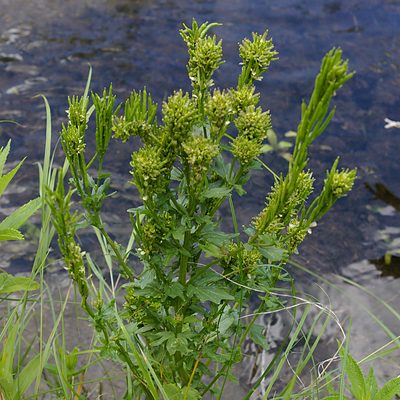 WintercressBarbarea orthoceras | Yellow, Green & Brown | Late May into early July; a few Black Hills specimens were also in flower in late September and October | 20–60 cm (8–24 in) | Creek banks, gravel bars, springs, wet meadows and moist openings in the forest | Look for a leafy, mostly hairless plant beside water, with stem leaves that wrap the stem at their base with two small ear-like lobes. Most leaves are lyre-shaped: a large, rounded end lobe with 1 to 4 pairs of smaller side lobes below it, and even the topmost stem leaves are lobed. The flowers are yellow or pale yellow, with 4 petals 5–7 mm long, crowded at the branch tips. The pods stand erect, 2.5–4.5 cm (1–1¾ in) long and about 2 mm wide, and end in a short, stout beak 0.5–1.2 mm long. Garden Yellowrocket (Barbarea vulgaris), a European plant that herbarium specimens show along many Black Hills creeks, looks much the same; Flora of North America separates it by its uppermost stem leaves, which are undivided with plain or toothed edges, its slender pod beak 1.5–3 mm long, and its larger petals, 6–9 mm. |
Other look-alike groups: 38 groups
- Anemones (4)
- Asters (4)
- Beardtongues (5)
- Buttercups (3)
- Cacti (4)
- Cinquefoils (7)
- Clovers (6)
- Coneflowers (4)
- Currants and gooseberries (5)
- Daisies (5)
- Dandelions (3)
- Docks and buckwheats (4)
- Evening primroses (4)
- Ferns (4)
- Gentians (4)
- Grasses (11)
- Groundsels and ragworts (3)
- Lilies (5)
- Mayflowers and false Solomon's seals (3)
- Milkvetches and locoweeds (12)
- Milkweeds (6)
- Mints (8)
- Orchids (8)
- Paintbrushes (3)
- Pines (3)
- Raspberries and thimbleberries (3)
- Sagebrushes and sageworts (3)
- Sedges (3)
- Speedwells and kittentails (3)
- Sunflowers (4)
- Thistles (6)
- Vervains (3)
- Vetches (4)
- Violets (7)
- Wild lettuces (3)
- Wild onions (3)
- Wild plums and cherries (3)
- Willows (3)