Desert Princeplume Stanleya pinnata
Also called Prince's Plume
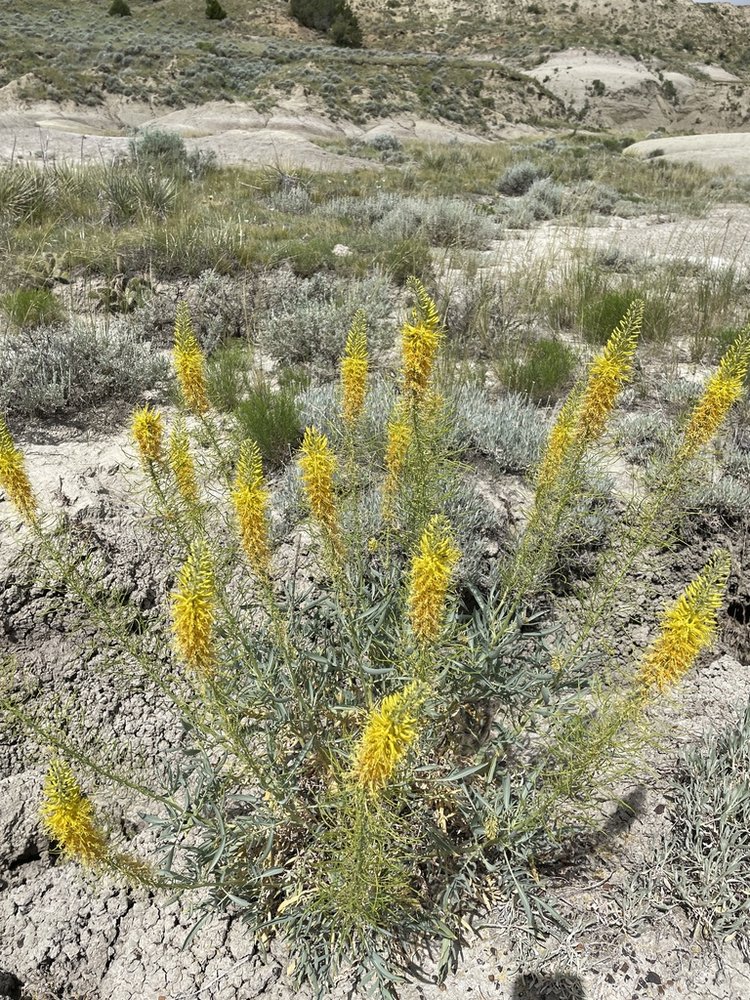
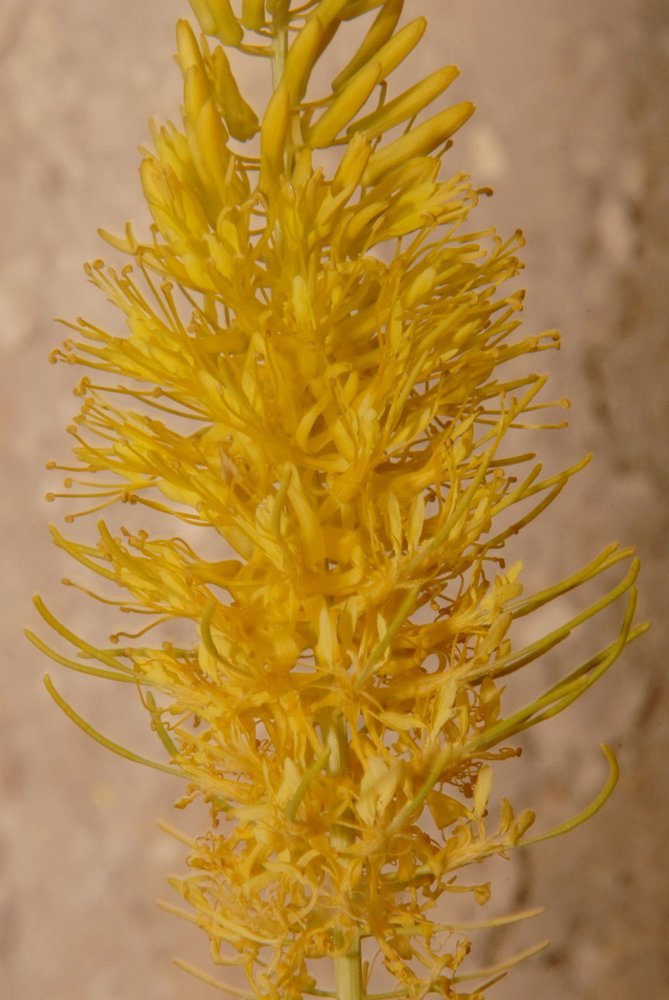
Desert Princeplume (Stanleya pinnata) is a tall, bluish-green native perennial of the mustard family, topped by dense, plume-like spikes of yellow flowers with long, thread-like stamens. In the Black Hills area it grows on dry prairie hills and clay or shale slopes, mostly on the southern and western edge, and the herbarium specimens were collected mainly in June and July.
Free photos from other sources
| Family | Brassicaceae · Mustard |
|---|---|
| Status | Native perennial |
| Blooms | Mostly June and July in the Black Hills area |
| Height | 30–120 cm (12–47 in) |
| Where | Dry prairie hills, shale and clay slopes, road ditches and disturbed ground |
| Also called | Prince's Plume |
| Synonym | Cleome pinnata |
| Toxicity | It takes up selenium from the soil and is poisonous to livestock, though they seldom eat it when other forage is available. |
| Traditional use | The Hopi boiled the plant and ate it as spring greens (Colton 1974; Whiting 1939), and the Havasupai boiled the leaves two or three times to remove poisons before eating them (Weber and Seaman 1985). The Paiute applied a poultice of mashed root for throat pain (Train and others 1941) and the Navajo a poultice of the plant to glandular swellings (Elmore 1944), as recorded in Moerman's ethnobotany database. |
Traditional use: first drafted by Google AI, then checked against the sources on this page.
How do you identify Desert Princeplume?
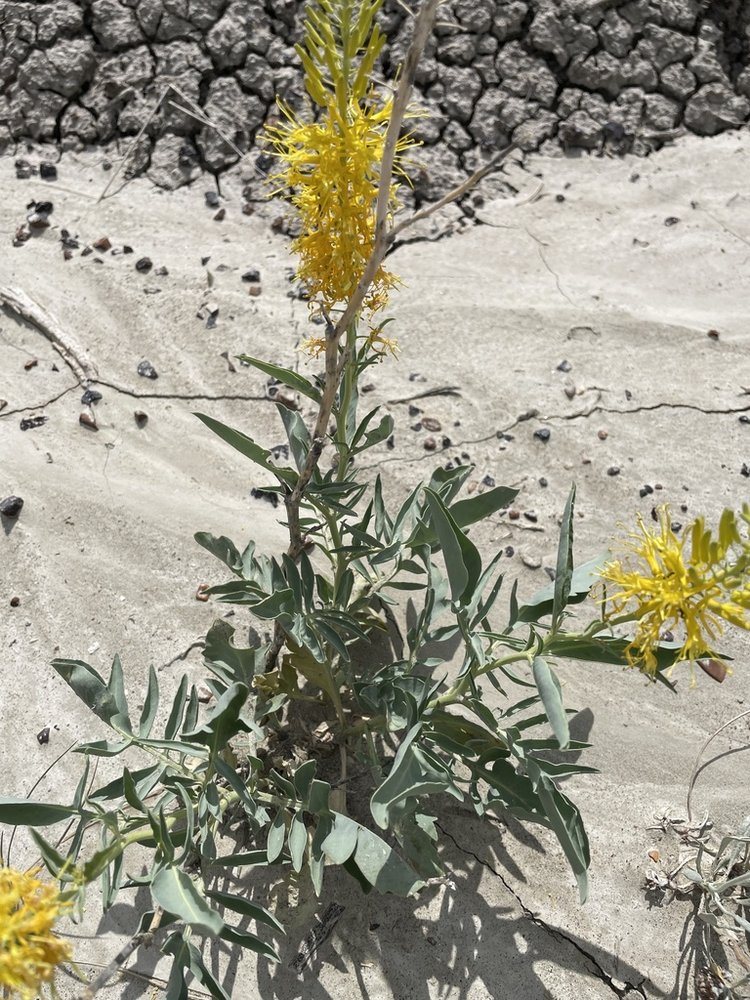
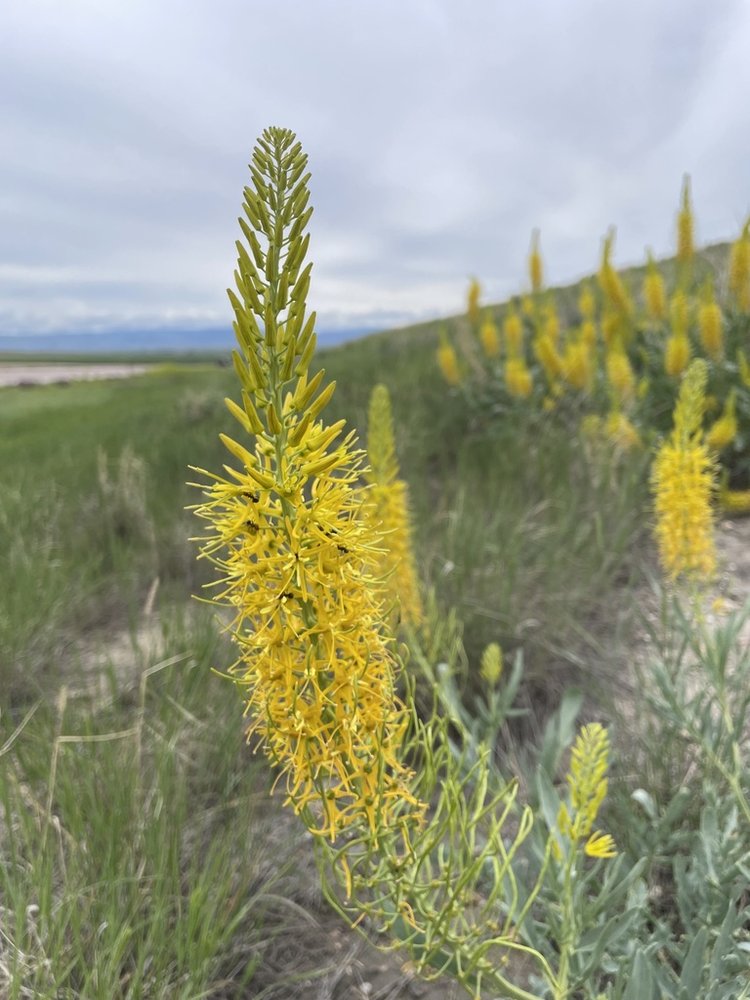
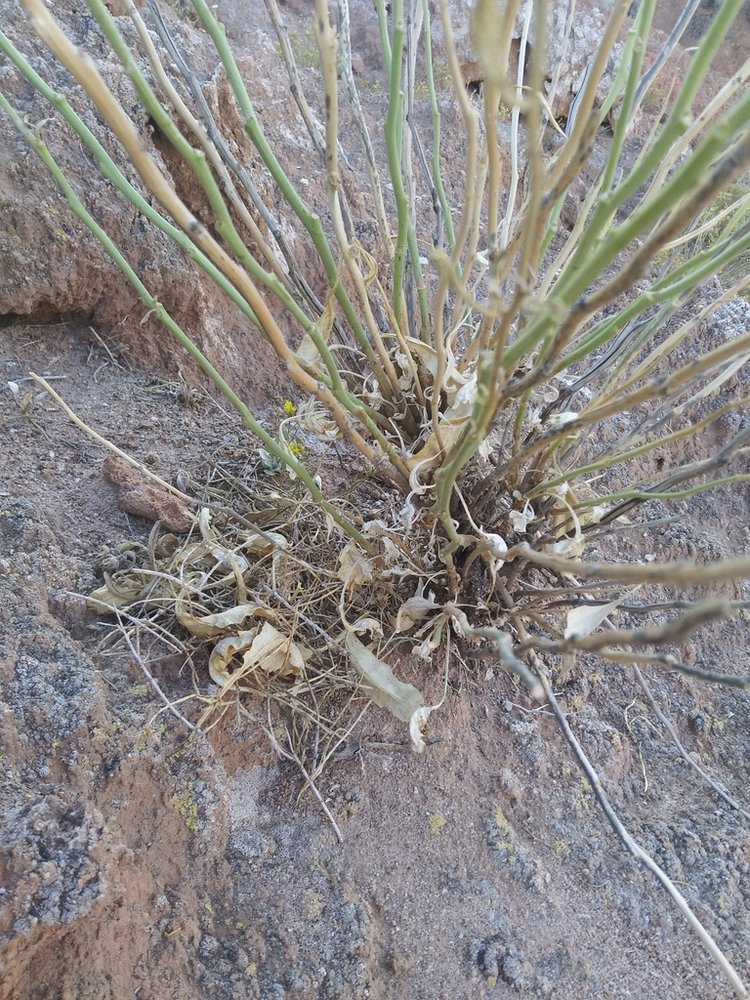
Look for tall, erect stems with thick, waxy, bluish-green leaves that are sometimes cut into lobes, topped by a dense, plume-like spike of yellow flowers 10–35 cm (4–14 in) long. Each flower has 4 yellow petals about 1–2 cm (½–¾ in) long, hairy on the inside, and 6 stamens that stick out past the petals, which gives the spike its feathery look. The slender pods, 3–9 cm (1–3½ in) long, spread out or curve downward as the spike lengthens.
When does it bloom?
Mostly June and July in the Black Hills area.
Where does it grow?
Dry hills, plains and clay or shale slopes. South Dakota herbarium labels from Custer and Fall River counties describe a shale hillside on Buffalo Gap National Grassland, shortgrass prairie pasture, mixed-grass prairie, a road ditch, and disturbed, clay, alkali soil; there are also specimens from Pennington County, SD, and Weston and Crook counties, WY. Of 47 specimens from those counties in GBIF, 15 are from Fall River County and 11 from Custer County, all on the dry prairie side of the Hills.
Other mustards in this guide
Compare all 11 mustards side by side
Dame's Rocket
Hesperis matronalis
False Flax
Camelina microcarpa
Hoary Alyssum
Berteroa incana
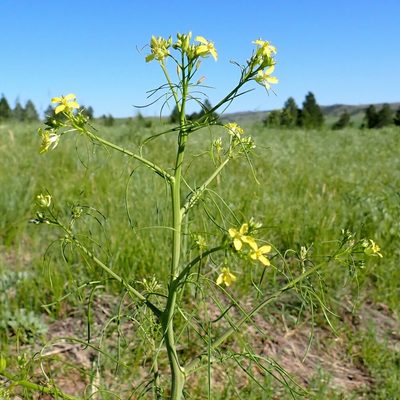
Mustard Tumbleweed
Sisymbrium altissimum
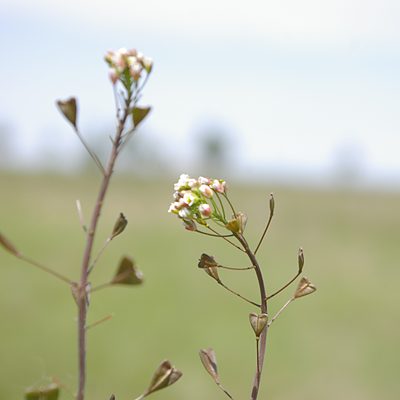
Shepherd's Purse
Capsella bursa-pastoris
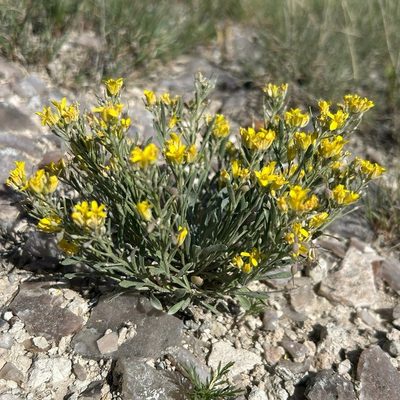
Sidesaddle Bladderpod
Lesquerella arenosa var. argillosa
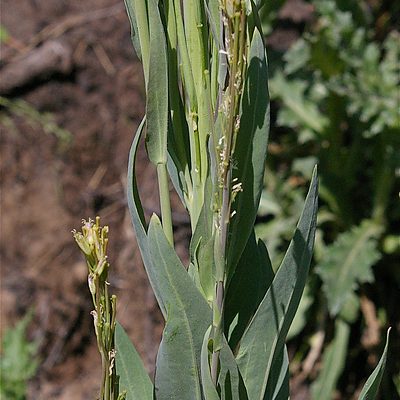
Tower Rockcress
Turritis glabra
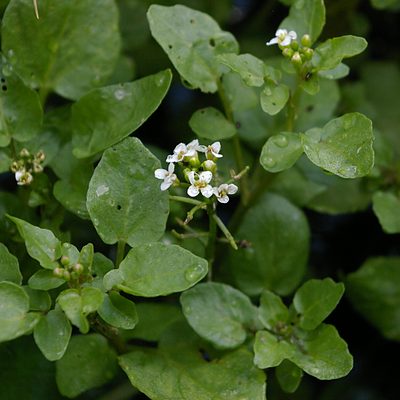
Watercress
Nasturtium officinale
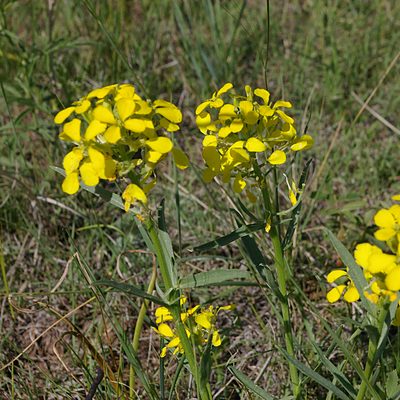
Western Wallflower
Erysimum asperum
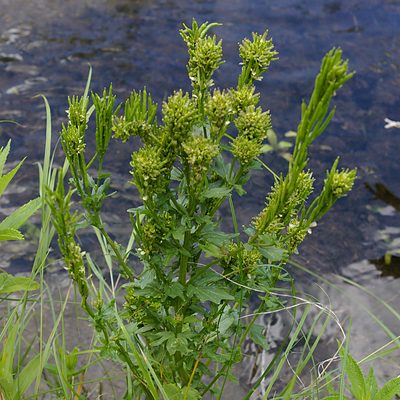
Wintercress
Barbarea orthoceras
Sources: Flora of North America Vol. 7: Stanleya pinnata (eFloras); Flora of North America Vol. 7: Stanleya pinnata var. pinnata (eFloras); Lady Bird Johnson Wildflower Center: Stanleya pinnata; Kansas Wildflowers and Grasses: Prince's plume (Stanleya pinnata); Utah State University Extension, Range Plants of Utah: Desert Princesplume; Native American Ethnobotany Database (BRIT): Stanleya pinnata; USDA PLANTS Database: Stanleya pinnata (STPI); GBIF specimen 3454984218 (Custer County, SD, 2008; shale hillside); GBIF specimen 3454983819 (Fall River County, SD, 2010; shortgrass prairie); GBIF specimen 5159117621 (Fall River County, SD, 1991; disturbed clay alkali soil); GBIF occurrence search: Stanleya pinnata, preserved specimens, South Dakota and Wyoming.