Hoary Alyssum Berteroa incana
Also called Hoary False Alyssum, Hoary False Madwort, Hoary Berteroa
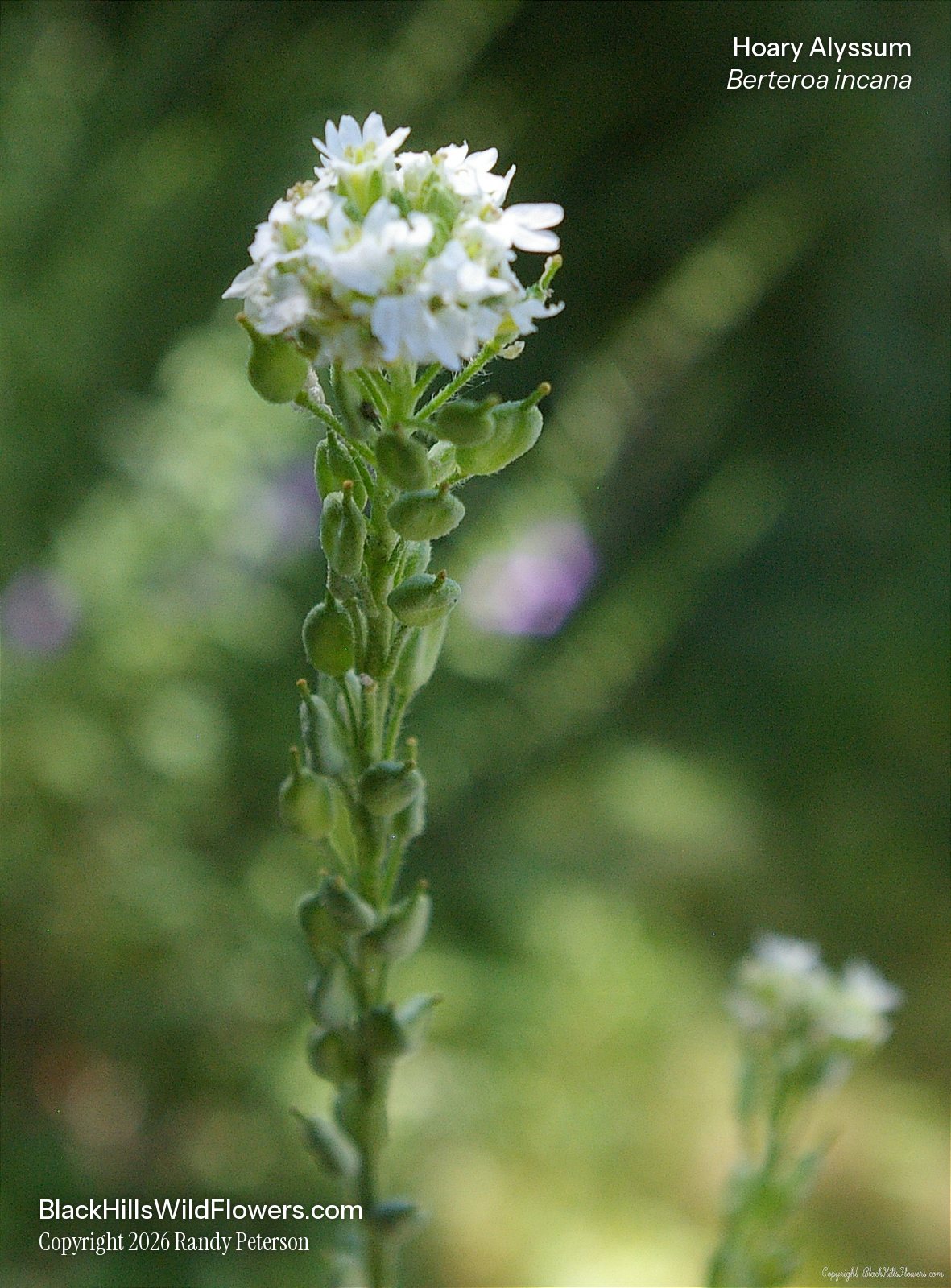
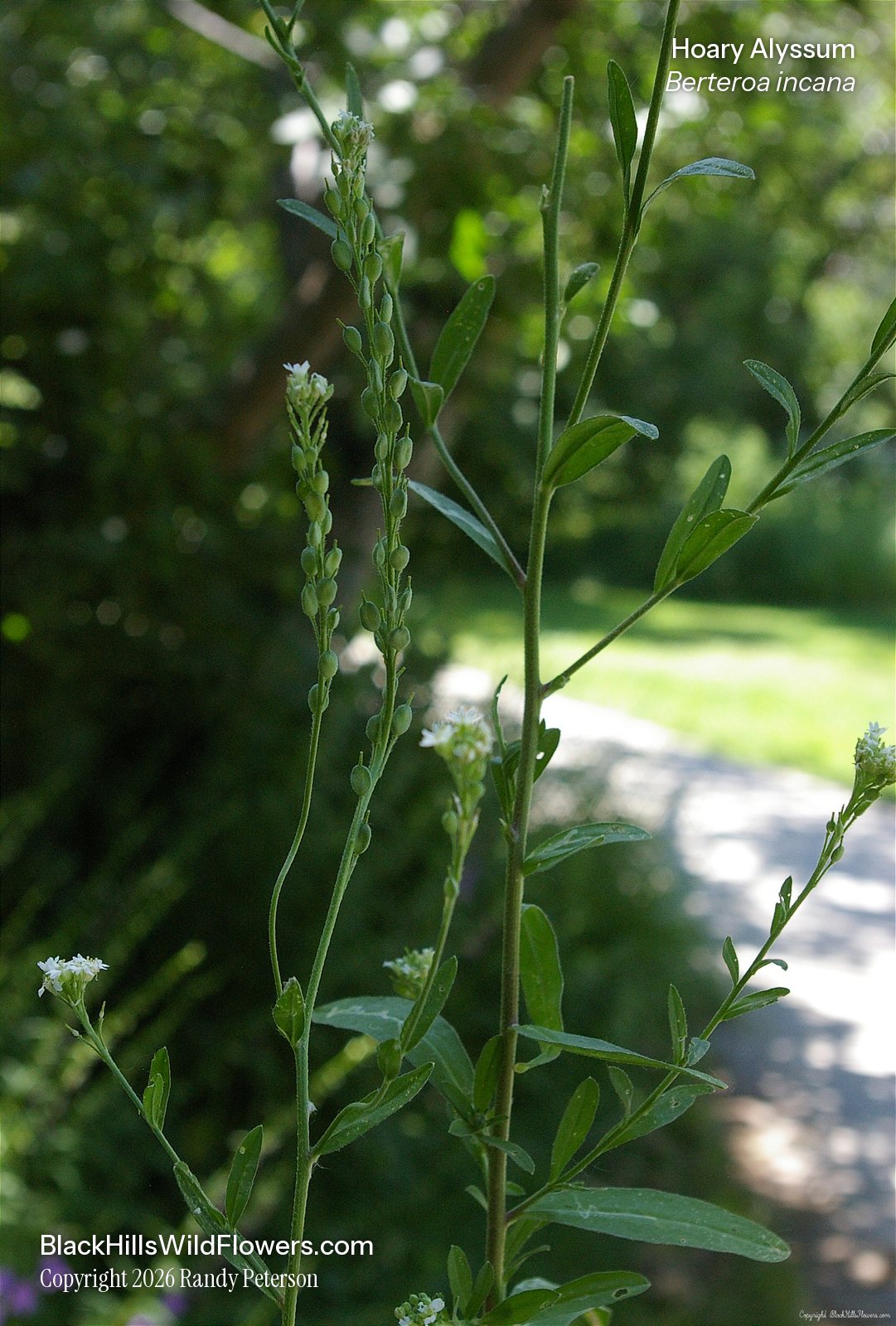
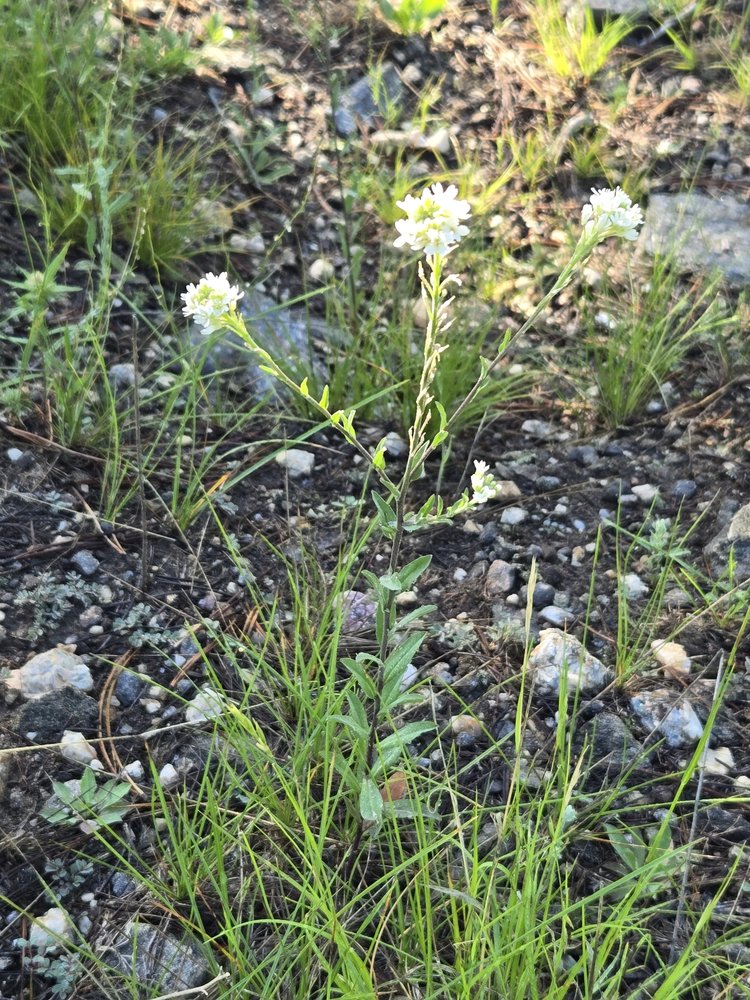
Hoary Alyssum (Berteroa incana) is a gray-green, hairy weed from Europe and Asia with rounded clusters of small white flowers whose four petals are split so deeply they look like eight. It blooms from spring into fall on roadsides and other dry, disturbed ground; in the Black Hills, herbarium specimens from 1965 to 2003 come from roadsides and meadows in Custer County, and the National Park Service lists it at Mount Rushmore. Photographed in the Black Hills.
Free photos from other sources
| Family | Brassicaceae · Mustard |
|---|---|
| Status | Introduced annual to short-lived perennial |
| Blooms | April into October |
| Height | 30–80 cm (12–31 in) |
| Where | Roadsides, meadow edges, lawns and other dry, disturbed ground |
| Also called | Hoary False Alyssum, Hoary False Madwort, Hoary Berteroa |
| Synonym | Alyssum incanum |
| Toxicity | Hay that is 30 percent or more hoary alyssum is toxic to horses: it causes laminitis, leg swelling and diarrhea, and has been tied to horse deaths. |
Roots, seeds & germination
Root: A slender taproot that can reach deep into the soil. Rosettes that start late in summer store sugars in the root until the first hard frost and usually live through the winter, while plants that have already flowered usually don't.
Seed: Each pod holds 4 to 12 dark reddish-brown, lens-shaped seeds 1–1.5 mm long with a narrow wing. At six sites in southwest Montana, plants averaged 584 seeds, with a range from none to 5,632, and about half were viable. Seeds can stay alive in the soil for about nine years, and they travel in hay and crop seed and on mowers and vehicles.
Germination: It spreads only by seed. Seeds sprout from early spring to late fall, held back mainly by lack of water and light. Seedlings that are up by early July flower and set seed the same year; later ones stay as rosettes until the next year.
How do you identify Hoary Alyssum?
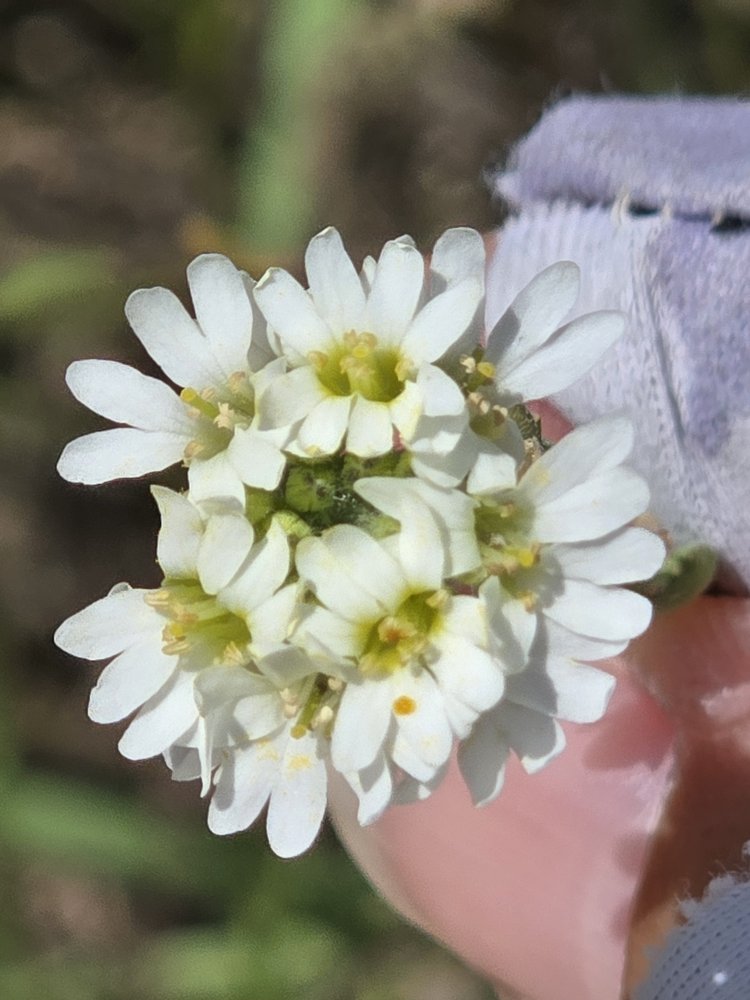
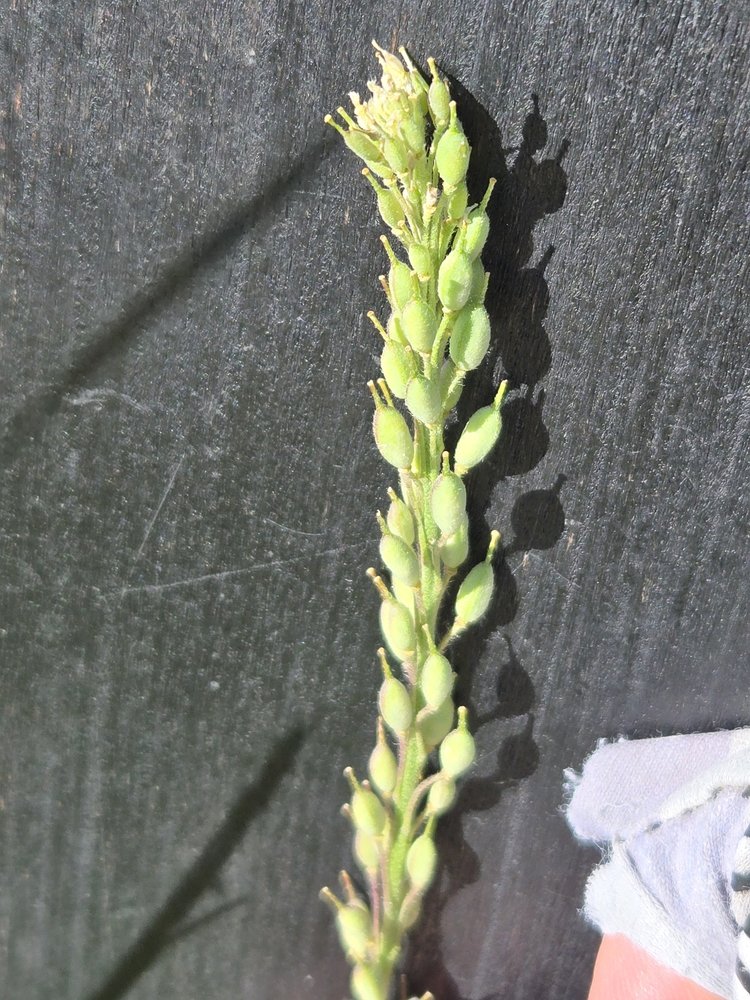
Look at the flowers first: each is about 6 mm (1/4 in) across, with four white petals cut so deeply at the tip that they look like eight. Below the flowers the stem is lined with small oval pods 5–8.5 mm (about 1/4 in) long, finely hairy and tipped with a short style, held upright close to the stem. Tiny star-shaped hairs cover the whole plant and give it its gray-green, hoary look, and the narrow stem leaves have smooth edges and no stalk. Montana State University Extension says it can be confused with False Flax, which has pale yellow flowers, and with field pennycress, which has toothed leaves and a winged pod.
When does it bloom?
April into October.
Where does it grow?
Dry, disturbed ground: roadsides and highway fill, meadow edges, lawns, farmyards and pastures, often on sandy or gravelly soil. Black Hills herbarium labels from 1965 to 2003, all from Custer County, record it as a roadside weed, in a meadow in ponderosa pine woods at about 1,700 m (5,600 ft), and on disturbed granitic soil. The National Park Service lists it at Mount Rushmore.
Other mustards in this guide
Compare all 11 mustards side by side
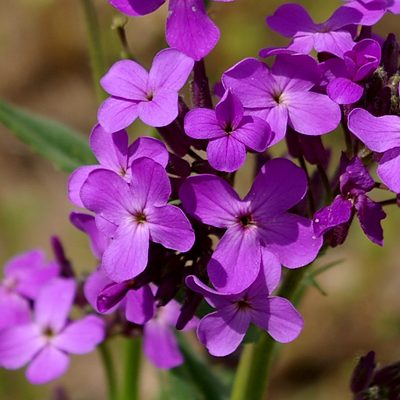
Dame's Rocket
Hesperis matronalis
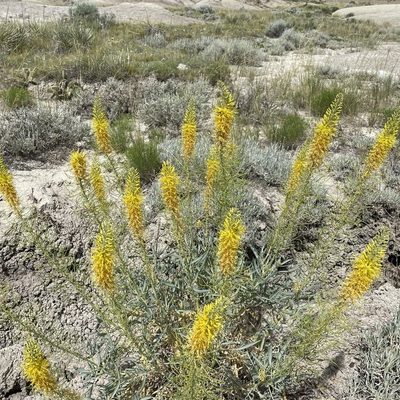
Desert Princeplume
Stanleya pinnata
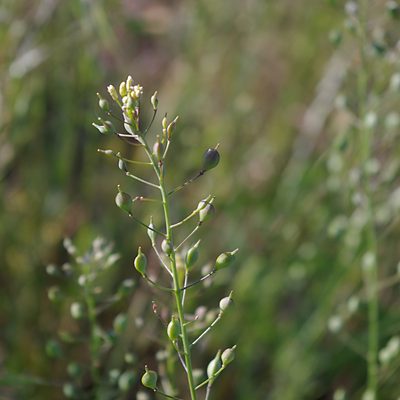
False Flax
Camelina microcarpa
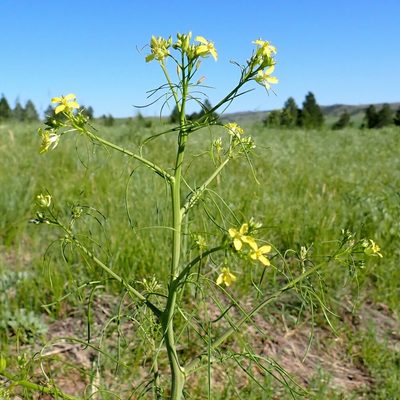
Mustard Tumbleweed
Sisymbrium altissimum
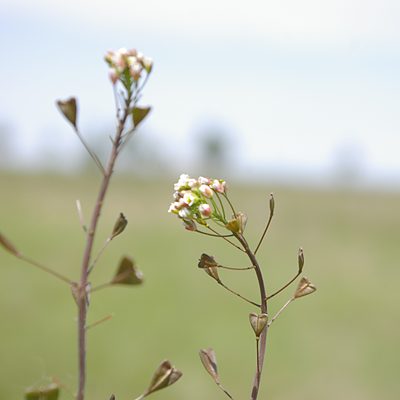
Shepherd's Purse
Capsella bursa-pastoris
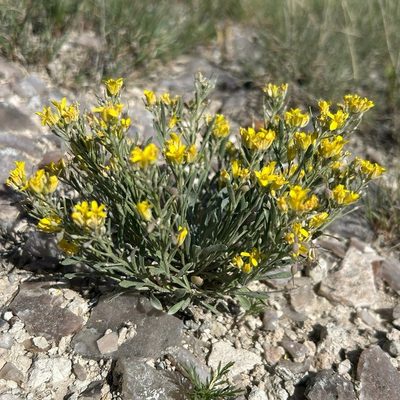
Sidesaddle Bladderpod
Lesquerella arenosa var. argillosa
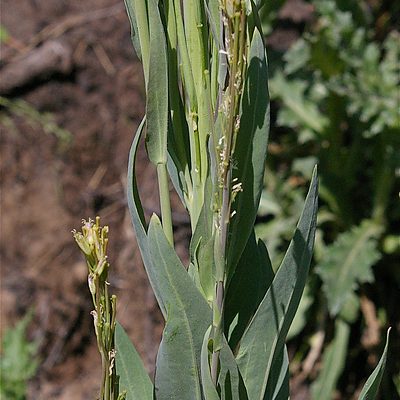
Tower Rockcress
Turritis glabra
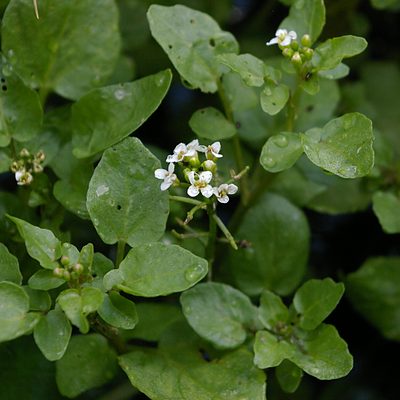
Watercress
Nasturtium officinale
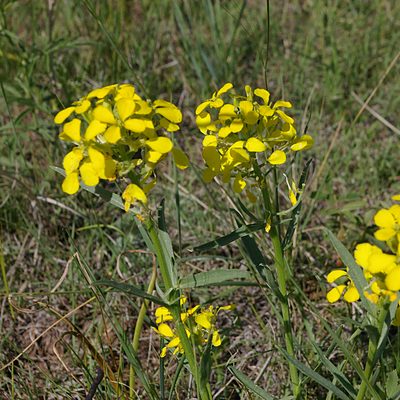
Western Wallflower
Erysimum asperum
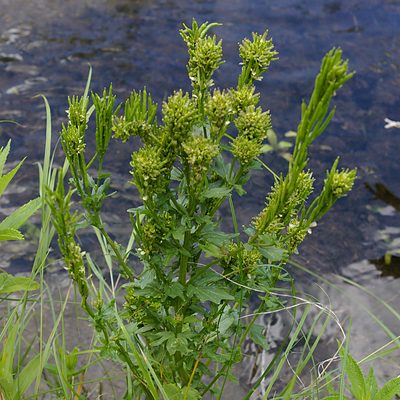
Wintercress
Barbarea orthoceras
Sources: Flora of North America Vol. 7: Berteroa incana (Al-Shehbaz), eFloras; USDA PLANTS Database: Berteroa incana (BEIN2); Minnesota Wildflowers: Hoary Alyssum (Berteroa incana); Montana State University Extension EB0194: Biology, Ecology and Management of Hoary Alyssum (rev. 2017); Washington State University Whitman County Extension: Hoary Alyssum (2010); NPSpecies checklist, Mount Rushmore National Memorial vascular plants; GBIF occurrence search: Berteroa incana, South Dakota and Wyoming herbarium specimens; GBIF specimen 2573464911: Shultz 1972, Custer County, "meadow in ponderosa pine woods"; GBIF specimen 2980508654: Kravig 1965, Custer County, "roadside weed in new fill beside main highways"; University of Wyoming CAPS: Berteroa incana, Hoary Alyssum; Wyoming Weed & Pest Council: State Designated Weed List; South Dakota DANR: State Noxious Weed & Pest List; South Dakota DANR: Locally Noxious Weed Pest List (updated 2024).