Shepherd's Purse Capsella bursa-pastoris
Also called Shepherd's Bag, Case Weed, Pick-pocket, napčhóka gmiyáŋ (Lakota)
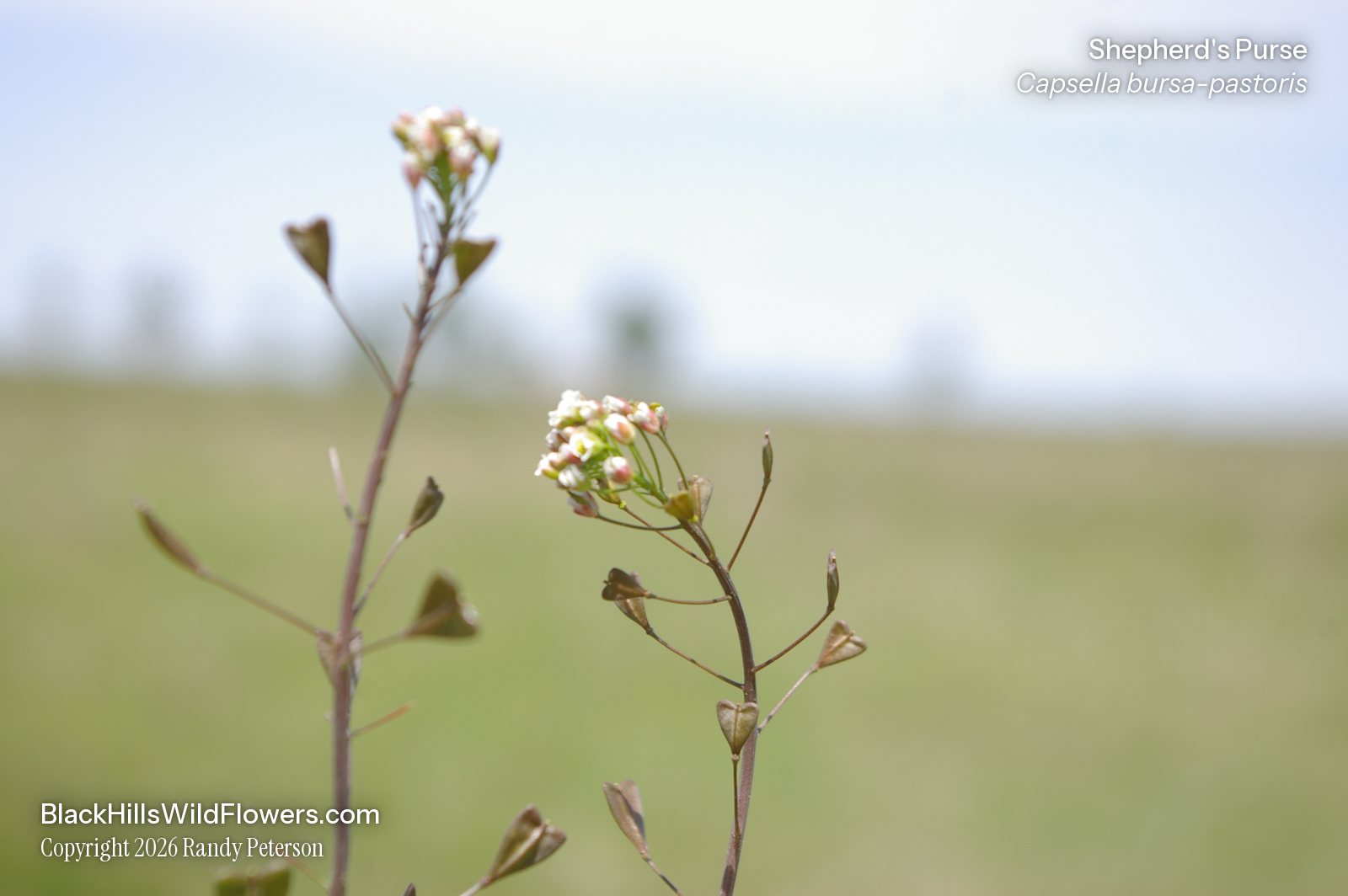
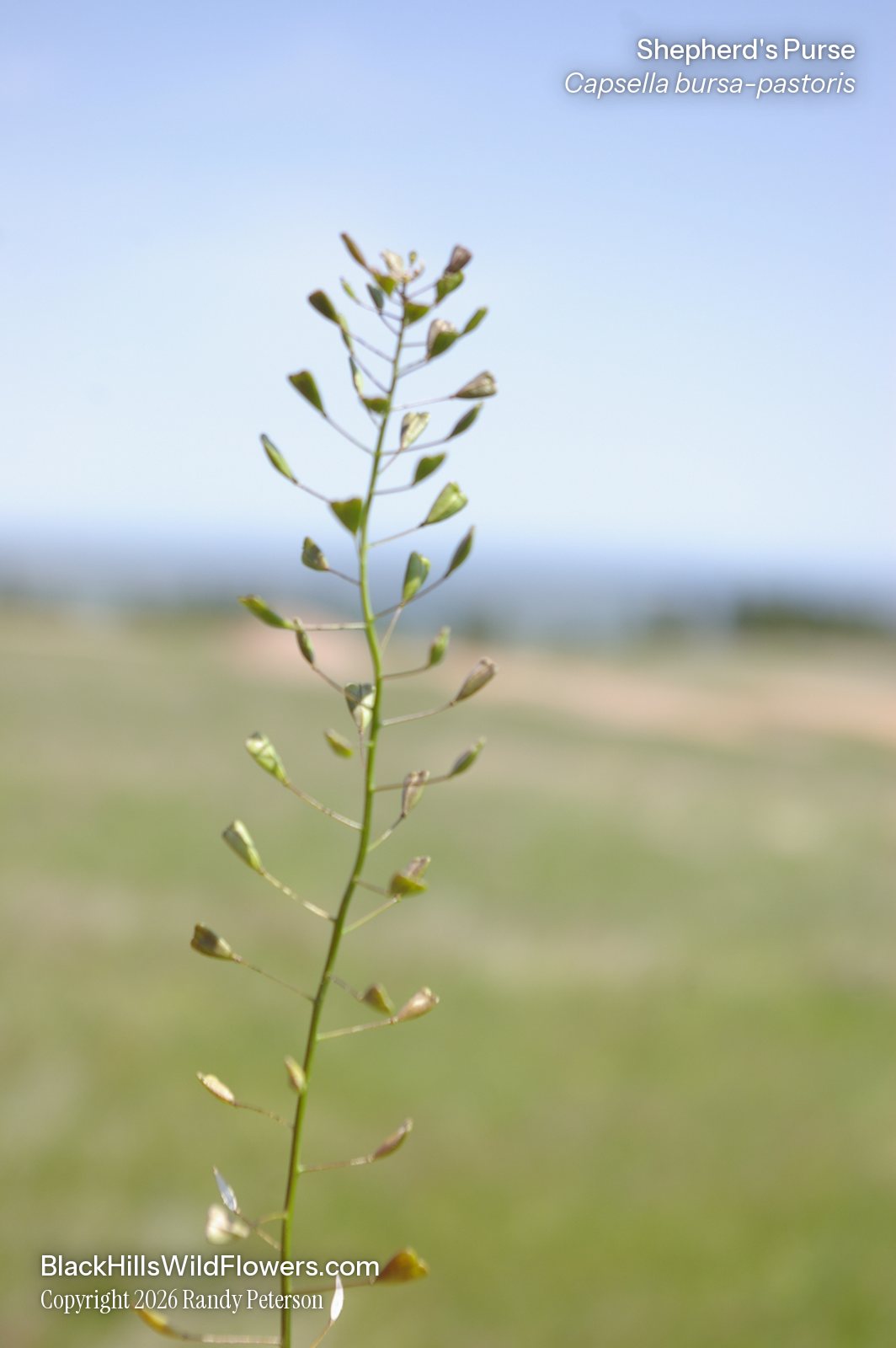
Shepherd's Purse (Capsella bursa-pastoris) is a small weed from Europe and Asia with tiny white flowers and flat, heart-shaped seed pods; its genus name refers to the pod's likeness to an old-time purse. It blooms from April into September on lawns, gardens, roadsides and other disturbed ground, and in the Black Hills herbarium specimens go back to 1892, while the National Park Service lists it at Wind Cave, Jewel Cave, Mount Rushmore and Devils Tower. Photographed in the Black Hills.
Free photos from other sources
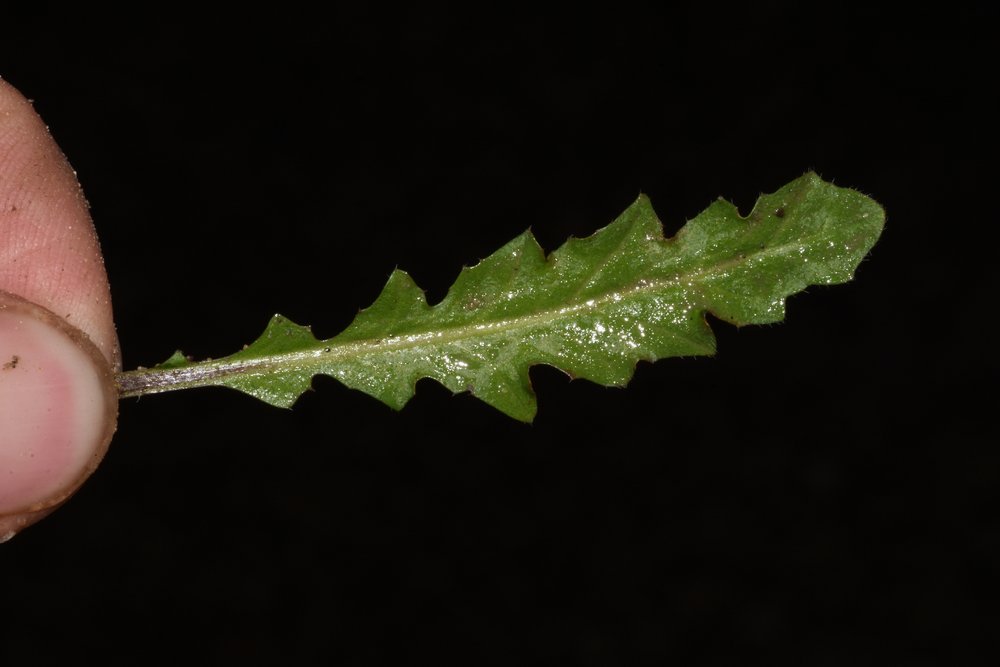
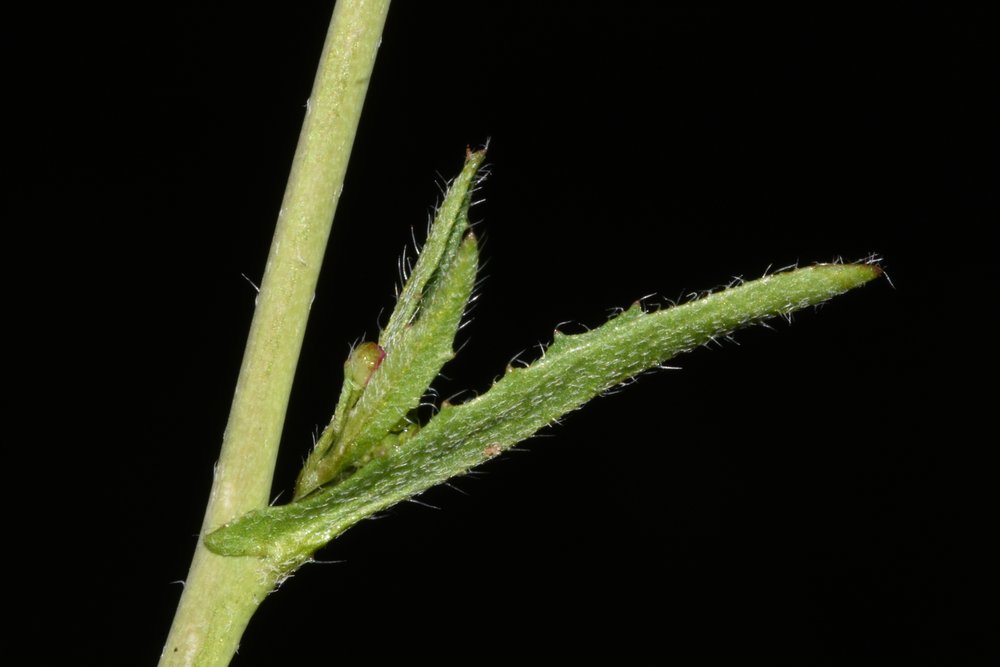
| Family | Brassicaceae · Mustard |
|---|---|
| Status | Introduced annual |
| Blooms | April into September |
| Height | 10–50 cm (4–20 in) |
| Where | Lawns, gardens, roadsides, fields and other disturbed ground |
| Also called | Shepherd's Bag, Case Weed, Pick-pocket, napčhóka gmiyáŋ (Lakota) |
| Synonym | Thlaspi bursa-pastoris |
| Traditional use | Black Elk and Flying By (1998) list it among plants important to the Lakota, noting that it was introduced, and record an infusion of the dried plant used for internal bleeding. |
Roots, seeds & germination
Root: A thin, branching taproot with fibrous side roots. Even small rosettes hold soil on their roots and can root again after the ground is worked.
Seed: Each pod holds 10 to 20 shiny, pale orange to red-brown seeds about 1 mm long. An average plant makes about 3,000 seeds, and large plants 30,000 to 60,000. The seed coat turns sticky when wet, which helps seeds cling to animals and machinery, and seeds can live up to 35 years in undisturbed soil.
Germination: Fresh seeds are dormant and need a cold period before they will sprout, and most also need a brief exposure to light. Seedlings come up mainly in spring and early fall, almost all from the top 1.3 cm (1/2 in) of soil; seedlings from the fall spend the winter as rosettes.
How do you identify Shepherd's Purse?
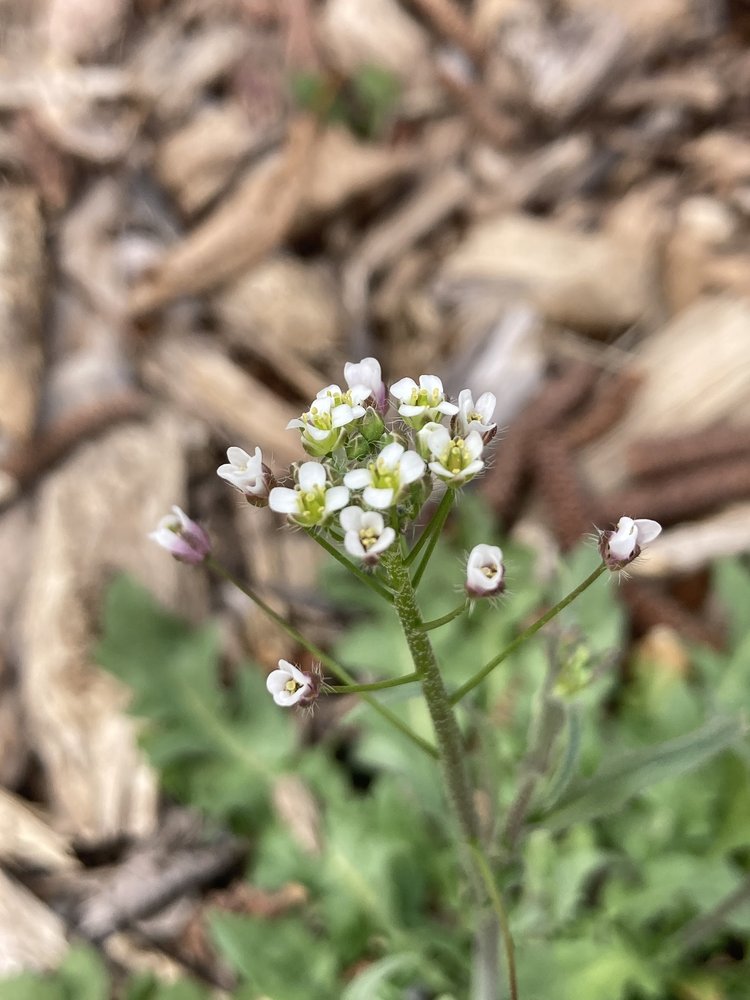
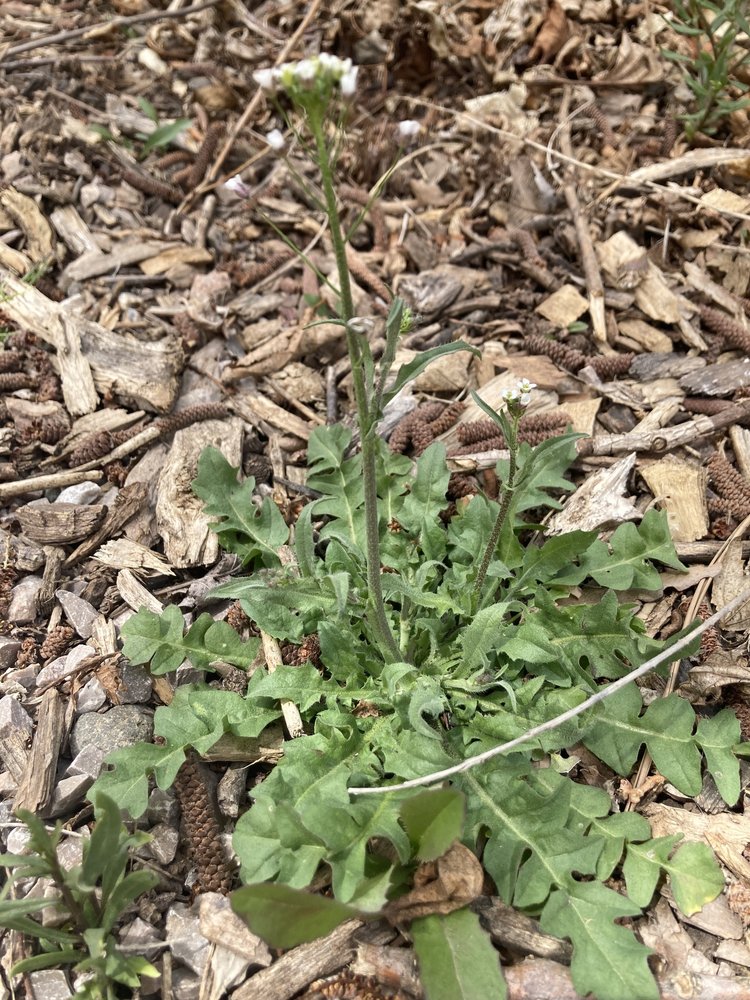
The seed pods give it away: flat, triangular to heart-shaped, notched at the top and 4–9 mm (about 1/4 in) long, each on a thin stalk 0.5–1.5 cm (1/4–1/2 in) long that sticks out nearly straight from the stem. Tiny white flowers with four petals, up to 6 mm (1/4 in) across, keep opening at the tip while pods ripen below. Most leaves sit in a rosette at the base and are toothed to deeply lobed; the few stem leaves are small, arrow-shaped and clasp the stem. Cornell's weed profile says field pennycress has hairless leaves with wavy edges, while Shepherd's Purse leaves are toothed or lobed, and that Virginia pepperweed and field pepperweed have leaves all the way up the flowering stem, while Shepherd's Purse has them only near the bottom.
When does it bloom?
April into September.
Where does it grow?
Disturbed ground of all kinds: lawns, gardens, fields, roadsides and waste places, and also creek banks and road edges in the forest. Black Hills herbarium labels from 1892 on, most from Lawrence, Custer and Pennington counties, record it in low ground and fields, in waste places, in the yard of an old cabin in 1924, along creeks, on a roadside in ponderosa pine forest in Crook County, Wyoming, and in moist ponderosa pine and paper birch forest. The National Park Service lists it at Wind Cave, Jewel Cave, Mount Rushmore and Devils Tower, and the 1986 plant survey of Jewel Cave lists it.
Other mustards in this guide
Compare all 11 mustards side by side
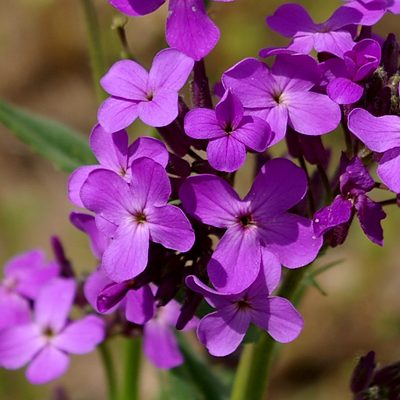
Dame's Rocket
Hesperis matronalis
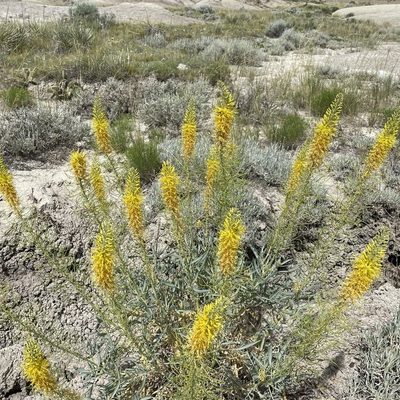
Desert Princeplume
Stanleya pinnata
False Flax
Camelina microcarpa
Hoary Alyssum
Berteroa incana
Mustard Tumbleweed
Sisymbrium altissimum
Sidesaddle Bladderpod
Lesquerella arenosa var. argillosa
Tower Rockcress
Turritis glabra
Watercress
Nasturtium officinale
Western Wallflower
Erysimum asperum
Wintercress
Barbarea orthoceras
Sources: Flora of North America Vol. 7: Capsella bursa-pastoris (Al-Shehbaz), eFloras; Flora of North America Vol. 7: genus Capsella, eFloras; USDA PLANTS Database: Capsella bursa-pastoris (CABU2); Minnesota Wildflowers: Shepherd's Purse (Capsella bursa-pastoris); Cornell University Weed Ecology and Management: Shepherd's-purse weed profile; NPSpecies checklist, Wind Cave National Park vascular plants; NPSpecies checklist, Jewel Cave National Monument vascular plants; NPSpecies checklist, Mount Rushmore National Memorial vascular plants; NPSpecies checklist, Devils Tower National Monument vascular plants; Marriott and Hartman 1986, A Survey of the Vegetation of Jewel Cave National Monument; GBIF occurrence search: Capsella bursa-pastoris, South Dakota and Wyoming herbarium specimens; GBIF specimen 1929816789: Rydberg 1892, Custer County; GBIF specimen 1999335978: Rydberg 1913, Lawrence County, "waste places"; GBIF specimen 3454984870: Marriott 1984, Crook County, Wyoming, "roadside in ponderosa pine forest"; GBIF specimen 2556159533: 2009, Lawrence County, "moist forest of Pinus ponderosa and Betula papyrifera"; Culturally Important Plants of the Lakota (Black Elk and Flying By, 1998), entry 66.