Wintercress Barbarea orthoceras
Also called American Yellowrocket, American Winter-cress
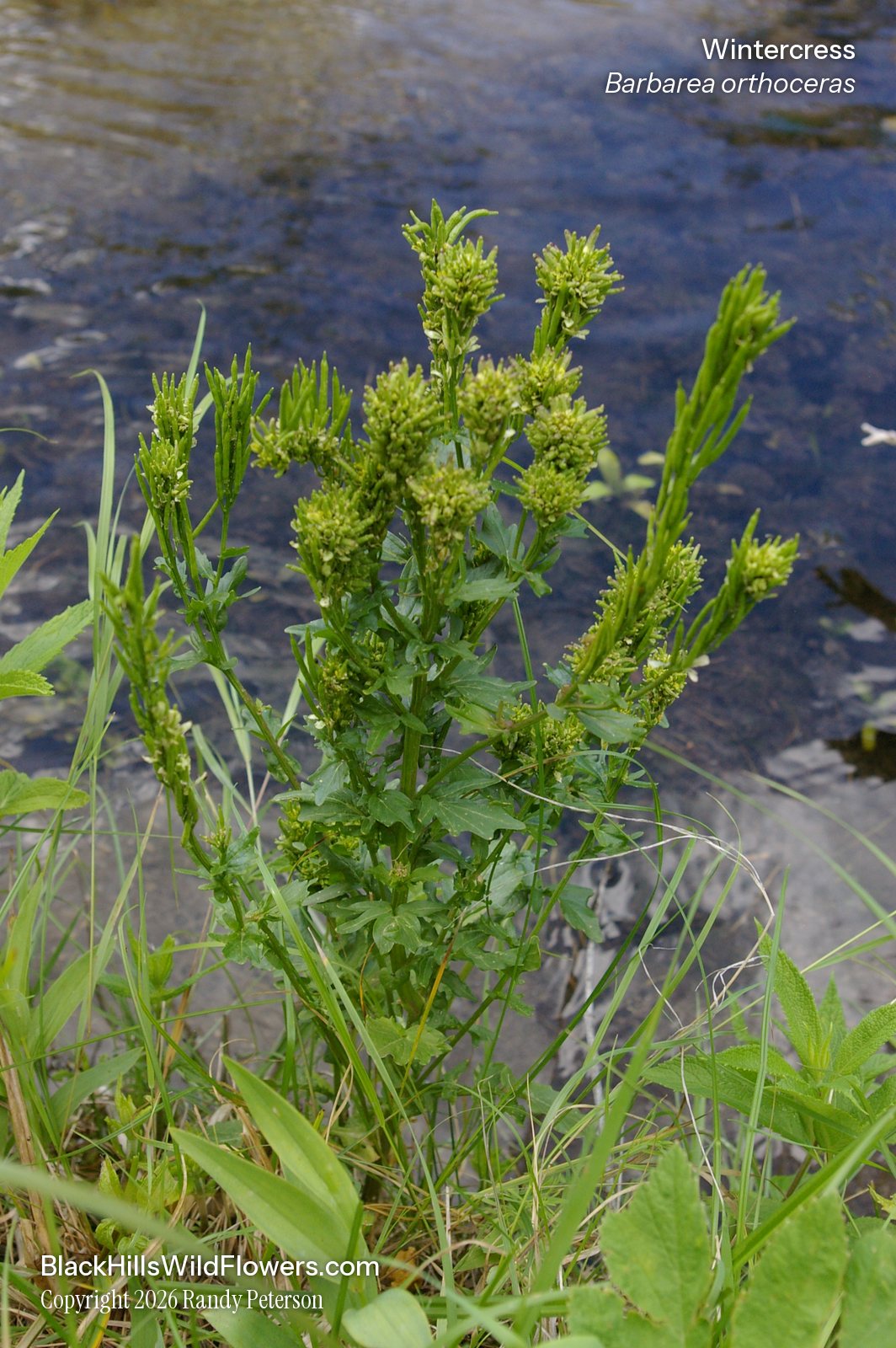
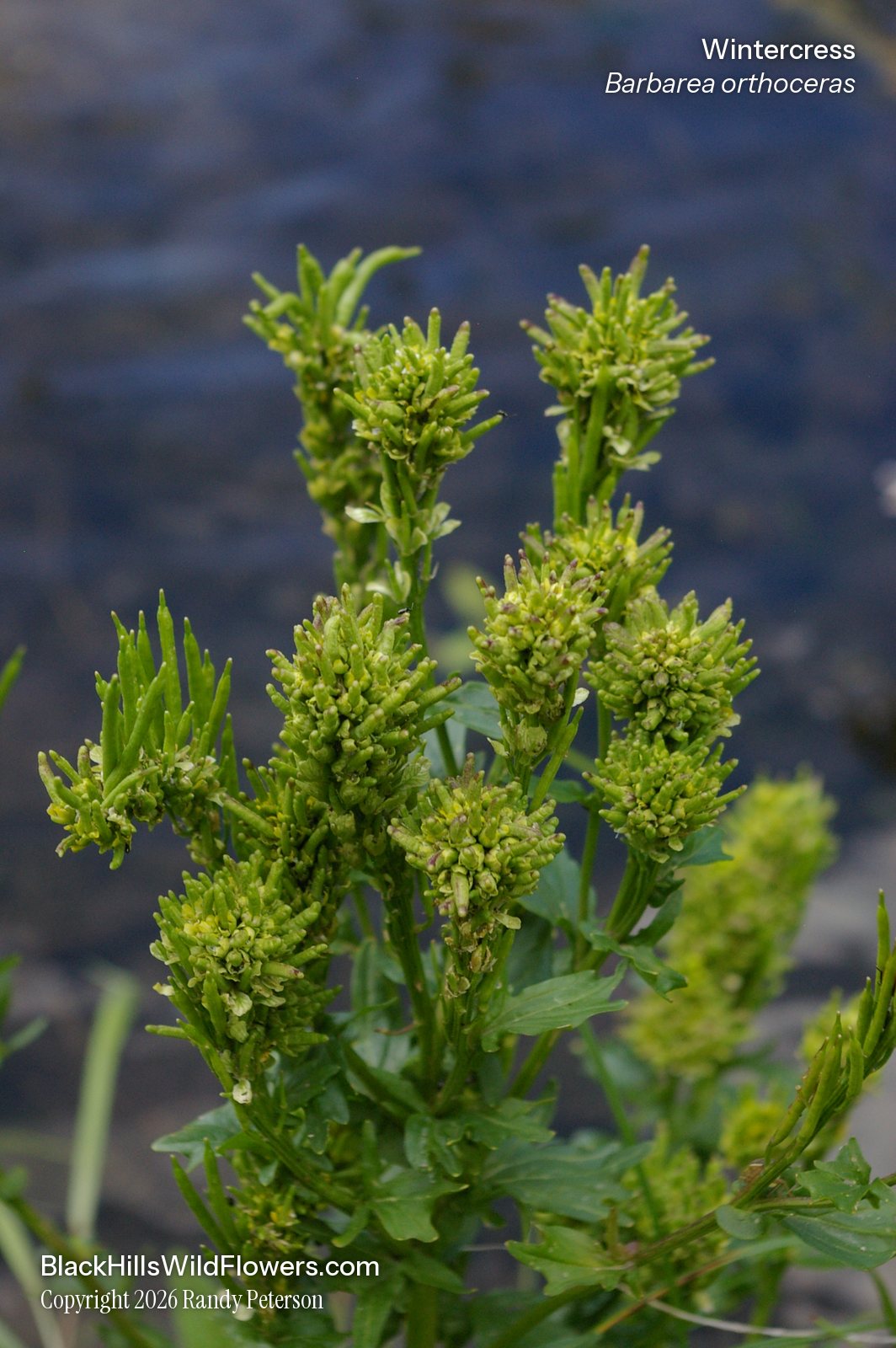
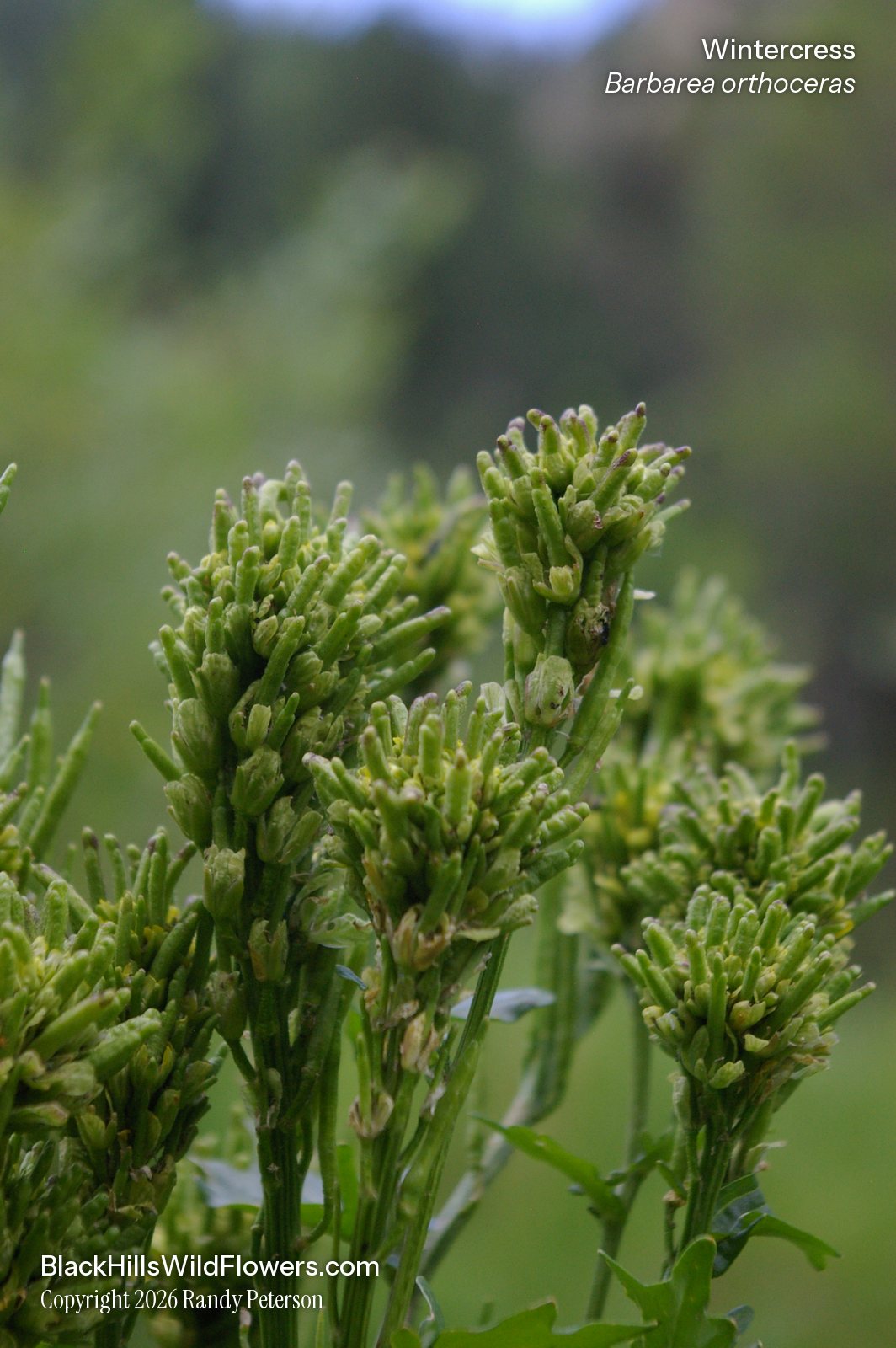
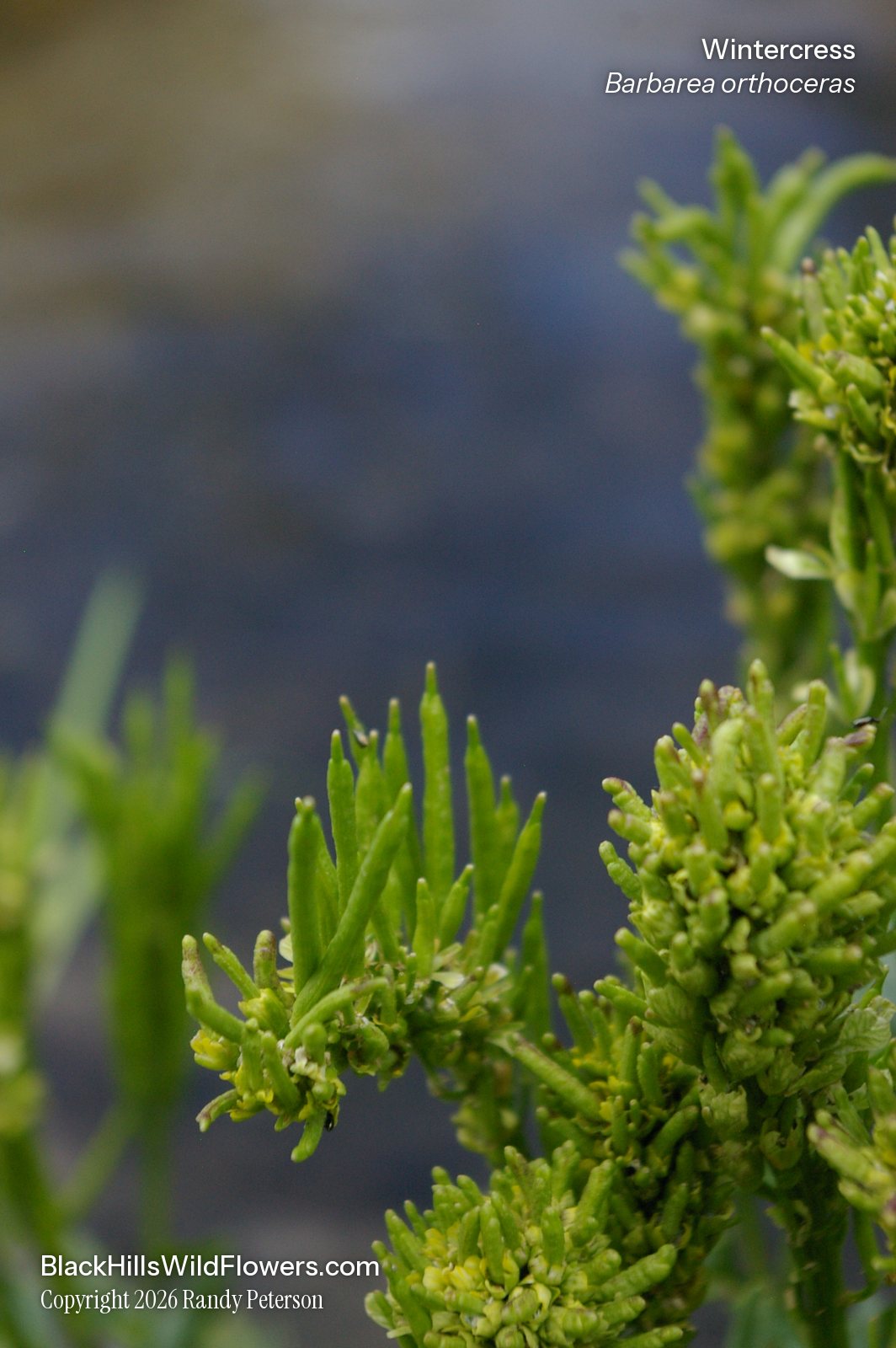
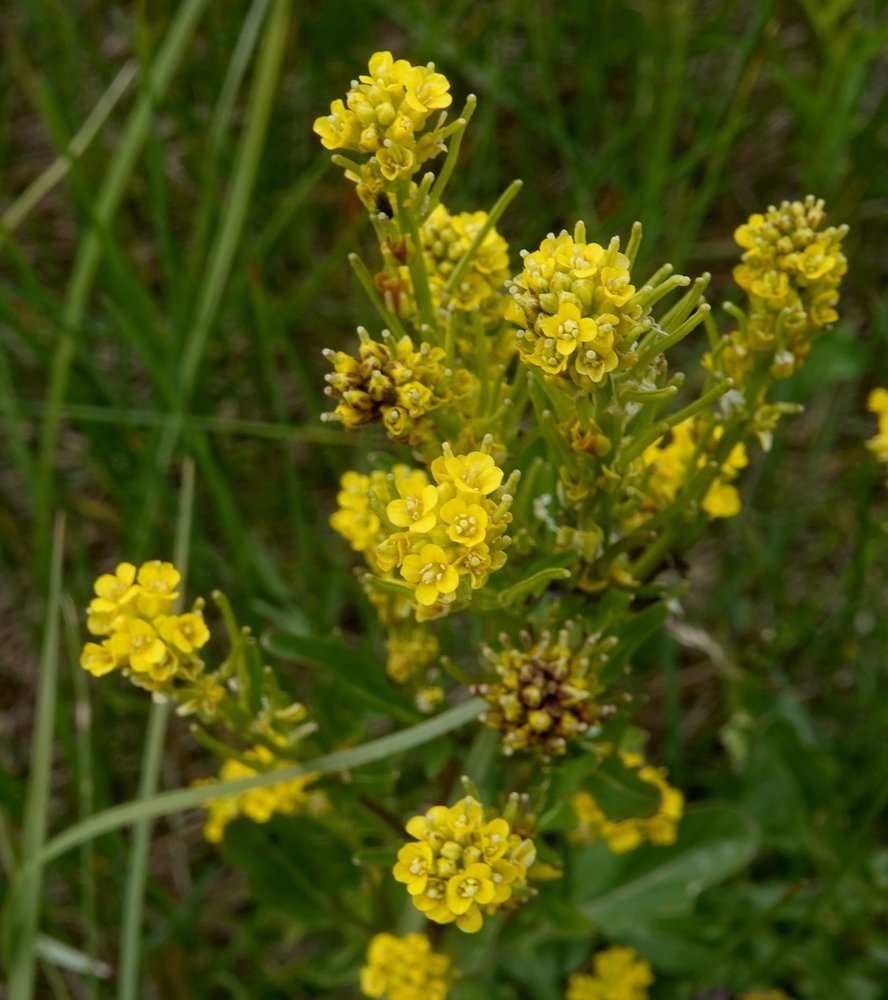
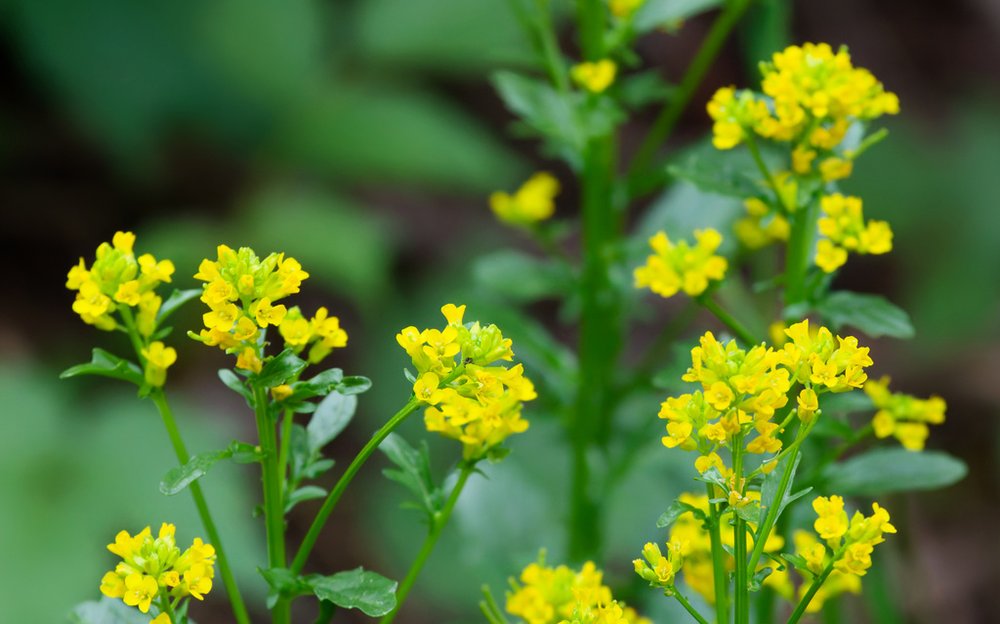
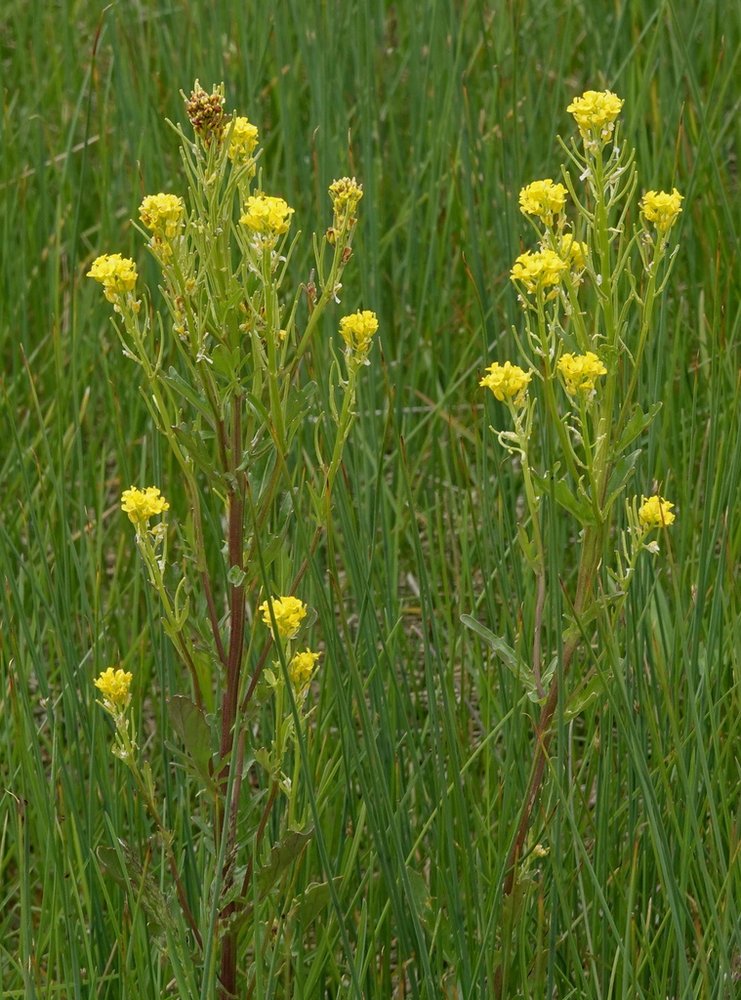
Wintercress (Barbarea orthoceras), also called American yellowrocket, is a native mustard of creek banks and wet meadows, 20–60 cm tall, with clasping, lobed leaves and dense clusters of small yellow four-petaled flowers that turn into erect, slender pods. In the Black Hills, herbarium specimens record it along creeks and in moist meadows from 1924 on, most of them in flower from late May into early July. Photographed in the Black Hills.
Free photos from other sources
| Family | Brassicaceae · Mustard |
|---|---|
| Status | Native biennial or perennial |
| Blooms | Late May into early July; a few Black Hills specimens were also in flower in late September and October |
| Height | 20–60 cm (8–24 in) |
| Where | Creek banks, gravel bars, springs, wet meadows and moist openings in the forest |
| Also called | American Yellowrocket, American Winter-cress |
| Synonym | Barbarea americana, Barbarea orthoceras var. dolichocarpa, Campe orthoceras |
Roots, seeds & germination
Root: A taproot.
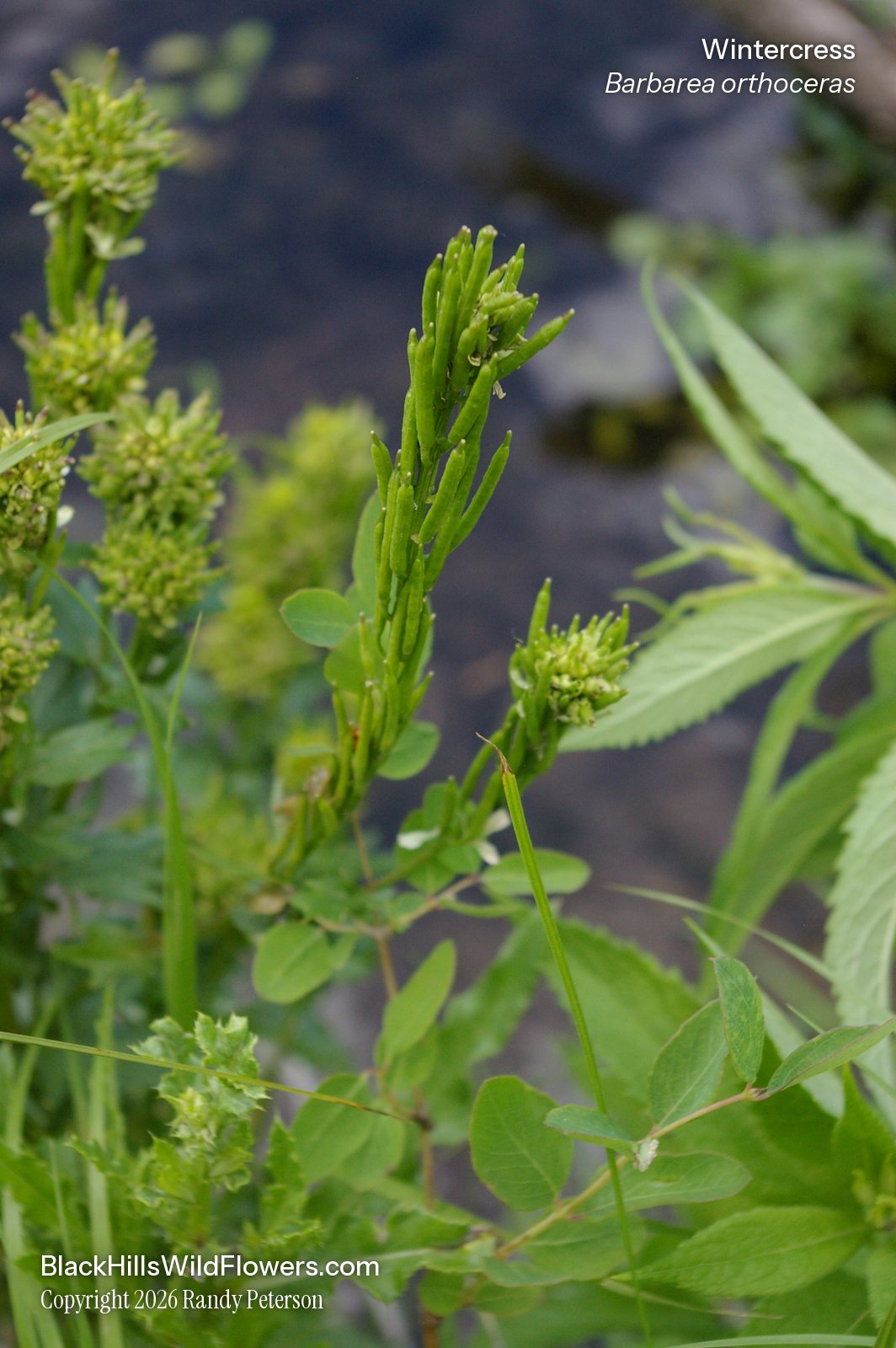
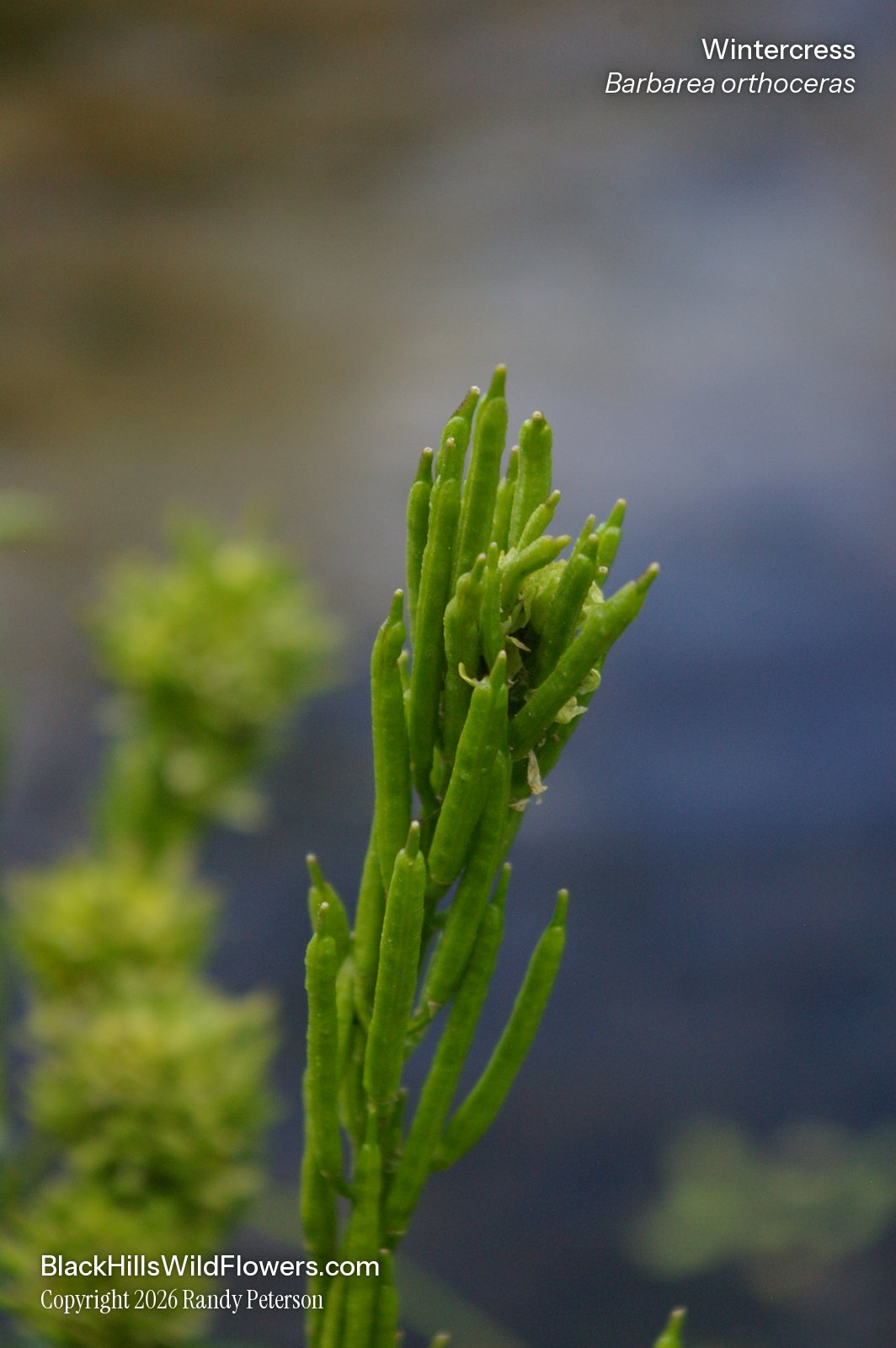
Seed: The pods are erect, 2.5–4.5 cm (1–1¾ in) long and 1.5–2 mm wide, slightly bumpy over the seeds, round to faintly four-angled, with a stout beak 0.5–1.2 mm long. The seeds are brown, plump and oval or oblong, 1.2–1.5 mm long.
How do you identify Wintercress?
Look for a leafy, mostly hairless plant beside water, with stem leaves that wrap the stem at their base with two small ear-like lobes. Most leaves are lyre-shaped: a large, rounded end lobe with 1 to 4 pairs of smaller side lobes below it, and even the topmost stem leaves are lobed. The flowers are yellow or pale yellow, with 4 petals 5–7 mm long, crowded at the branch tips. The pods stand erect, 2.5–4.5 cm (1–1¾ in) long and about 2 mm wide, and end in a short, stout beak 0.5–1.2 mm long. Garden Yellowrocket (Barbarea vulgaris), a European plant that herbarium specimens show along many Black Hills creeks, looks much the same; Flora of North America separates it by its uppermost stem leaves, which are undivided with plain or toothed edges, its slender pod beak 1.5–3 mm long, and its larger petals, 6–9 mm.
When does it bloom?
Late May into early July; a few Black Hills specimens were also in flower in late September and October.
Where does it grow?
Creek banks and gravel bars, springs and spring-fed bottoms, wet meadows, and moist openings and slopes in the forest. Herbarium specimens from 1924 to 2002 record it in Lawrence, Pennington and Custer counties, on a gravel bar beside a creek, along a creek in a gulch, in a wet meadow where it was most plentiful along the stream, and on a moist north-facing forest slope; a 1996 specimen from Crook County, Wyoming, came from aspen and paper birch woods at 1,737 m (5,700 ft).
Other mustards in this guide
Compare all 11 mustards side by side
Dame's Rocket
Hesperis matronalis
Desert Princeplume
Stanleya pinnata
False Flax
Camelina microcarpa
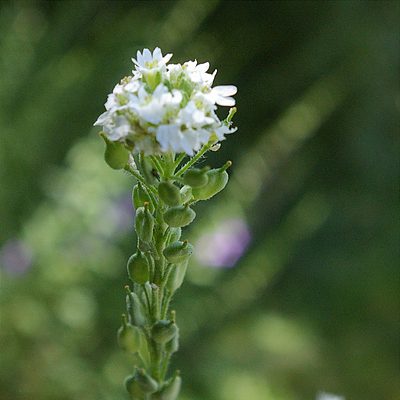
Hoary Alyssum
Berteroa incana
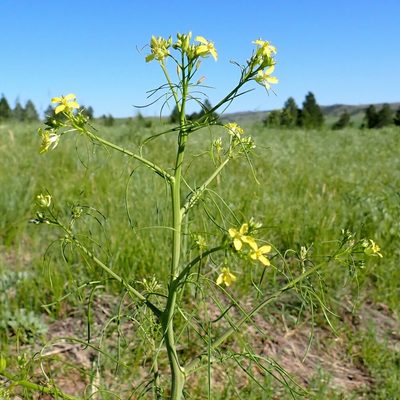
Mustard Tumbleweed
Sisymbrium altissimum
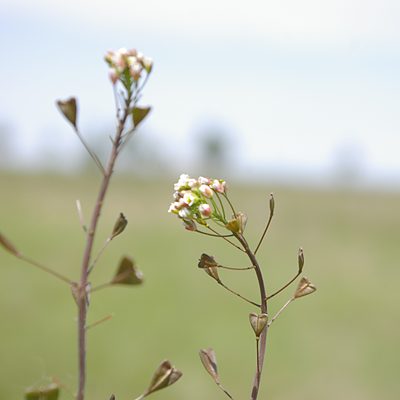
Shepherd's Purse
Capsella bursa-pastoris
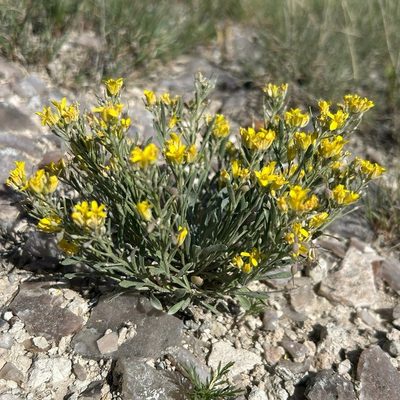
Sidesaddle Bladderpod
Lesquerella arenosa var. argillosa
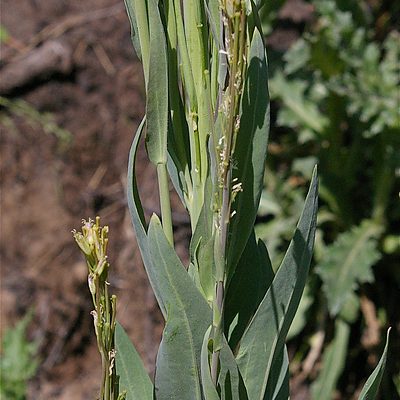
Tower Rockcress
Turritis glabra
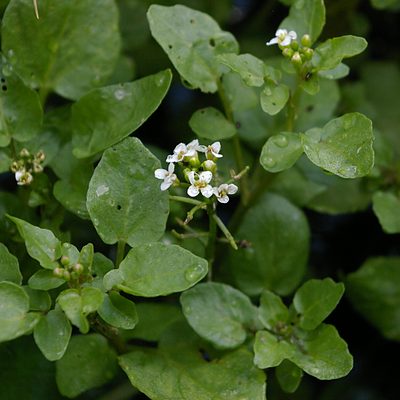
Watercress
Nasturtium officinale
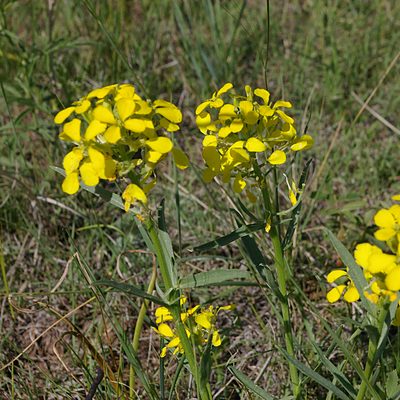
Western Wallflower
Erysimum asperum
Sources: Flora of North America Vol. 7: genus Barbarea and key (I. A. Al-Shehbaz), eFloras; Flora of North America Vol. 7: Barbarea orthoceras, eFloras; Flora of North America Vol. 7: Barbarea vulgaris, eFloras; Flora of North America Vol. 7: Barbarea stricta, with the note separating it from B. vulgaris and B. orthoceras, eFloras; Montana Field Guide: American Winter-cress, Barbarea orthoceras (Montana Natural Heritage Program); USDA PLANTS Database: Barbarea orthoceras (BAOR); USDA PLANTS Database: Barbarea vulgaris (BAVU); GBIF occurrence search: Barbarea orthoceras, South Dakota herbarium specimens; GBIF specimen 2564831553: McIntosh 1924, Pennington County, gravel bar beside a creek, in flower; GBIF specimen 2564831720: Van Bruggen 1967, Custer County, creek in a gulch, in flower 27 May; GBIF specimen 4872674942: Pooley 1978, Pennington County, open wet meadow, most abundant along and in the stream; GBIF specimen 1998307870: Larson 1980, Lawrence County, meadow beside a creek; GBIF specimen 4912105680: Kass 1996, Crook County, WY, aspen/paper birch community, 1737 m; GBIF occurrence search: Barbarea vulgaris, South Dakota herbarium specimens; GBIF specimen 2564831780: Carroll 1975, Lawrence County, moist forest on a north-facing slope, in flower and fruit 3 July; GBIF specimen 2980508329: Baker 1986, Lawrence County, spring-fed bottom, in flower and fruit 25 September; GBIF specimen 2980508676: Jorgenson 2002, Lawrence County, wet grassy ditch, in flower and fruit 20 October.