Woolly Groundsel
Packera cana
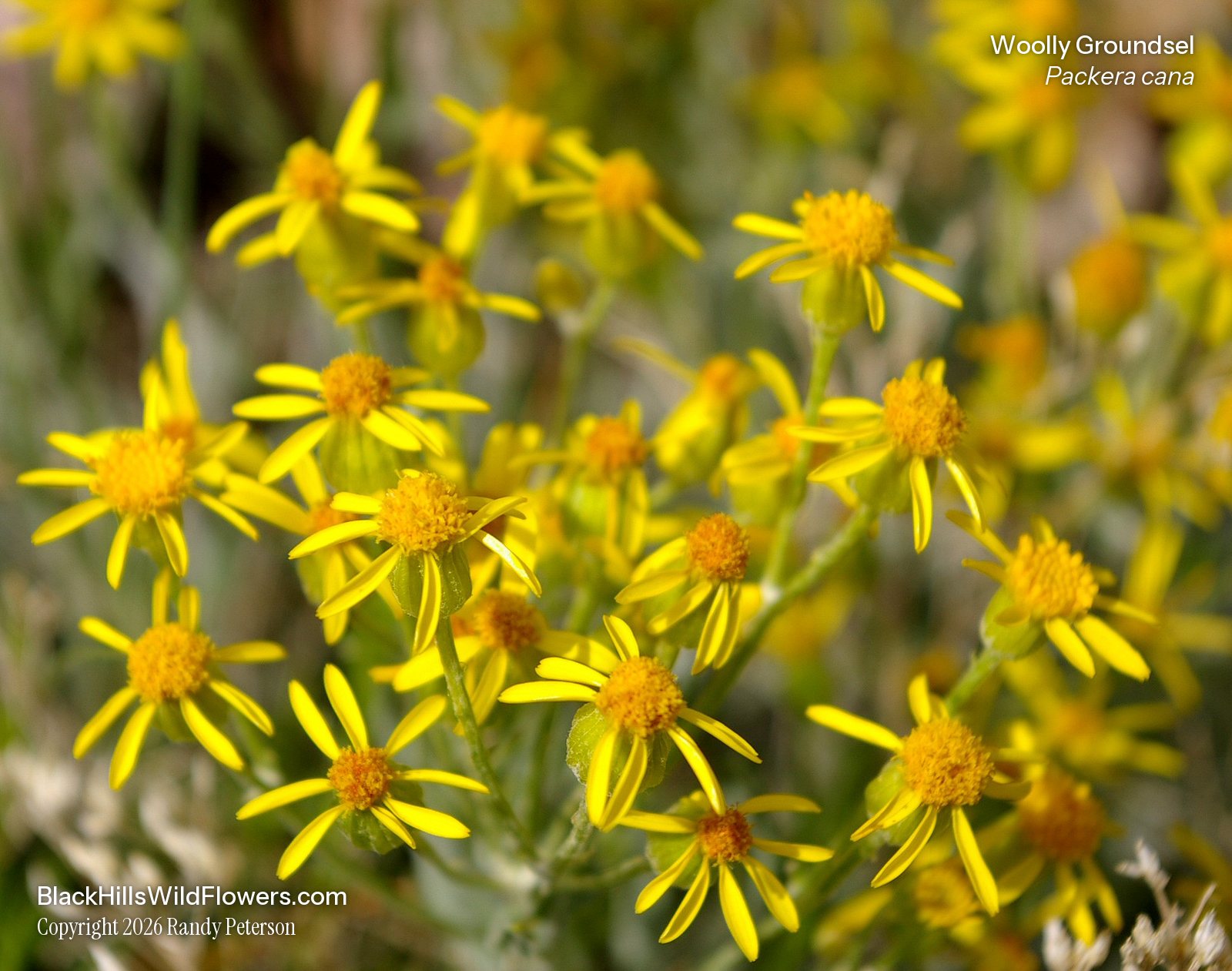
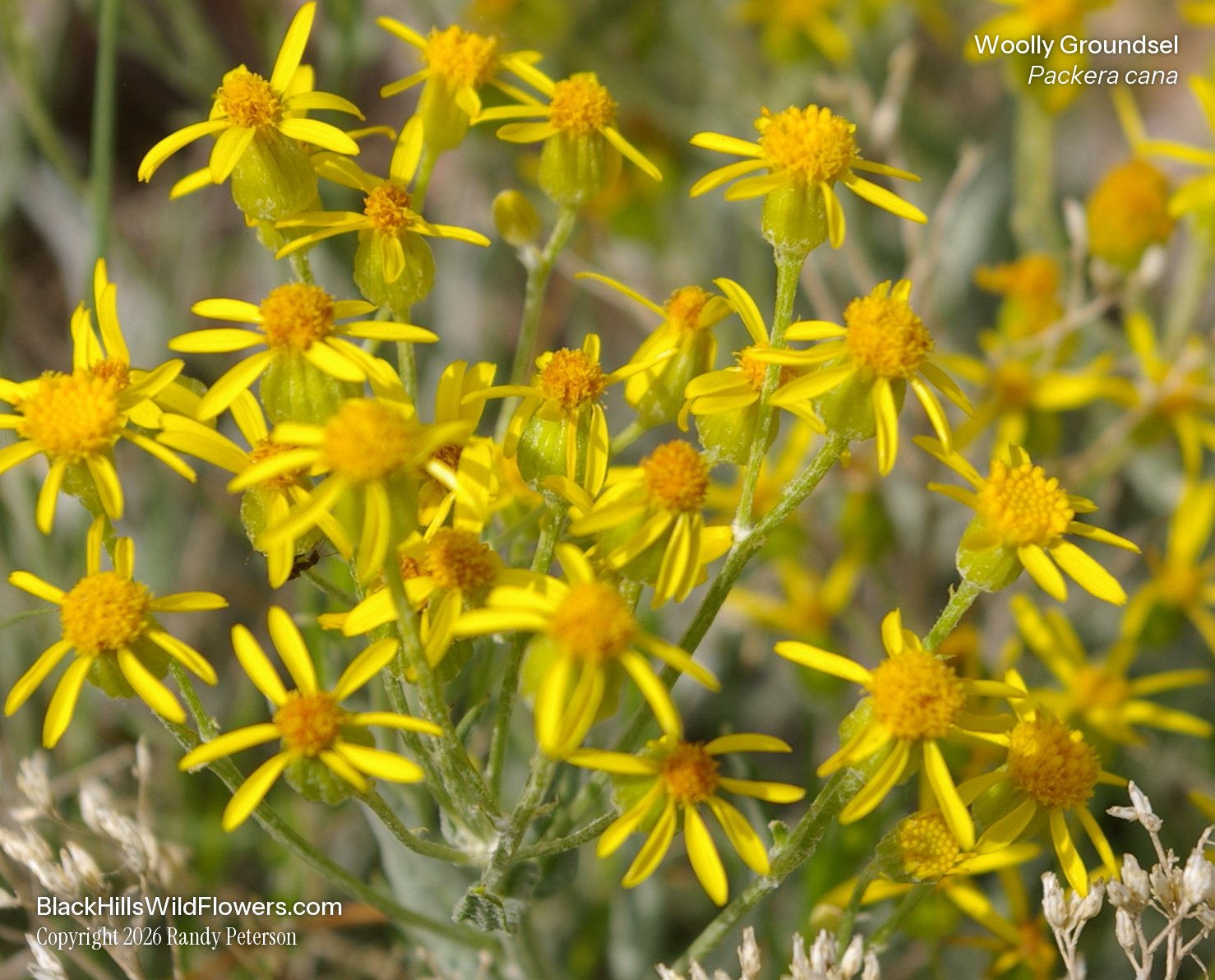
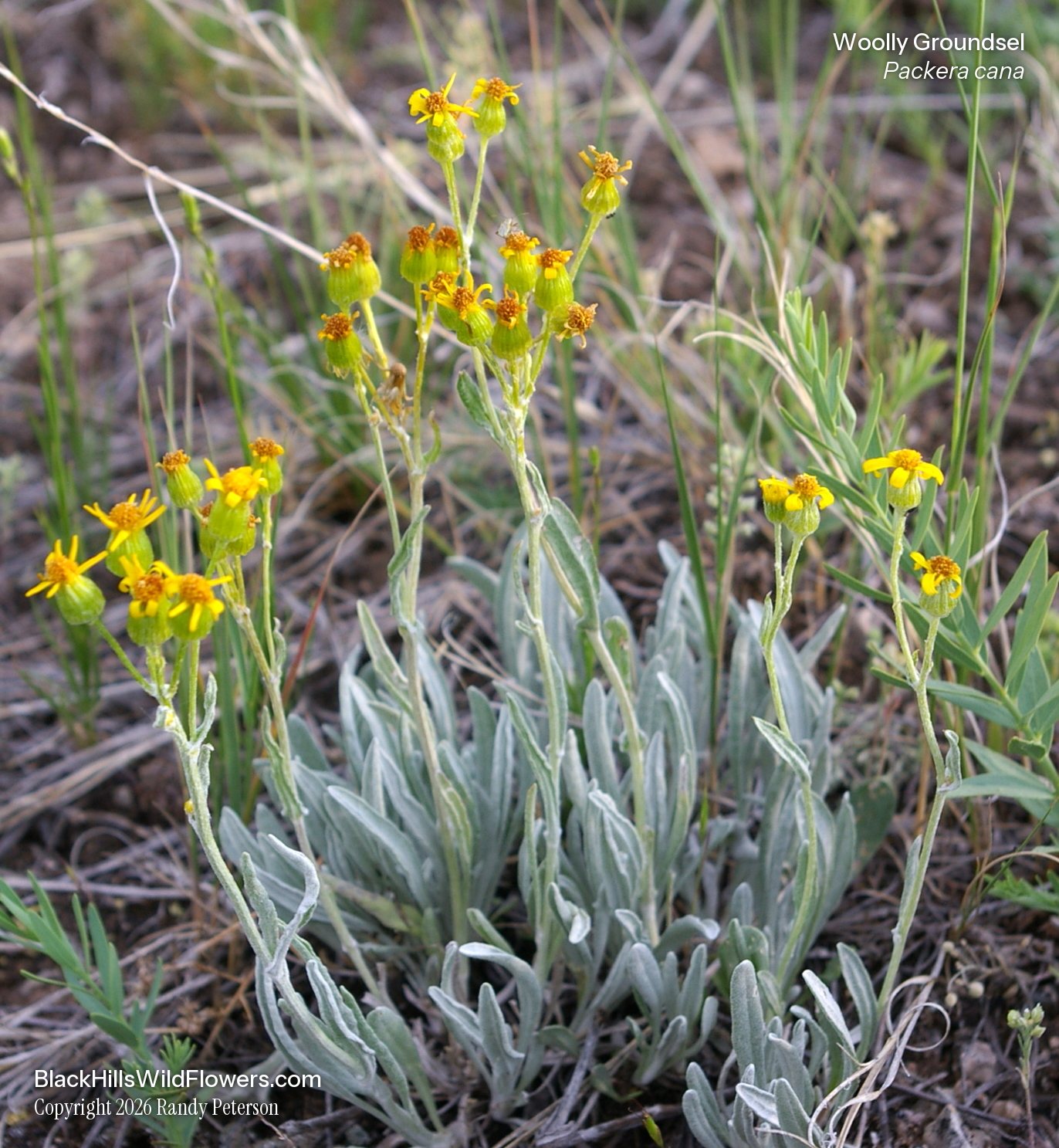
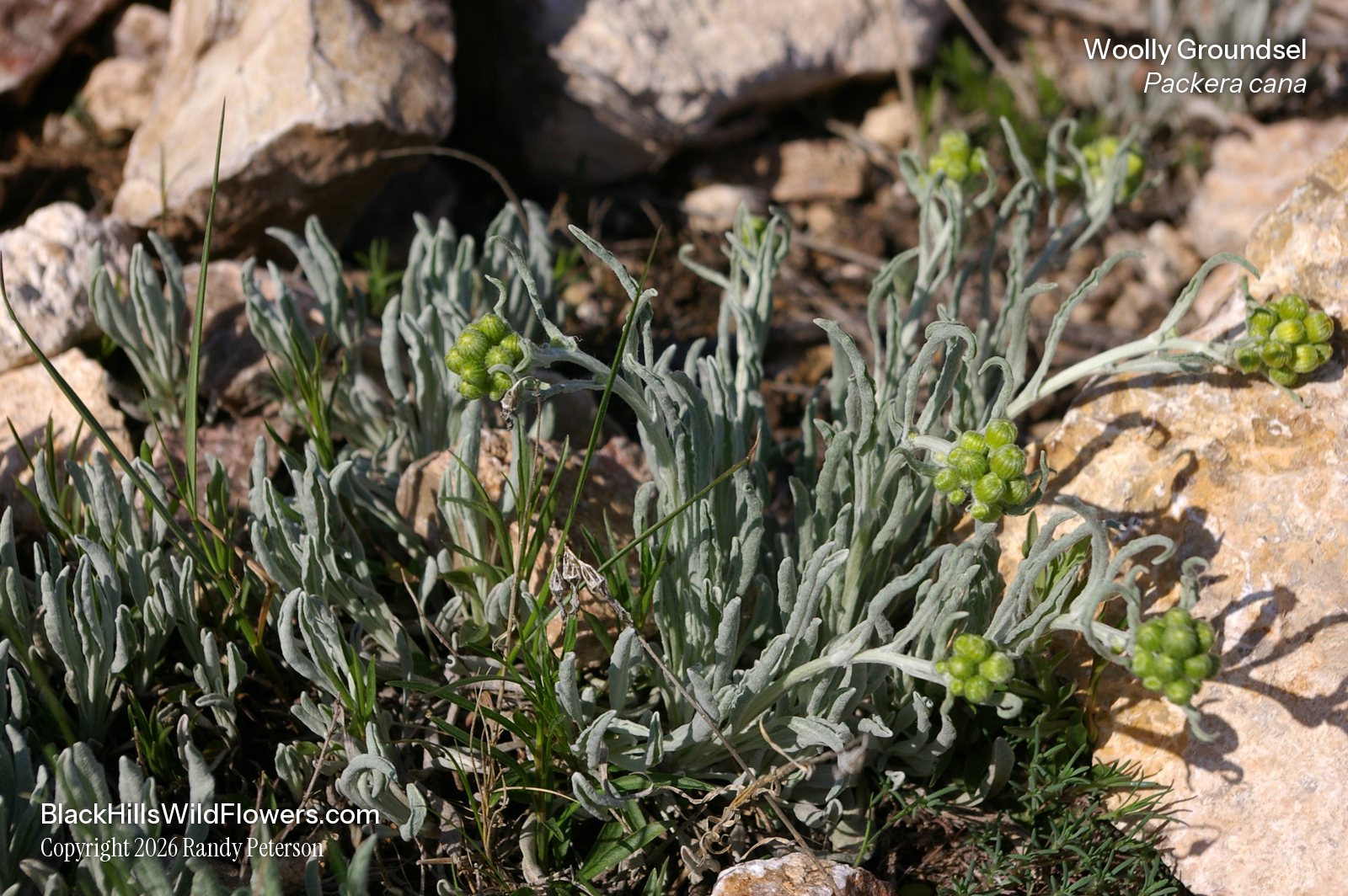
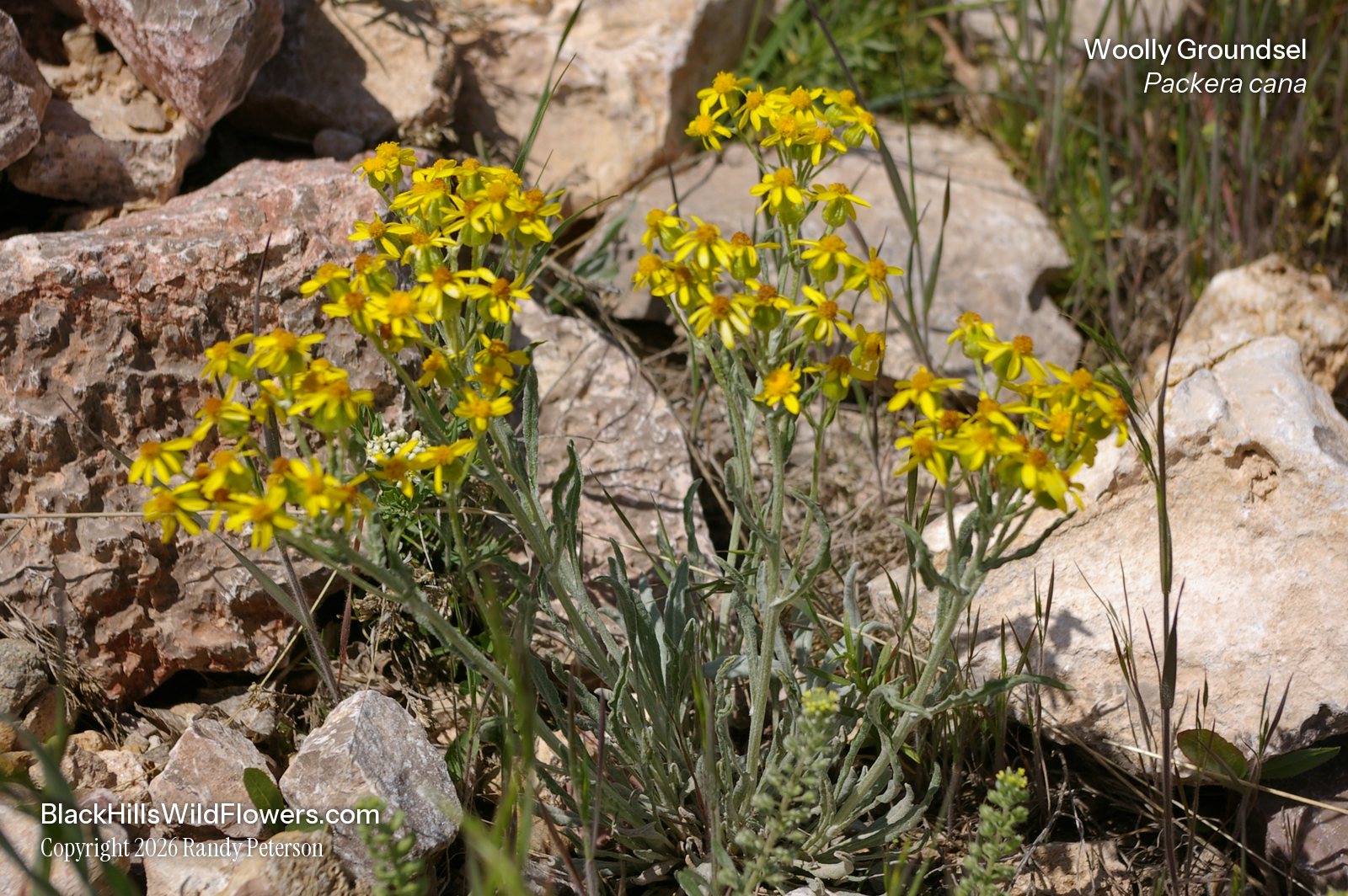
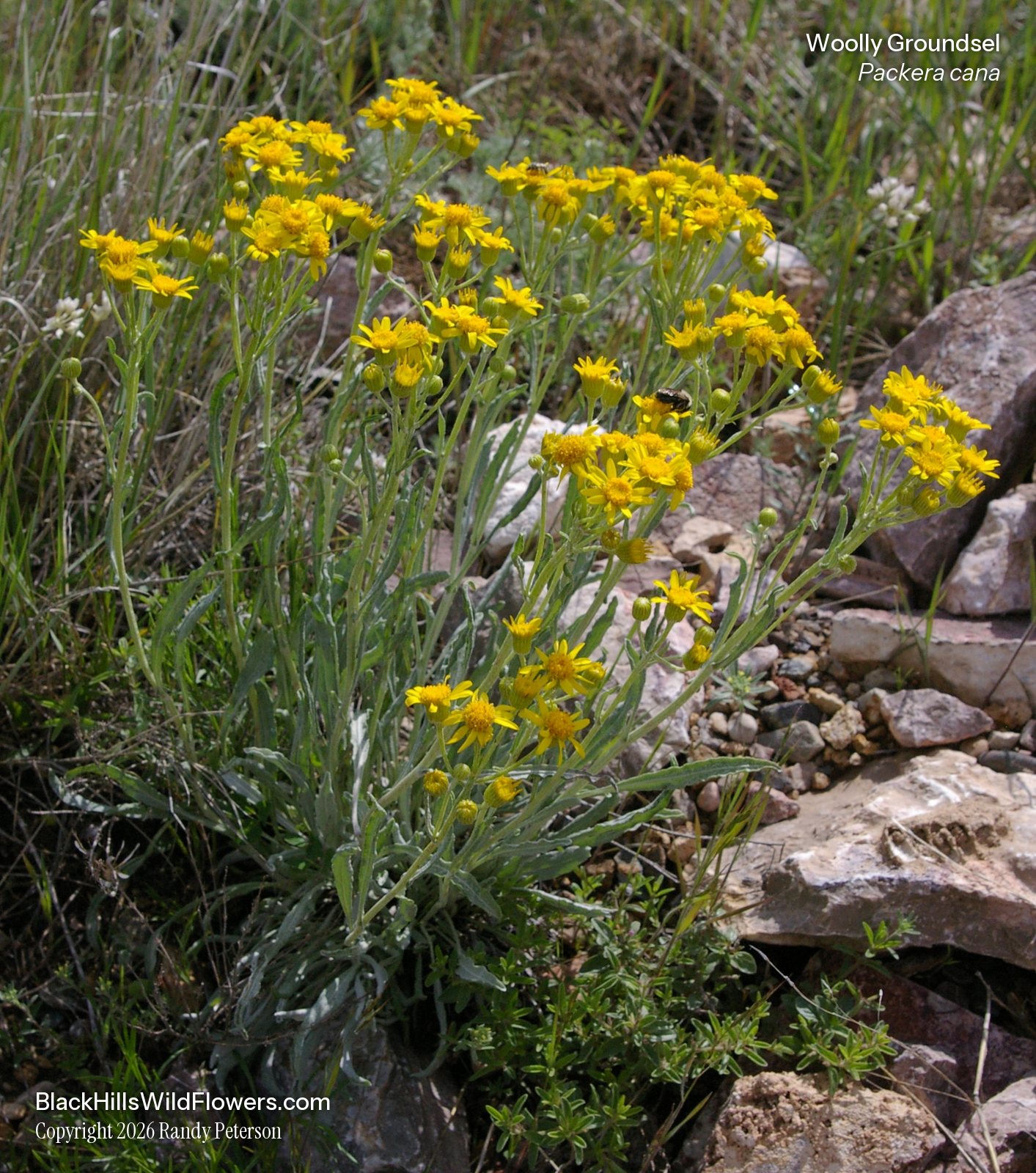
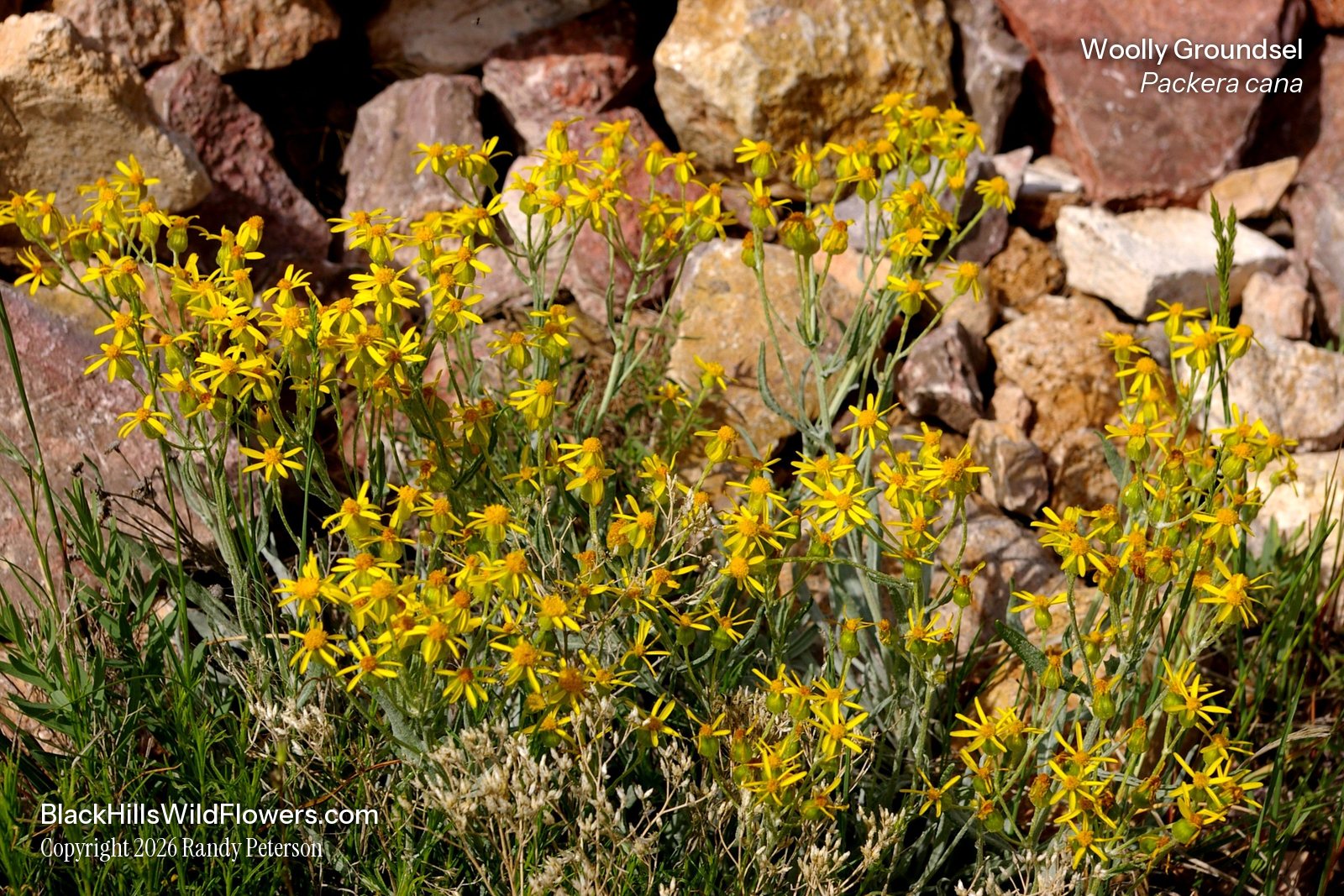
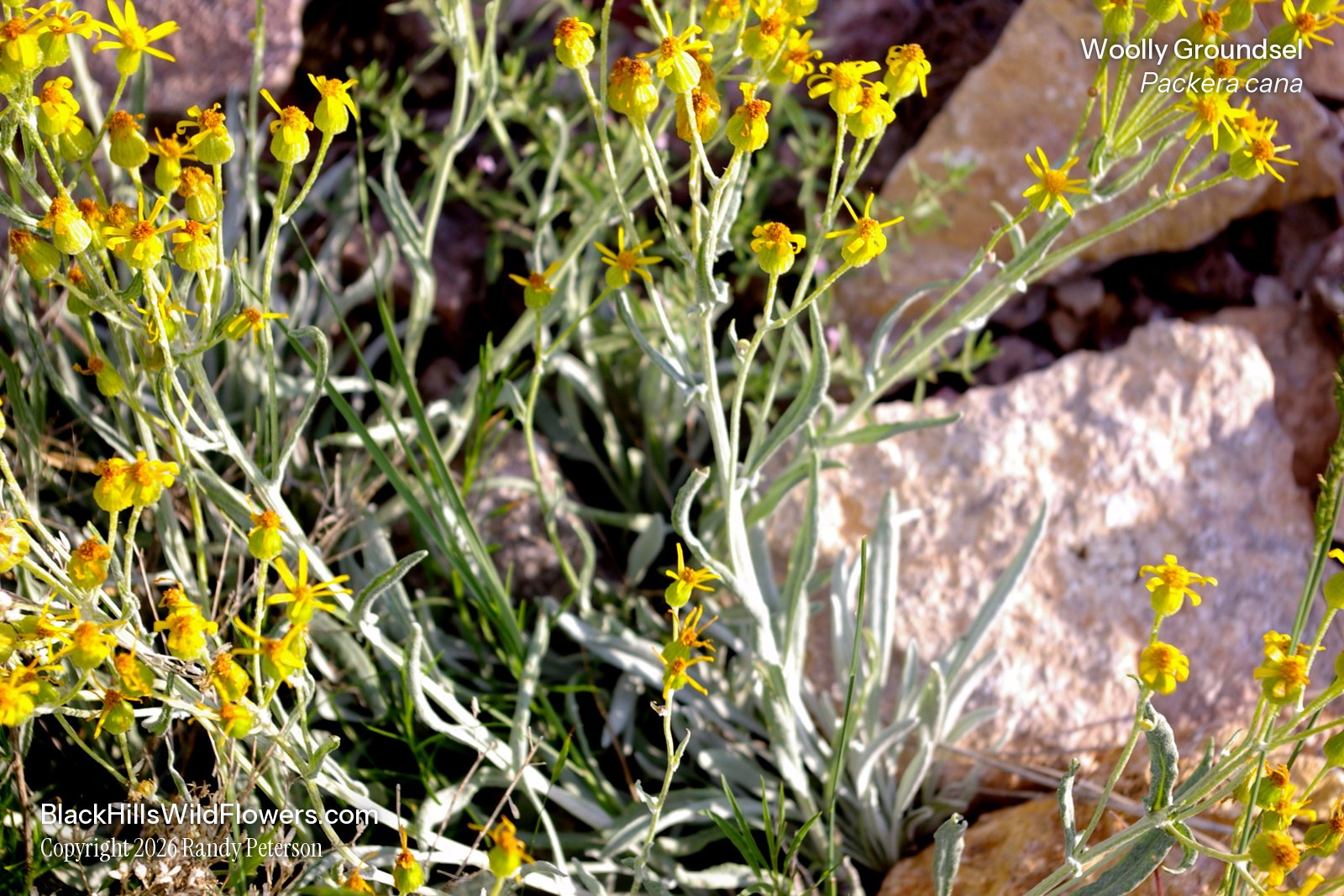
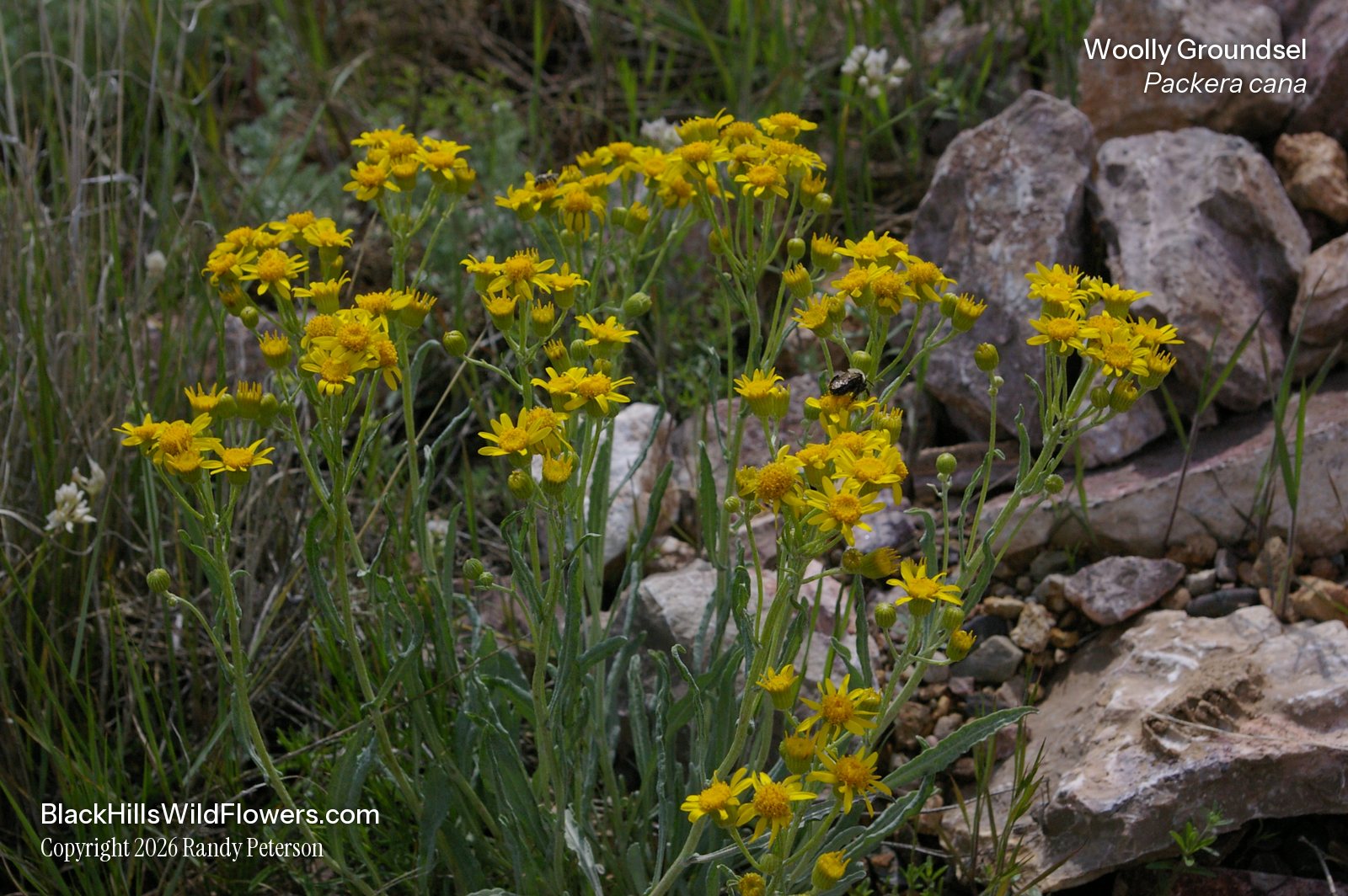
Woolly Groundsel (Packera cana) is a low native perennial whose stems and leaves are covered in felt-like hairs that make them silvery gray, topped by 6 to 15 yellow daisy-like heads. It blooms May into July on open, dry plains, mostly in western South Dakota, and it is recorded in the Black Hills. Photographed in the Black Hills.
| Family | Asteraceae · Aster |
|---|---|
| Status | Native perennial |
| Blooms | May into July |
| Height | 10–30 cm (4–12 in) |
| Where | Open, dry plains; rocky soil in full sun |
| Also called | Gray Ragwort |
| Synonym | Senecio canus |
Roots, seeds & germination
Seed: Cylindrical achene (dry one-seeded fruit) about 2 mm long, topped with longer white hairs. Seed is collected in June and July.
Germination: Seed is dormant and is best planted in fall.
How do you identify Woolly Groundsel?
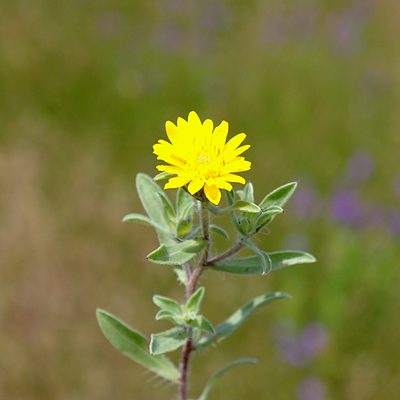
Look for a short plant covered in silver-gray felt, with long-stalked oval basal leaves 2.5–5 cm long, much smaller leaves up the stem, and a cluster of 6 to 15 yellow heads with 8 to 13 rays. Lambstongue Groundsel is usually taller and loses most of its hair with age.
When does it bloom?
May into July.
Where does it grow?
Open, dry plains, mostly in western South Dakota, on rocky soil in full sun. National Park Service plant records list it in Black Hills parks.
Other flowers to compare

Sources: SDSU Open PRAIRIE: Packera cana; Jewel Cave National Monument Plant Community Composition and Structure Monitoring 2011 Annual Report; Marriott and Hartman 1986, A Survey of the Vegetation of Jewel Cave National Monument; NPSpecies: Packera cana; pnwflowers.com: Packera cana.