Mountain Dandelion
Agoseris glauca
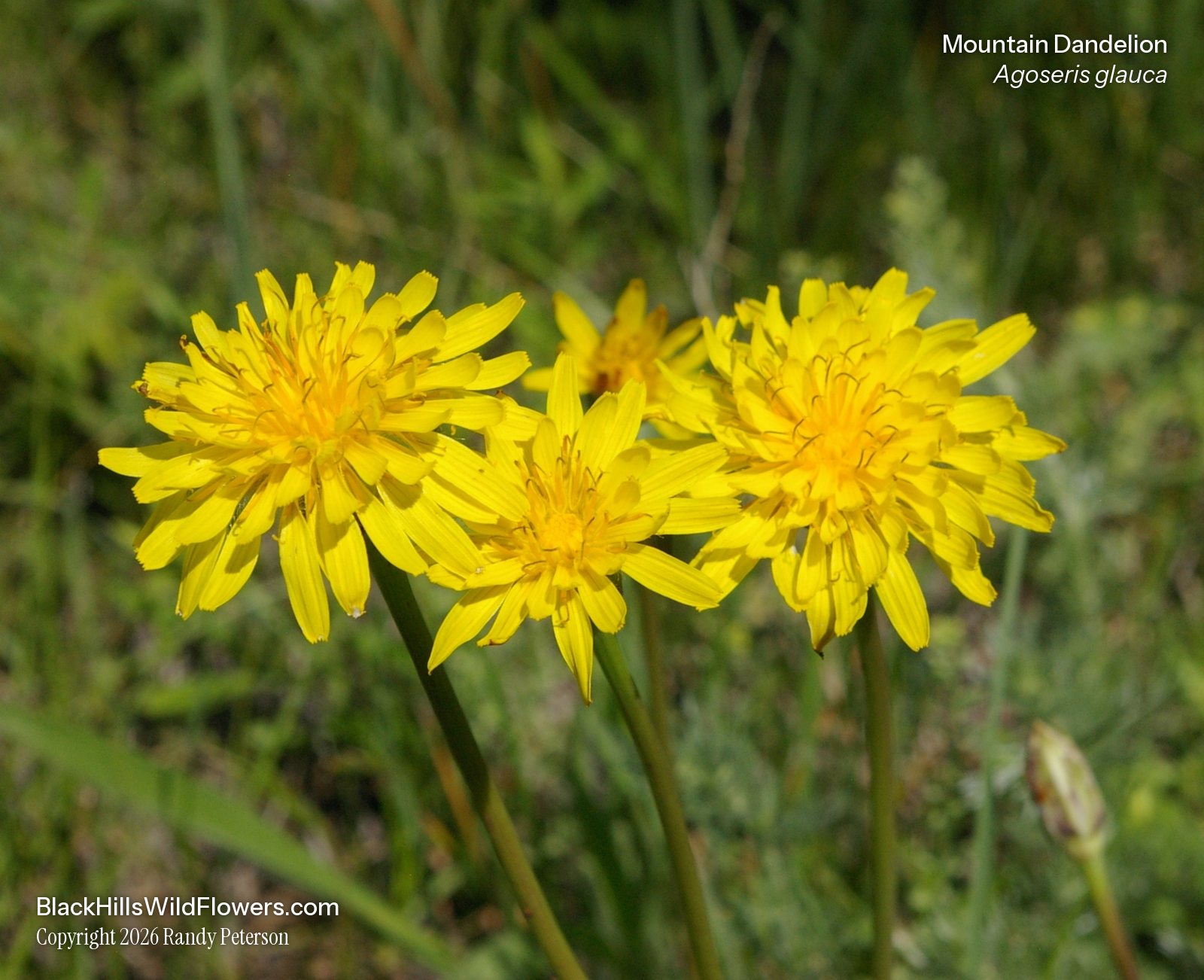
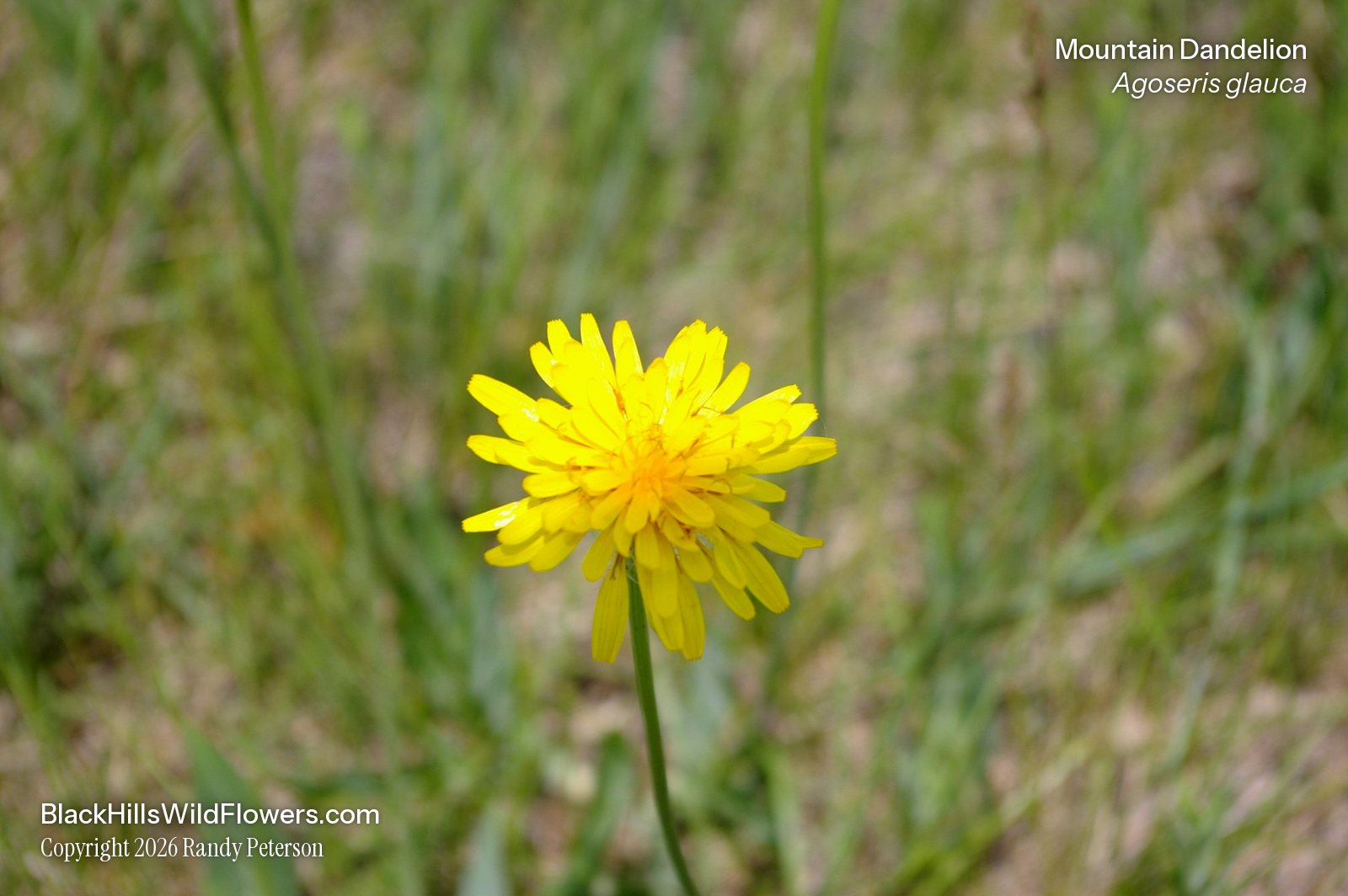
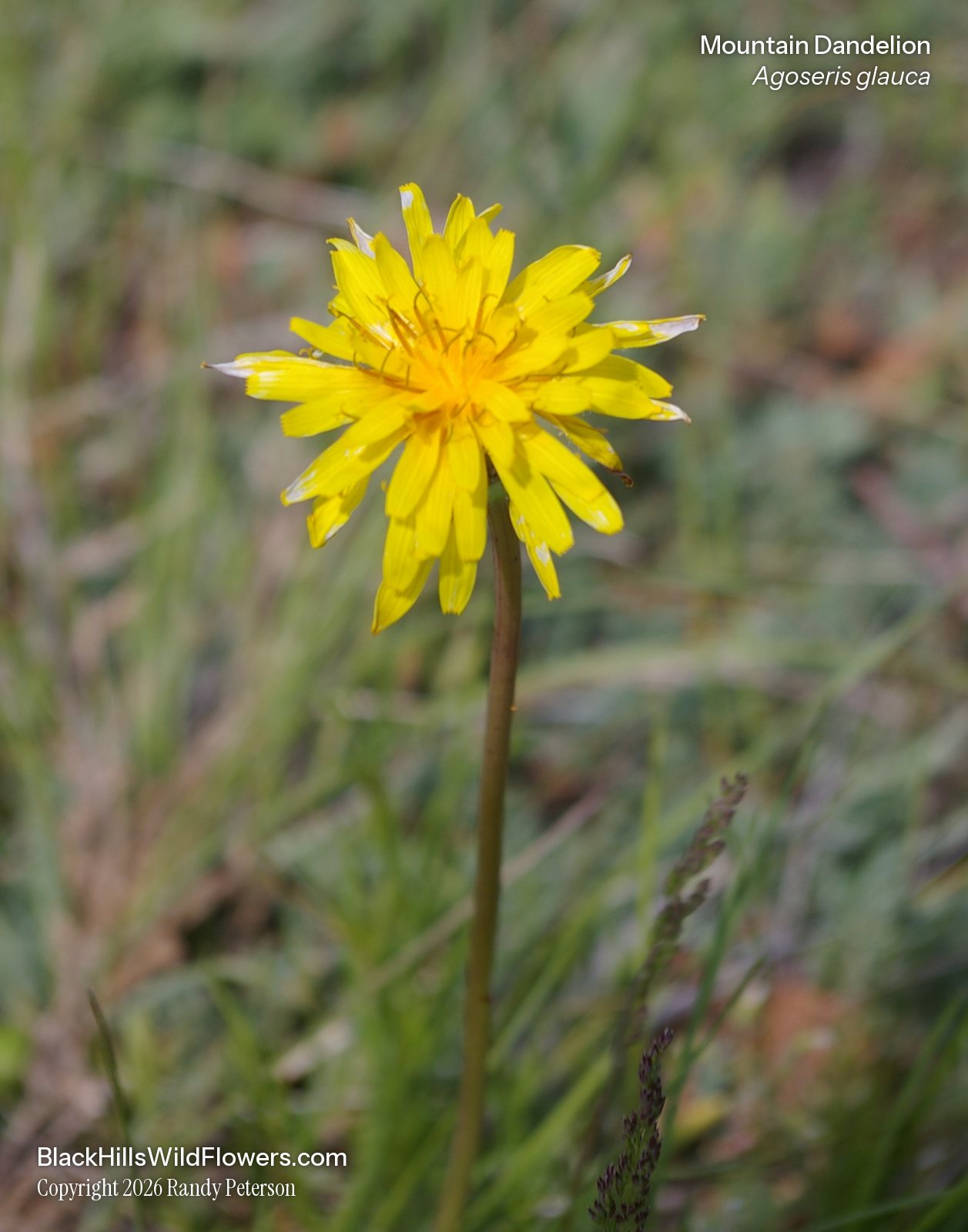
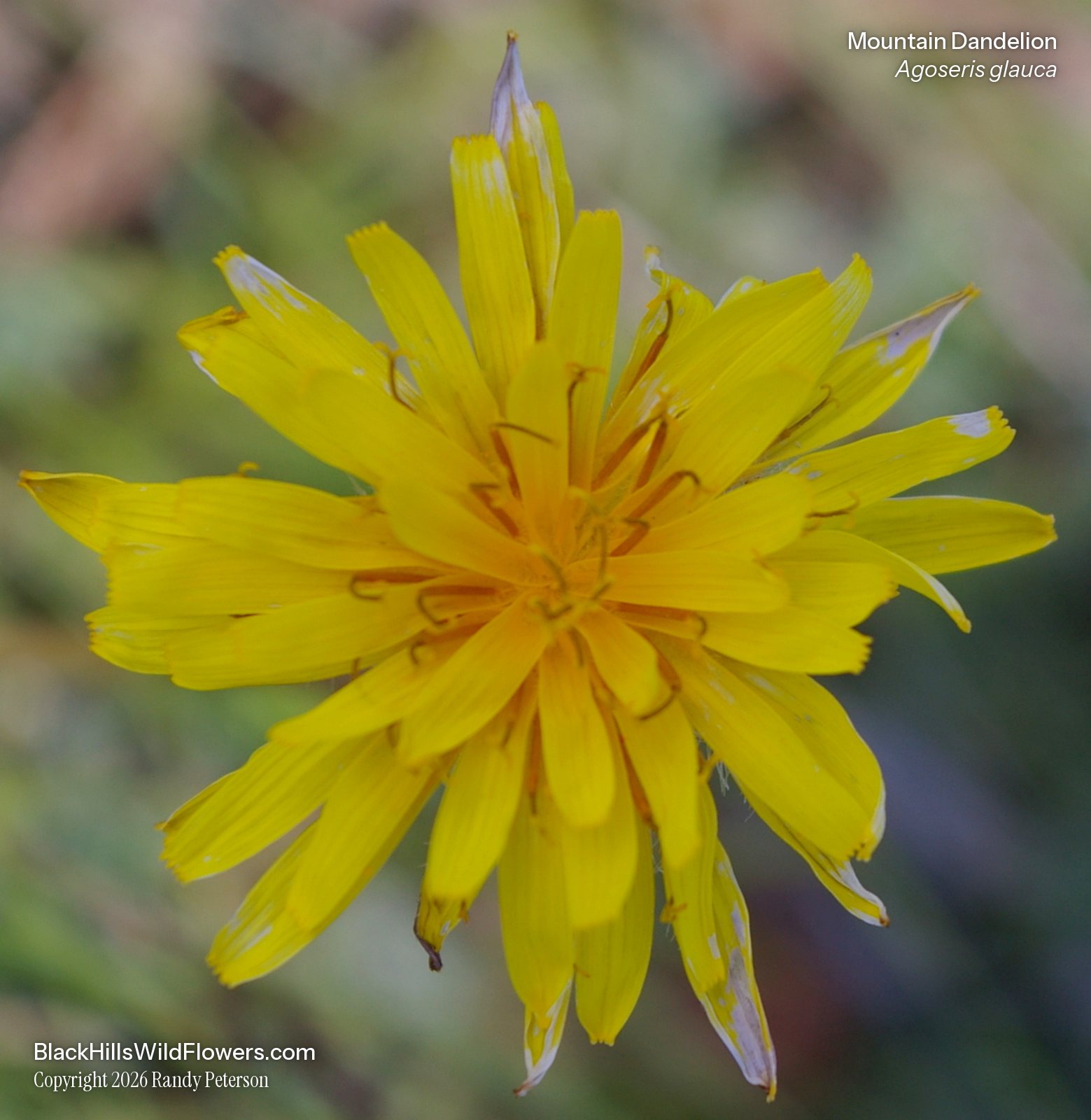
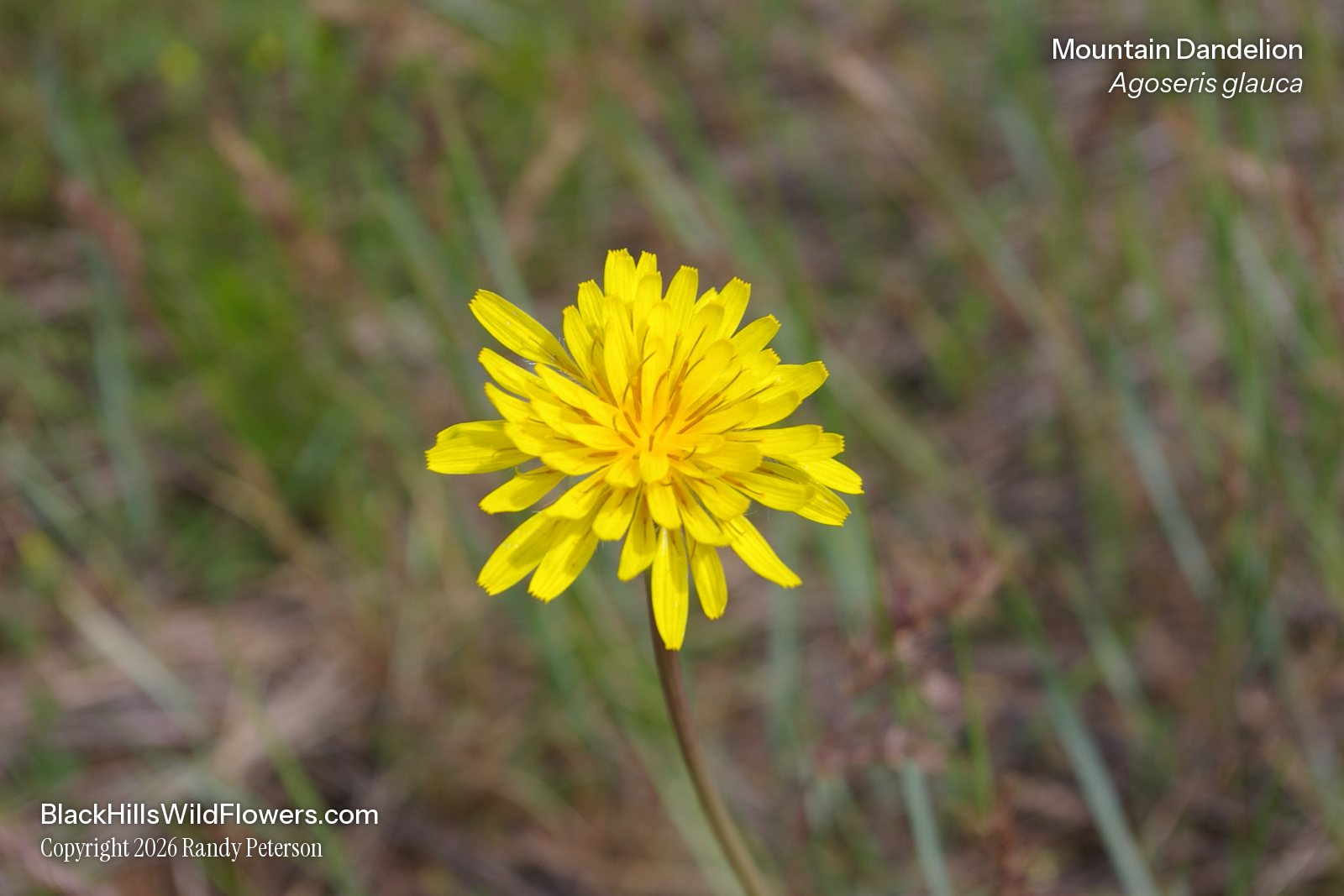
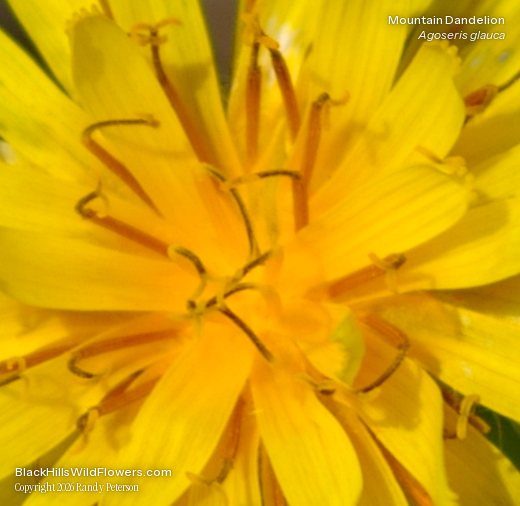
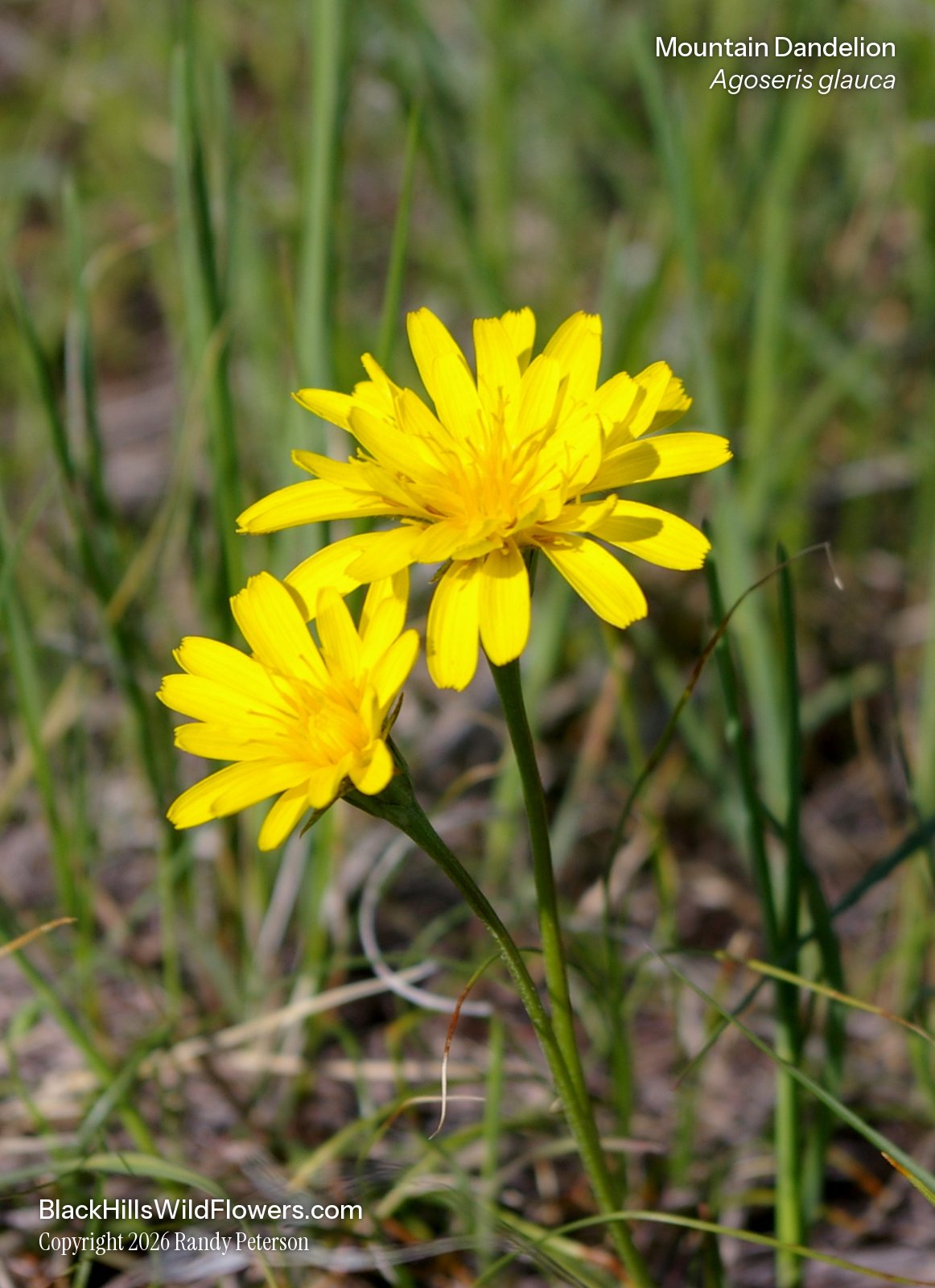
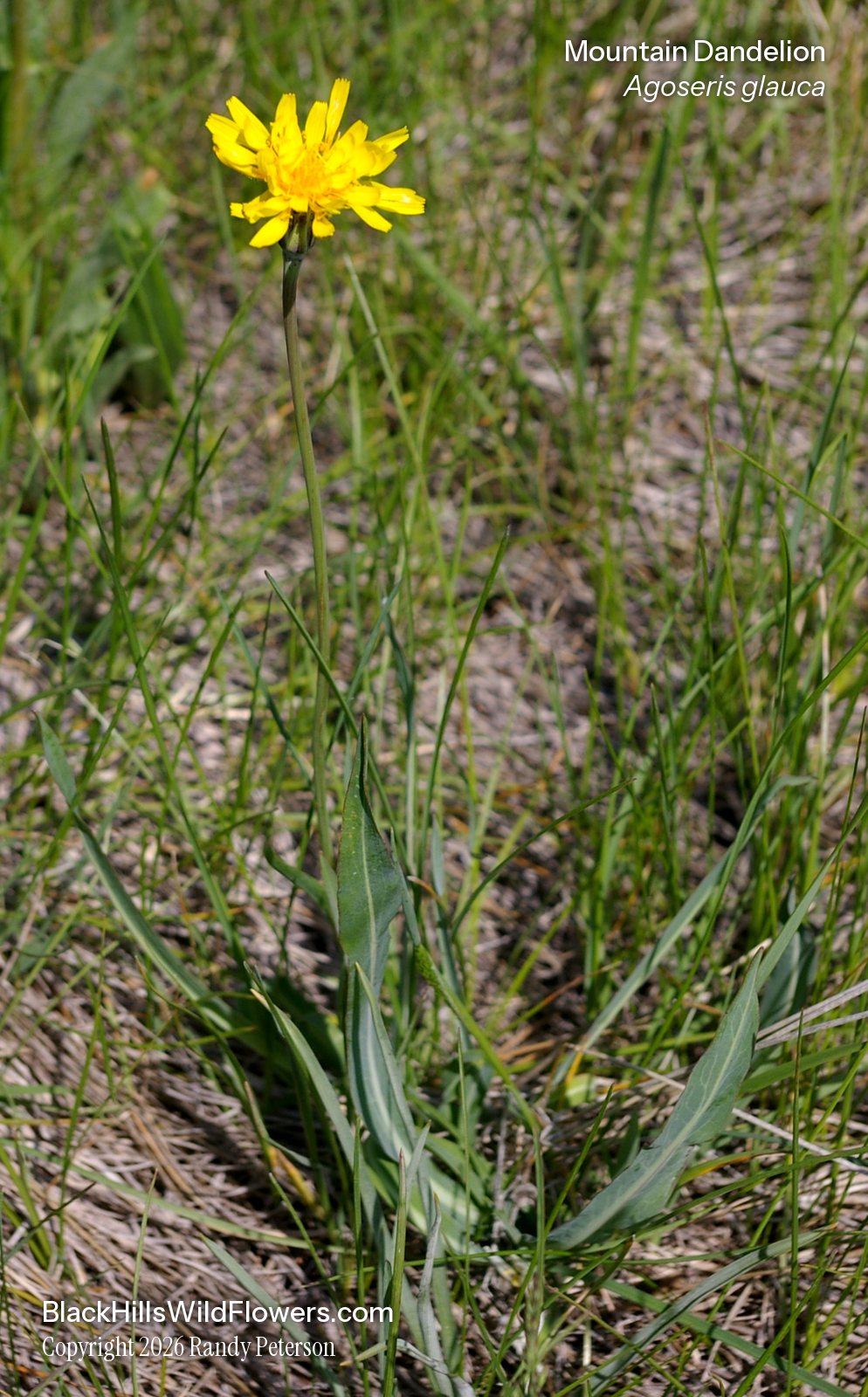
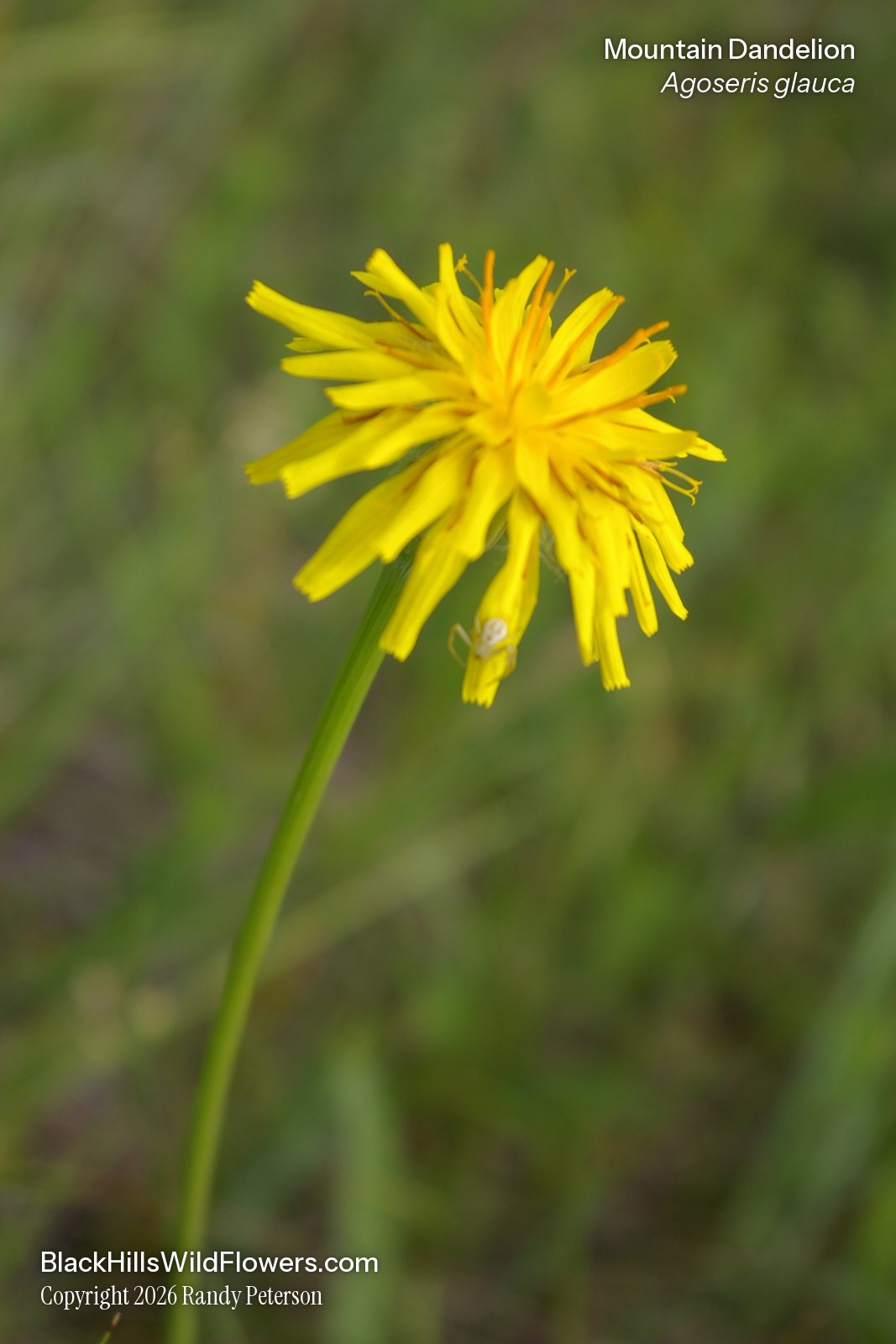
Mountain Dandelion (Agoseris glauca) is a native perennial with narrow, waxy, bluish-green leaves at the base and a single yellow flower head, 2.5–5 cm (1–2 in) wide, on a leafless stalk. It blooms May into June, grows in open meadows and openings in conifer forest across its range, and is recorded in the Black Hills. Photographed in the Black Hills.
| Family | Asteraceae · Aster |
|---|---|
| Status | Native perennial |
| Blooms | May into June |
| Height | Up to 76 cm (30 in) |
| Where | Open meadows and openings in conifer forest and sagebrush; well-drained soil |
| Also called | Pale Agoseris, False Dandelion, Pale Mountain Dandelion, Pale Dandelion, Prairie Dandelion, Short-beaked Agoseris, Yellow-flowered False Dandelion |
| Synonym | Agoseris villosa, Troxicum glaucum |
Roots, seeds & germination
Root: Taproot.
Seed: Beaked seeds with white bristles about 1.3 cm (½ in) long. In Utah they ripen June to August.
How do you identify Mountain Dandelion?
Look for one yellow head on a bare stalk, milky sap, and strap-like leaves 5–36 cm (2–14 in) long that grow only from the base, often with a red or purple midvein. The seeds are beaked and topped with white bristles.
When does it bloom?
May into June.
Where does it grow?
Recorded in the Black Hills. Across its range it grows in open meadows and in openings of conifer forest and sagebrush, on well-drained sandy or gravelly loam, and it doesn't tolerate shade.
Other flowers to compare

Sources: Utah State University Extension, Range Plants of Utah: Mountain Dandelion; Lady Bird Johnson Wildflower Center: Agoseris glauca; National Park Service, Devils Tower National Monument: Wildflowers; Marriott and Hartman 1986, A Survey of the Vegetation of Jewel Cave National Monument; Jewel Cave National Monument Plant Community Composition and Structure Monitoring 2011 Annual Report; University of Washington ESRM 412 protocol: Agoseris glauca.