Canada Hawkweed
Hieracium umbellatum
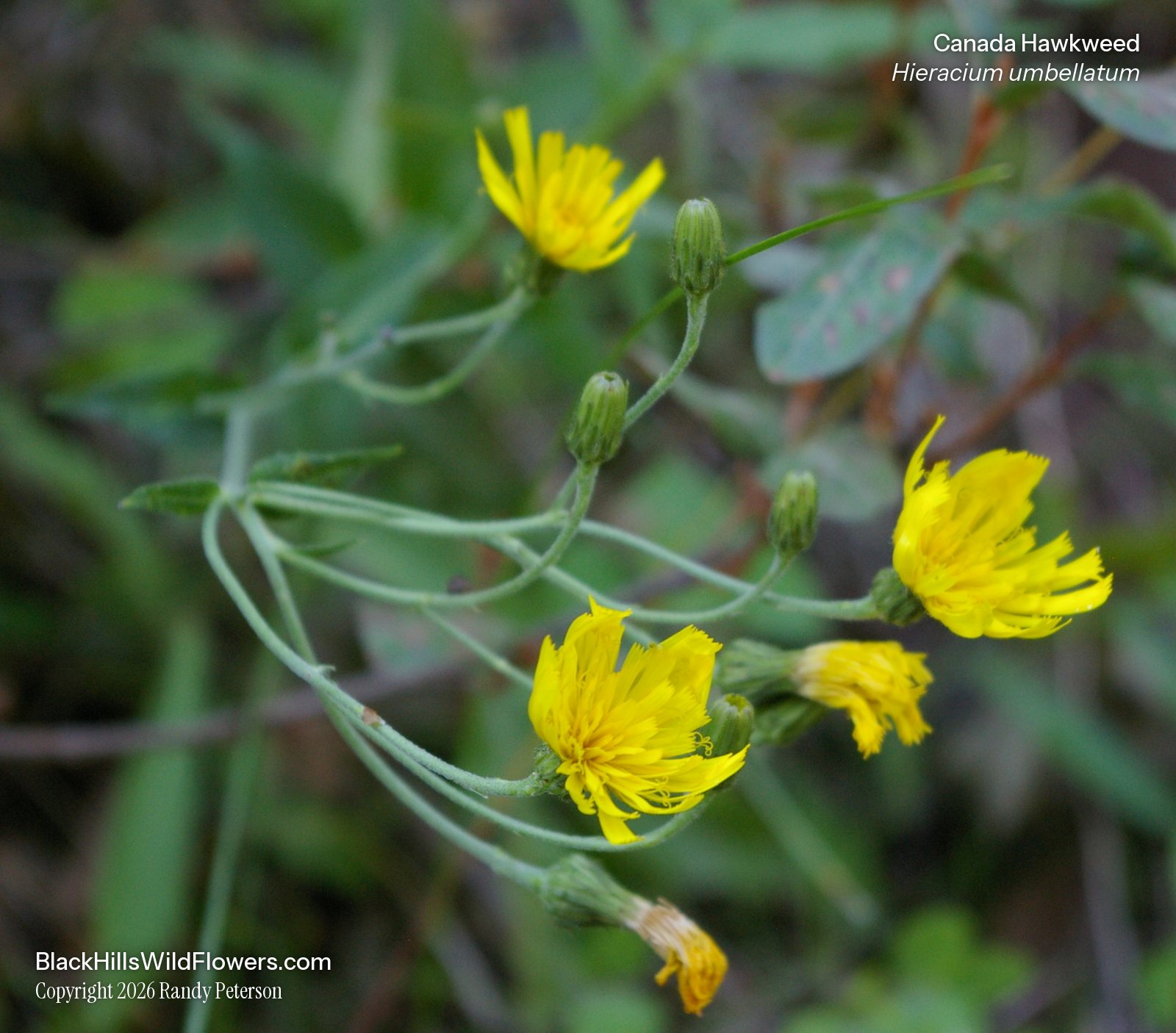
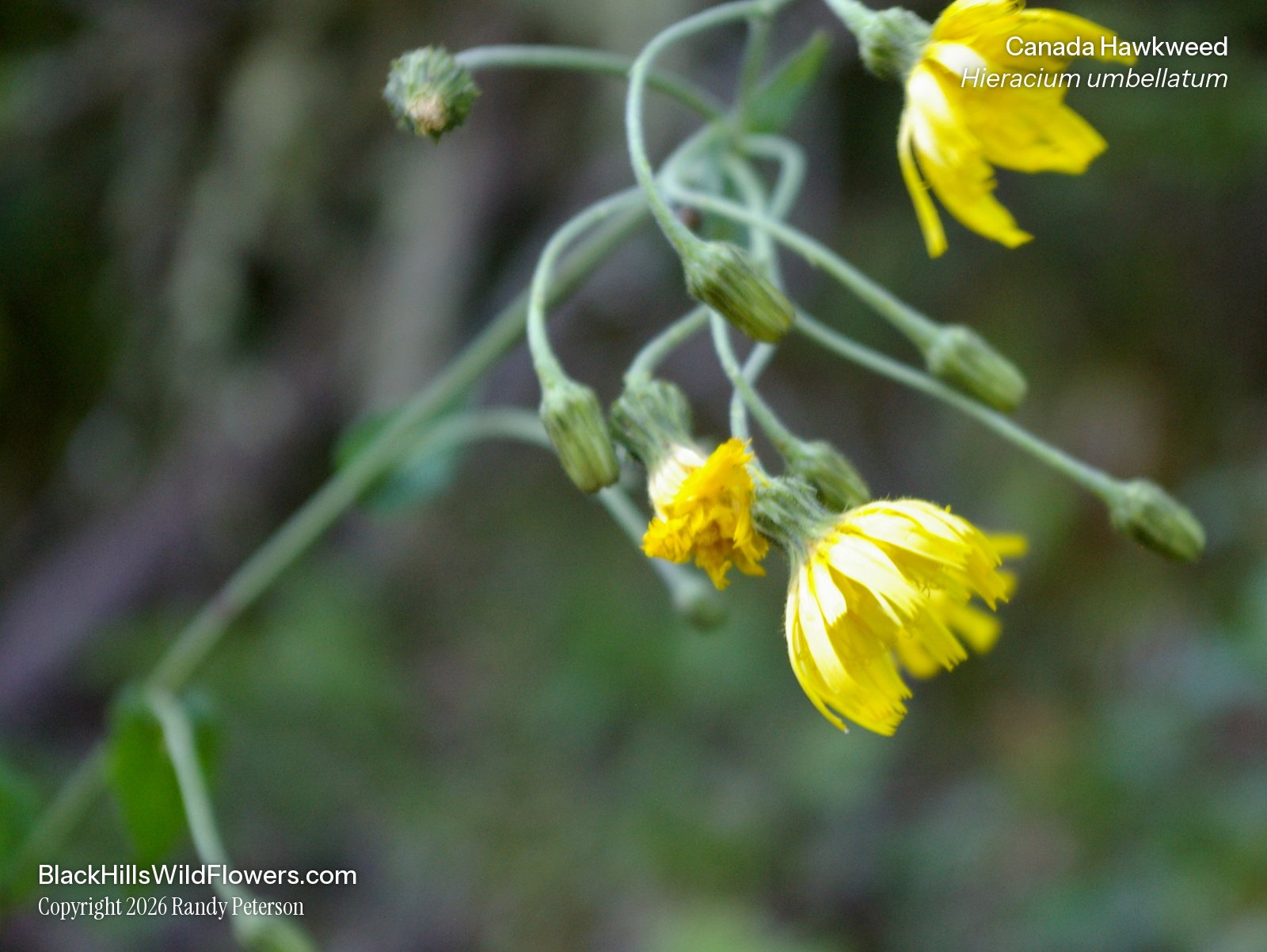
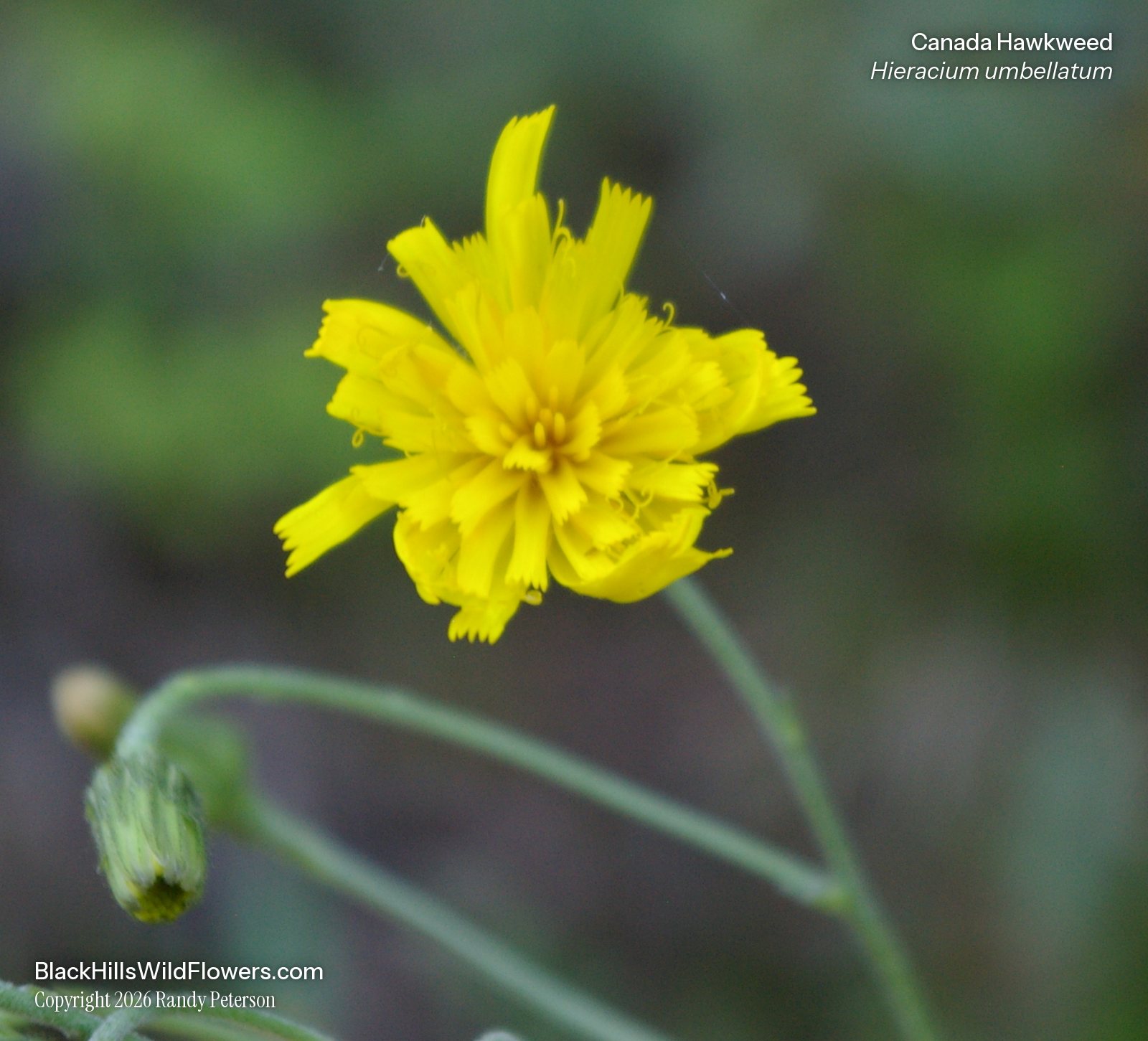
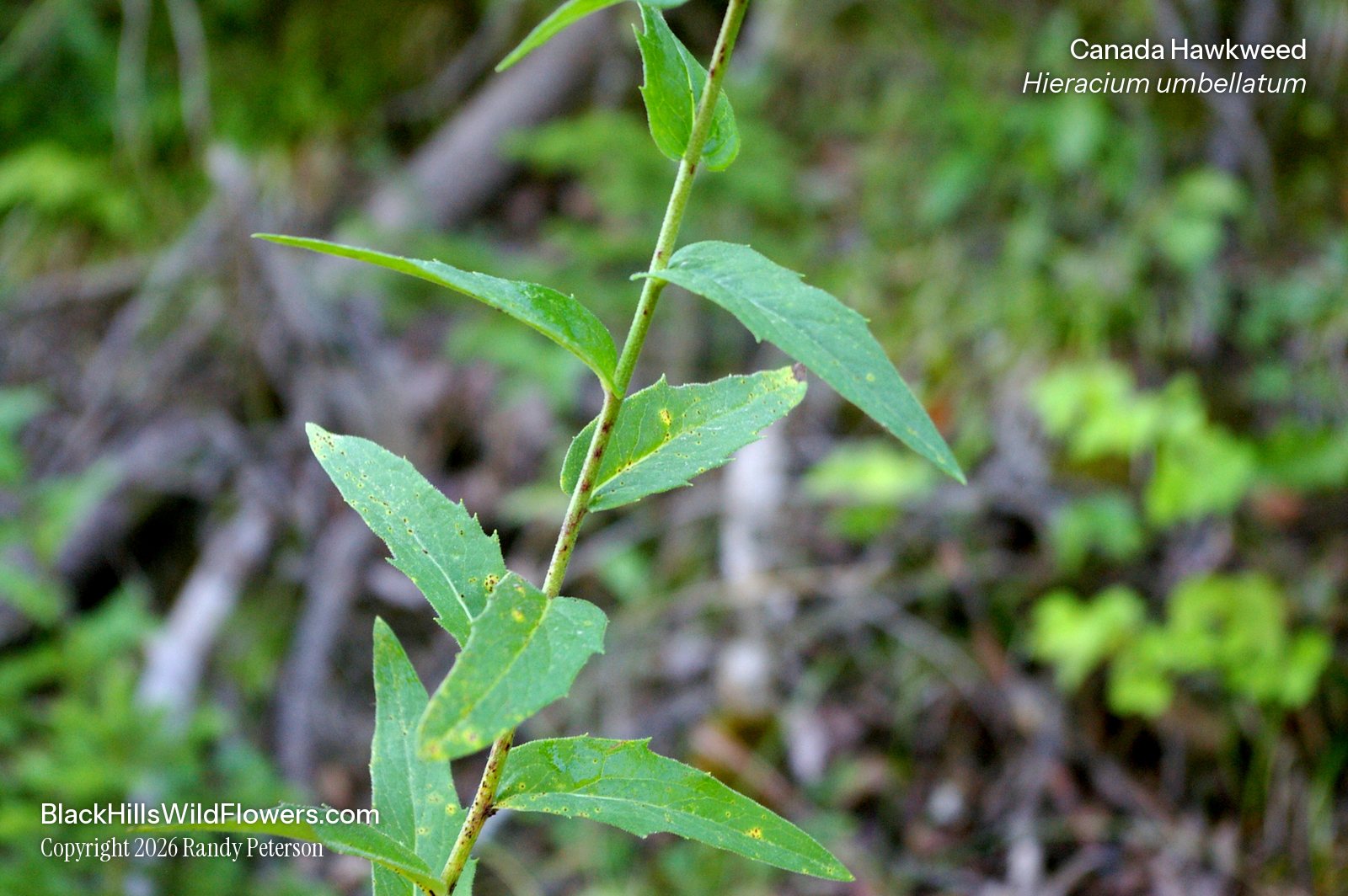
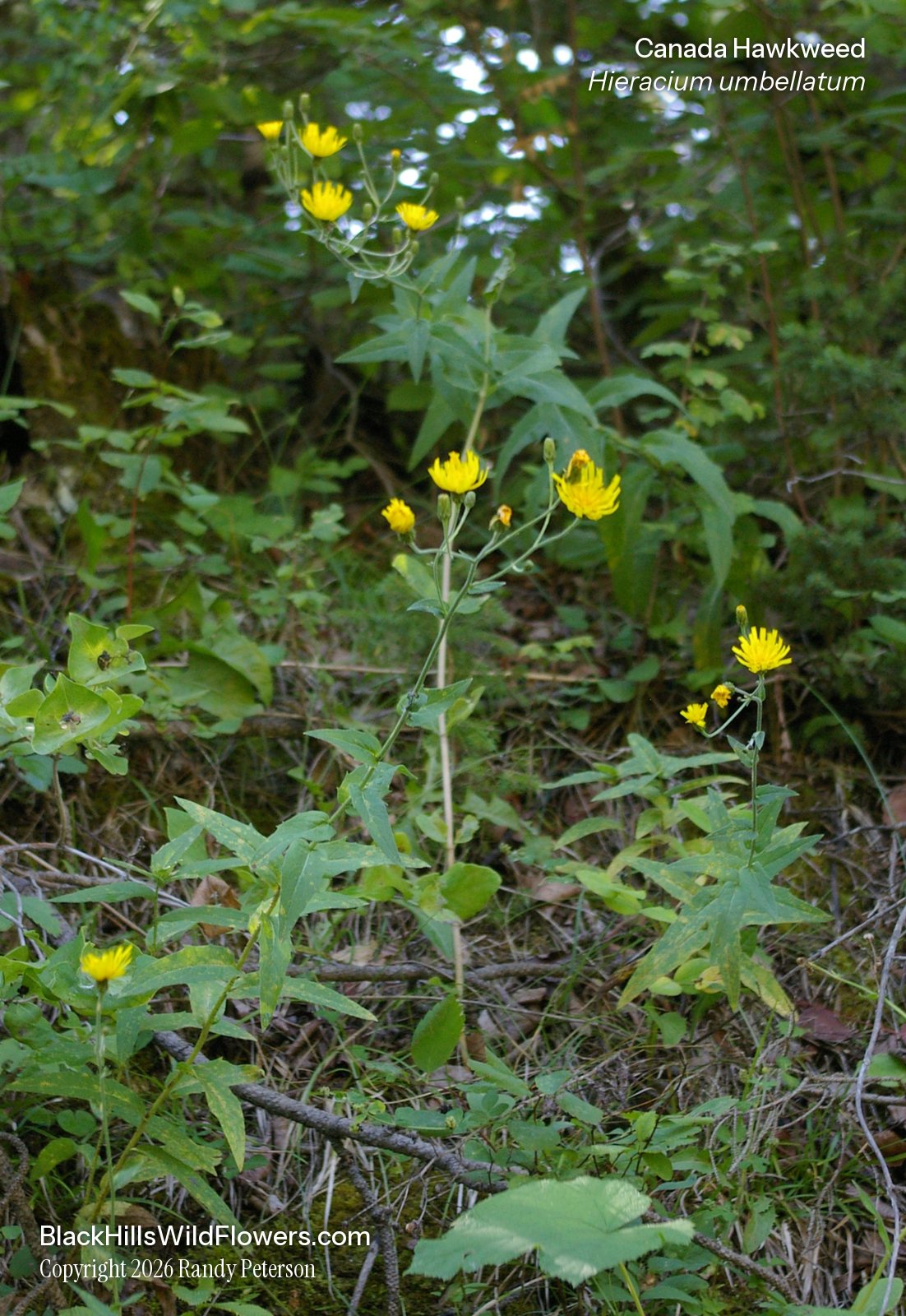
Canada Hawkweed (Hieracium umbellatum) is a native perennial with leafy stems, rough leaves with a few spaced teeth, and open clusters of yellow, dandelion-like heads. A National Park Service species list records it as present and native at Wind Cave National Park, and in neighboring Minnesota it blooms June to September in open woods, fields and roadsides. Photographed in the Black Hills.
| Family | Asteraceae · Aster |
|---|---|
| Status | Native perennial |
| Blooms | June into September |
| Height | 30–150 cm (12–60 in) |
| Where | Open woods, woodland edges, fields, roadsides and rock outcrops, usually in sandy or rocky soil |
| Also called | Narrow-leaf Hawkweed, Rough Hawkweed, Northern Hawkweed |
| Synonym | Hieracium canadense, Hieracium scabriusculum |
Roots, seeds & germination
Seed: A black, dry seed with a tuft of light brown hair that carries it on the wind.
How do you identify Canada Hawkweed?
Look for a leafy stem with no leaves at the base, stalkless lance-shaped leaves that feel rough and have a few widely spaced teeth, and heads 1.3–2.5 cm across made only of rays. The non-native hawkweeds, two of which have been recorded in the Black Hills, have less leafy stems and keep leaves at the base.
When does it bloom?
June into September.
Where does it grow?
In Minnesota and Wisconsin it grows in open woods, woodland edges, fields, roadsides and rock outcrops, usually in sandy or rocky soil, in part shade to full sun. A National Park Service species list records it as present and native at Wind Cave National Park.
Other flowers to compare

Sources: National Park Service, NPSpecies: Hieracium umbellatum, Wind Cave National Park; Minnesota Wildflowers: Narrow-leaf Hawkweed; University of Wisconsin-Eau Claire, Putnam Park Wildflowers: Hieracium umbellatum; Dickerson et al. 2016, Hieracium caespitosum and Hieracium piloselloides in the Black Hills National Forest.