Lambstongue Groundsel
Senecio integerrimus
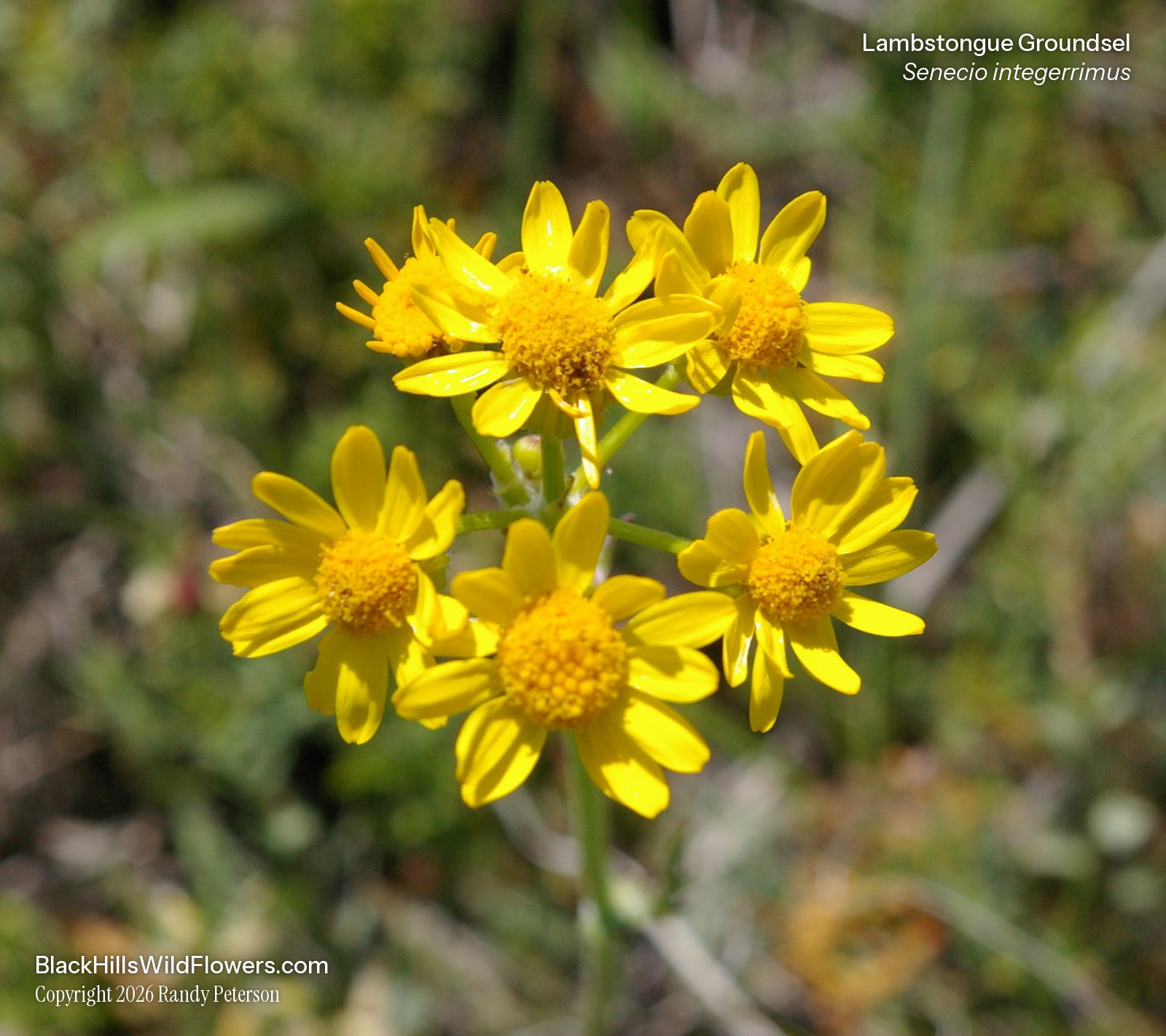
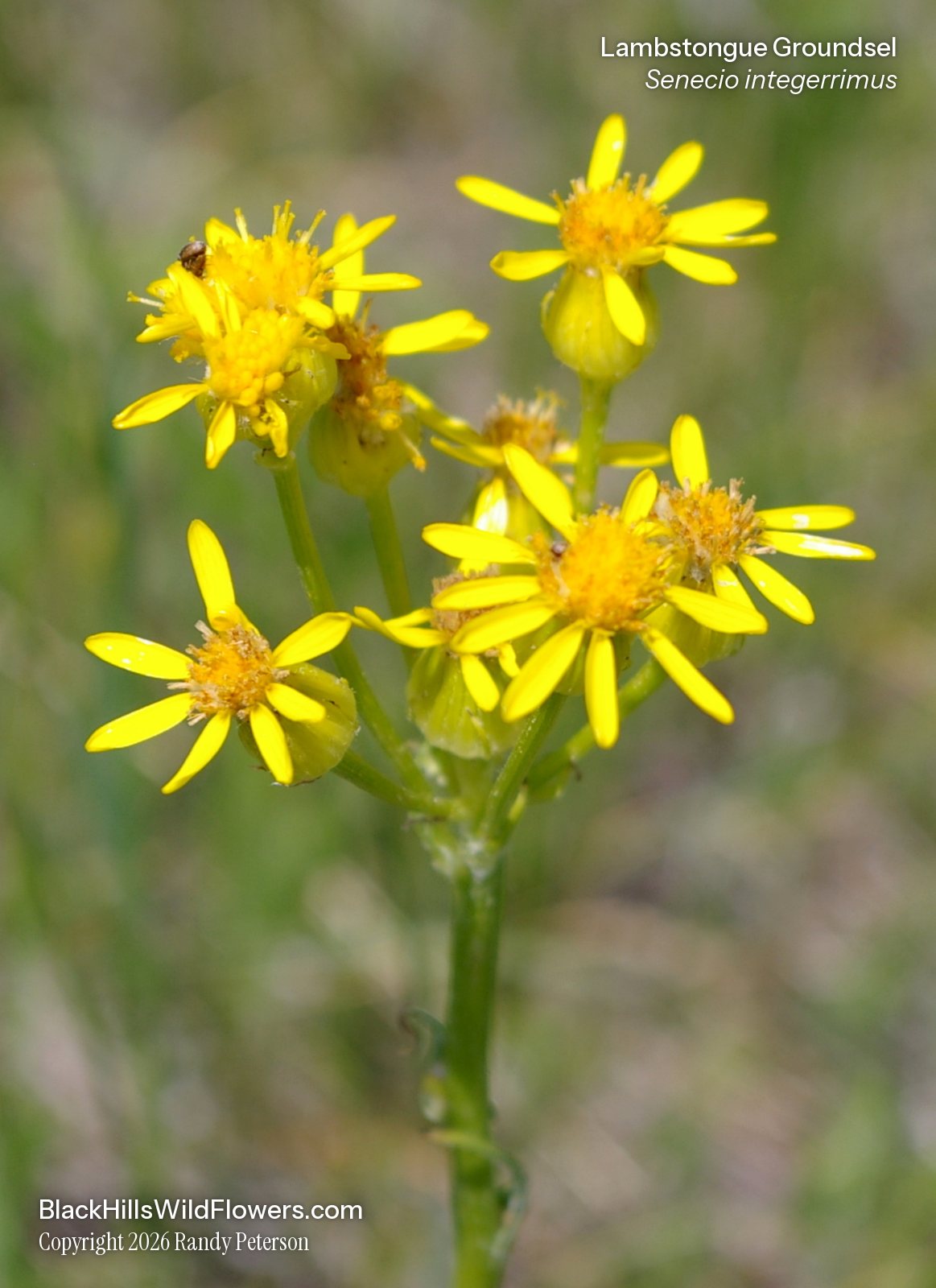
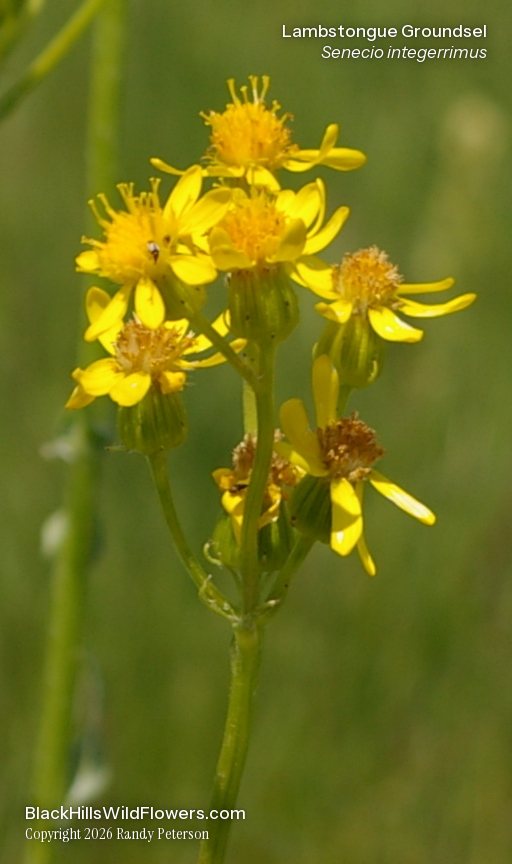
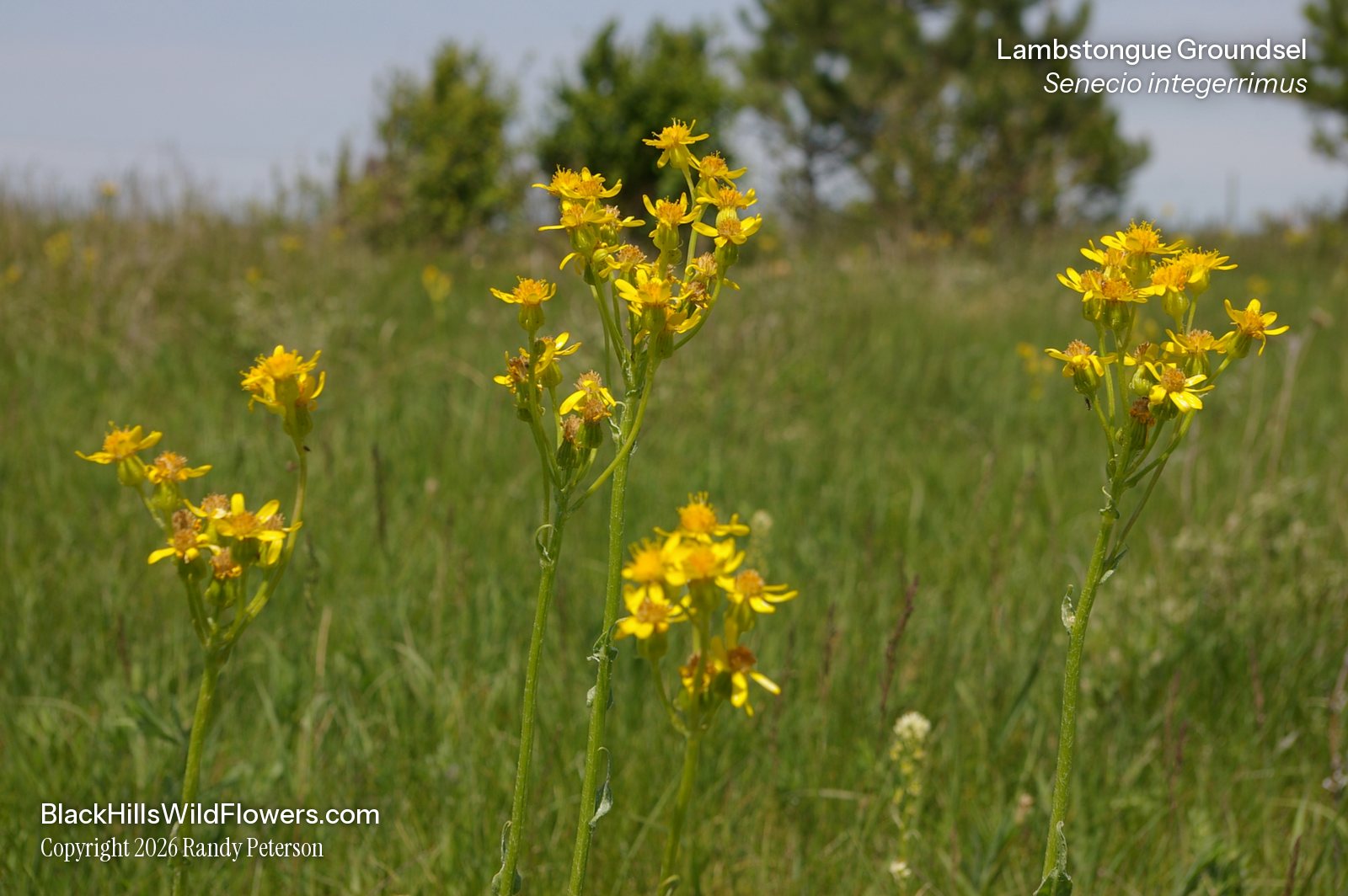
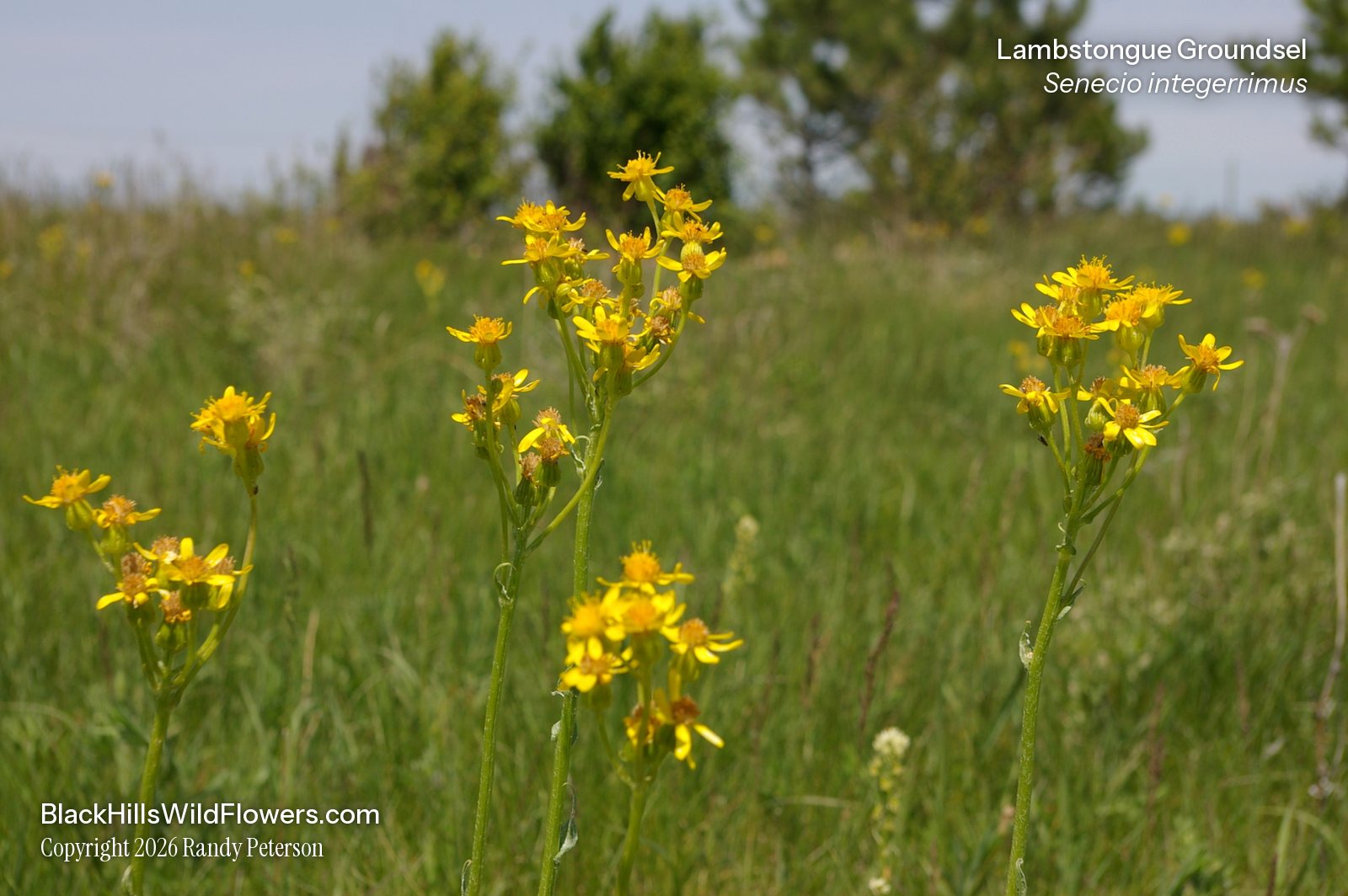
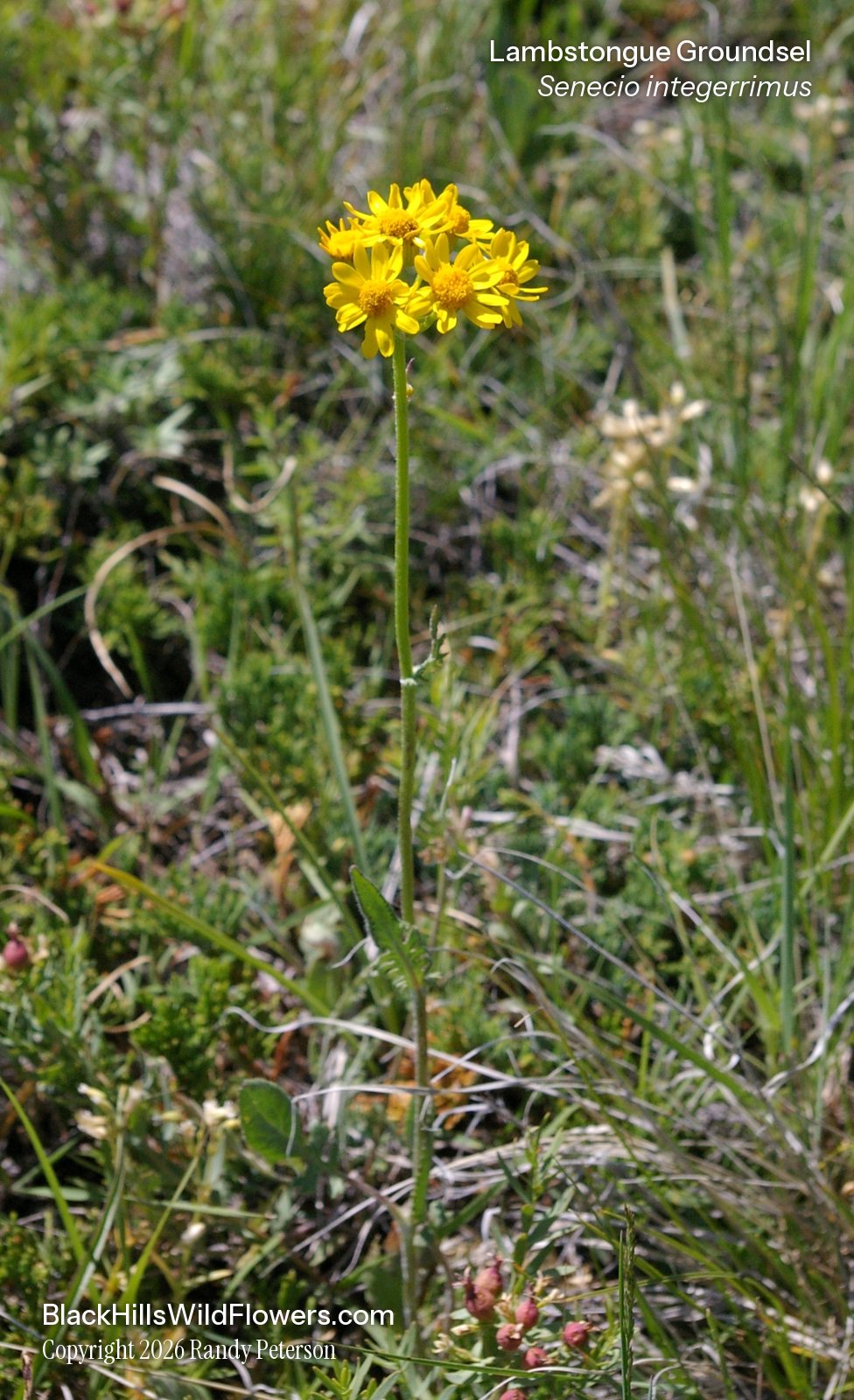
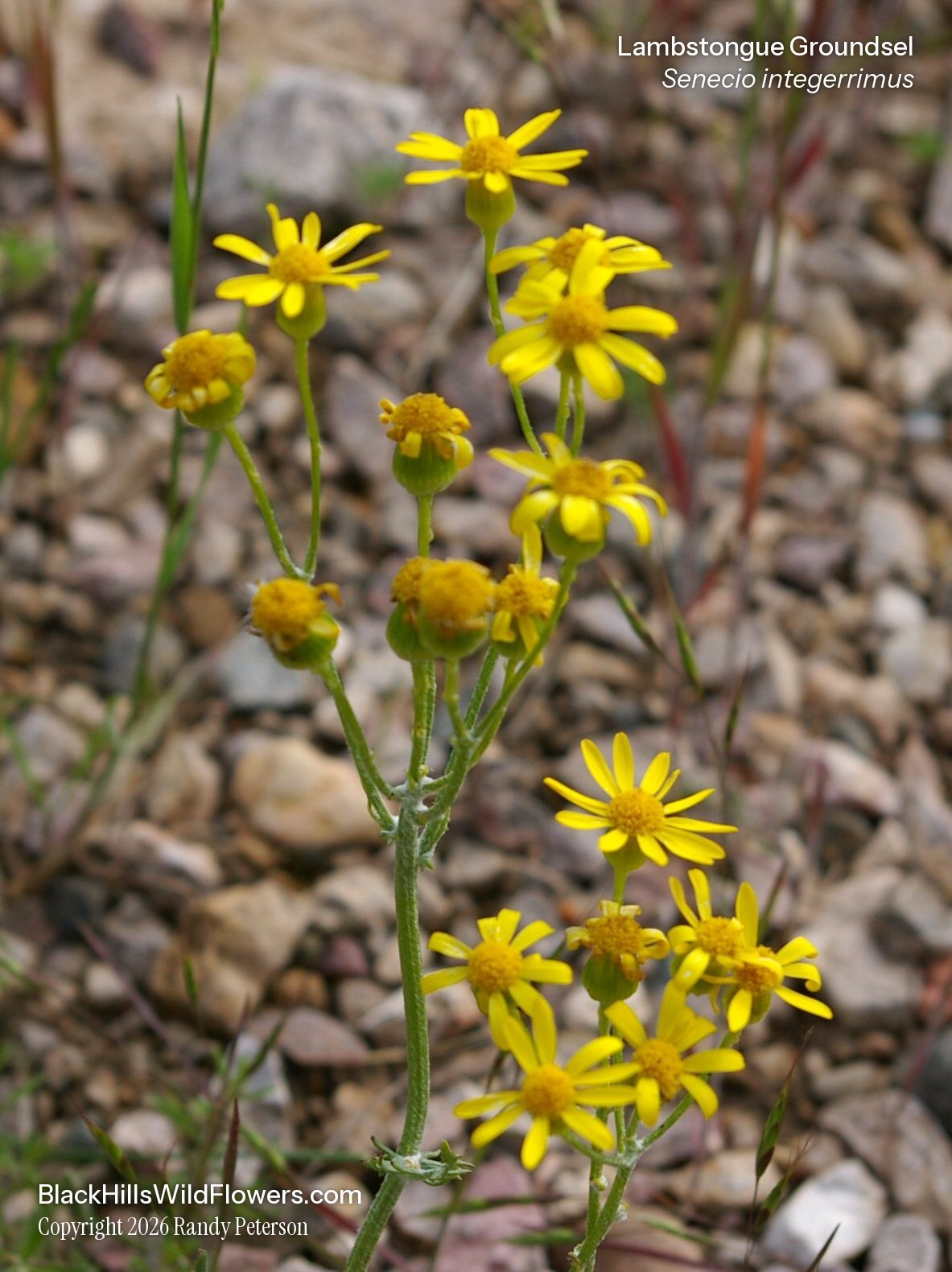
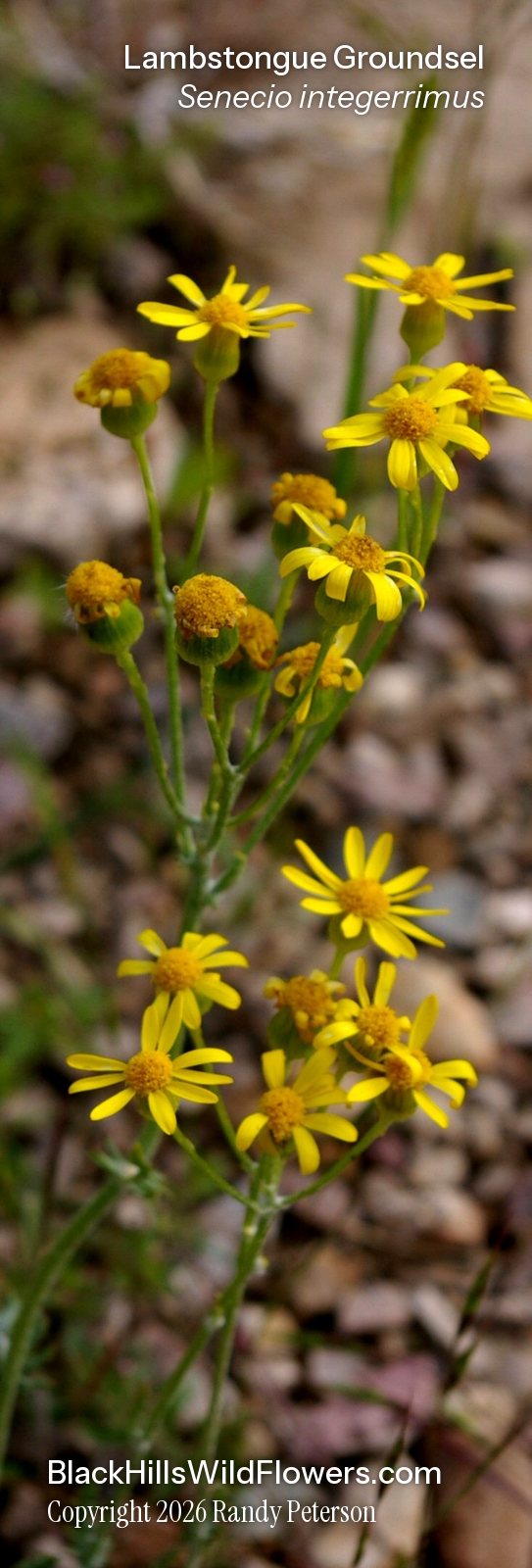
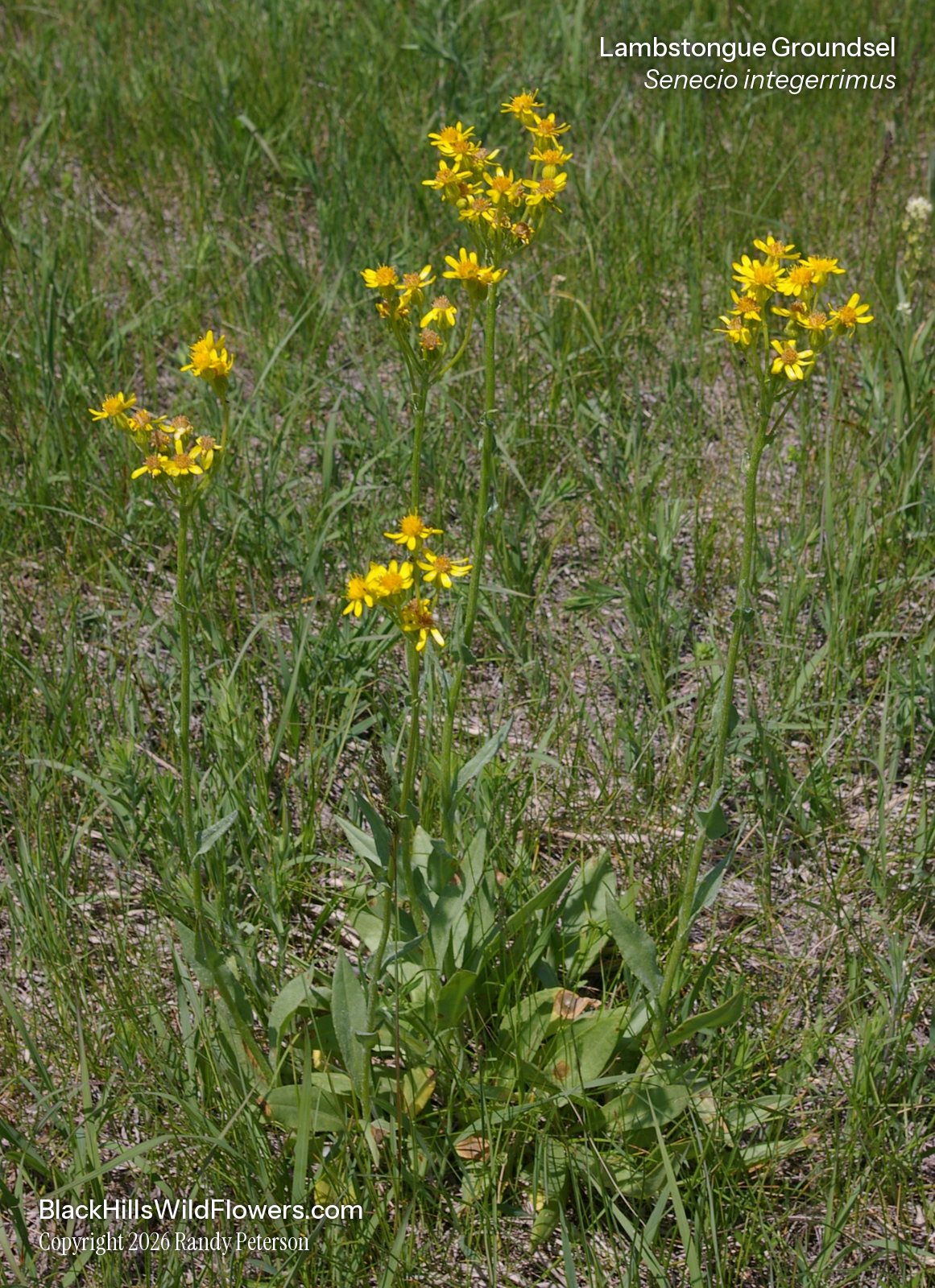
Lambstongue Groundsel (Senecio integerrimus) is a native perennial with a single upright stem, leaves that shrink toward the top, and a cluster of 6 to 20 yellow daisy-like heads. It blooms June into August on prairies, open woods, meadows and rocky slopes in central and western South Dakota, and it is recorded in the Black Hills. Photographed in the Black Hills.
| Family | Asteraceae · Aster |
|---|---|
| Status | Native perennial |
| Blooms | June into August |
| Height | 10–70 cm (4–28 in) |
| Where | Prairies, open woods, meadows and rocky slopes; well-drained soil |
| Also called | Lambstongue Ragwort, Wholeleaf Ragwort, Gauge Plant, One-stemmed Butterweed, Single-stemmed Groundsel, Western Groundsel, Wet-the-bed |
| Toxicity | Contains toxic alkaloids that are a risk to livestock, including cattle. |
Roots, seeds & germination
Root: Short, thick stem base (caudex) with fleshy, fibrous roots.
Seed: Achene (dry one-seeded fruit) 3–4 mm long, topped with fine white hairs. It ripens July through September. About 400,000 seeds make a pound.
Germination: Seed is dormant and needs a long cold, moist period. In nursery work it is sown outdoors in late fall or early winter, starts germinating in March, and can take two to four weeks.
How do you identify Lambstongue Groundsel?
Look for one stem from the base, large stalked lower leaves that shrink to small stalkless ones near the top, and cobwebby hairs that fade with age. The narrow bracts under each head are often black-tipped, though var. integerrimus has green tips. Woolly Groundsel is shorter and stays covered in silver-gray felt.
When does it bloom?
June into August.
Where does it grow?
Prairies, open woods, meadows, rocky slopes and disturbed sites, mainly in central and western South Dakota. A plant survey in the Black Hills lists it, and across the West it is common in grassy meadows and ponderosa pine forests.
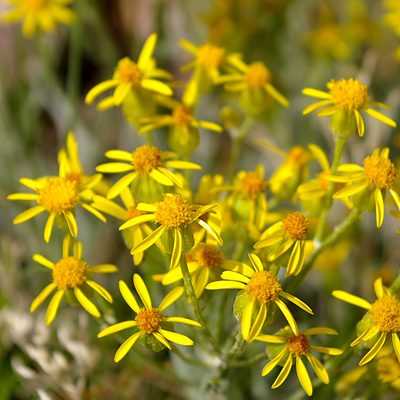
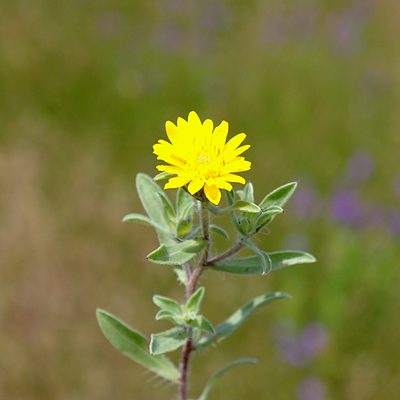
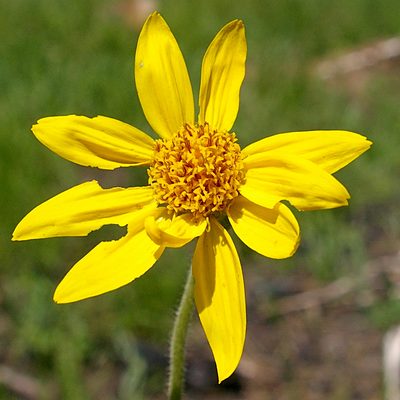
Other flowers to compare
Sources: SDSU Open PRAIRIE: Senecio integerrimus; USDA Plant Guide: Lambstongue Ragwort; Flora of North America: Senecio integerrimus; National Park Service, Devils Tower National Monument: Wildflowers; Marriott and Hartman 1986, A Survey of the Vegetation of Jewel Cave National Monument.