Hairy Golden Aster
Heterotheca villosa
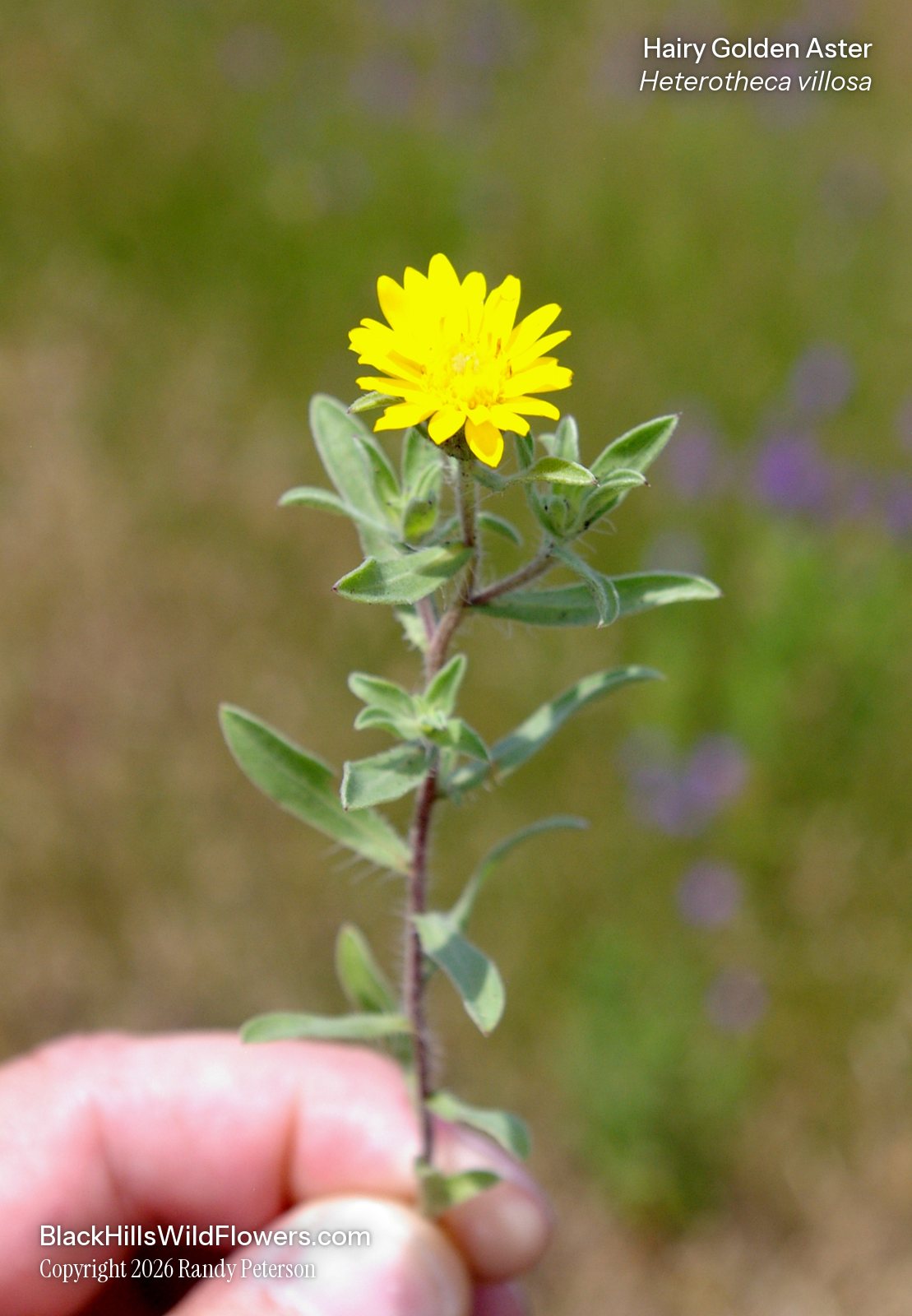
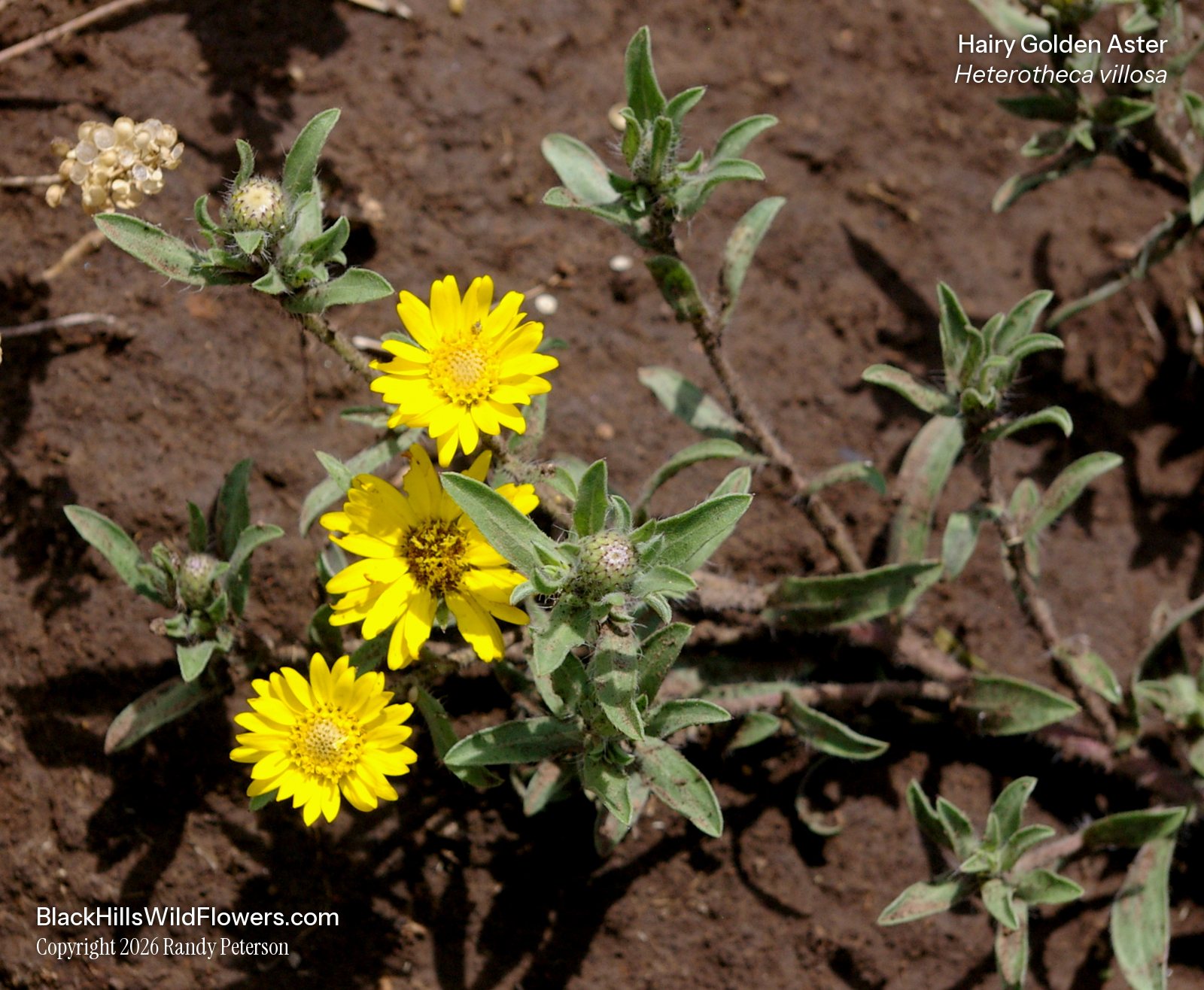
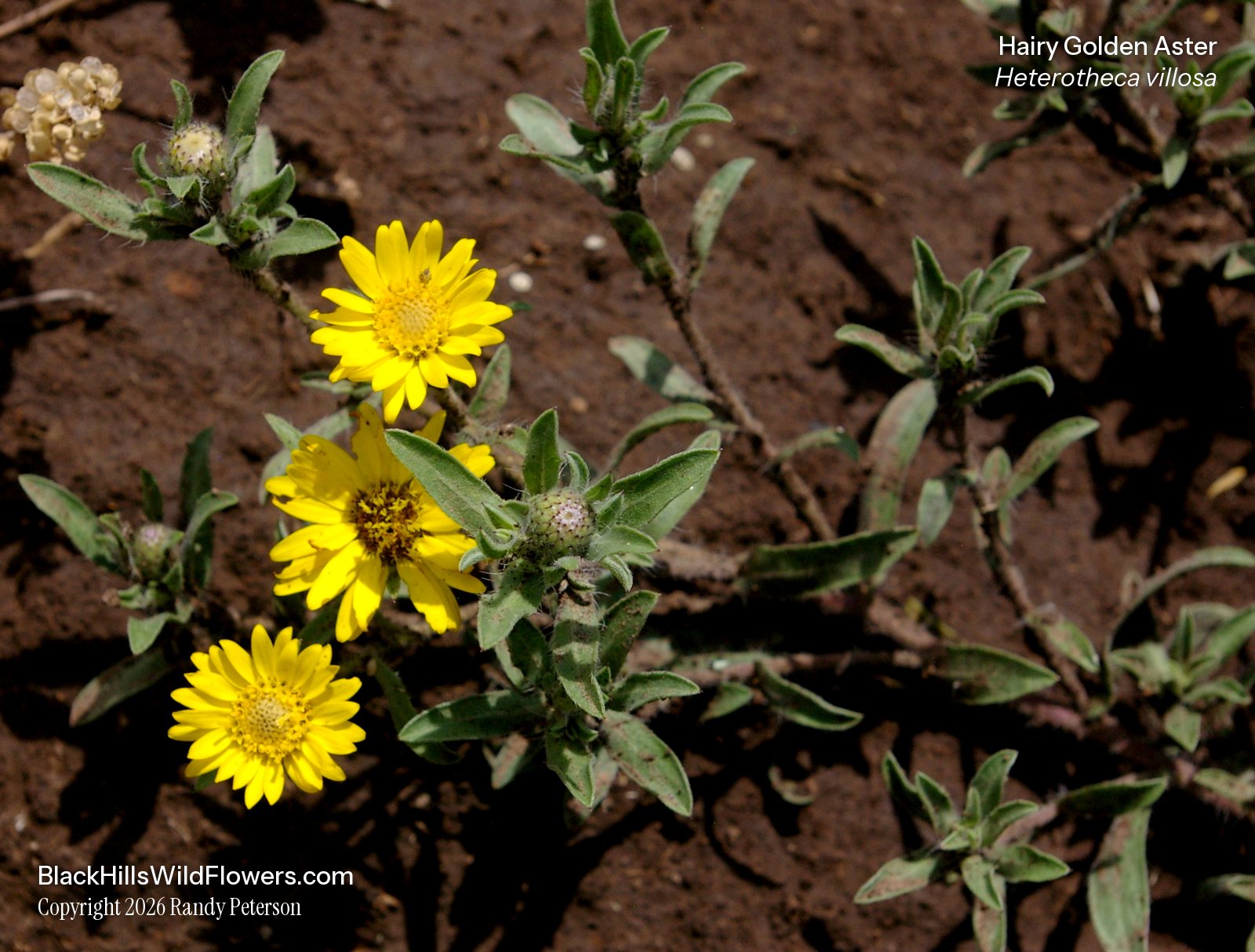
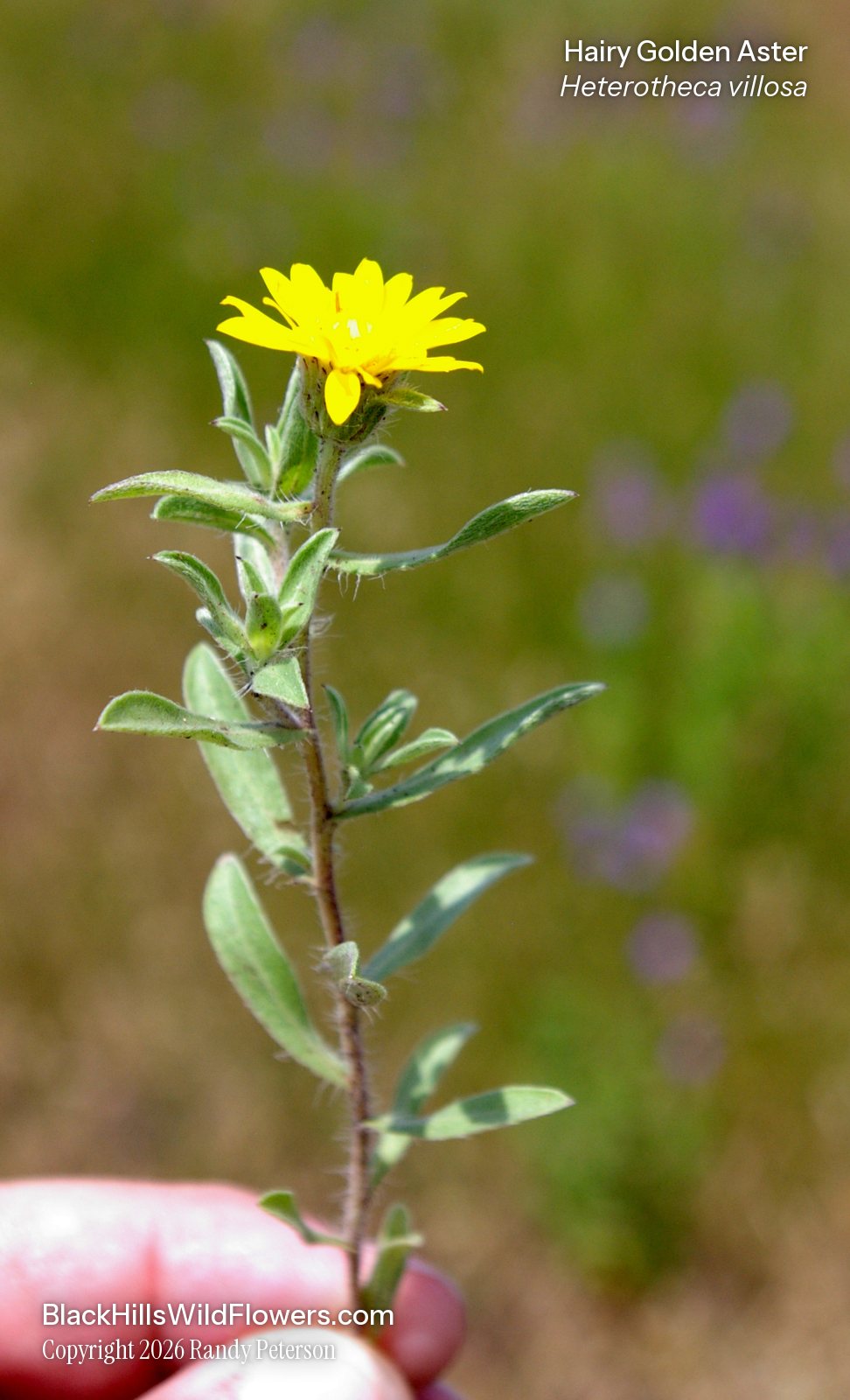
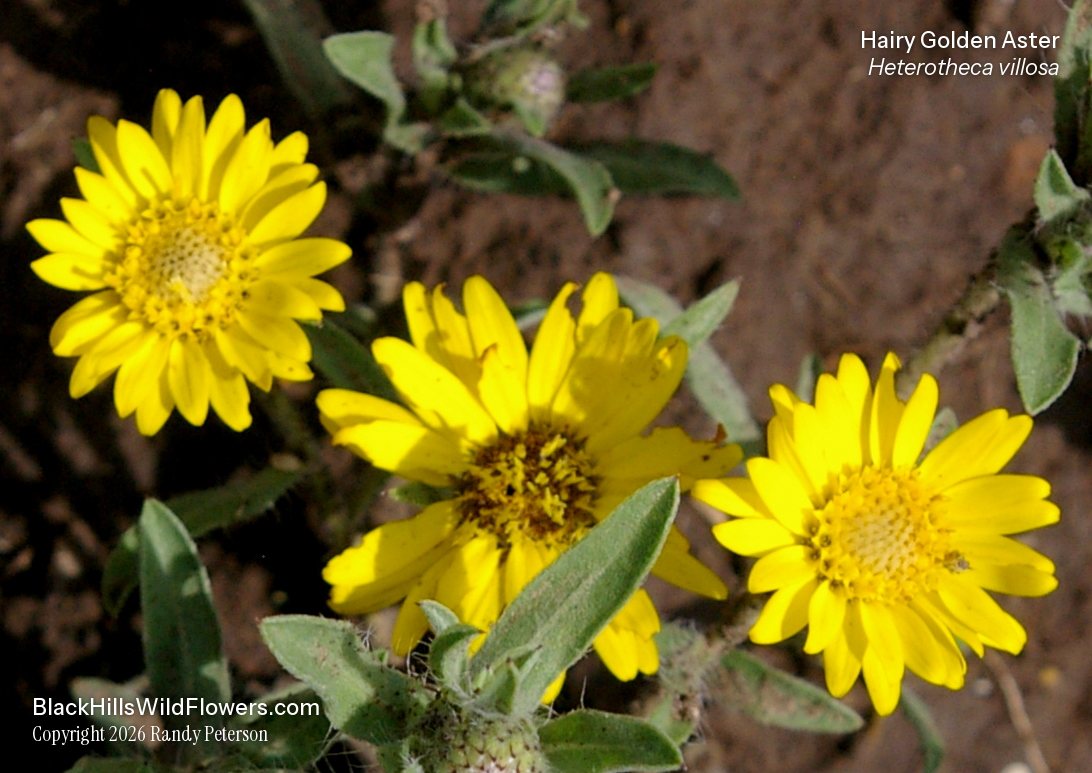
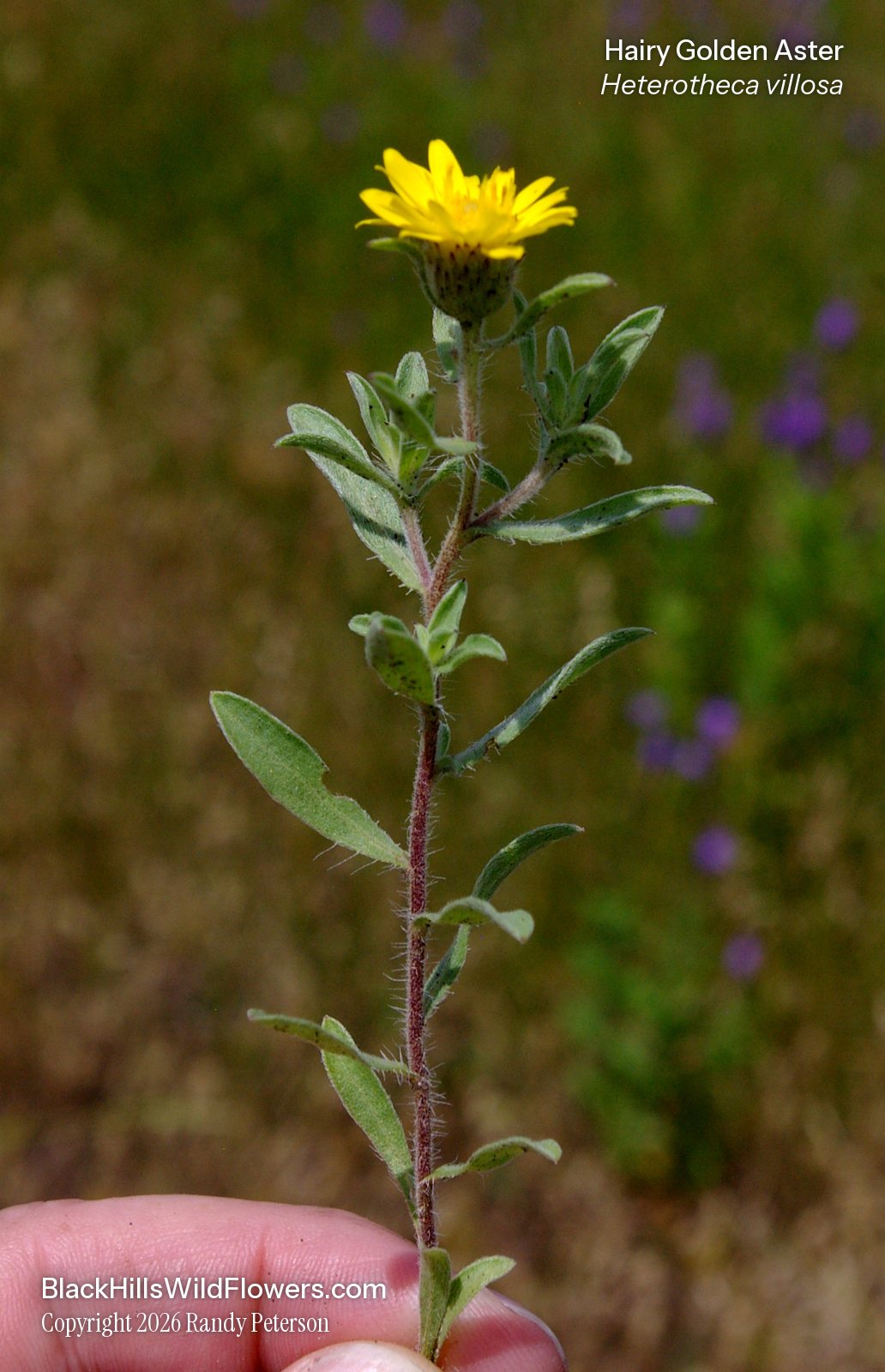
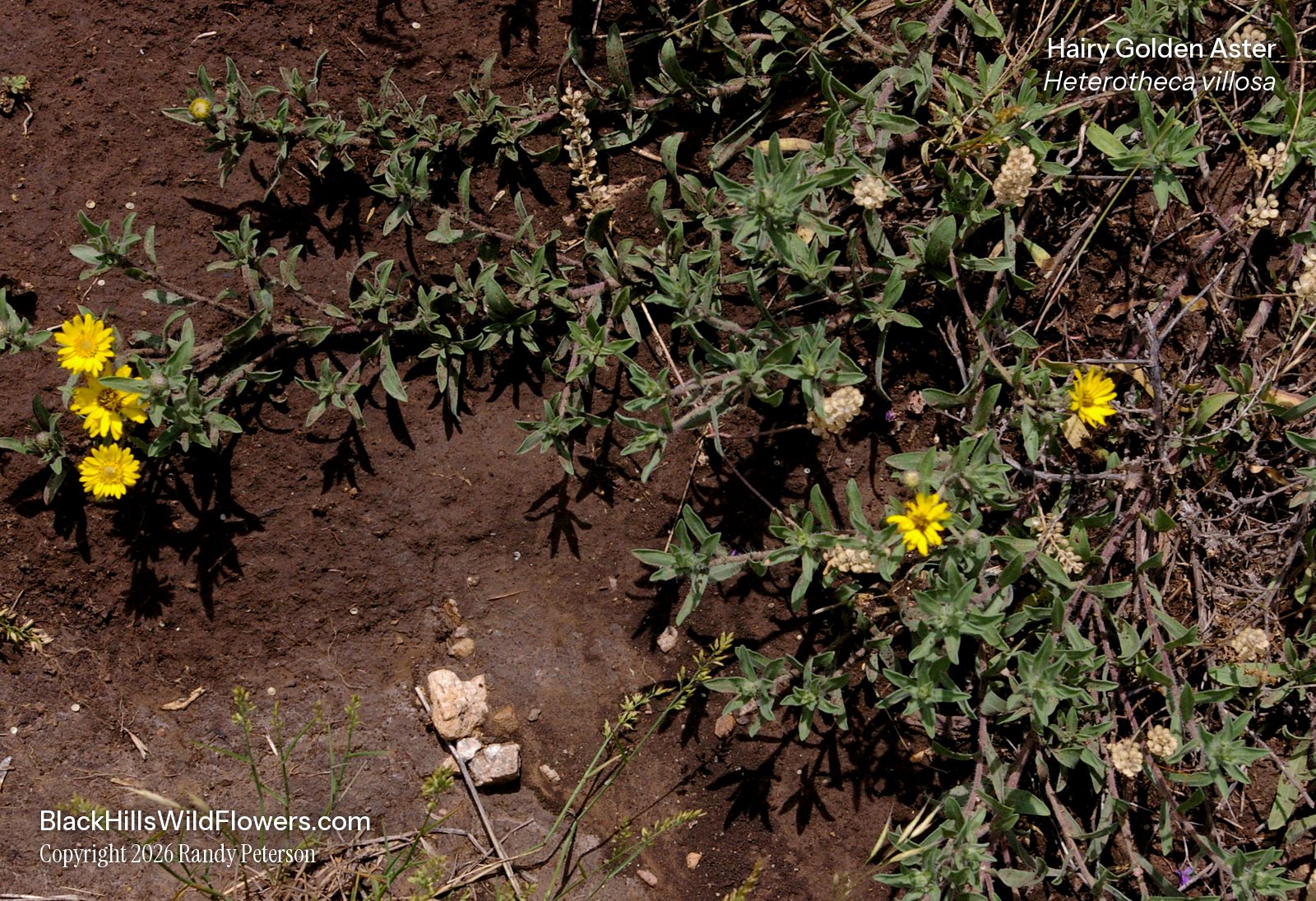
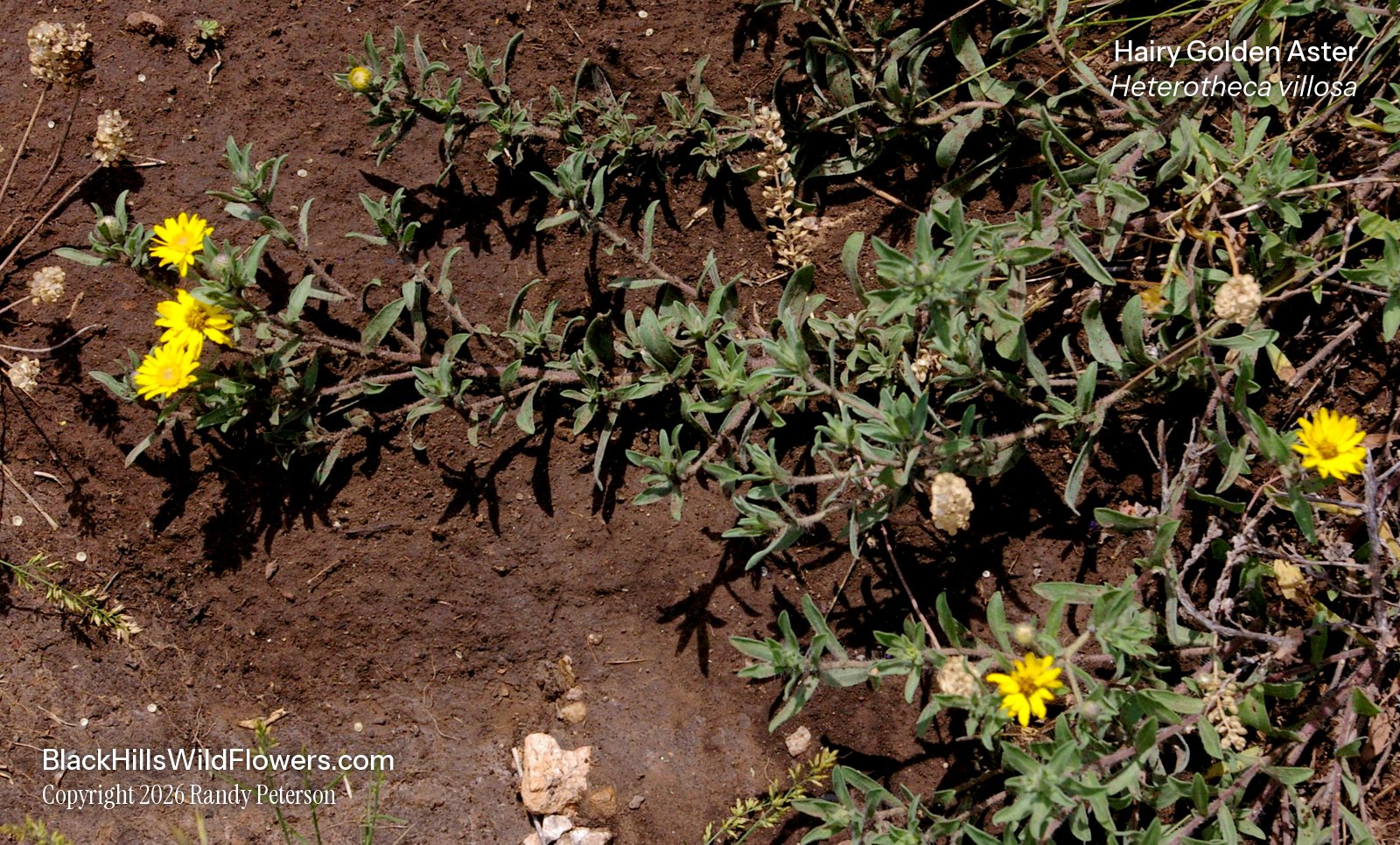
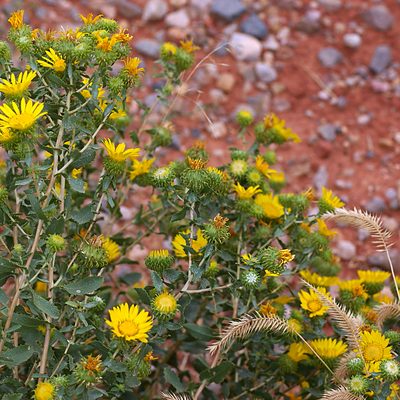
Hairy Golden Aster (Heterotheca villosa) is a low native perennial with small gray-green, hairy leaves and yellow daisy-like flower heads 2–4 cm (¾–1½ in) across. It blooms July into September and is common in dry grasslands, meadows and open forests of the Black Hills. Photographed in the Black Hills.
| Family | Asteraceae · Aster |
|---|---|
| Status | Native perennial |
| Blooms | July into September |
| Height | 10–50 cm (4–20 in) |
| Where | Dry grasslands, meadows and open forest; sandy or gravelly soil |
| Also called | Golden Aster, Hairy Goldaster, Hairy Goldenaster, Hairy False Goldenaster, Hairy Golden-aster |
| Synonym | Chrysopsis villosa |
Roots, seeds & germination
Root: Taproot.
Seed: Achenes (dry one-seeded fruits) 2–2.5 mm long with an outer ring of scales and an inner ring of bristles. They turn dark when ripe, from July to October.
Germination: A 60-day cold treatment improves germination, and fall seeding works well. Spring-sown seed germinates later in the summer.
How do you identify Hairy Golden Aster?
Look for low, sprawling to upright stems with small stalkless leaves about 2.5 cm (1 in) long, gray-green from their hairs and often twisted or wavy. The heads have 10 to 35 yellow rays around a small yellow center, with green bracts in 4 to 6 overlapping layers below.
When does it bloom?
July into September.
Where does it grow?
Common in dry grasslands, meadows and open forests of the Black Hills. Elsewhere in South Dakota it grows on sandy upland sites, in full sun to part shade and dry to medium moisture.
Other flowers to compare
Sources: USDA Forest Service, Black Hills National Forest: Black Hills Native Plants; SDSU Open PRAIRIE: Heterotheca villosa; Minnesota Wildflowers: Hairy False Goldenaster; National Park Service, Devils Tower National Monument: Wildflowers; Marriott and Hartman 1986, A Survey of the Vegetation of Jewel Cave National Monument.