Mustard Tumbleweed Sisymbrium altissimum
Also called Tall Tumble Mustard, Jim Hill Mustard, Tall Hedge-mustard, Tall Tumblemustard, Tumbleweed, čhaŋȟlóǧaŋ wablúška hú (Lakota)
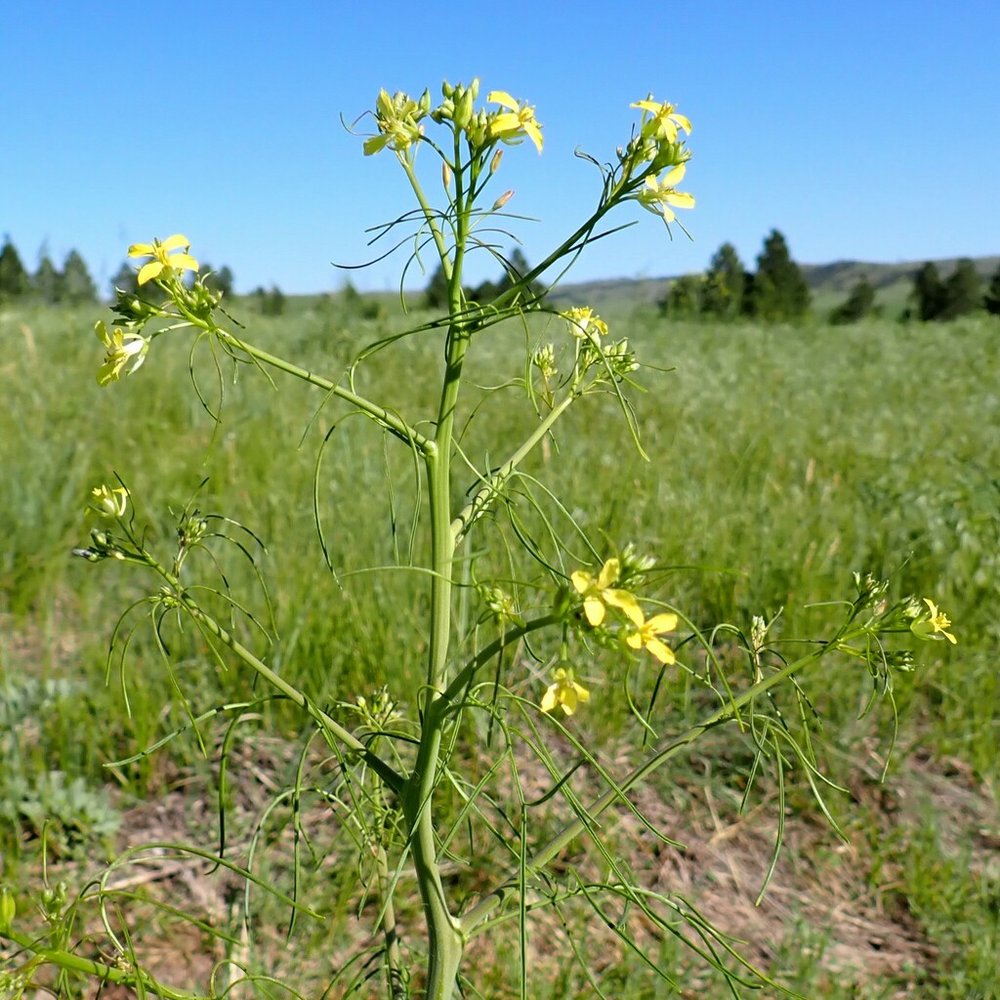
Mustard Tumbleweed (Sisymbrium altissimum) is an introduced annual or biennial of the mustard family, a branching plant with small pale-yellow, four-petaled flowers and long, thin seedpods, found on roadsides and disturbed ground across the Black Hills region. Herbarium specimens from the Hills were collected most often in June. When it dries, the brittle plant breaks off at the base and tumbles in the wind.
Free photos from other sources
| Family | Brassicaceae · Mustard |
|---|---|
| Status | Introduced annual or biennial |
| Blooms | June into August |
| Height | 20–100 cm (8–40 in) |
| Where | Roadsides, fields, waste ground and other disturbed soil, including open grassland |
| Also called | Tall Tumble Mustard, Jim Hill Mustard, Tall Hedge-mustard, Tall Tumblemustard, Tumbleweed, čhaŋȟlóǧaŋ wablúška hú (Lakota) |
| Traditional use | Black Elk and Flying By's 1998 list of culturally important plants gives the Lakota name čhaŋȟlóǧaŋ wablúška hú and records the leaves and young shoots as eaten, raw or cooked, and the ground seeds as a substitute for mustard. Moerman's ethnobotany database records that the Navajo used the seeds with goat's milk to make a mush (Elmore 1944). |
Traditional use: first drafted by Google AI, then checked against the sources on this page.
How do you identify Mustard Tumbleweed?
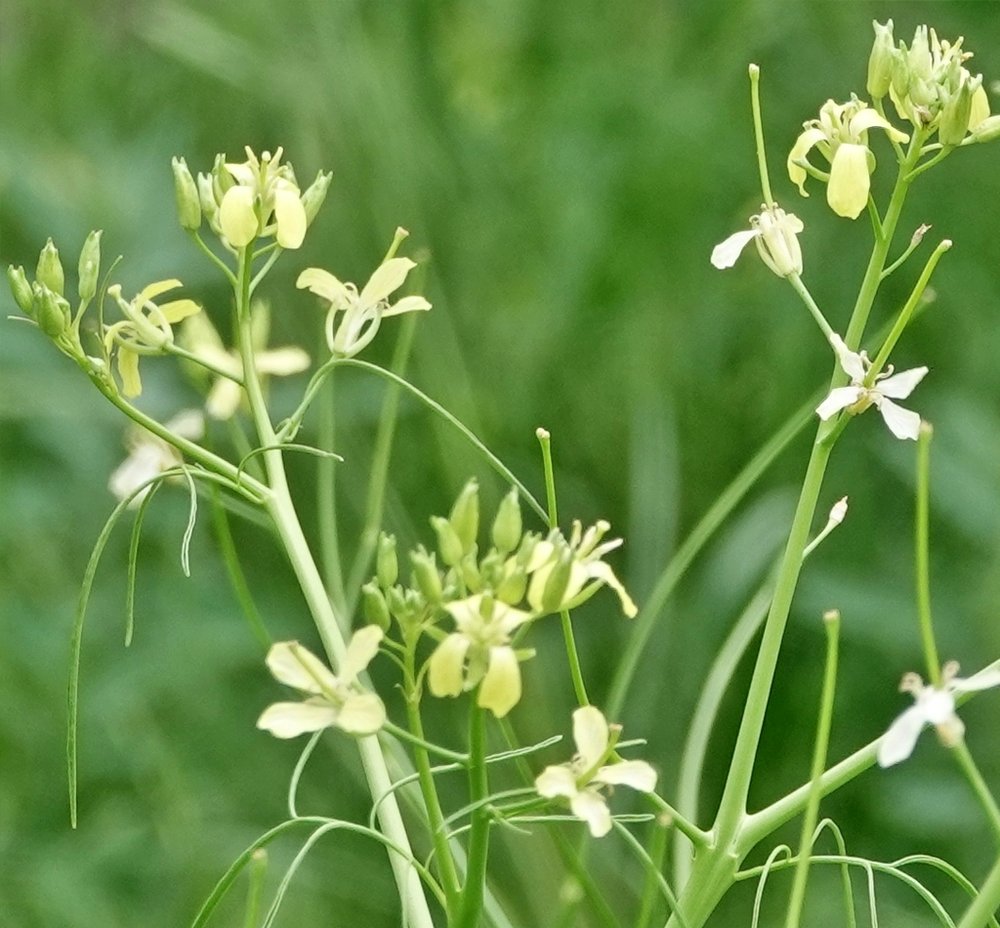
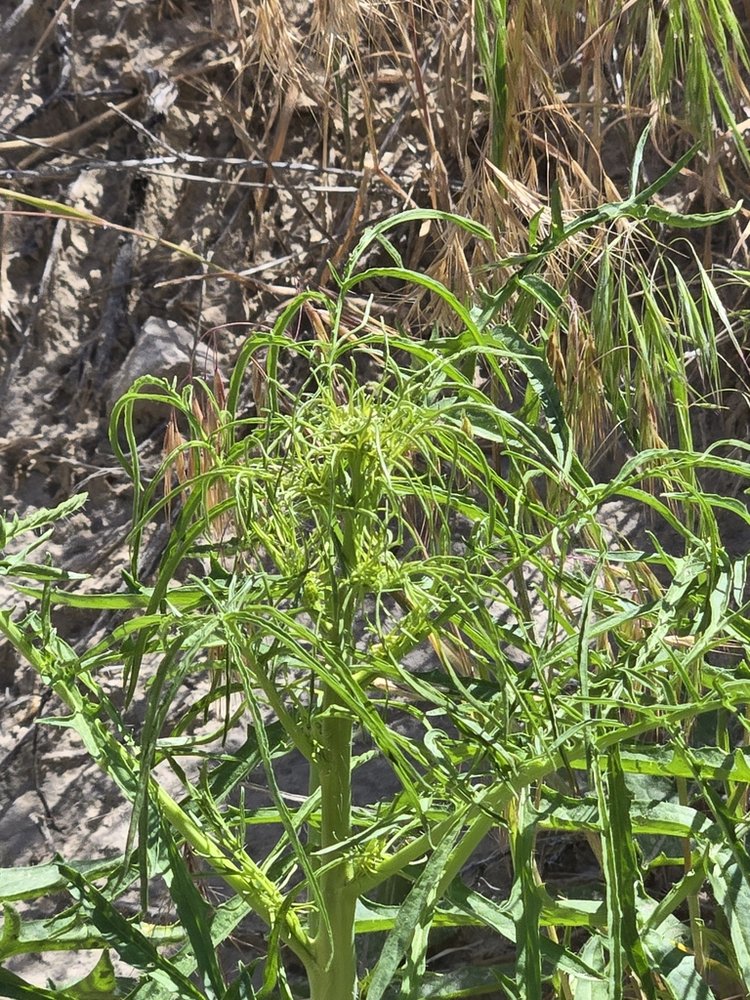
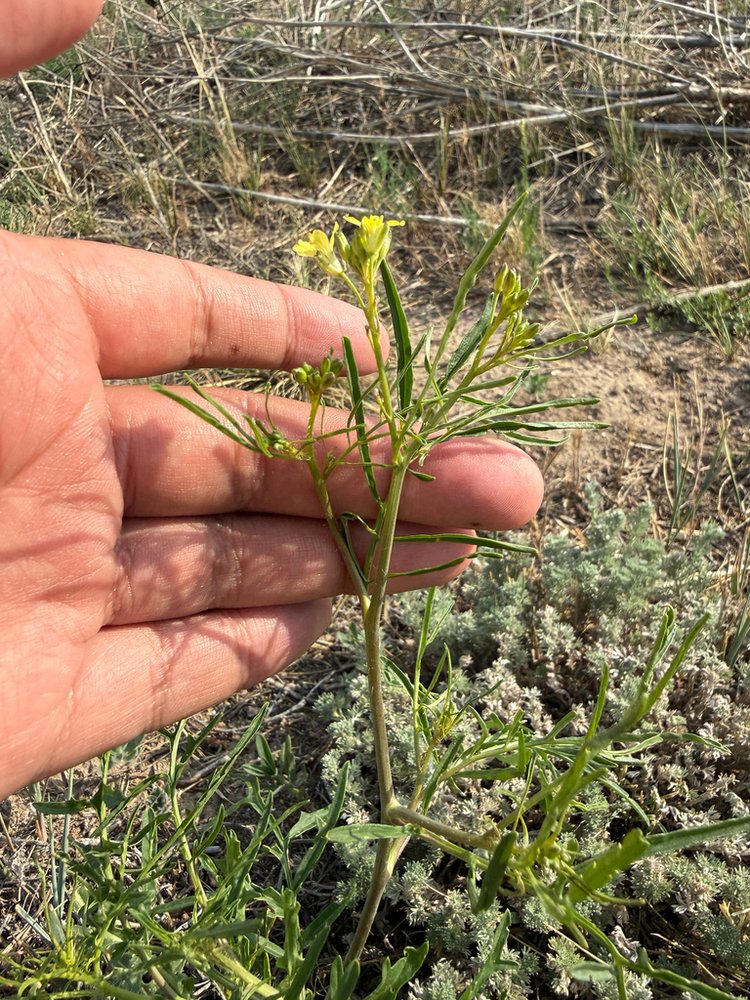
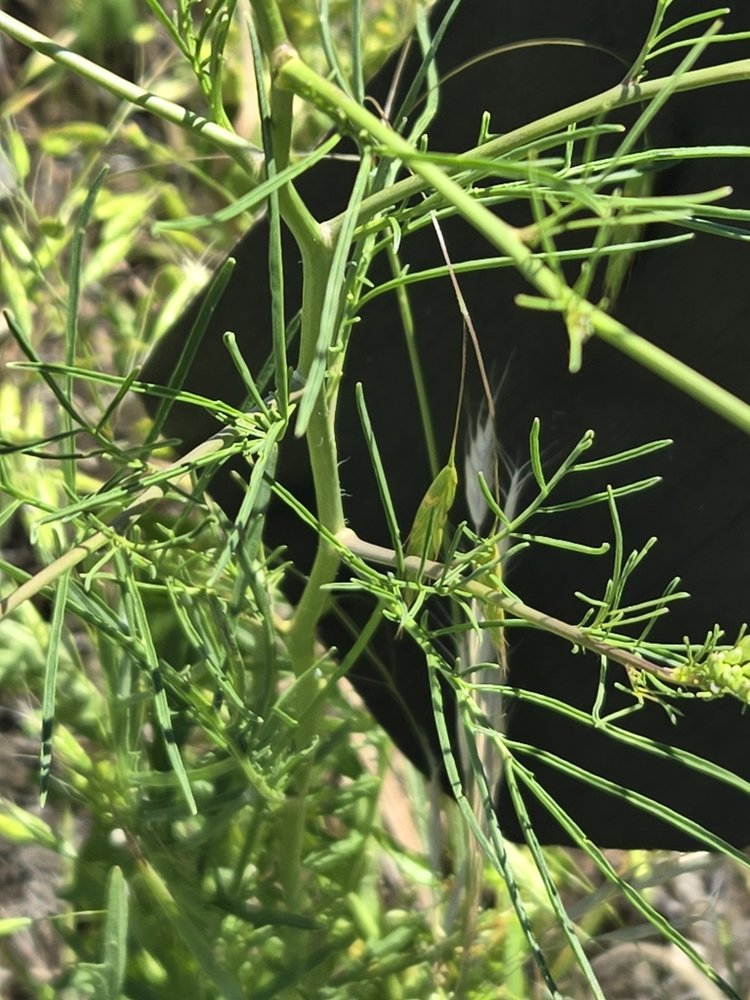
Look for a many-branched plant, 20–80 cm (8–32 in) tall, whose branches spread in all directions and look open and thread-like. The lower leaves are deeply cut into narrow lobes and hairy on the edges, and the upper leaves are cut into thin, linear segments and mostly hairless. The flowers are small, about 8 mm (1/3 in) across, with 4 creamy-white to pale-yellow petals. The slender pods are 4–8 cm (1½–3 in) long and stick out straight from the stem on stalks as thick as the pods.
When does it bloom?
June into August.
Where does it grow?
Disturbed ground: roadsides, fields, waste places, open grassland along roads and old railroad beds, and stream terraces. Herbarium labels from Lawrence County describe roadside margins; Pennington, Custer and Fall River county labels describe open grassland along an old railroad and a gravel road on Buffalo Gap National Grassland and a clay prairie, and one from Pennington County is a low creek terrace. Of 53 specimens in GBIF from Black Hills counties of South Dakota and Wyoming, Lawrence County has 14.
Other mustards in this guide
Compare all 11 mustards side by side
Dame's Rocket
Hesperis matronalis
Desert Princeplume
Stanleya pinnata
False Flax
Camelina microcarpa
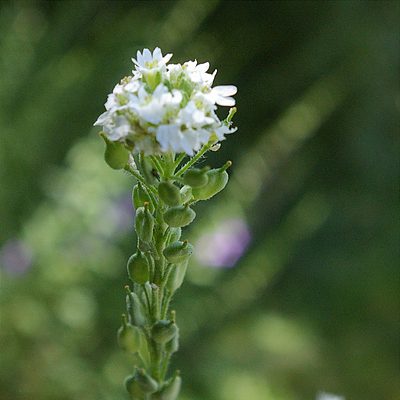
Hoary Alyssum
Berteroa incana
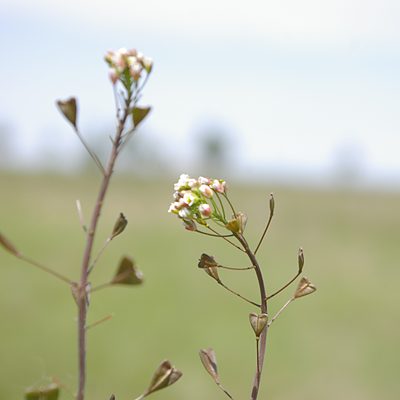
Shepherd's Purse
Capsella bursa-pastoris
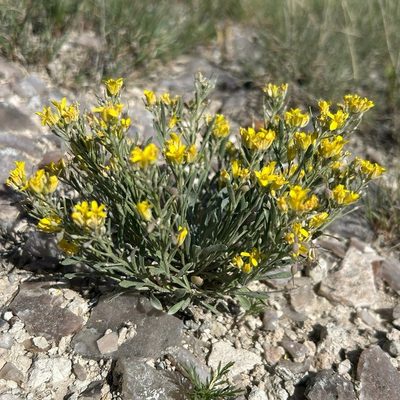
Sidesaddle Bladderpod
Lesquerella arenosa var. argillosa
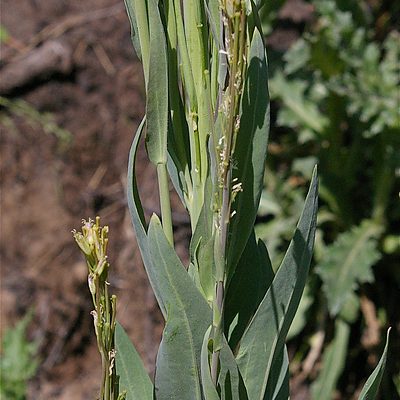
Tower Rockcress
Turritis glabra
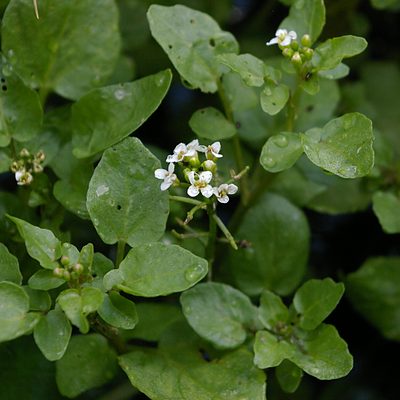
Watercress
Nasturtium officinale
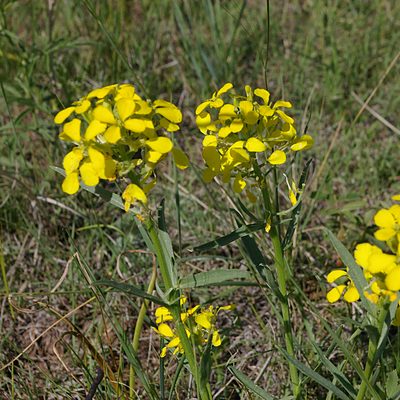
Western Wallflower
Erysimum asperum
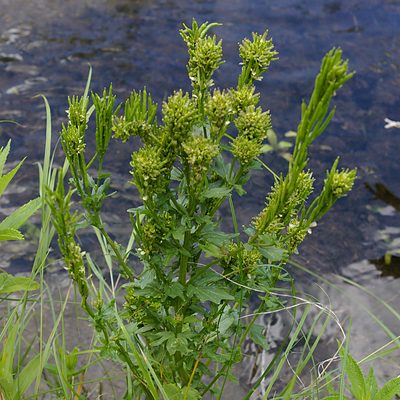
Wintercress
Barbarea orthoceras
Sources: Minnesota Wildflowers: Sisymbrium altissimum (Tall Tumble Mustard); Montana Field Guide: Tall Tumble-mustard (Sisymbrium altissimum); USDA PLANTS Database: Sisymbrium altissimum (SIAL2); Native American Ethnobotany Database (BRIT): Sisymbrium altissimum; Culturally Important Plants of the Lakota (Black Elk and Flying By, 1998), entry 283; GBIF specimen 3454979558 (Lawrence County, SD, 2014; roadside margins); GBIF specimen 2859479447 (Pennington County, SD, 2013; open grassland along old railroad); GBIF specimen 2512287469 (Pennington County, SD, 2009; creek terrace); GBIF specimen 3023456600 (Fall River County, SD, 2007; clay prairie); GBIF occurrence search: Sisymbrium altissimum, preserved specimens, South Dakota and Wyoming.