Northern Paintbrush
Castilleja septentrionalis
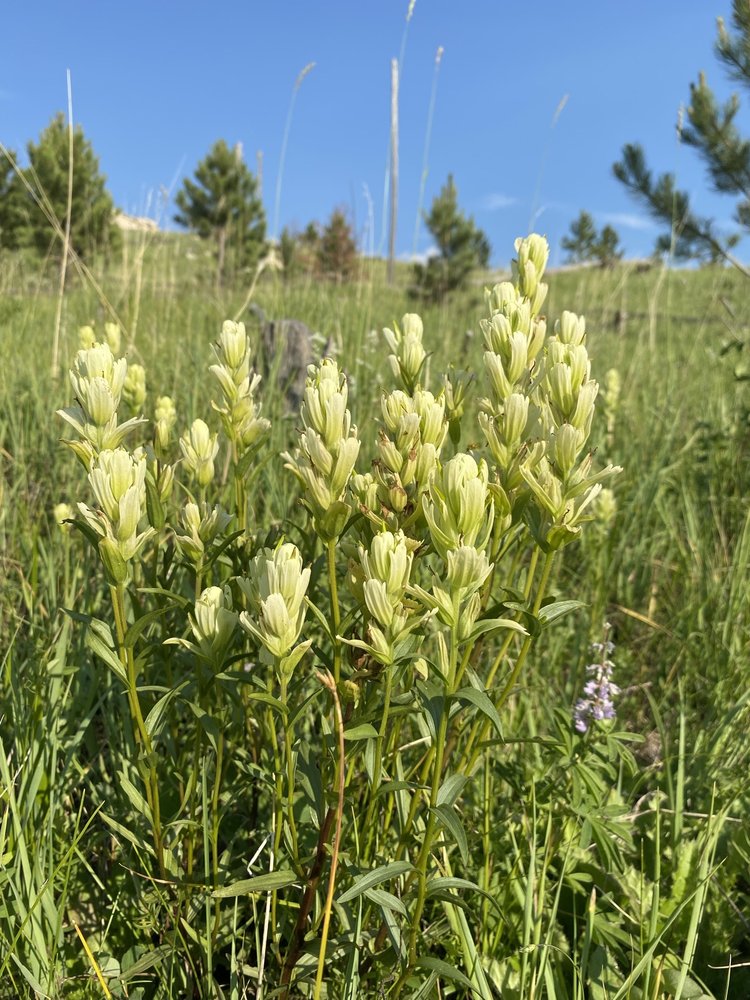
Northern Paintbrush (Castilleja septentrionalis) is a native perennial whose pale, greenish-yellow to cream flower spikes brighten forest openings in the central and northern Black Hills from June into August. It is the Hills' forest paintbrush: the Black Hills National Forest calls it common in coniferous and mixed forests, and the 1986 plant survey of Jewel Cave National Monument lists it as Castilleja sulphurea.
Free photos from other sources
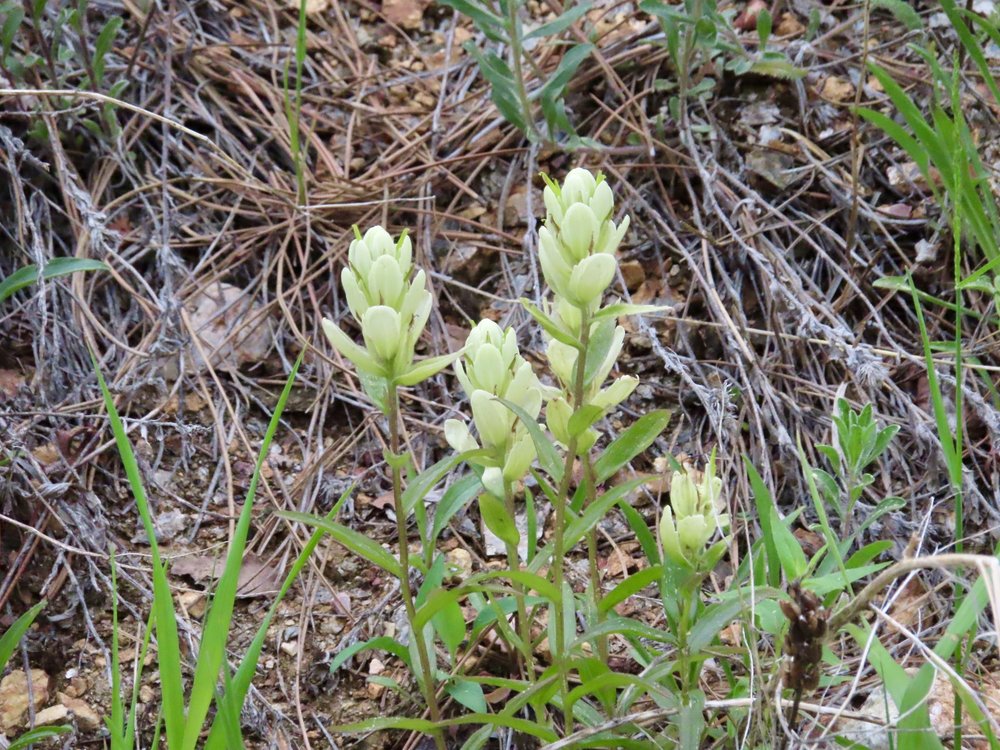
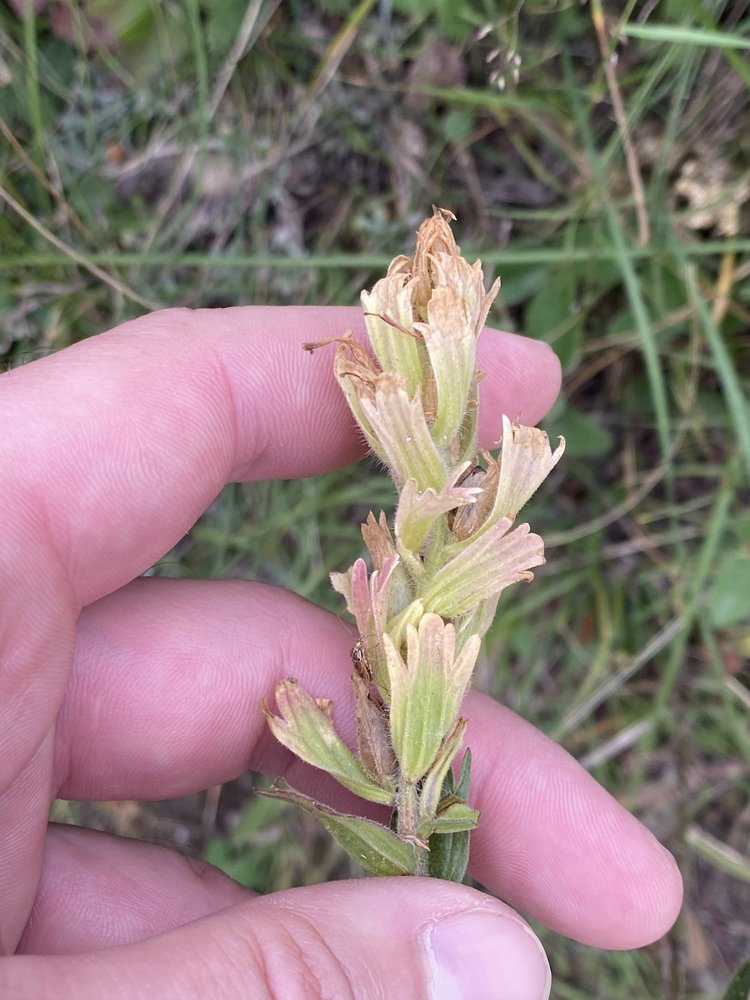
| Family | Orobanchaceae · Broomrape |
|---|---|
| Status | Native perennial |
| Blooms | June through August, the first spikes in late May |
| Height | 25–55 cm (10–22 in) |
| Where | Openings, meadows and edges in pine, spruce and mixed forest |
| Also called | Sulphur Paintbrush, Pale Painted Cup, Northern Painted-cup |
| Synonym | Castilleja sulphurea, Castilleja luteovirens, Castilleja wyomingensis, Castilleja brunnescens |
| Note | The Black Hills National Forest, USDA PLANTS and the park plant lists still call it Castilleja sulphurea, Sulphur Paintbrush. |
Roots, seeds & germination
Root: A woody crown on a taproot or a few branched roots sends up several stems, so plants often stand in small clumps. Like all paintbrushes it is a hemiparasite: it makes its own food, but some roots grip the roots of nearby grasses and sedges and draw off extra water and minerals without killing them.
Seed: Each flower makes a small, dry capsule that ripens about 8–10 weeks after pollination and splits to release many tiny, grayish-tan seeds with a netted coat. They shake out in late summer and fall.
Germination: Seed needs 60–90 days of cold, moist stratification (a winter in the ground), then sprouts in about 10–14 days at warm daytime temperatures. The seedling needs a host: growers pair each one with a small grass or sedge after 4–6 weeks. Plants usually flower in their second year.
How do you identify Northern Paintbrush?
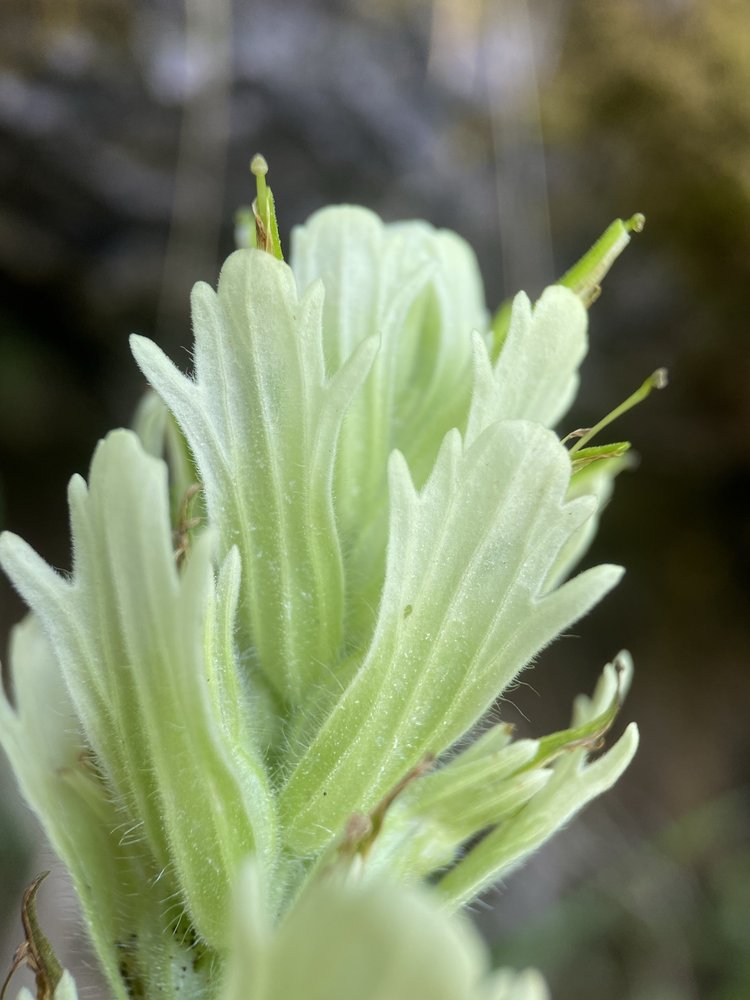
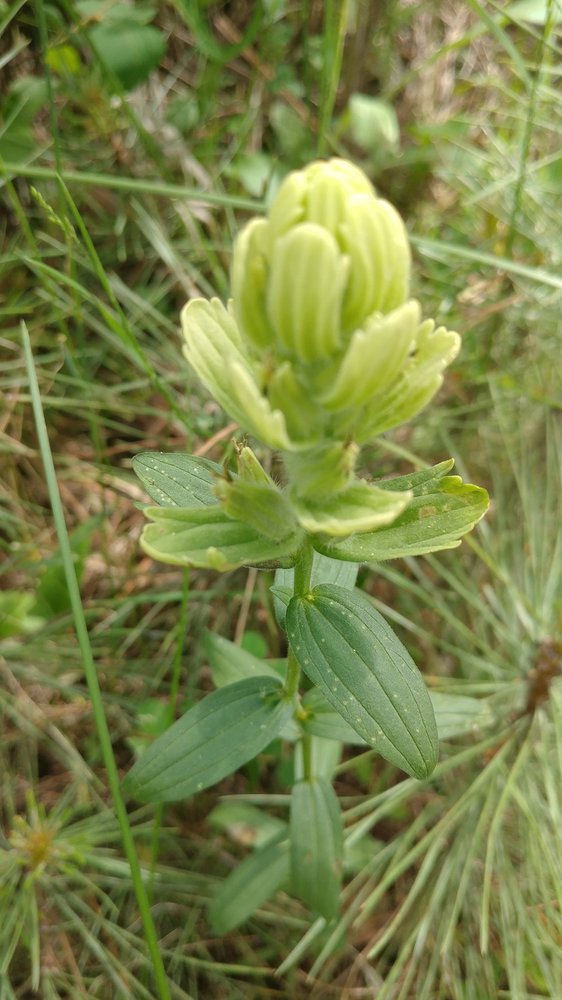
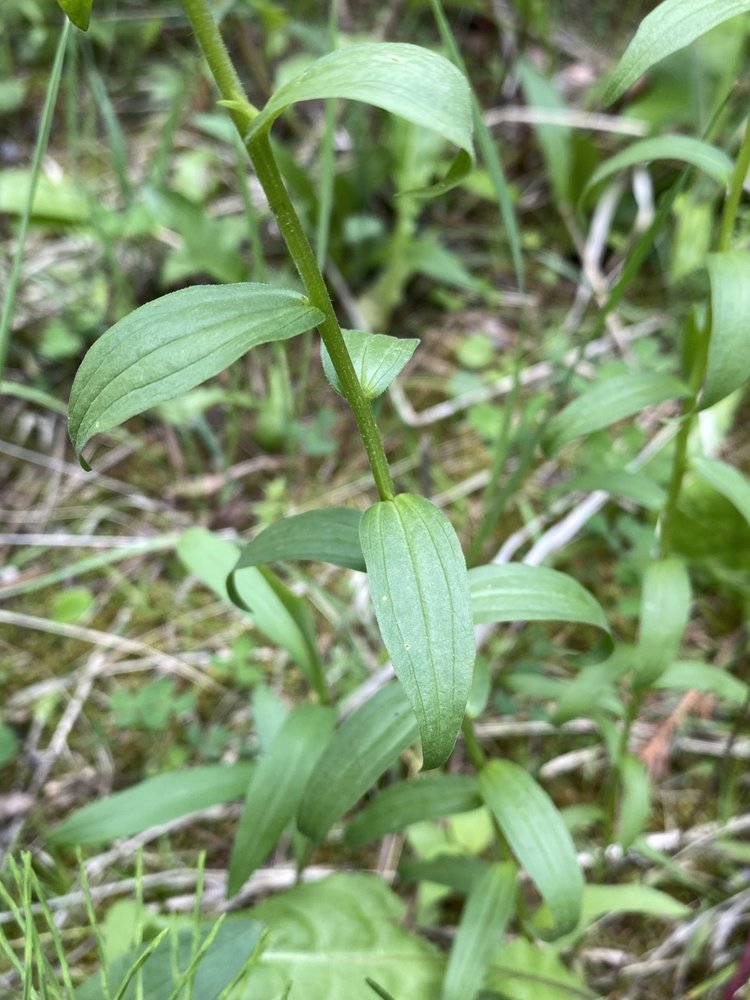
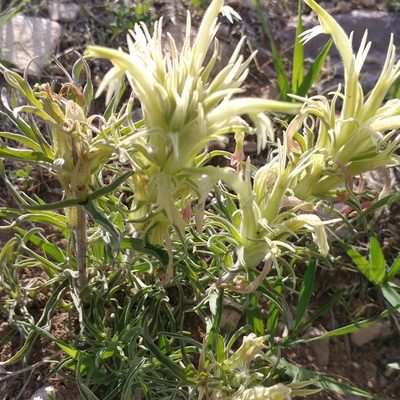
Look for one spike at the top of each stiff, upright stem, often several stems together. The color comes from broad, hairy bracts, greenish-yellow at the base and fading to cream or pale sulphur-yellow at the tips. The true flowers are slim green tubes tucked between the bracts, with only their pointed beaks peeking out. Stem leaves are lance-shaped, smooth and usually unlobed, with 3–5 parallel-looking veins. Downy Paintbrush grows on dry prairie, is shorter and gray-downy, has lobed upper leaves and green bracts, and its long, curved flower tubes stick out well past the bracts. Old spikes can take on a rosy or tan blush in late summer.
When does it bloom?
June through August, the first spikes in late May.
Where does it grow?
Openings, meadows, roadside banks and forest edges in ponderosa pine, white spruce and mixed pine–aspen forest, often among grasses, and around springs and fens. The Black Hills National Forest calls it common from the central to the northern Hills. NPSpecies lists it at Jewel Cave and Mount Rushmore, and herbarium specimens come from Lawrence, Pennington, Custer and Meade counties and from Crook and Weston counties in Wyoming, with none from Fall River County in the dry southern Hills.
Other flowers to compare
Sources: Castilleja sulphurea, synonym of Castilleja septentrionalis (VASCAN, citing Flora of North America vol. 17, 2019); Castilleja septentrionalis, species page (GBIF backbone: C. sulphurea = synonym; occurrence records); GBIF herbarium specimens of Castilleja septentrionalis, South Dakota; Castilleja sulphurea Rydb., ITIS TSN 33083; Castilleja sulphurea, USDA PLANTS Database (CASU12); Castilleja septentrionalis, Wikipedia (summarizes FNA 2019 description, range and the POWO/WFO/USDA name dispute); Black Hills Native Plants, Black Hills National Forest, USDA Forest Service; Marriott & Hartman 1986, Vegetation of Jewel Cave National Monument (species list); NPSpecies: Castilleja sulphurea at Jewel Cave National Monument; Luna, T. 2005. Propagation protocol for Indian paintbrush (Castilleja species). Native Plants Journal 6(1):62-68; Castilleja sulphurea, Lady Bird Johnson Wildflower Center Plant Database; Ask Mr. Smarty Plants: growing and transplanting Indian paintbrush, Lady Bird Johnson Wildflower Center; Penskar & Crispin 2009, Special Plant Abstract for Castilleja septentrionalis, Michigan Natural Features Inventory; Castilleja septentrionalis, Gleason & Cronquist 1991 Manual (NYBG monograph record); Al Schneider, Castilleja septentrionalis, Rocky Mountains Plant Descriptions; Black Elk & Flying By 1998, Culturally Important Plants of the Lakota; Reese, R.N., Castilleja sessiliflora, South Dakota Native Plant Research, SDSU Open PRAIRIE; Castilleja sessiliflora (Downy Paintbrush), Kansas Wildflowers and Grasses; Castilleja linariifolia (Wyoming Indian paintbrush), USDA PLANTS Database; Castilleja miniata (giant red Indian paintbrush), USDA PLANTS Database; Castilleja septentrionalis, iNaturalist taxon page (observations).