Downy Paintbrush
Castilleja sessiliflora
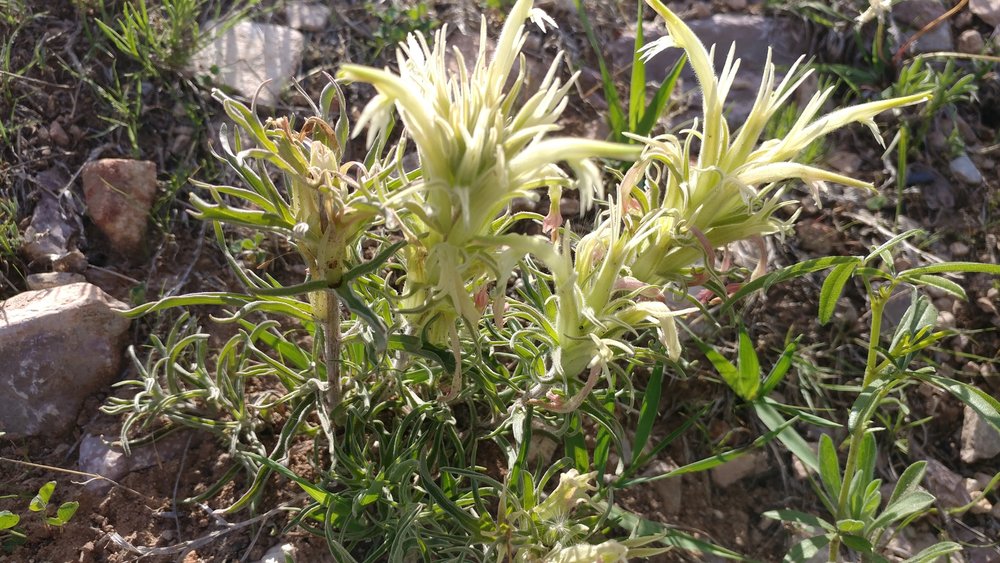
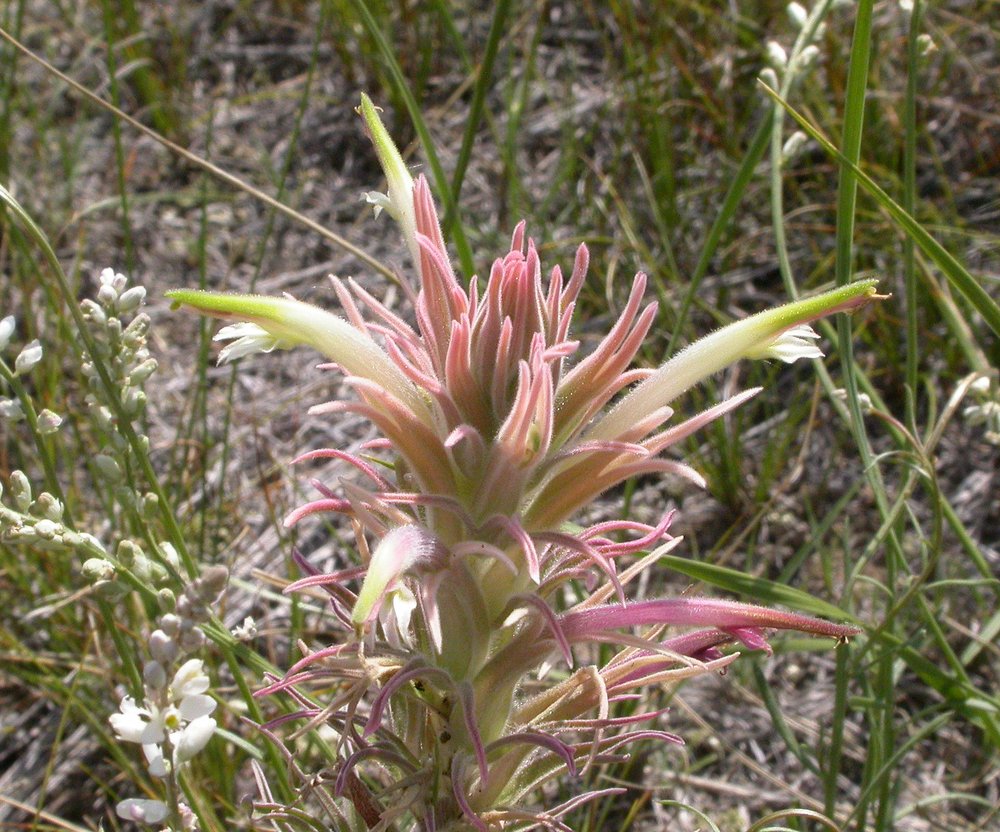
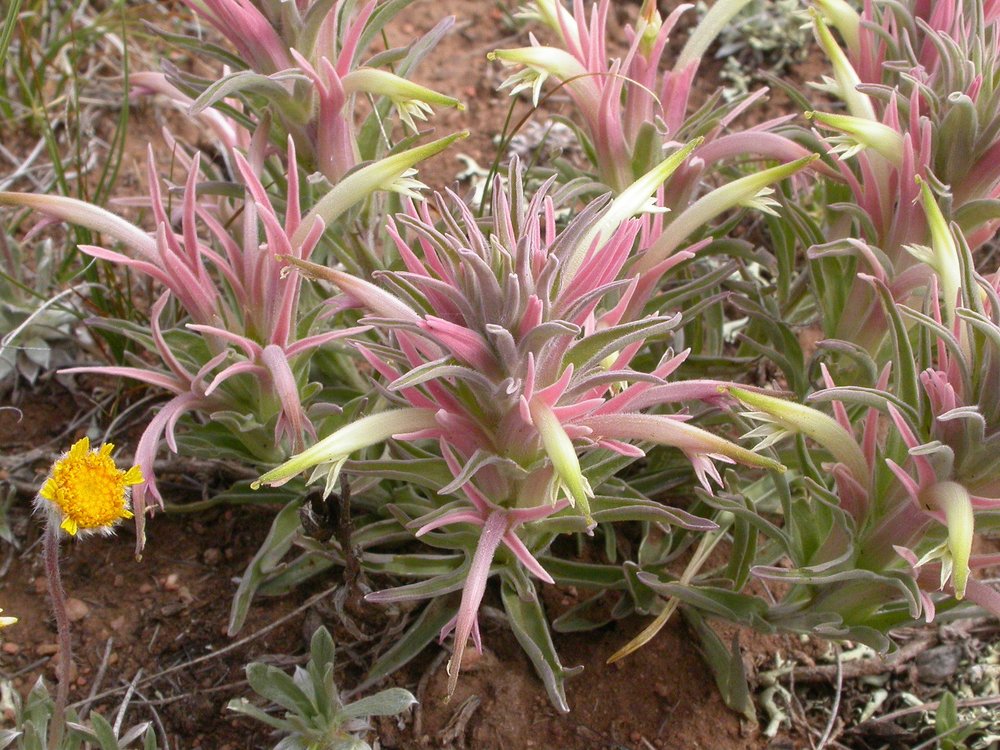
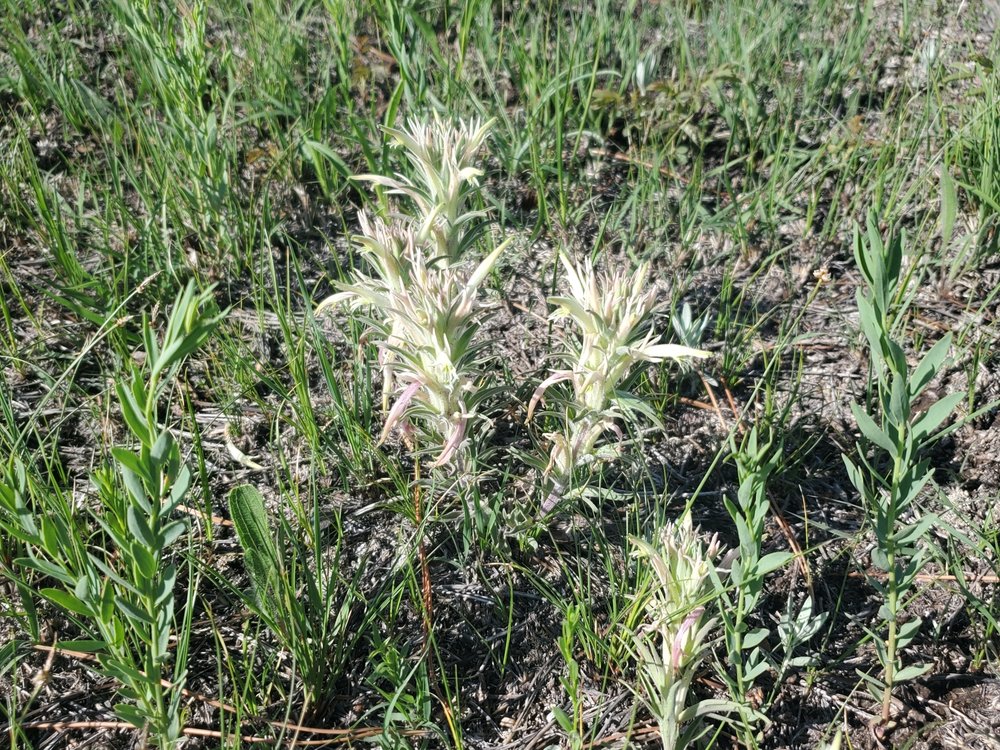
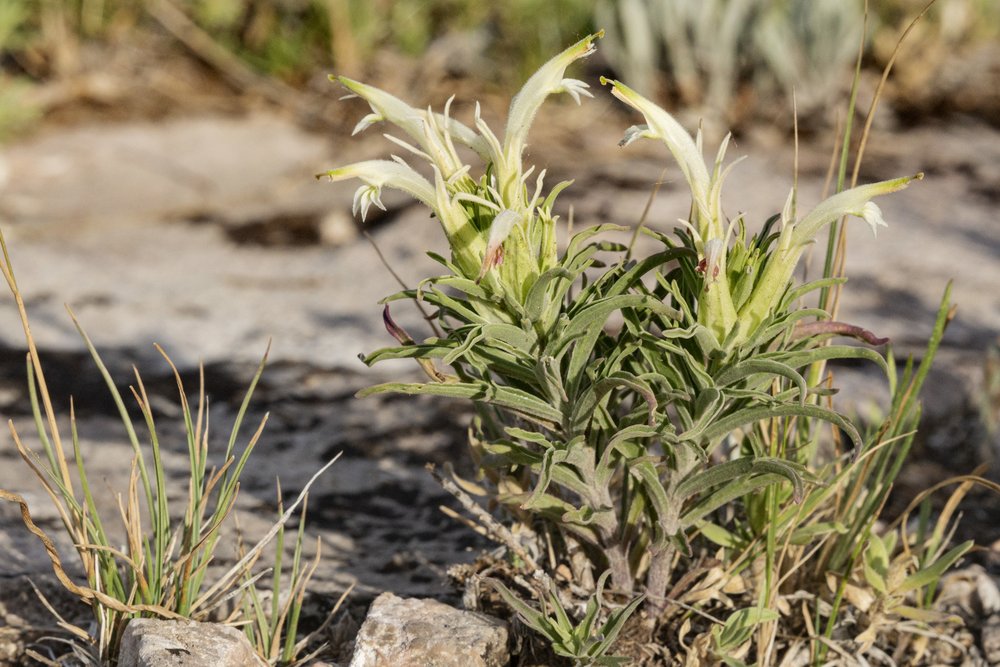
Downy Paintbrush (Castilleja sessiliflora) is a short, soft-hairy native perennial of the prairie, with long, curved, pale yellow to pink flower tubes that poke well out of a tuft of gray-green leaves. It blooms in May and June on the dry grassy foothills and Red Valley slopes that ring the Black Hills, and the 1986 plant survey of Jewel Cave National Monument lists it.
Free photos from other sources
| Family | Orobanchaceae · Broomrape |
|---|---|
| Status | Native perennial |
| Blooms | May and June, a few into early July |
| Height | 10–30 cm (4–12 in) |
| Where | Dry mixed-grass prairie and rocky or red-soil hillsides around the edge of the Hills |
| Also called | Downy Painted-cup, Great Plains Paintbrush, Downy Yellow Painted Cup, waȟpé yazókapi (Lakota) |
| Synonym | Castilleja grandiflora, Euchroma grandiflora, Bartsia grandiflora |
| Traditional use | Sitting Bull College's 1998 Culturally Important Plants of the Lakota says the fresh flowers were eaten for the sweet nectar at the bottom of the flower tube. Hart (1981) records that the Northern Cheyenne sucked the nectar from the flowers in spring. |
Roots, seeds & germination
Root: Several stems rise from a woody crown with roots about 28 cm (11 in) deep, which lets it come back each spring and resprout after a grass fire. Like all paintbrushes it is a hemiparasite: it makes its own food, but some roots fasten onto the roots of nearby grasses and wildflowers and draw off water and minerals without killing them.
Seed: Each flower leaves a woody, pointed capsule about 1.3–2 cm (½–¾ in) long, packed with dust-fine, angular seeds that ripen in early summer.
Germination: Seed needs about 60 days of cold, moist stratification (a winter in the ground) and should be sown on or just under the surface. Germination is often very low, and the seedling needs a host close by, so growers sow it at the base of a short grass such as blue grama, buffalo grass or Junegrass. SDSU notes it can be hard to establish.
How do you identify Downy Paintbrush?
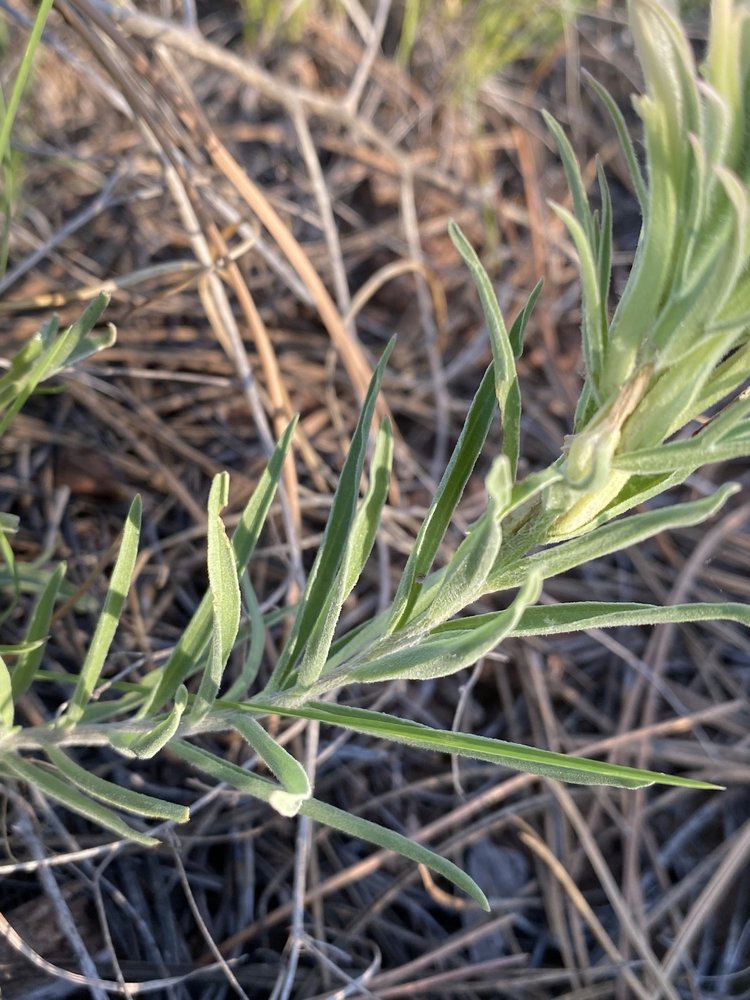
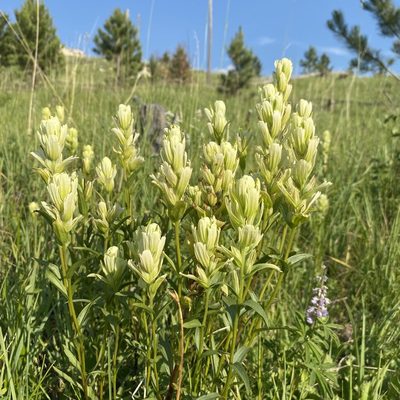
Look for a low clump of unbranched stems, usually 10–30 cm tall, soft and fuzzy with gray hairs. The leaves are narrow and crowded along the stem, the upper ones usually split into three narrow lobes, and the bracts in the spike stay green to gray-green instead of turning bright. The key mark is the flowers: slender, curved tubes 3.5–5.5 cm (1.4–2.2 in) long, pale yellow, cream or pinkish, that stick far out past the bracts. Northern Paintbrush grows in forest openings, is taller and smooth, and gets its color from broad cream to greenish-yellow bracts that hide its short flowers.
When does it bloom?
May and June, a few into early July.
Where does it grow?
Dry, open, sunny ground with well-drained, rather poor soil: mixed-grass prairie, rocky and gravelly hillsides, limestone outcrops, the red soils of the Red Valley, and grassy openings at the edge of ponderosa pine. The Black Hills National Forest describes it in mixed-grass prairie at low to middle elevations. NPSpecies lists it at Wind Cave, Jewel Cave and Devils Tower, and herbarium specimens come from all seven Black Hills counties in South Dakota and Wyoming, collected from 1892 on.
Other flowers to compare
Sources: Black Elk, L.S. & W.D. Flying By. 1998. Culturally Important Plants of the Lakota. Sitting Bull College (entry 71, Castilleja sessiliflora); Reese, R.N. Castilleja sessiliflora (downy paintbrush). South Dakota Native Plant Research, SDSU Open PRAIRIE; Walsh, R.A. 1993. Castilleja sessiliflora. Fire Effects Information System, USDA Forest Service; Black Hills Native Plants, Black Hills National Forest, USDA Forest Service; Marriott & Hartman 1986, Vegetation of Jewel Cave National Monument (species list); NPSpecies species lists (Wind Cave, Jewel Cave, Devils Tower), National Park Service; Castilleja sessiliflora, USDA PLANTS Database (CASE5); Castilleja sessiliflora, GBIF species page and occurrence records; GBIF herbarium specimens of Castilleja sessiliflora, South Dakota; GBIF herbarium specimens of Castilleja sessiliflora, Wyoming; Castilleja sessiliflora, Gleason & Cronquist 1991 Manual (NYBG monograph record); Castilleja sessiliflora, NEON Biorepository / SEINet taxon page (descriptions); Downy Paintbrush, Kansas Wildflowers and Grasses; Castilleja sessiliflora, Missouri Plants; Downy Painted Cup, Prairie Moon Nursery; Mitton, J. 2022. Downy paintedcup adapts, changes pollinators and root hosts across its range. Colorado Arts & Sciences Magazine, University of Colorado; Native American Ethnobotany Database (BRIT): Castilleja sessiliflora uses (Hart 1981, Northern Cheyenne; Smith 1923, Menominee); Castilleja sessiliflora, Wikipedia (summarizes FNA 2020 description and POWO synonymy); Castilleja sessiliflora, iNaturalist observations near the Black Hills.