Watercress Nasturtium officinale
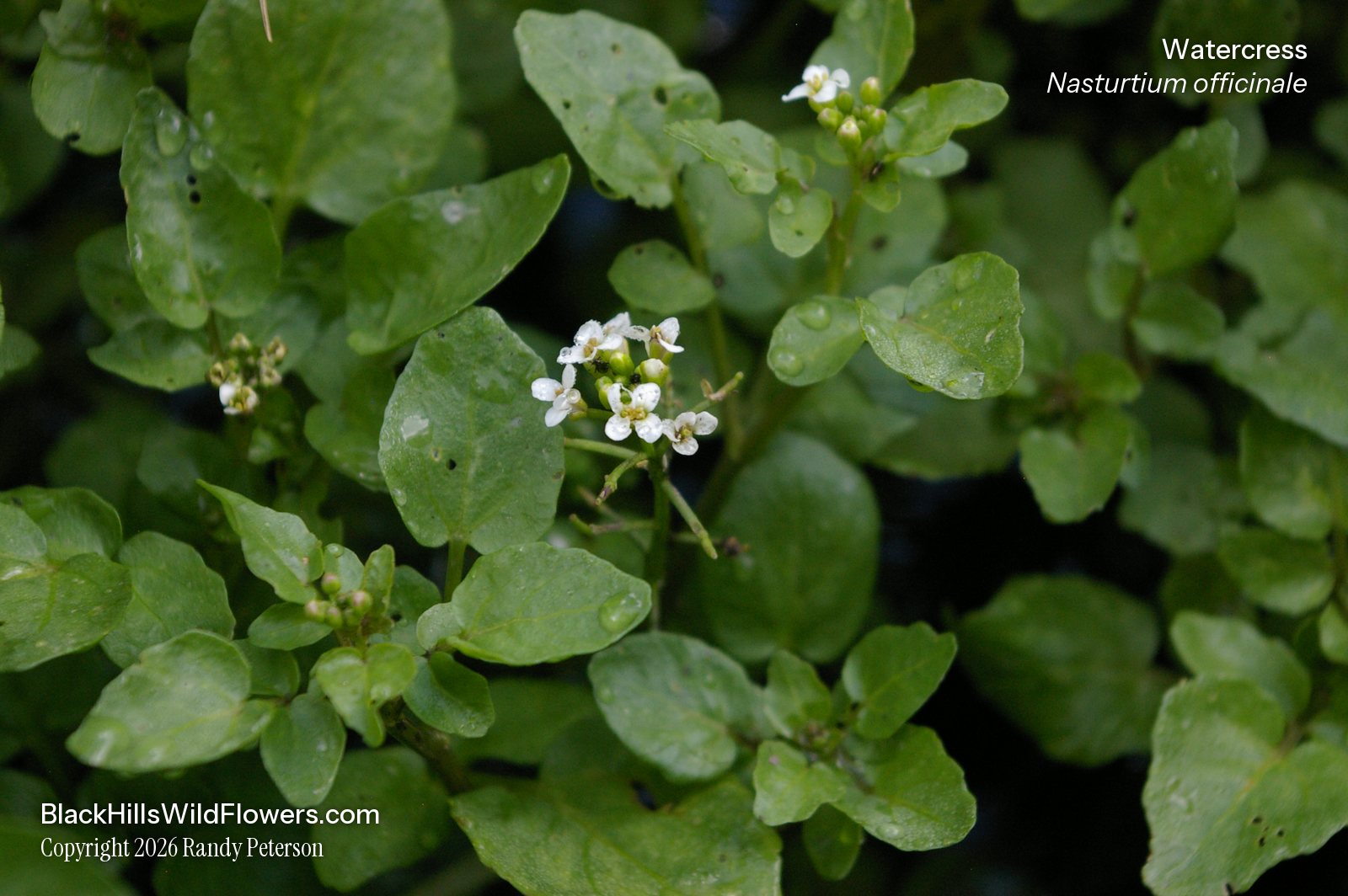
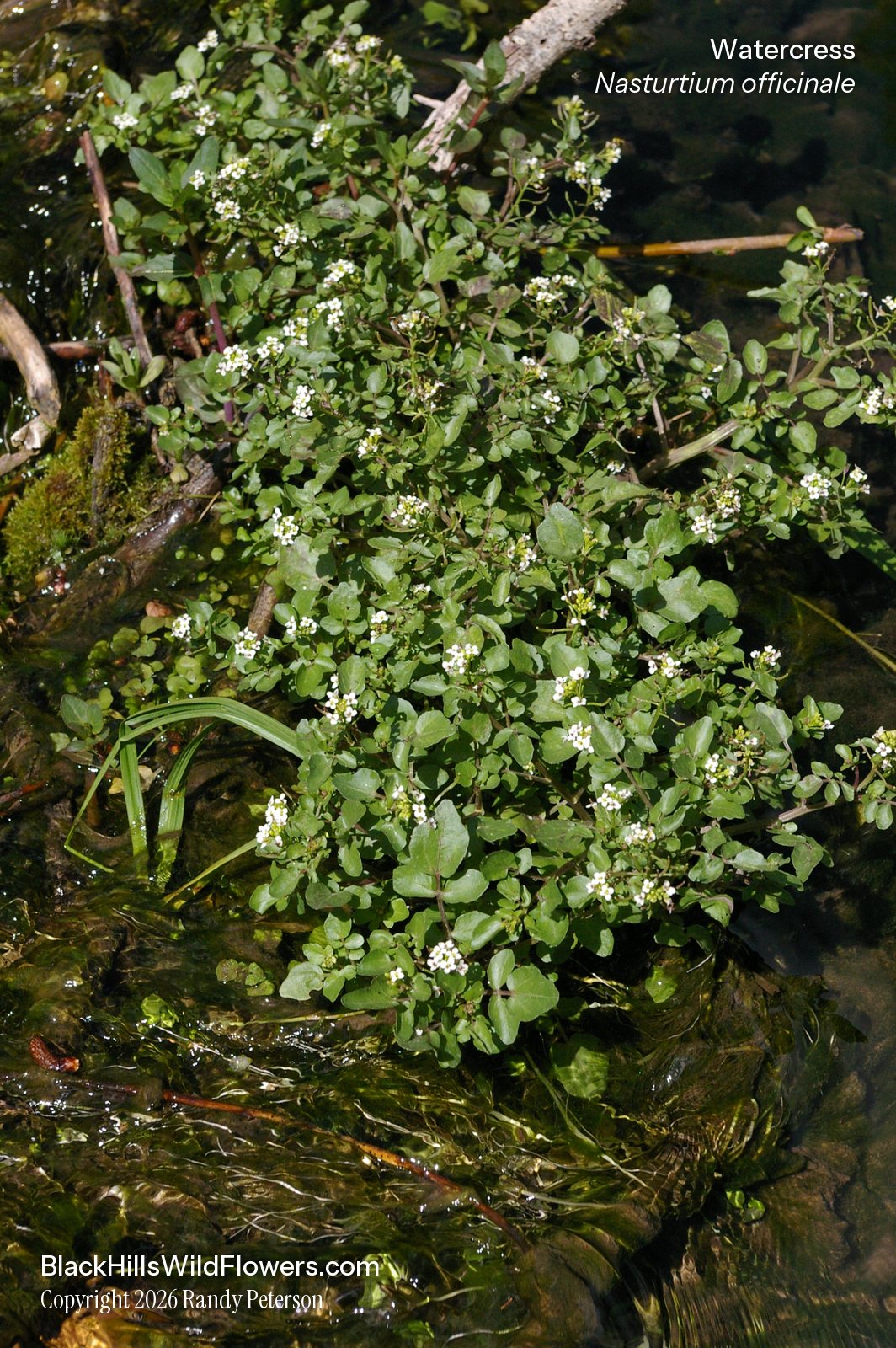
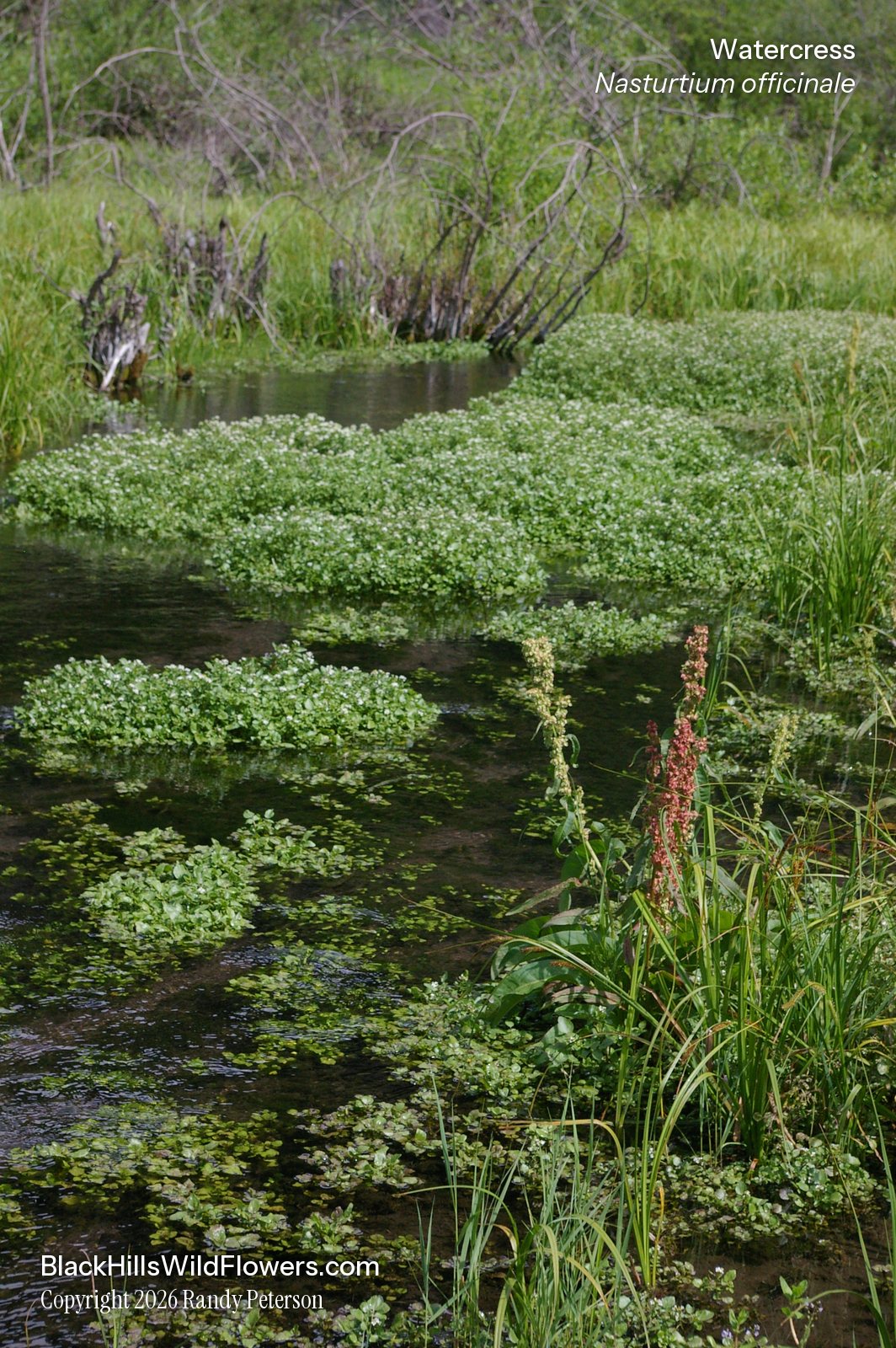
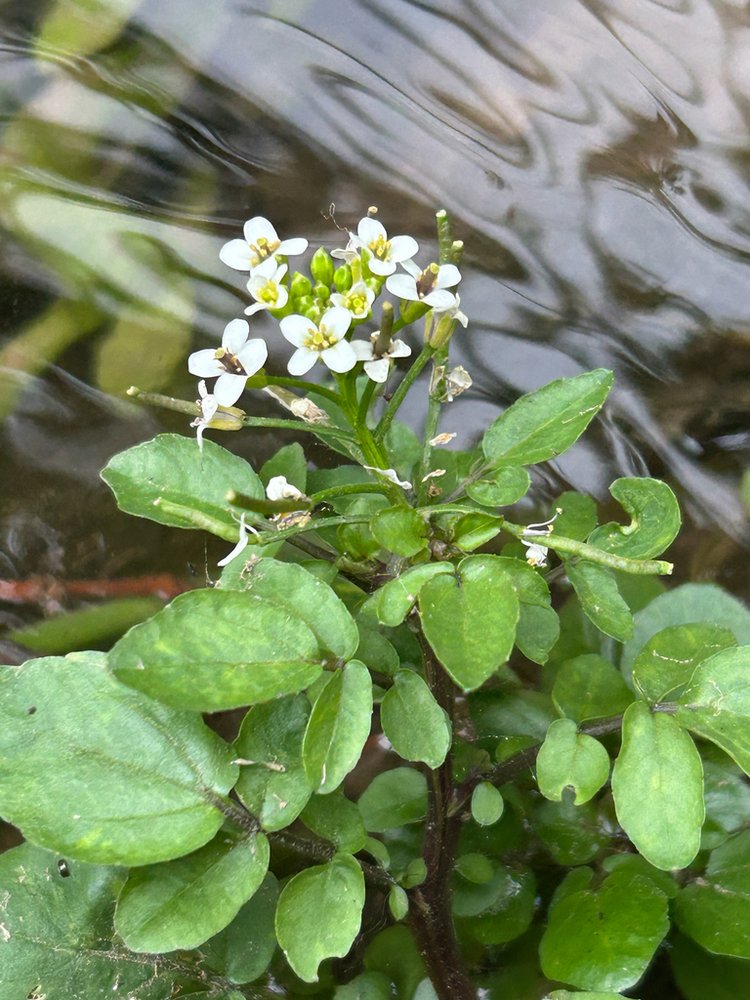
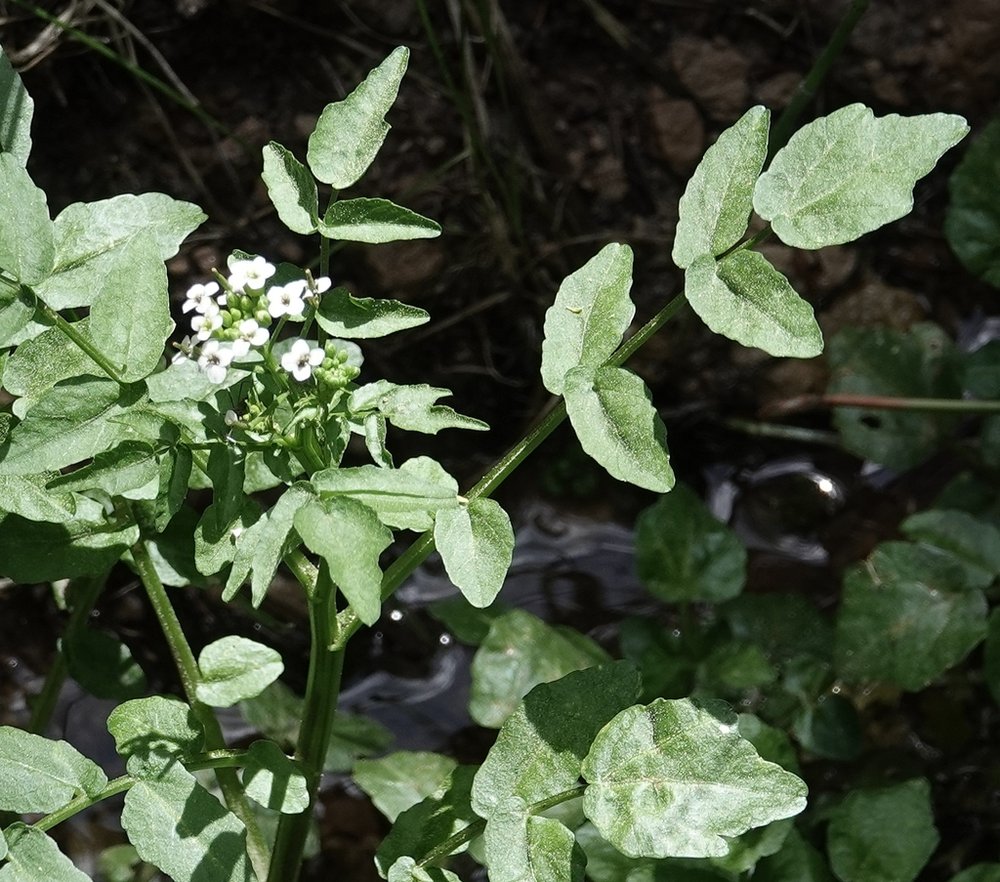
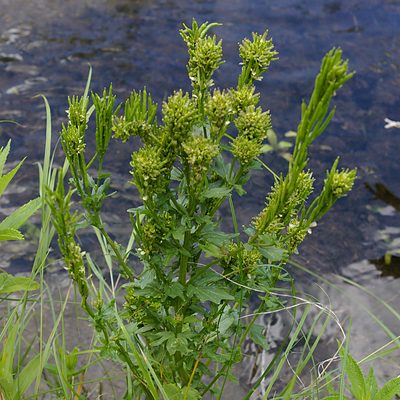
Watercress (Nasturtium officinale) is a hairless perennial of the mustard family, brought from Europe, that grows in cold streams and springs. Its stems float or sprawl and root at the joints, building dense green mats, and small white four-petaled flowers bloom in clusters at the stem tips. Herbarium specimens record it in Black Hills creeks and spring-fed streams from 1892 on, in flower from May into October, and the National Park Service lists it at Wind Cave. Photographed in the Black Hills.
Free photos from other sources
| Family | Brassicaceae · Mustard |
|---|---|
| Status | Introduced perennial |
| Blooms | May into October; Black Hills herbarium specimens are in flower from mid-May to late October, a few into early November |
| Height | Stems 10–110 cm (4–43 in), mostly floating or sprawling |
| Where | Cold, clear streams, springs and spring-fed creeks, ponds and ditches, including warm spring water |
| Synonym | Rorippa nasturtium-aquaticum, Sisymbrium nasturtium-aquaticum, Nasturtium nasturtium-aquaticum |
Roots, seeds & germination
Root: The stems float on the water or lie on mud and root at the joints, so a plant spreads into a dense mat.
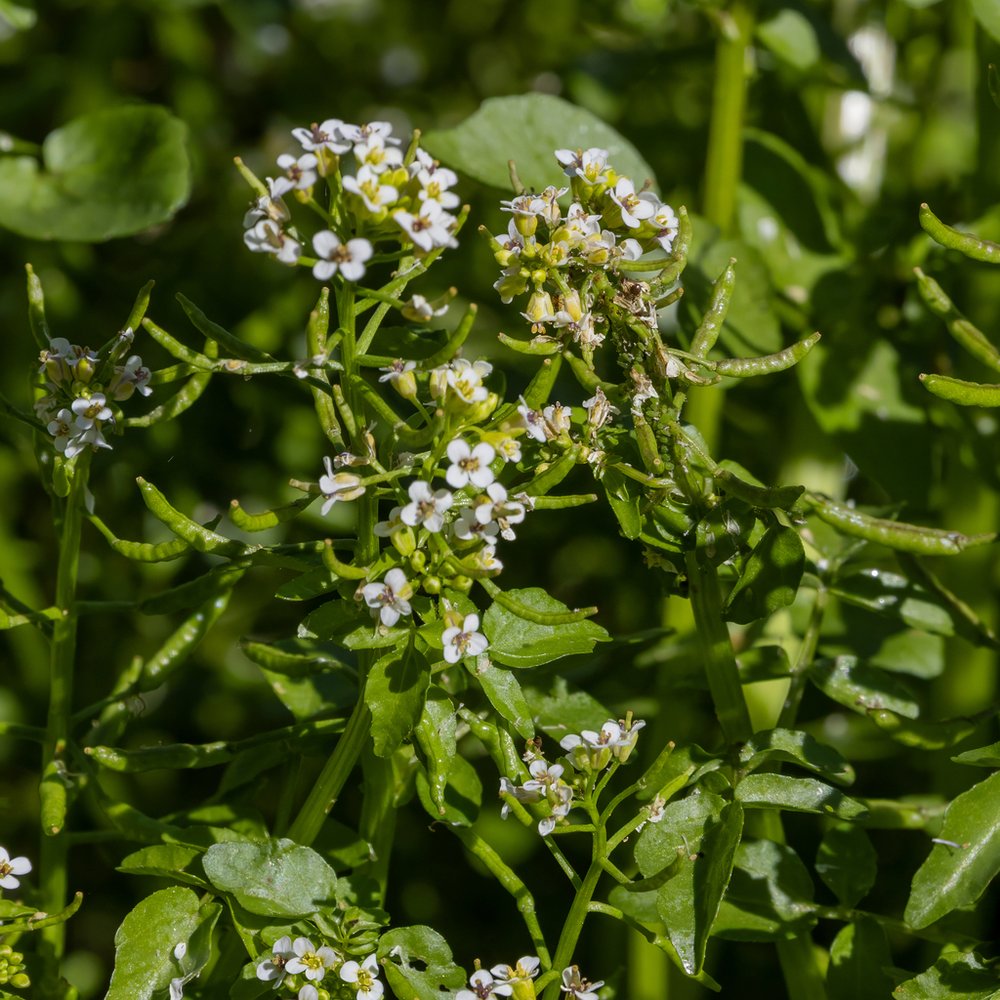
Seed: The pods are 1–1.8 cm (⅜–¾ in) long, rarely to 2.5 cm, and about 2 mm wide, tipped by a style 0.5–1 mm long. The seeds sit in two rows inside; they are reddish brown, oval, about 1 mm long, with a coarse net pattern of 25 to 50 cells on each face.
How do you identify Watercress?
Look for a hairless plant growing in or at the edge of cold, moving water, with stems that float or lie on the mud and root at the joints. Each leaf is divided into 3 to 9 leaflets, sometimes more: the end leaflet is the largest and often nearly round, and the side leaflets are smaller and oval to lance-shaped, with smooth or slightly wavy edges. The flowers are about 6 mm (¼ in) across, with 4 white petals and yellowish stamens, in clusters at the stem tips that stretch out as the pods form. The pods are slender and slightly curved, 1–2.5 cm (⅜–1 in) long with a short beak, held out on spreading or drooping stalks, and the seeds sit in two rows inside. One-row Watercress (Nasturtium microphyllum), which Flora of North America records in Wyoming but not South Dakota, is nearly impossible to tell apart without fruit; Minnesota Wildflowers says its pods are longer and slimmer, with the seeds in a single row.
When does it bloom?
May into October; Black Hills herbarium specimens are in flower from mid-May to late October, a few into early November.
Where does it grow?
Cold, clear water: creeks, springs and spring-fed streams, ponds and ditches, rooted in the creek bed, standing at the edge or floating; in Fall River County it also grows in warm spring water. Herbarium specimens from 1892 to 2011 record it in Lawrence, Pennington, Custer and Fall River counties and in Crook County, Wyoming; a 2007 label describes it as locally abundant, forming large mats over the water. The National Park Service lists it at Wind Cave National Park.
Other flowers to compare
Other mustards in this guide
Compare all 11 mustards side by side
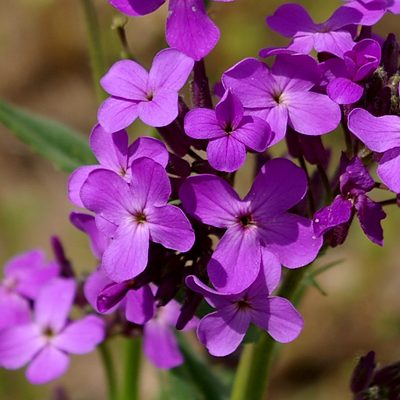
Dame's Rocket
Hesperis matronalis
Desert Princeplume
Stanleya pinnata
False Flax
Camelina microcarpa
Hoary Alyssum
Berteroa incana
Mustard Tumbleweed
Sisymbrium altissimum
Shepherd's Purse
Capsella bursa-pastoris
Sidesaddle Bladderpod
Lesquerella arenosa var. argillosa
Tower Rockcress
Turritis glabra
Western Wallflower
Erysimum asperum
Wintercress
Barbarea orthoceras
Sources: Flora of North America Vol. 7: Nasturtium officinale (I. A. Al-Shehbaz), eFloras; Flora of North America Vol. 7: genus Nasturtium and key, eFloras; Flora of North America Vol. 7: Nasturtium microphyllum, eFloras; Minnesota Wildflowers: Nasturtium officinale (Watercress); USDA PLANTS Database: Nasturtium officinale (NAOF); NPSpecies checklist, Wind Cave National Park vascular plants; GBIF occurrence search: Nasturtium officinale, South Dakota herbarium specimens; GBIF specimen 3454982729: Ode 2007, Lawrence County, "locally abundant forming extensive surface mats over water"; GBIF specimen 3454982697: Larson 1982, Lawrence County, emergent at the edge of a creek; GBIF specimen 3454983231: Van Sickle 1982, Fall River County, submerged in warm water; GBIF specimen 3454982667: Rydberg 1892, Fall River County, in flower and fruit; GBIF specimen 3454982046: Larson and Johnson 1992, Fall River County, emergent in shallow water, in flower and fruit 15 May; GBIF specimen 3023458375: Johnson 2000, Lawrence County, in a creek, in flower and fruit 13 October; GBIF specimen 3023458361: Johnson 1998, Lawrence County, shallow slow-moving water, in flower and fruit 1 November; GBIF specimen 3454984210: Marriott 1984, Crook County, WY, shallow water at the edge of a stream, in flower.