Sidesaddle Bladderpod Lesquerella arenosa var. argillosa also listed as Physaria arenosa ssp. argillosa
Also called Great Plains Bladderpod, Secund Bladderpod
Sidesaddle Bladderpod (Lesquerella arenosa var. argillosa) is a low perennial of the mustard family, with stems up to about 30 cm (12 in) long and yellow flowers in May and June. South Dakota's rare plant table calls it a badlands plant of the state's southwest, and herbarium sheets with its name also come from dry limestone slopes and ridges inside the Black Hills, some under ponderosa pine; but sheets from the Hills carry both varieties' names, so which one grows there isn't settled.
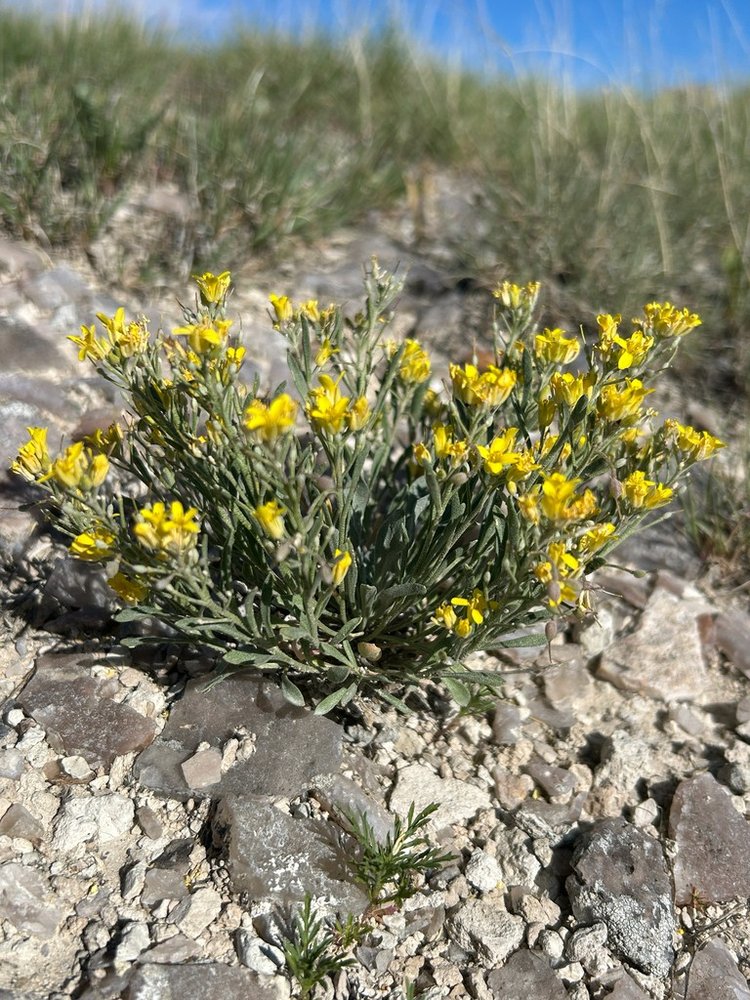
Free photos from other sources
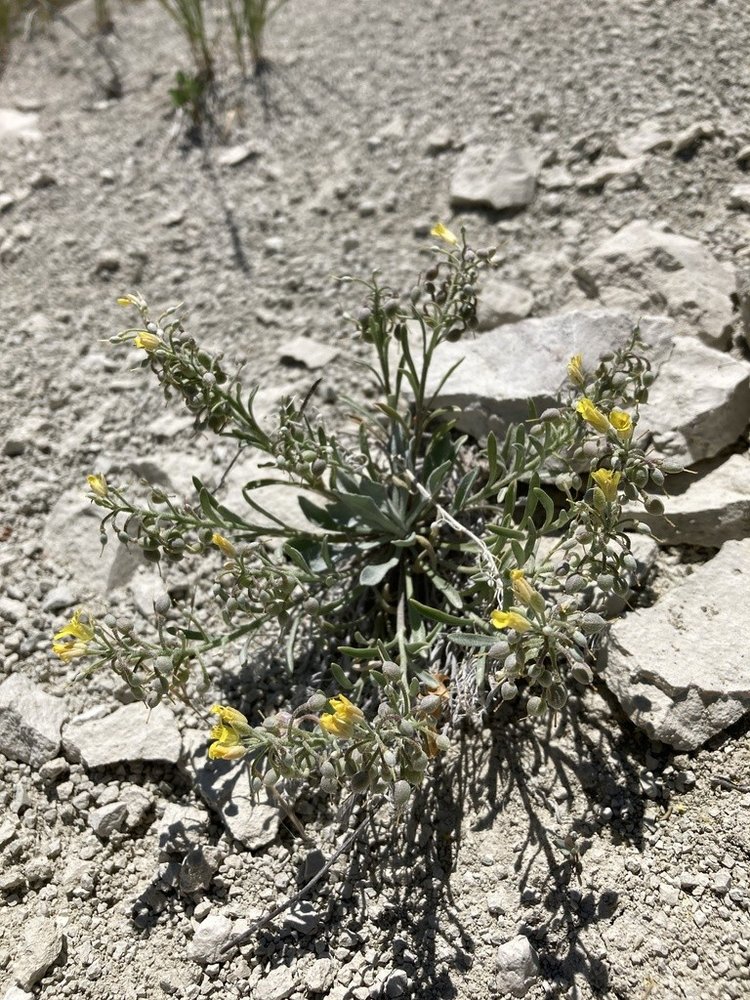
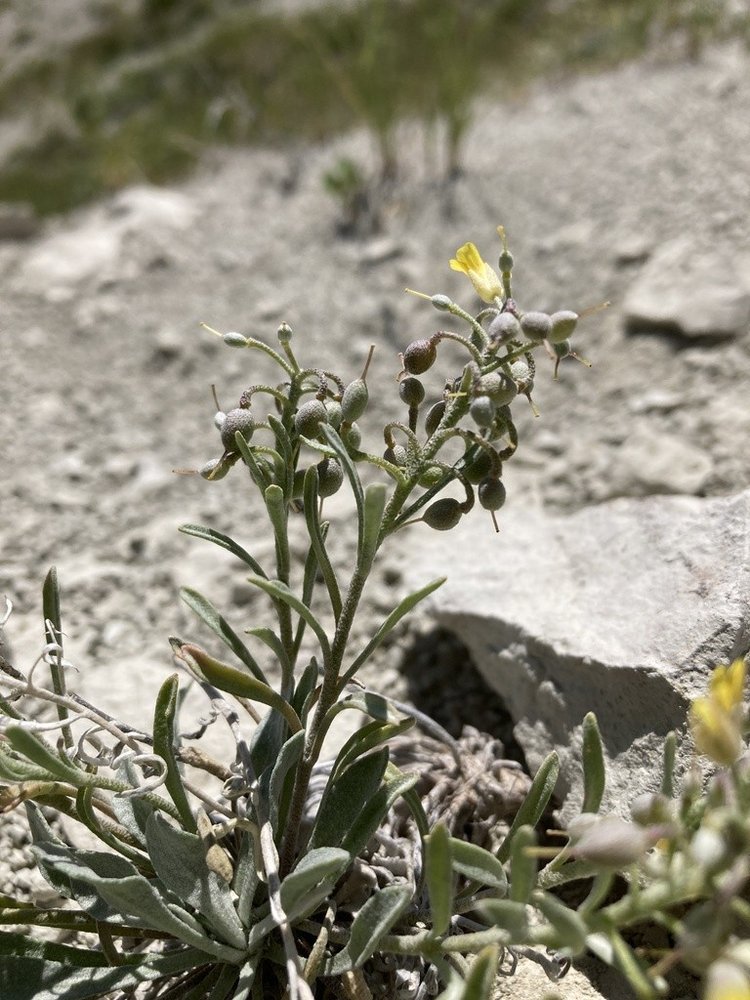
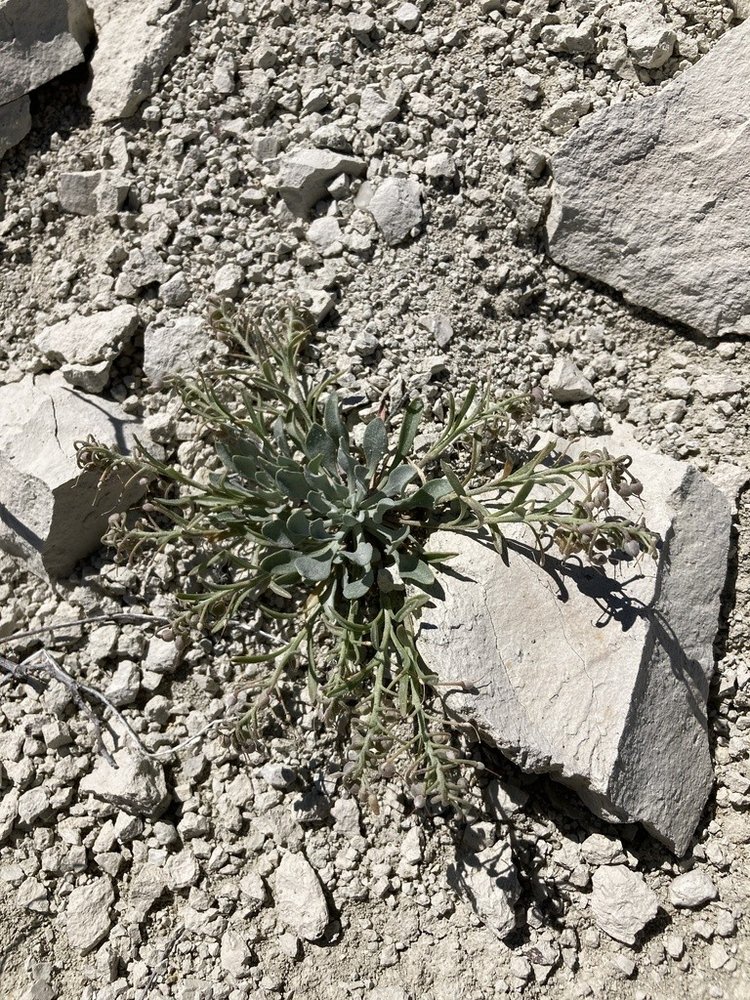
| Family | Brassicaceae · Mustard |
|---|---|
| Status | Native perennial |
| Blooms | May into June |
| Height | Stems up to about 30 cm (12 in) long, lying flat to upright |
| Where | Open, barren grassland and badlands with clay or sandy-clay soil from limestone; in the Black Hills, dry limestone slopes and ridges, some under ponderosa pine |
| Also called | Great Plains Bladderpod, Secund Bladderpod |
| Note | South Dakota's Natural Heritage Program ranks Sidesaddle Bladderpod S3, vulnerable in the state, and the Forest Service's 2023 draft assessment for the Black Hills forest plan lists it as a species of conservation concern. This page gives no locations. |
How do you identify Sidesaddle Bladderpod?
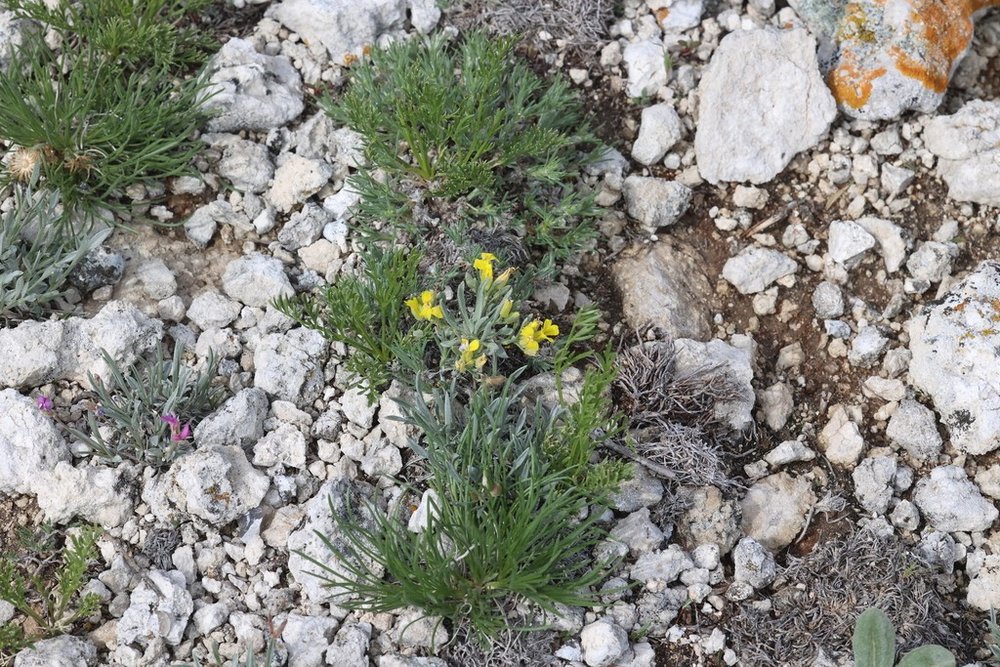
Look for a low plant whose stems lie flat, sprawl or stand up, up to about 30 cm (12 in) long, with yellow flowers that often dry to red or lavender, and a fruit that is a silicle, a short mustard-family pod (Lady Bird Johnson Wildflower Center, describing this variety). Herbarium labels for this variety give the flower color as yellow on two sheets and cream-white on one collection. A 2024 herbarium label from a badlands butte where both varieties grew together says var. argillosa has broader golden-yellow petals than the pale yellow ones of var. arenosa, and flowers later. No source opened for this guide gives a full key to the two varieties. The photos here are of plants identified on iNaturalist as var. argillosa, from the plains.
When does it bloom?
May into June.
Where does it grow?
The Wildflower Center gives open, barren sites in grassland and badlands, with clayey or sandy-clay soil made from limestone, and South Dakota's rare plant table calls it a regional endemic of badlands in the southwest of the state. GBIF holds 83 preserved specimens of the species, collected from 1892 to 2010, from the western South Dakota and northeastern Wyoming areas that take in part of the Black Hills: 51 are named var. or ssp. argillosa, 13 var. or ssp. arenosa and 19 only Physaria or Lesquerella arenosa. Both names turn up on both kinds of ground. Sheets named argillosa come from badland buttes, clay and shale slopes and flat prairie on the plains, and from inside the Hills on dry limestone slopes and ridges, rocky open ground, gravelly hillsides and grassland, some under ponderosa pine. Sheets named arenosa come from prairie, shrub steppe and buttes on the plains, and from inside the Hills from a grassy opening in ponderosa pine forest on limestone and from sandstone bluffs in pine forest. The plant list of one Black Hills park unit shows var. arenosa as present, and another's lists the species as probably present. The Forest Service's 2023 draft assessment of at-risk species for the Black Hills forest plan lists var. argillosa as a species of conservation concern: it counts 36 known occurrences, at least five on Forest Service land, notes a couple of specimen records from the Black Hills forest, and groups it with plants of limy or limestone soils. South Dakota's table ranks it G5T3 (the variety is vulnerable across its range) and S3 in the state, and an older Wyoming Natural Diversity Database list ranks it S1 in Wyoming and marks it a BLM sensitive plant.
Other mustards in this guide
Compare all 11 mustards side by side
Dame's Rocket
Hesperis matronalis
Desert Princeplume
Stanleya pinnata
False Flax
Camelina microcarpa
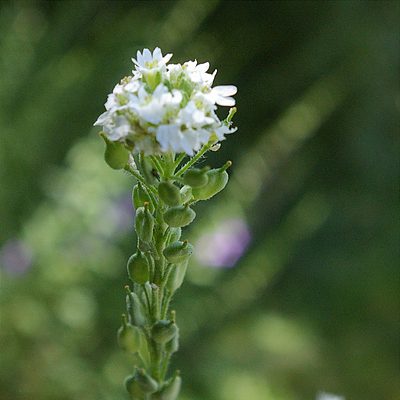
Hoary Alyssum
Berteroa incana
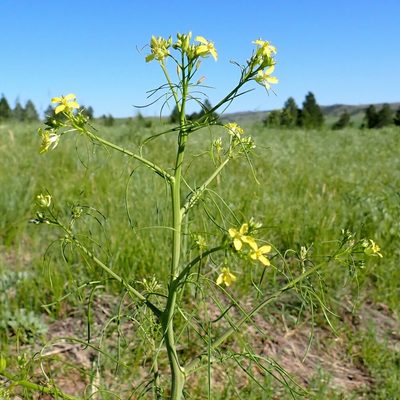
Mustard Tumbleweed
Sisymbrium altissimum
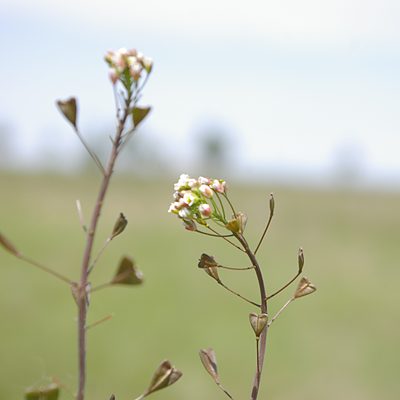
Shepherd's Purse
Capsella bursa-pastoris
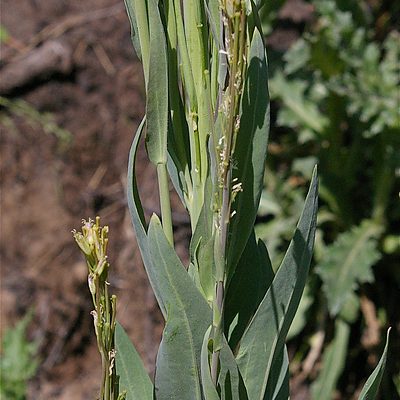
Tower Rockcress
Turritis glabra
Watercress
Nasturtium officinale
Western Wallflower
Erysimum asperum
Wintercress
Barbarea orthoceras
Sources: South Dakota Game, Fish and Parks: Rare Plants of South Dakota (South Dakota Natural Heritage Program, 2018); USDA Forest Service Rocky Mountain Region, Revised Forest Assessment: At-Risk Species, draft, October 2023 (Physaria arenosa ssp. argillosa: species of conservation concern; calcareous soils); Lady Bird Johnson Wildflower Center: Lesquerella arenosa var. argillosa (Great Plains Bladderpod, Secund Bladderpod, Sidesaddle Bladderpod); Wyoming Natural Diversity Database: Species of Special Concern (L), older list hosted by BLM Wyoming; USDA PLANTS Database: Lesquerella arenosa var. argillosa (LEARA); ITIS: Physaria arenosa ssp. argillosa (TSN 823391, accepted; Lesquerella arenosa var. argillosa is a synonym); GBIF occurrence search: Physaria arenosa, South Dakota specimens; GBIF occurrence search: Physaria arenosa, Wyoming specimens; National Park Service NPSpecies: vascular plant checklist for a Black Hills park unit, 1 of 2 cited; National Park Service NPSpecies: vascular plant checklist for a Black Hills park unit, 2 of 2 cited; Native American Ethnobotany Database (BRIT): searches for Lesquerella arenosa and Physaria arenosa (no uses listed).