Silktop Dalea Dalea aurea
Also called Golden Prairie Clover, Golden Dalea, Golden Prairieclover, tȟokȟála tȟapȟéžuta (Lakota)
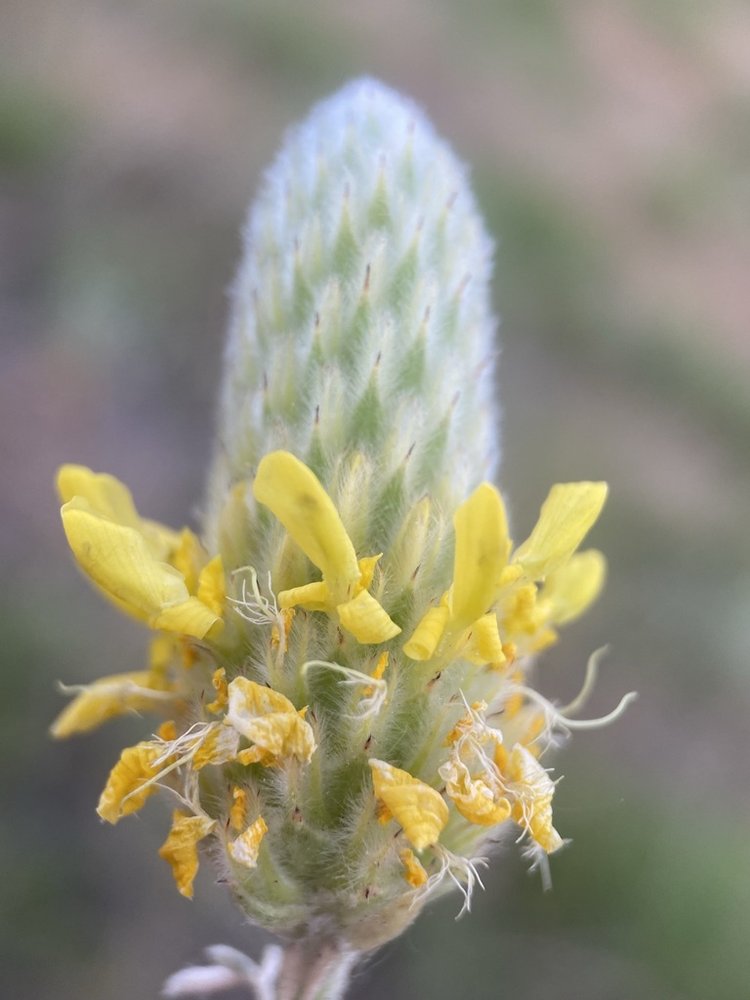
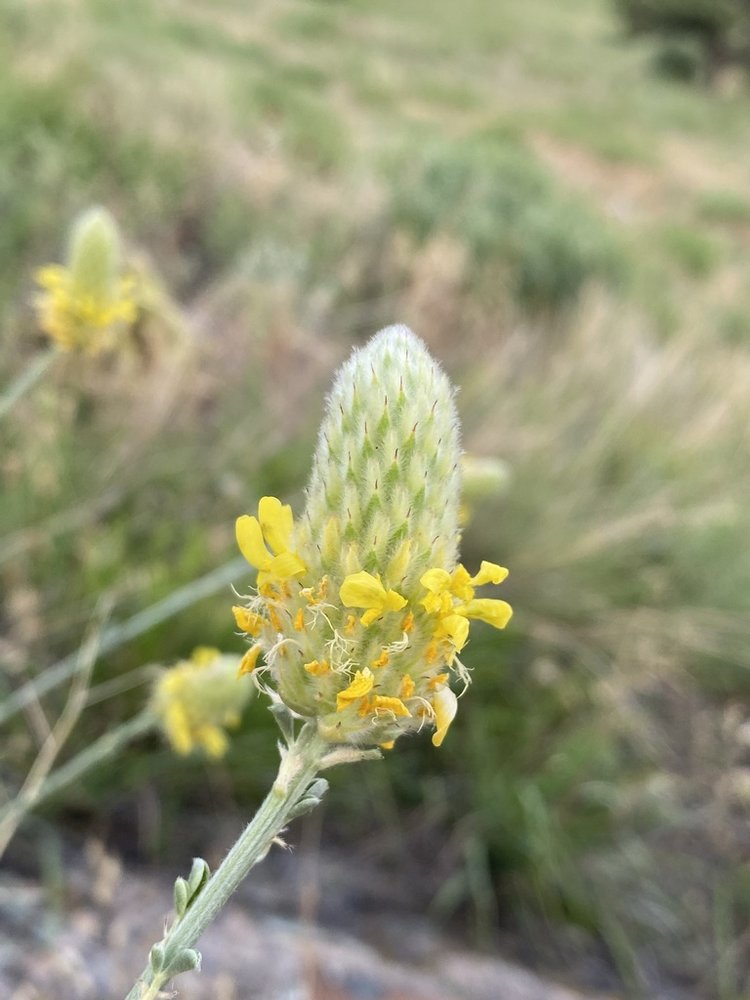
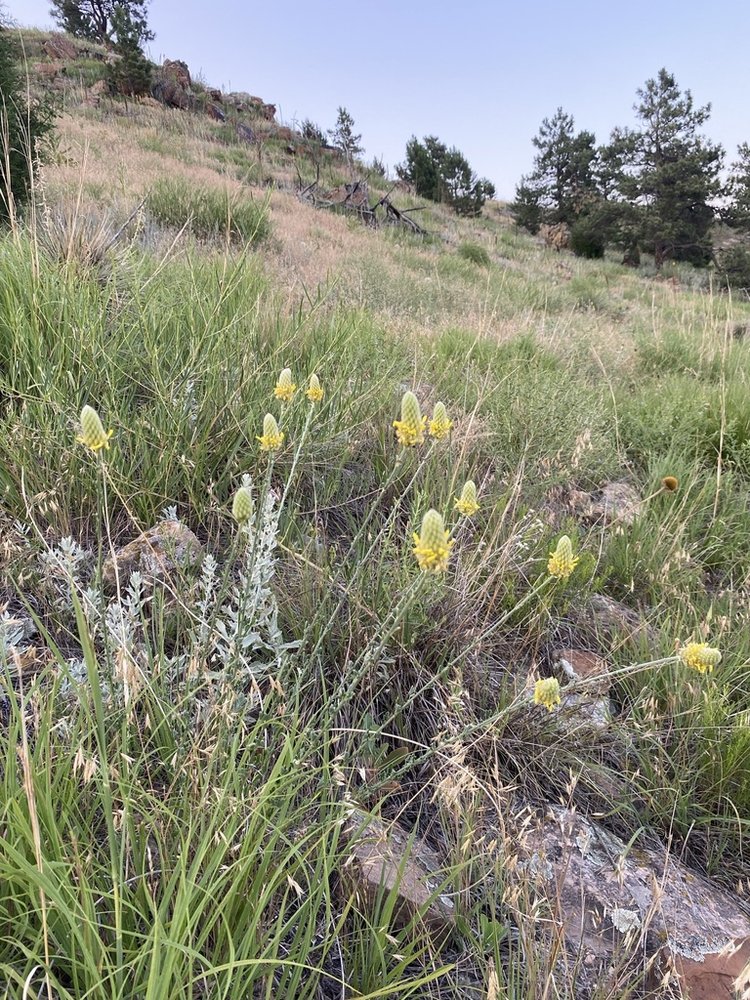
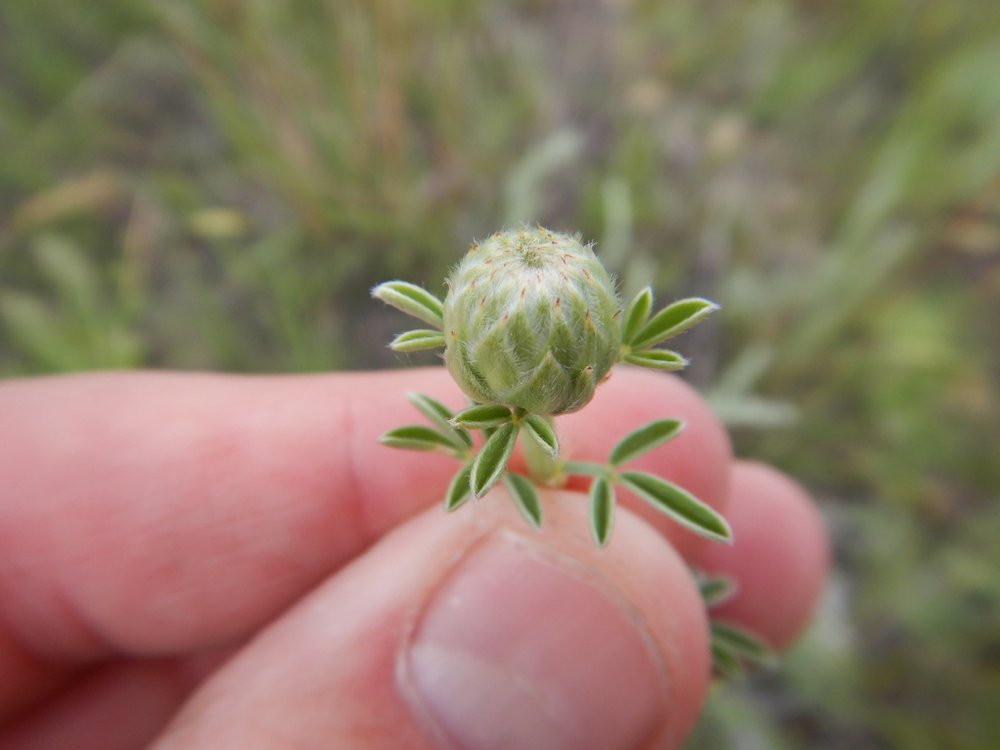
Silktop Dalea (Dalea aurea) is a native perennial with silky-haired, gray-green stems and leaves and dense, cone-shaped spikes of bright yellow, pea-like flowers that bloom from June into September. It grows on prairies and open hillsides in western and southwestern South Dakota, and in the Black Hills the National Park Service lists it at Wind Cave National Park.
Free photos from other sources
| Family | Fabaceae · Pea |
|---|---|
| Status | Native perennial |
| Blooms | June into September |
| Height | 20–75 cm (8–30 in) |
| Where | Dry prairie, sandy or rocky open hillsides, ravines and stream valleys |
| Also called | Golden Prairie Clover, Golden Dalea, Golden Prairieclover, tȟokȟála tȟapȟéžuta (Lakota) |
| Synonym | Parosela aurea |
| Traditional use | Black Elk and Flying By's 1998 list of Lakota plants records that the Lakota took an infusion of the leaves for dysentery and stomachache and a decoction of the leaves for colic. Gilmore (1919, p. 94) records an Oglala informant who said a decoction of the leaves was used for colic and dysentery. |
Roots, seeds & germination
Root: A woody base (caudex) sits atop a taproot, and the stems rise from it (SDSU).
Seed: The fruit is a one-seeded legume 3–4 mm long, covered with silky hairs, and the yellow seeds are 2–2.6 mm long (SDSU).
Germination: SDSU says the seed has a mild dormancy, and some of it will sprout when planted in spring; scratching the seed coat with fine sandpaper lets water in and improves sprouting.
How do you identify Silktop Dalea?
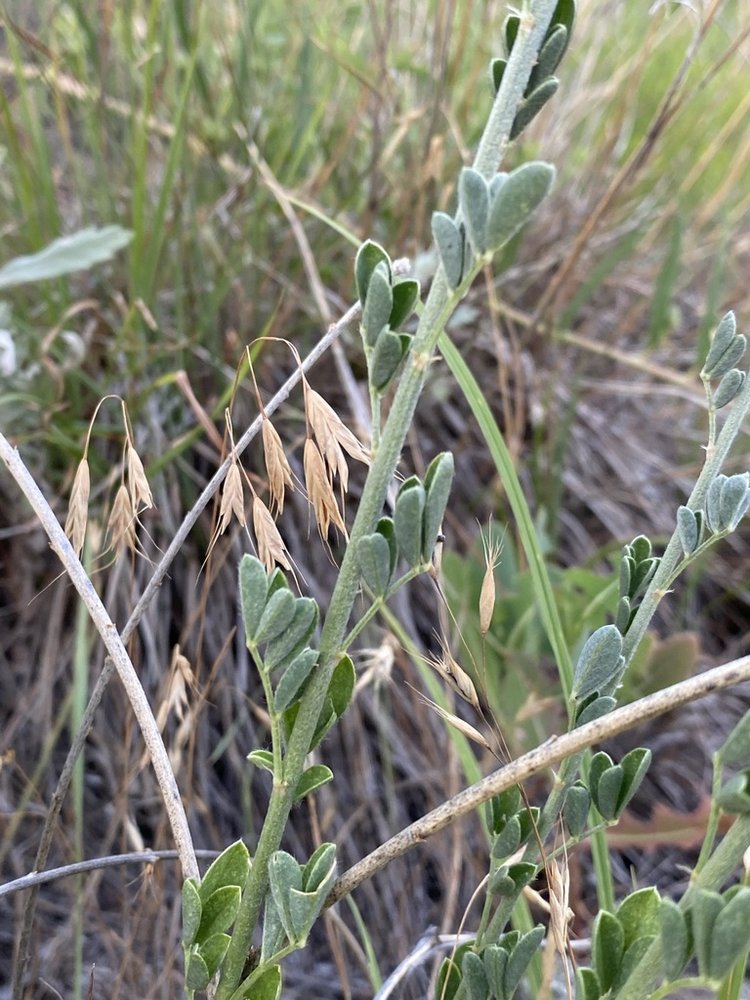
Look for a dense, cone-like spike 1.5–7 cm (½–2¾ in) long, covered in silky hairs, with the yellow flowers blooming from the base upward and encircling the spike. The stems, 1 to several from the base, are erect and silky-hairy, and the gray-green leaves are divided into 5–7 small leaflets (4–16 mm long), largest near the base of the stem and smaller above. Each flower is pea-shaped, with an upper petal 6.5–8.6 mm long, and the fruit is a tiny silky-hairy pod holding one yellow seed.
When does it bloom?
June into September.
Where does it grow?
Prairies, open hillsides, ravines and stream valleys in western and southwestern South Dakota (SDSU), and rocky prairie slopes, open wooded or brushy hillsides and waste ground in Kansas. Black Hills herbarium labels give sandy prairie, dry sand beside a road, a rocky limestone outcrop in shortgrass plains, prairie hillsides and a canyon-bottom prairie. The National Park Service lists it at Wind Cave, and GBIF holds 14 dated herbarium specimens from Fall River, Meade and Pennington counties, South Dakota, collected between 1892 and 1998.
Other clovers in this guide
Pea family (Fabaceae): 31 other plants in this guide
- Alfalfa
- Alpine Sweetvetch
- American Vetch
- Barr's Milkvetch
- Black Medic
- Canada Milkvetch
- Canada Tickclover
- Cream Milkvetch
- Crown Vetch
- Drummond's Milkvetch
- Field Locoweed
- Field Milkvetch
- Golden Pea
- Groundplum Milkvetch
- Indian Milkvetch
- Lambert's Crazyweed
- Laxmann's Milkvetch
- Lead Plant
- Missouri Milkvetch
- Pale Vetchling
- Prairie Turnip
- Purple Prairie Clover
- Red Clover
- Silverleaf Scurfpea
- Silvery Lupine
- Slimflower Scurfpea
- Tufted Milkvetch
- White Clover
- White Prairie Clover
- Wild Licorice
- Yellow Sweetclover
Sources: SDSU Open PRAIRIE: Fabaceae: Dalea aurea (R. Neil Reese); Kansas Wildflowers and Grasses: Silktop dalea (Dalea aurea); Lady Bird Johnson Wildflower Center: Dalea aurea (Golden Prairie Clover); USDA PLANTS Database: Dalea aurea (DAAU); NPSpecies checklist, Wind Cave National Park vascular plants; GBIF occurrence search: Dalea aurea herbarium specimens, South Dakota; GBIF specimen 5159144108: Fall River County 1989, limestone rocky outcrop, shortgrass plains; GBIF specimen 2609438889: Fall River County 1924, dry sand beside road; Culturally Important Plants of the Lakota (Black Elk and Flying By, 1998), entry 97, filed with the South Dakota PUC; Gilmore 1919, Uses of Plants by the Indians of the Missouri River Region, p. 94 (Parosela aurea); Native American Ethnobotany Database (BRIT): Dalea aurea; South Dakota locally noxious weed list, updated 2024 (DANR); Wyoming Weed and Pest Council: Designated Weed List.