Lead Plant
Amorpha canescens
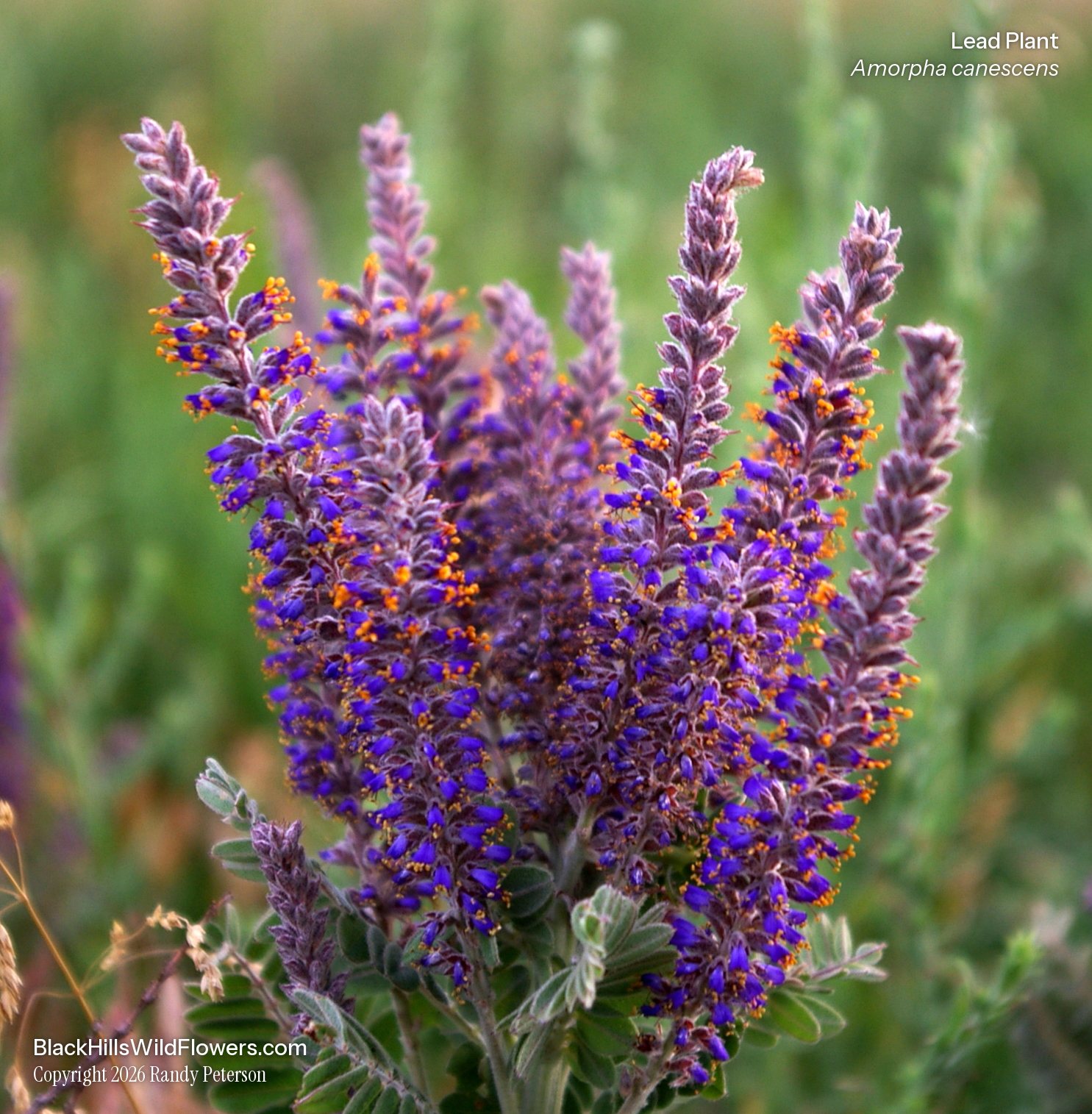
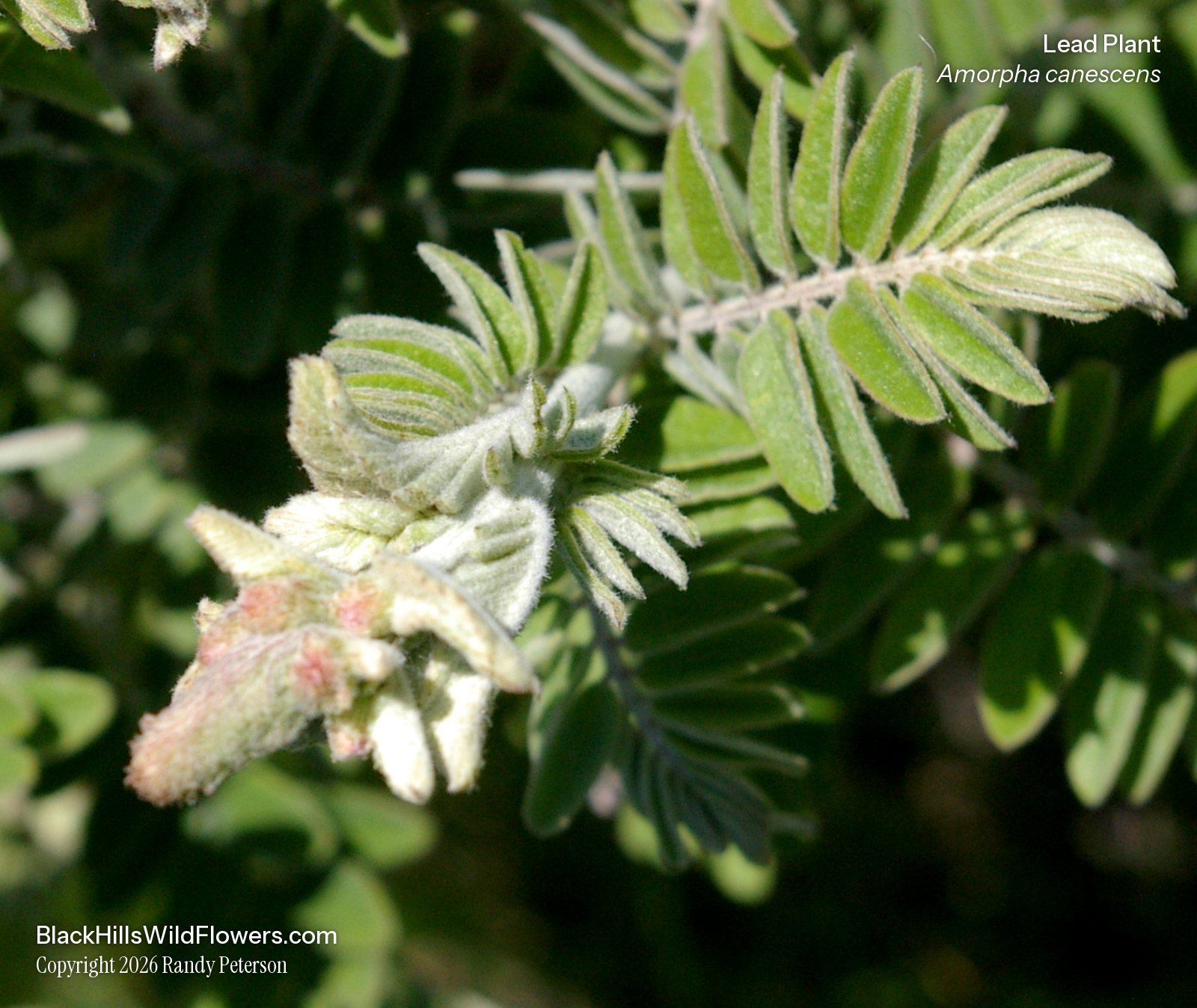
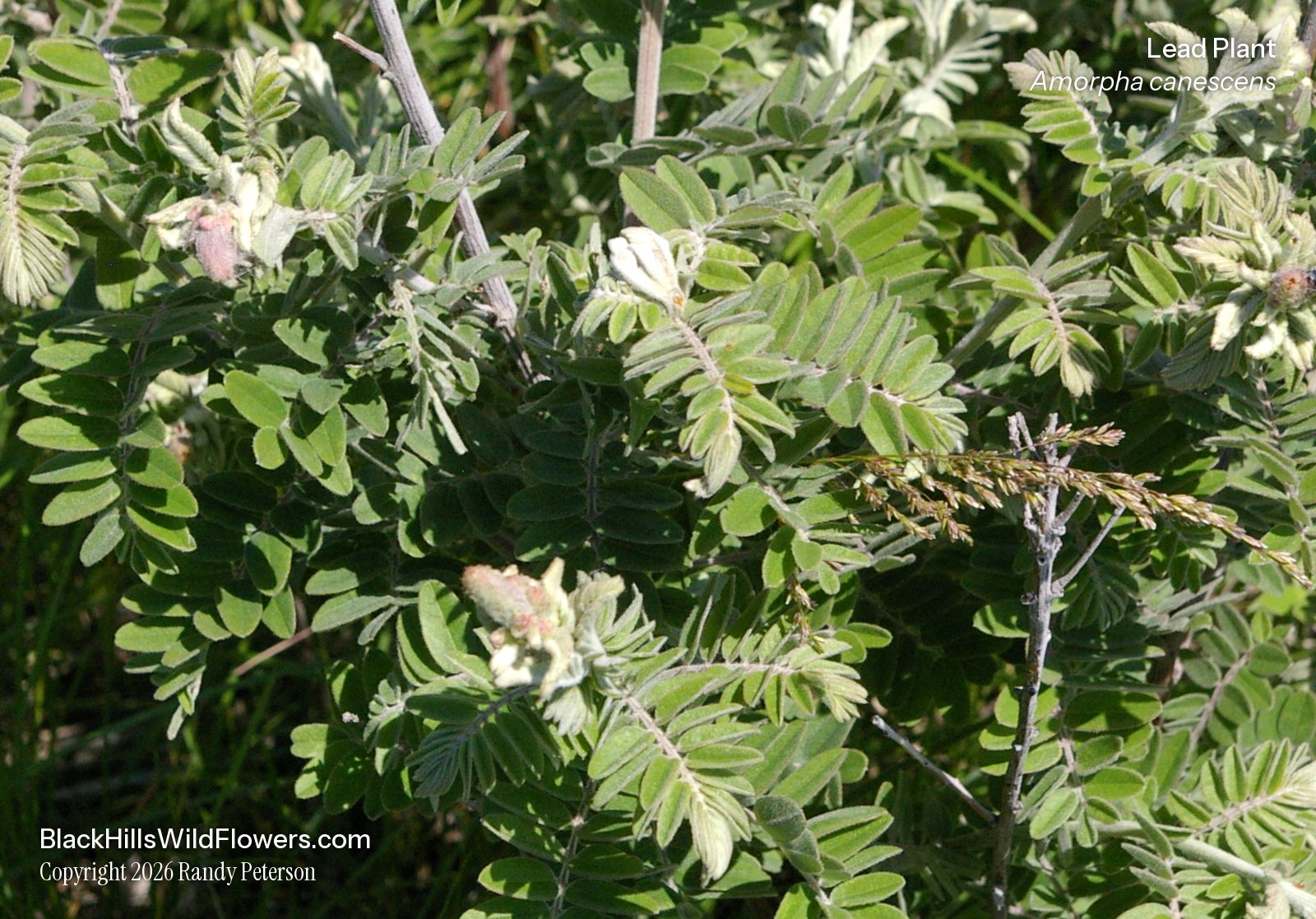
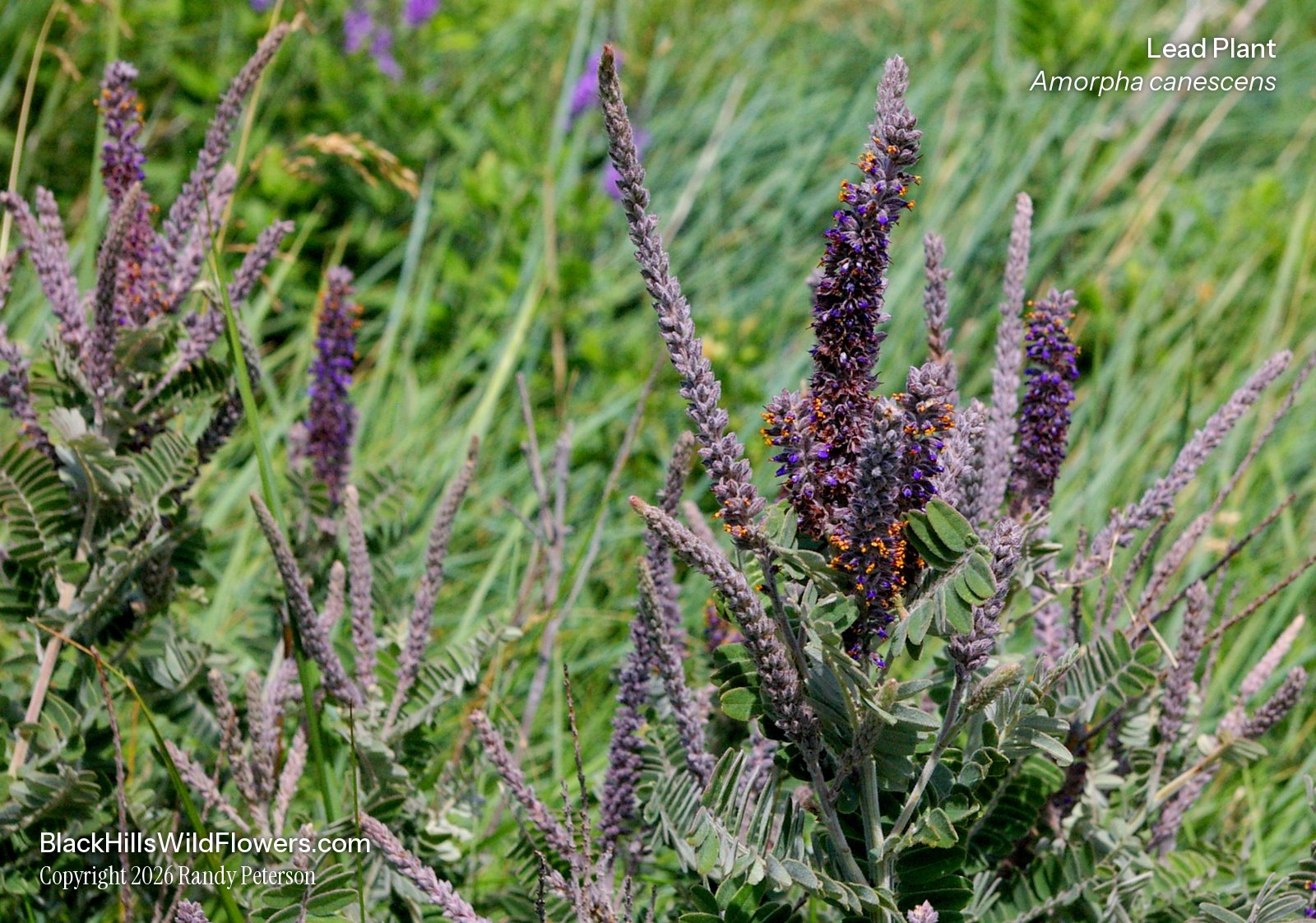
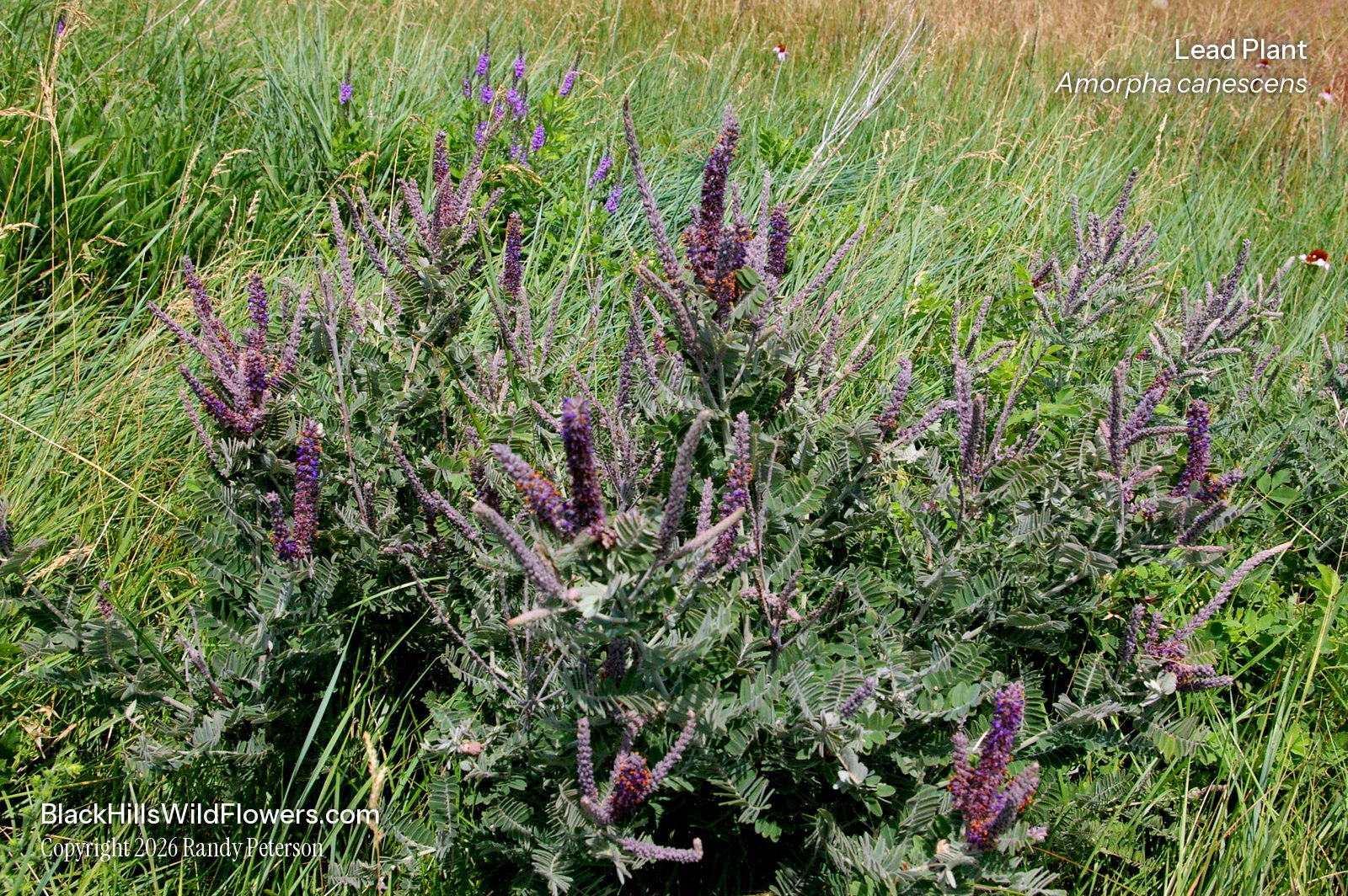
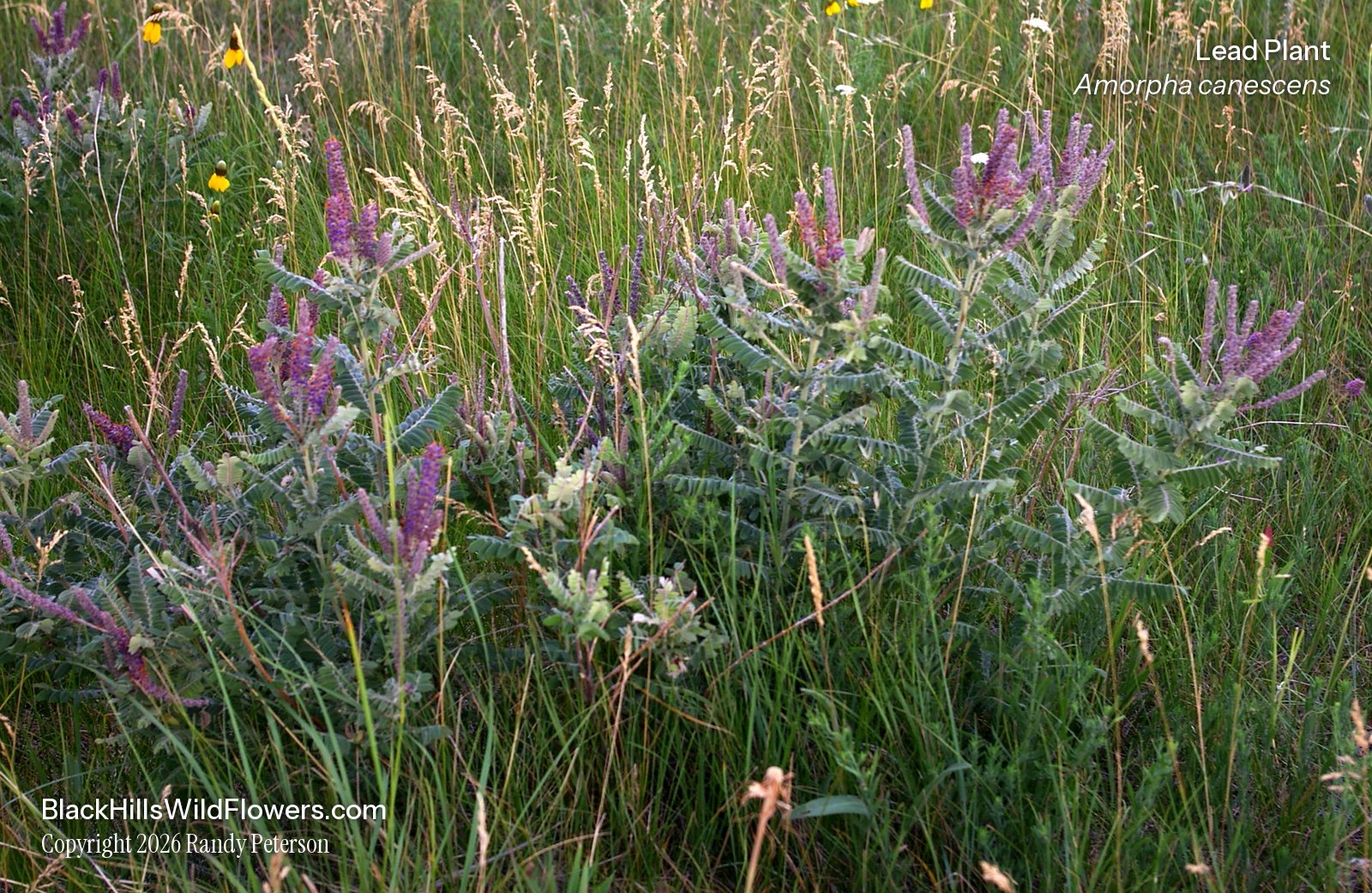
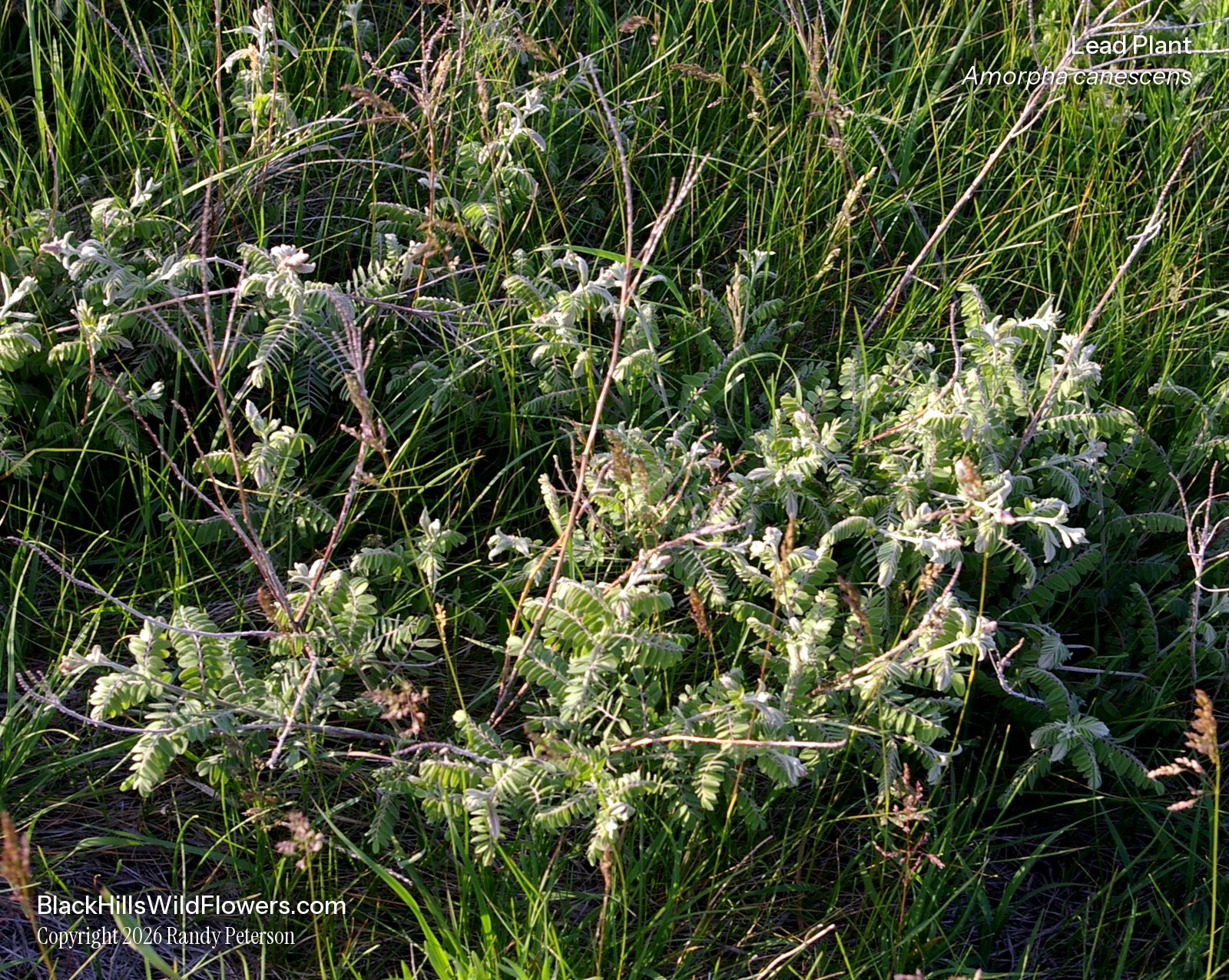
Lead Plant (Amorpha canescens) is a low native shrub named for its leaden gray-green, finely hairy leaves, with dense spikes of small bluish-purple flowers and yellow to orange-tipped stamens. At Wind Cave National Park it blooms in June and July, and in the Black Hills it is sometimes dominant in ponderosa pine savannas and is one of the most common shrubs on cattle rangelands near Rapid City. Photographed in the Black Hills.
| Family | Fabaceae · Pea |
|---|---|
| Status | Native shrub |
| Blooms | June into July |
| Height | 30–110 cm (12–42 in) |
| Where | Dry prairies, hillsides and ponderosa pine savannas |
| Also called | Leadplant, Prairie Shoestring, Downy Indigobush, ziŋtká wóte (Lakota) |
| Synonym | Amorpha brachycarpa |
| Traditional use | A 1998 Sitting Bull College list of culturally important Lakota plants records that the leaves were made into tea and added to smoking mixtures, and that the stems were used in ceremonies, especially before bison hunts. |
Roots, seeds & germination
Root: Deep, branched roots that may reach 2 to 5 m (7 to 20 ft), with nitrogen-fixing nodules along them.
Seed: A small, hairy pod that does not split holds one seed about 2 mm long. Seeds ripen in August and September across most of the Great Plains.
Germination: The hard seed coat keeps seed dormant. Chipping the coat, cold treatment or a hot-water soak improves germination, and seed needs temperatures above 20 °C (68 °F) to sprout.
How do you identify Lead Plant?
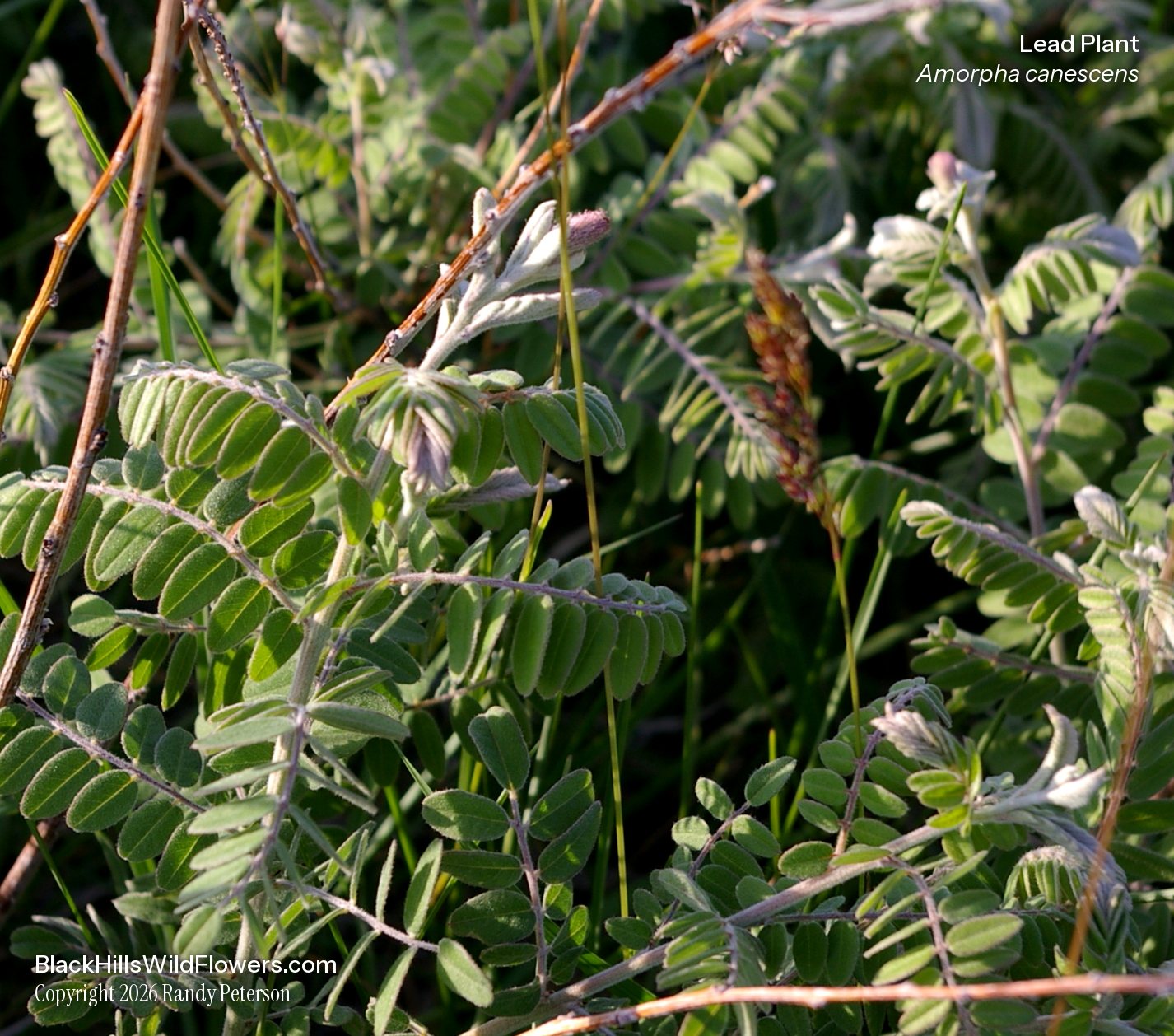
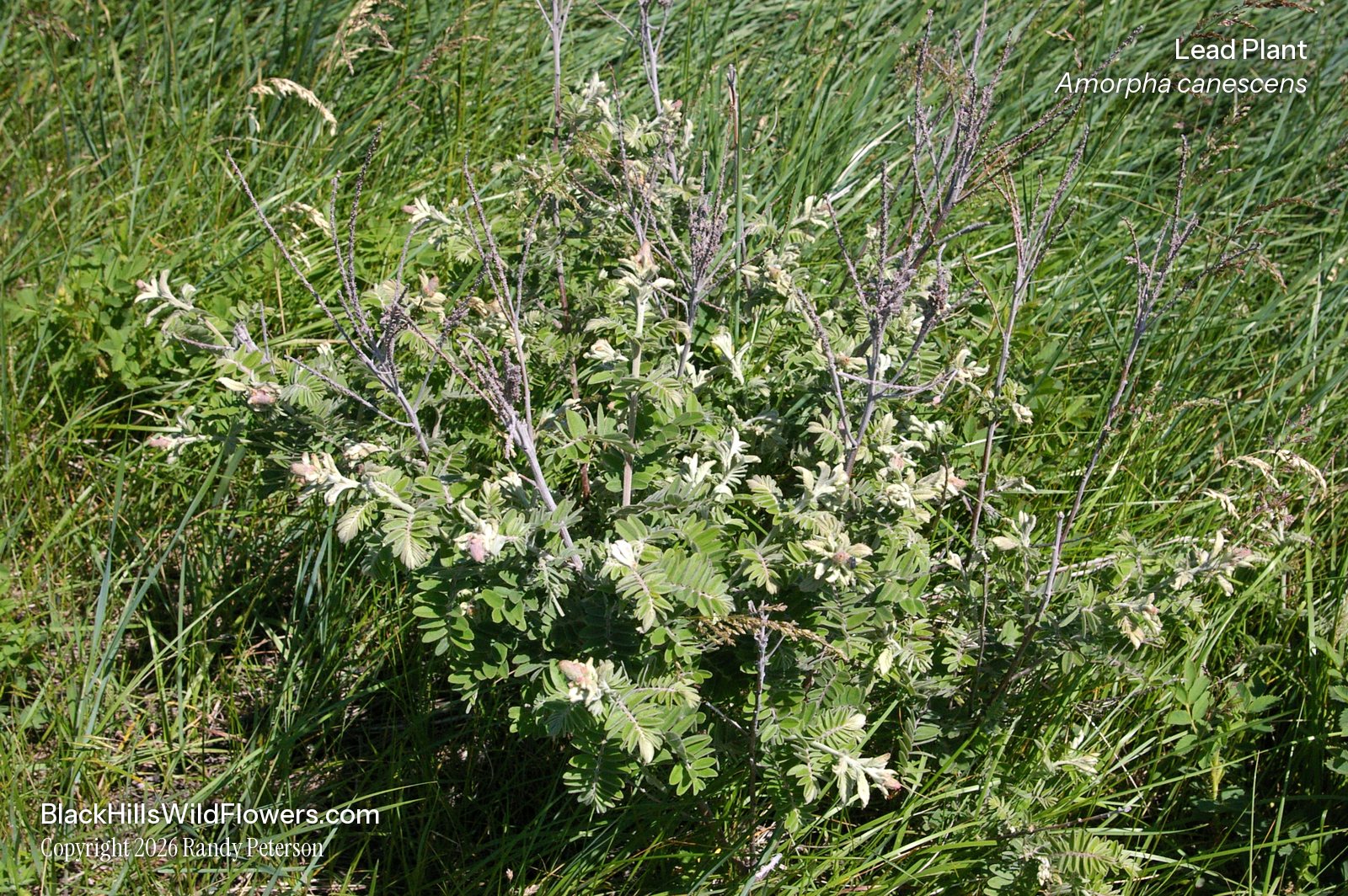
Look for gray, finely hairy leaves made of many small leaflets, and flowers in dense spikes 1 to 10 inches long. Each tiny flower has just one petal, deep blue to violet, with 10 stamens sticking out past it. Stems are semiwoody, and regular burning, mowing or heavy grazing keeps the plant short and nearly herbaceous.
When does it bloom?
June into July.
Where does it grow?
Dry prairies, hillsides, roadsides and open woods. In the Black Hills it grows in the low-shrub layer of interior ponderosa pine savannas and on cattle rangelands near Rapid City. Elsewhere in South Dakota it grows on stabilized sandhills and loamy sands.
Other flowers to compare
Sources: Forest Service Fire Effects Information System: Amorpha canescens; SDSU Open PRAIRIE: Amorpha canescens; Kansas Wildflowers and Grasses: Amorpha canescens; National Park Service NPGallery, Wind Cave National Park: Leadplant (photo record, 2013); Culturally Important Plants of the Lakota (Black Elk and Flying By, Sitting Bull College, 1998), filed with the South Dakota PUC.