Lambert's Crazyweed
Oxytropis lambertii
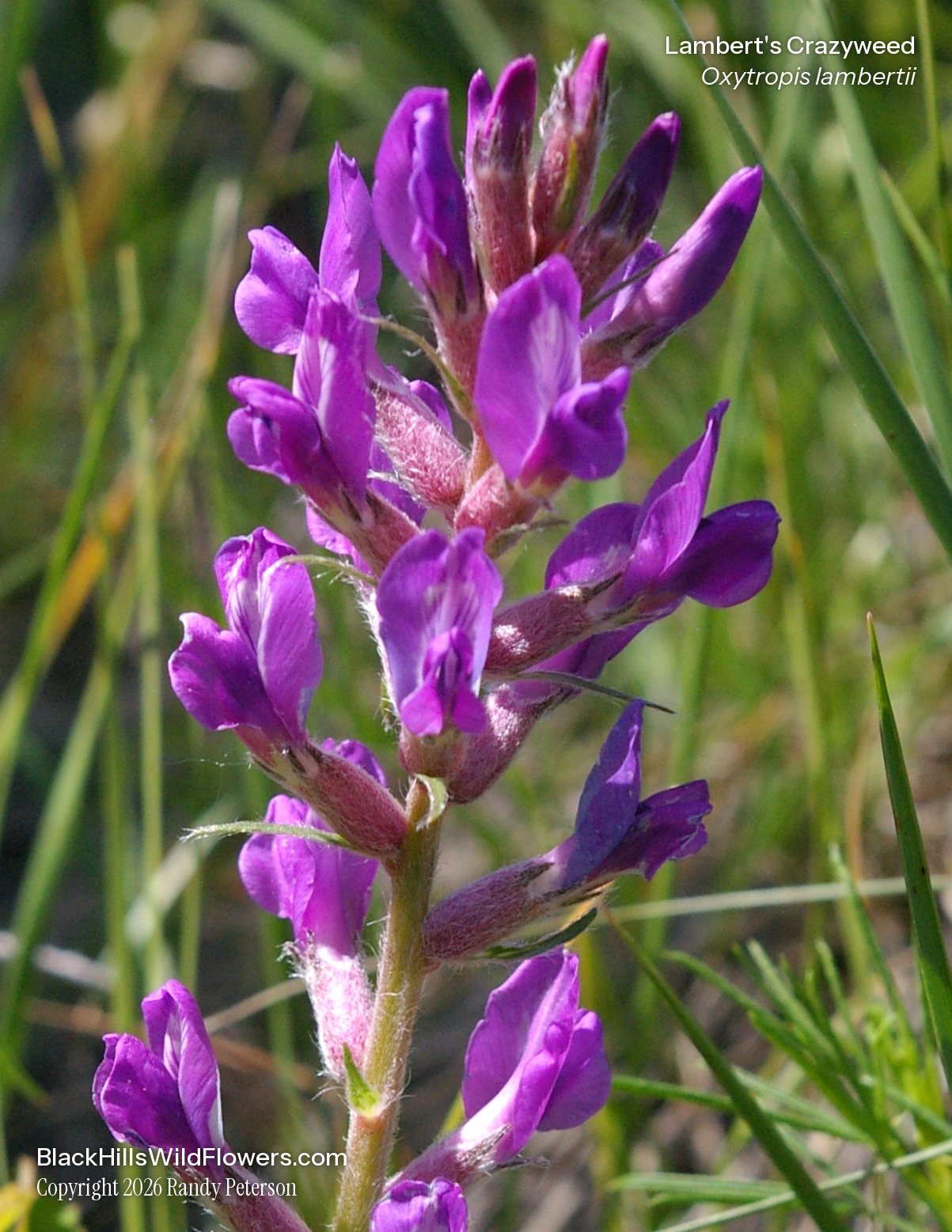
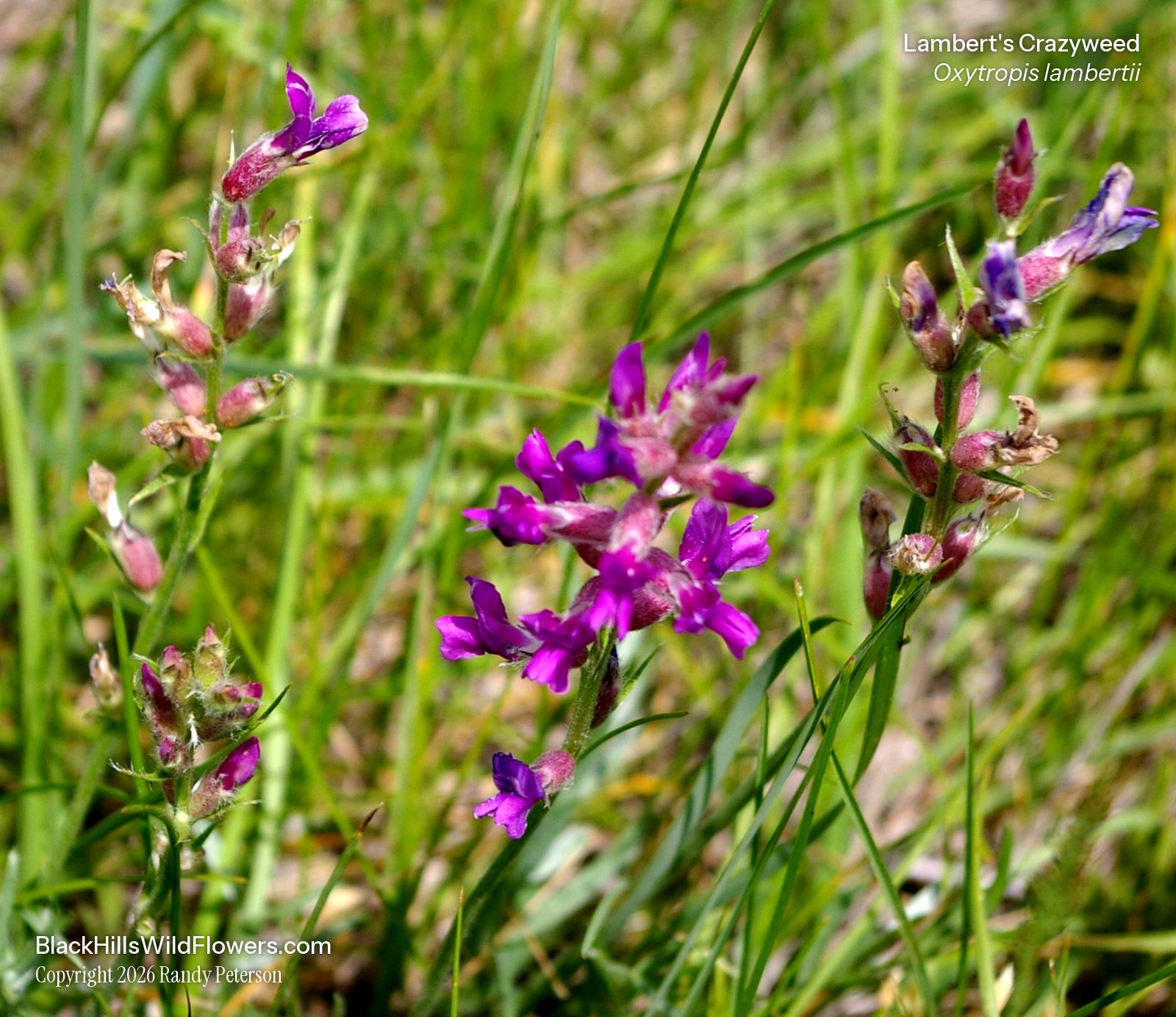
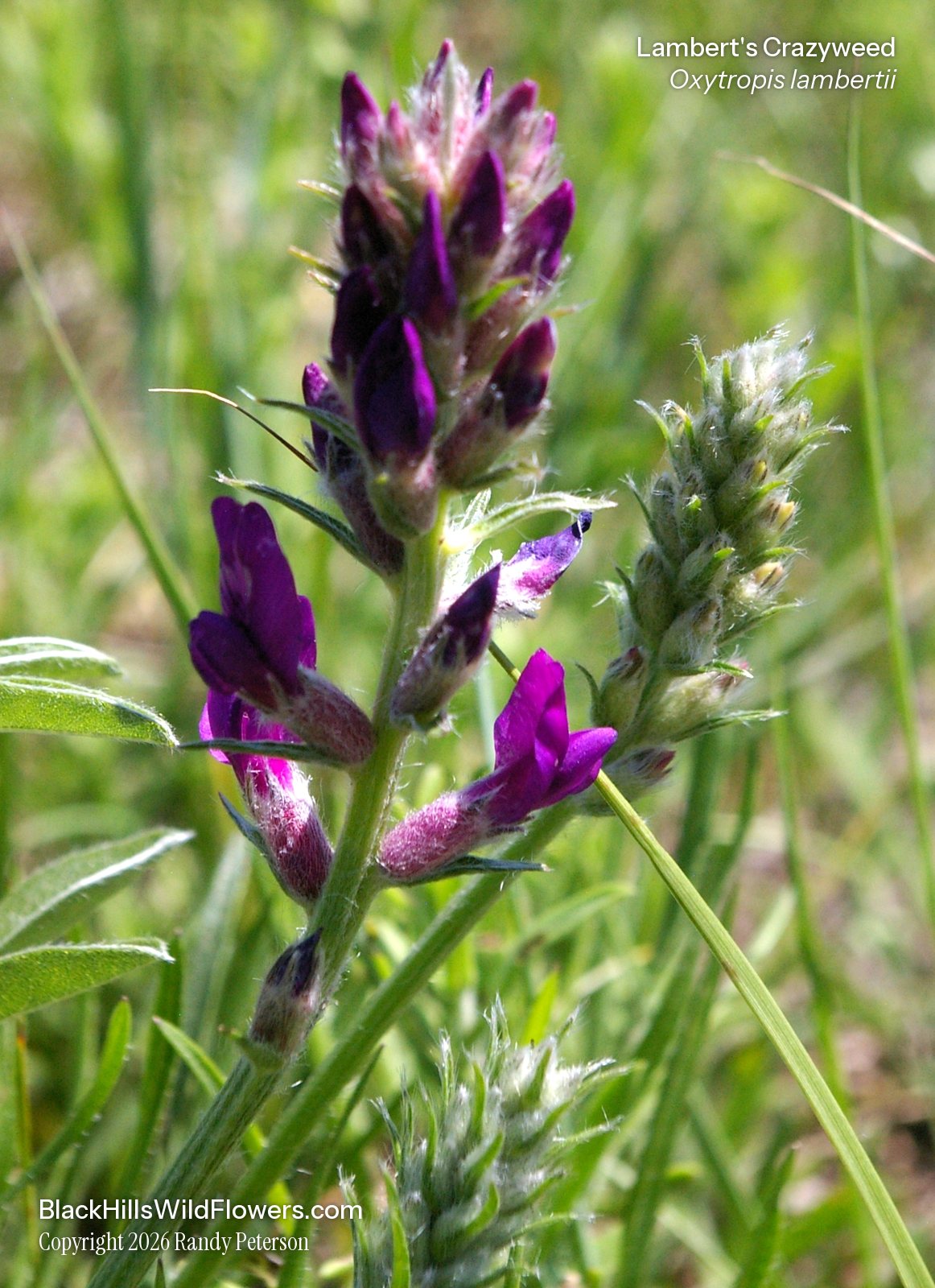
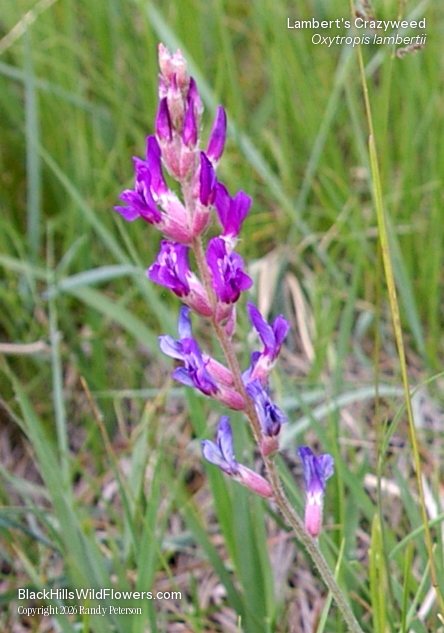
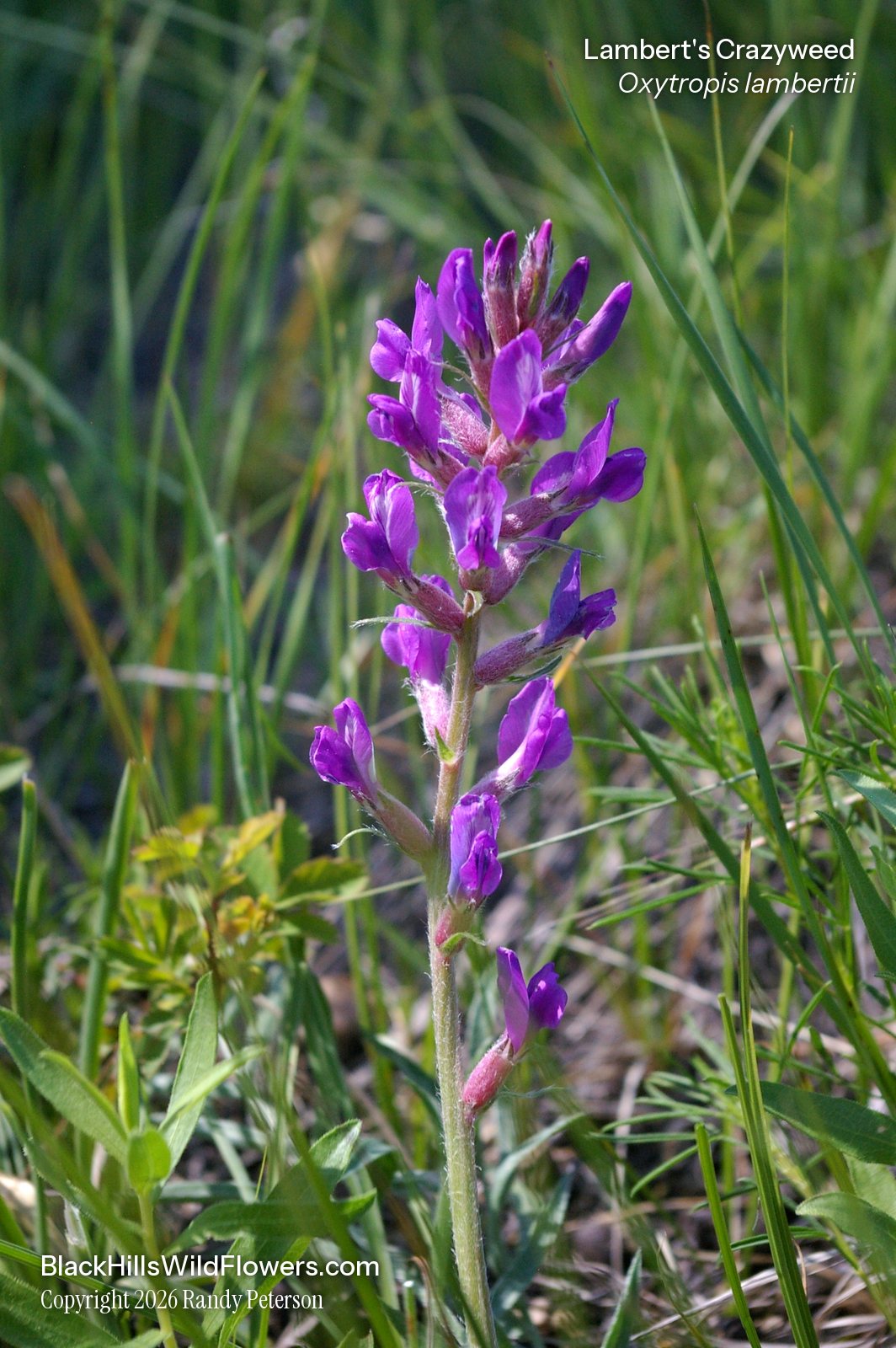
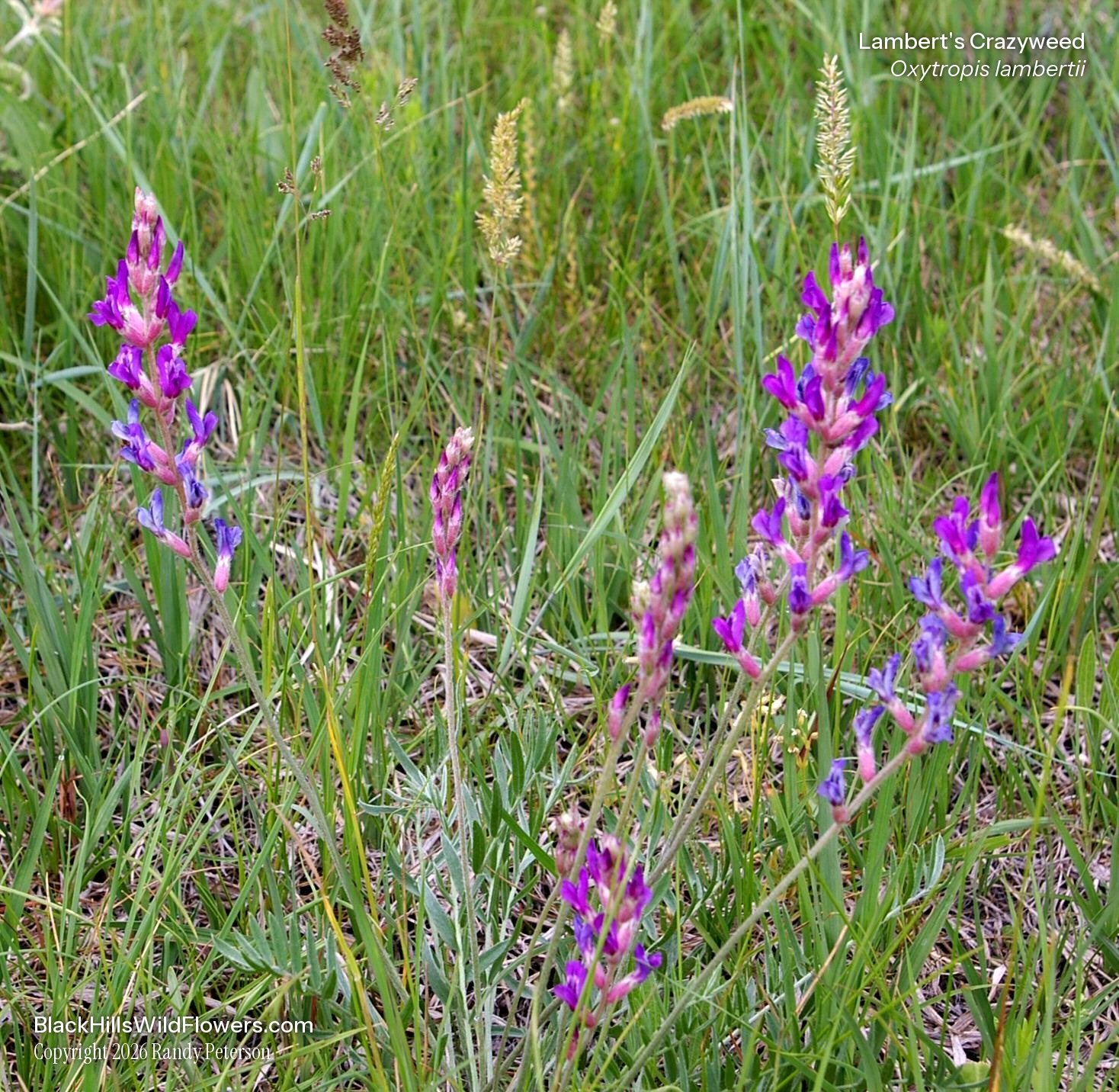
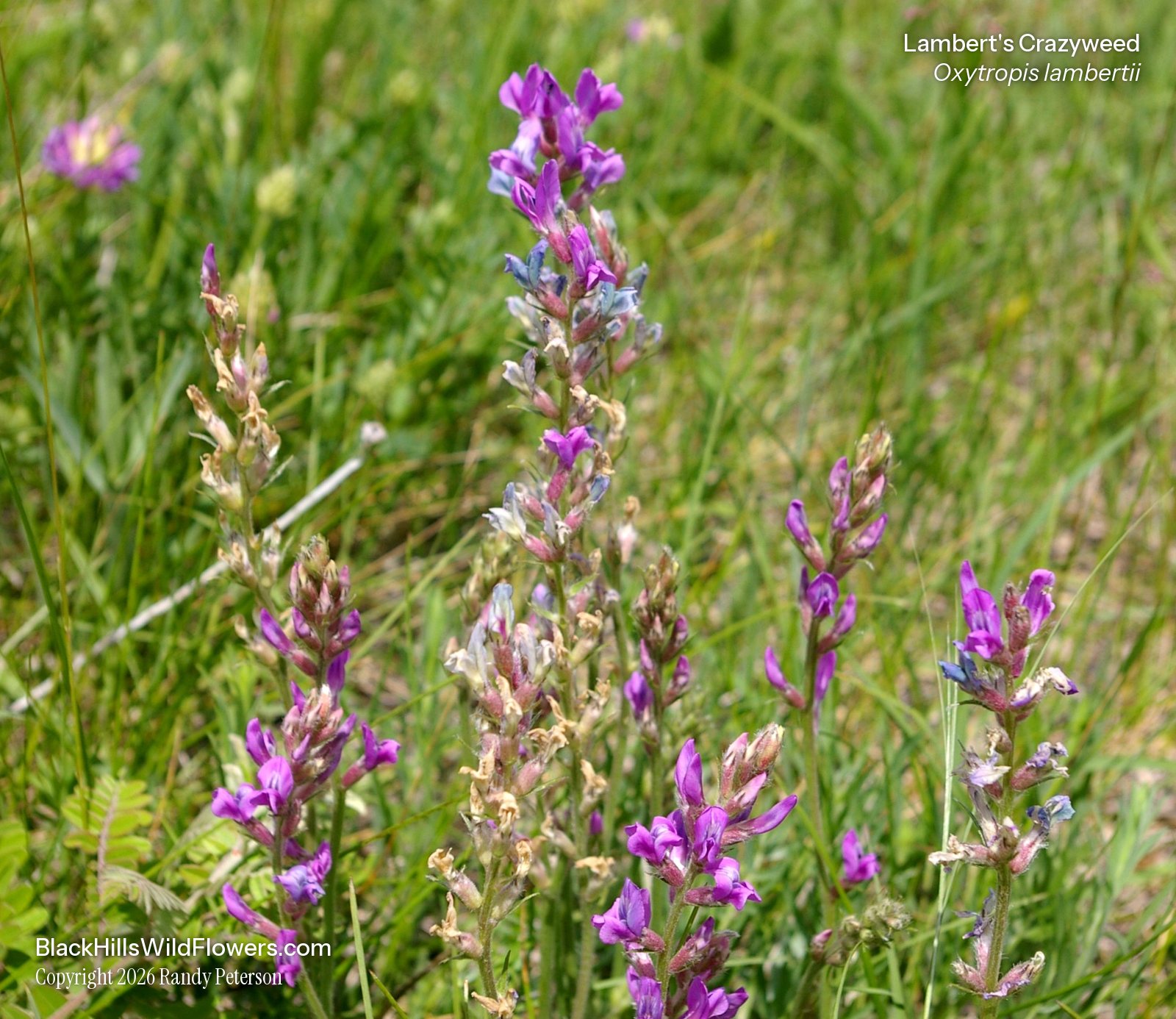
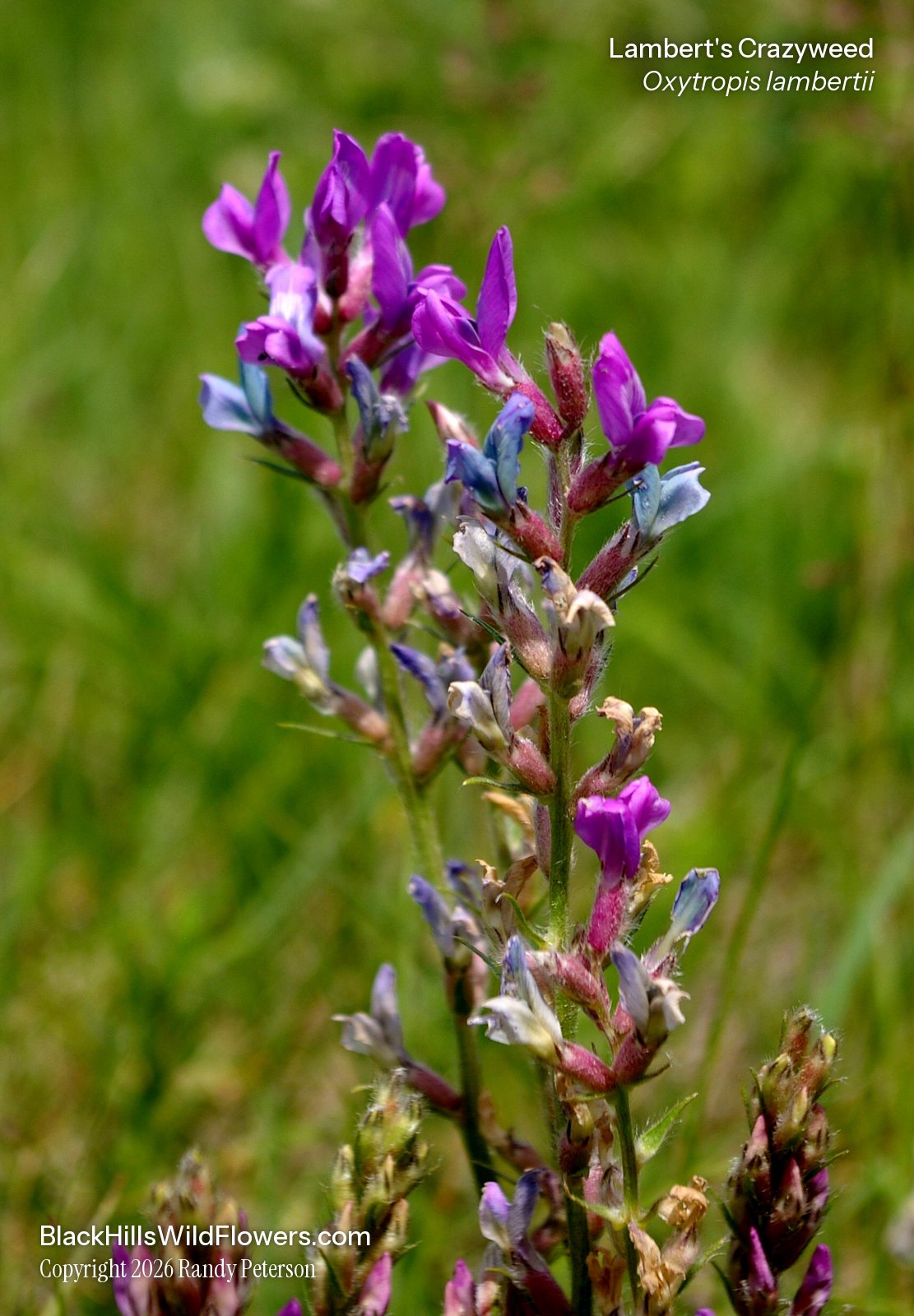
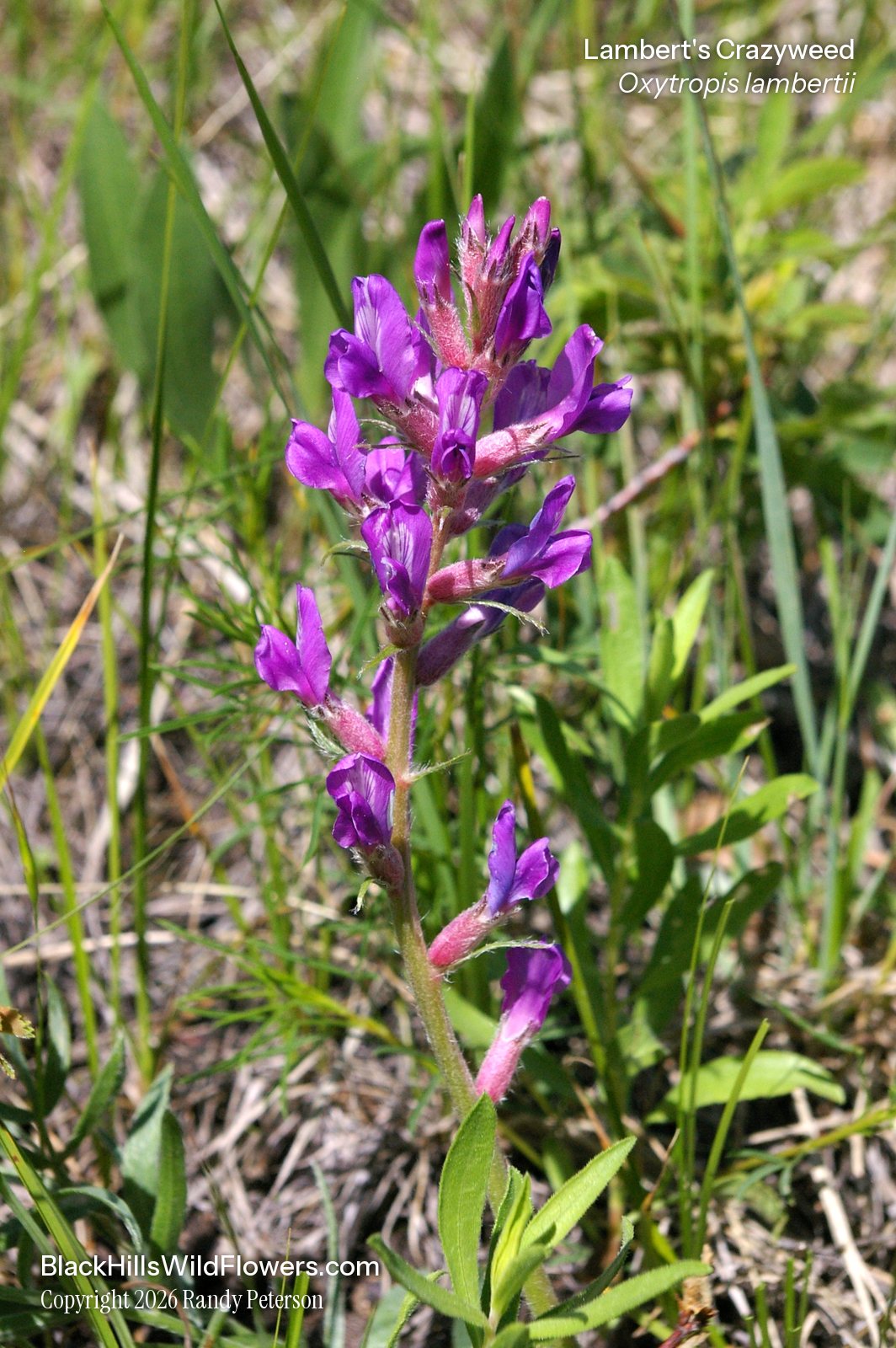
Lambert's Crazyweed (Oxytropis lambertii) is a low native perennial with silvery, finely hairy leaves that rise from the base and upright spikes of pinkish-purple, sometimes rose, pea-shaped flowers. It blooms from May into early July, is the most common locoweed on South Dakota prairies, and is recorded at Jewel Cave National Monument in the Black Hills. Photographed in the Black Hills.
| Family | Fabaceae · Pea |
|---|---|
| Status | Native perennial |
| Blooms | May into early July |
| Height | 10–30 cm (4–12 in) |
| Where | Prairies, plains, river bluffs and hillsides |
| Also called | Purple Locoweed, Lambert Crazyweed, sunktȟápȟežuta (Lakota) |
| Toxicity | Poisonous to livestock: alkaloids in the plant cause locoism, a chronic nerve disease, and horses are especially susceptible. |
Roots, seeds & germination
Root: A branching caudex, the woody base at the root crown.
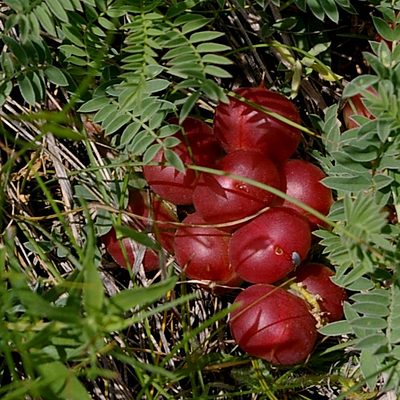
Seed: A hairy, erect pod 1 to 2 cm long holds smooth, dark seeds about 2 mm long. Collect in summer once they turn brown.
Germination: Seeds have little dormancy. Scarifying them with sandpaper sometimes helps, and some sprout when planted in spring.
How do you identify Lambert's Crazyweed?
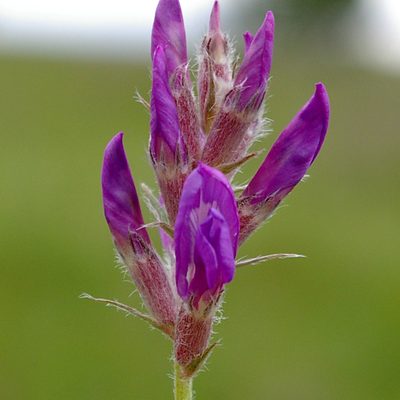
Leaves and flower stalks all rise from the crown, with no leafy stem, and each silvery leaf has 7 to 19 leaflets. Look at the keel, the lowest petals of the pea flower: on a crazyweed it comes to a point, while on a milkvetch or other Astragalus it is blunt. Woolly locoweed carries its leaves and flowers on stems.
When does it bloom?
May into early July.
Where does it grow?
Prairies, plains, river bluffs and hillsides across much of South Dakota. In the Black Hills, a 1986 survey recorded it at Jewel Cave National Monument.
Other flowers to compare
Sources: SDSU Extension: Poisonous Plants on Rangelands, Locoweed and Crazyweed; SDSU Open PRAIRIE: Oxytropis lambertii; National Park Service, Devils Tower: Wildflowers; Kansas Wildflowers and Grasses: Oxytropis lambertii; Marriott and Hartman 1986, A Survey of the Vegetation of Jewel Cave National Monument; Culturally Important Plants of the Lakota (Black Elk and Flying By, Sitting Bull College, 1998), filed with the South Dakota PUC.