Groundplum Milkvetch
Astragalus crassicarpus
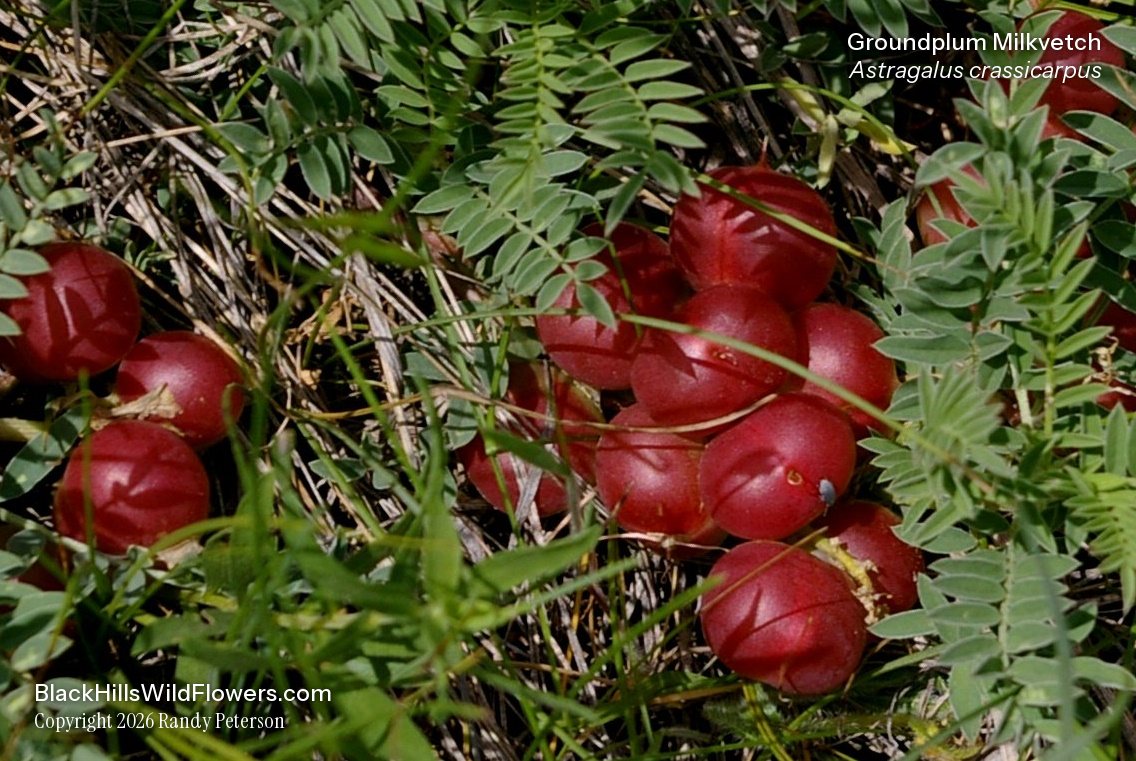
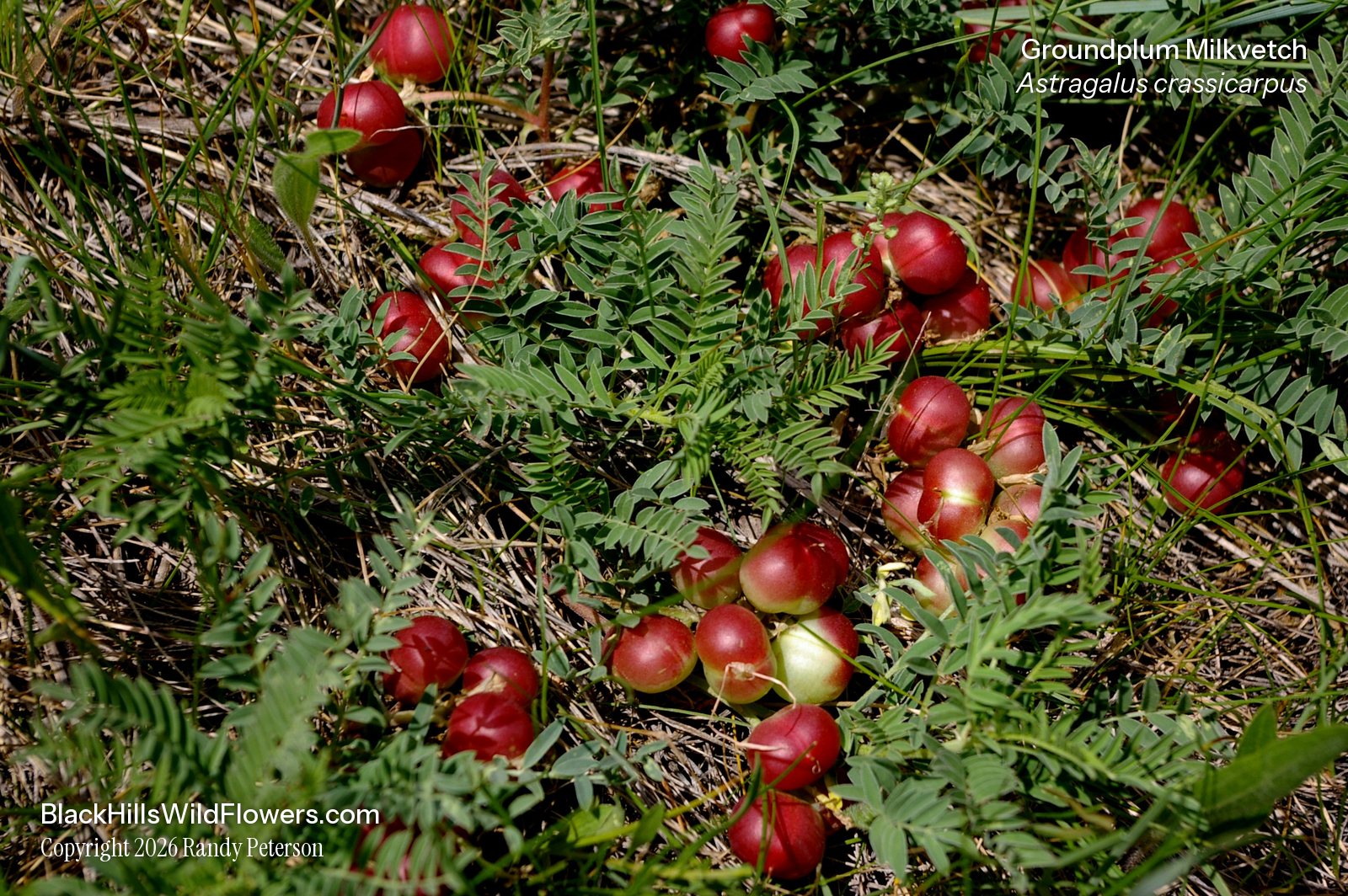
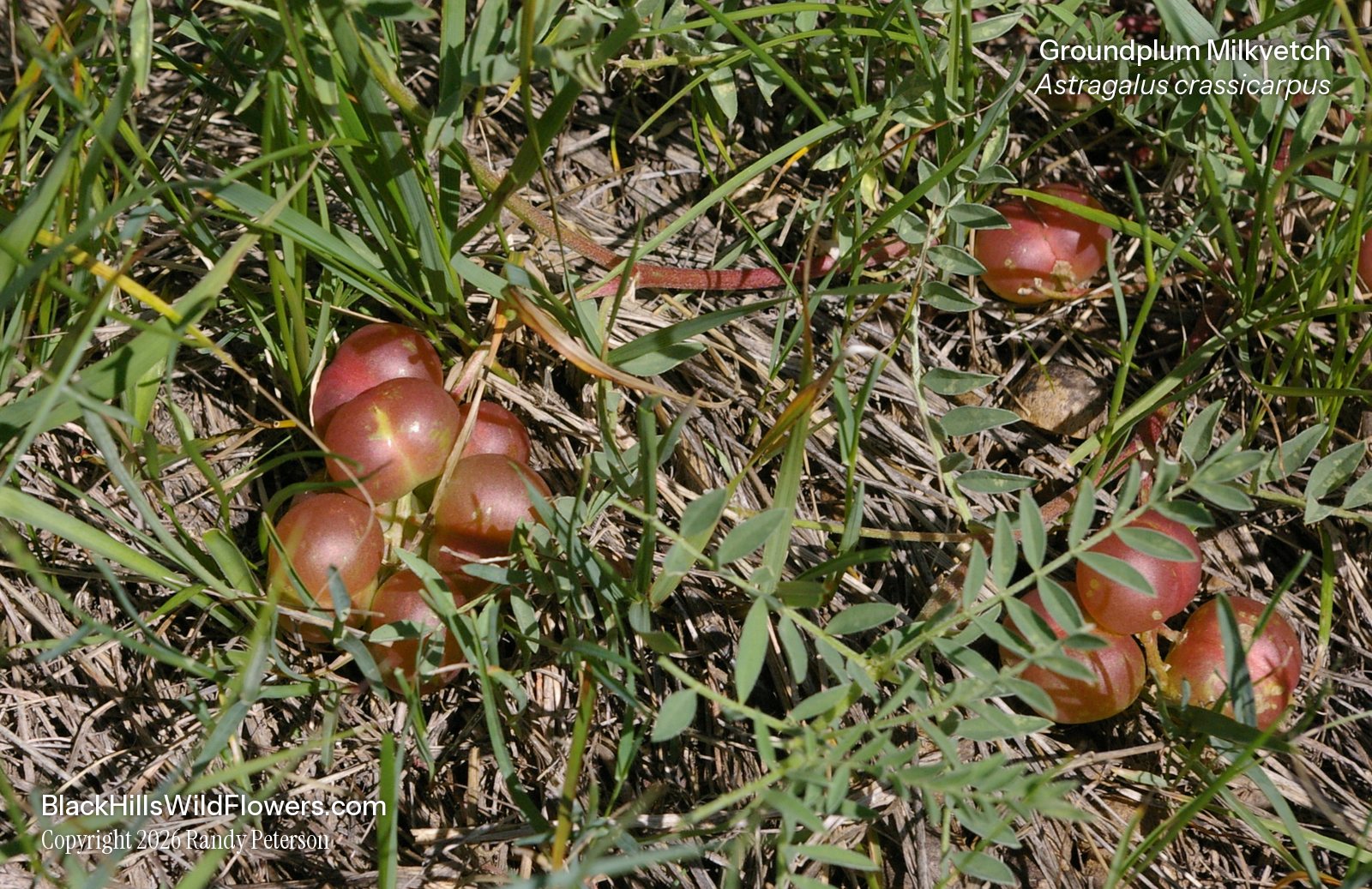
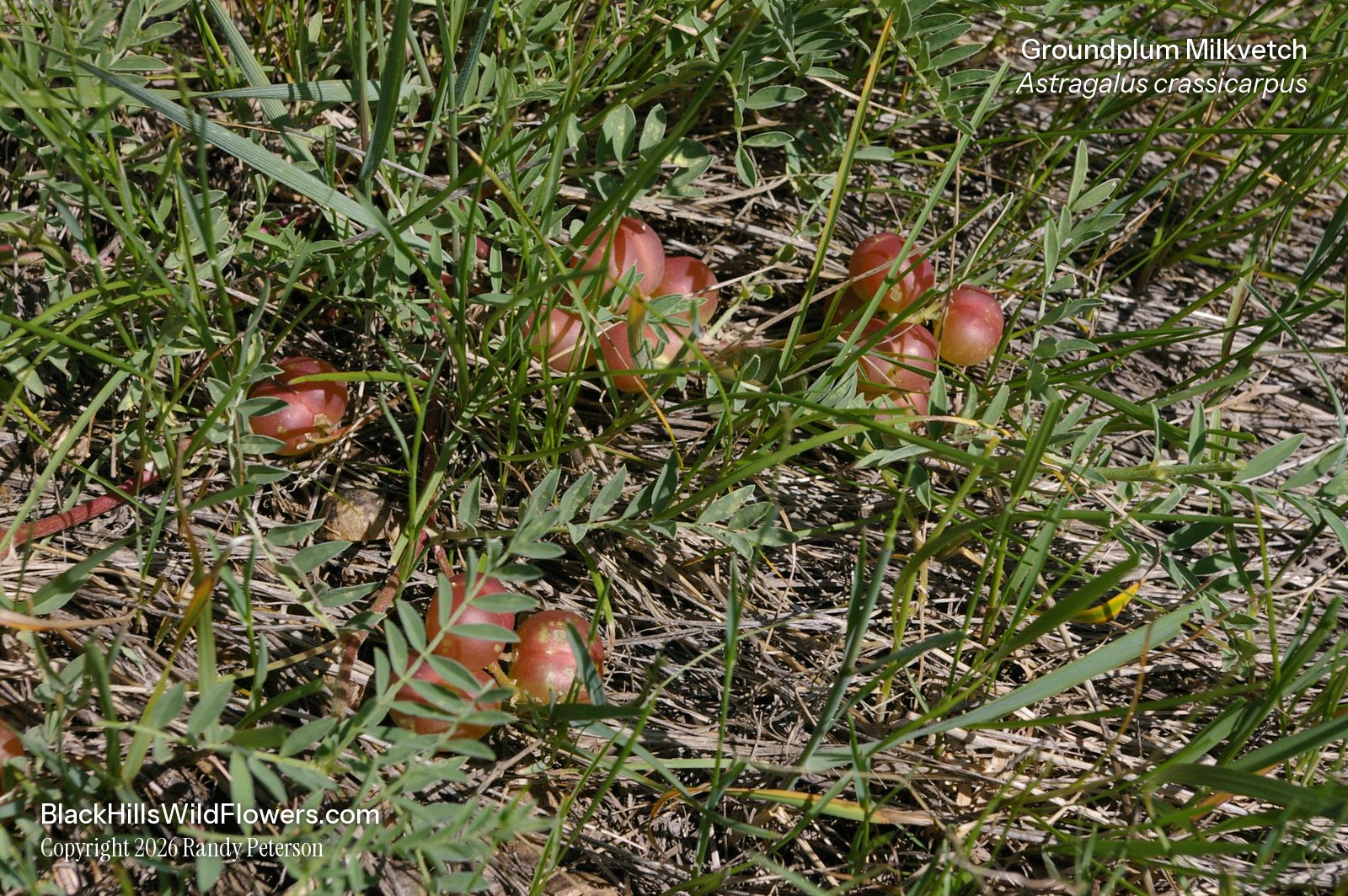
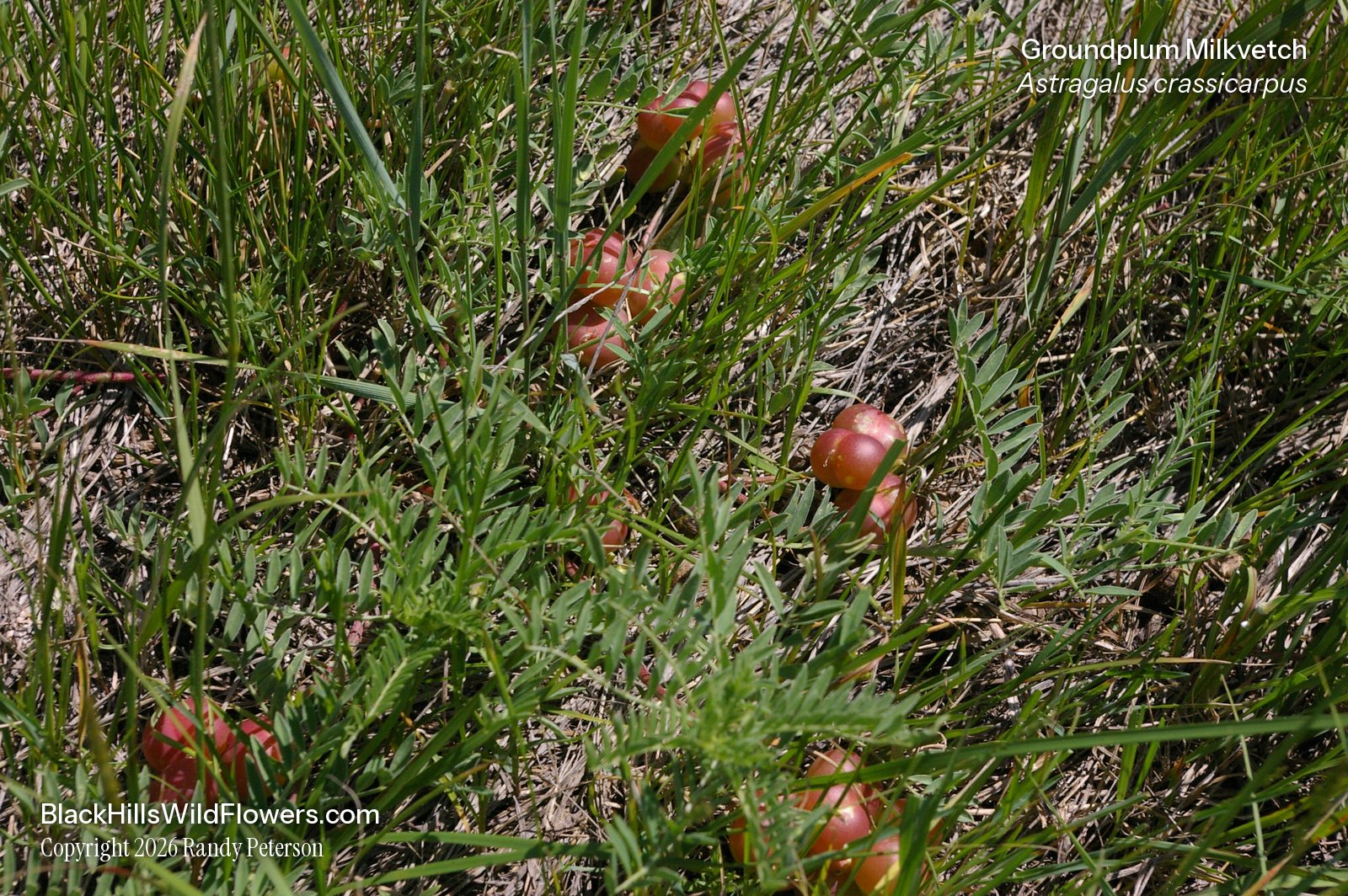
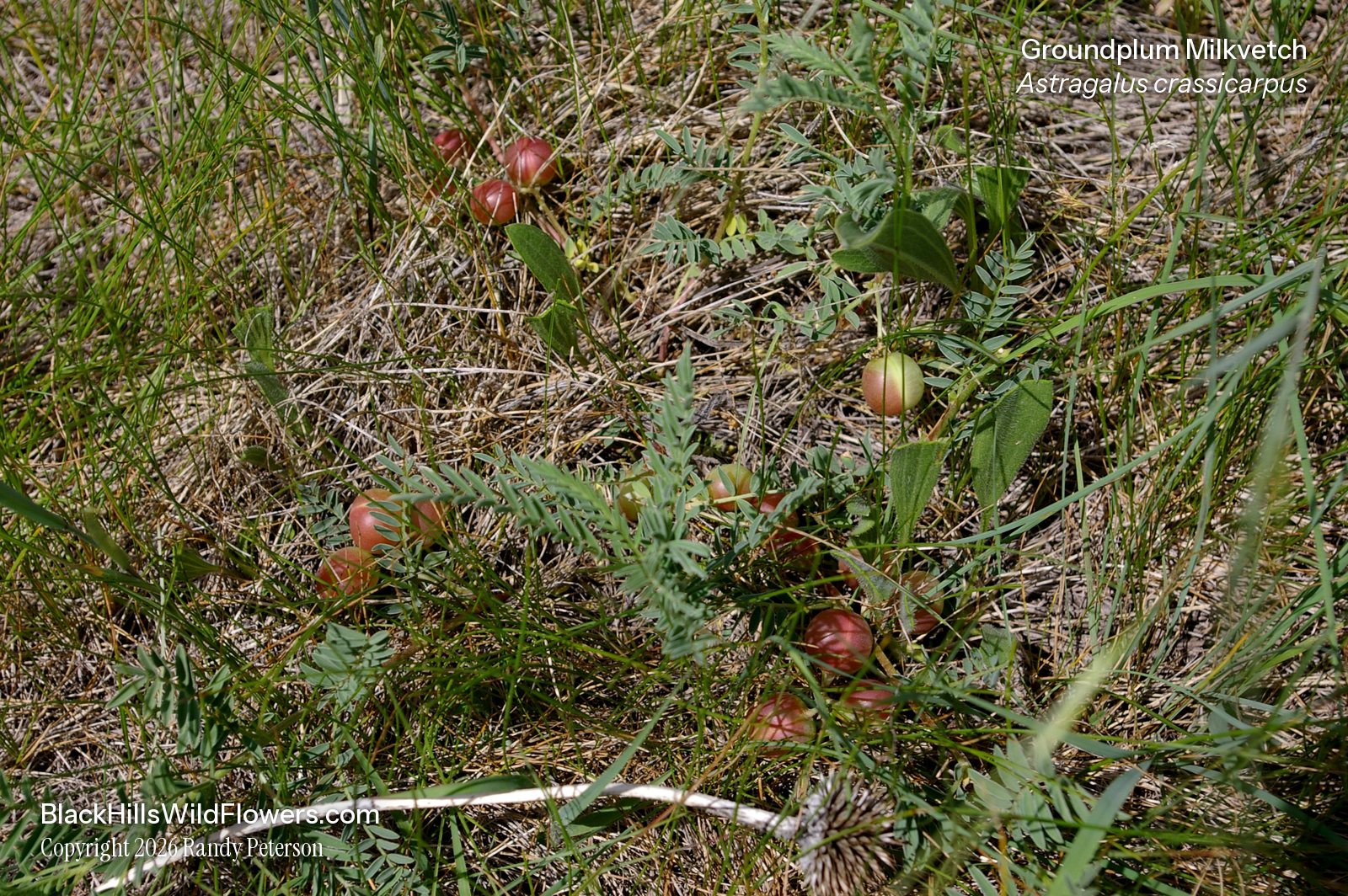
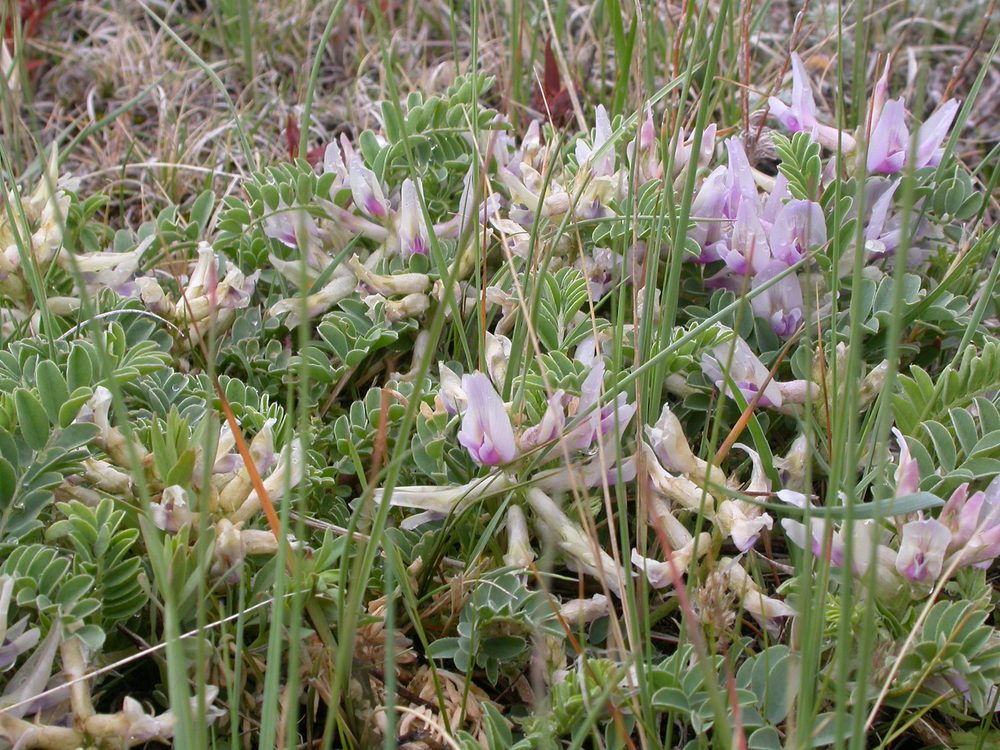
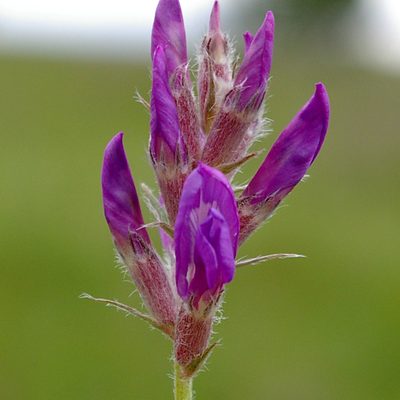
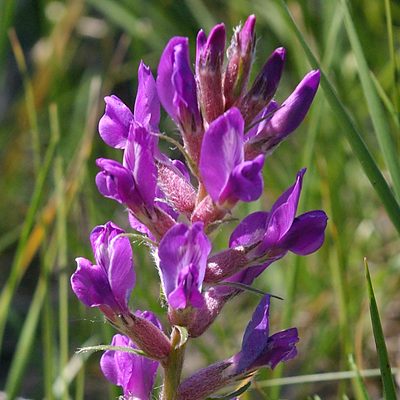
Groundplum Milkvetch (Astragalus crassicarpus) is a low, sprawling native perennial in the pea family, with bluish to purple flowers and round, fleshy pods that look like small plums. It blooms in April and May on prairie hillsides and in open woods throughout South Dakota, and the 1986 plant survey of Jewel Cave National Monument lists it in the Black Hills. Photographed in the Black Hills.
Free photos from other sources
| Family | Fabaceae · Pea |
|---|---|
| Status | Native perennial |
| Blooms | April and May |
| Height | 11–60 cm (4–24 in) |
| Where | Prairie hillsides, stream banks and open woods |
| Also called | Ground Plum, Buffalo Bean, Buffalo Pea, Prairie Plum, pté tȟawóte (Lakota), tȟatȟáŋka omníča (Lakota) |
| Traditional use | Sitting Bull College's 1998 Culturally Important Plants of the Lakota records the fruits as a Lakota snack food and the plant as good medicine for horses. |
Roots, seeds & germination
Root: A taproot with a well-branched caudex (a woody crown) at its top.
Seed: Black seeds, 2–3 mm long, inside the pod. Pods are collected in mid to late summer.
Germination: The seed coat prevents germination. Sow in fall, or score the seed coat with a sharp knife and sow in spring.
How do you identify Groundplum Milkvetch?
Look for hairy stems that sprawl on the ground and rise at the tips, leaves split into 13 to 27 small leaflets, and smooth, round pods 15–25 mm long that ripen red to purple. The pods turn woody as they age.
When does it bloom?
April and May.
Where does it grow?
Prairie hillsides, stream banks and open woods throughout South Dakota, best on well-drained soil in full sun. The 1986 Jewel Cave survey lists it, and Devils Tower National Monument lists it blooming April to May.
Other flowers to compare
Sources: SDSU Open PRAIRIE: Astragalus crassicarpus; Minnesota Wildflowers: Ground Plum; Kansas Wildflowers: Astragalus crassicarpus; National Park Service, Devils Tower National Monument: Native Plants; Marriott and Hartman 1986, A Survey of the Vegetation of Jewel Cave National Monument; Culturally Important Plants of the Lakota (Black Elk and Flying By, Sitting Bull College, 1998), filed with the South Dakota PUC.