Canada Milkvetch
Astragalus canadensis
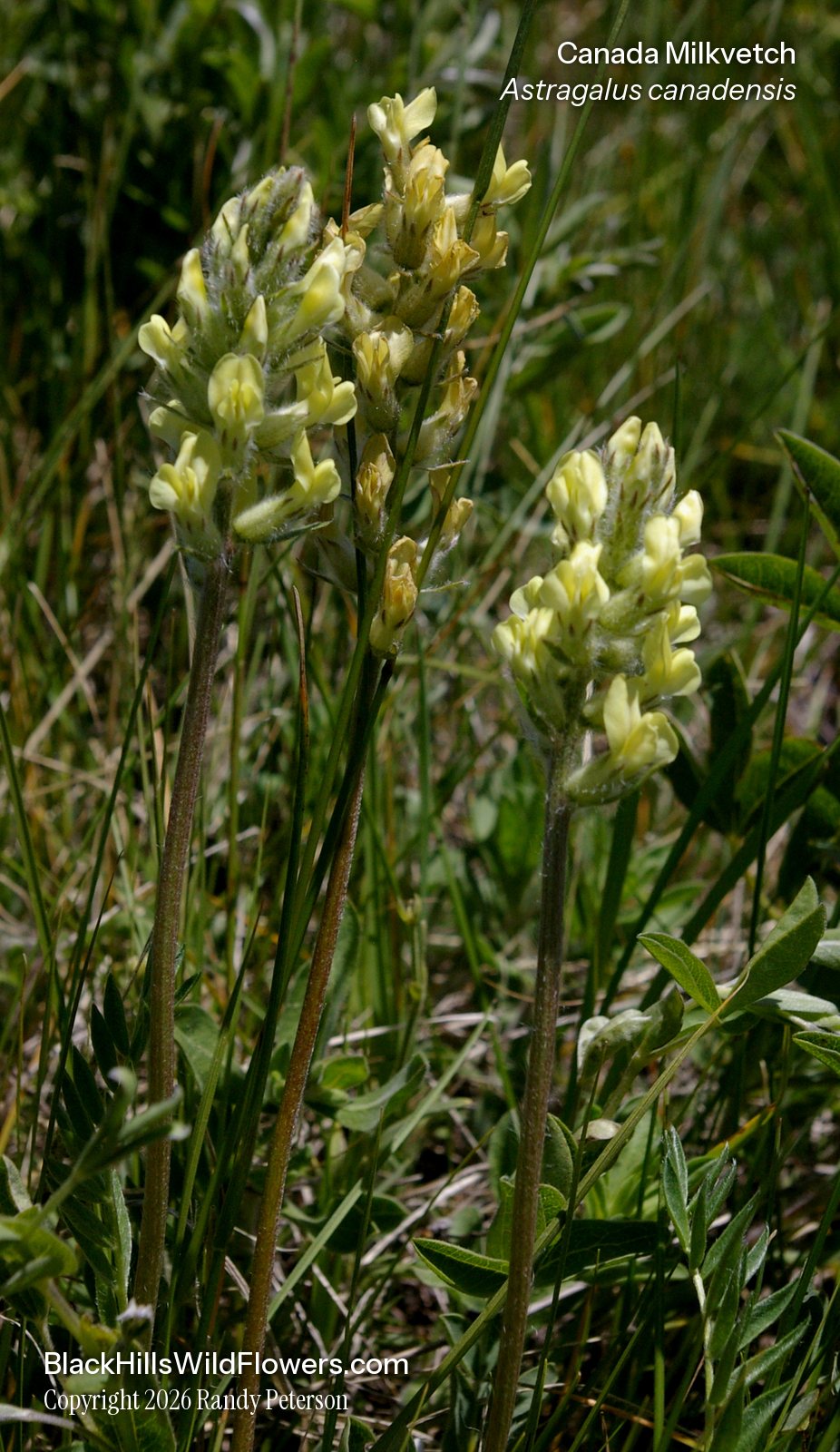
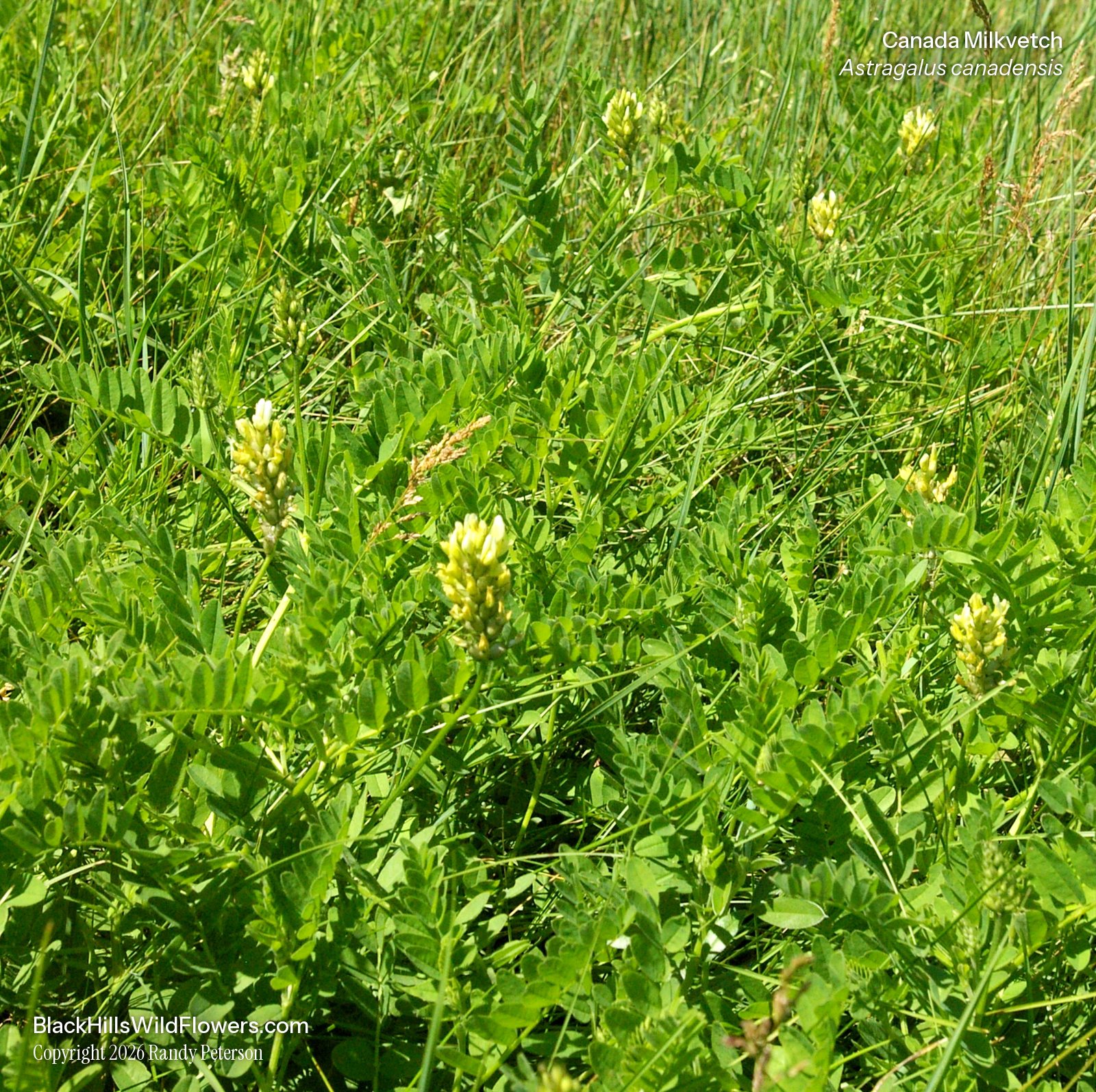
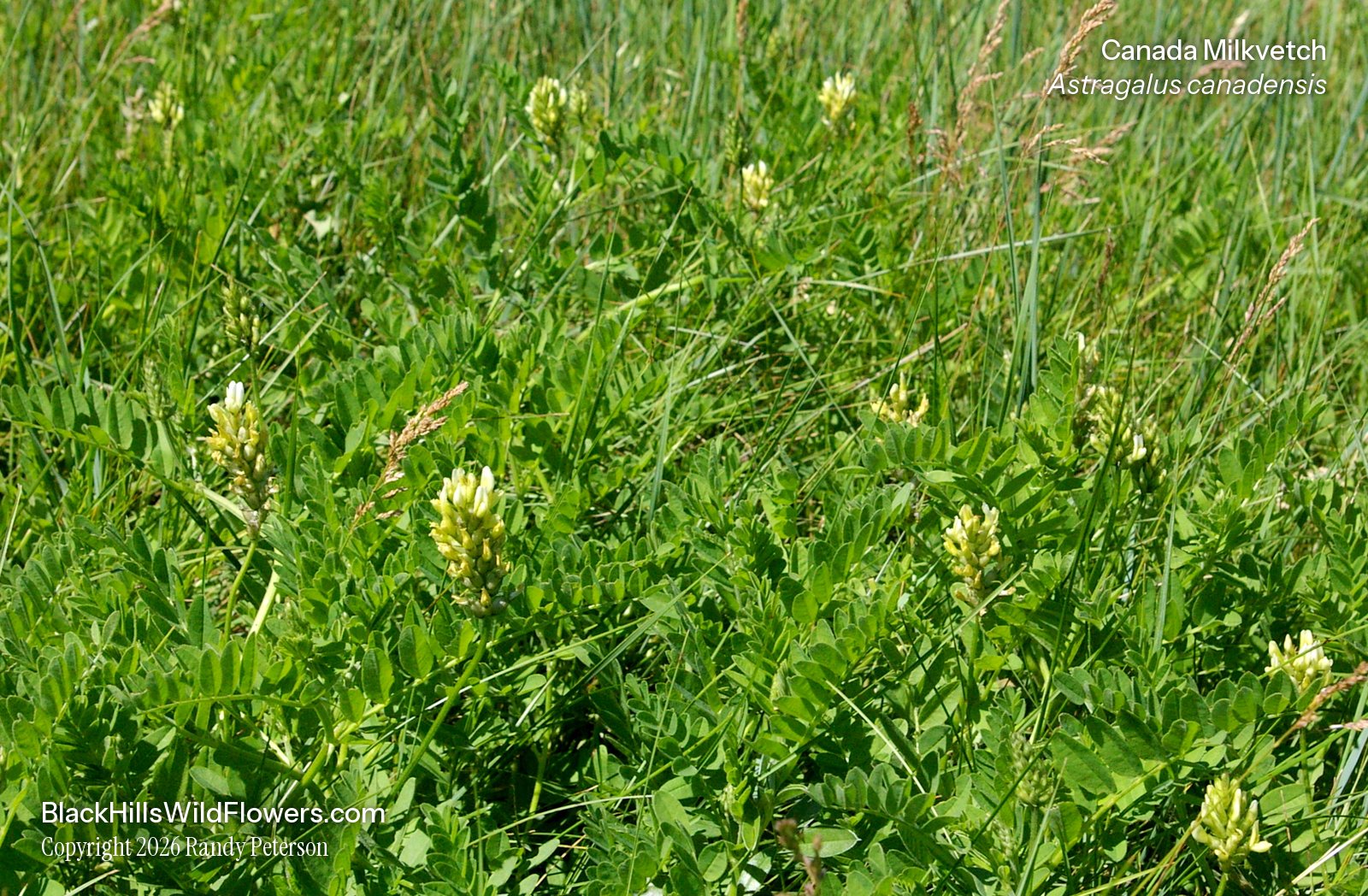
Canada Milkvetch (Astragalus canadensis) is a native perennial, 30 to 120 cm (1 to 4 feet) tall, with compound leaves and dense, upright spikes of greenish white to yellowish white pea flowers. It blooms May into August on moist prairies, riverbanks and open wooded hillsides across much of South Dakota. Photographed in the Black Hills.
| Family | Fabaceae · Pea |
|---|---|
| Status | Native perennial |
| Blooms | May into August |
| Height | 30–120 cm (12–47 in) |
| Where | Moist prairies, riverbanks and open wooded hillsides |
| Also called | Canadian Milkvetch, Canada Milk-vetch |
| Toxicity | Contains toxic compounds, like many milkvetches, but isn't considered a serious pest. |
| Traditional use | A USDA plant guide records that the Blackfoot dug the roots in spring to eat. |
Roots, seeds & germination
Root: Underground rhizomes (creeping stems).
Seed: Pods hold several small, smooth, brownish yellow-green seeds. They are ready once pods turn brown and begin to split.
Germination: The hard seed coat needs scarification (scratching, so water can get in), and South Dakota's page adds cold treatment. Fall planting usually gives good germination in spring.
How do you identify Canada Milkvetch?
Dense, spike-like clusters of 30 to 100 narrow, creamy pea flowers stand on stalks from the leaf axils, above compound leaves with 11 to 35 blunt-tipped leaflets. The pods are the best mark: they stand upright and are smooth, oval and two-chambered, 9–15 mm long. American Milkvetch has loose clusters of 10 to 30 nodding flowers and hanging, bladdery pods. Stems can turn red in strong sun.
When does it bloom?
May into August.
Where does it grow?
Moist prairies, riverbanks and open wooded hillsides across much of South Dakota. It prefers moist sites and isn't recommended for dry uplands in a USDA guide from North Dakota.
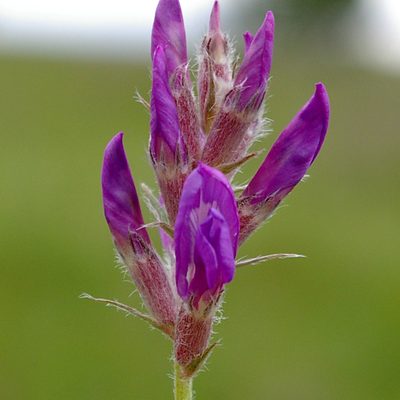
Other flowers to compare
Sources: SDSU Open PRAIRIE: Astragalus canadensis; Minnesota Wildflowers: Astragalus canadensis; USDA NRCS Bismarck Plant Materials Center: Canada Milkvetch planting guide; USDA PLANTS: Plant Guide, Canadian milkvetch; Lady Bird Johnson Wildflower Center: Astragalus canadensis; New York Botanical Garden, Barneby narrative: Astragalus americanus; South Dakota Game, Fish and Parks: Rare Plants of South Dakota.