Field Milkvetch
Astragalus agrestis
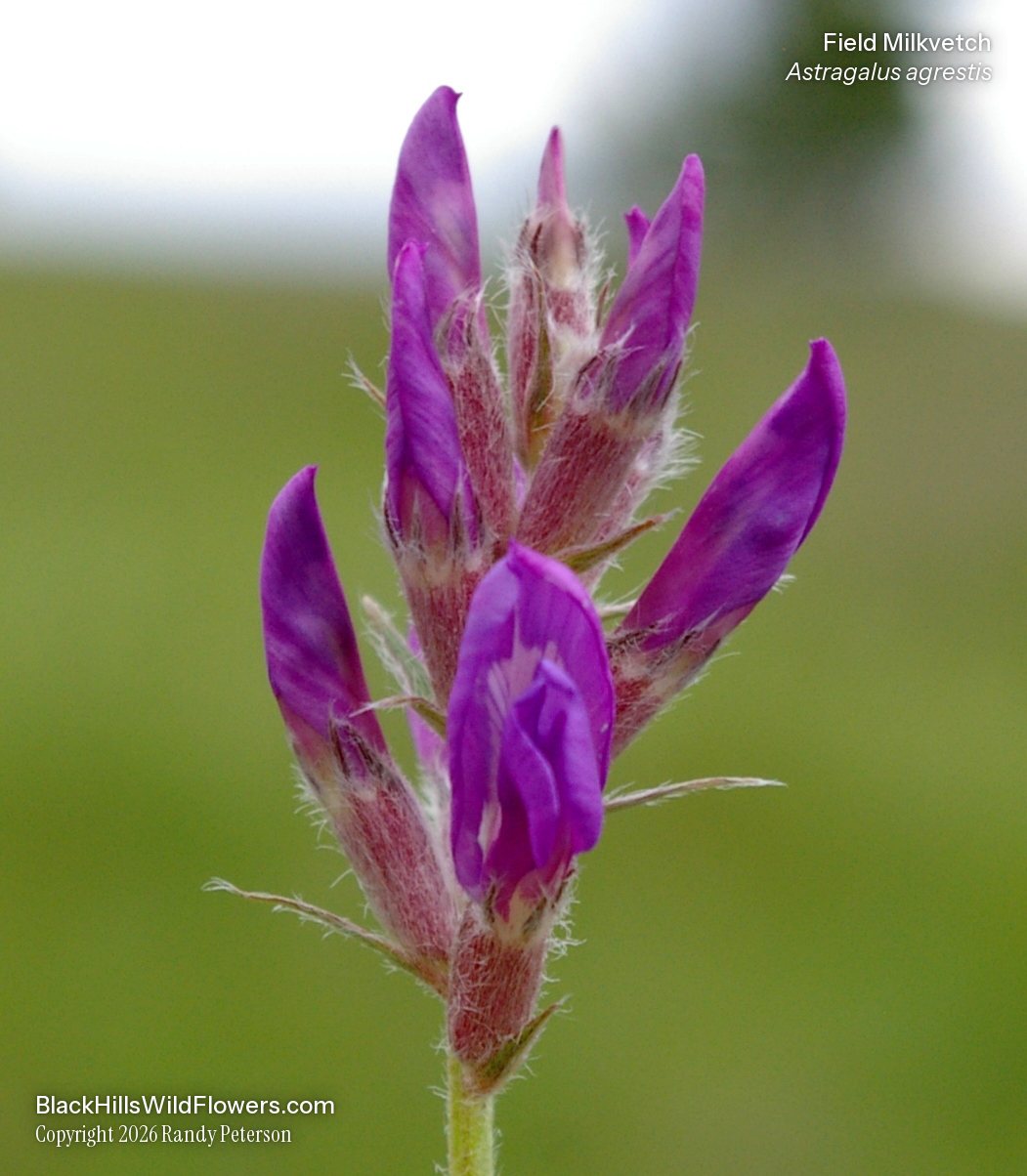
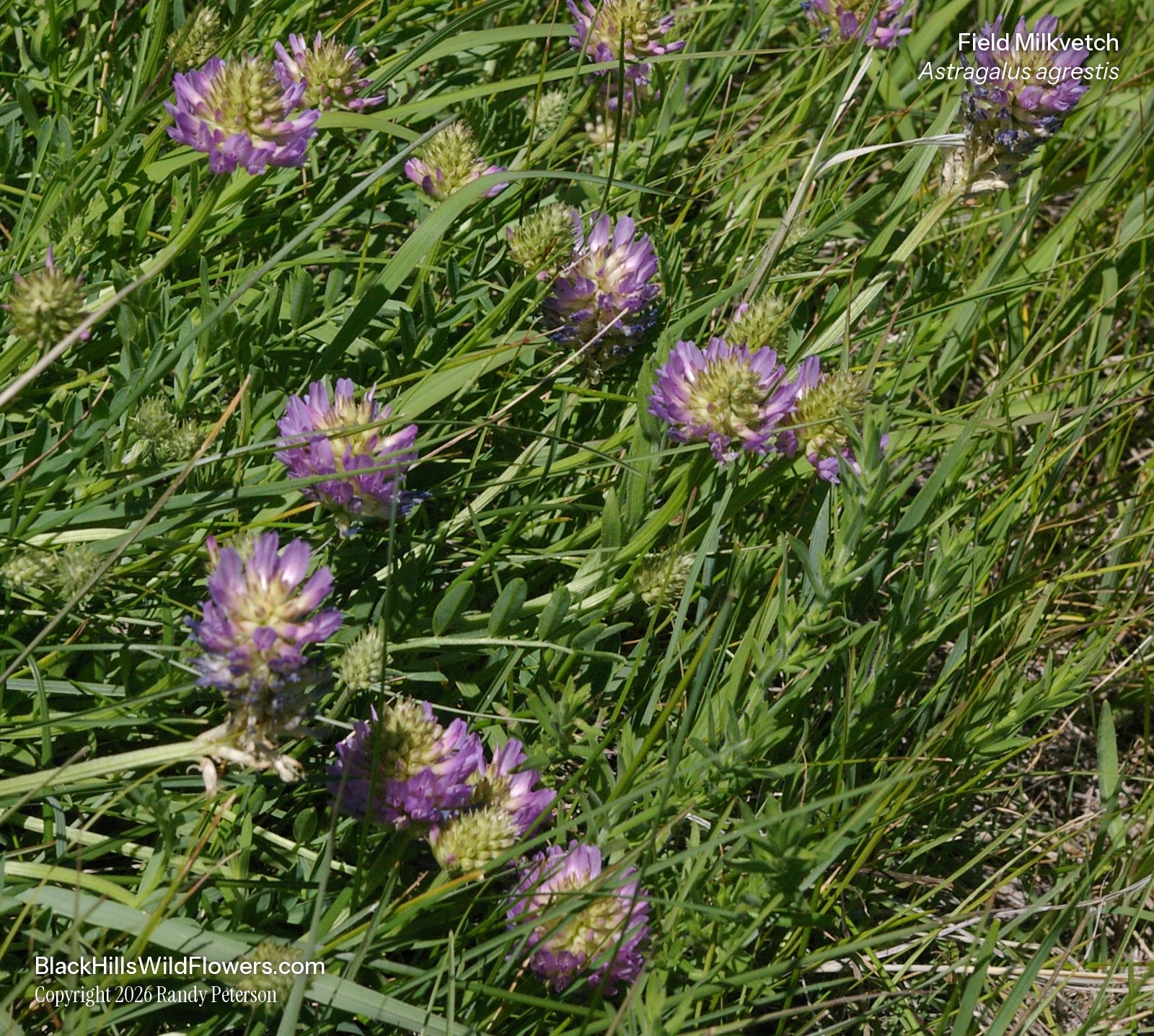
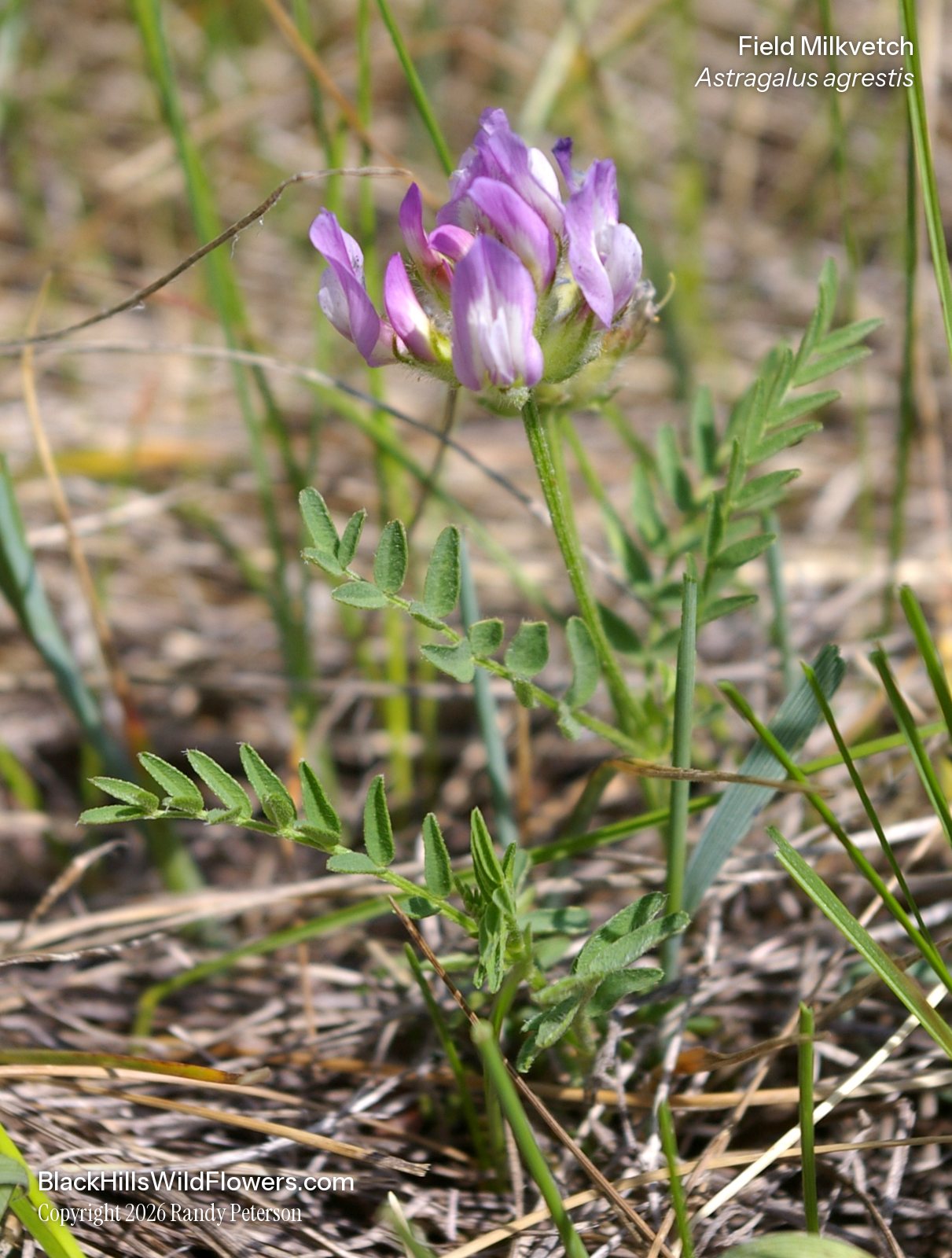
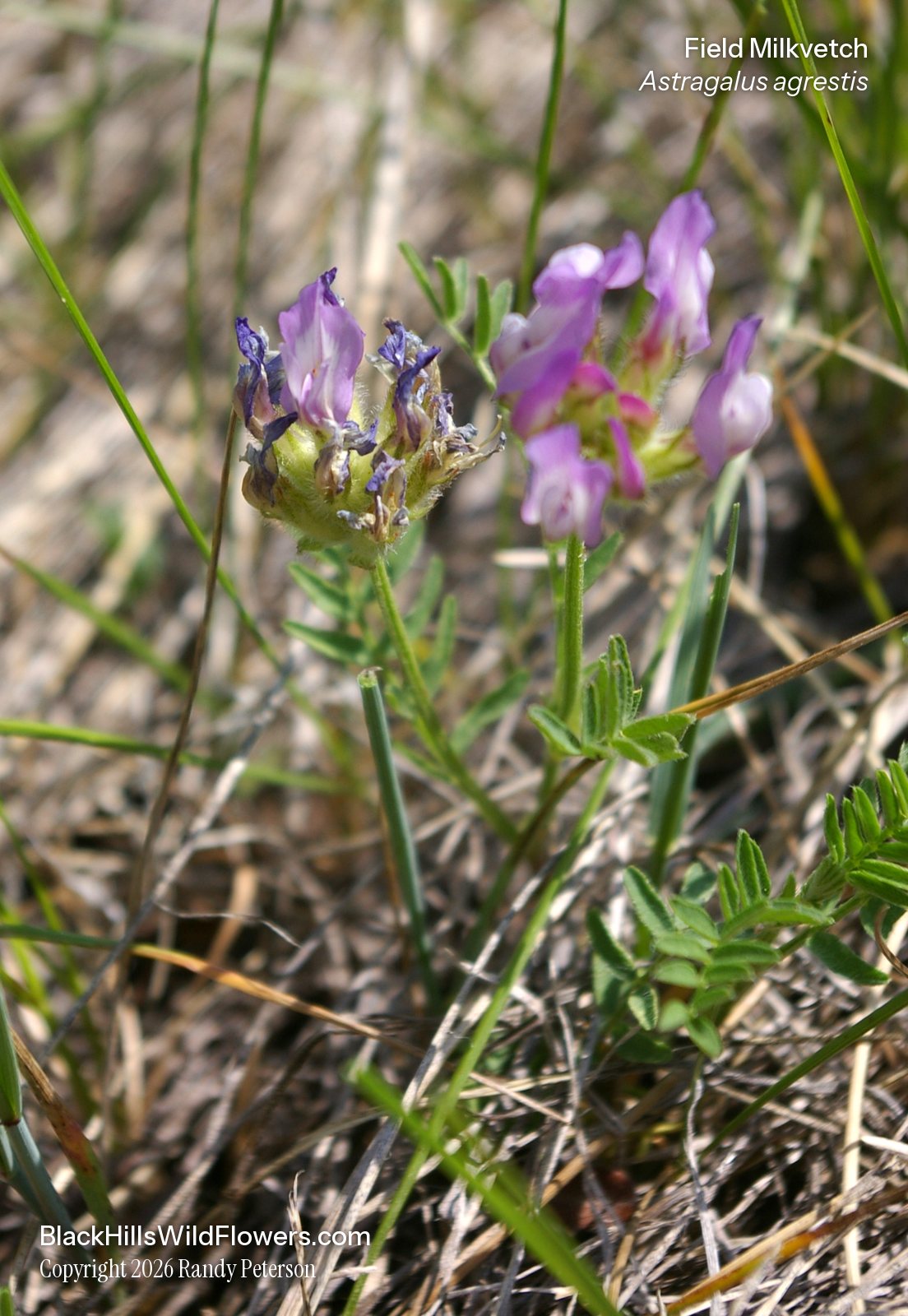
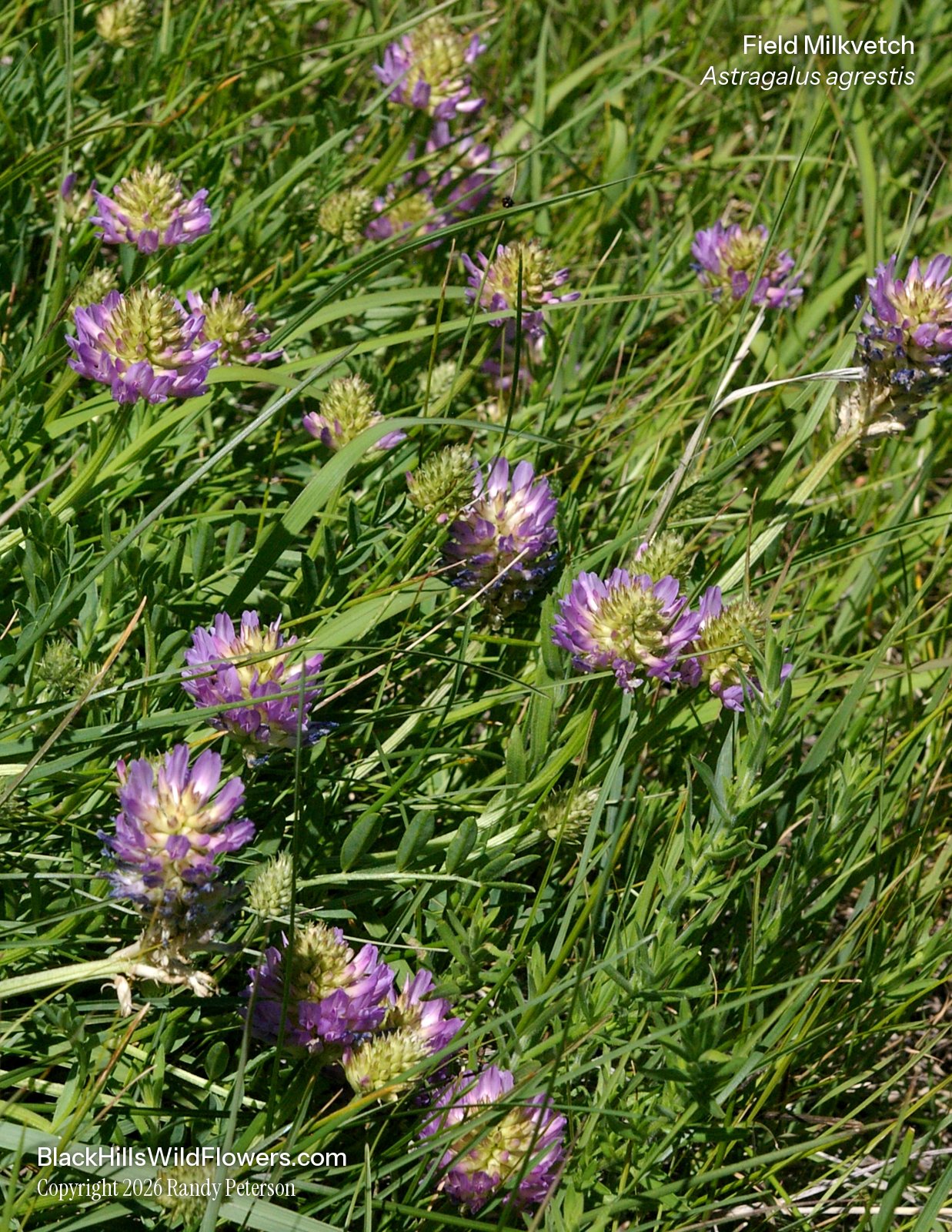
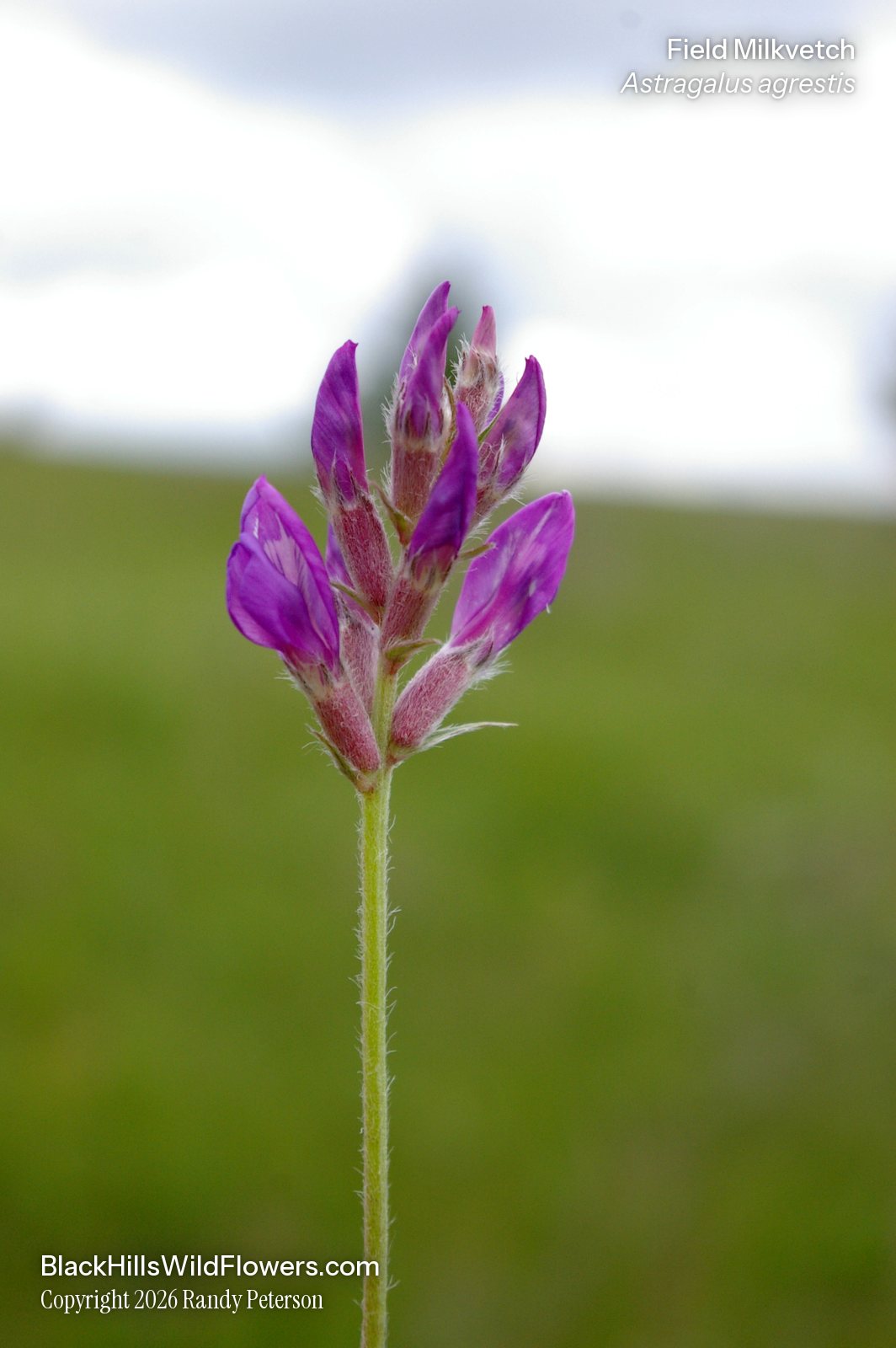
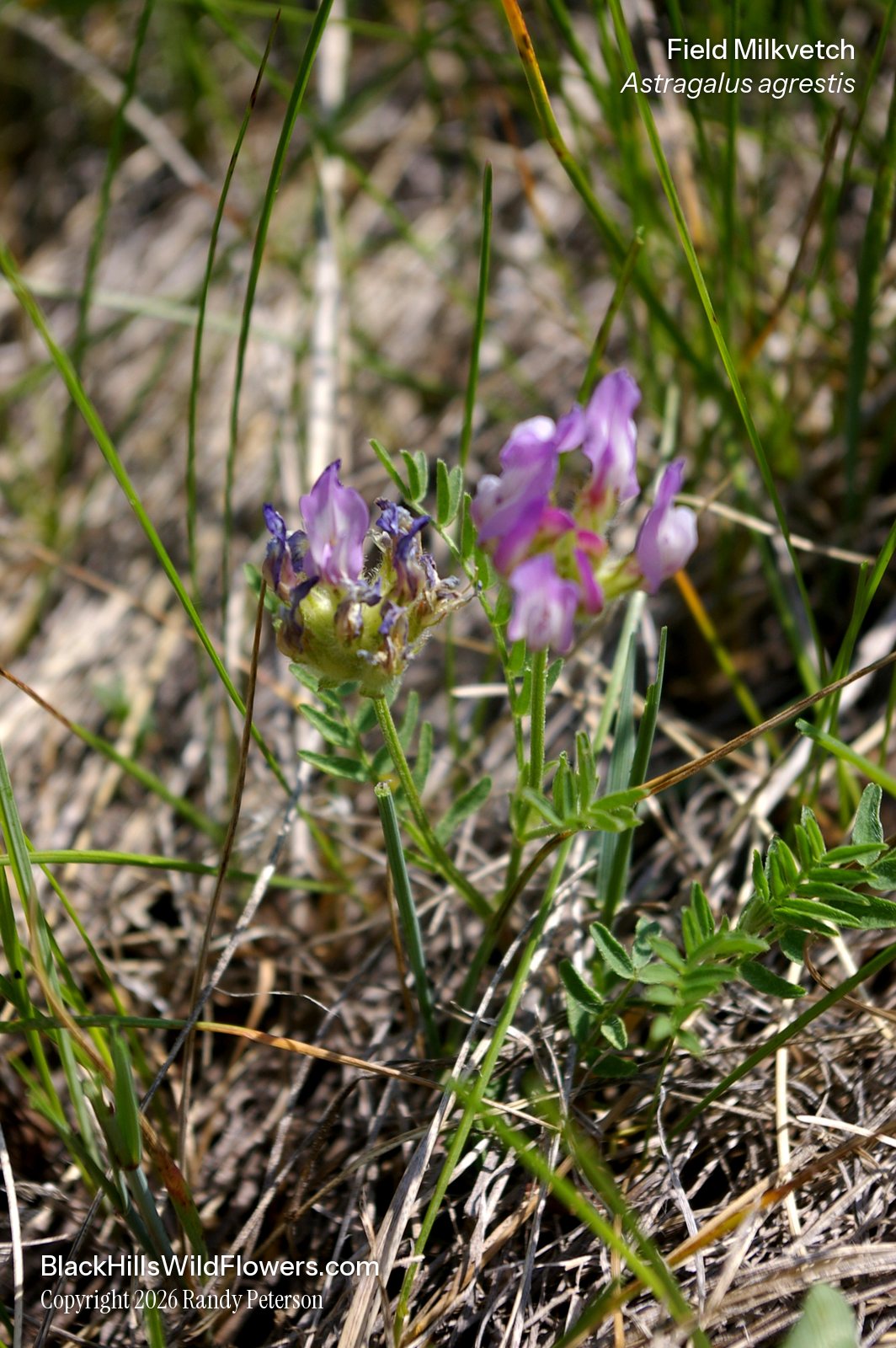
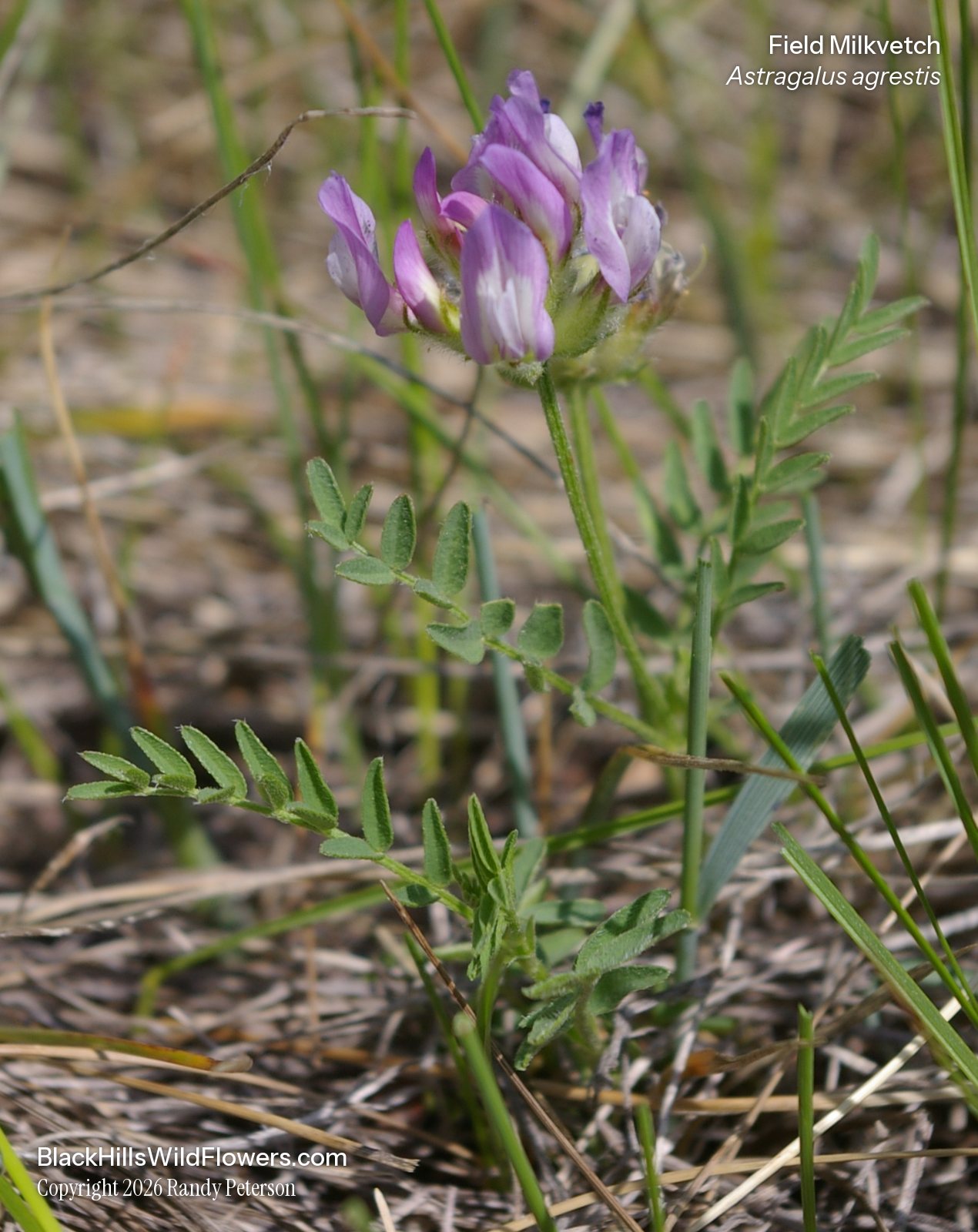
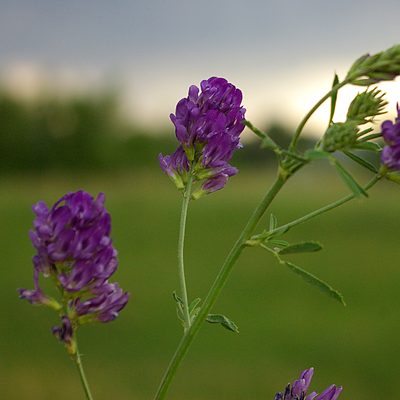
Field Milkvetch (Astragalus agrestis) is a native perennial legume with leaves of many small leaflets and round heads of light purple, pea-shaped flowers. It grows in moist meadows, low prairies and along streams, blooms in June and July in neighboring Minnesota, and a 2011 plant survey at Jewel Cave National Monument recorded it in the Black Hills. Photographed in the Black Hills.
| Family | Fabaceae · Pea |
|---|---|
| Status | Native perennial |
| Blooms | June and July |
| Height | 10–30 cm (4–12 in) |
| Where | Prairies, moist meadows and stream banks |
| Also called | Purple Milk-vetch |
| Synonym | Astragalus dasyglottis |
Roots, seeds & germination
Root: Stems rise from a small crown or from underground rhizomes (creeping underground stems).
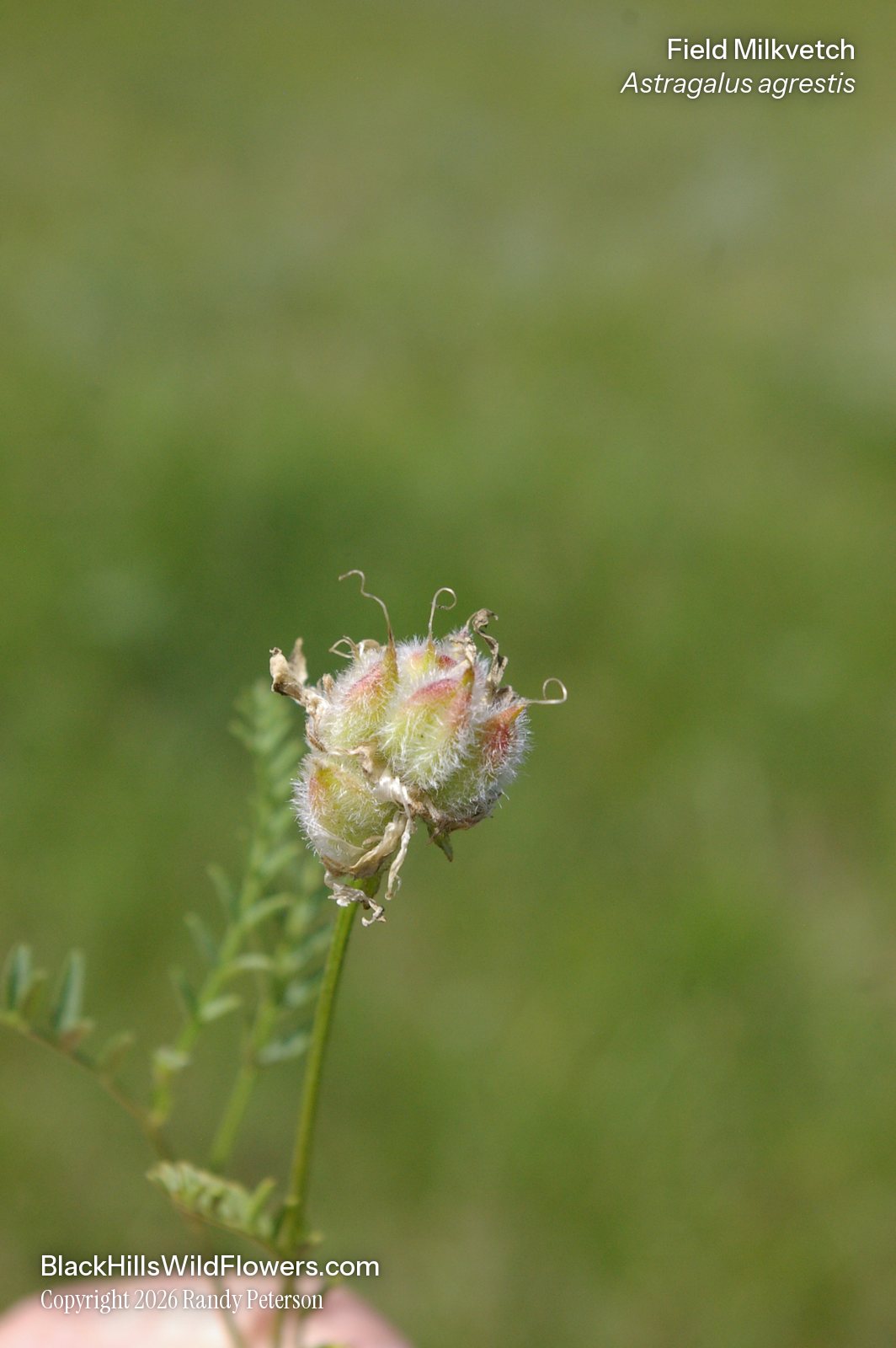
Seed: An erect, two-chambered, egg-shaped pod, 7–10 mm long, densely covered in long white hairs.
How do you identify Field Milkvetch?
Look for a round to egg-shaped head of light purple flowers, each 1/2 to 3/4 inch long, with long gray to black hairs on the calyx (the cup behind the petals). Leaves have 13 to 21 leaflets, and the stems come up scattered rather than in a dense clump. Prairie Milkvetch has very similar flowers but a far denser cluster of stems. Pods stand erect and are densely white-hairy.
When does it bloom?
June and July.
Where does it grow?
Prairies, moist meadows, low ground and stream banks. A 2011 plant survey at Jewel Cave National Monument recorded it in the Black Hills.
Other flowers to compare
Sources: Minnesota Wildflowers: Astragalus agrestis (Field Milkvetch); New York Botanical Garden, Gleason and Cronquist manual: Astragalus agrestis; Jewel Cave National Monument Plant Community Composition and Structure Monitoring 2011 Annual Report.