Alfalfa
Medicago sativa
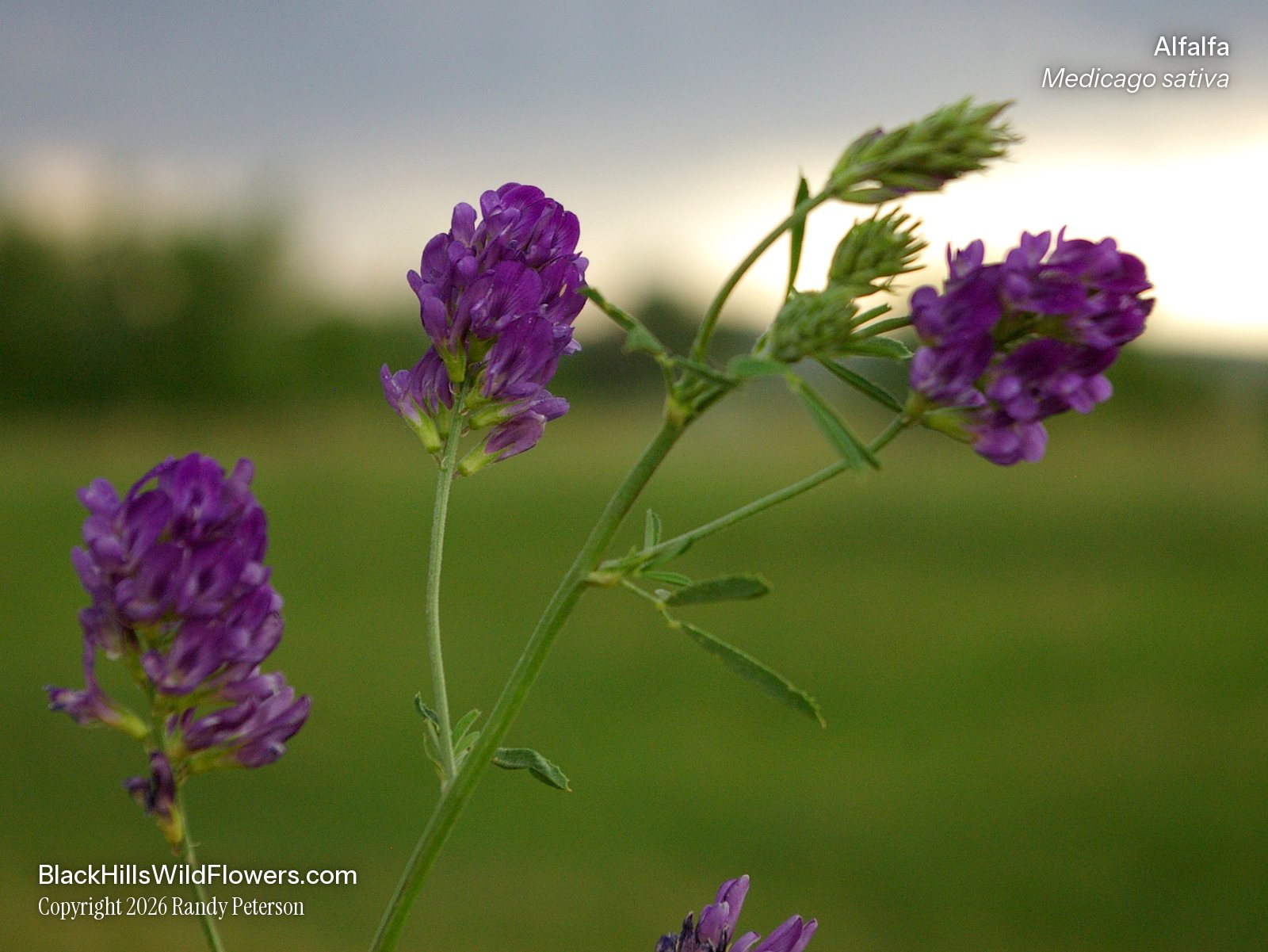
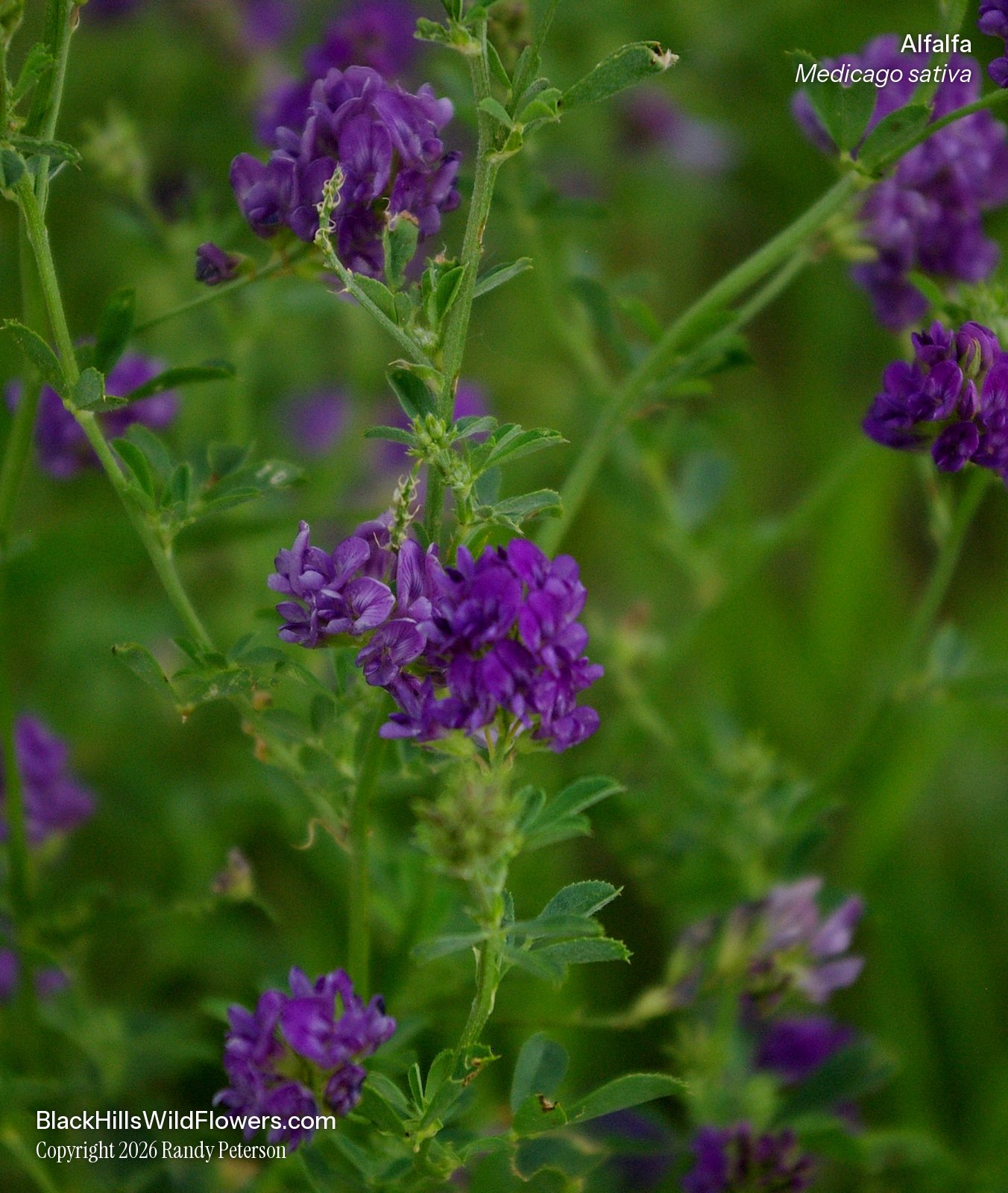
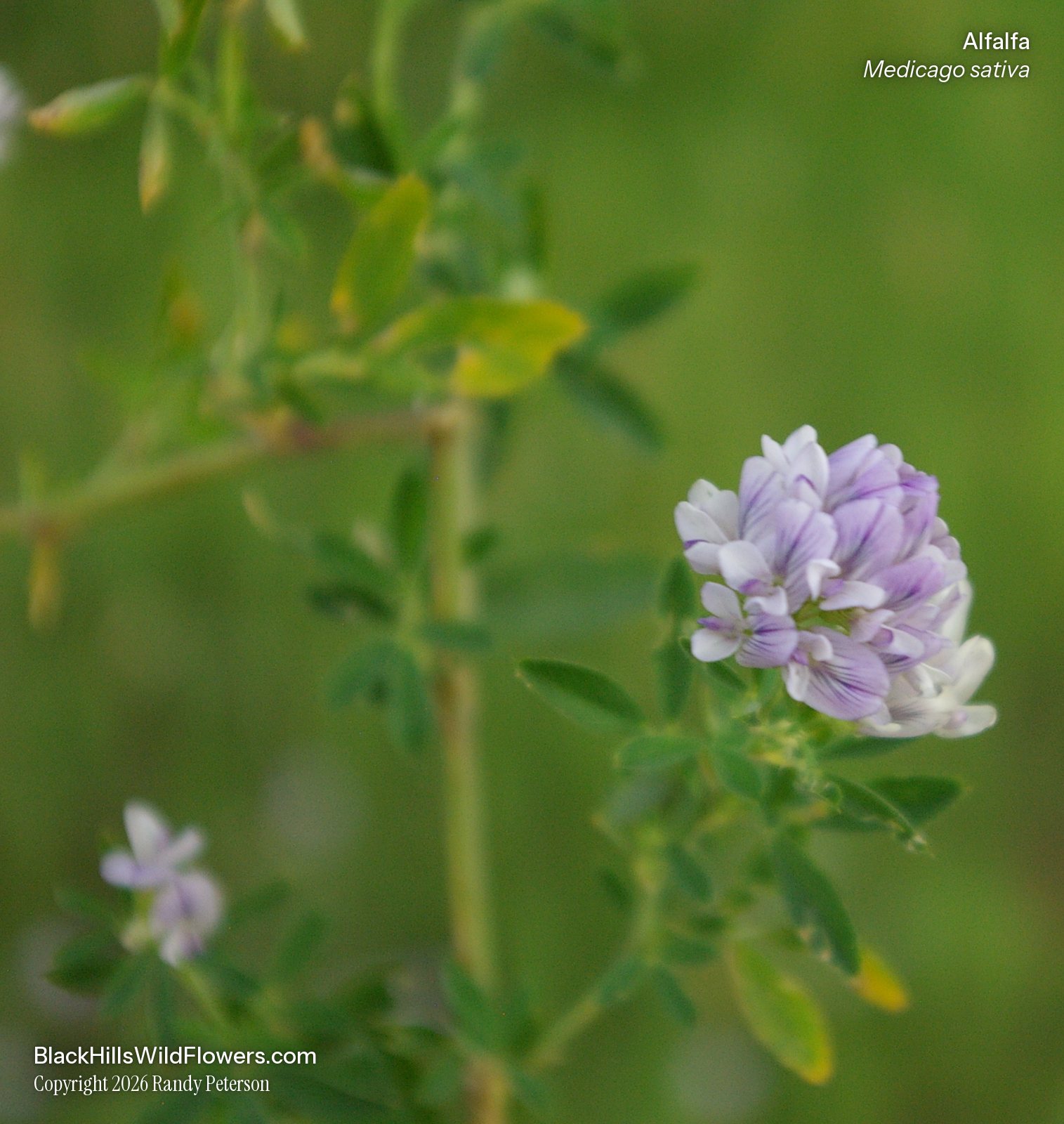
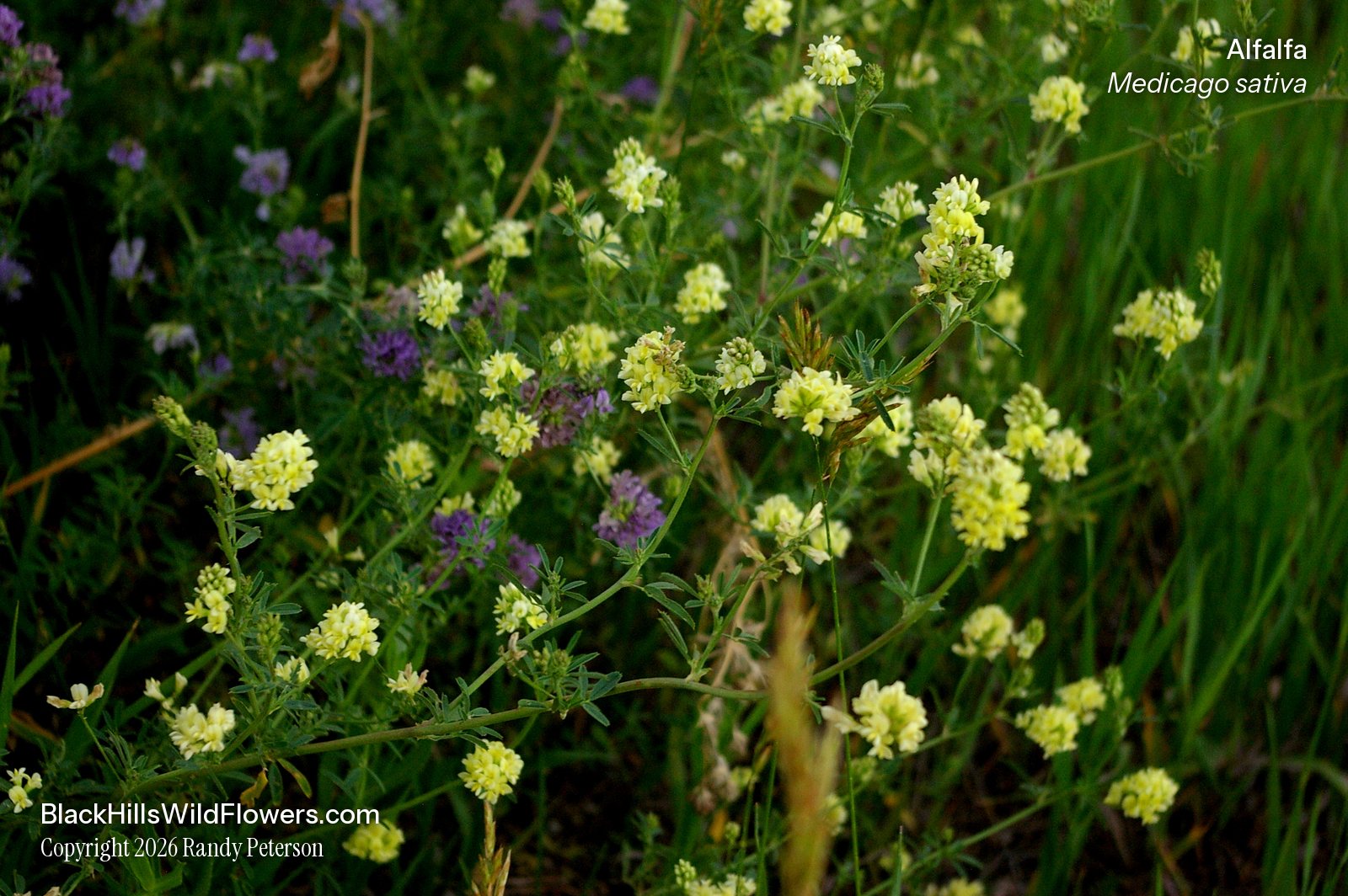
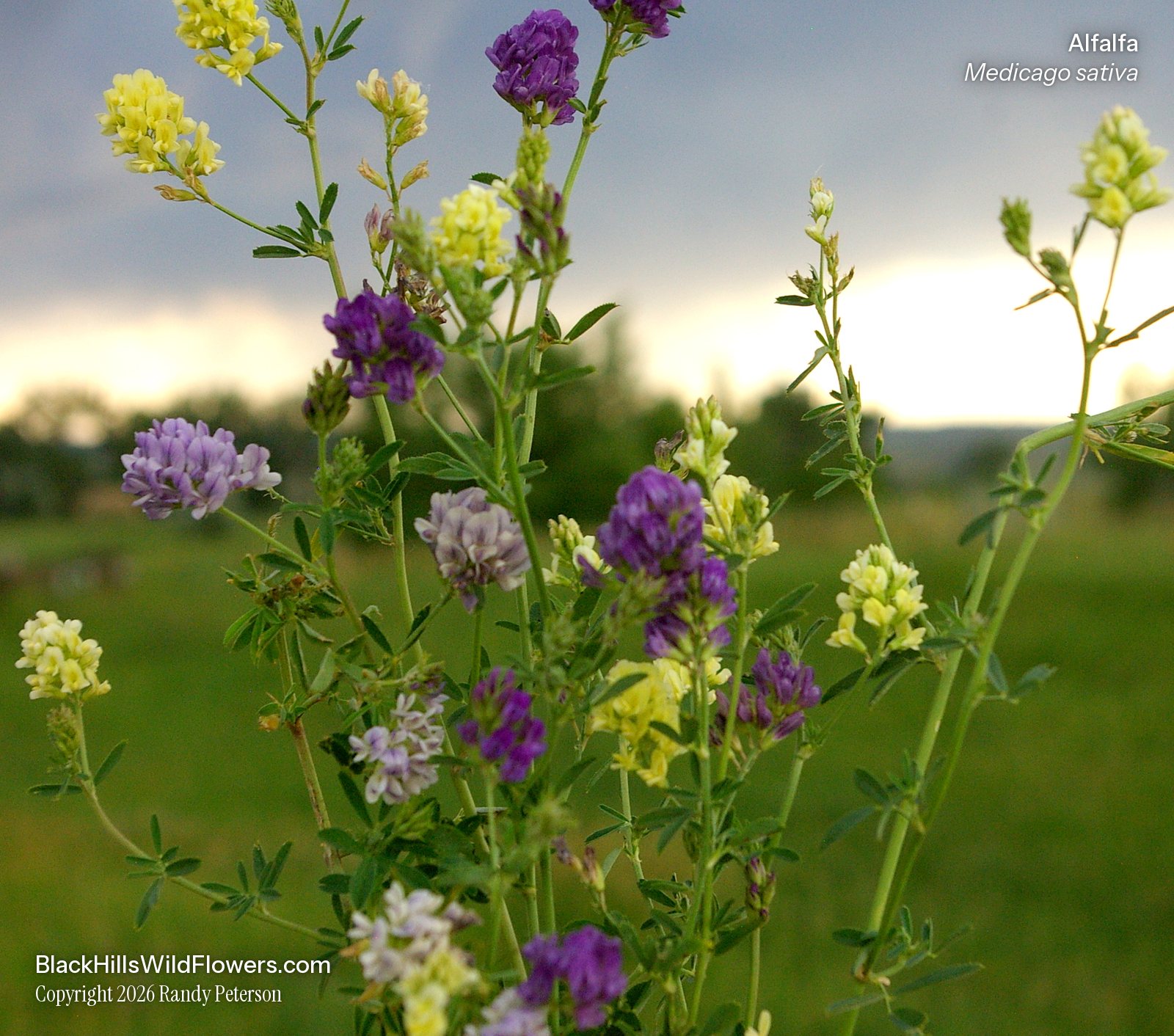
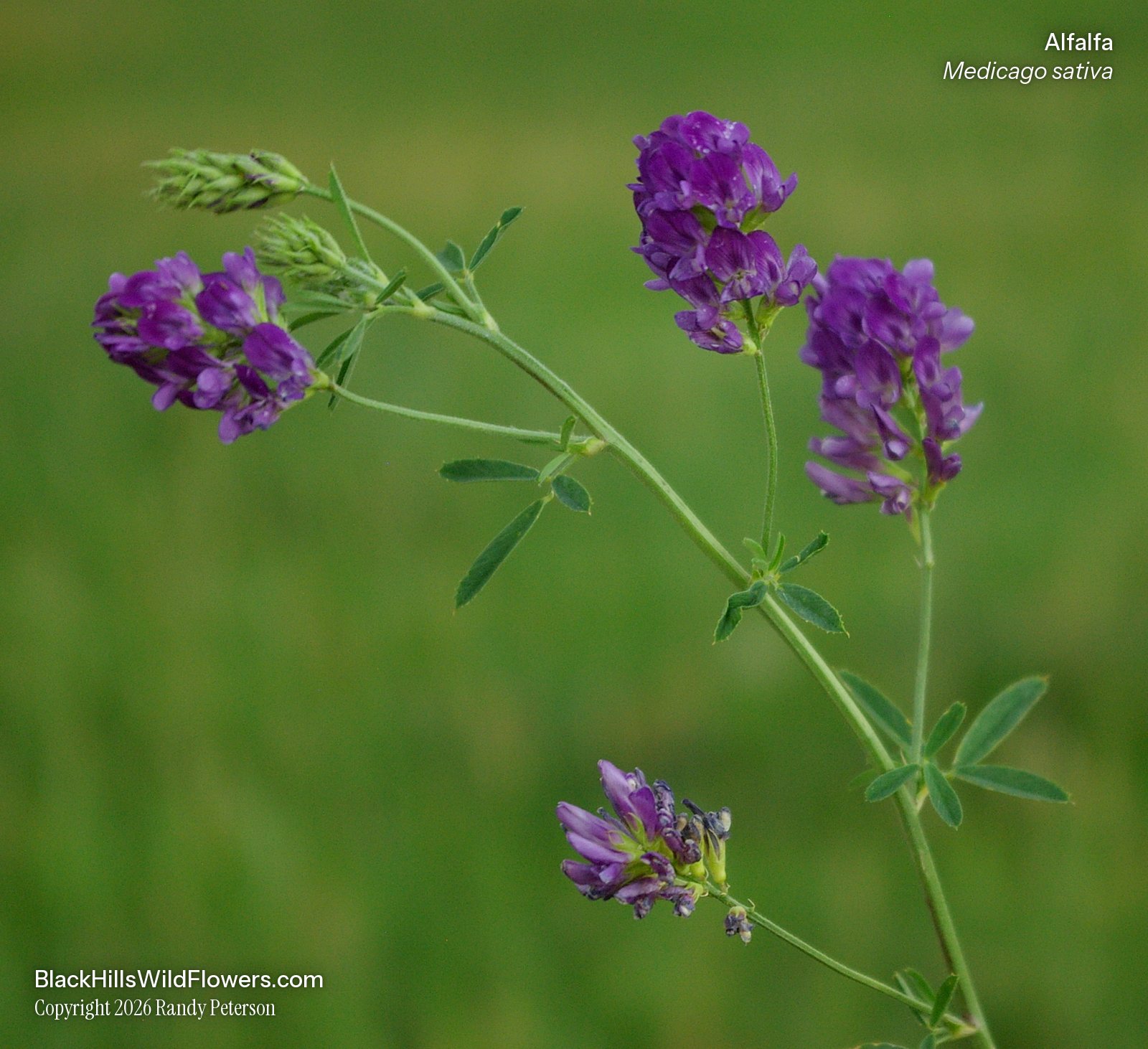
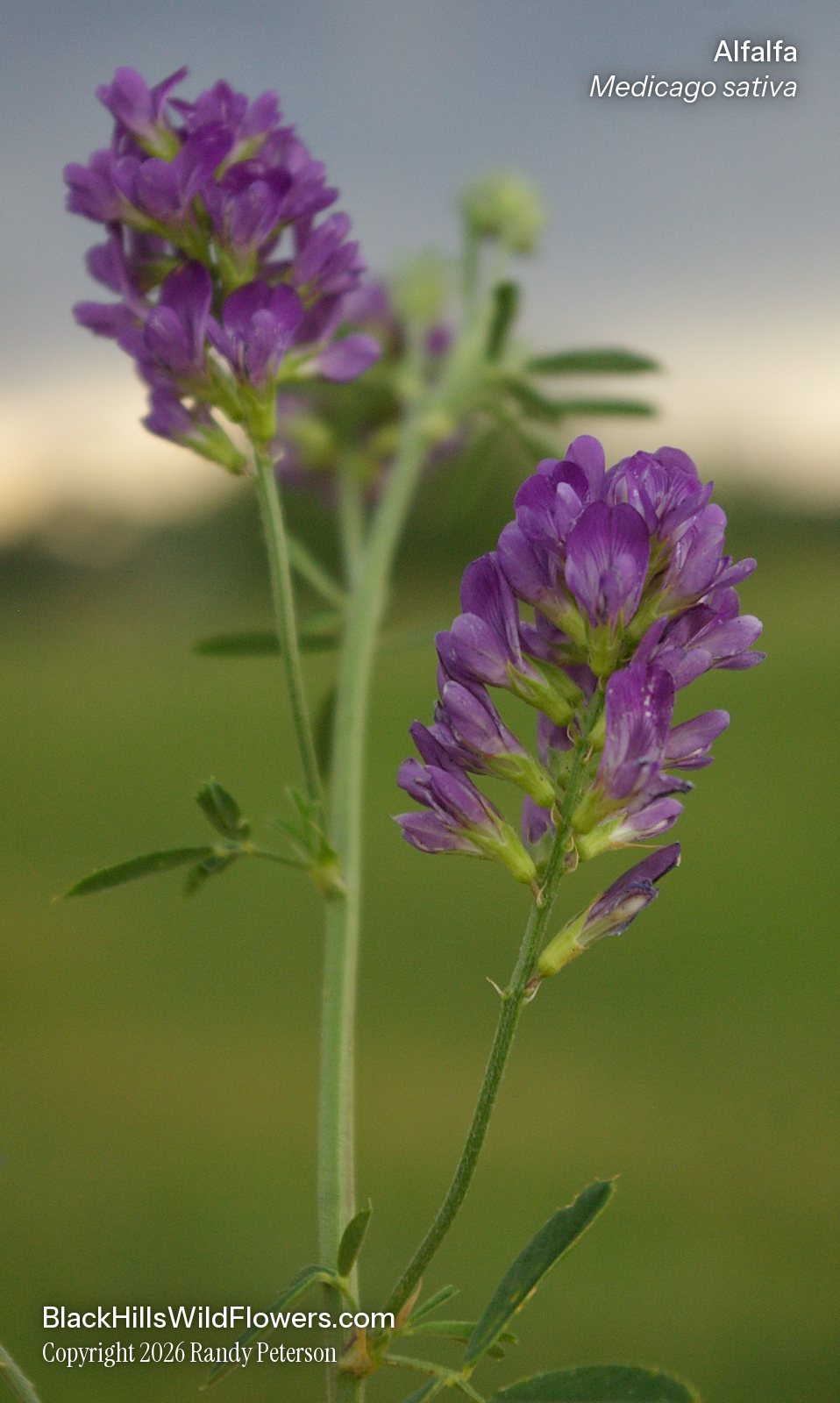
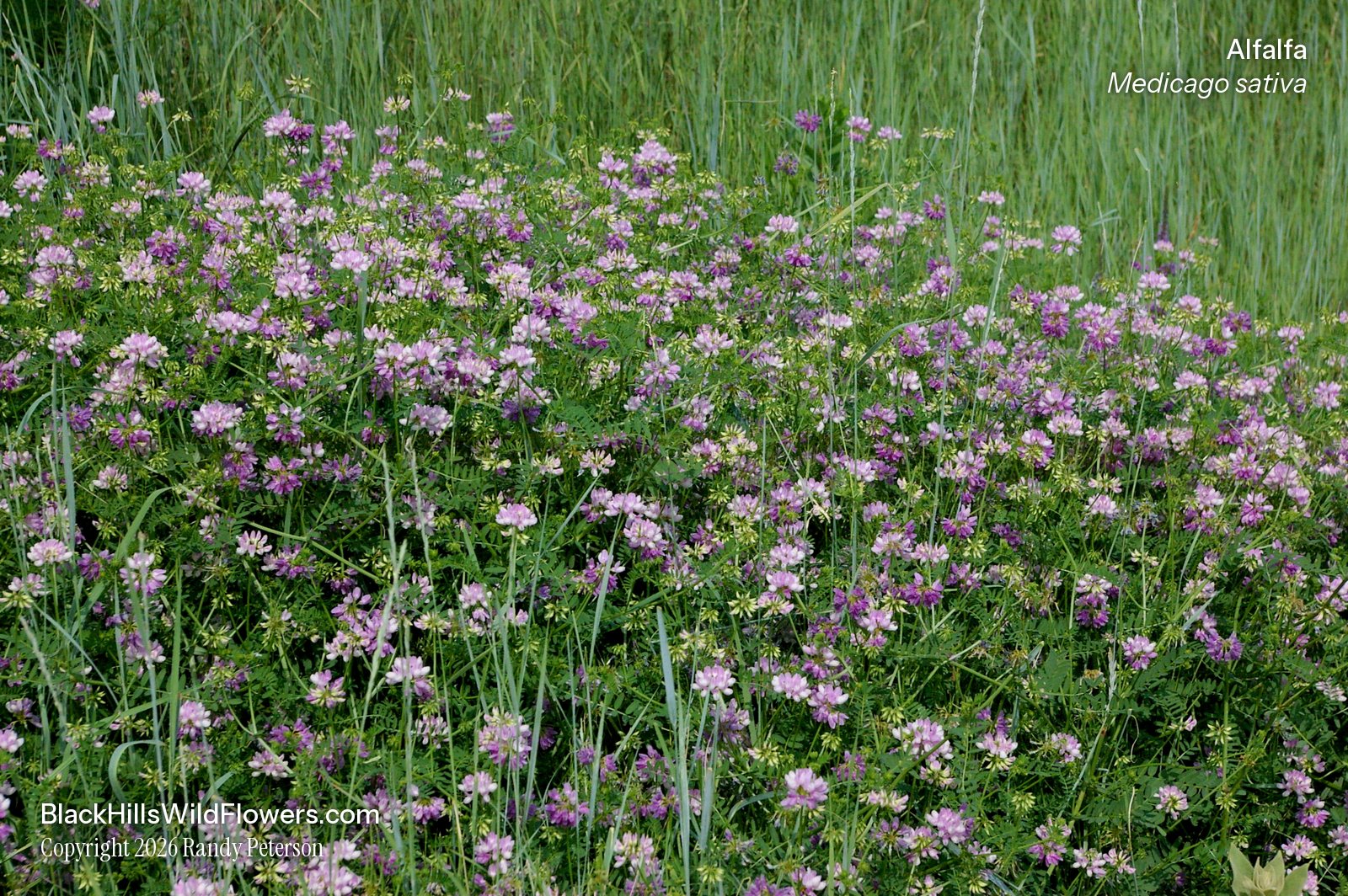
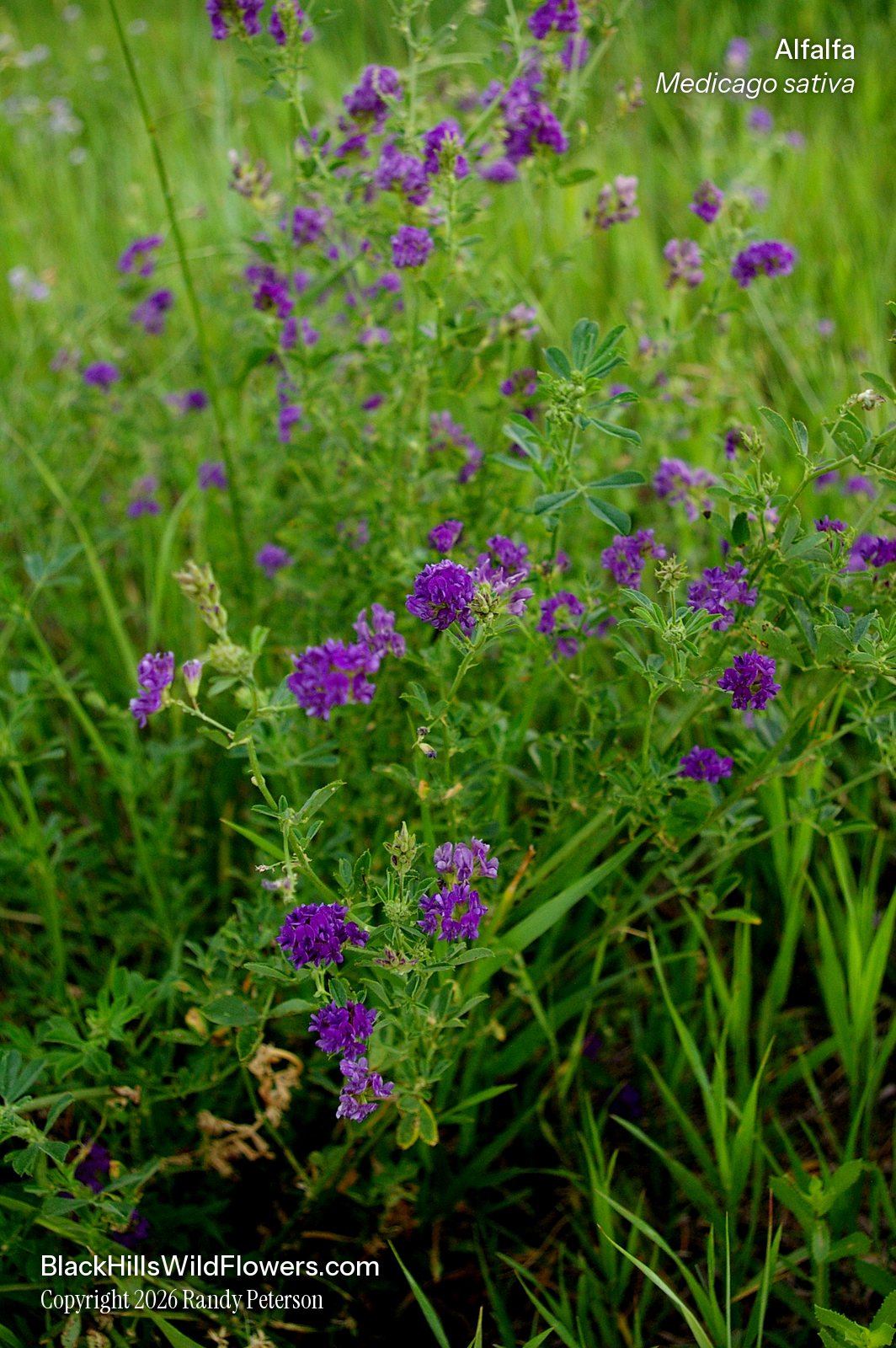
Alfalfa (Medicago sativa) is an introduced perennial legume grown for hay, with three-part leaves and short clusters of pea-shaped flowers, usually purple to violet but sometimes yellow or white. In South Dakota it blooms from about May through August, it also grows along roadsides and in disturbed ground, and it is recorded in the Black Hills. Photographed in the Black Hills.
| Family | Fabaceae · Pea |
|---|---|
| Status | Introduced perennial |
| Blooms | May through August |
| Height | 30–100 cm (12–39 in) |
| Where | Hay fields, roadsides and disturbed ground |
| Also called | Purple Medick, waȟpókhižate (Lakota), tȟačháŋičahu tȟáŋka (Lakota) |
| Toxicity | It can cause bloat in grazing livestock. |
Roots, seeds & germination
Root: A deep, extensive taproot.
Seed: A coiled pod, up to about 8 mm (1/3 in) across, holds up to 10 small kidney-shaped seeds, yellowish to brown.
How do you identify Alfalfa?
Look for leaves in groups of three, pea flowers in short clusters of 5 to 30, and a coiled seed pod with 2 to 4 spirals. Flowers run from pale lavender to deep violet, and some plants are yellow or white. Sweet clover has very similar leaves but smaller flowers in a longer, looser cluster.
When does it bloom?
May through August.
Where does it grow?
Mostly a forage crop that escapes to roadsides, waste areas, disturbed sites and dry fields, where it often forms dense stands. It does best on deep, well-drained soil. A 1986 plant survey in the Black Hills listed it as an introduced plant.
Other flowers to compare
Sources: SDSU Open PRAIRIE: Medicago sativa; USDA NRCS fact sheet: Alfalfa; Minnesota Wildflowers: Medicago sativa (Alfalfa); A Survey of the Vegetation of Jewel Cave National Monument, with vascular plant checklist (Marriott and Hartman, 1986); Culturally Important Plants of the Lakota (Black Elk and Flying By, Sitting Bull College, 1998), filed with the South Dakota PUC.