Black Medic
Medicago lupulina
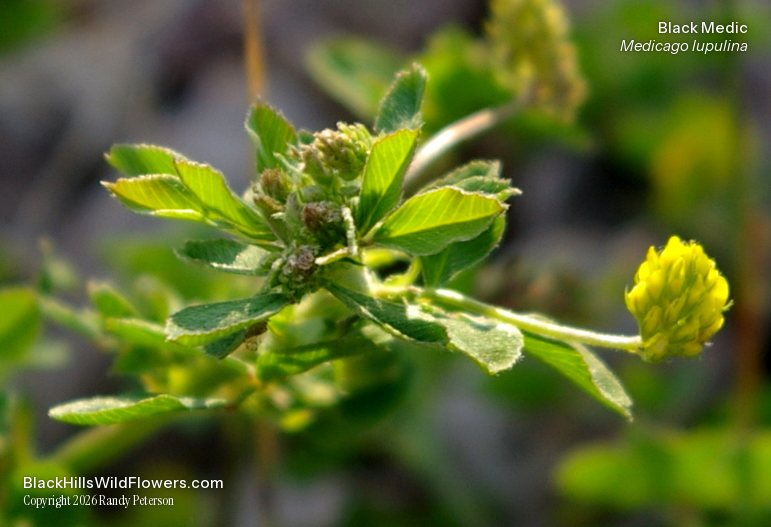
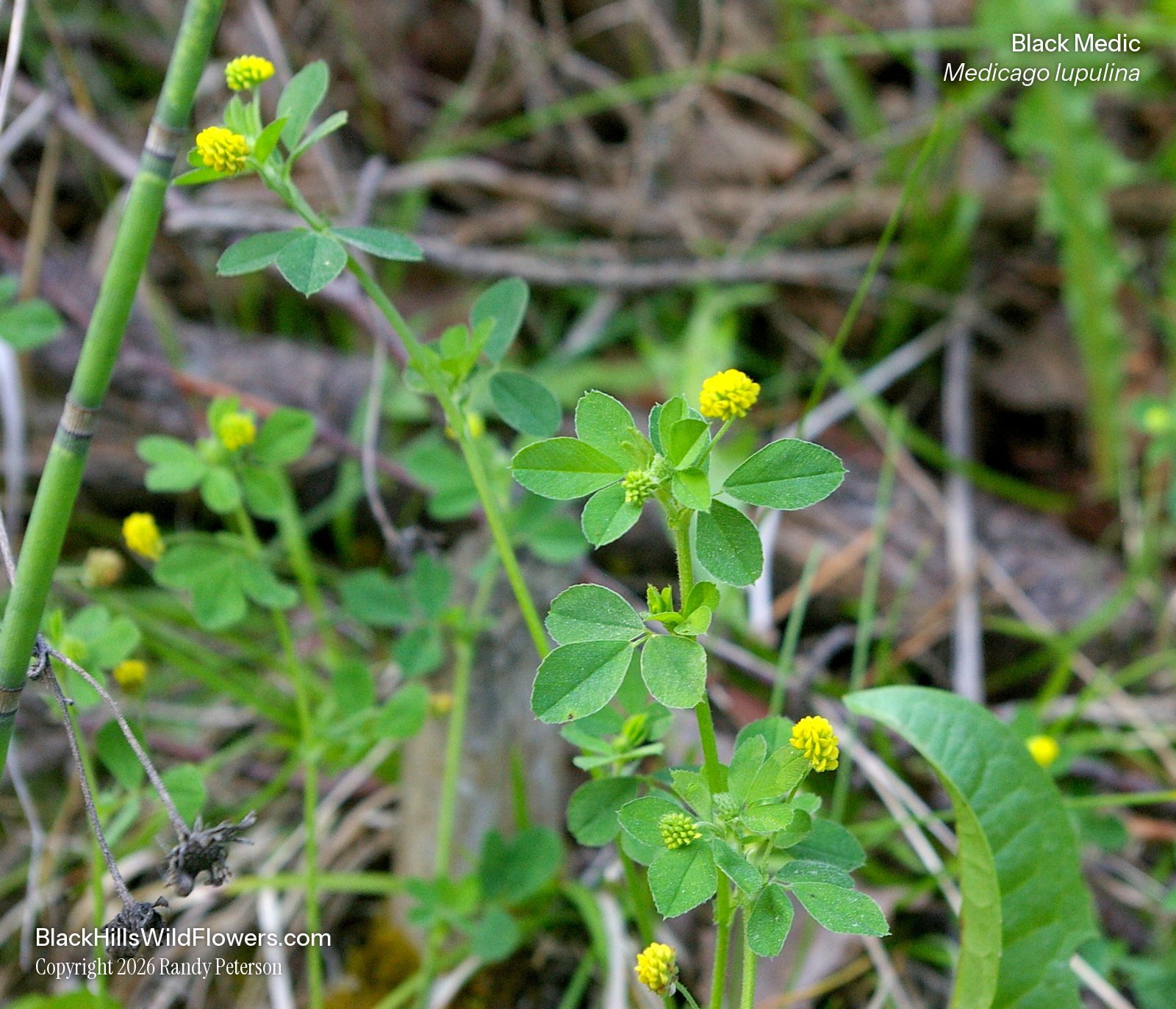
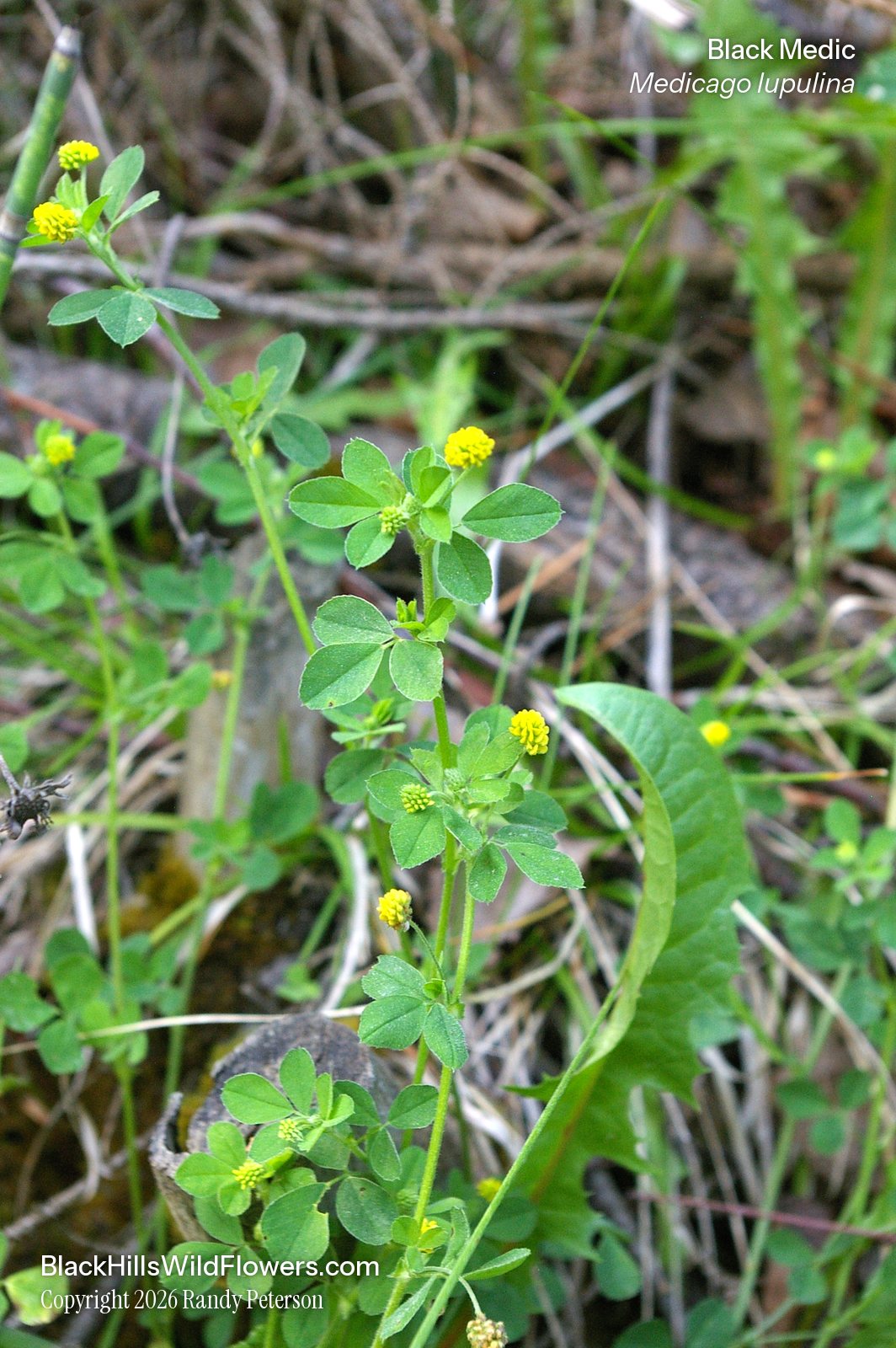
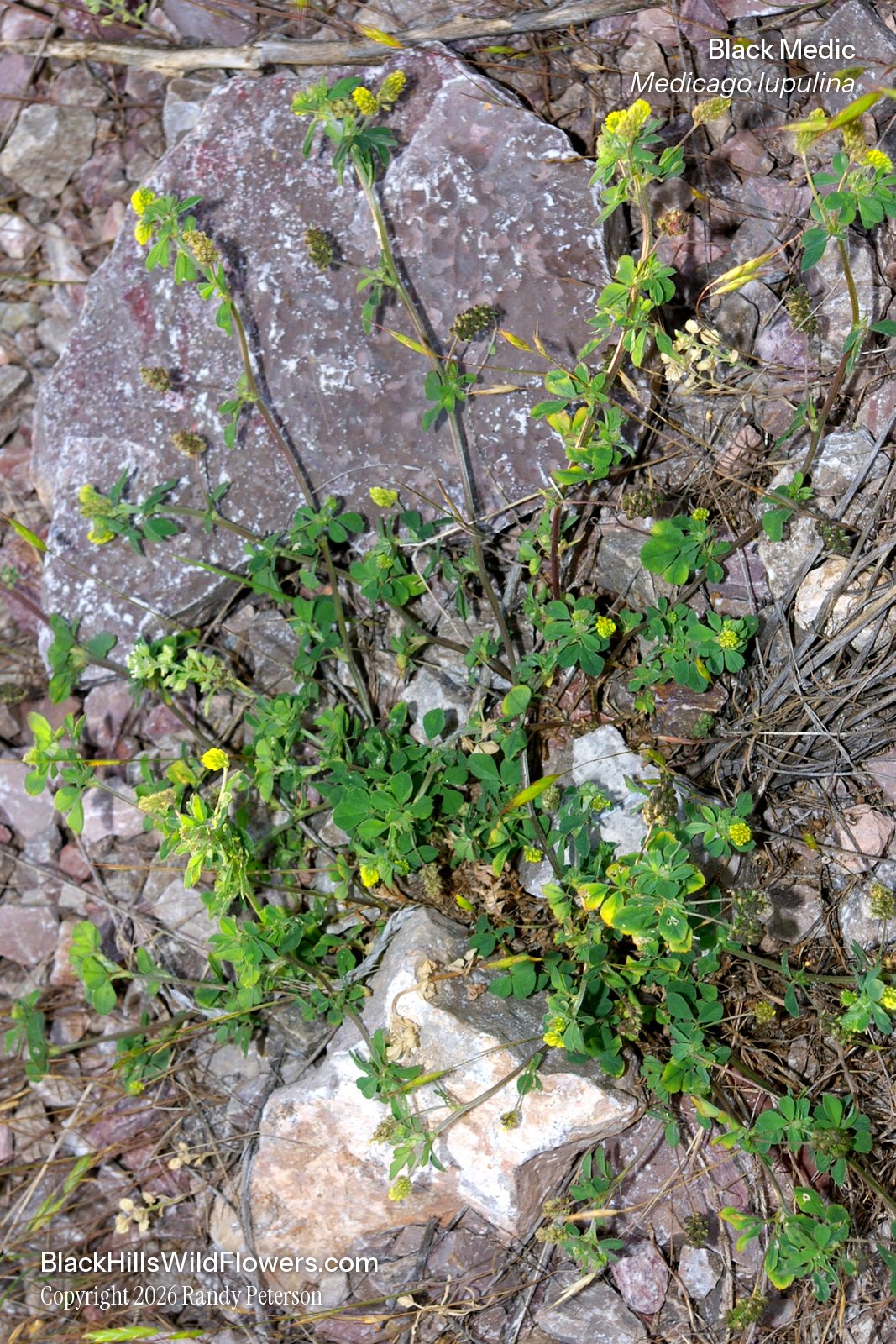
Black Medic (Medicago lupulina) is a low, sprawling plant in the pea family, brought from Eurasia, with three-part leaves and tiny round heads of bright yellow flowers. It blooms from May into August in lawns, pastures, roadsides and disturbed ground across South Dakota, and it is recorded in the Black Hills. Photographed in the Black Hills.
| Family | Fabaceae · Pea |
|---|---|
| Status | Introduced annual |
| Blooms | May into August |
| Height | 10–50 cm (4–20 in) |
| Where | Lawns, pastures, roadsides and disturbed ground |
| Also called | Black Medick, Black Clover, Hop Clover, ápe yámni (Lakota) |
Roots, seeds & germination
Root: Fibrous, with occasional short stolons (runners along the ground) that help it spread. It fixes nitrogen, and its roots can form nodules.
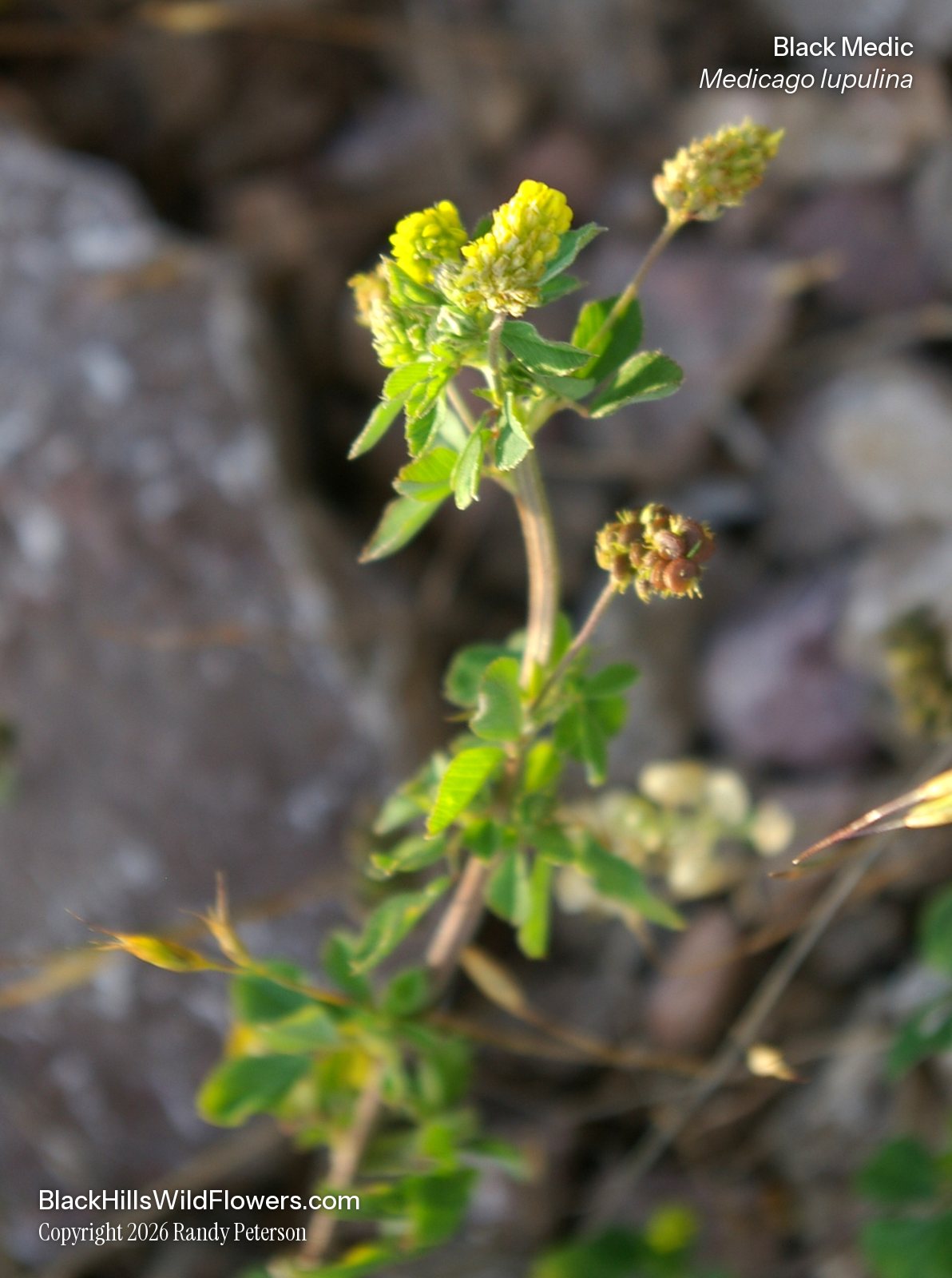
Seed: Each small, curled pod, about 3 mm long, holds one seed. Pods mature in late summer and turn black.
How do you identify Black Medic?
Look for three-part leaves with small oval leaflets, the middle one on a longer stalk, and round yellow heads only 6–8 mm across. Each head turns into a cluster of small, curled, one-seeded pods that go black when ripe. Hop clovers (Trifolium) have similar yellow heads, but theirs are much larger.
When does it bloom?
May into August.
Where does it grow?
Lawns, pastures, roadsides and disturbed sites across South Dakota. It usually grows in highly disturbed ground, but an Illinois guide says it can invade high-quality prairie. A 1986 plant survey in the Black Hills listed it as an introduced plant.
Other flowers to compare
Sources: SDSU Open PRAIRIE: Medicago lupulina; Minnesota Wildflowers: Black Medick; Illinois Wildflowers: Black Medic; Iowa State University: Black medic; A Survey of the Vegetation of Jewel Cave National Monument, with vascular plant checklist (Marriott and Hartman, 1986); Culturally Important Plants of the Lakota (Black Elk and Flying By, Sitting Bull College, 1998), filed with the South Dakota PUC.