Golden Pea
Thermopsis rhombifolia
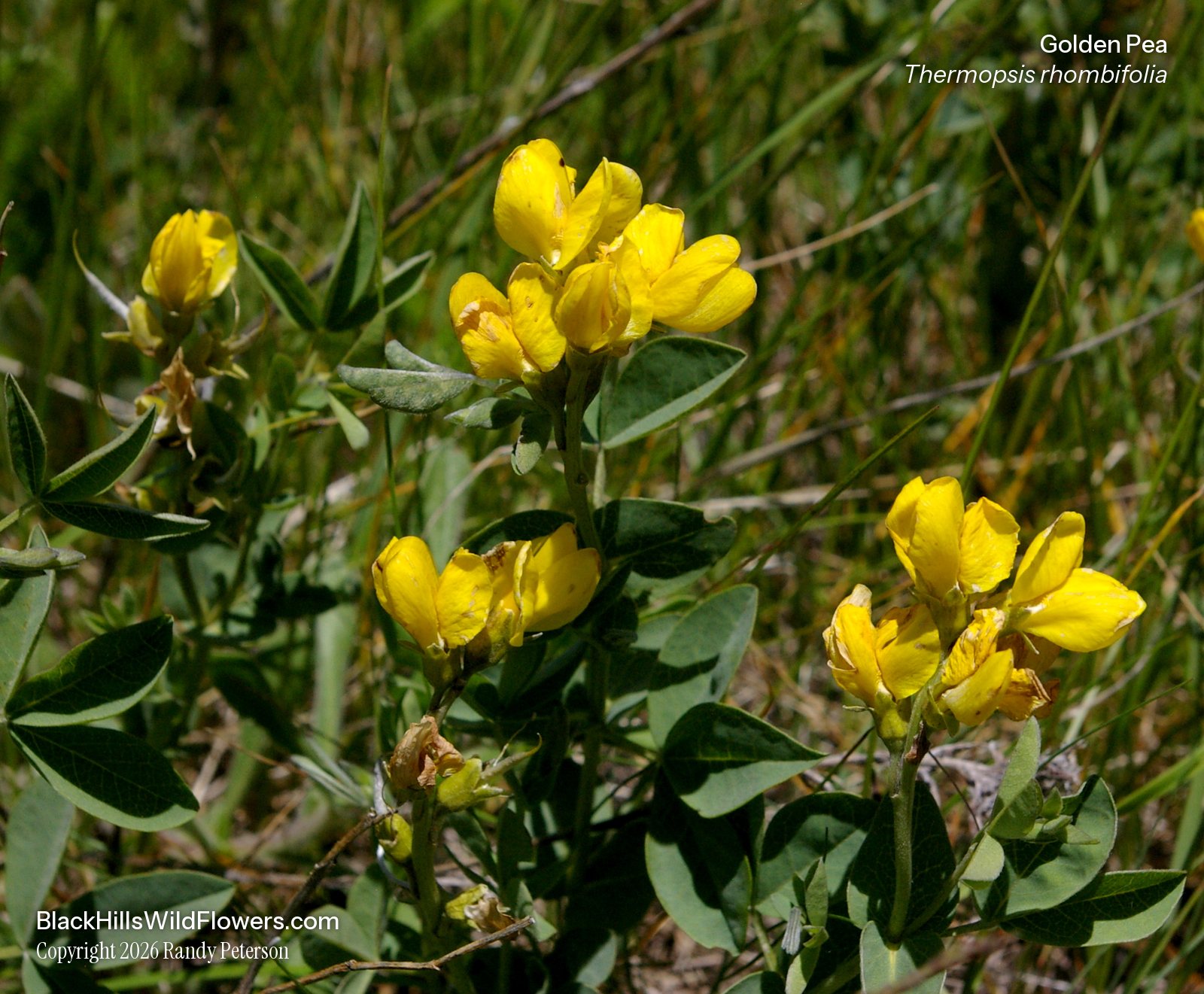
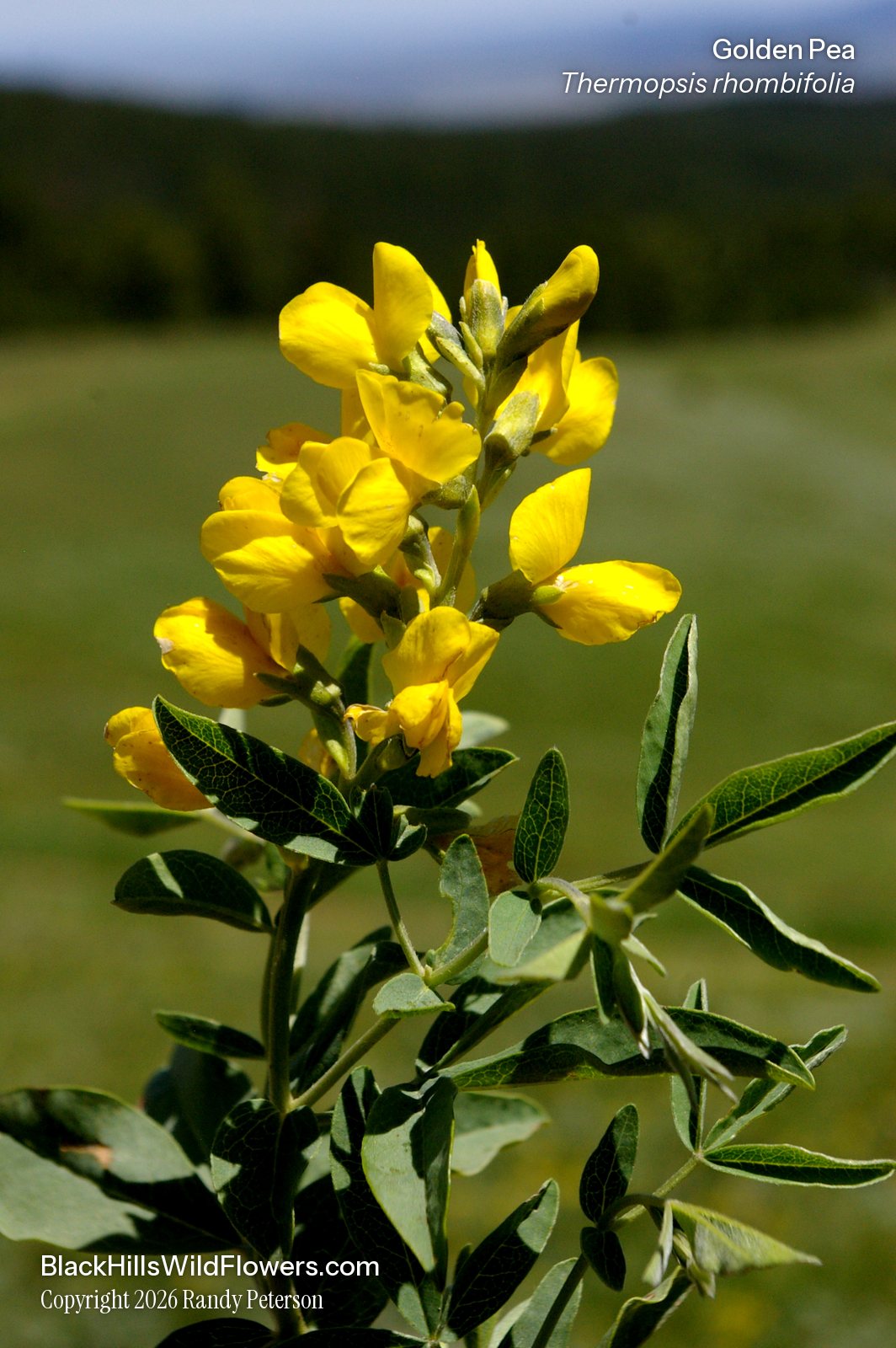
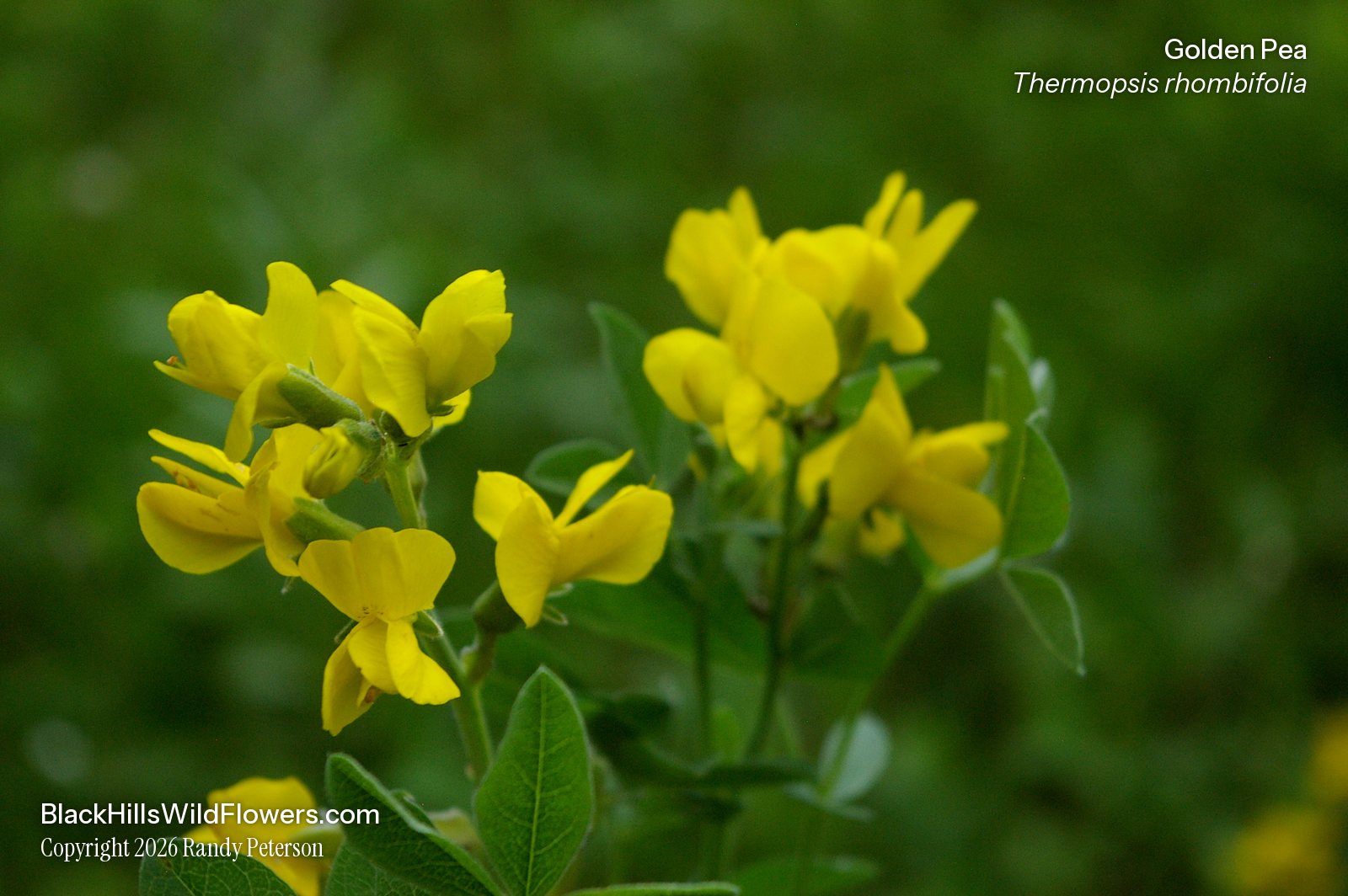
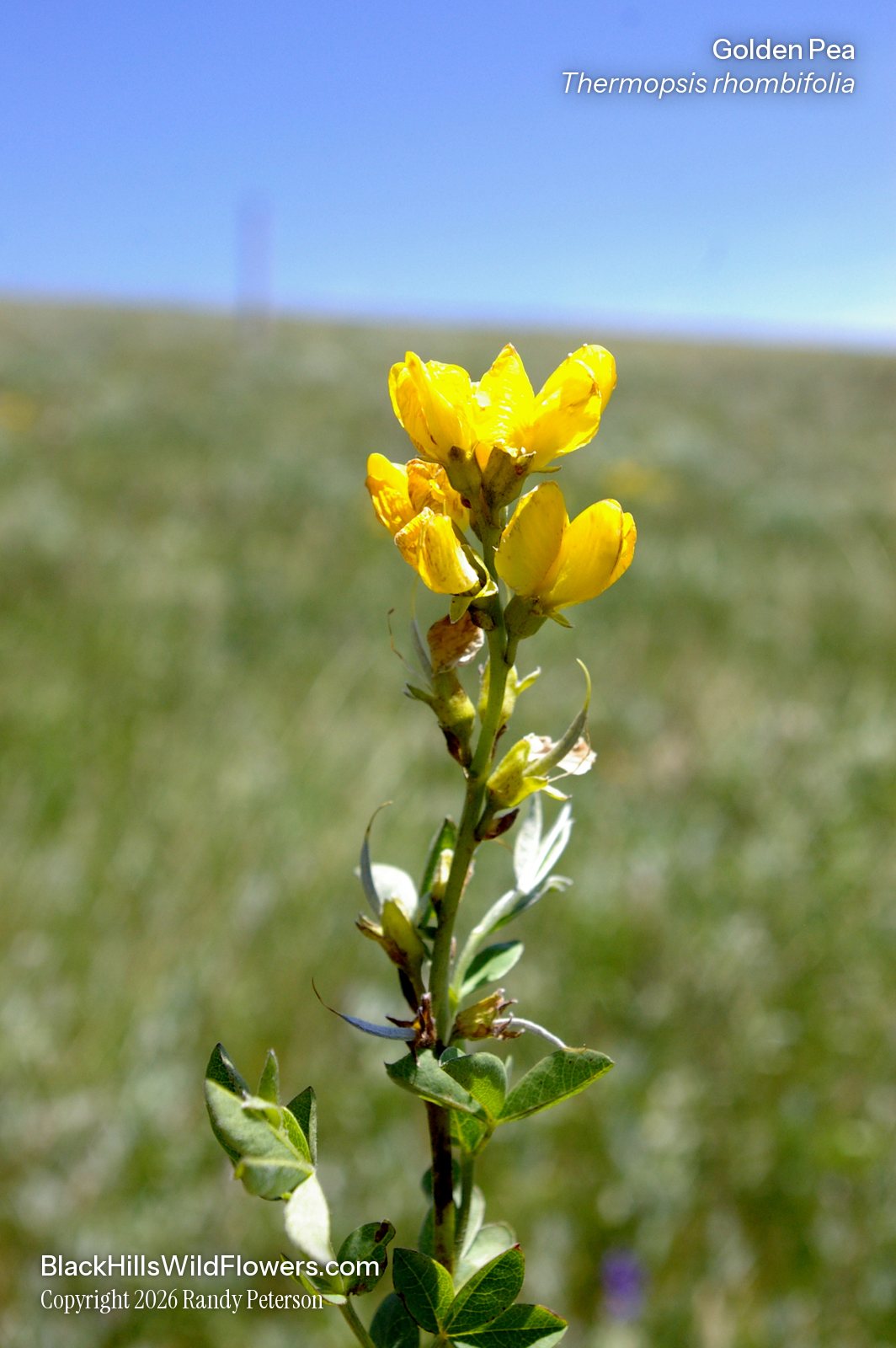
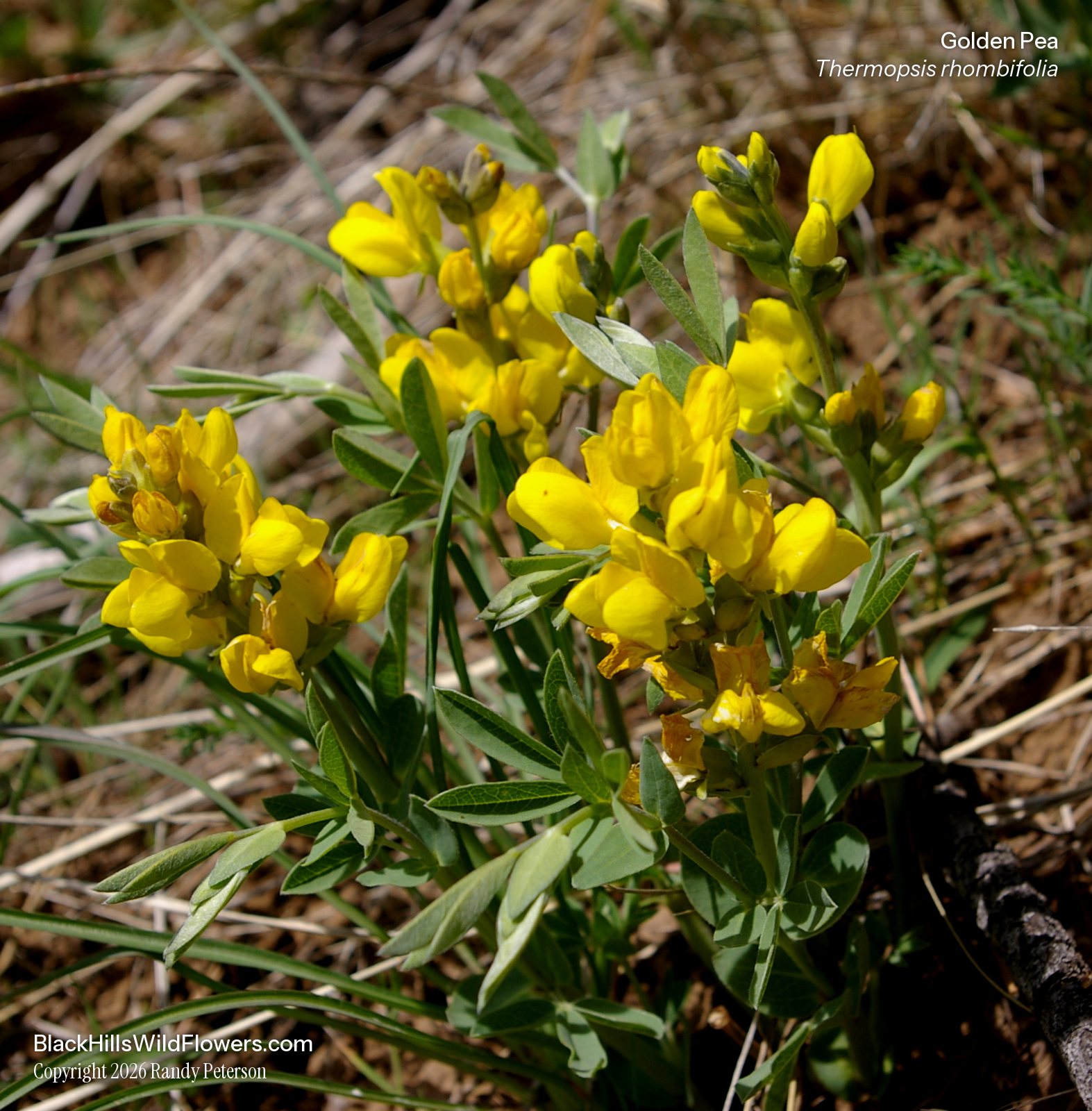
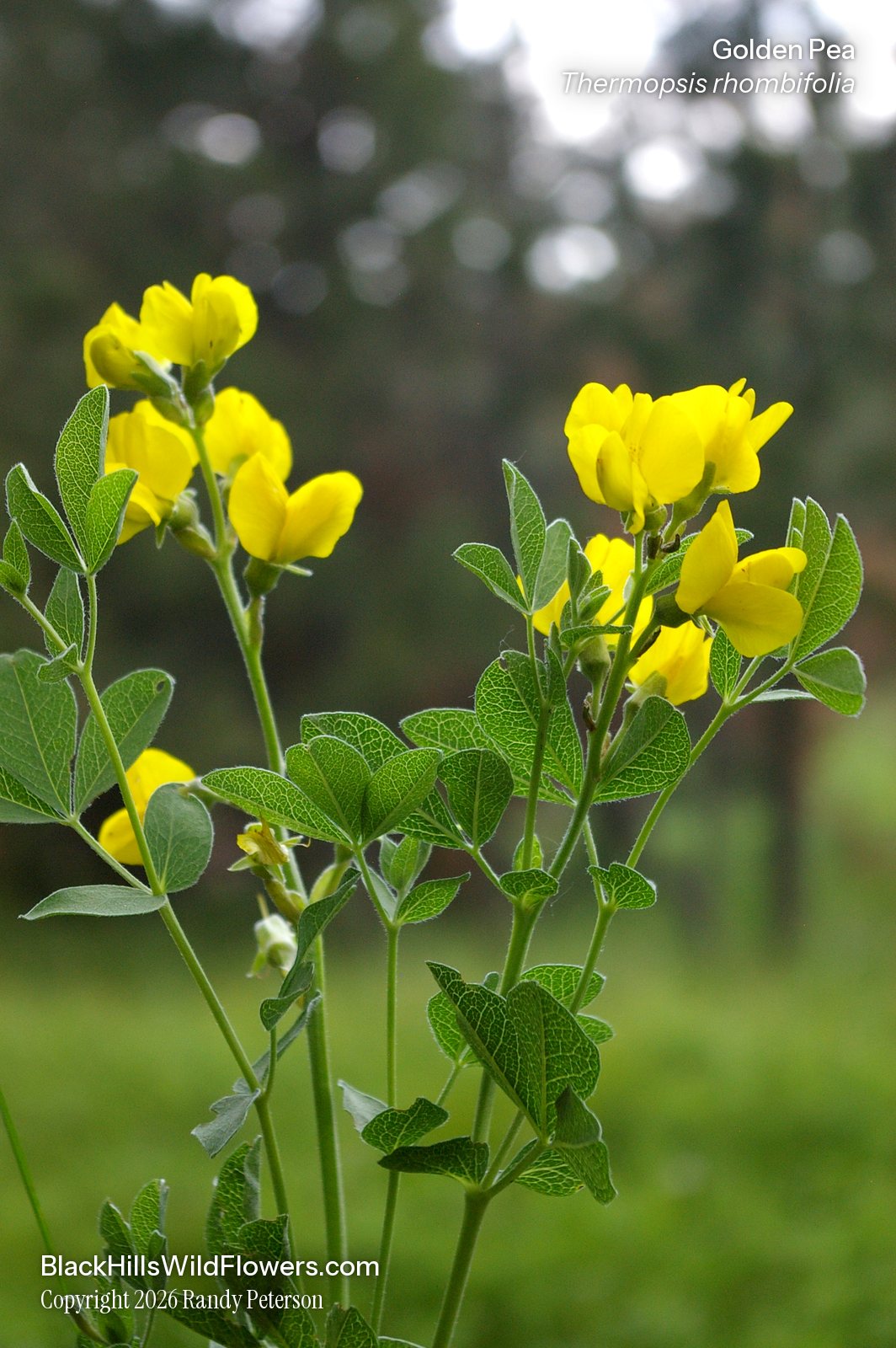
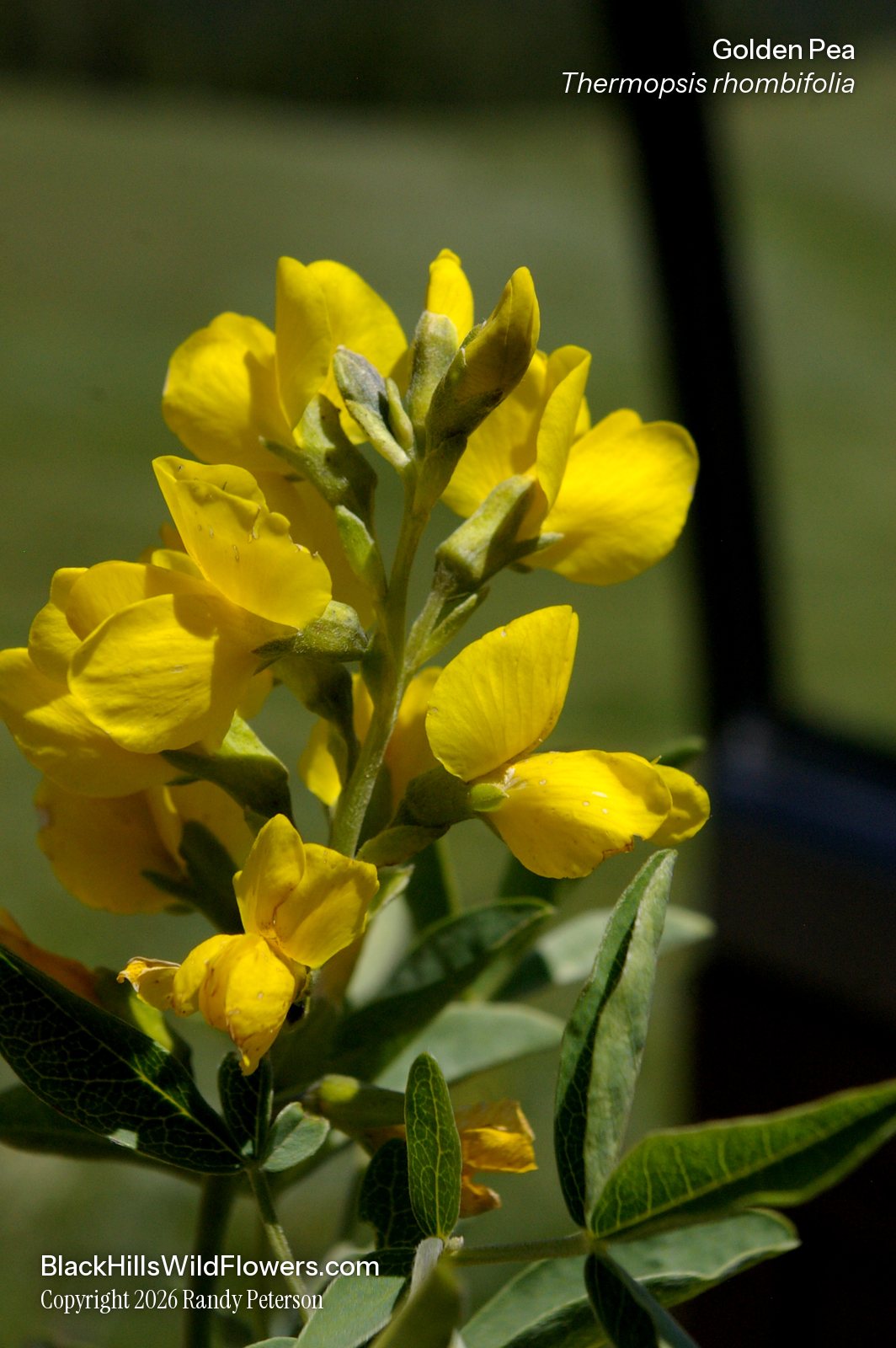
Golden Pea (Thermopsis rhombifolia) is a native perennial with three-part leaves and showy clusters of bright yellow, pea-shaped flowers, usually growing in wide patches. It blooms April into June and is common from low to high elevations in a variety of habitats throughout the Black Hills. Photographed in the Black Hills.
| Family | Fabaceae · Pea |
|---|---|
| Status | Native perennial |
| Blooms | April into June |
| Height | 15–60 cm (6–24 in) |
| Where | Open prairies, hillsides and woodlands, from low to high elevations |
| Also called | Goldenpea, Prairie Thermopsis, False Lupine, Golden Bean, Buffalo Bean |
| Toxicity | Contains poisonous alkaloids; animals that eat it show muscle tremors, and it is suspected of causing livestock deaths. |
Roots, seeds & germination
Root: Spreads by rhizomes (underground stems), and new plants rise from them.
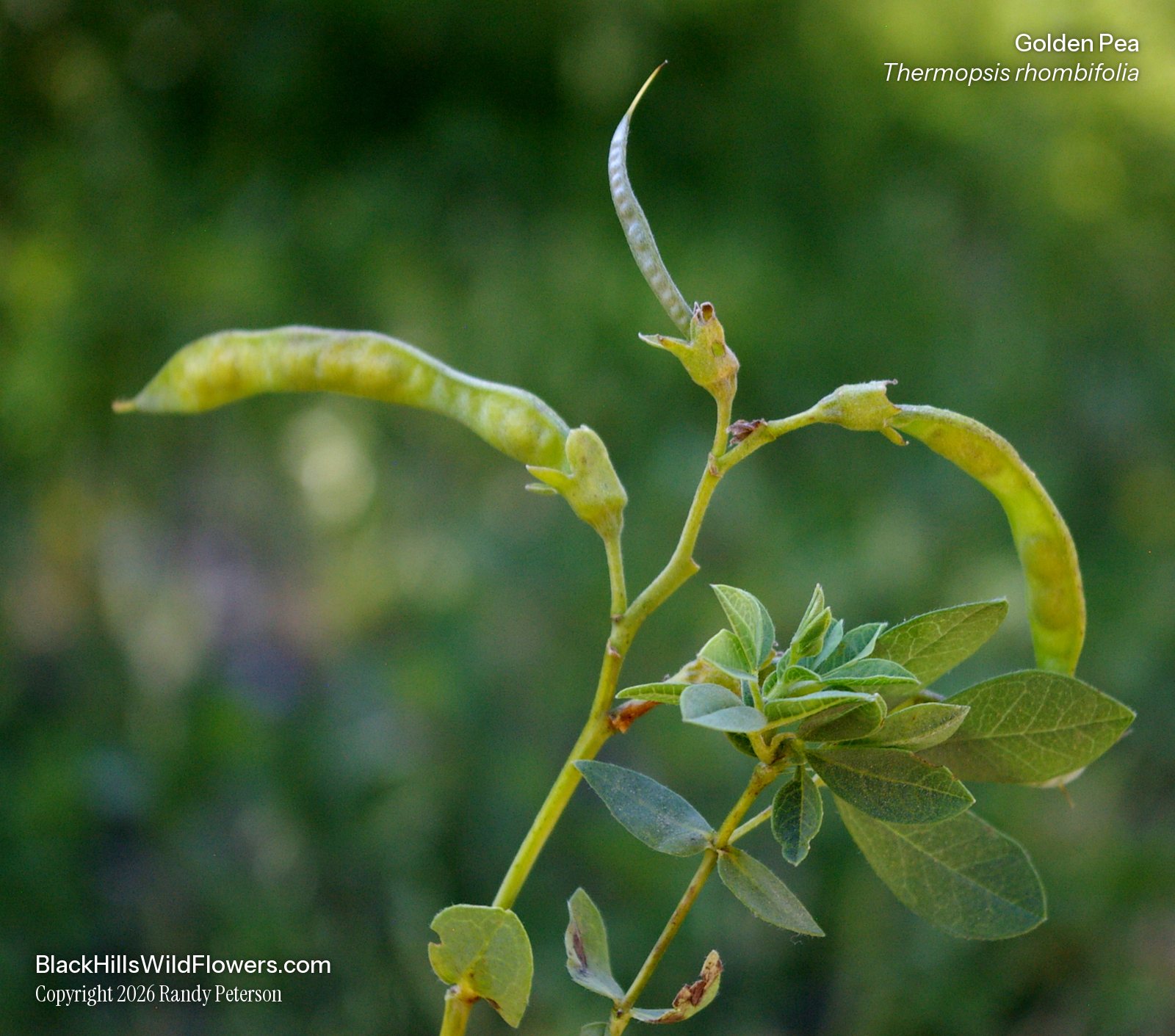
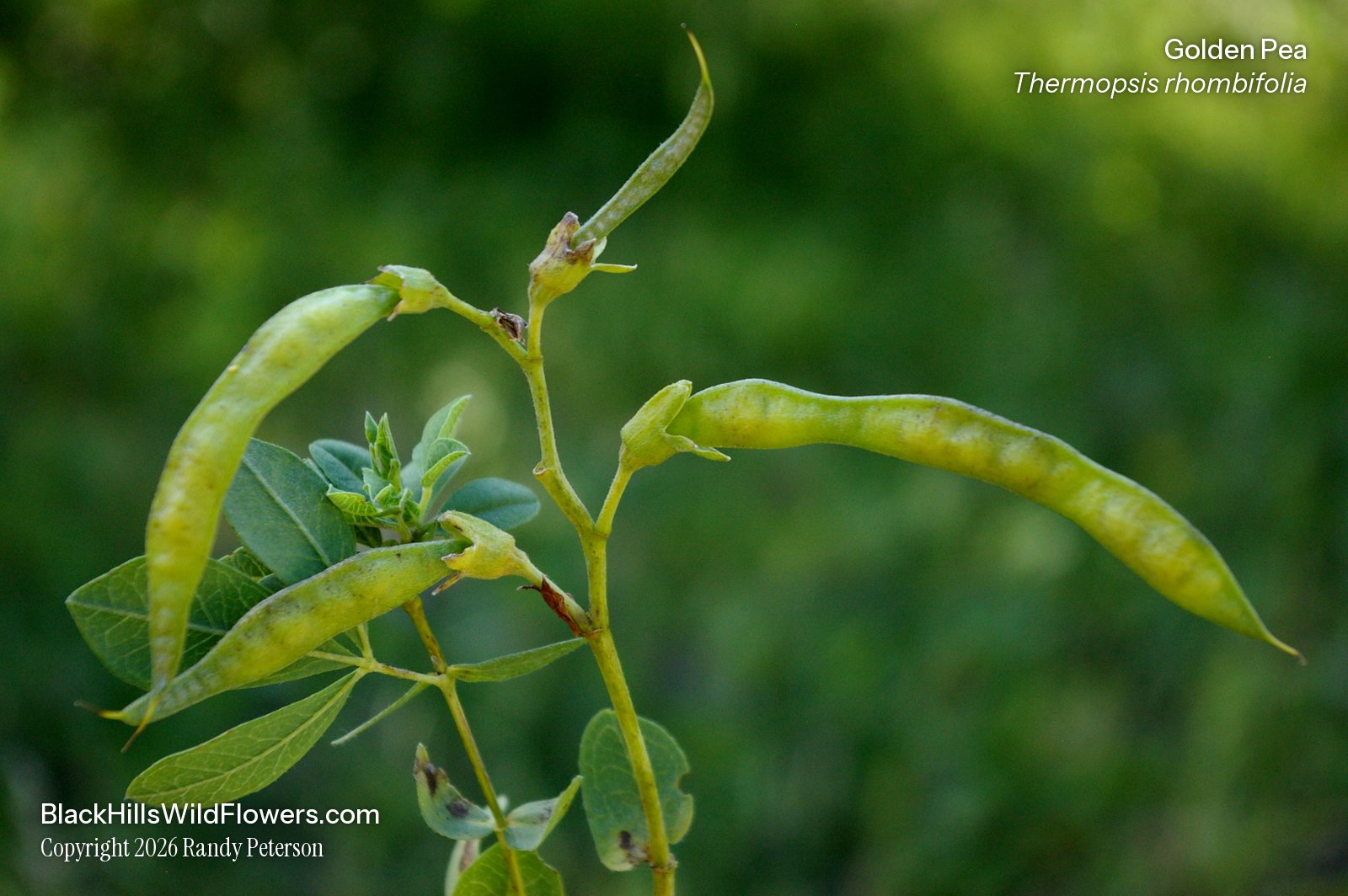
Seed: Pods hold 3–10 seeds, about 5 mm long, that turn dark brown. Collect them July to September as the pods dry.
Germination: The seed coat causes dormancy, so chip it with the tip of a small, sharp knife before planting. Sow in fall or spring.
How do you identify Golden Pea?
Look for wide-spreading patches of plants with three leaflets from one point, each 15–50 mm long, and clusters 3–10 cm long of yellow pea flowers, often with purple spots on the upper petal. The pods are 3–8 cm long and pinched between the seeds.
When does it bloom?
April into June.
Where does it grow?
Common from low to high elevations in a variety of habitats throughout the Black Hills. In western South Dakota it grows on open prairies, hillsides and in woodlands, and it often forms colonies on open prairie.
Other flowers to compare
Sources: USDA Forest Service: Black Hills Native Plants; SDSU Open PRAIRIE: Thermopsis rhombifolia; WSU Extension, Stevens County: Thermopsis rhombifolia; Nature Alberta, PlantWatch: Golden Bean; Oregon State University, Small Farms: False Lupine, Thermopsis rhombifolia.