Canada Tickclover Desmodium canadense
Also called Showy Tick-trefoil, Canadian Tick-trefoil, wókaȟtaŋ blaskáska (Lakota)
Canada Tickclover (Desmodium canadense) is a tall, hairy native perennial in the pea family, with dense spikes of pink-to-purple pea flowers from July into September. SDSU's Open PRAIRIE guide says it grows mainly in eastern and central South Dakota; in the Black Hills it is known from a few old herbarium sheets and a few recent observations.
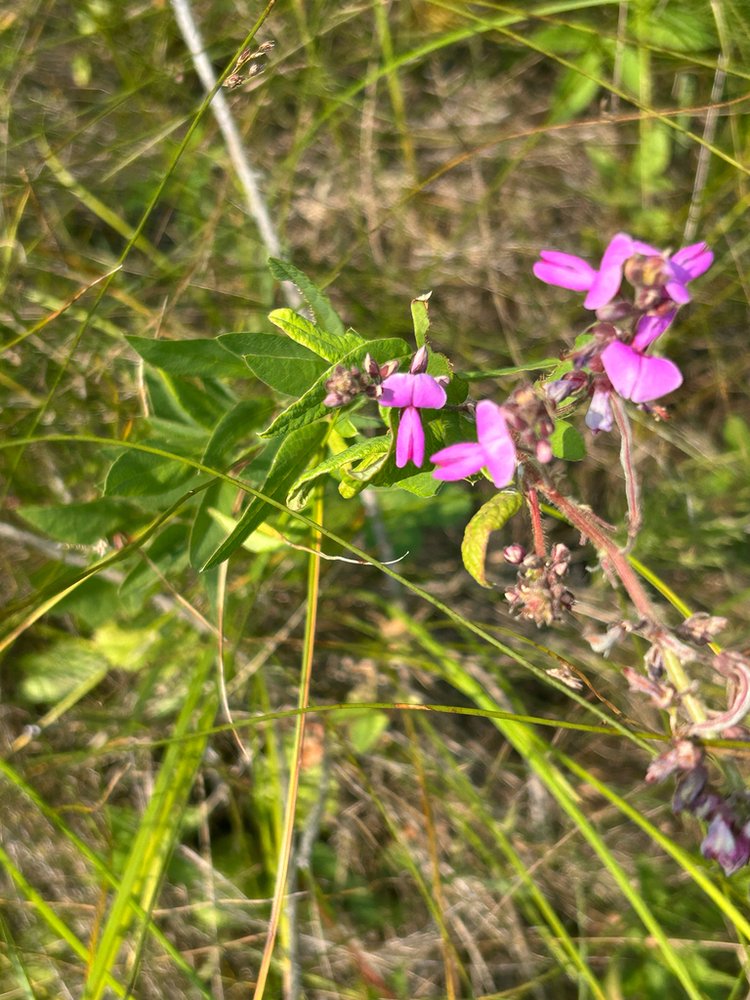
Free photos from other sources
| Family | Fabaceae · Pea |
|---|---|
| Status | Native perennial |
| Blooms | July into September |
| Height | 60–180 cm (2–6 ft) |
| Where | Moist prairies, river meadows, open thickets, stream banks and roadsides |
| Also called | Showy Tick-trefoil, Canadian Tick-trefoil, wókaȟtaŋ blaskáska (Lakota) |
| Traditional use | Moerman's database records one use: the Iroquois took a decoction of the root for biliousness (Herrick 1977). The Lakota plant guide by Black Elk and Flying By (1998) lists the plant as wókaȟtaŋ blaskáska and says only that it provides good forage for wildlife. |
| Note | In the Black Hills this plant is known from only a few old herbarium sheets and a few recent observations. |
Traditional use: first drafted by Google AI, then checked against the sources on this page.
Roots, seeds & germination
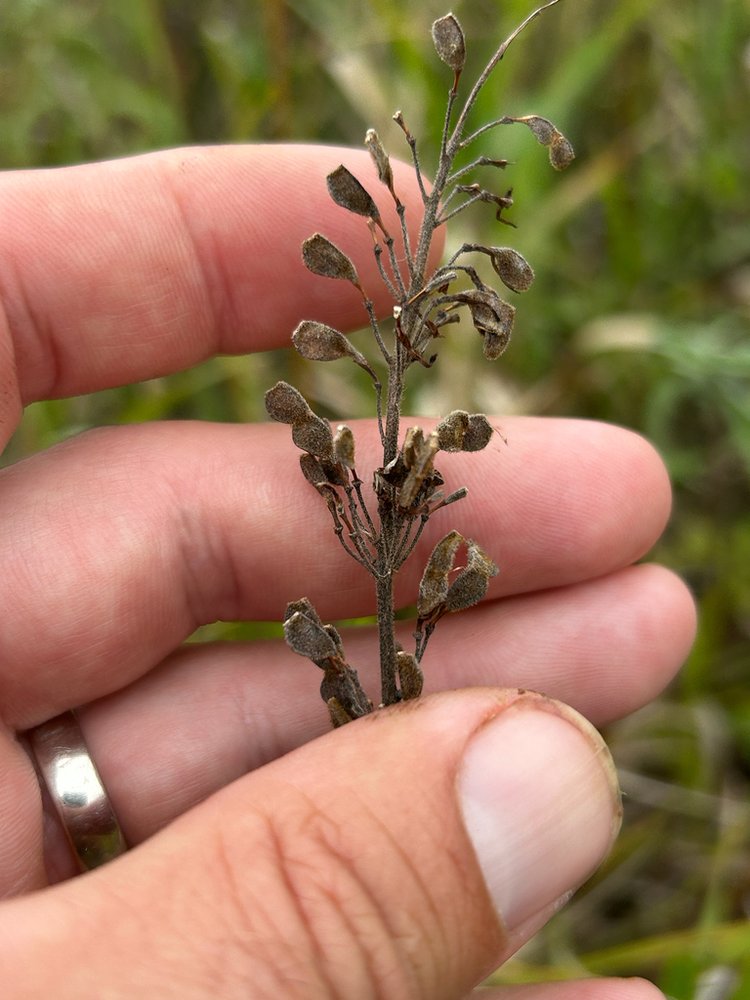
Seed: Each segment of the pod holds one kidney-shaped seed about 4 mm (⅙ in) long that ripens brown, and the hooked hairs on the pod carry the segments away on passing animals.
How do you identify Canada Tickclover?
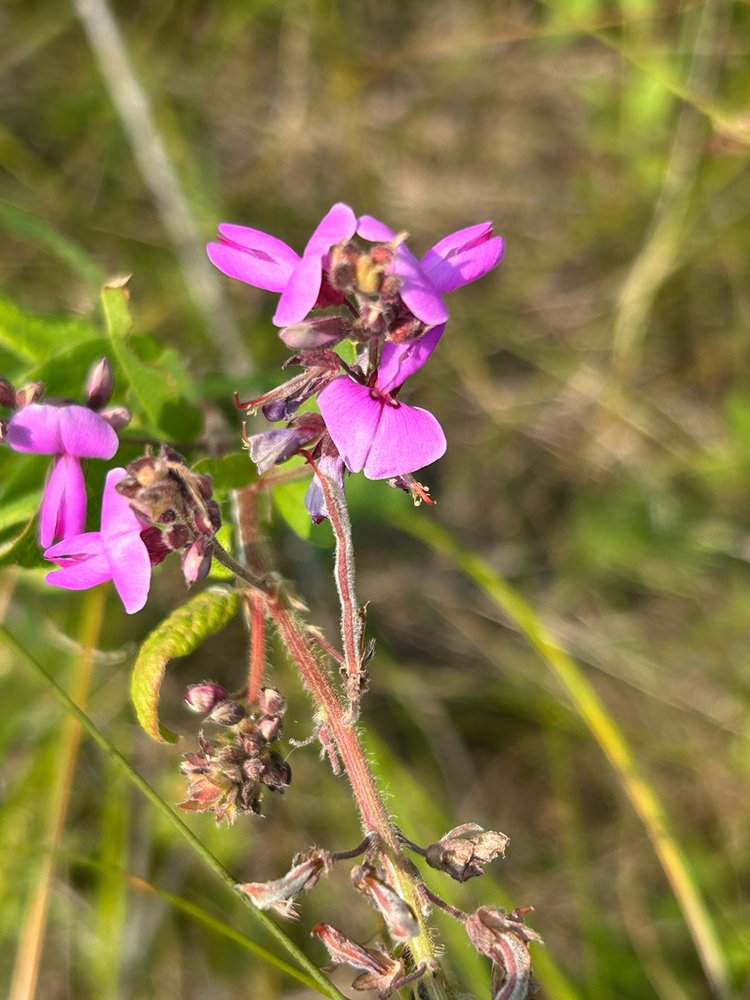
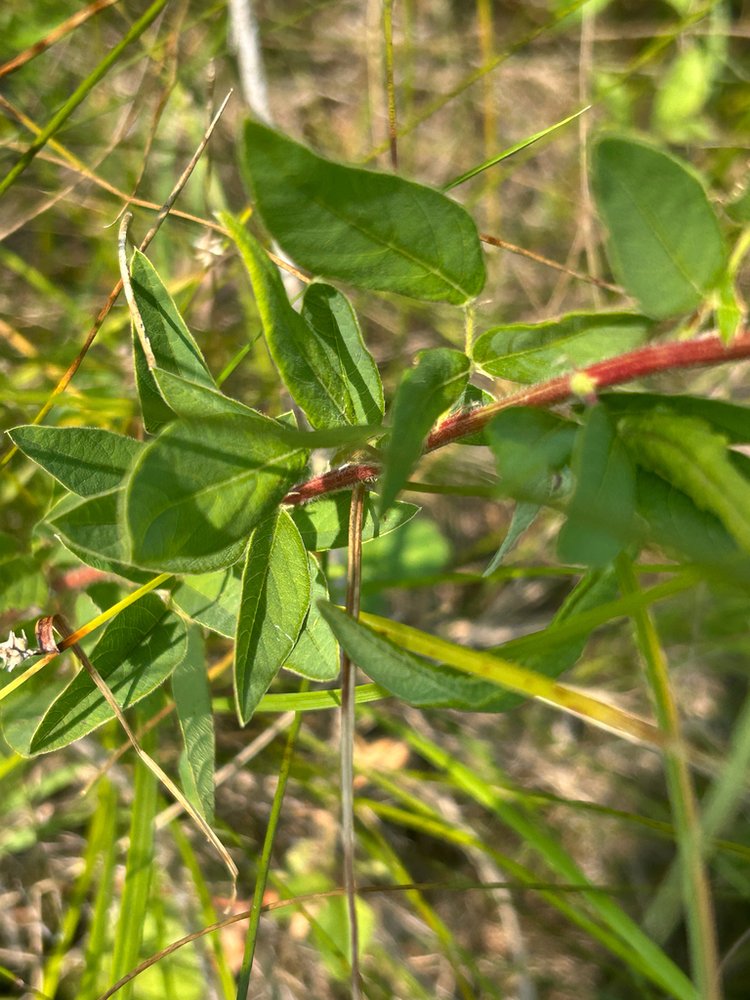
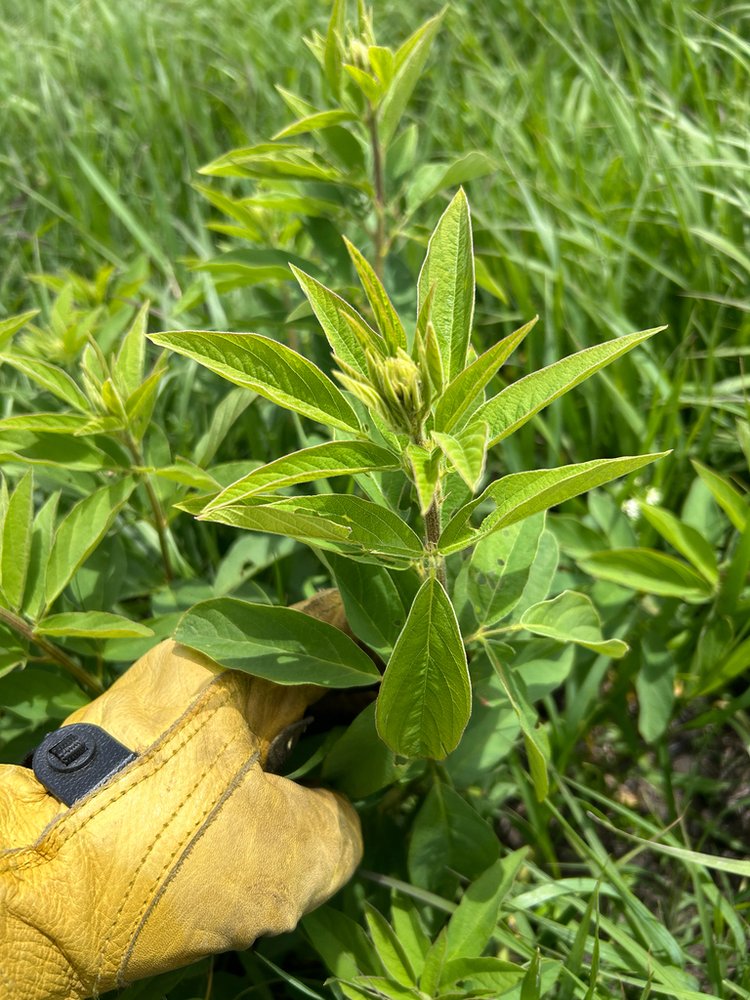
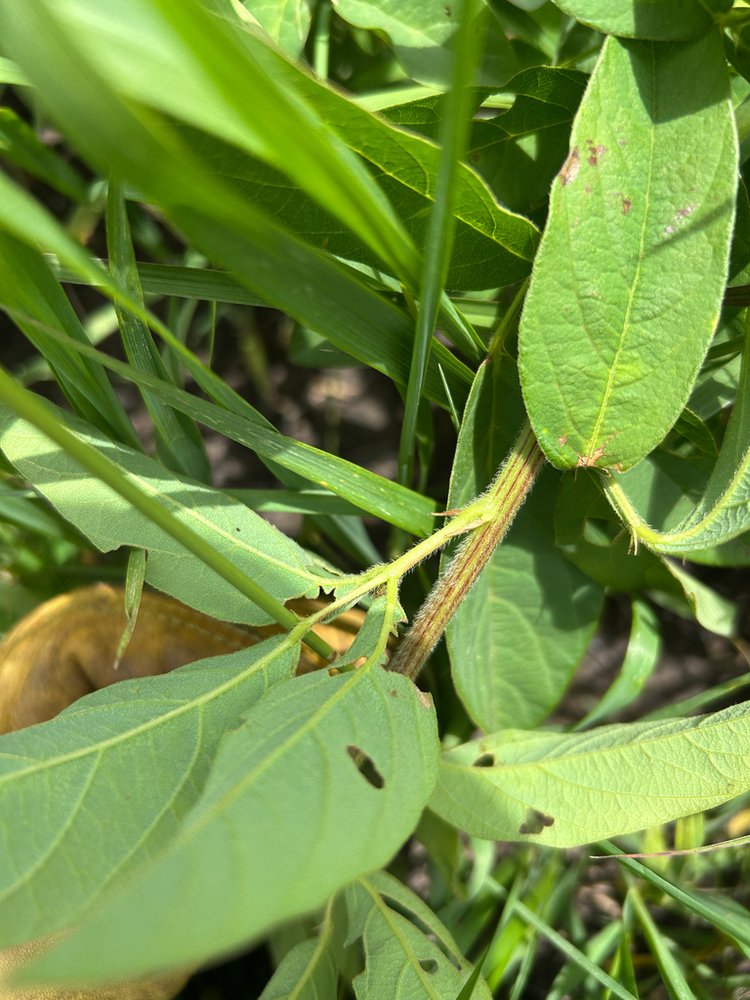
Look for a tall, leafy plant 60–180 cm (2–6 ft) high with a ridged, hairy stem and leaves cut into three leaflets, set alternately along the stem. The leaflets are ovate to lanceolate, longer than wide, and paler and softly hairy underneath. The flowers are pea-shaped, about 1 cm (½ in) long, pink to purple with two yellow spots at the base of the upper petal, and crowd into a dense, elongated cluster at the top of the stem. The fruit is a flat pod that breaks into several one-seeded, chain-like segments covered in tiny hooked hairs that stick to clothing and fur. Minnesota Wildflowers says two look-alike tick-trefoils there, Illinois and Large-bract, have more loosely arranged flower clusters, compound leaf stalks much longer than the end leaflet's stalk, and larger, more prominent stipules (the small leafy growths at the leaf base).
When does it bloom?
July into September.
Where does it grow?
SDSU's Open PRAIRIE guide says it occurs mainly in the eastern and central parts of South Dakota, in moist prairies, river meadows, open thickets, lake borders and roadsides, and Kansas Wildflowers adds stream valleys, open woods and ravines. Black Hills evidence is thin and old: three herbarium sheets, from 1887 and 1927 (both labeled Black Hills) and from 1924 (a stream bank in Pennington County, labeled frequent there). iNaturalist has 3 research-grade observations in the Black Hills area, all from July and August 2023, one labeled Custer County and two labeled Black Hills National Forest. Most of the 37 South Dakota herbarium sheets on GBIF come from outside the Hills, GBIF holds no Wyoming specimens, and the National Park Service lists for Wind Cave, Jewel Cave, Mount Rushmore and Devils Tower do not include it.
Pea family (Fabaceae): 31 other plants in this guide
- Alfalfa
- Alpine Sweetvetch
- American Vetch
- Barr's Milkvetch
- Black Medic
- Canada Milkvetch
- Cream Milkvetch
- Crown Vetch
- Drummond's Milkvetch
- Field Locoweed
- Field Milkvetch
- Golden Pea
- Groundplum Milkvetch
- Indian Milkvetch
- Lambert's Crazyweed
- Laxmann's Milkvetch
- Lead Plant
- Missouri Milkvetch
- Pale Vetchling
- Prairie Turnip
- Purple Prairie Clover
- Red Clover
- Silktop Dalea
- Silverleaf Scurfpea
- Silvery Lupine
- Slimflower Scurfpea
- Tufted Milkvetch
- White Clover
- White Prairie Clover
- Wild Licorice
- Yellow Sweetclover
Sources: SDSU Open PRAIRIE, South Dakota Native Plant Research: Fabaceae, Desmodium canadense; Minnesota Wildflowers: Desmodium canadense (Showy Tick-trefoil); Kansas Wildflowers and Grasses: Desmodium canadense (Canada tickclover); Missouri Plants: Desmodium canadense (Showy Tick Trefoil); USDA PLANTS Database: Desmodium canadense (DECA7); GBIF specimen 1675826557: Forwood 1887, Black Hills (US); GBIF specimen 2575125777: McIntosh 1924, Pennington County, stream bank, frequent (BHSC); GBIF specimen 1305288954: Hayward 1927, Black Hills (Milwaukee Public Museum); GBIF occurrence search: Desmodium canadense, South Dakota and Wyoming preserved specimens (taxon key 2967285); iNaturalist: research-grade Desmodium canadense observations in the Black Hills (July and August 2023); Native American Ethnobotany Database (BRIT): Desmodium canadense; Culturally Important Plants of the Lakota (Black Elk and Flying By, 1998), entry 106, filed with the South Dakota PUC.