Laxmann's Milkvetch
Astragalus laxmannii var. robustior
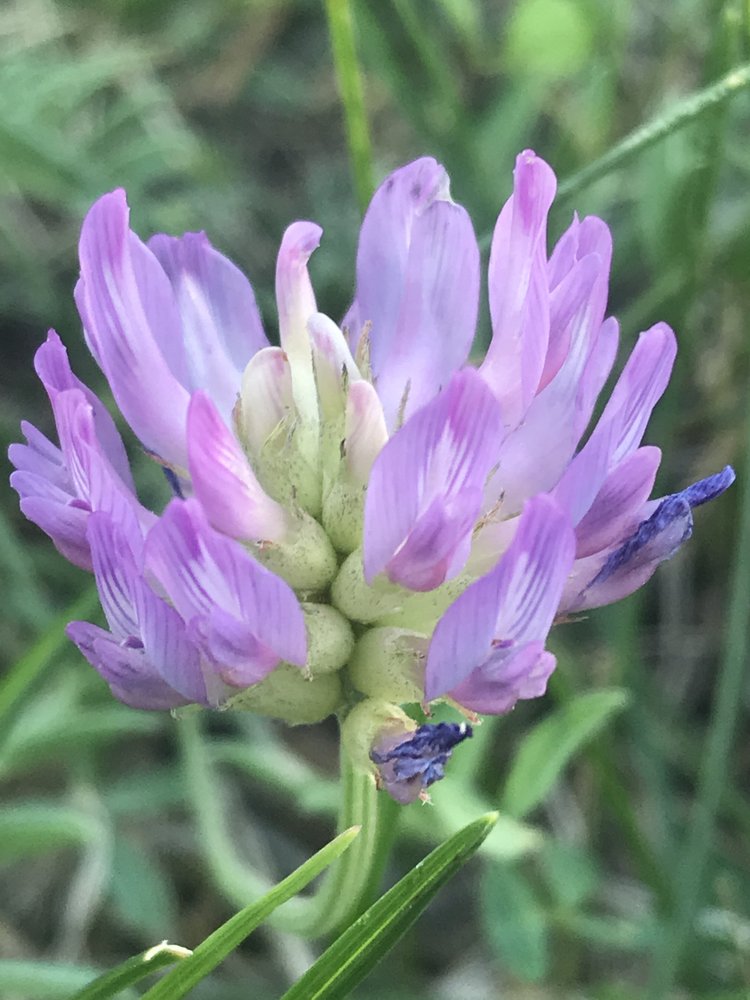
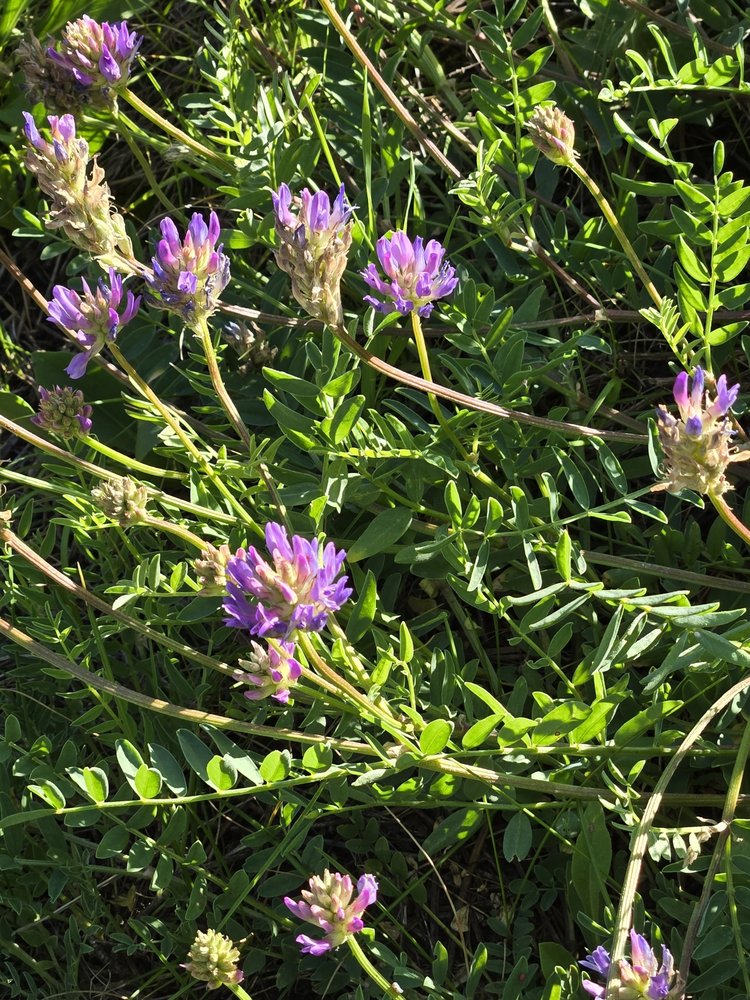
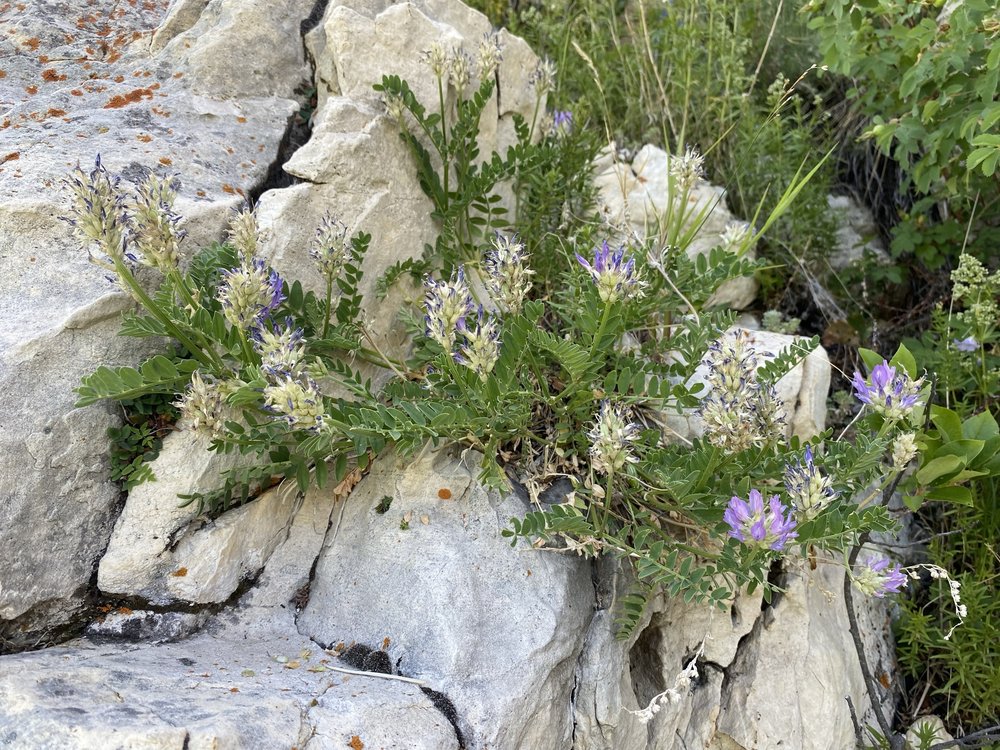
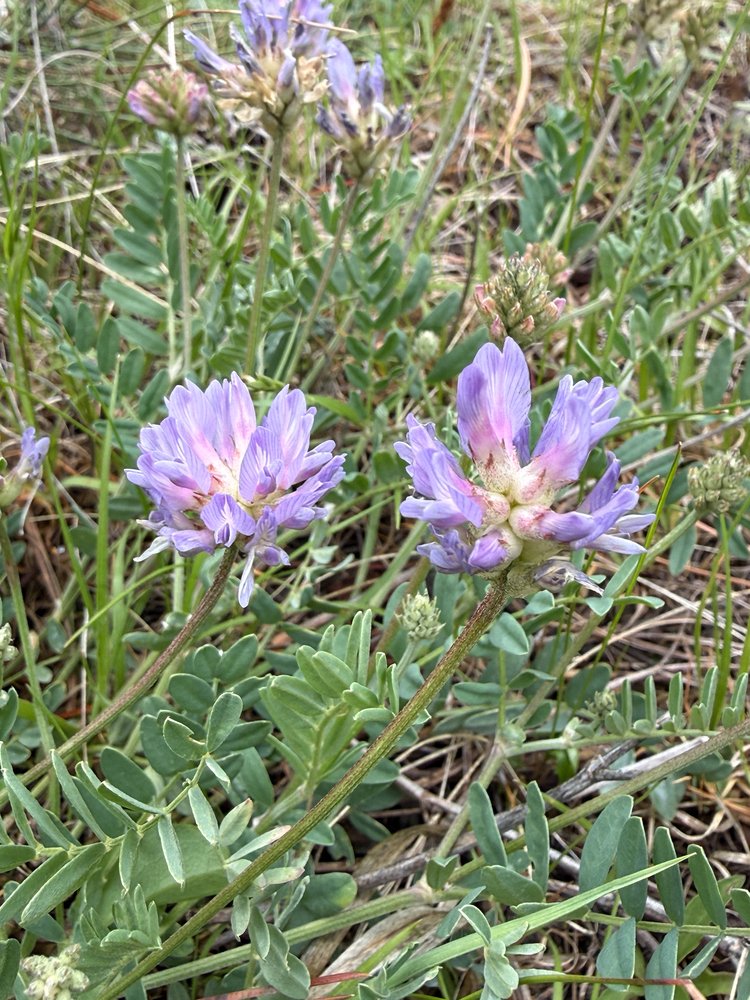
Laxmann's Milkvetch (Astragalus laxmannii var. robustior), often called Prairie or Standing Milkvetch, is a native perennial of the pea family that grows in upright, leafy clumps. Mostly in June and July it carries dense, upright spikes of small lavender to blue flowers on stalks that rise from the leaf joints, on dry, open grassland, meadows and rocky slopes across the Black Hills.
Free photos from other sources
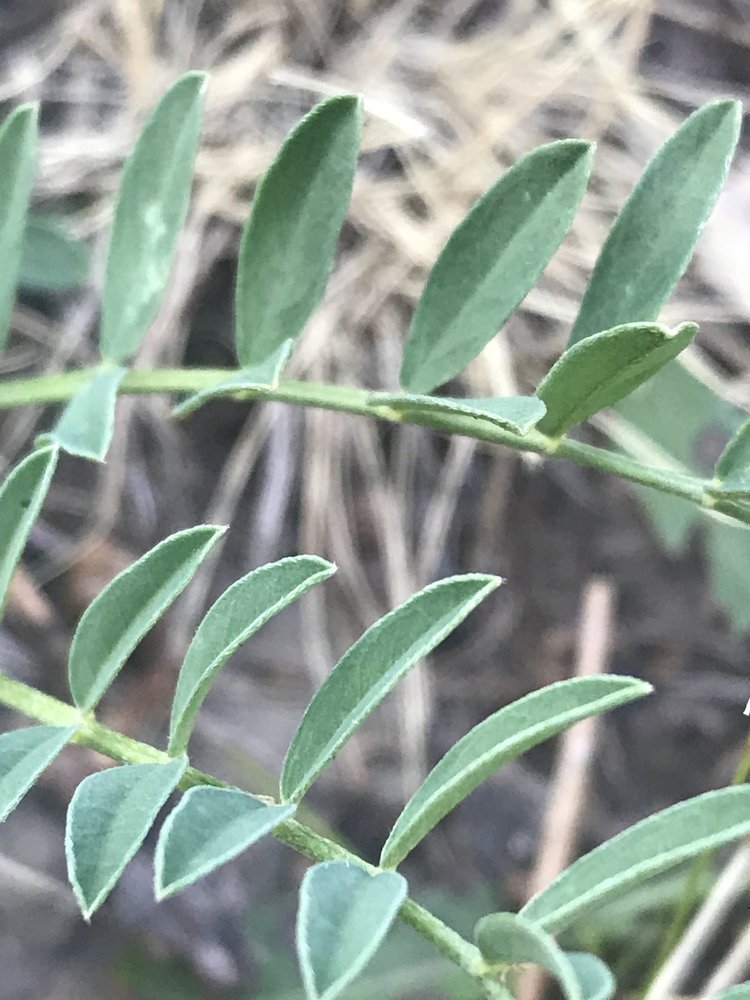
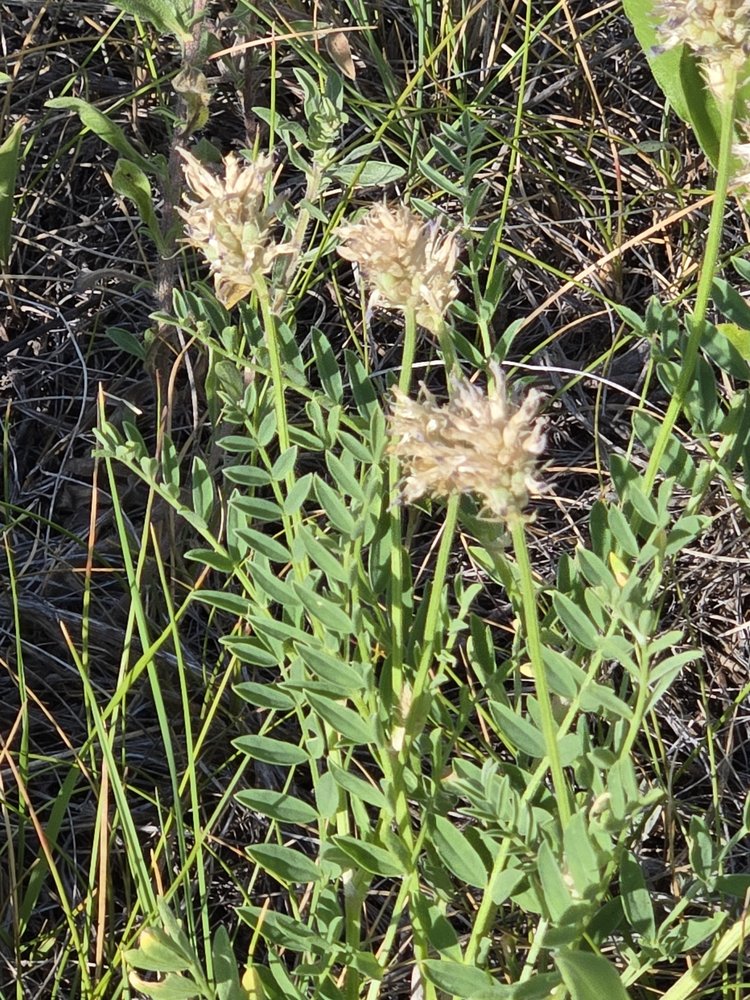
| Family | Fabaceae · Pea |
|---|---|
| Status | Native perennial |
| Blooms | Late May into August, mostly June and July |
| Height | 10–40 cm (4–16 in) |
| Where | Dry, open grassland, mountain meadows, rocky and limestone slopes, roadsides and open pine |
| Also called | Prairie Milkvetch, Standing Milkvetch, Lavender Milkvetch |
| Synonym | Astragalus adsurgens var. robustior, Astragalus adsurgens subsp. robustior, Astragalus laxmannii subsp. robustior, Astragalus striatus, Astragalus sulphurescens, Astragalus nitidus |
Roots, seeds & germination
Root: A tough, woody taproot topped by a knobby, branching crown that sends up many stems each spring, so the plant forms a dense clump up to about 60 cm (2 ft) across. It has no runners. Like other legumes it carries nitrogen-fixing bacteria in root nodules.
Seed: Upright pods 6–12 mm (¼–½ in) long, three-sided, covered in flat-lying hairs and tipped with a short beak, pack the old flower spike and split along their seams when ripe. The seeds are 1.5–2.6 mm long, smooth and dark brown to nearly black.
Germination: The seed must be scarified, for example by rubbing it between sheets of sandpaper to scratch its surface, and then sown in fall so winter's cold, moist conditions bring it up in spring. At planting, the seed is coated with an inoculant of root-nodule bacteria made for its genus.
How do you identify Laxmann's Milkvetch?
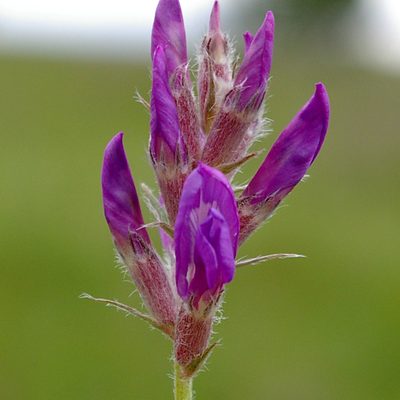
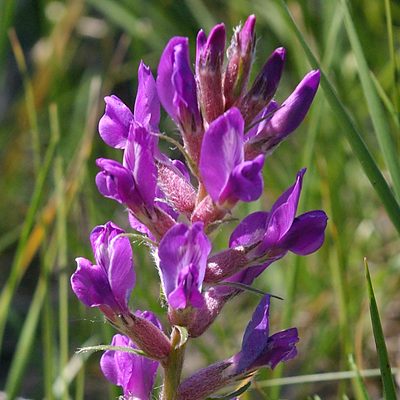
Look for a dense clump of leafy stems from one crown, with 15–50 small pea flowers crowded into an upright, round to cylinder-shaped spike, all pointing upward, on a stout, ribbed stalk that rises from a leaf joint and is usually as long as the leaf or longer. The flowers are lavender to blue, sometimes pink or nearly white, and the cup behind each one has a salt-and-pepper mix of short black and white hairs. Field Milkvetch has similar flowers but grows as scattered stems from underground runners in moister ground, and its pods are shorter and broader, with long white hairs. Lambert's Crazyweed has leaves only at the base, a leafless flower stalk and a keel that ends in a sharp point.
When does it bloom?
Late May into August, mostly June and July.
Where does it grow?
Dry to moderately moist, open, sunny ground: mixed-grass prairie, the high meadows of the central Hills, rocky and limestone slopes, roadsides, burns and openings in ponderosa pine, from about 910 to 1,950 m (3,000–6,400 ft). The 1986 Jewel Cave survey lists it as Astragalus adsurgens var. robustior, and National Park Service lists record it at Wind Cave, Jewel Cave, Mount Rushmore and Devils Tower. Herbarium specimens come from all seven Black Hills counties, as far back as 1892.
Other flowers to compare
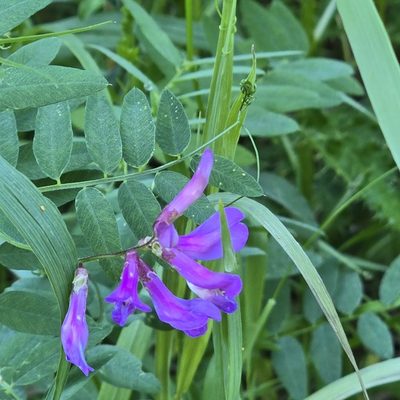
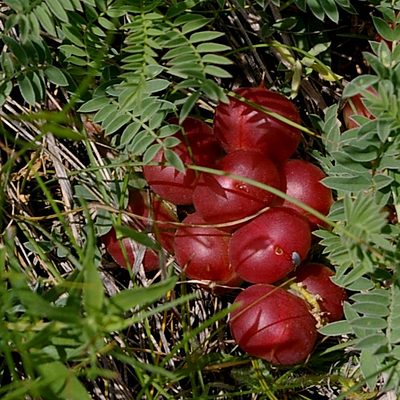
Sources: Marriott and Hartman 1986, A Survey of the Vegetation of Jewel Cave National Monument; NPSpecies checklist, Jewel Cave National Monument vascular plants; NPSpecies checklist, Wind Cave National Park vascular plants; NPSpecies checklist, Mount Rushmore National Memorial vascular plants; NPSpecies checklist, Devils Tower National Monument vascular plants; GBIF occurrence search: Astragalus laxmannii, preserved specimens, South Dakota; GBIF occurrence search: Astragalus laxmannii, preserved specimens, Wyoming; iNaturalist: Astragalus laxmannii, research-grade observations near the Black Hills; USDA PLANTS Database: Astragalus laxmannii var. robustior (ASLAR), prairie milkvetch; ITIS: Astragalus laxmannii var. robustior (TSN 566195); Barneby, R.C., Astragalus adsurgens treatment (NYBG Virtual Herbarium); Minnesota Wildflowers: Astragalus laxmannii (Prairie Milkvetch); Minnesota Wildflowers: Astragalus agrestis (Field Milkvetch); Minnesota Board of Water and Soil Resources, Featured Plant: Prairie Milk Vetch (Astragalus adsurgens); Colorado Wildbuds: Astragalus laxmannii var. robustior; Lady Bird Johnson Wildflower Center: Astragalus laxmannii var. robustior; SDSU Extension: Poisonous Plants on Rangelands: Locoweed and Crazyweed (Bachler & Ehlert, 2022); USDA-ARS Poisonous Plant Research Lab: Selenium Accumulating Plants; USDA-ARS (Ralphs): Toxic Astragalus and Oxytropis species in North America (locoweed lecture); Lakin & Byers 1941, Selenium Occurrence in Certain Soils in the United States, USDA Technical Bulletin 783; Williams & Barneby 1977, The Occurrence of Nitro-Toxins in North American Astragalus, Brittonia 29: 310–326; Liu & Li 2025, Study on Toxic Substances in Astragalus adsurgens Infected with Alternaria gansuense, Agriculture 15: 1401; GBIF Backbone Taxonomy: Astragalus laxmannii subsp. robustior (Hook.) Podlech; NPS Devils Tower National Monument: Native Plants (bloom list).