American Vetch
Vicia americana
American Vetch (Vicia americana) is a native perennial vine of the pea family that climbs through grass and shrubs with curling tendrils at the tips of its leaves, and carries loose clusters of 3 to 9 purple pea flowers. In the Black Hills it blooms from late May into July, peaking in June, in open pine woods, aspen groves, meadows and prairie.
Free photos from other sources
| Family | Fabaceae · Pea |
|---|---|
| Status | Native perennial |
| Blooms | Late May into July, with a few into August |
| Height | 30–100 cm (12–40 in) |
| Where | Open pine and aspen woods, forest edges, meadows, roadsides and mixed-grass prairie |
| Also called | Purple Vetch, Wild Vetch, American Purple Vetch, Stiffleaf Vetch, Wild Pea, tȟasúsu (Lakota) |
| Synonym | Vicia americana var. linearis, Vicia linearis, Vicia sparsifolia, Vicia caespitosa |
| Traditional use | Sitting Bull College's 1998 Culturally Important Plants of the Lakota says a poultice of the leaves was applied to spider bites and women used an infusion of the leaves as love medicine, and it notes the plant as excellent forage for grazing animals. |
Roots, seeds & germination
Root: Creeping underground stems (rhizomes) lie shallow, about 1.5–5 cm (½–2 in) down, and a branched taproot can reach about 100 cm (40 in), which makes the plant drought-tolerant. Like most legumes it has root nodules with bacteria that take nitrogen from the air. The shallow rhizomes resprout after light to moderate fire.
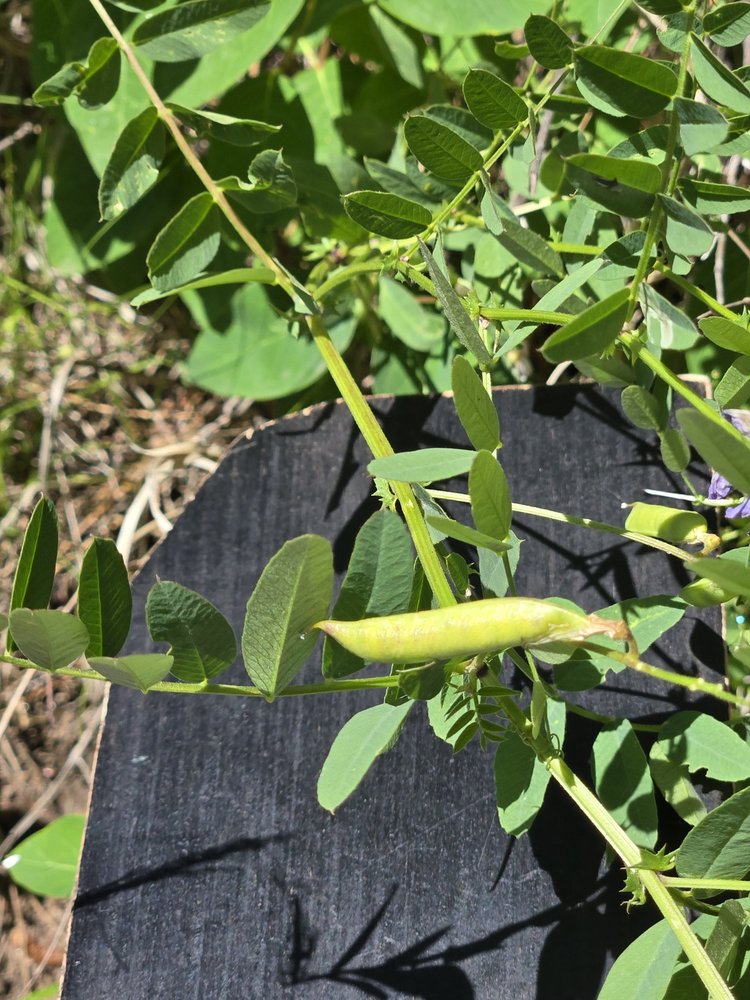
Seed: Pods 2–3.5 cm (about 1–1½ in) long turn from green to reddish brown and split easily when ripe, holding two to several hard-coated, pea-like seeds about 3 mm long. Seeds ripen about a month after flowering.
Germination: Seed sprouts well without treatment: untreated seed germinated 85–87% in tests for a British Columbia seed manual, with the first seedlings after about two weeks. Scratching the seed coat speeds sprouting to 3–7 days but doesn't raise the final rate. USDA advises sowing in fall.
How do you identify American Vetch?
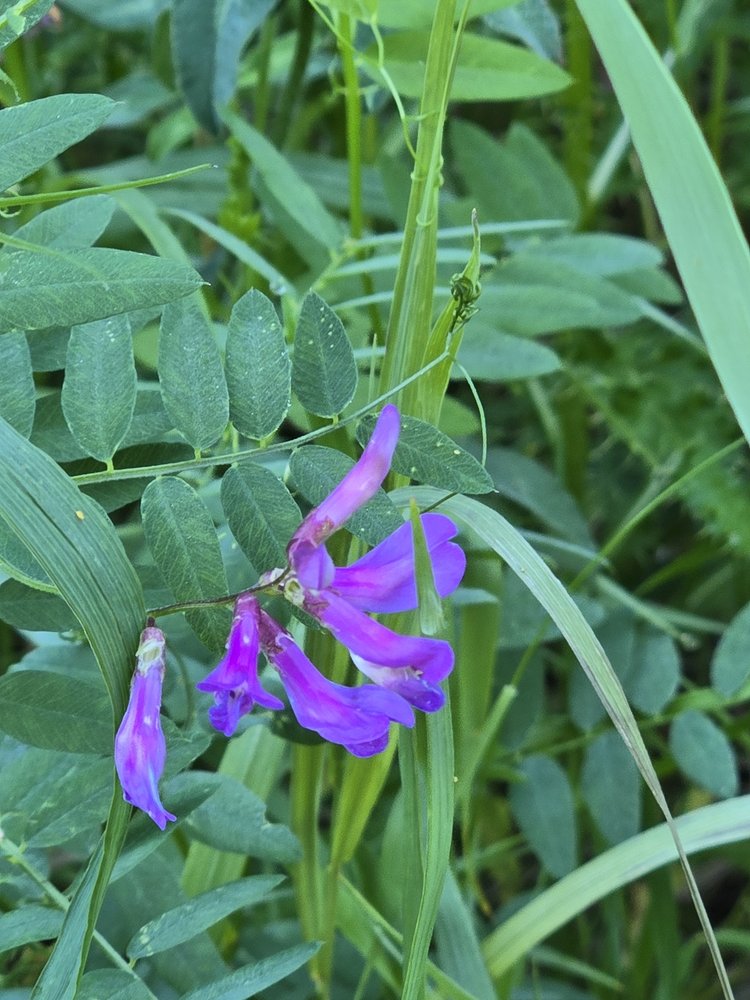
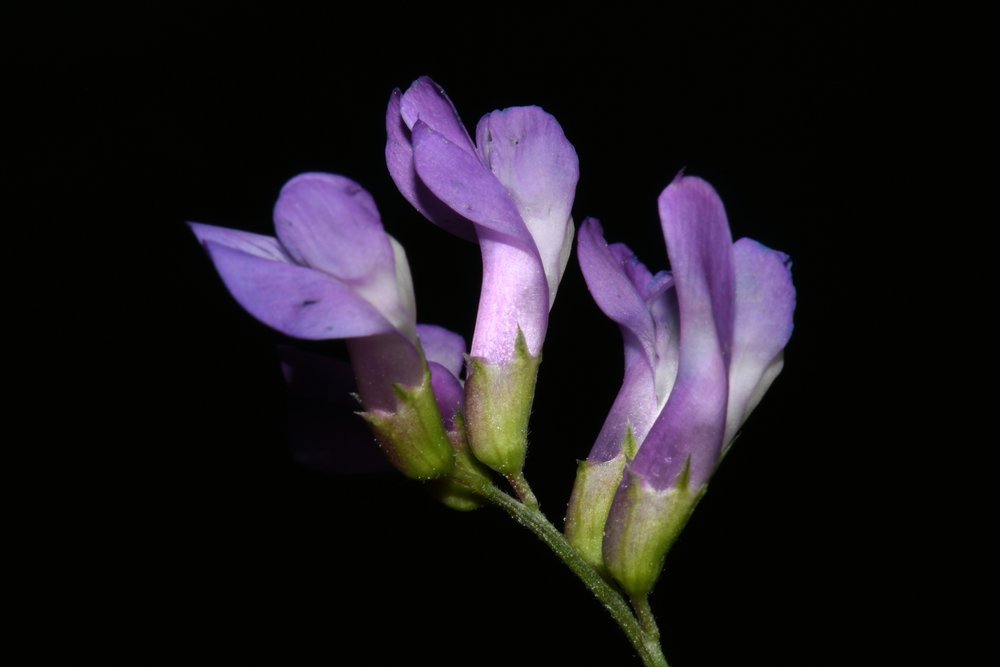
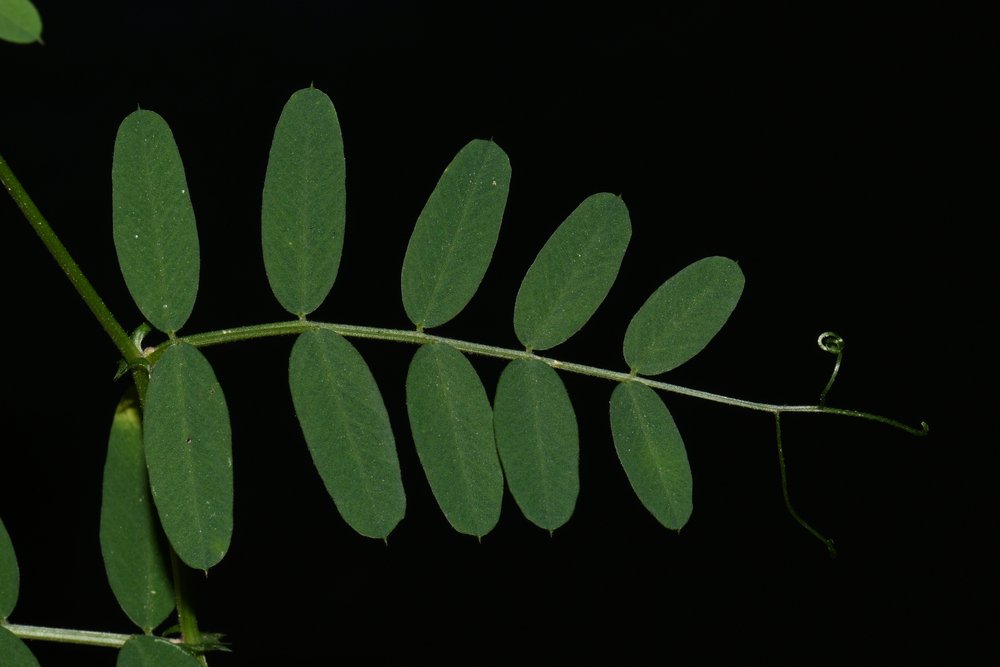
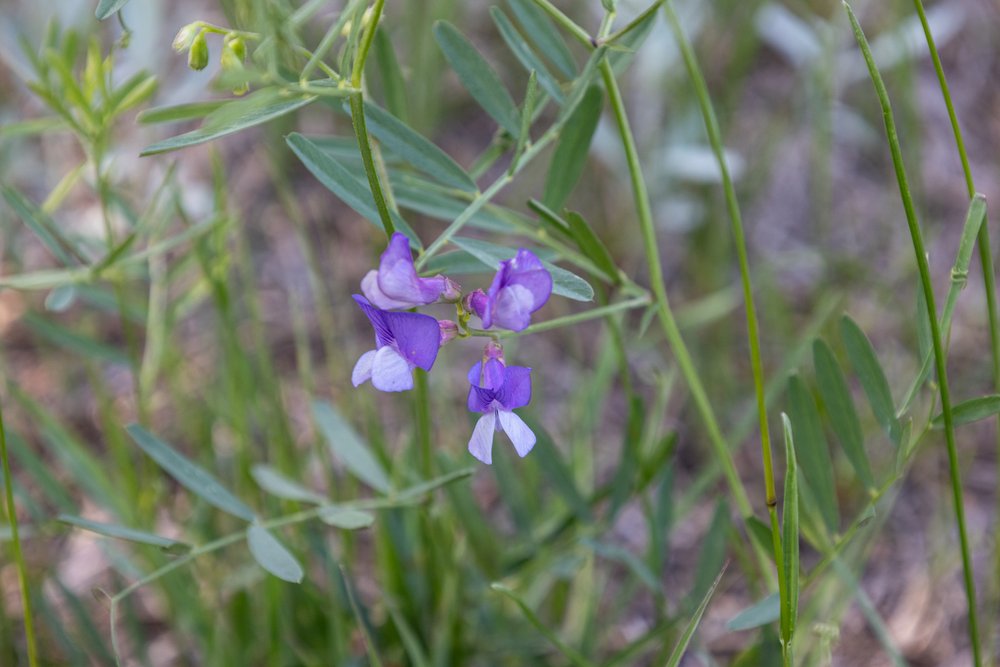
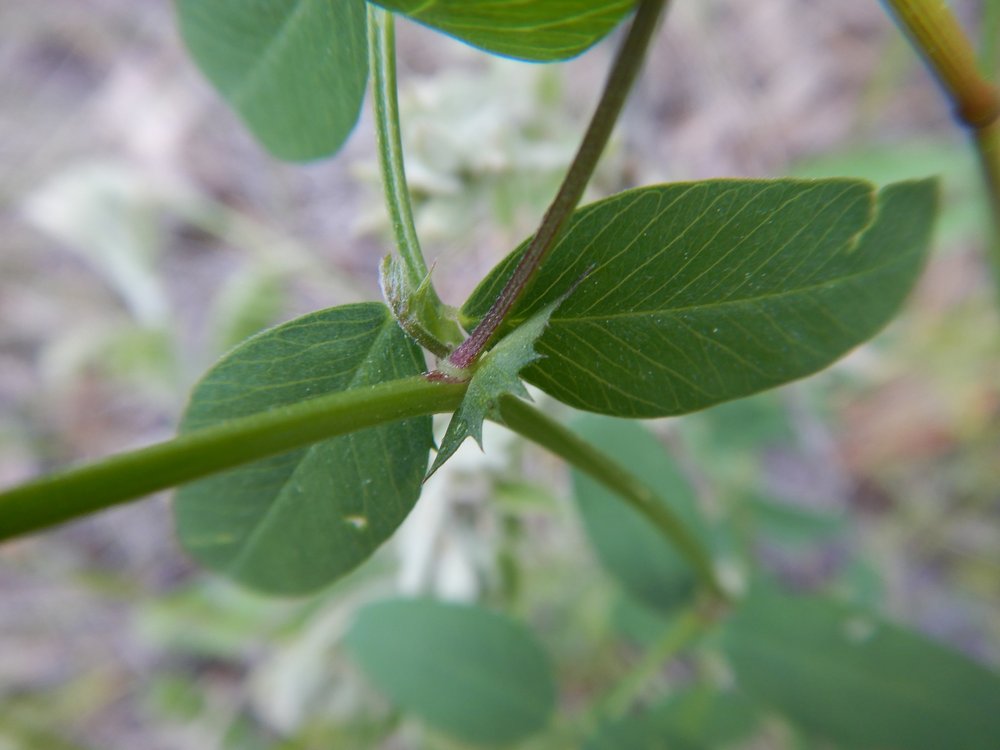
Each leaf has 8–16 paired leaflets and ends in a thin, curling tendril instead of a last leaflet. At the base of each leaf stalk is a pair of small, sharply toothed flaps (stipules) that often look star-like, a good check when the plant isn't in flower. The 3–9 pea flowers, 1.5–2.5 cm (⅝–1 in) long, sit in a loose cluster on a stalk shorter than the leaf and run from bluish to reddish purple, sometimes pink. Prairie plants are shorter and more upright, with narrow, stiff leaflets.
When does it bloom?
Late May into July, with a few into August.
Where does it grow?
Moist to fairly dry, open to partly shaded ground: ponderosa pine and aspen woods, forest edges, meadows, shrubby draws, roadsides and mixed-grass prairie. It tolerates shade and grows in every stage from fresh burns to mature forest. The 1986 Jewel Cave survey lists it as Wild Vetch, National Park Service lists record it at Wind Cave, Mount Rushmore and Devils Tower, and herbarium specimens come from all seven Black Hills counties, including Custer State Park.
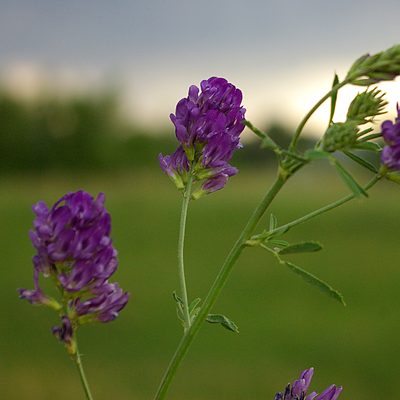
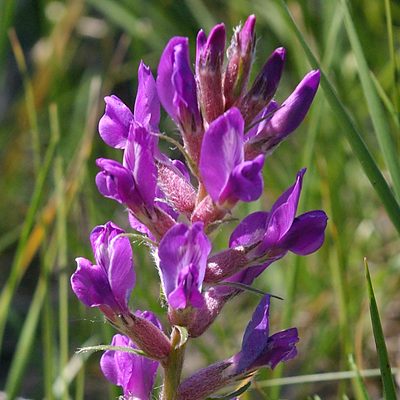
Other flowers to compare
Sources: Marriott and Hartman 1986, A Survey of the Vegetation of Jewel Cave National Monument; NPSpecies checklist, Wind Cave National Park vascular plants; NPSpecies checklist, Jewel Cave National Monument vascular plants; NPSpecies checklist, Mount Rushmore National Memorial vascular plants; NPSpecies checklist, Devils Tower National Monument vascular plants; GBIF occurrence search: Vicia americana, preserved specimens, South Dakota; GBIF occurrence search: Vicia americana, preserved specimens, Wyoming; Culturally Important Plants of the Lakota (Black Elk and Flying By, Sitting Bull College, 1998), filed with the South Dakota PUC; USDA NRCS Plant Guide: American Vetch, Vicia americana (Allen and Tilley 2014); USDA PLANTS Database: Vicia americana (VIAM); USDA Forest Service Fire Effects Information System: Vicia americana (Coladonato 1993); Burton and Burton 2003, Growing and Using Plants in the Northern Interior of B.C.: Vicia americana (B.C. Ministry of Environment native seed manual); Allred and Allred, A Taxonomic Review of the Tendril-bearing Legumes in New Mexico II: Vicia (The New Mexico Botanist 26); Minnesota Wildflowers: Vicia americana (American Vetch); Kansas Wildflowers and Grasses: American Vetch (Vicia americana var. minor); ITIS: Vicia americana Muhl. ex Willd. (TSN 26331); iNaturalist research-grade observations of Vicia americana within 80 km of the central Black Hills.