Alpine Sweetvetch Hedysarum alpinum
Also called Alpine Sweet-vetch, Alpine Hedysarum, Purple Sweetvetch, Bear Root, Licorice Root
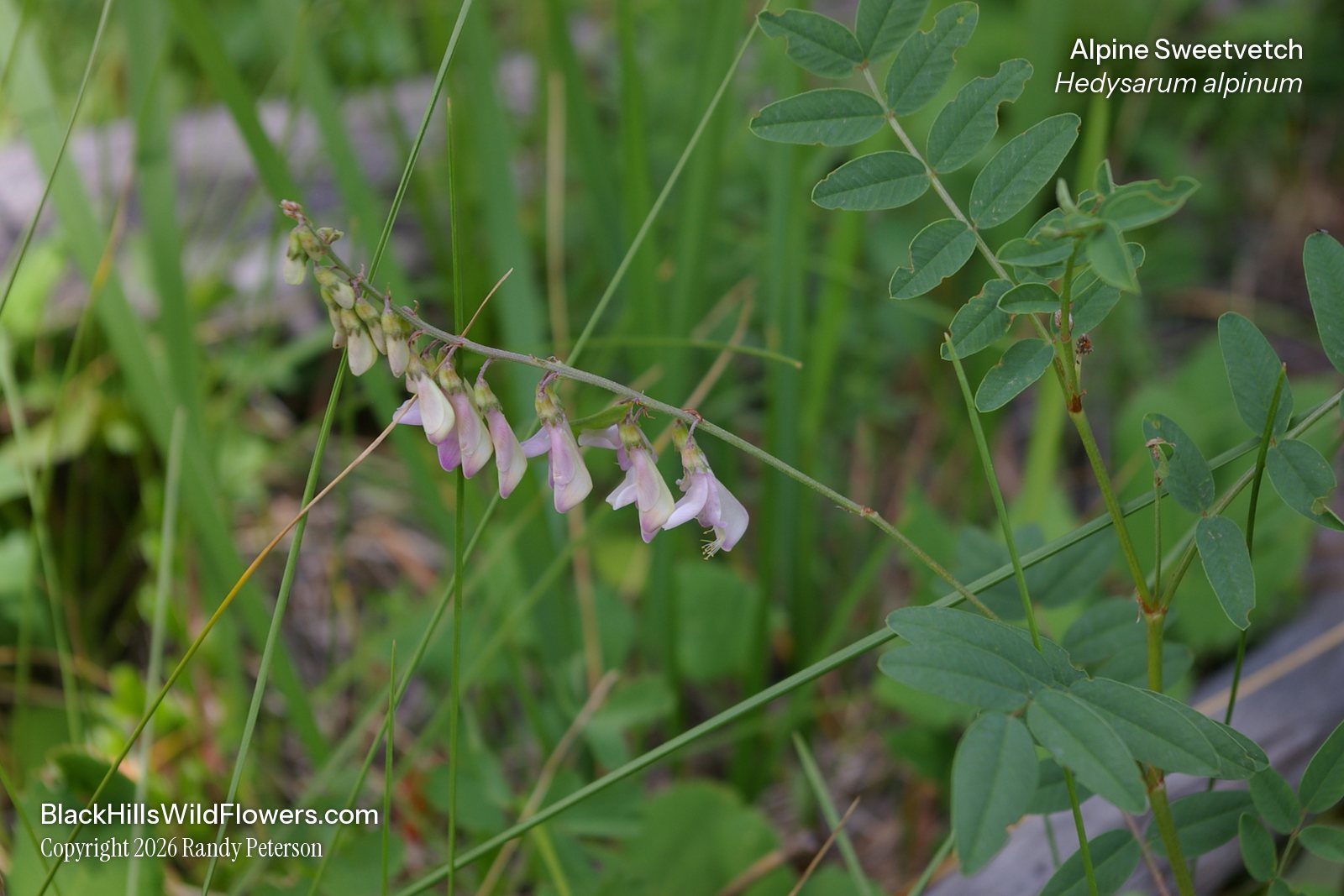
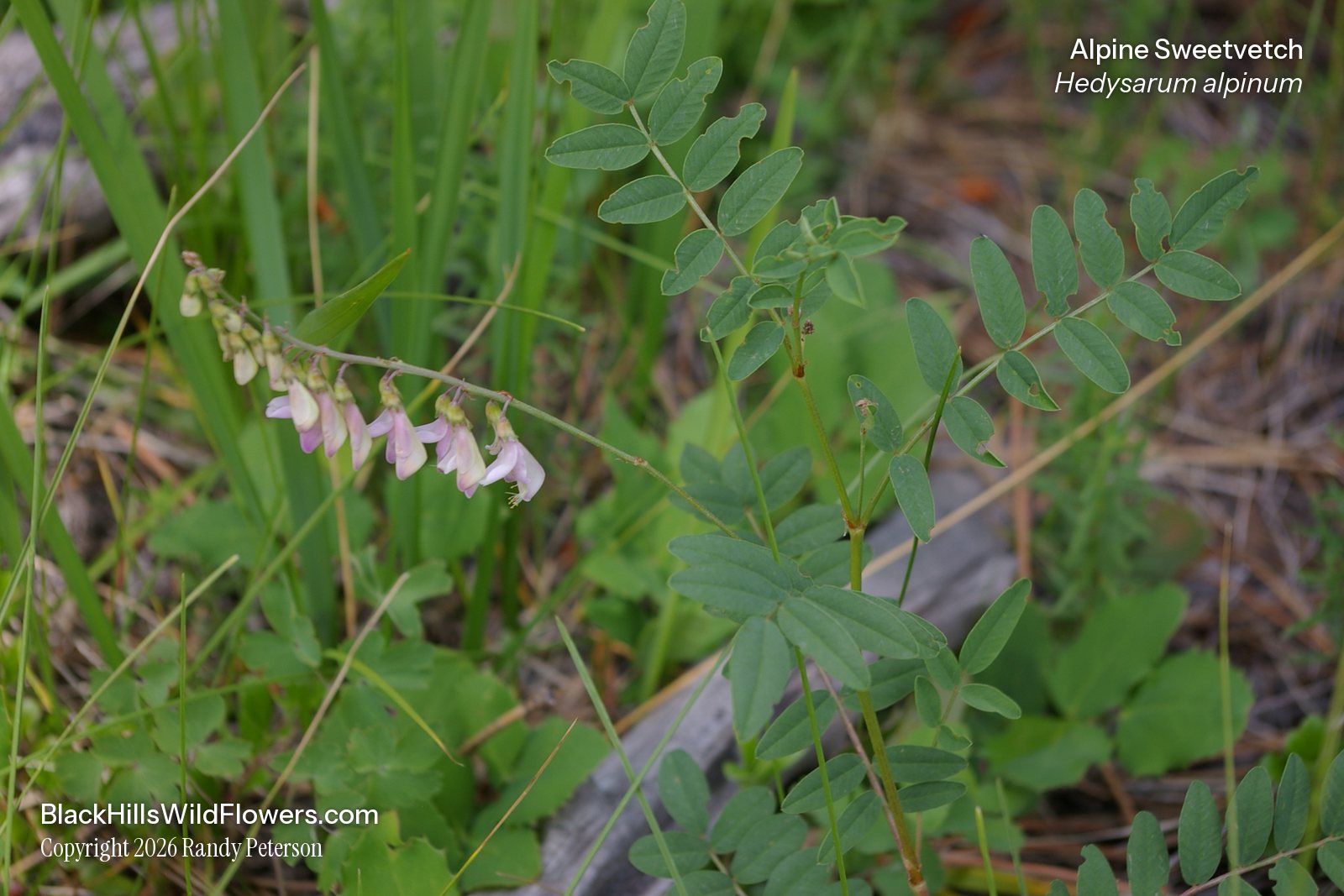
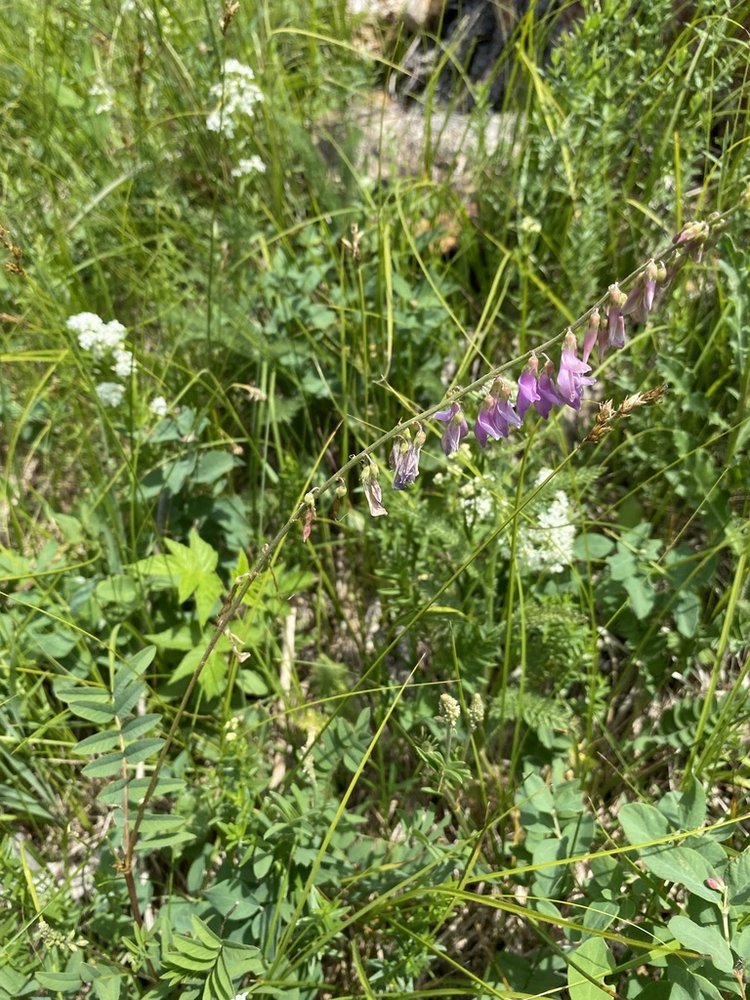
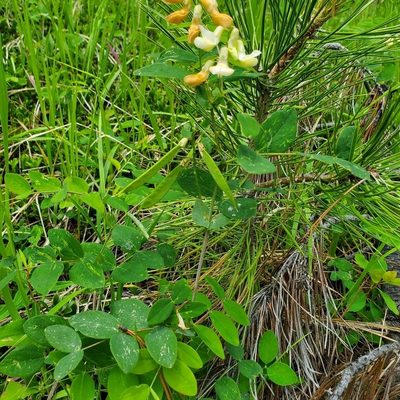
Alpine Sweetvetch (Hedysarum alpinum) is a native perennial of the pea family, 20–70 cm (8–28 in) tall, with clumped leafy stems, leaves divided into 9 to 31 narrow leaflets, and long one-sided spikes of pink-purple pea flowers from June into August, followed by flat pods pinched into a chain of rounded joints. It grows in moist openings and edges of pine, spruce and aspen forest in the Black Hills, where the National Park Service lists it at Jewel Cave and herbarium specimens come from five counties in South Dakota and Wyoming. Photographed in the Black Hills.
Free photos from other sources
| Family | Fabaceae · Pea |
|---|---|
| Status | Native perennial |
| Blooms | June into August |
| Height | 20–70 cm (8–28 in) |
| Where | Moist to dry openings and edges in pine, spruce, aspen and birch forest, meadows, stream banks and rocky slopes |
| Also called | Alpine Sweet-vetch, Alpine Hedysarum, Purple Sweetvetch, Bear Root, Licorice Root |
| Synonym | Hedysarum alpinum var. americanum, Hedysarum alpinum ssp. americanum, Hedysarum americanum |
| Food use | The roots and young stems are eaten in Alaska. The Inupiat of Kaktovik harvest the roots, and for the Dena'ina they are the most important food after wild fruits. |
| Traditional use | The Fire Effects Information System records that Alaska Native peoples, among them the Dena'ina, ate the roots and young stems. Moerman's database adds that the Inupiat ate the roots raw or cooked and stored them for winter, and that the Upper Tanana ate them raw, roasted, fried or boiled. |
Traditional use: first drafted by Google AI, then checked against the sources on this page.
Roots, seeds & germination
Root: A woody, long-lived crown with deep, thick taproots and branching rhizomes (underground stems), so neighboring plants may be clones of one individual.
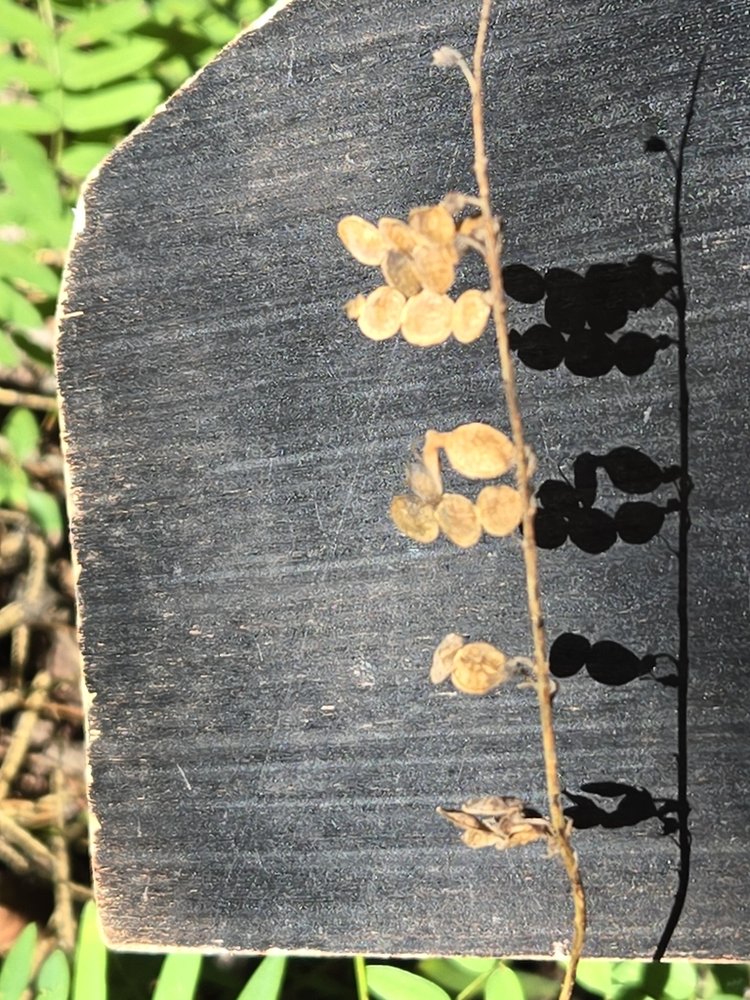
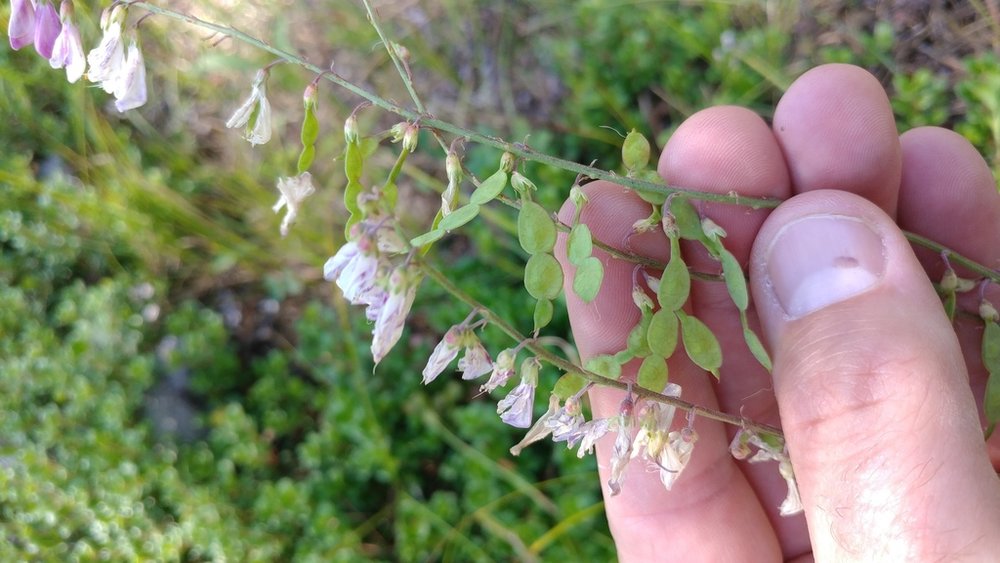
Seed: The pod is flat and never splits open. Instead it is pinched between the seeds into usually 2 to 5 rounded joints, each 5–7 mm long with one kidney-shaped seed about 3 mm long, brown to very dark purple, and the joints break apart when ripe. Seeds ripen unevenly, and many are hollow because the flower was never pollinated.
Germination: Sources disagree on a cold period. The Fire Effects Information System says seeds germinate readily in moist spring conditions and best after about 60 days of cold, moist stratification, with scarification or stratification both helping. A Yukon University seed guide says seeds germinate best after a light rub with fine sandpaper, that cold stratification is not required, and that most seeds sprout within two weeks at room temperature; sow them 6–9 mm (about ¼–⅓ in) deep.
How do you identify Alpine Sweetvetch?
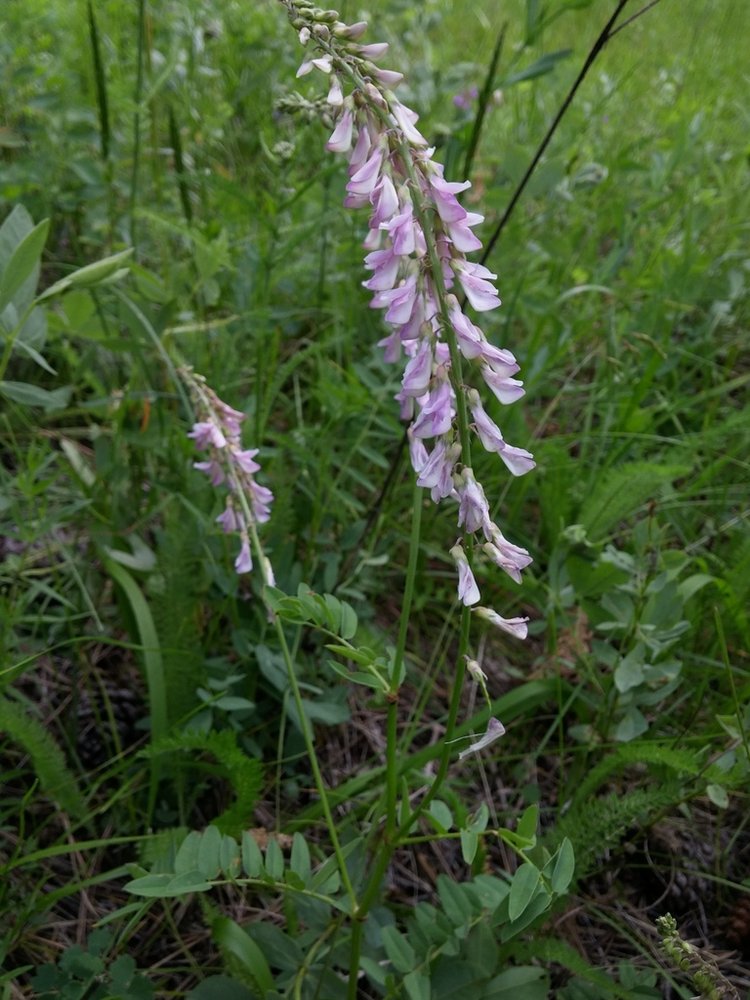
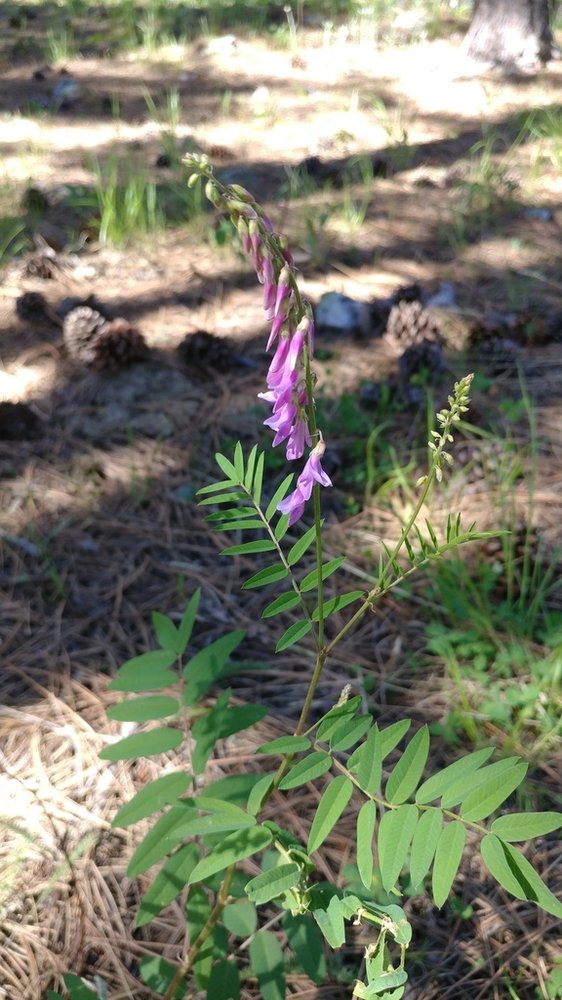
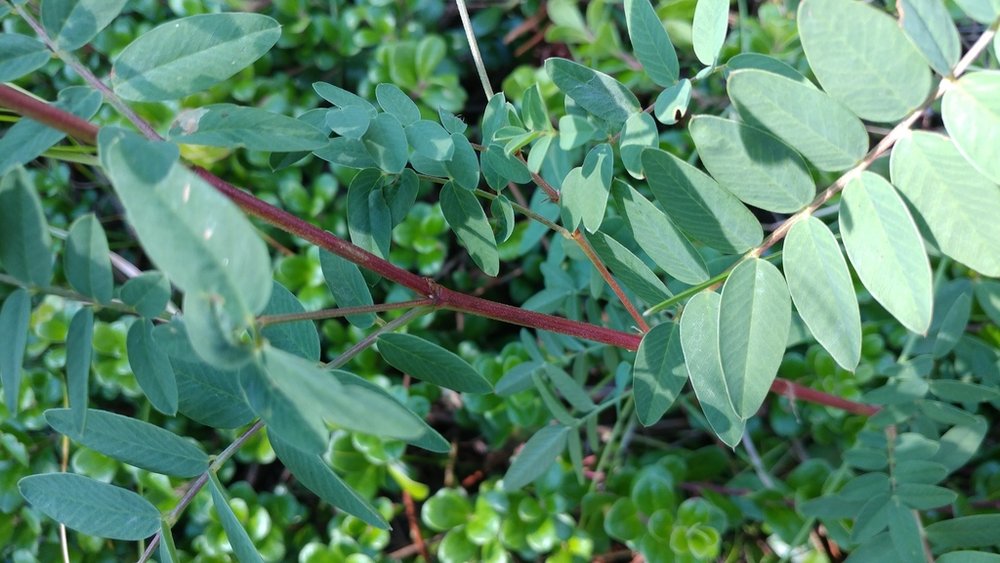
Look for a clump of several upright or outward-leaning leafy stems from a woody base. The leaves are alternate and pinnately divided, 5–15 cm long, into 7 to 31 narrow elliptic leaflets 10–25 mm long, with the side veins plainly visible and very little hair underneath. The flowers hang in a long one-sided raceme (a spike with the flowers on short equal stalks, all turned to one side) of 20 to 60 pink-purple to pink or white pea flowers, each 9–18 mm long. The fruit settles it: a flat pod pinched into a chain of 2 to 5 rounded, one-seeded joints that break apart rather than splitting open. Northern Sweetvetch, a close relative recorded at Devils Tower, is very hard to tell from it except by the leaves, which have much less visible veins and a hairier underside. Lambert's Crazyweed has no stem, only basal leaves with its flower stalks rising from the base, and cylinder-shaped, silky pods. Canada Milkvetch carries pale yellow to creamy white flowers in dense spike-like clusters and smooth oval pods about 1.3 cm (½ in) long, and American Vetch is a climbing vine whose leaves end in a tendril.
When does it bloom?
June into August.
Where does it grow?
Moist to dry openings and edges in ponderosa pine, white spruce, aspen and paper birch forest, meadows, stream banks, spring-fed streams and rocky slopes, over limestone or granite, from about 1390 to 2185 m (4560 to 7170 ft). The National Park Service lists it as present at Jewel Cave National Monument, and the 1986 Jewel Cave plant survey records it. Herbarium specimens from 1908 to 2018 come from Pennington, Custer and Lawrence counties in South Dakota and Weston and Crook counties in Wyoming: aspen groves below limestone cliffs, the moist edge of aspen, white spruce and paper birch forest, a spring-fed stream in spruce and pine forest in the northern Hills, open pine woods, granite ridges and spruce slopes, rocky summits near 2130 m (7000 ft), and a meadow by a stream.
Other flowers to compare
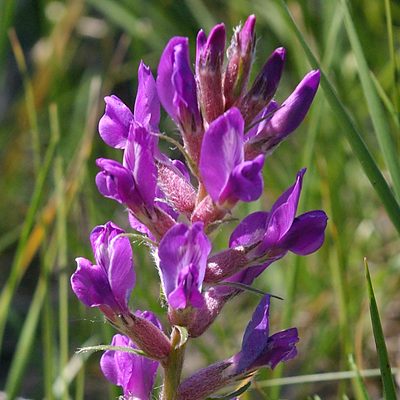
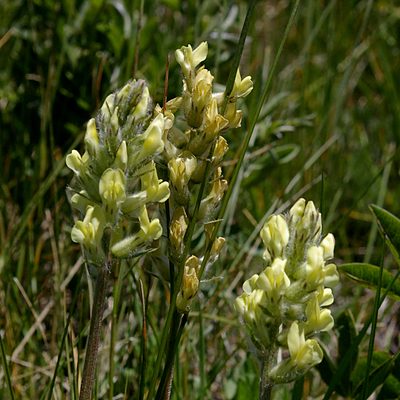
Other vetches in this guide
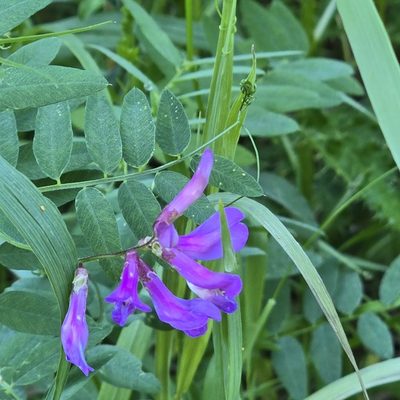
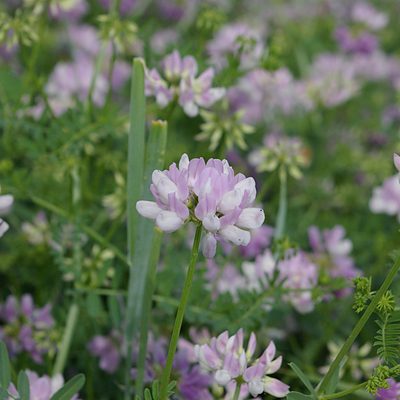
Pea family (Fabaceae): 31 other plants in this guide
- Alfalfa
- American Vetch
- Barr's Milkvetch
- Black Medic
- Canada Milkvetch
- Canada Tickclover
- Cream Milkvetch
- Crown Vetch
- Drummond's Milkvetch
- Field Locoweed
- Field Milkvetch
- Golden Pea
- Groundplum Milkvetch
- Indian Milkvetch
- Lambert's Crazyweed
- Laxmann's Milkvetch
- Lead Plant
- Missouri Milkvetch
- Pale Vetchling
- Prairie Turnip
- Purple Prairie Clover
- Red Clover
- Silktop Dalea
- Silverleaf Scurfpea
- Silvery Lupine
- Slimflower Scurfpea
- Tufted Milkvetch
- White Clover
- White Prairie Clover
- Wild Licorice
- Yellow Sweetclover
Sources: Hedysarum alpinum — USDA Forest Service, Fire Effects Information System (Gucker 2007); Hedysarum alpinum, seed collection and propagation factsheet — Yukon University; Hedysarum alpinum (alpine sweet-vetch) — Go Botany, Native Plant Trust; Hedysarum alpinum — Lady Bird Johnson Wildflower Center; Astragalus canadensis (Canada Milkvetch) — Minnesota Wildflowers; Vicia americana (American Vetch) — Minnesota Wildflowers; Oxytropis lambertii — Kansas Wildflowers and Grasses; Hedysarum alpinum (HEAL) — USDA PLANTS Database; NPSpecies checklist, Jewel Cave National Monument vascular plants — National Park Service; NPSpecies checklist, Devils Tower National Monument vascular plants — National Park Service; A Survey of the Vegetation of Jewel Cave National Monument (1986) — Marriott and Hartman, NPS History; Hedysarum alpinum, South Dakota and Wyoming herbarium specimens — GBIF; Moerman, Native American Ethnobotany database (BRIT): Hedysarum alpinum.