American Dragonhead Dracocephalum parviflorum
Also called False Dragonhead, Dragon's Head
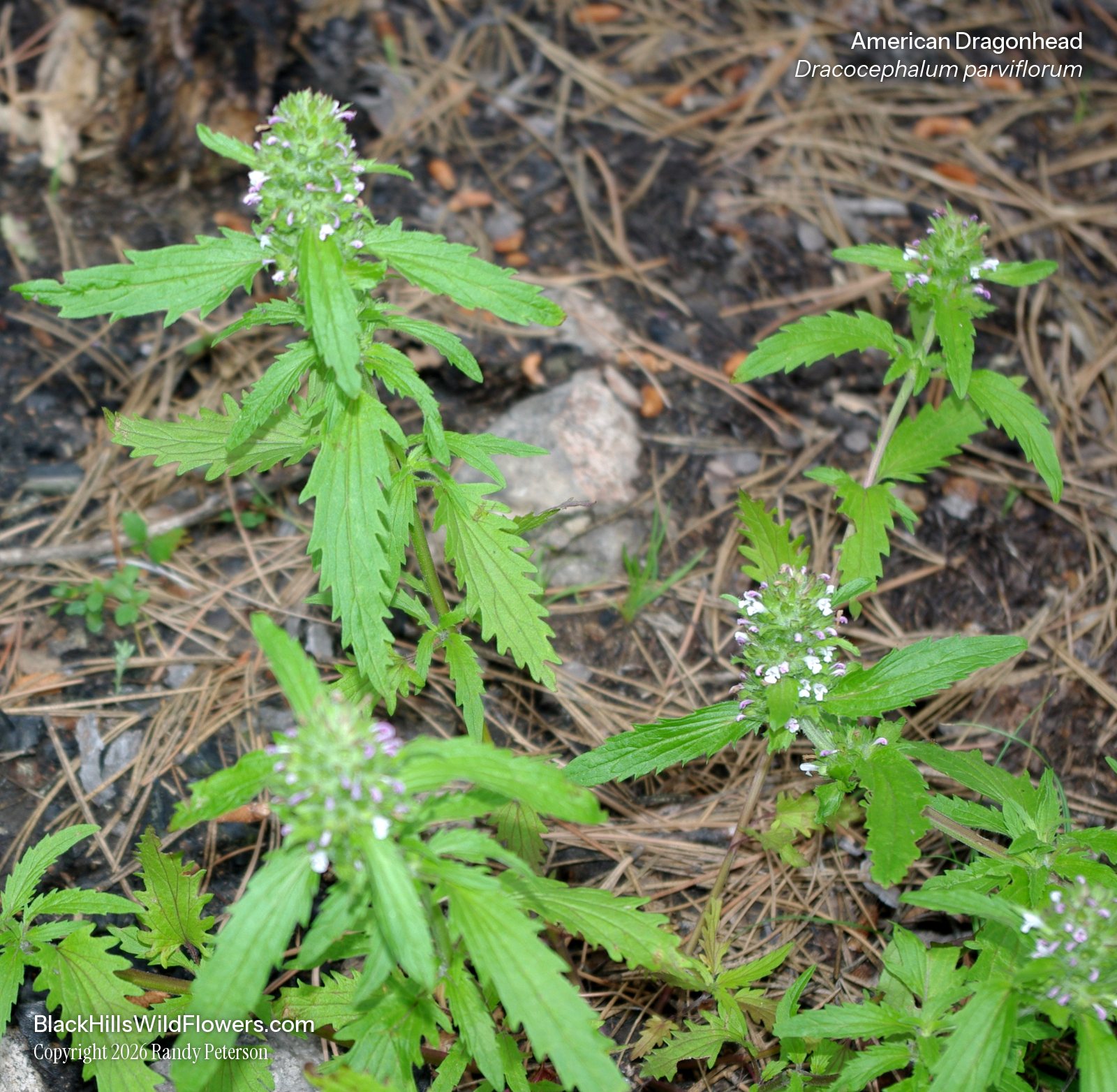
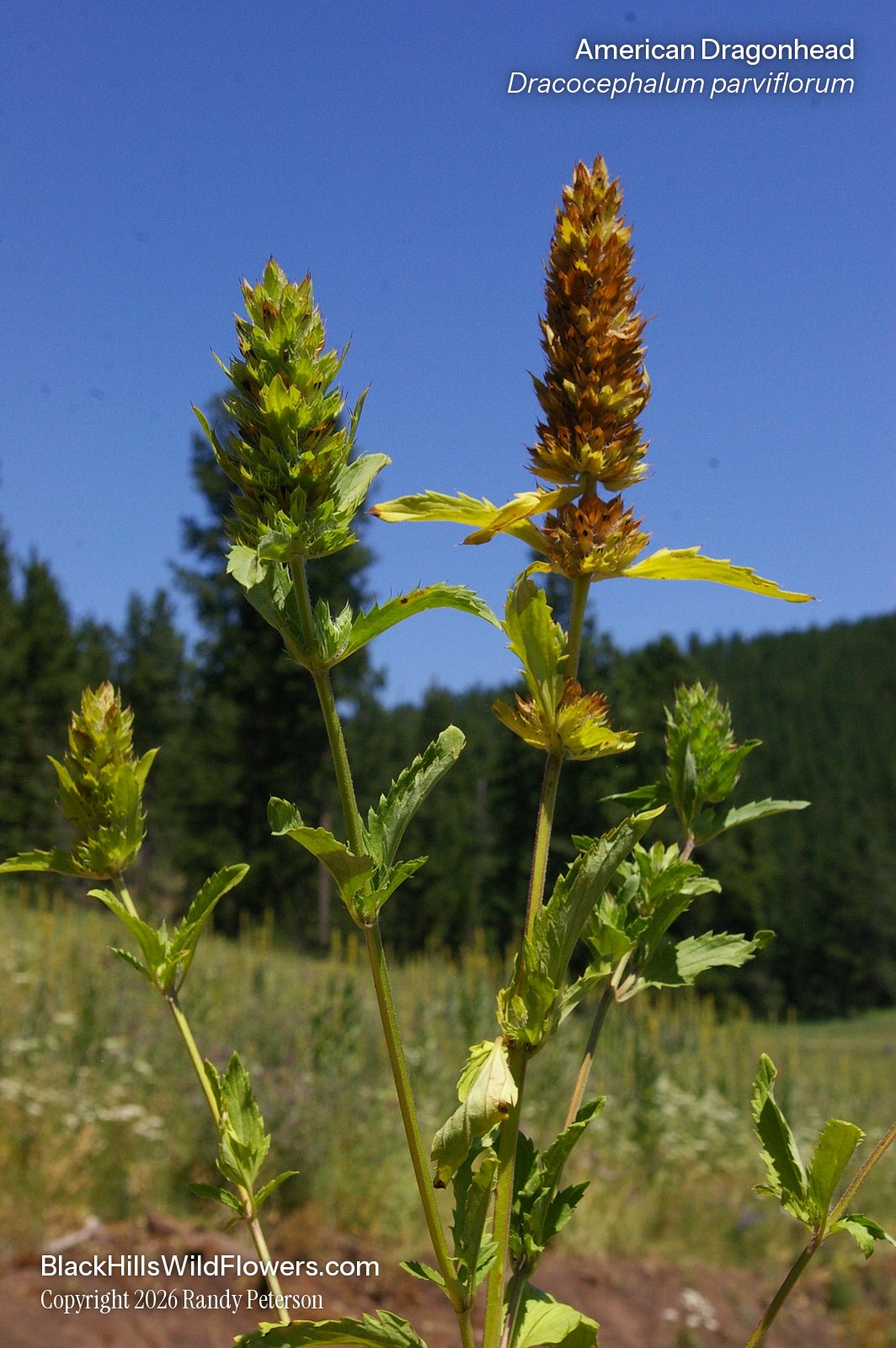
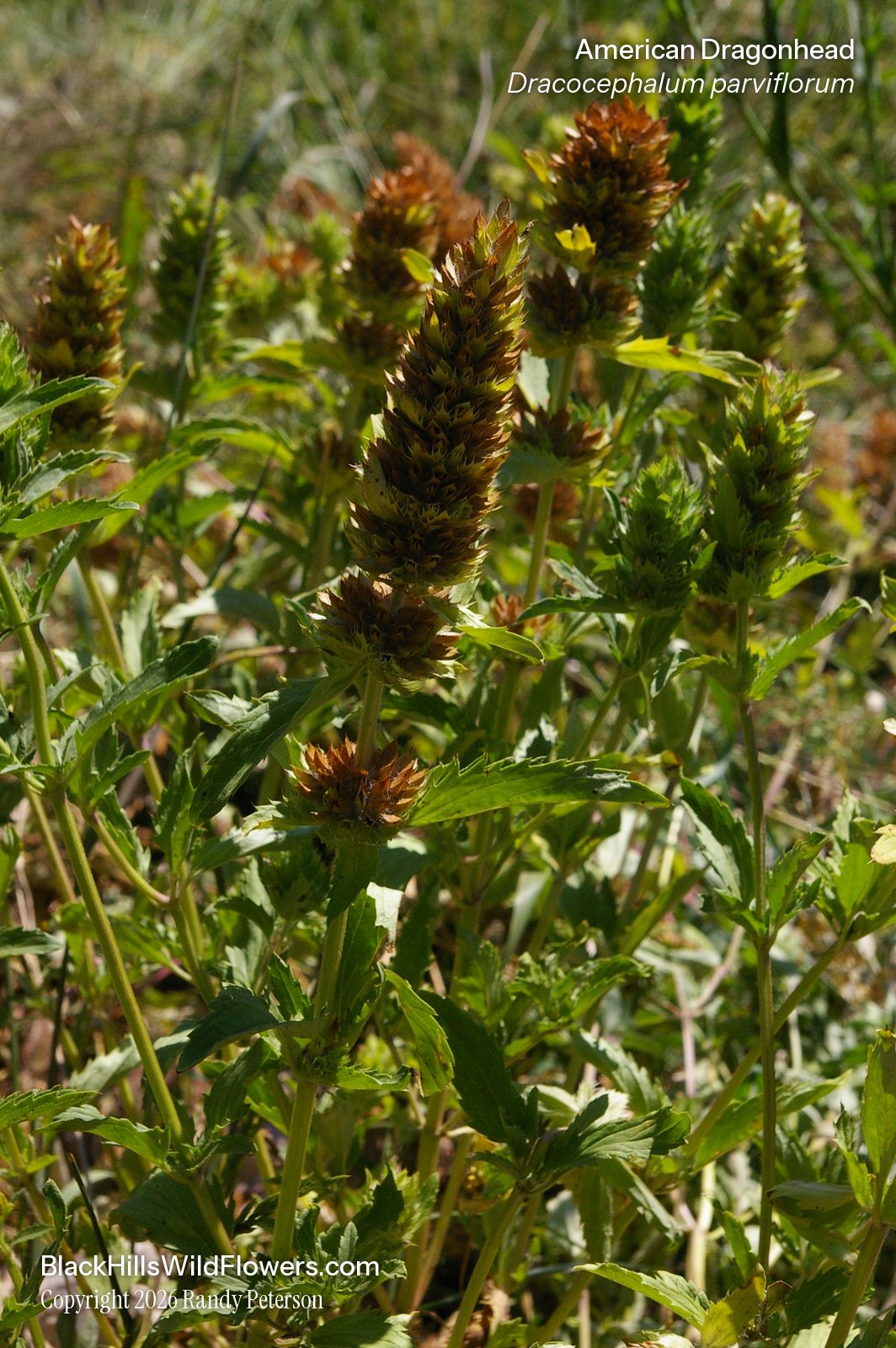
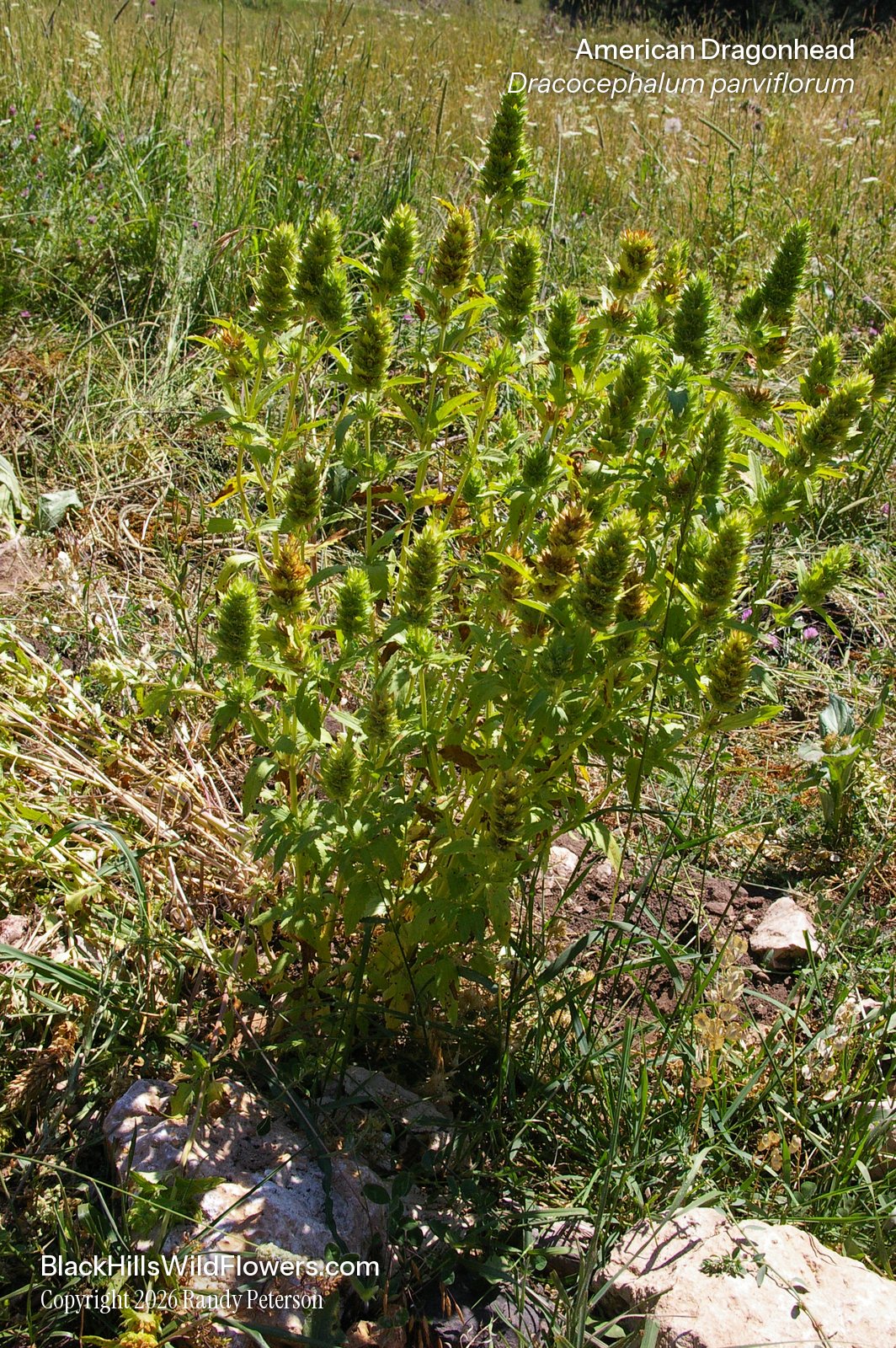
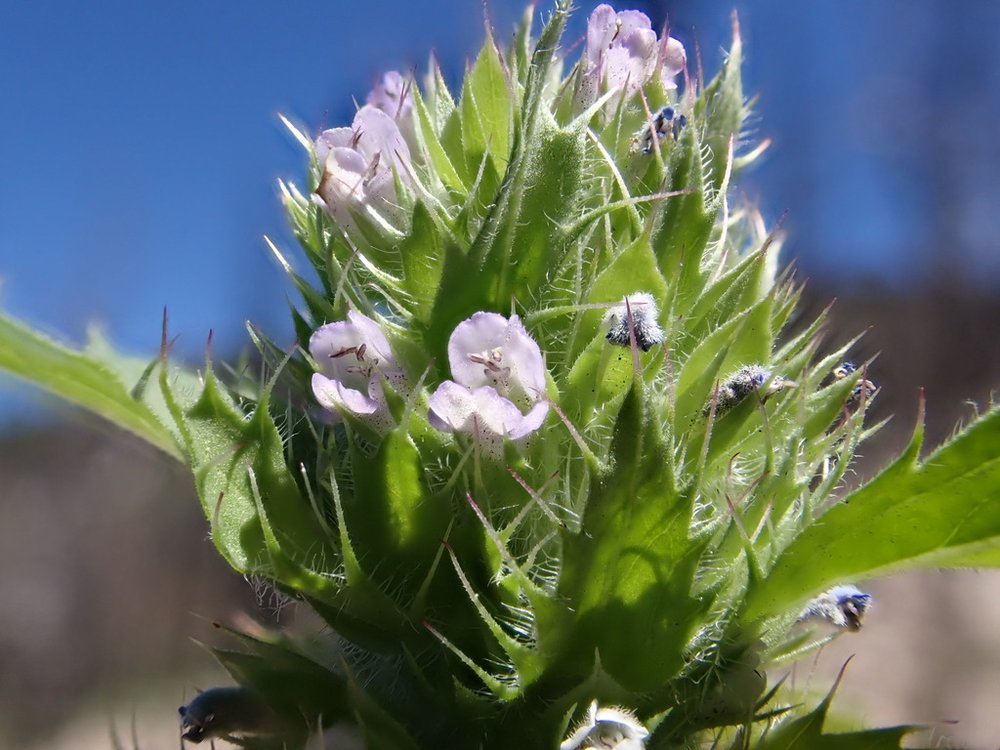
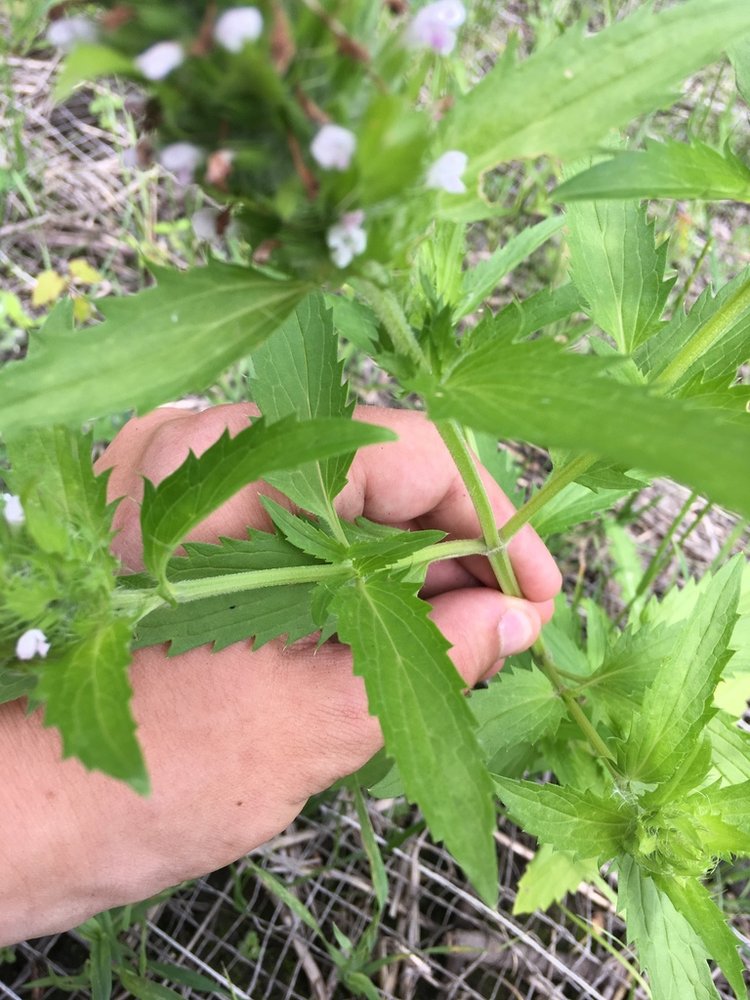
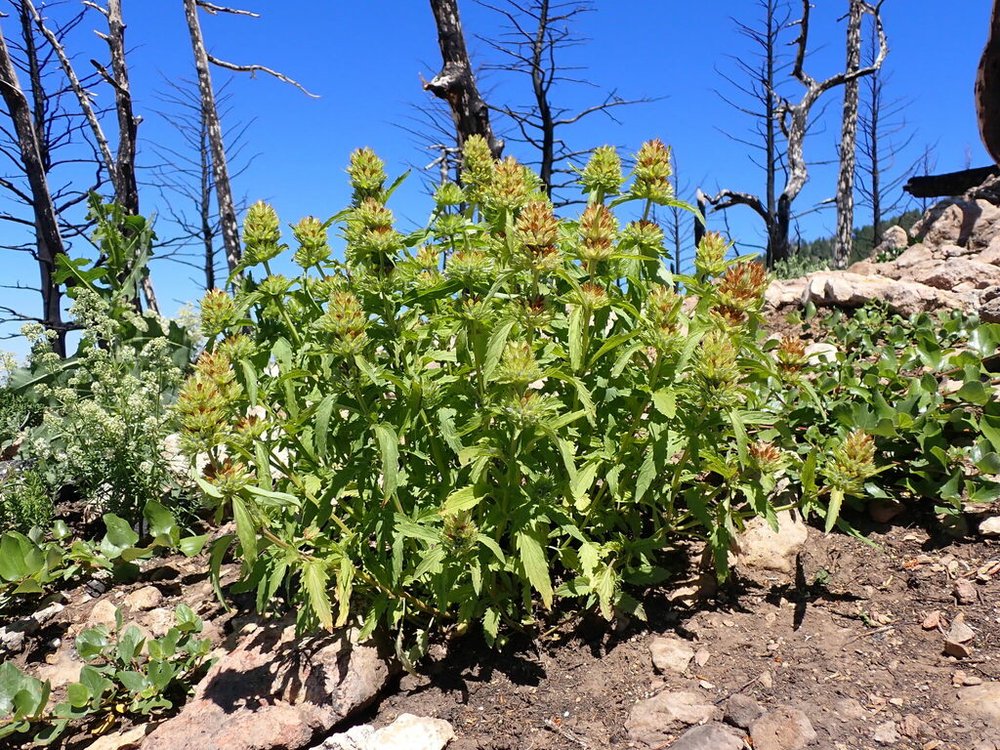
American Dragonhead (Dracocephalum parviflorum) is a native mint with square stems, sharply toothed leaves and thick spikes of small pale blue-violet flowers among spiny-toothed bracts that dry brown as the seeds ripen. It grows on roadsides, gravel and other disturbed ground and blooms in the Black Hills from mid-June to mid-July; in Black Hills ponderosa pine it is prominent right after a fire, then declines or disappears by the second or third year. Photographed in the Black Hills.
Free photos from other sources
| Family | Lamiaceae · Mint |
|---|---|
| Status | Native annual, biennial or short-lived perennial |
| Blooms | Mid-June to mid-July in dated Black Hills specimens; June into September across the Great Plains (FEIS) |
| Height | 15–80 cm (6–32 in) |
| Where | Roadsides, gravel, burns, open pine woods, rocky hillsides and stream floodplains |
| Also called | False Dragonhead, Dragon's Head |
| Synonym | Moldavica parviflora |
| Traditional use | Moerman's database records that the Gosiute used the seeds for food and the Chiricahua and Mescalero Apache used the leaves as a flavoring. The Ramah Navajo took a cold infusion of the leaves for headache and fever and used it as an eyewash. |
Traditional use: first drafted by Google AI, then checked against the sources on this page.
Roots, seeds & germination
Root: A taproot, from which one stem or a cluster of stems rises.
Seed: Each flower makes small black nutlets (one-seeded fruits). The seeds are fairly large and aren't carried by wind, and buried seed stays alive in the soil for a long time, so the plant builds up a store of seed in the ground.
Germination: Seed in the soil sprouts after fire or other disturbance, even after a severe fire. New seed then lies dormant in the soil until the next fire or other disturbance.
How do you identify American Dragonhead?
Look for a square stem with opposite, lance-shaped leaves up to about 8 cm (3 in) long that have large, coarse, sharp teeth and a slender stalk. The flowers crowd into a thick spike 2.5–10 cm (1–4 in) long at the stem tip and at the ends of side stems from the upper leaf joints. Each flower is only about 6 mm (¼ in) long, pale blue-violet, with a notched upper lip and a 3-lobed lower lip, and it reaches about as far as its calyx (the green cup around it) or a little past it. Long, hairy bracts (leafy scales) under the flowers have sharp teeth that each end in a spine, which gives the head a spiny look, and the whole head turns brown after bloom.
When does it bloom?
Mid-June to mid-July in dated Black Hills specimens; June into September across the Great Plains (FEIS).
Where does it grow?
Open, disturbed ground: roadsides, gravel, burns, open pine woods, rocky hillsides and thickets on stream floodplains. The 1986 plant survey of Jewel Cave lists it, the National Park Service lists it at Jewel Cave and Mount Rushmore, and herbarium specimens come from Lawrence, Pennington, Custer and Meade counties and Crook County, Wyoming, from a rocky hillside in Lawrence County in 1913 to a dirt road through burned ponderosa pine forest in Custer County in 1992.
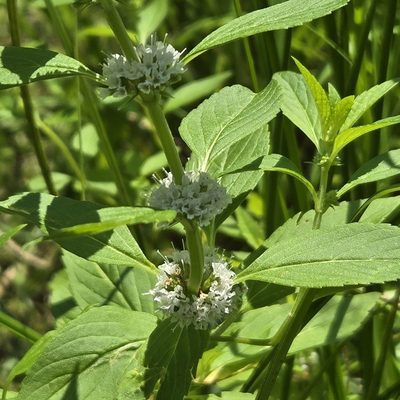
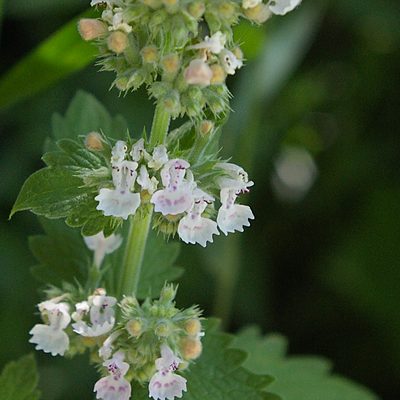
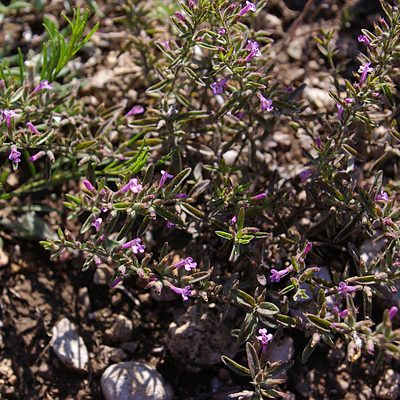
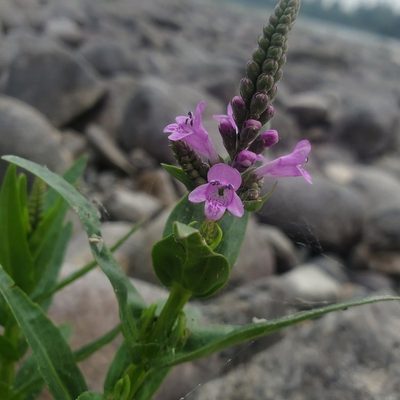
Other mints in this guide
Sources: USDA Forest Service Fire Effects Information System: Dracocephalum parviflorum (Matthews 1993); Minnesota Wildflowers: Dracocephalum parviflorum (American Dragonhead); Go Botany (Native Plant Trust): Dracocephalum parviflorum; USDA PLANTS Database: Dracocephalum parviflorum (DRPA2); ITIS: Dracocephalum parviflorum, TSN 32490; Marriott and Hartman 1986, A Survey of the Vegetation of Jewel Cave National Monument; NPSpecies checklist, Jewel Cave National Monument vascular plants; NPSpecies checklist, Mount Rushmore National Memorial vascular plants; GBIF occurrence search: Dracocephalum parviflorum, South Dakota and Wyoming herbarium specimens; GBIF specimen 2620319010: Lawrence County, 1913, rocky hillside; GBIF specimen 5159138463: Custer County, 1992, roadside in burned ponderosa pine forest on granitic soil; Moerman, Native American Ethnobotany database (BRIT): Dracocephalum parviflorum.