Wild Bergamot
Monarda fistulosa
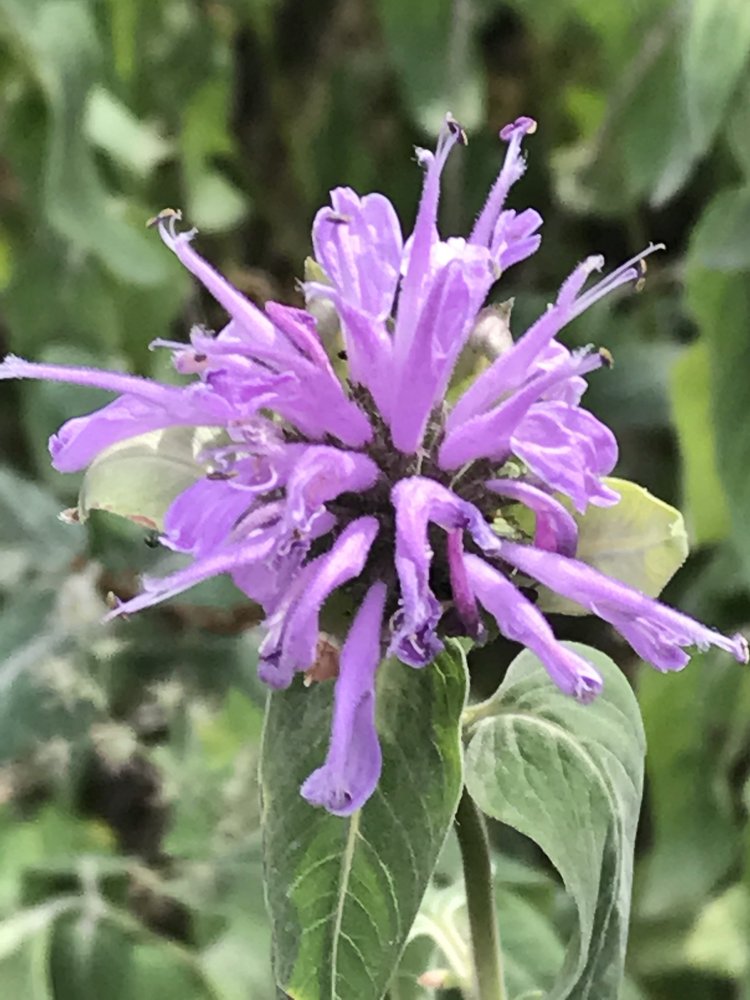
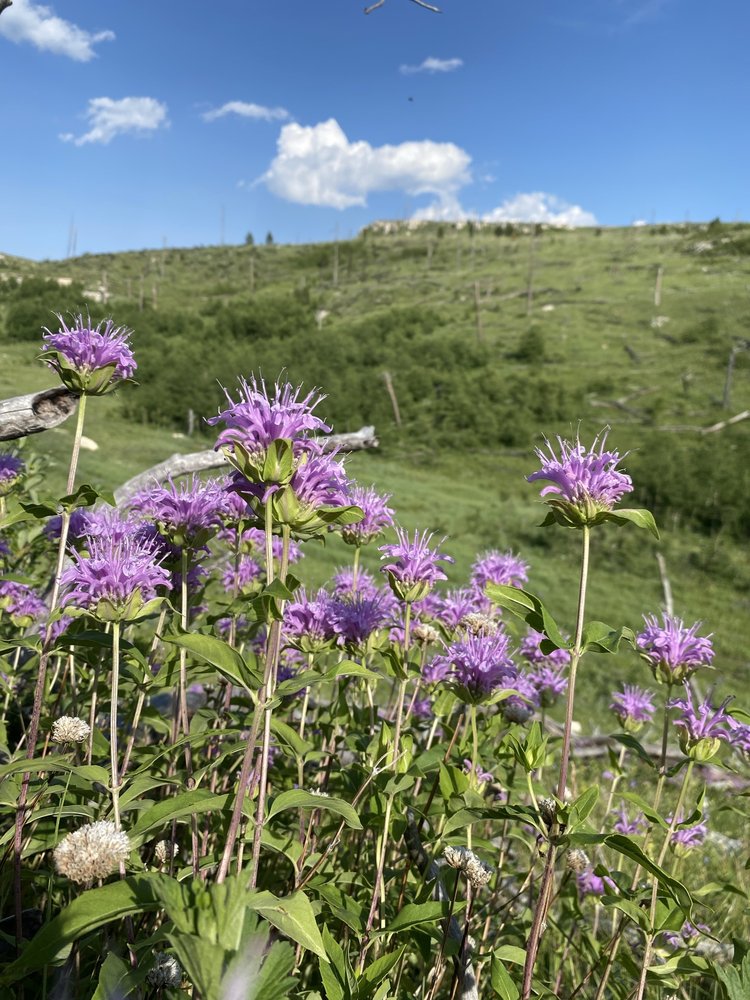
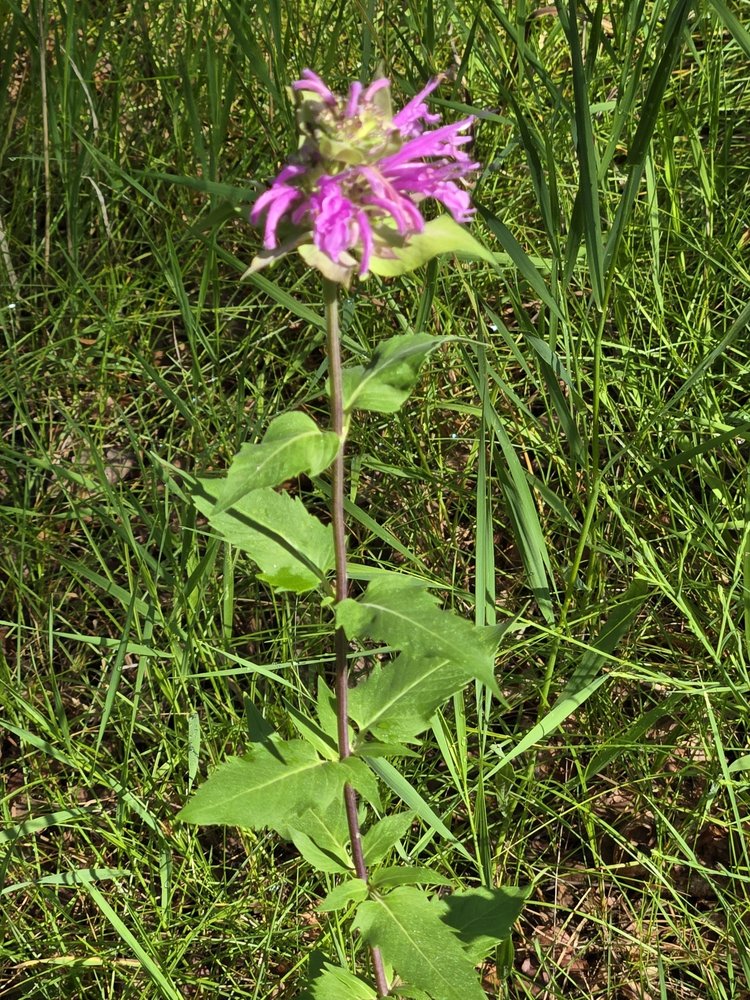
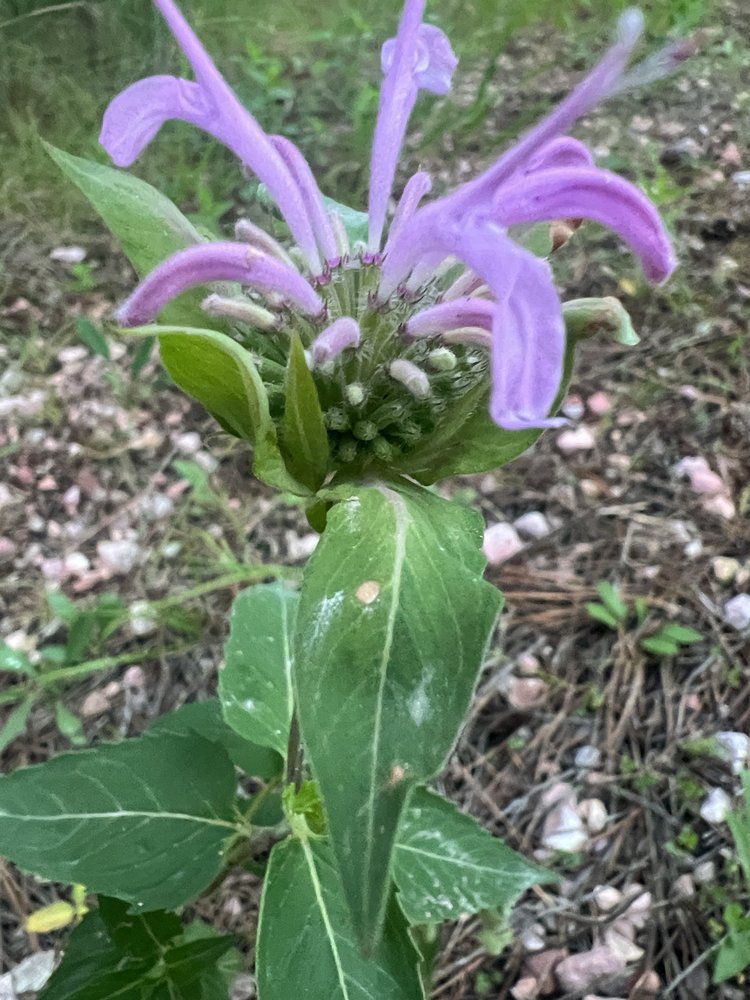
Wild Bergamot (Monarda fistulosa) is a native perennial mint that grows in clumps, with square stems, round heads of lavender-pink to light purple tubular flowers, and leaves that smell of oregano or thyme when crushed. It blooms mostly in July and August in open pine forest, meadows and along roadsides, from the foothills to the high Black Hills.
Free photos from other sources
| Family | Lamiaceae · Mint |
|---|---|
| Status | Native perennial |
| Blooms | July and August, with a few in June and September |
| Height | 30–120 cm (1–4 ft) |
| Where | Open ponderosa pine forest, meadows, prairie edges, roadsides and trailsides |
| Also called | Beebalm, Horsemint, Mintleaf Bergamot, Wild Oregano, Purple Bergamot, heȟáka tȟapȟéžuta (Lakota), heȟáka tȟawóte (Lakota), waȟpé waštémna (Lakota) |
| Synonym | Monarda menthifolia |
| Traditional use | Gilmore (1919) recorded that the Teton Dakota boiled the leaves and flowers together and drank the tea for abdominal pain, and Sitting Bull College's 1998 Culturally Important Plants of the Lakota says a tea of the flowers or leaves was taken for colds, sore throat and fever. |
Roots, seeds & germination
Root: Shallow, fibrous roots. The plant spreads by short, creeping rhizomes and by seed, so one plant becomes a clump and clumps can merge into large patches.
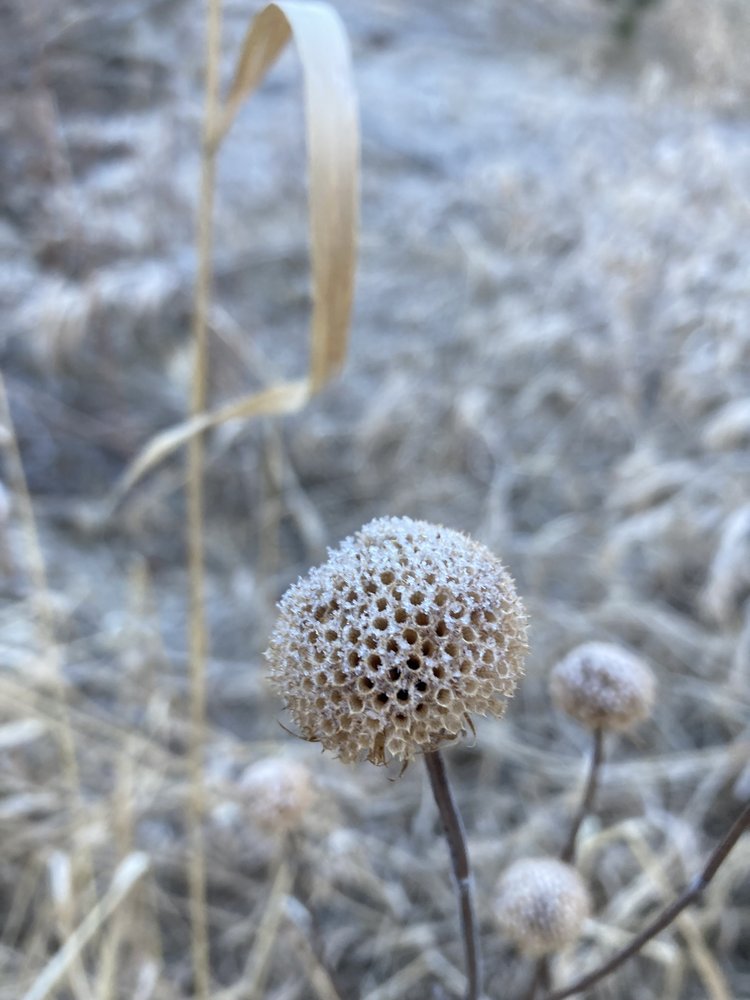
Seed: Each flower makes four tiny, smooth, brown, oval nutlets about 1.5 mm long inside its calyx tube. Seed ripens about two months after bloom, and the empty dark brown heads stay on the dry stems through winter.
Germination: Sources differ. Prairie Moon and a Montana State study say the seed needs no pretreatment, while a Glacier National Park protocol used 30 days of cold, moist stratification and got 97% germination in light. The seed is pressed onto the surface, not buried.
How do you identify Wild Bergamot?
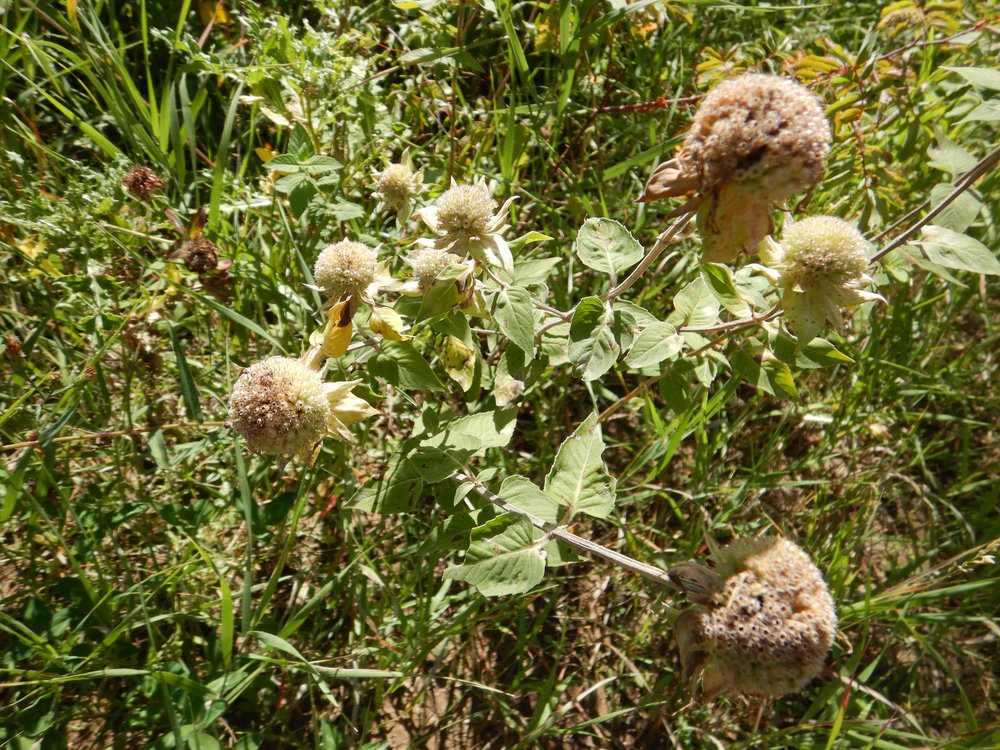
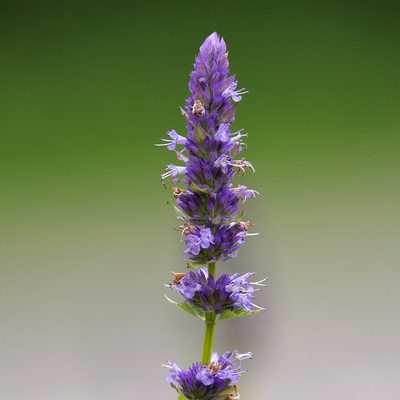
Look for one round, pom-pom-like head 2.5–5 cm (1–2 in) across at the tip of each stem, made of many narrow, two-lipped, lavender-pink to light purple tubes, with leafy, often pale or purple-tinged bracts just below. The stem is square, and the opposite, toothed, lance-shaped leaves smell strongly of oregano or thyme when crushed; in Black Hills plants the leaf stalks are very short. Anise Hyssop has its small blue-violet flowers in a cylinder-shaped spike, leaves white underneath and a licorice smell. After bloom, a brown, honeycomb-like ball of empty flower cups stands on each bare stem through winter.
When does it bloom?
July and August, with a few in June and September.
Where does it grow?
Open ponderosa pine forest, forest edges, mountain meadows, prairie margins, burns, roadsides and trail edges, in full sun to light shade on well-drained soil, from about 900 to 2,130 m (3,000–7,000 ft). The Black Hills National Forest calls it common from low to high elevations. The 1986 Jewel Cave survey lists it as Monarda fistulosa var. menthaefolia, National Park Service lists record it at Wind Cave, Mount Rushmore and Devils Tower, and at least 225 herbarium specimens come from the seven Black Hills counties.
Other flowers to compare
Sources: Wildflowers – Jewel Cave National Monument (NPS); Wildflowers – Mount Rushmore National Memorial (NPS); Black Hills Native Plants – Black Hills National Forest (USDA Forest Service); Marriott & Hartman (1986), Vegetation of Jewel Cave National Monument; NPSpecies checklist – Wind Cave National Park; NPSpecies checklist – Jewel Cave National Monument; NPSpecies checklist – Mount Rushmore National Memorial; NPSpecies checklist – Devils Tower National Monument; Black Elk & Flying By (1998), Culturally Important Plants of the Lakota, Sitting Bull College (entry 196); Gilmore (1919), Uses of Plants by the Indians of the Missouri River Region, BAE 33rd Annual Report, p. 111 (full text); USDA PLANTS – Monarda fistulosa (MOFI); USDA NRCS Plant Guide – Wild Bergamot (Anderson); Plant Propagation Protocol for Monarda fistulosa, Univ. of Washington ESRM 412 (summarizes Luna et al. 2001, Native Plant Network); Prairie Moon Nursery – Wild Bergamot; Minnesota Wildflowers – Wild Bergamot; Montana State University – Native Plants for Wild Bee Conservation: Beebalm (Delphia et al.); Keefover-Ring (2022), The chemical biogeography of a widespread aromatic plant species, Ecology and Evolution; ITIS – Monarda fistulosa var. menthifolia (TSN 566738); GBIF – Monarda fistulosa occurrences, South Dakota preserved specimens; GBIF – Monarda pectinata occurrences, South Dakota; iNaturalist – Monarda fistulosa in Black Hills National Forest; Illinois Wildflowers – Anise Hyssop; Colorado Wildbuds – Monarda pectinata (Plains Beebalm).