Catnip
Nepeta cataria
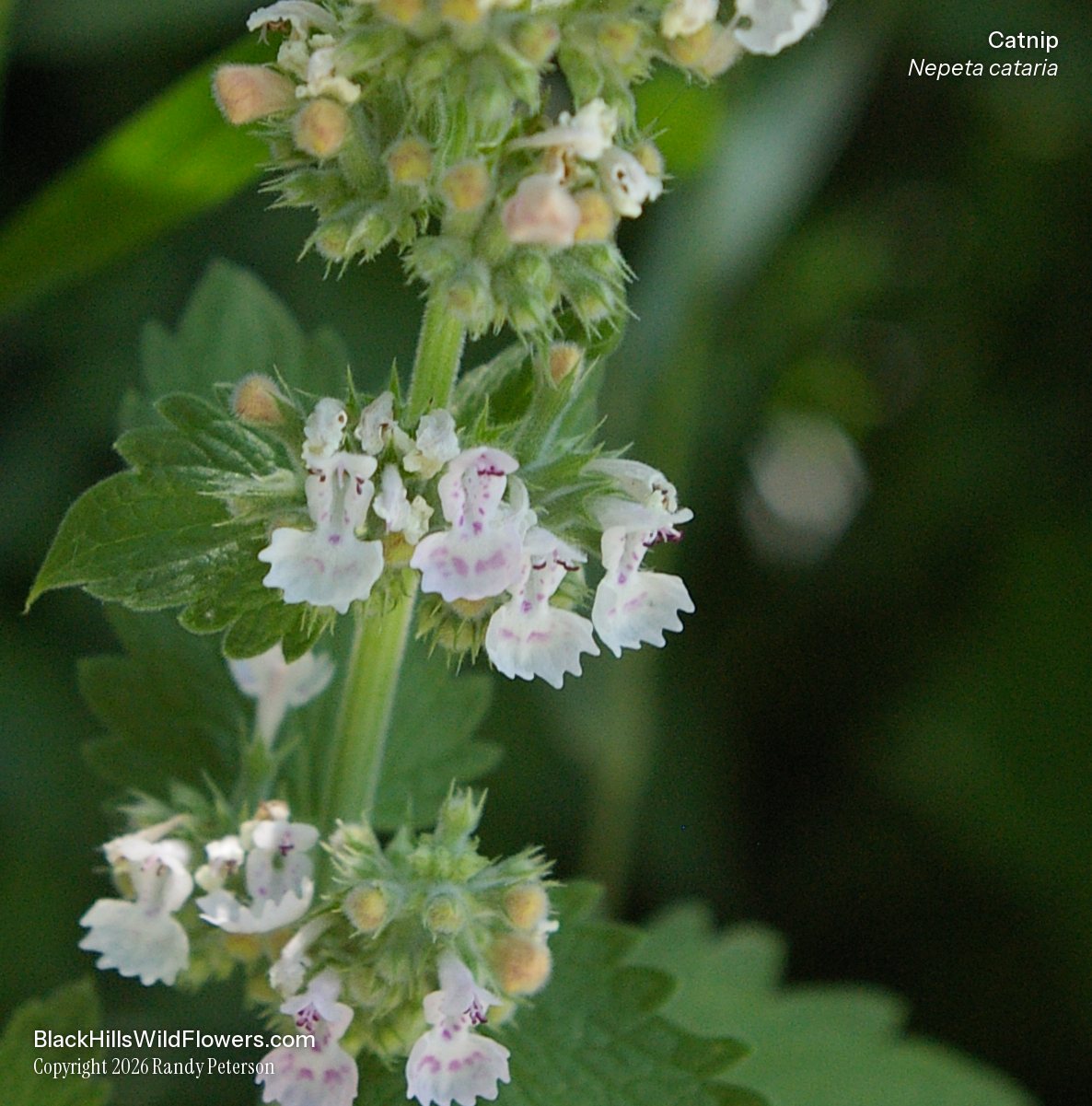
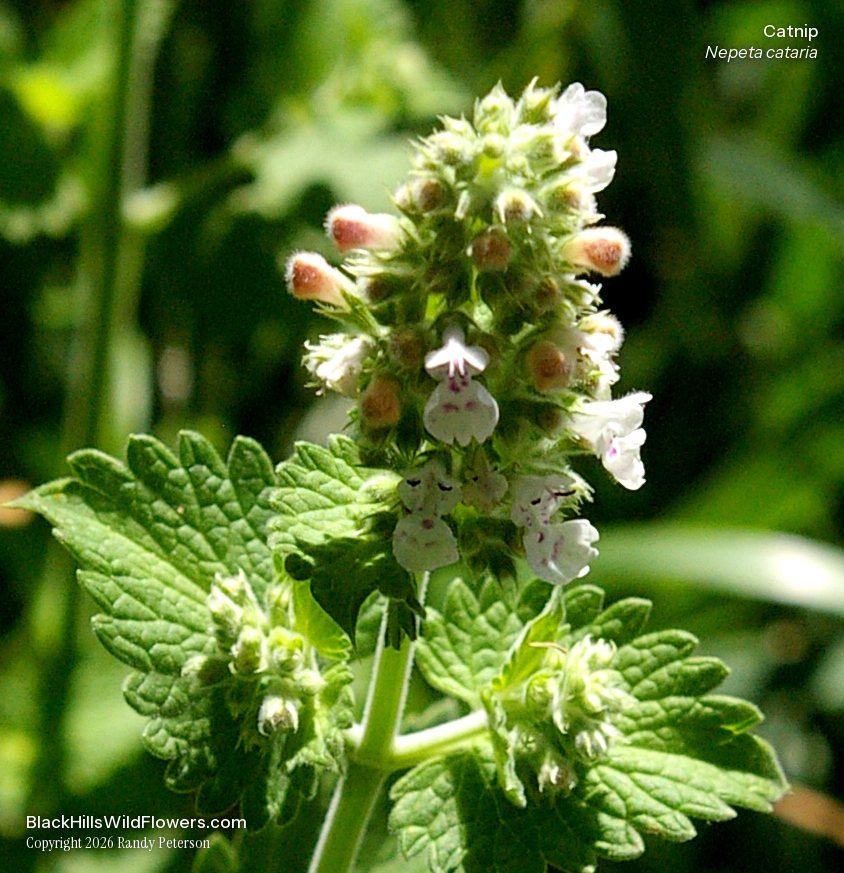
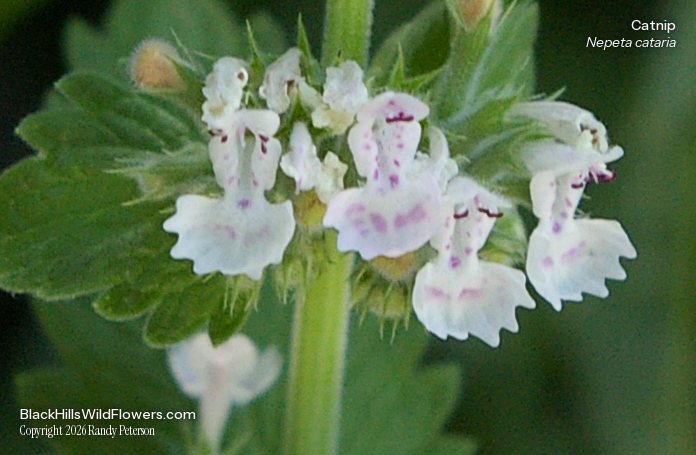
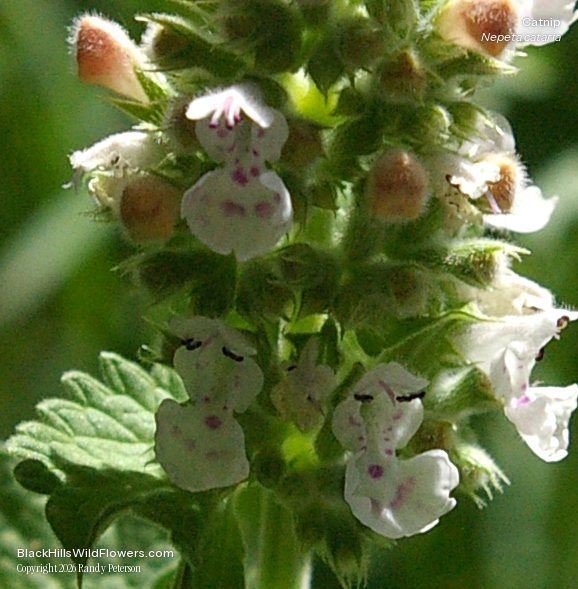
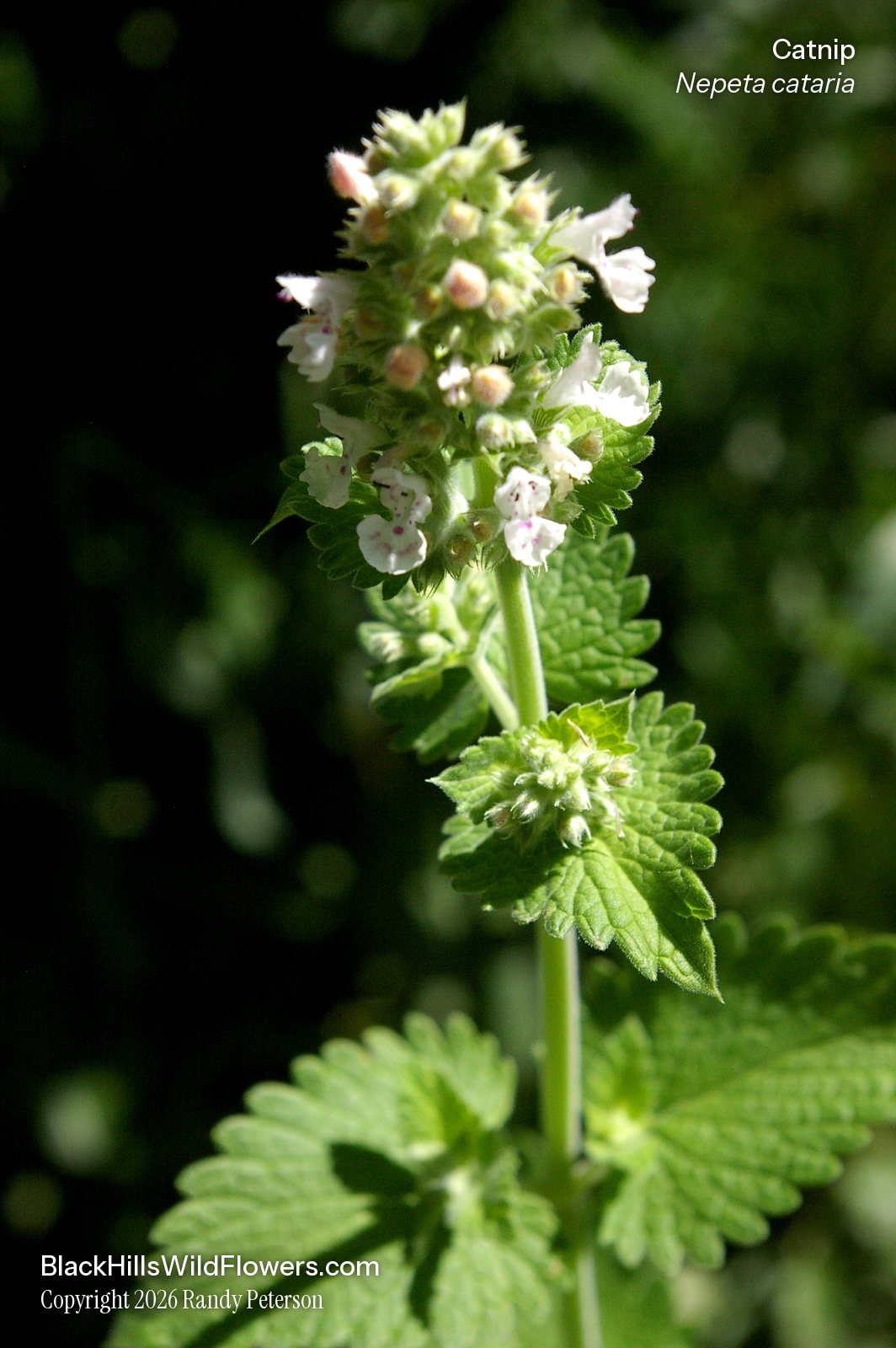
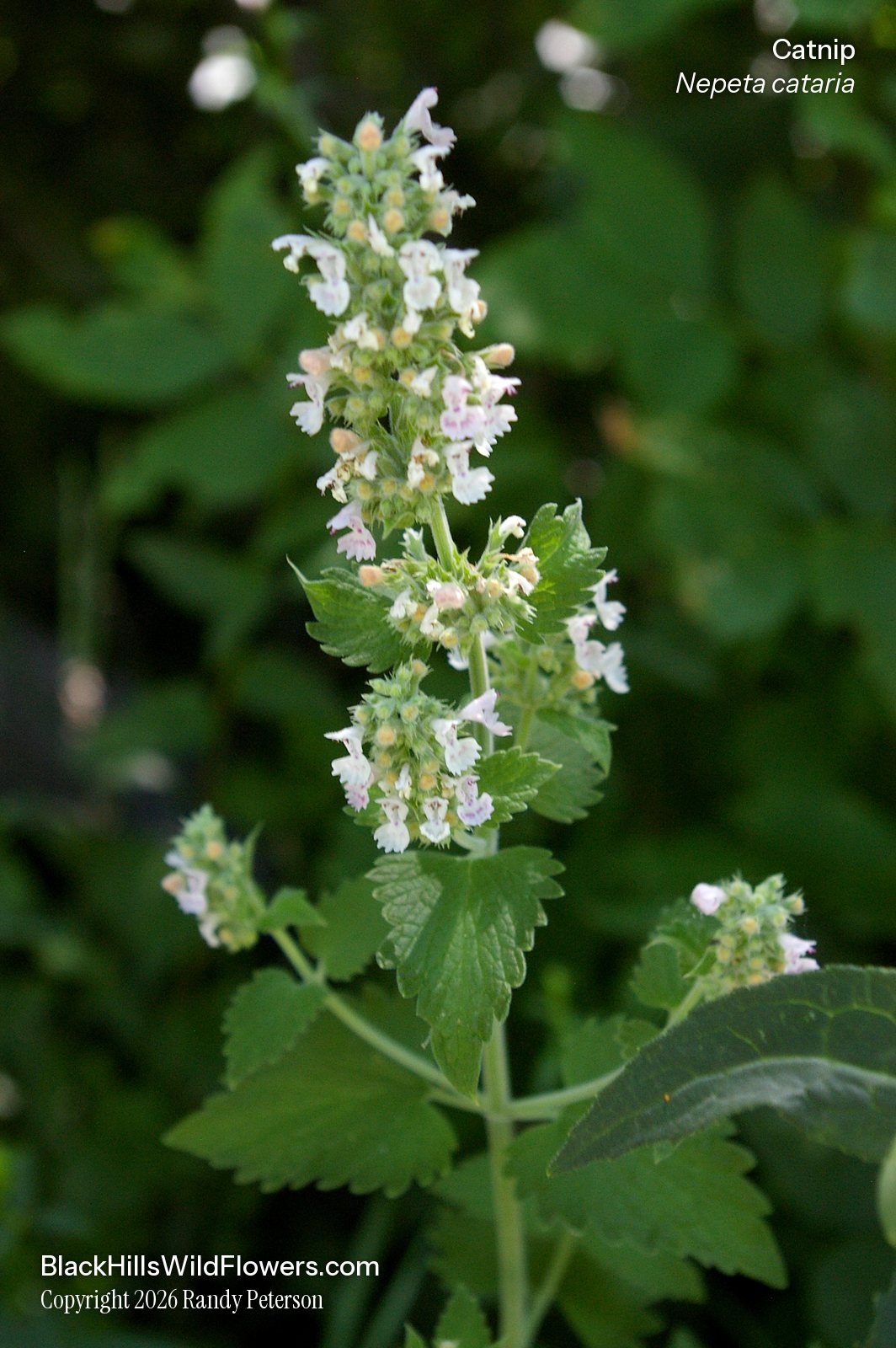
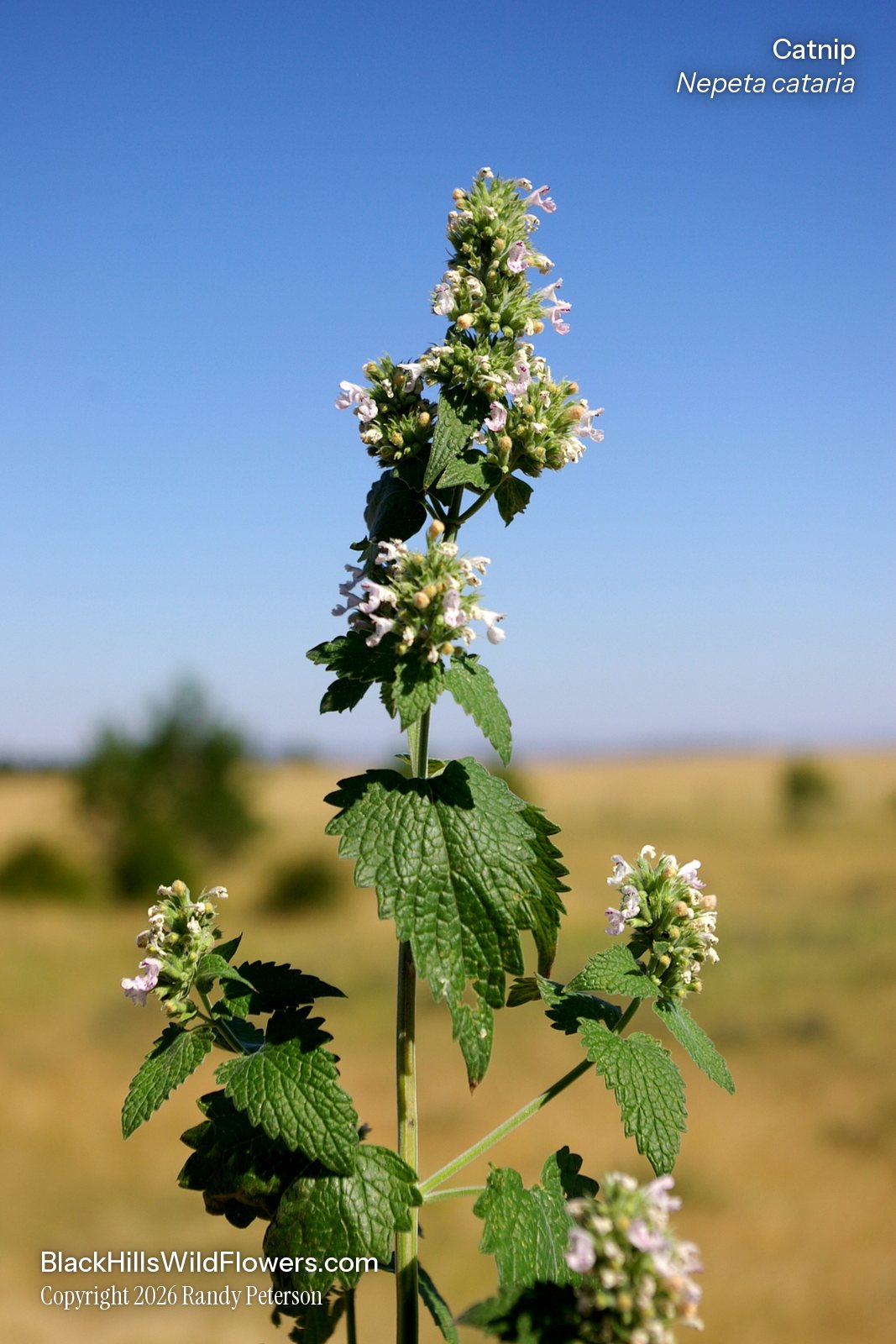
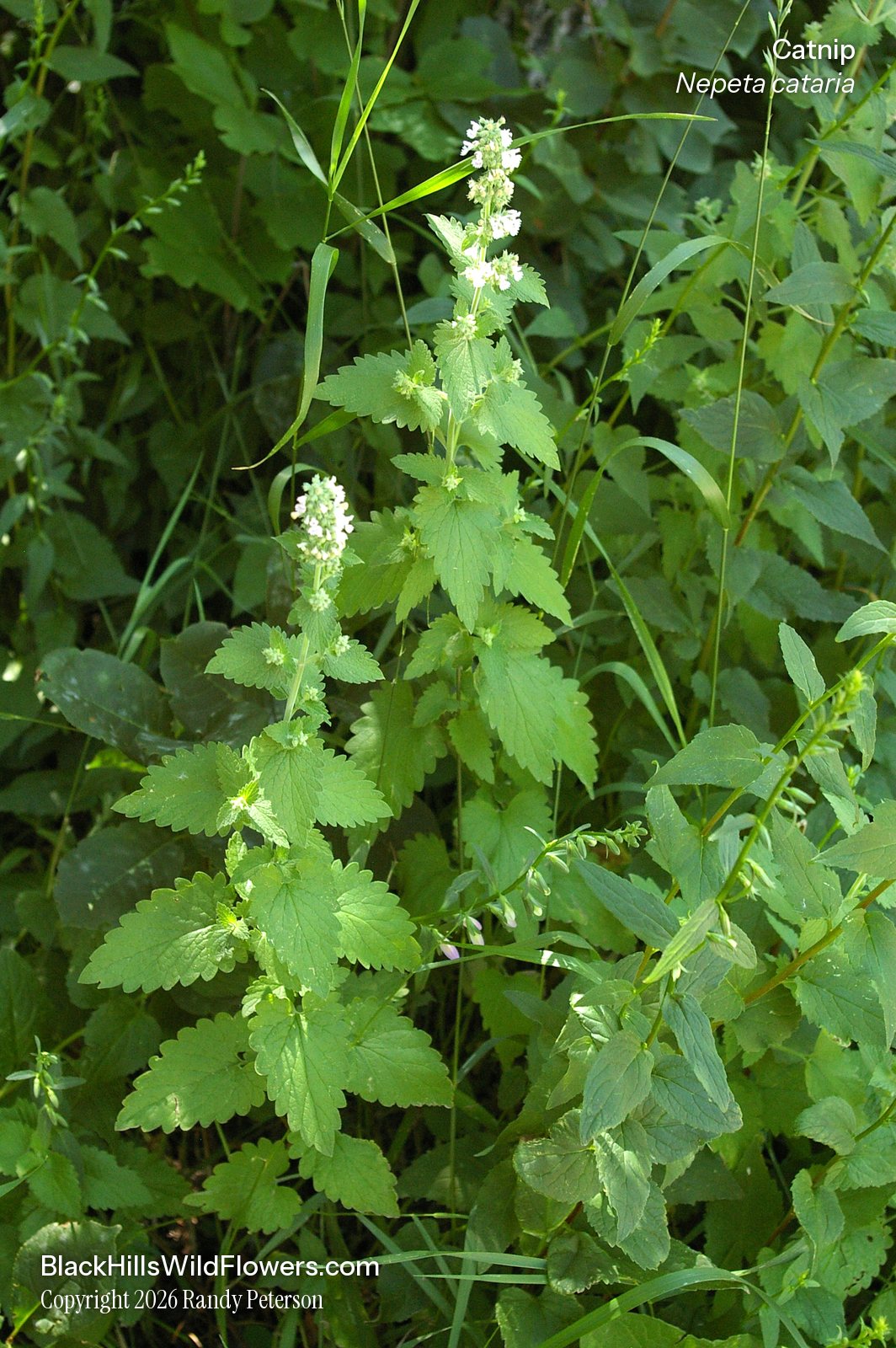
Catnip (Nepeta cataria) is an introduced perennial mint, 40 to 100 cm (16 to 39 inches) tall, with square, finely hairy stems, heart-shaped toothed leaves and dense spikes of small white to pale lavender flowers. It blooms June into September on roadsides, disturbed sites and open fields throughout much of South Dakota. Photographed in the Black Hills.
| Family | Lamiaceae · Mint |
|---|---|
| Status | Introduced perennial |
| Blooms | June into September |
| Height | 40–100 cm (16–39 in) |
| Where | Disturbed sites, roadsides, open fields and woodland edges |
| Also called | Catmint |
Roots, seeds & germination
Root: Fibrous roots, with rhizomes (underground stems) that can form colonies.
Seed: Each flower produces 4 small nutlets, 2–3 mm long, held in the leftover calyx. They ripen in late summer.
Germination: Seeds germinate easily in spring without special treatment.
How do you identify Catnip?
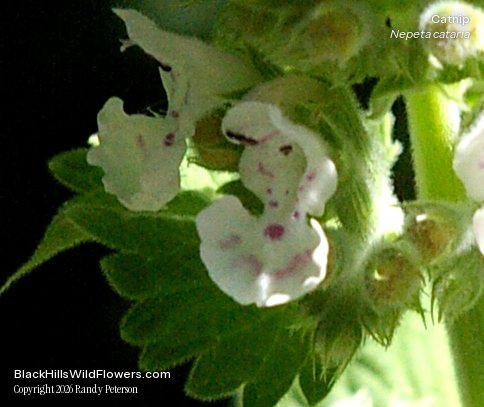
Square, finely hairy stems carry opposite, heart-shaped leaves with rounded teeth. Crushed leaves smell strongly of mint from nepetalactone, and cats are strongly drawn to the plant. Thick, tightly packed flower clusters at the stem tips hold two-lipped flowers, about ⅓ to ½ inch long, white to pale lavender with darker dots on the lower lip.
When does it bloom?
June into September.
Where does it grow?
Disturbed sites, roadsides and open fields throughout much of South Dakota. Minnesota also records it along woodland edges and railroads.
Other flowers to compare
Sources: SDSU Open PRAIRIE: Nepeta cataria; Minnesota Wildflowers: Nepeta cataria; Illinois Wildflowers: Catnip.