Marsh Skullcap Scutellaria galericulata
Also called Common Skullcap
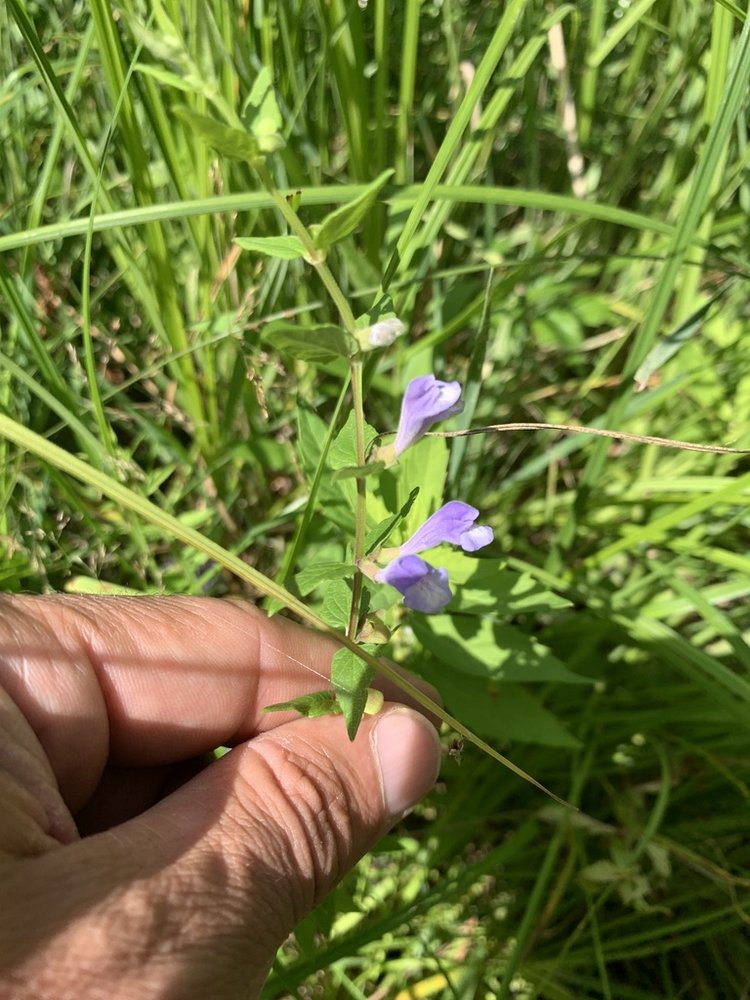
Marsh Skullcap (Scutellaria galericulata) is a native perennial of the mint family with pairs of blue to violet flowers, each with a hooded upper lip and a white throat, in the leaf joints from June into August. It grows on wet ground along streams, in wet meadows and in creek-bottom wetlands, and in the Black Hills its herbarium specimens come from Pennington, Custer, Lawrence and Fall River counties and Crook County, Wyoming.
Free photos from other sources
| Family | Lamiaceae · Mint |
|---|---|
| Status | Native perennial |
| Blooms | June into August |
| Height | 30–75 cm (12–30 in) |
| Where | Wet meadows, stream banks, shores, swamps and creek-bottom wetlands |
| Also called | Common Skullcap |
| Synonym | Scutellaria epilobiifolia |
| Traditional use | Moerman's database records that the Delaware used the tops of the plant as a laxative and stomach stimulant (Tantaquidgeon 1942, 1972) and that the Ojibwa used the plant for heart trouble (Smith 1932). |
Traditional use: first drafted by Google AI, then checked against the sources on this page.
Roots, seeds & germination
Seed: The fruit is a spherical cluster of 4 brown nutlets that forms inside the persistent calyx (Minnesota Wildflowers).
How do you identify Marsh Skullcap?
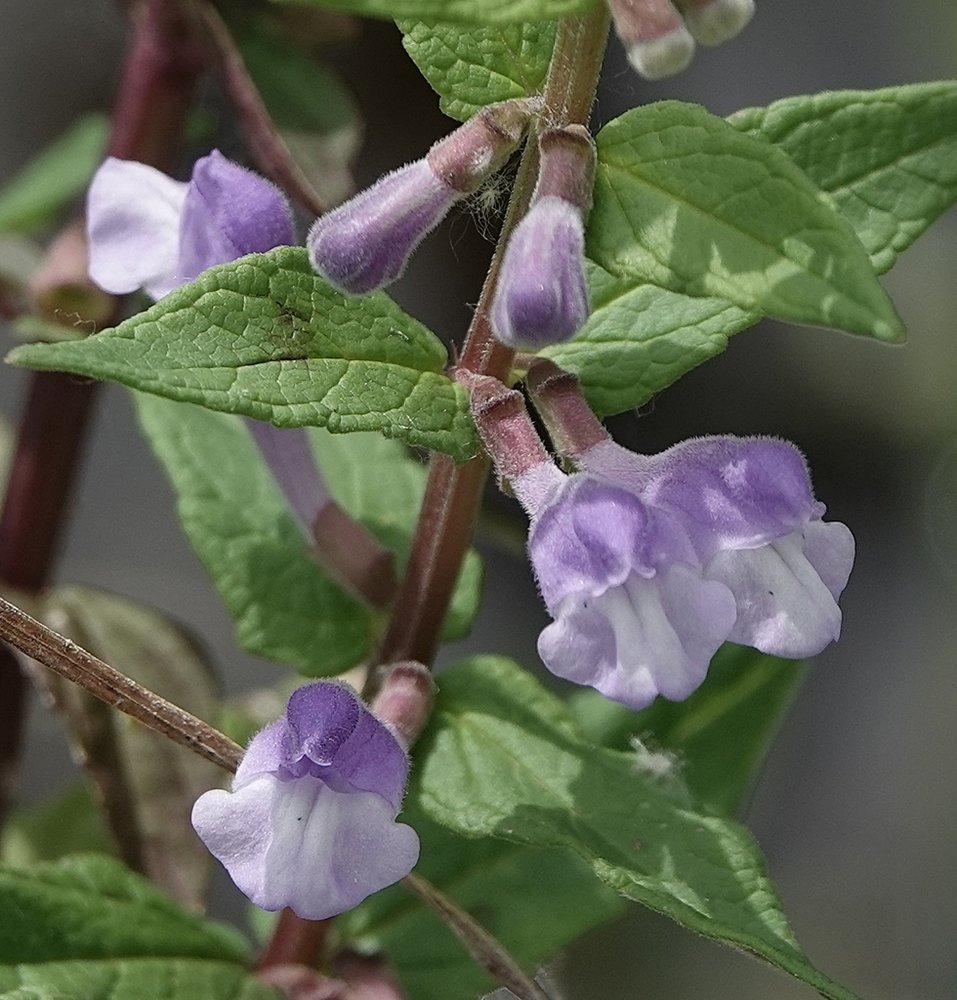
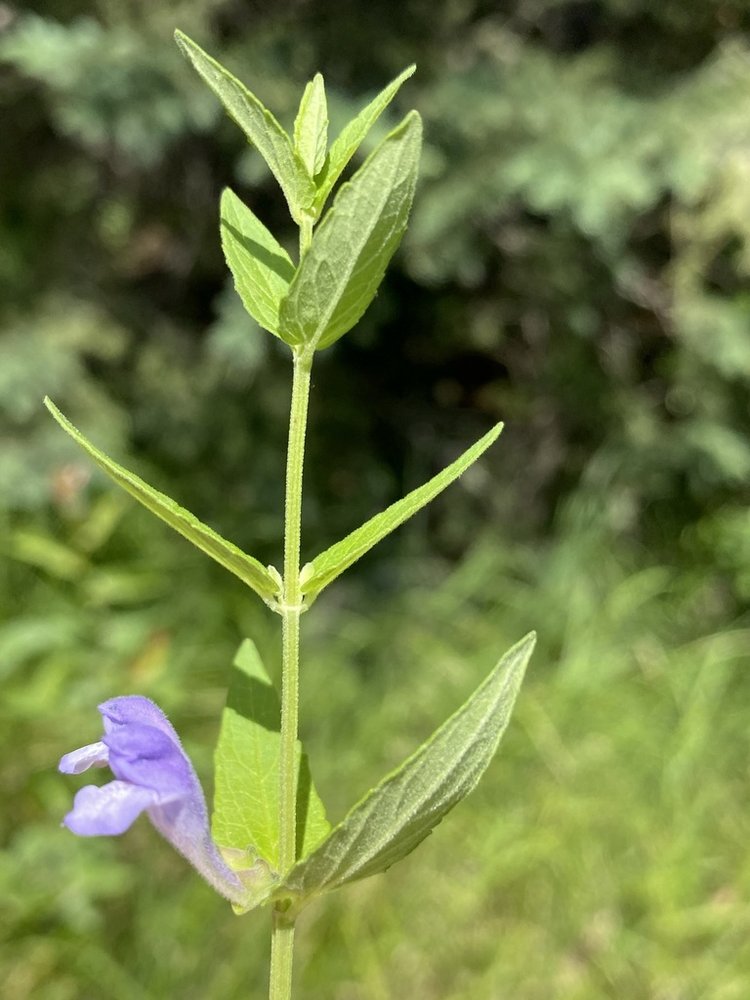
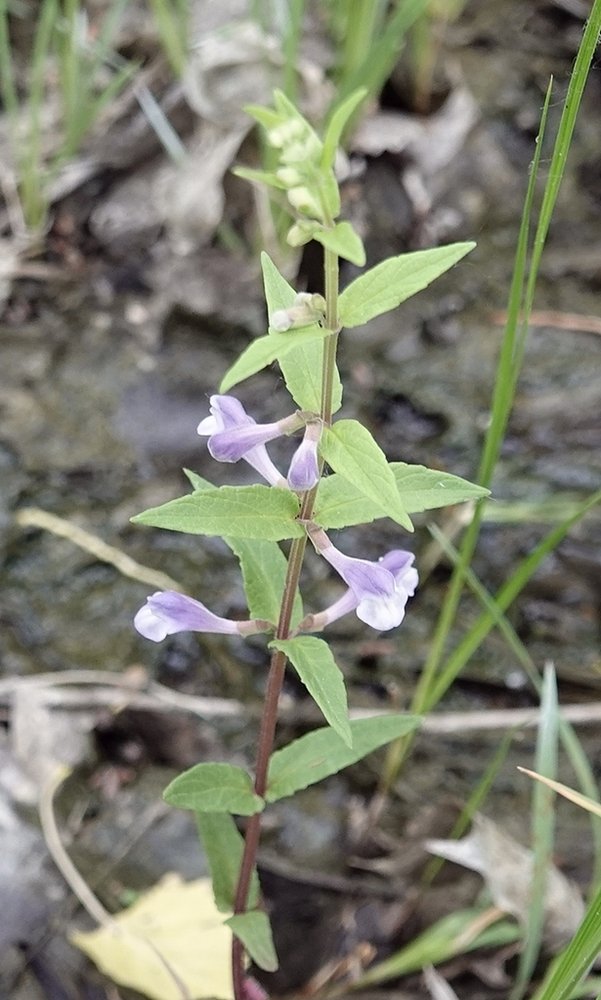
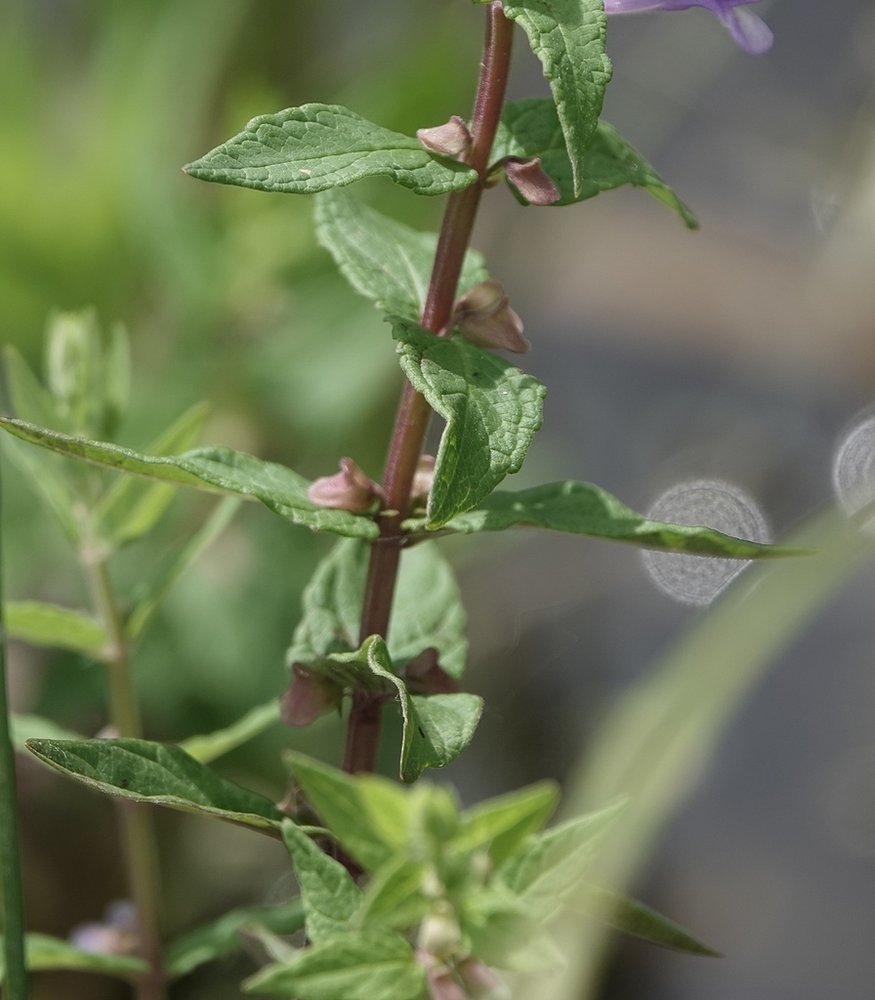
Look for a square, branching stem 30–75 cm (12–30 in) tall with fine rough hairs on its angles, and opposite leaves 2–6 cm (¾–2¼ in) long, lance-shaped to oblong, with rounded or blunt teeth and little or no leaf stalk. The flowers are tubular and irregular, 1–2 cm (½–¾ in) long, blue to violet and hairy, borne in pairs from opposite leaf joints just below the stem tip. The upper lip forms a rounded hood over the mouth, and the broad, wavy lower lip is blue-dotted against a white throat. The fruit is a round cluster of 4 brown nutlets inside the persistent calyx (the green cup under the flower). Minnesota Wildflowers separates it from Mad-dog Skullcap (Scutellaria lateriflora), which grows in the same wet places there, by flowers about half the size in racemes without the blue-spotted lower lip and by broader leaves. GBIF holds only three specimens of Mad-dog Skullcap from the Hills counties, collected in 1914, 1925 and 1965.
When does it bloom?
June into August.
Where does it grow?
Wet ground along streams and around creek-bottom wetlands, meadows and lake shores. Herbarium labels from 1892 to 2010 record it on a rocky, boulder-strewn creek bottom under spruce, in a mossy opening along a creek, on saturated organic soil on a sedge floodplain, in a riparian sedge wetland, in a stream bed, on stream banks in pine woods and shaded floodplains, on a rocky lake shore, in a moist prairie swale and rooted in water in a marshy area. The specimens come from Pennington, Custer, Lawrence and Fall River counties, South Dakota, and Crook County, Wyoming.
Other mints in this guide
Sources: Minnesota Wildflowers: Scutellaria galericulata (Marsh Skullcap); Lady Bird Johnson Wildflower Center: Scutellaria galericulata (SCGA); USDA PLANTS Database: Scutellaria galericulata (SCGA); Native American Ethnobotany Database (BRIT): Scutellaria galericulata; Native American Ethnobotany Database (BRIT): Scutellaria lateriflora (checked, not printed); GBIF specimen 2562611533 (Pennington County, SD, 2009; rocky creek bottom, Black Hills National Forest); GBIF specimen 2512288573 (Lawrence County, SD, 2009; riparian sedge wetland); GBIF specimen 5103617827 (Custer County, SD, 1972; stream bed); GBIF specimen 2512288754 (Crook County, WY; bank of a creek); GBIF specimen 5895766871 (Custer County, SD, 1892; altitude 5500 feet); GBIF occurrence search: Scutellaria galericulata, preserved specimens, South Dakota and Wyoming; GBIF occurrence search: Scutellaria lateriflora, preserved specimens, South Dakota.