Manyflower Stickseed Hackelia floribunda
Also called Many-flowered Stickseed, Showy Stickseed, Large-flowered Stickseed
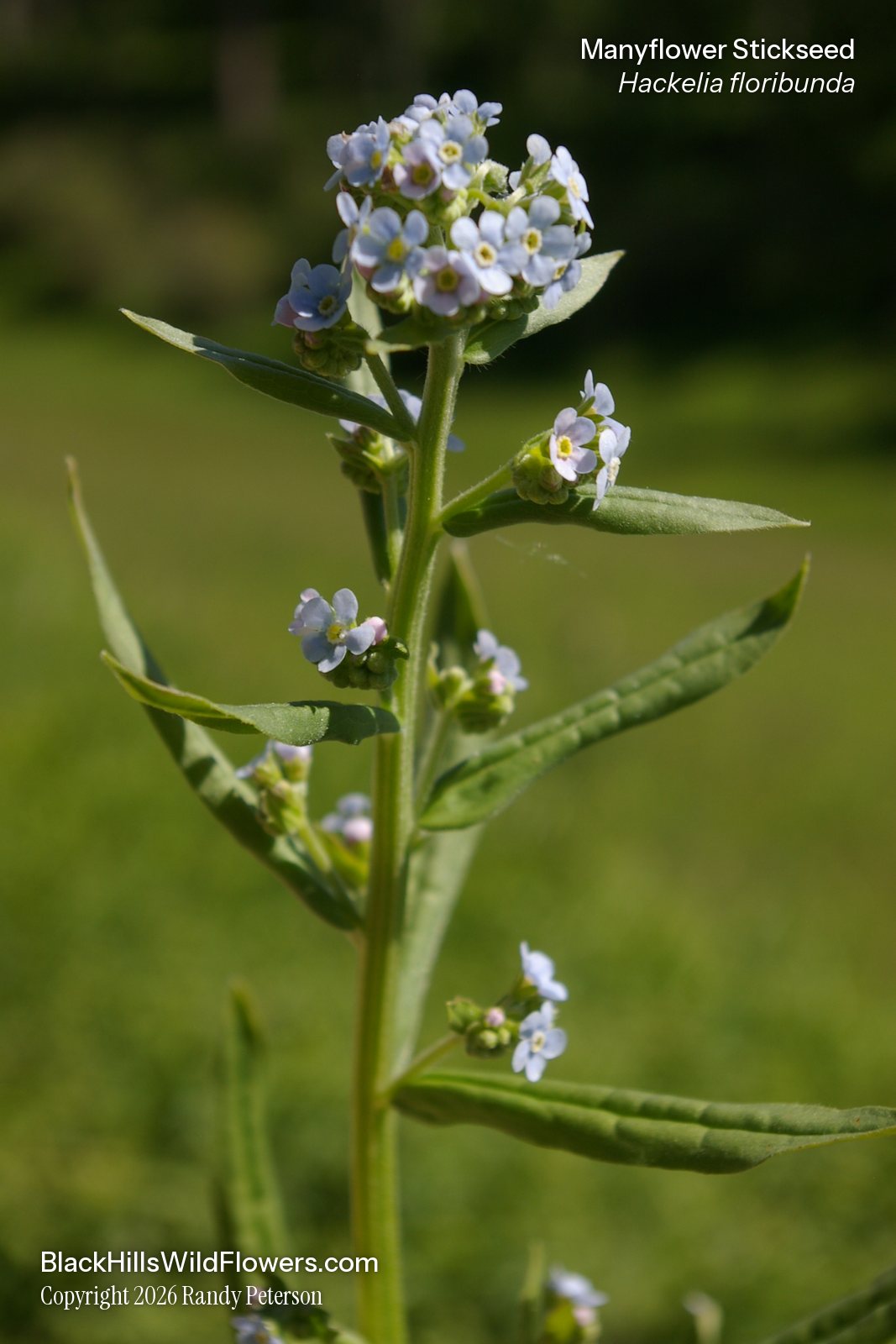
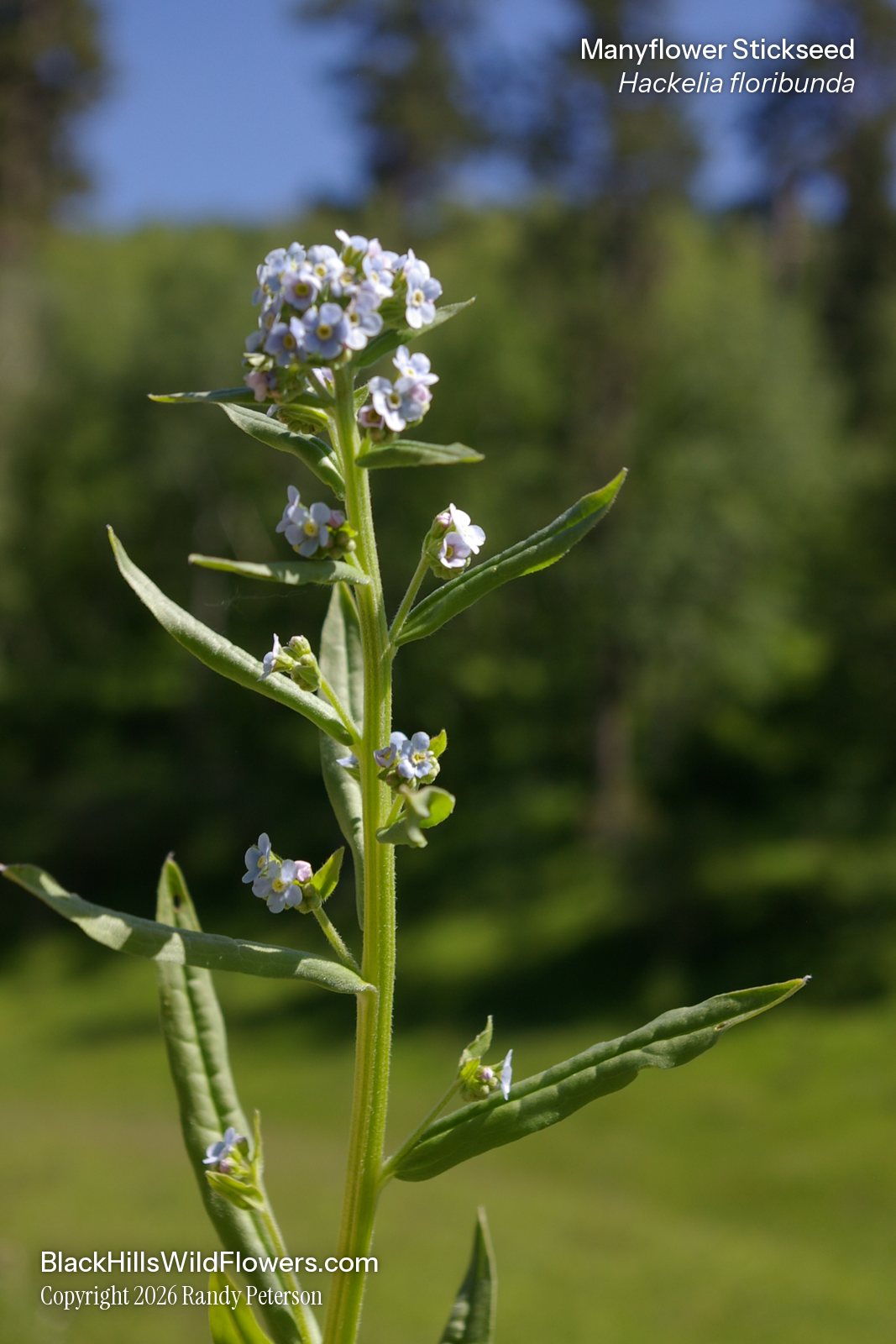
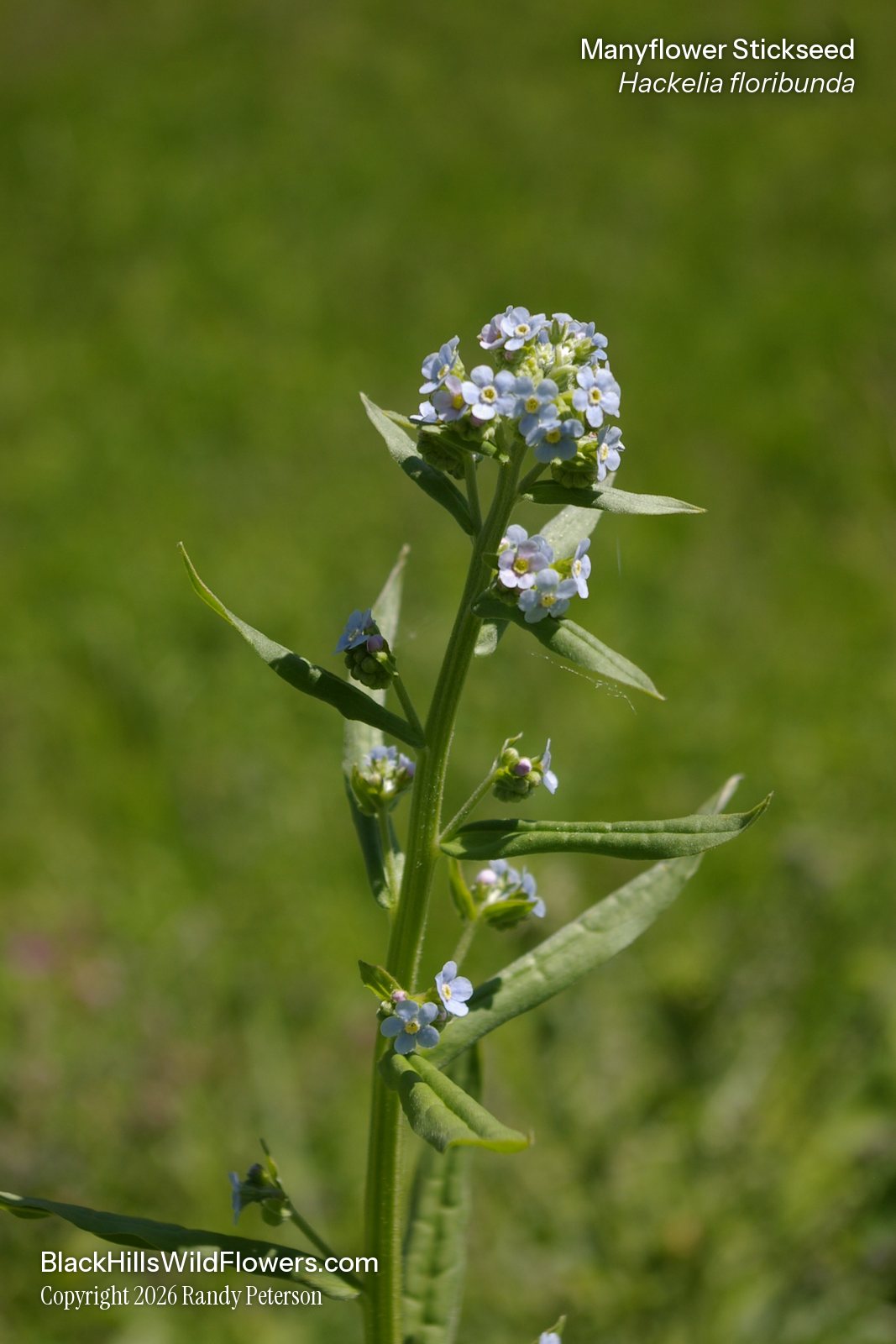
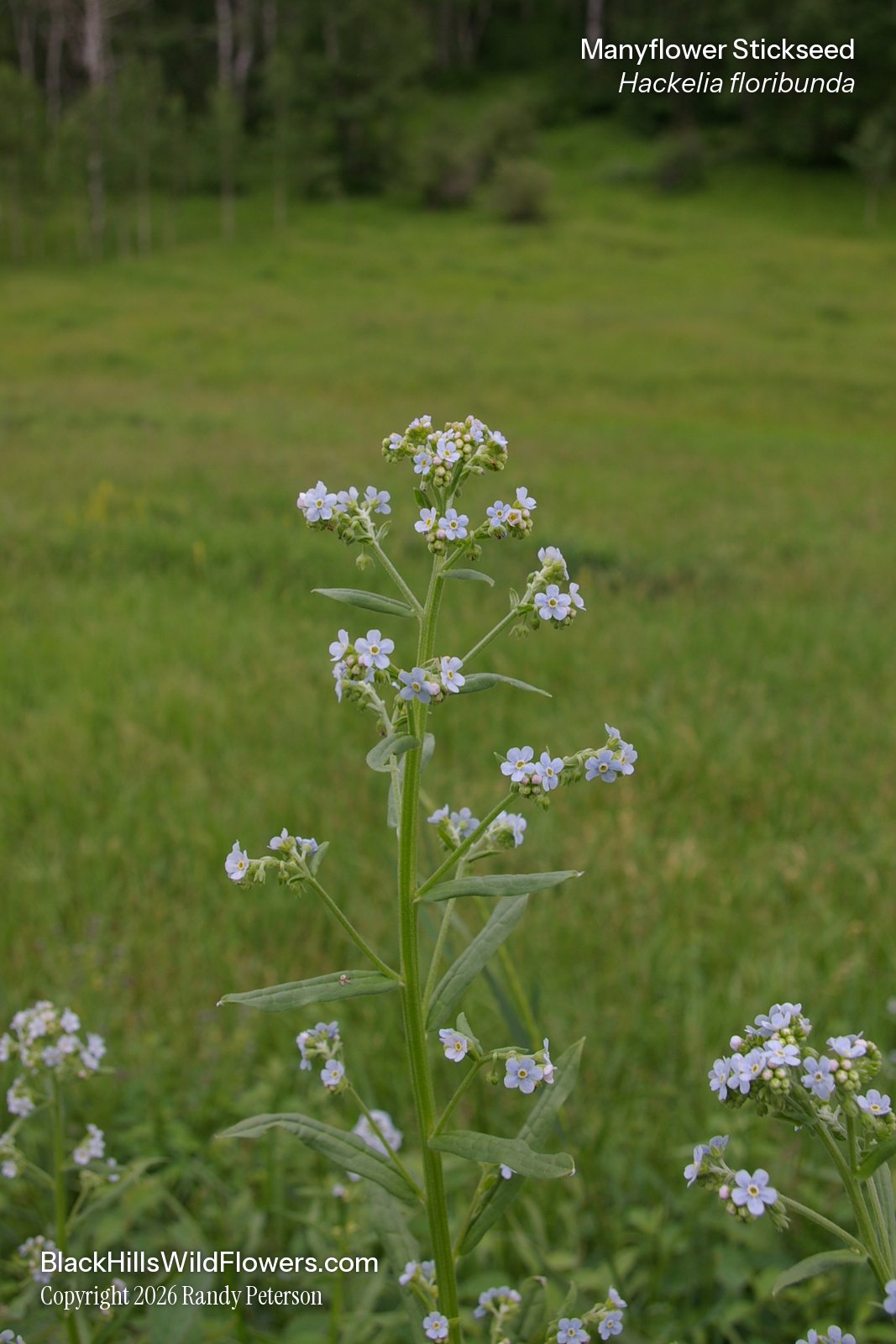
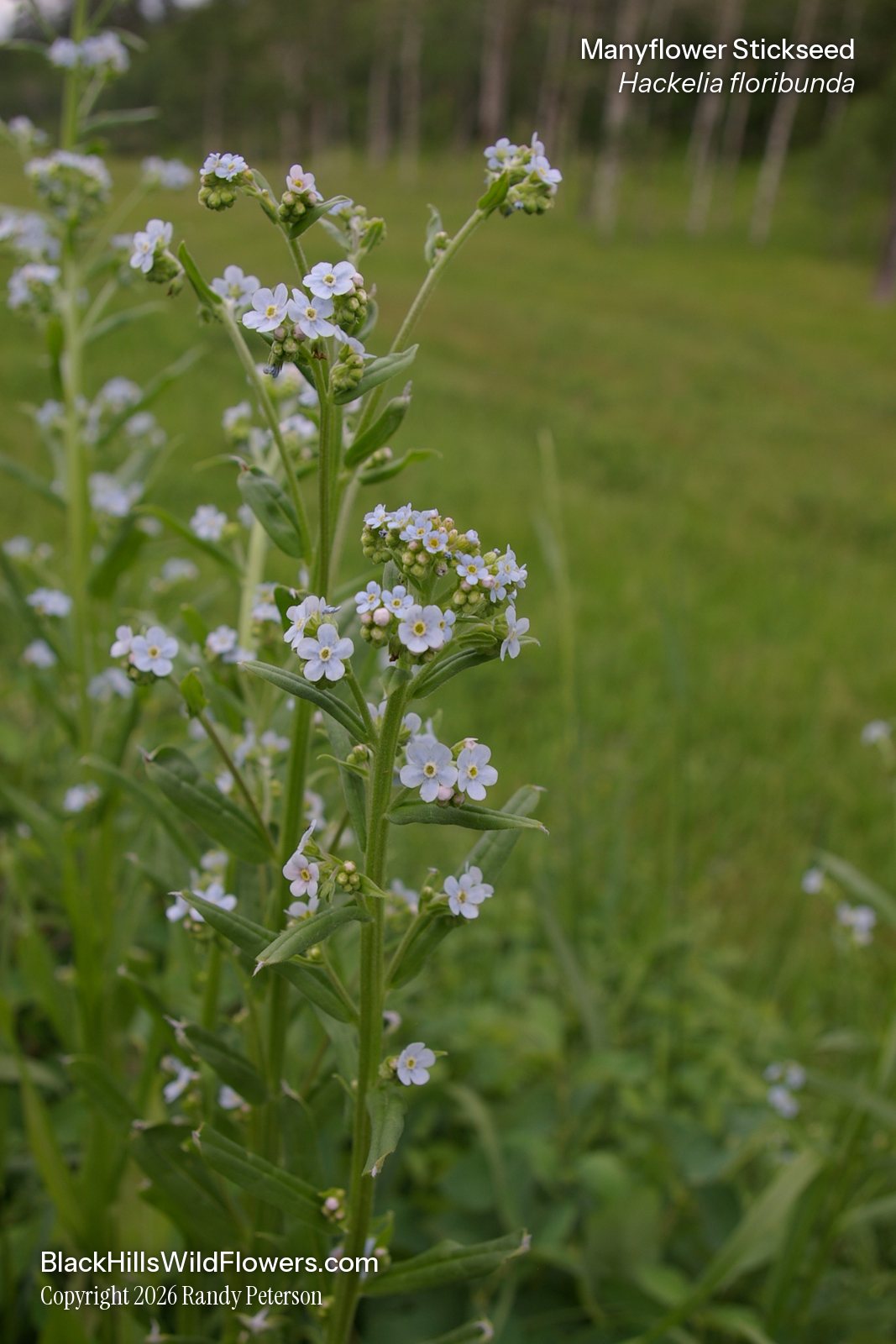
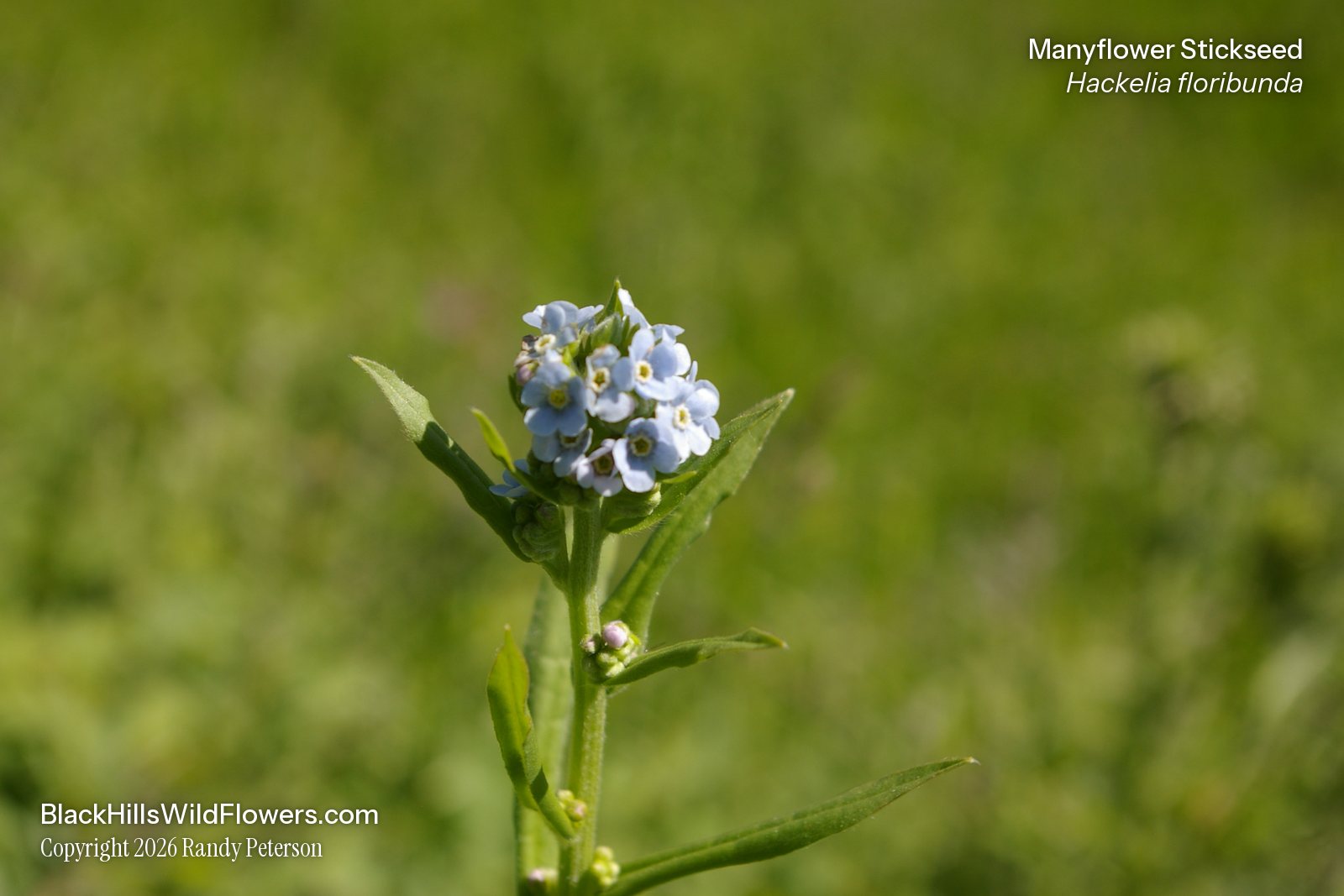
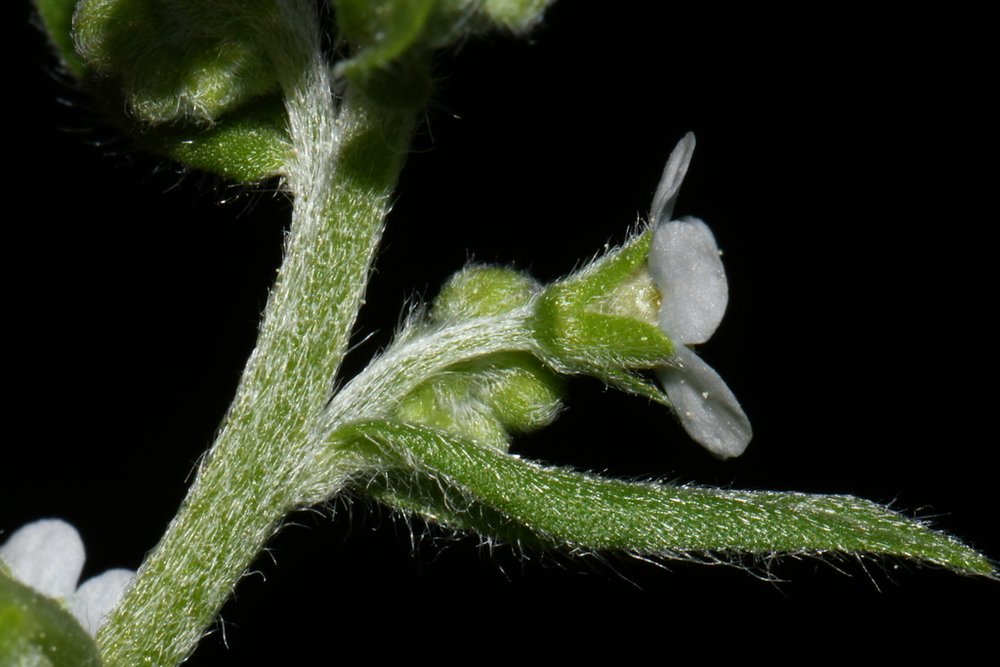
Manyflower Stickseed (Hackelia floribunda) is a native biennial or short-lived perennial, 30–120 cm (1–4 ft) tall, with narrow, hairy leaves and many small clusters of blue, yellow-eyed flowers that look like forget-me-nots, blooming in June and July. In the Black Hills it grows in moist meadows, along creeks, in wet canyons and in open pine, aspen and spruce woods, and its small nutlets are edged with prickles. Photographed in the Black Hills.
Free photos from other sources
| Family | Boraginaceae · Borage |
|---|---|
| Status | Native biennial or short-lived perennial |
| Blooms | June and July, going by Black Hills herbarium specimens collected in flower; the nutlets ripen into August |
| Height | 30–120 cm (12–47 in) |
| Where | Moist meadows, creek banks, wet canyons, open pine, aspen and spruce woods |
| Also called | Many-flowered Stickseed, Showy Stickseed, Large-flowered Stickseed |
| Synonym | Hackelia leptophylla, Lappula floribunda |
Roots, seeds & germination
Root: Grows from a simple caudex, a short, thickened base at ground level.
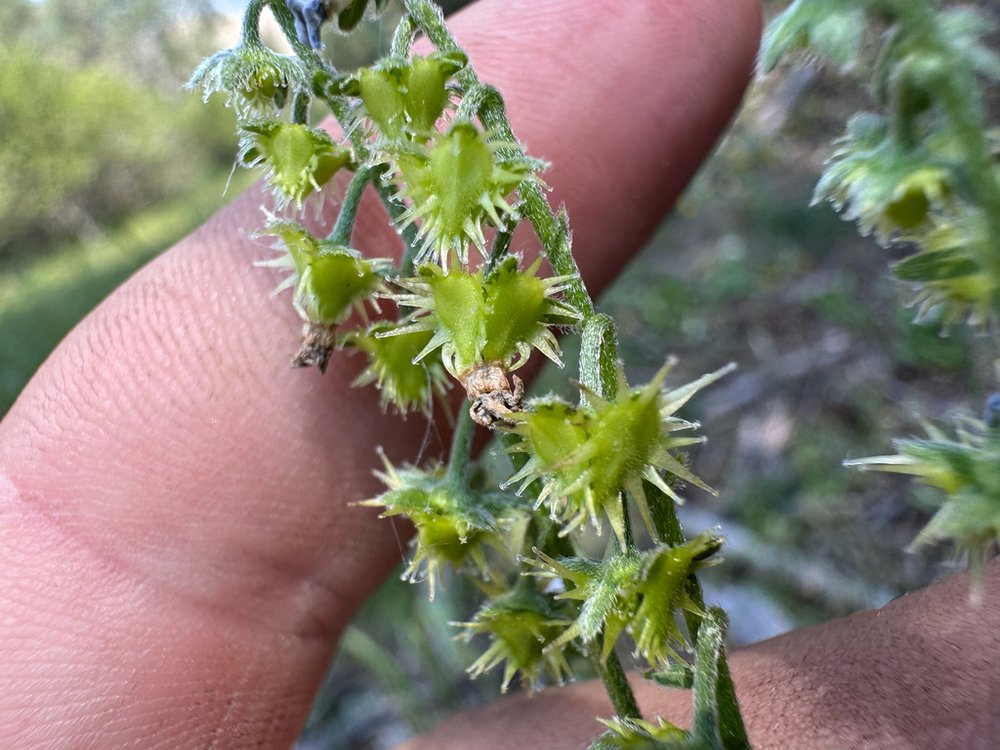
Seed: Each flower makes 4 nutlets 3–4 mm (about ⅛ in) long. Each nutlet is edged with distinct prickles that are free to the base, and its back is mostly unarmed, with tiny bumps or hairs.
How do you identify Manyflower Stickseed?
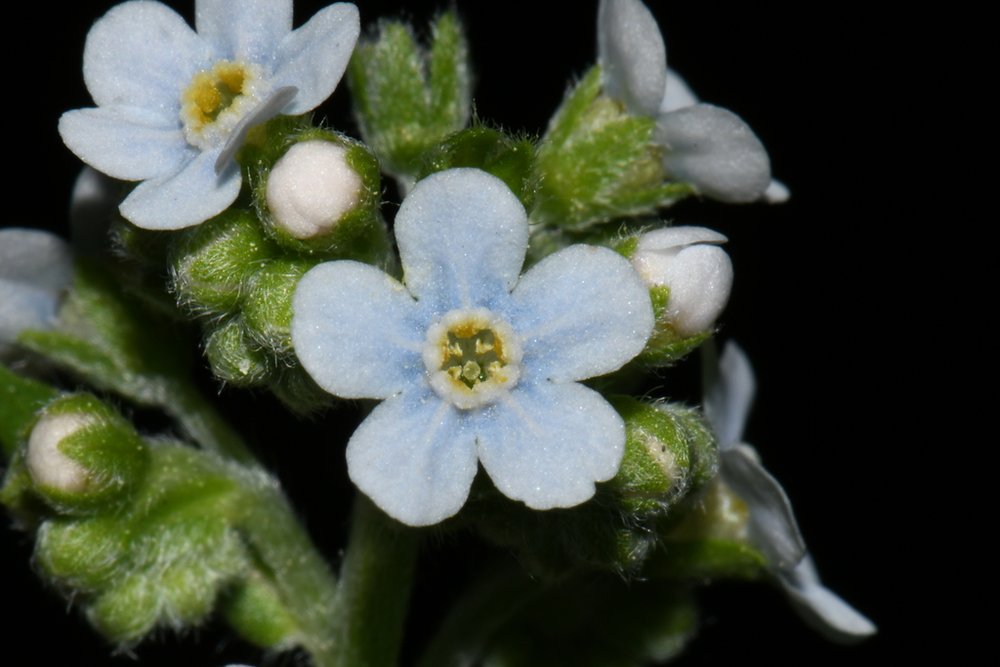
Look for one or a few upright stems 30–120 cm (12–47 in) tall, with spreading hairs low on the stem and flat-lying hairs higher up. The leaves are narrow and widest above the middle, 4–20 cm (1½–8 in) long; the basal leaves have usually withered by the time it flowers. The flowers are blue, 4–7 mm (about ¼ in) across, with a ring of yellow bumps at the throat, in many short, branched clusters whose tips are coiled. Each flower makes 4 nutlets 3–4 mm long, edged with a row of distinct prickles, their backs mostly smooth; those prickly nutlets are what tell a stickseed from a forget-me-not. Two other stickseeds are listed in the Hills: Nodding Stickseed (Hackelia deflexa) is a taprooted annual whose flowers are only 2–3 mm across, and Blue Stickseed (Hackelia micrantha), which the Park Service lists at Jewel Cave, is a perennial from a branched base with flowers 6–9 mm across and 4 to 8 smaller prickles on the back of each nutlet.
When does it bloom?
June and July, going by Black Hills herbarium specimens collected in flower; the nutlets ripen into August.
Where does it grow?
Moist meadows, creek banks and floodplains, wet canyons, thickets and draws, and open ponderosa pine, pine–aspen, bur oak and white spruce woods, including logged and roadside ground. Herbarium specimens collected from 1892 to 2018 come from Lawrence, Pennington and Custer counties in South Dakota and Crook and Weston counties in Wyoming.
Other flowers to compare
Borage family (Boraginaceae): 6 other plants in this guide
Sources: Montana Field Guide: Hackelia floribunda (Montana Natural Heritage Program; description from Lesica et al. 2012); Montana Field Guide: Northern Stickseed, Hackelia deflexa; Montana Field Guide: Blue Stickseed, Hackelia micrantha; Minnesota Wildflowers: Hackelia deflexa (Nodding Stickseed); University of Washington ESRM 412: Plant Propagation Protocol for Hackelia floribunda; USDA PLANTS Database: Hackelia floribunda, manyflower stickseed (HAFL2); ITIS: Hackelia floribunda (TSN 31927); NPSpecies checklist, Jewel Cave National Monument vascular plants; GBIF occurrence search: Hackelia floribunda, South Dakota and Wyoming herbarium specimens; GBIF occurrence search: Hackelia deflexa, South Dakota herbarium specimens; South Dakota Game, Fish and Parks: Rare Plants of South Dakota (checked; not listed); Black Hills National Forest Revised Forest Assessment: At-Risk Species, October 2023 (checked; not listed).