Lanceleaf Bluebells
Mertensia lanceolata
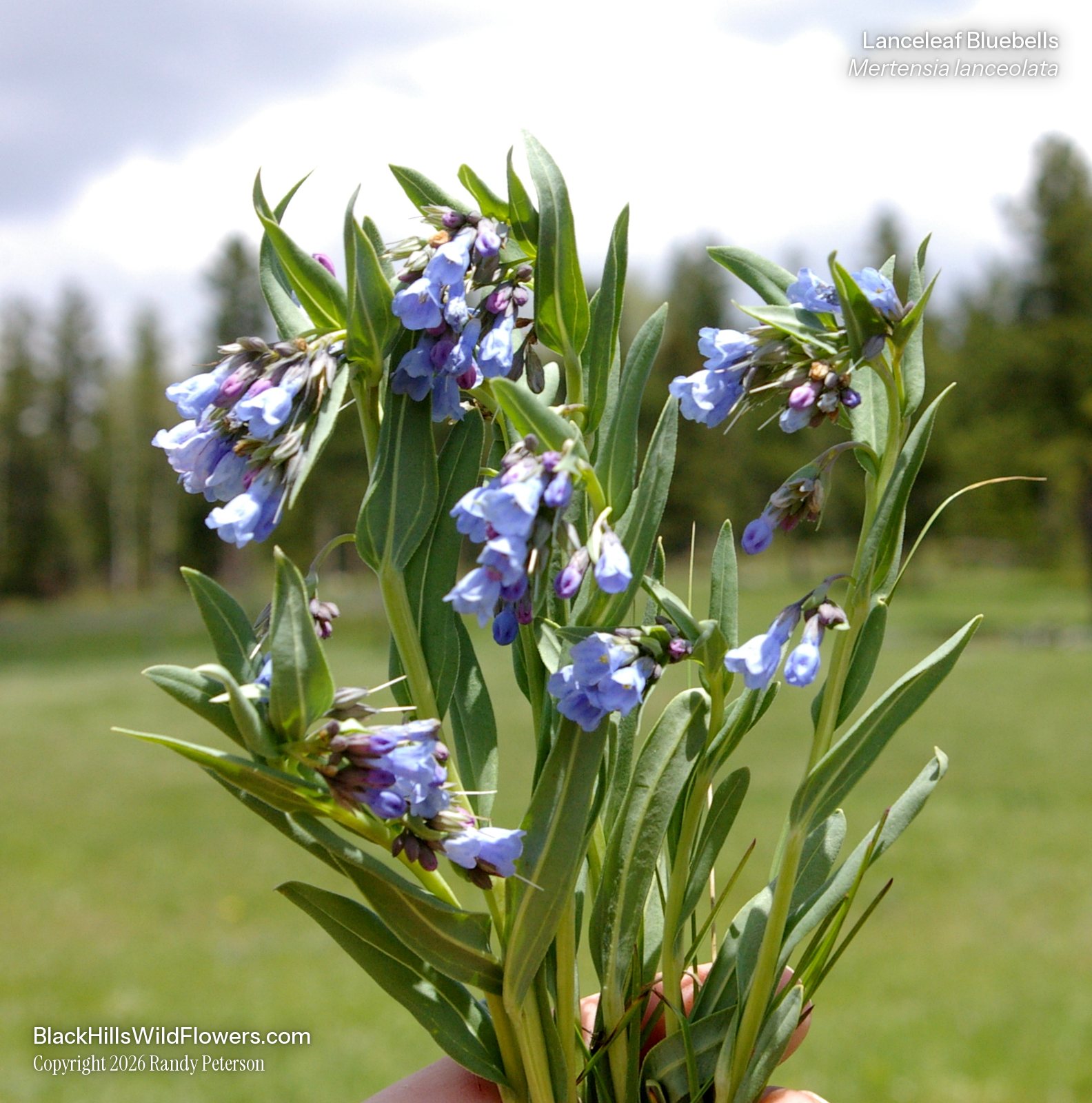
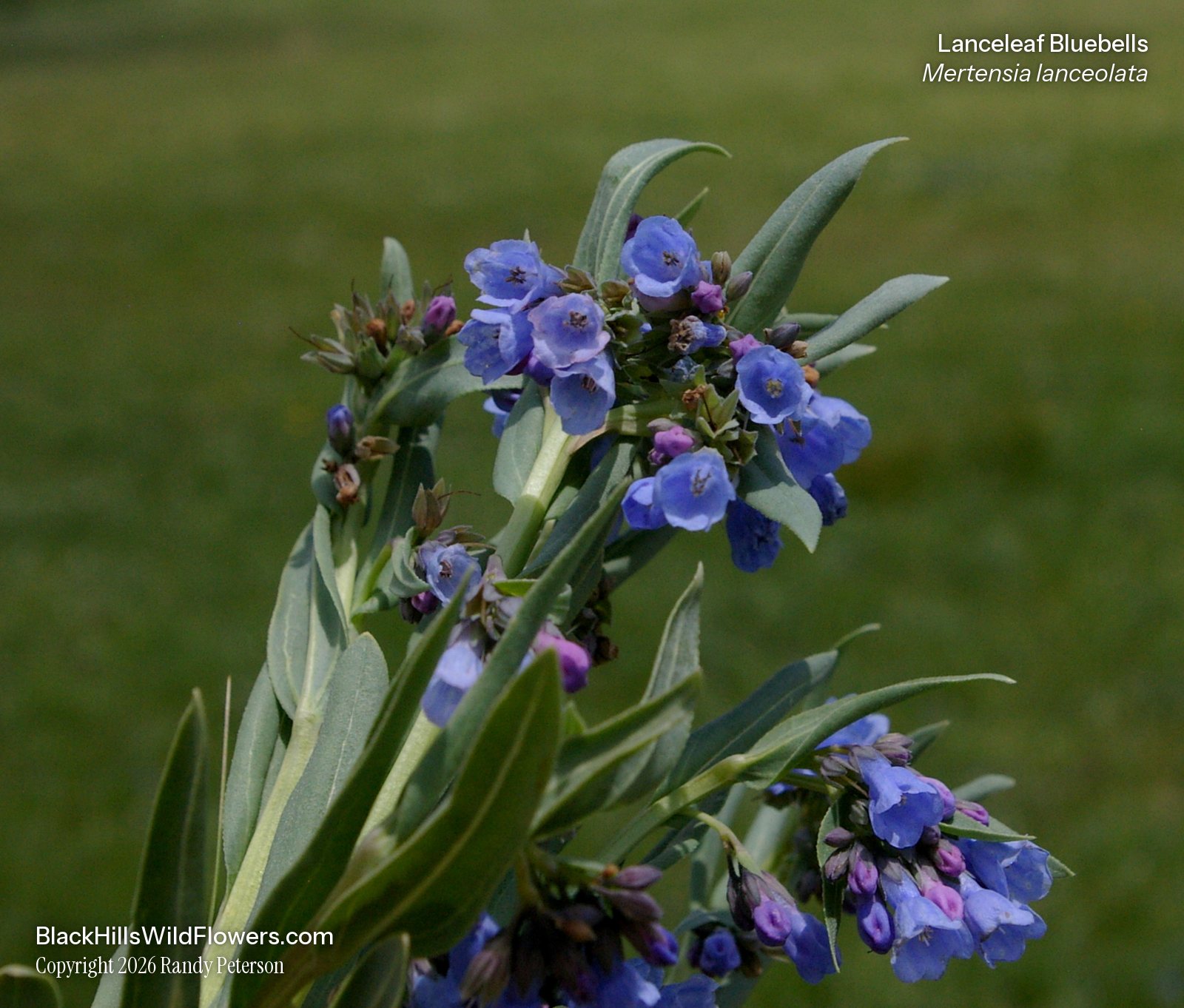
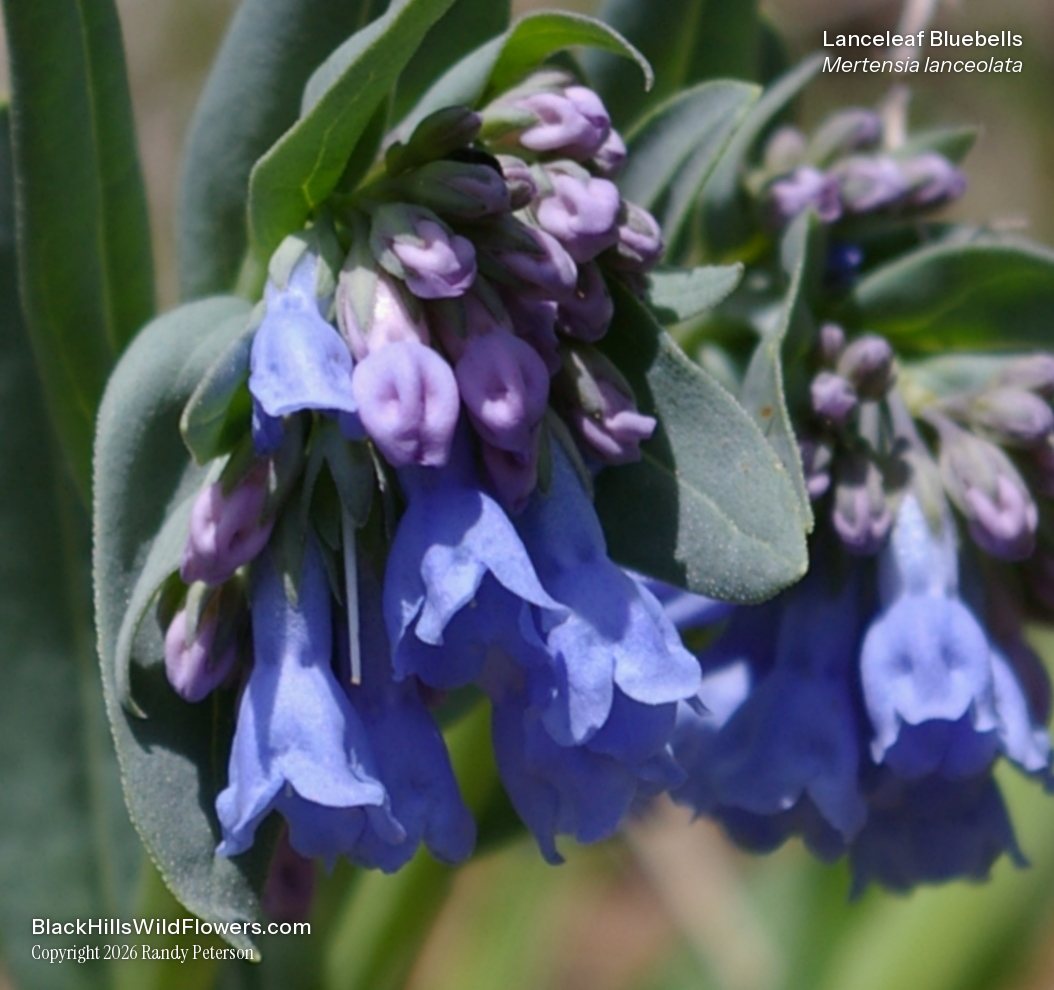
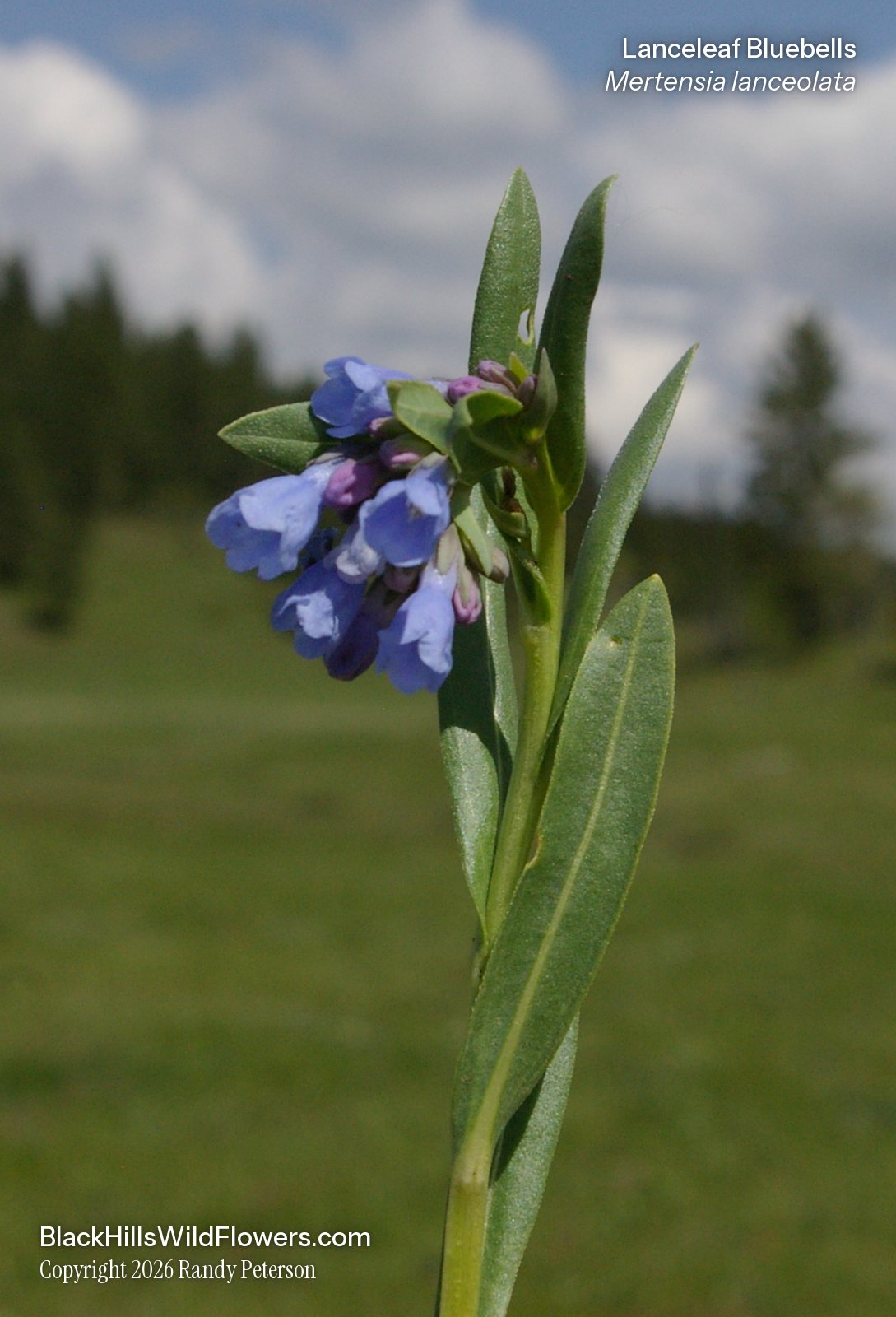
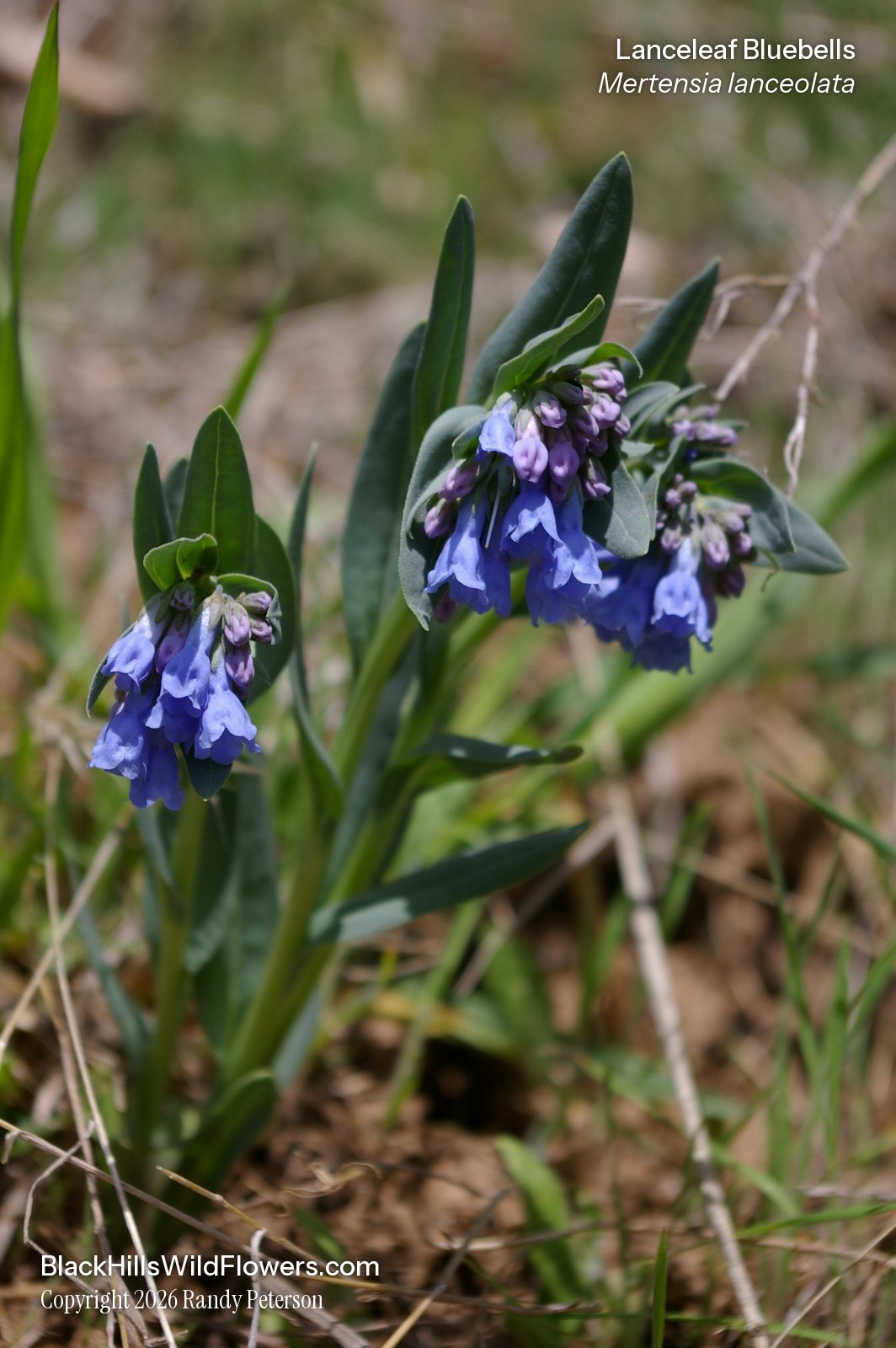
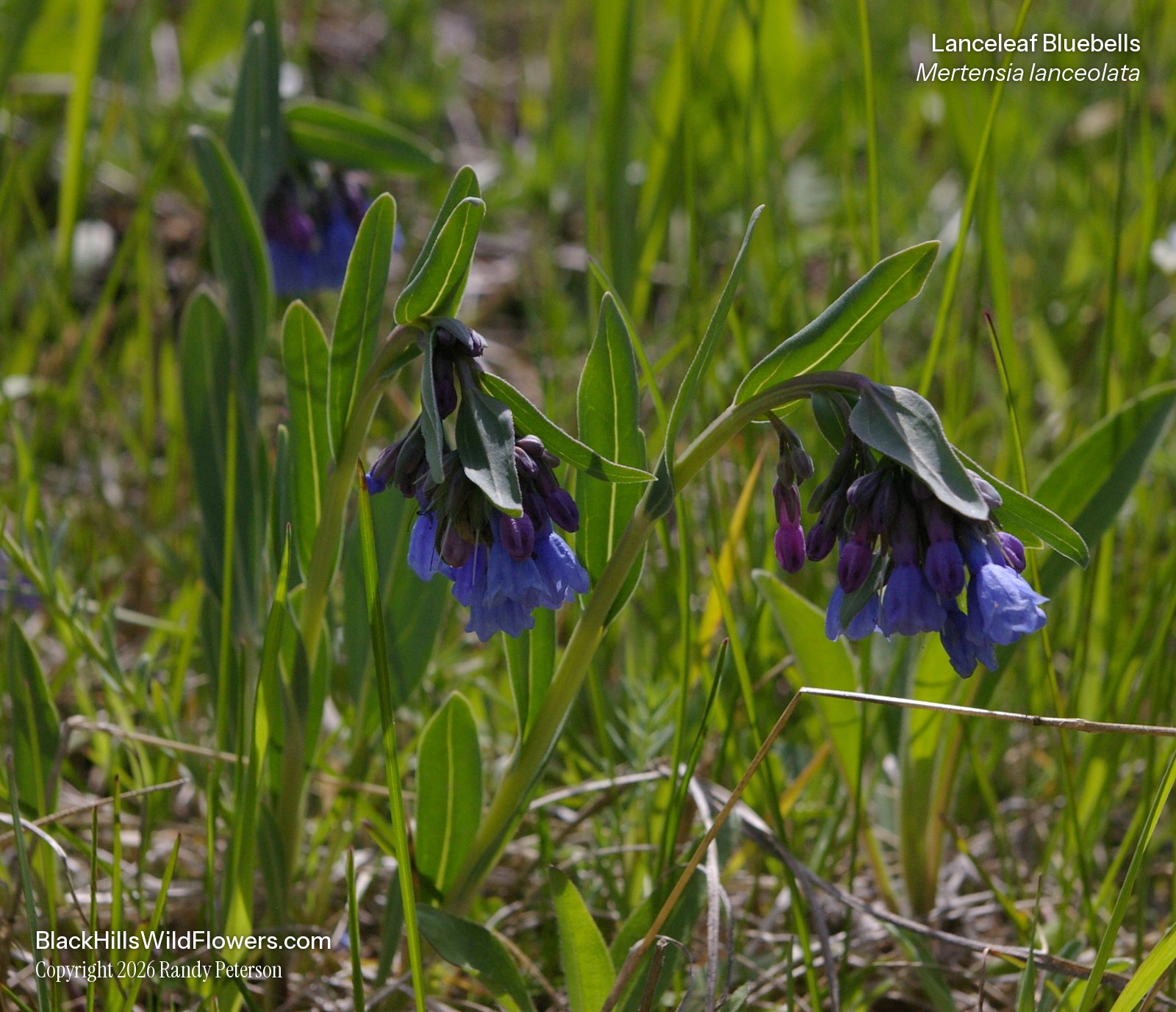
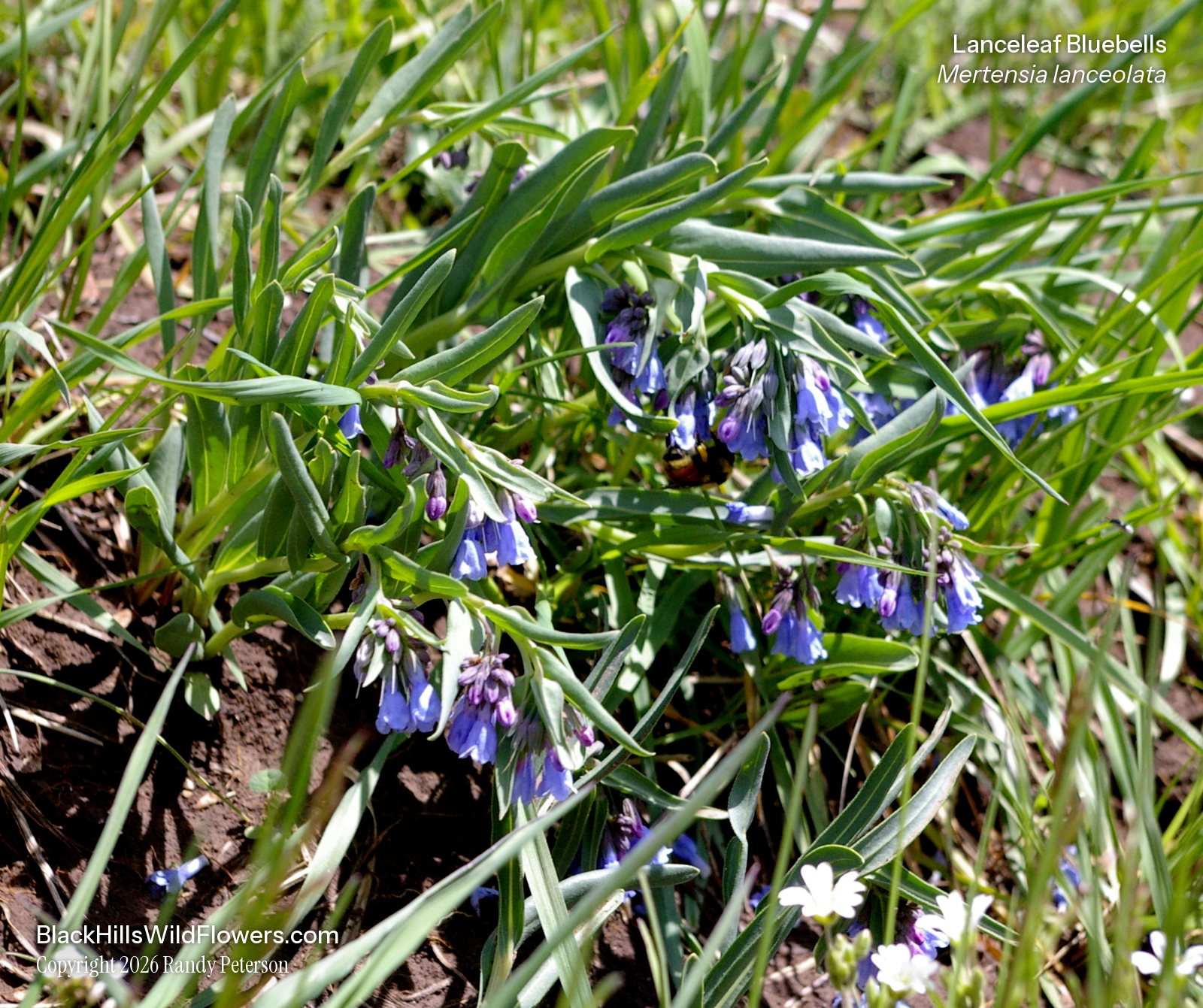
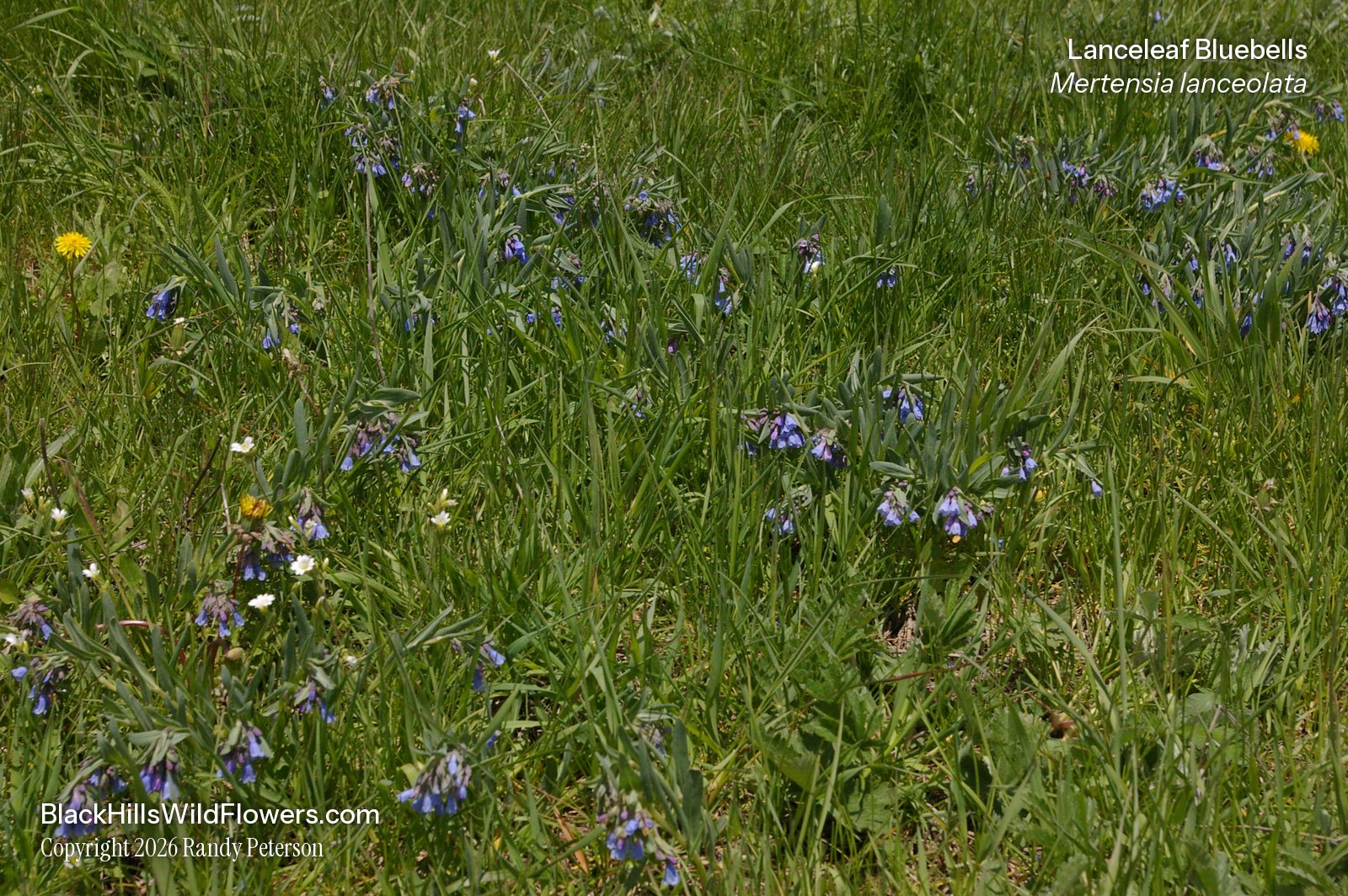
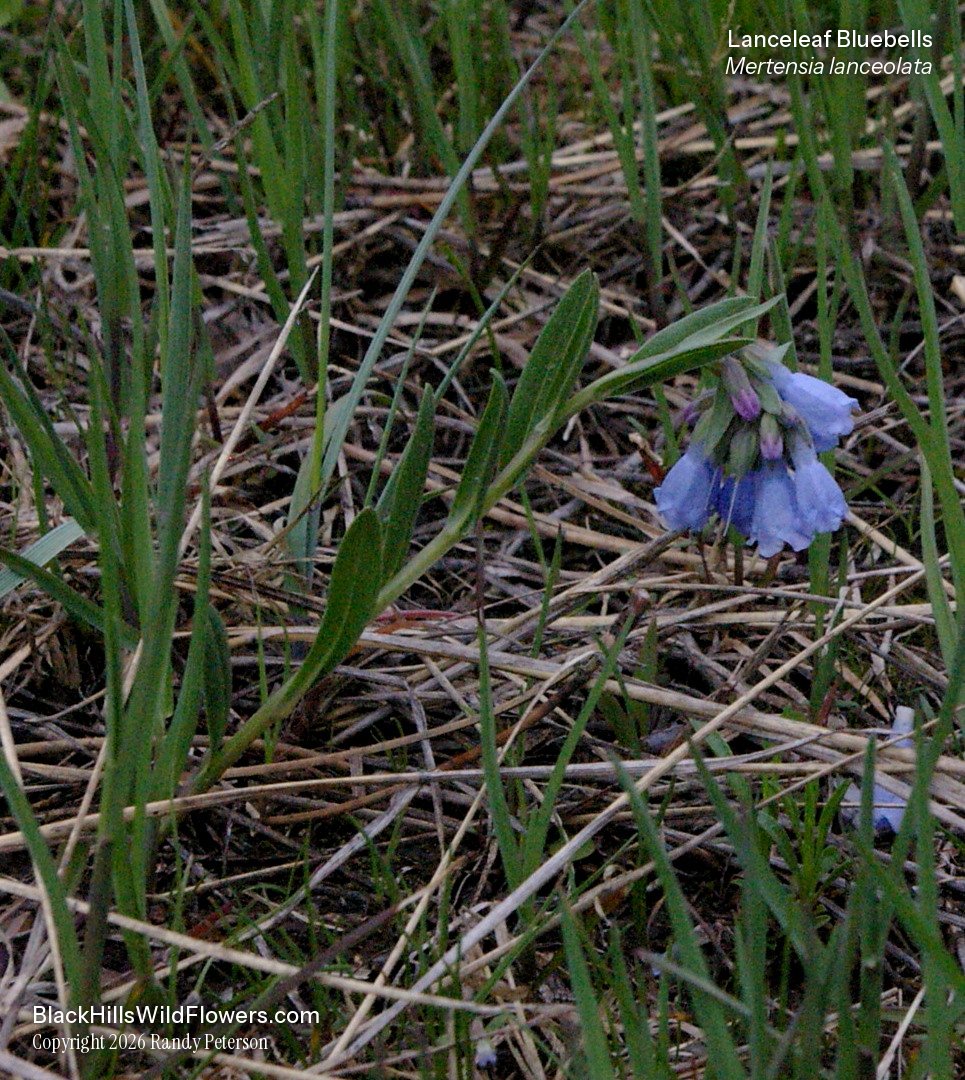
Lanceleaf Bluebells (Mertensia lanceolata) is a native perennial with clusters of drooping, tubular blue flowers that open from pink buds above lance-shaped leaves. It blooms in early spring, about April into May, in grasslands, open forests and rocky slopes from low to high elevations in the Black Hills. Photographed in the Black Hills.
| Family | Boraginaceae · Borage |
|---|---|
| Status | Native perennial |
| Blooms | Early spring, about April into May |
| Height | 10–40 cm (4–16 in) |
| Where | Grasslands, open forests and rocky slopes from low to high elevations |
| Also called | Prairie Bluebells, Narrowleaf Bluebells |
Roots, seeds & germination
Root: Grows from a branched caudex (a woody base at ground level).
Seed: Wrinkled nutlets about 3 mm long.
How do you identify Lanceleaf Bluebells?
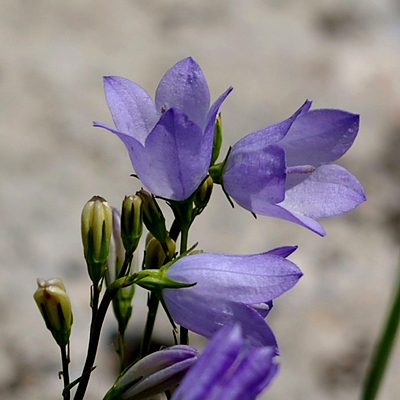
Look for hanging clusters of narrow blue bells, 9–14 mm long, with five spreading lobes and a hairy-edged calyx split about two-thirds of the way down. Leaves are lance-shaped to elliptic, grow both at the base and along the stem, and show little side-vein pattern. The species is highly variable. Harebell blooms later, from mid-summer to early fall.
When does it bloom?
Early spring, about April into May.
Where does it grow?
Grasslands, open forests and rocky slopes from low to high elevations in the Black Hills, including rocky limestone slopes. It is scattered on those slopes in spring.
Other flowers to compare
Sources: Black Hills National Forest: Black Hills Native Plants; National Park Service, Devils Tower National Monument: Native Plants; U.S. Forest Service, Celebrating Wildflowers: Hell Canyon; Montana Field Guide: Prairie Bluebells; Native Plant Society of New Mexico, Wildflowers of New Mexico: Mertensia lanceolata; Al Schneider's Rocky Mountains Plant Descriptions: Mertensia lanceolata; A Survey of the Vegetation of Jewel Cave National Monument, with vascular plant checklist (Marriott and Hartman, 1986).