Harebell
Campanula rotundifolia
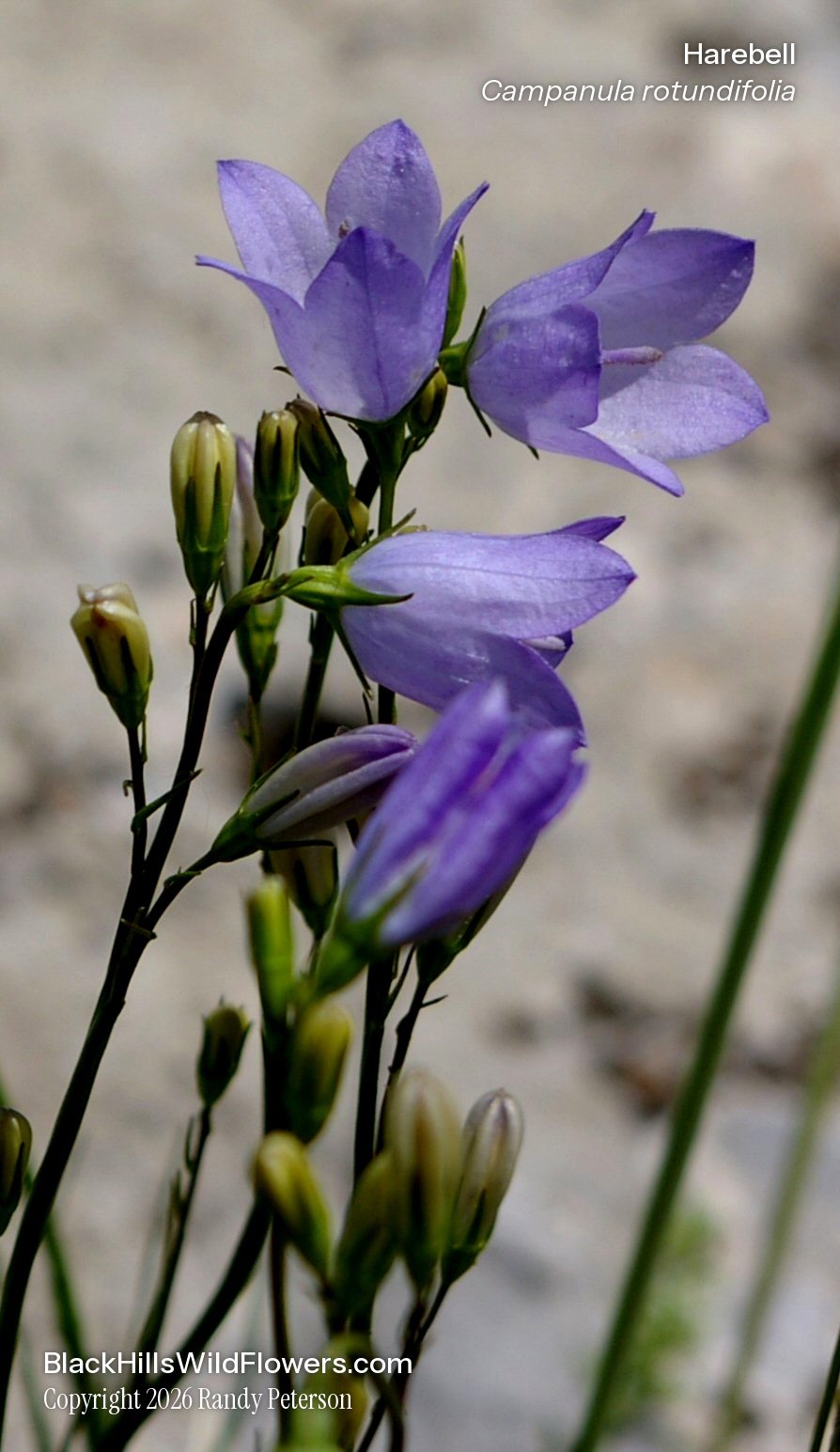
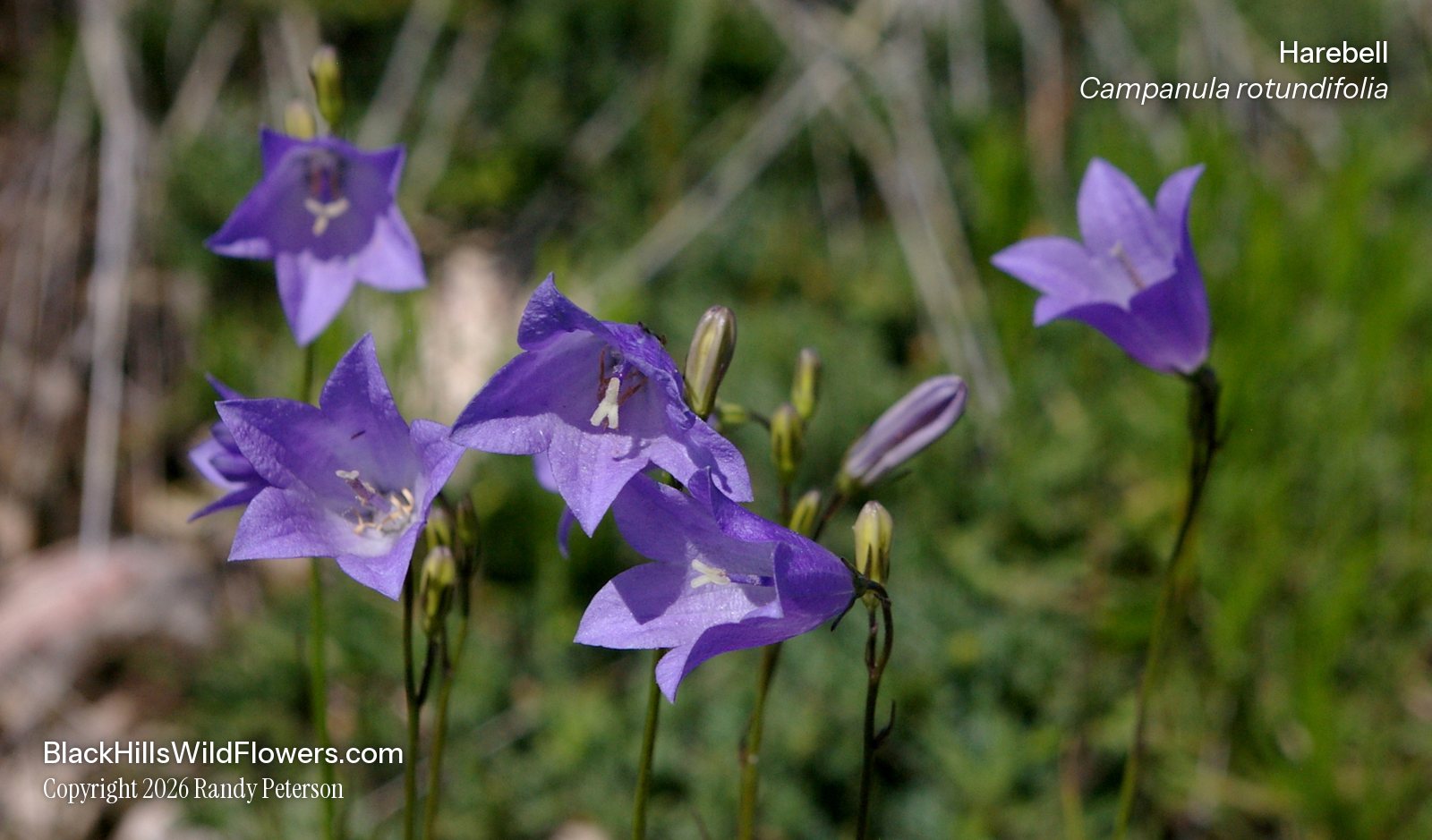
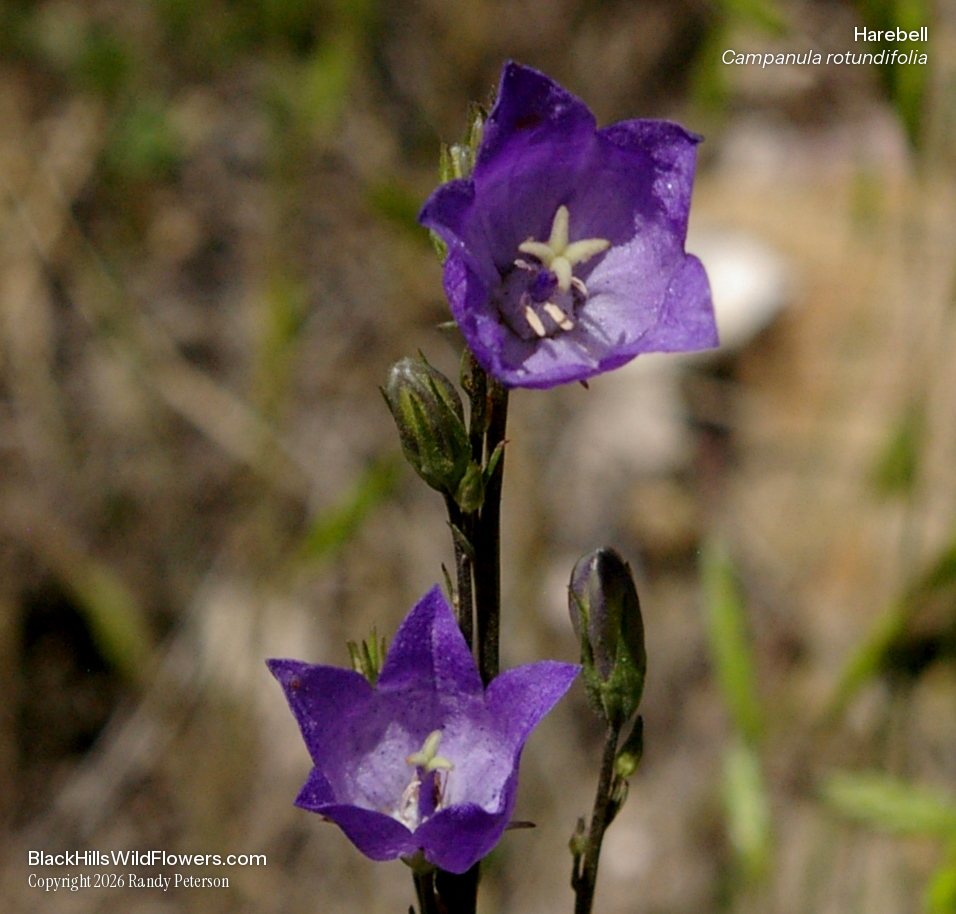
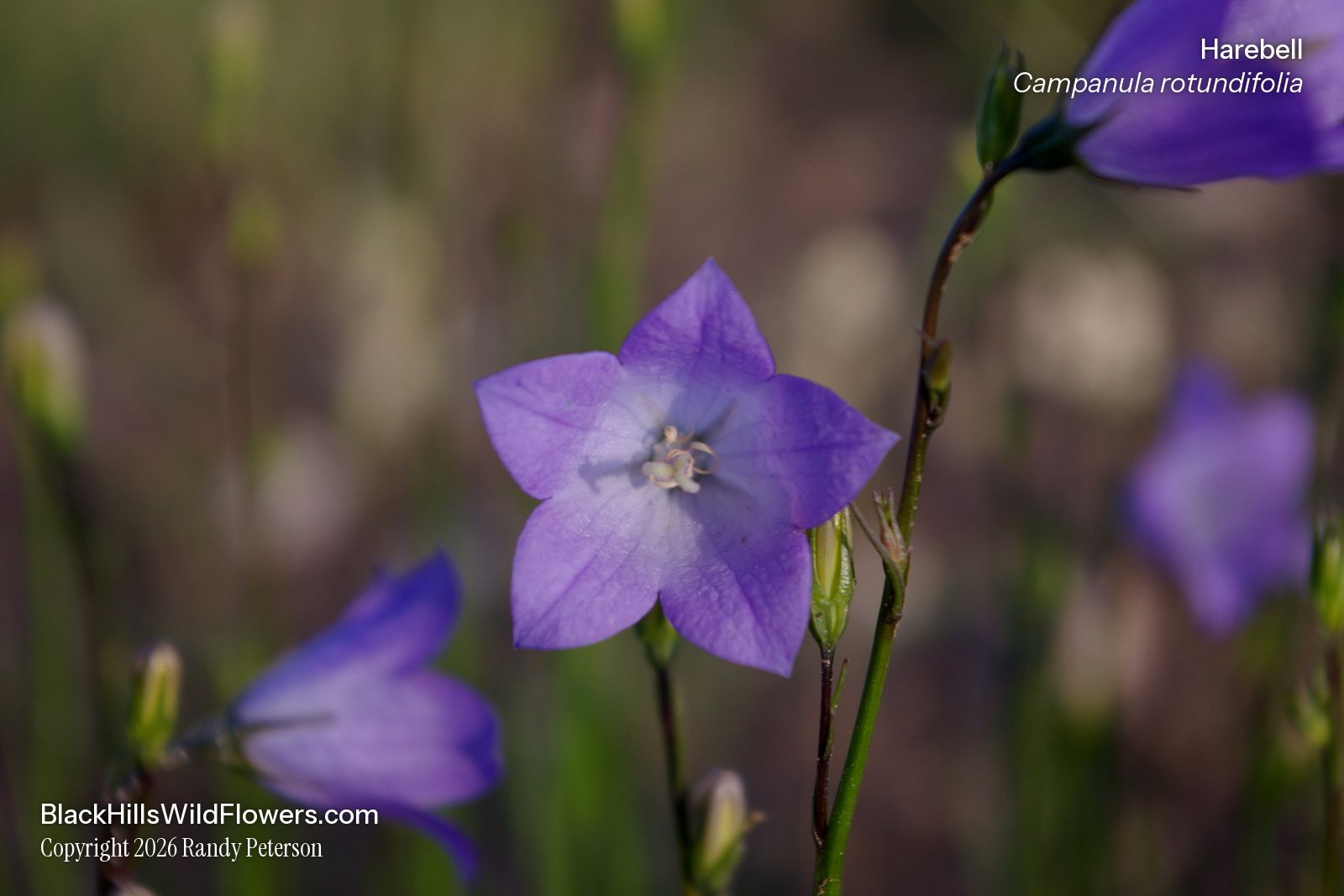
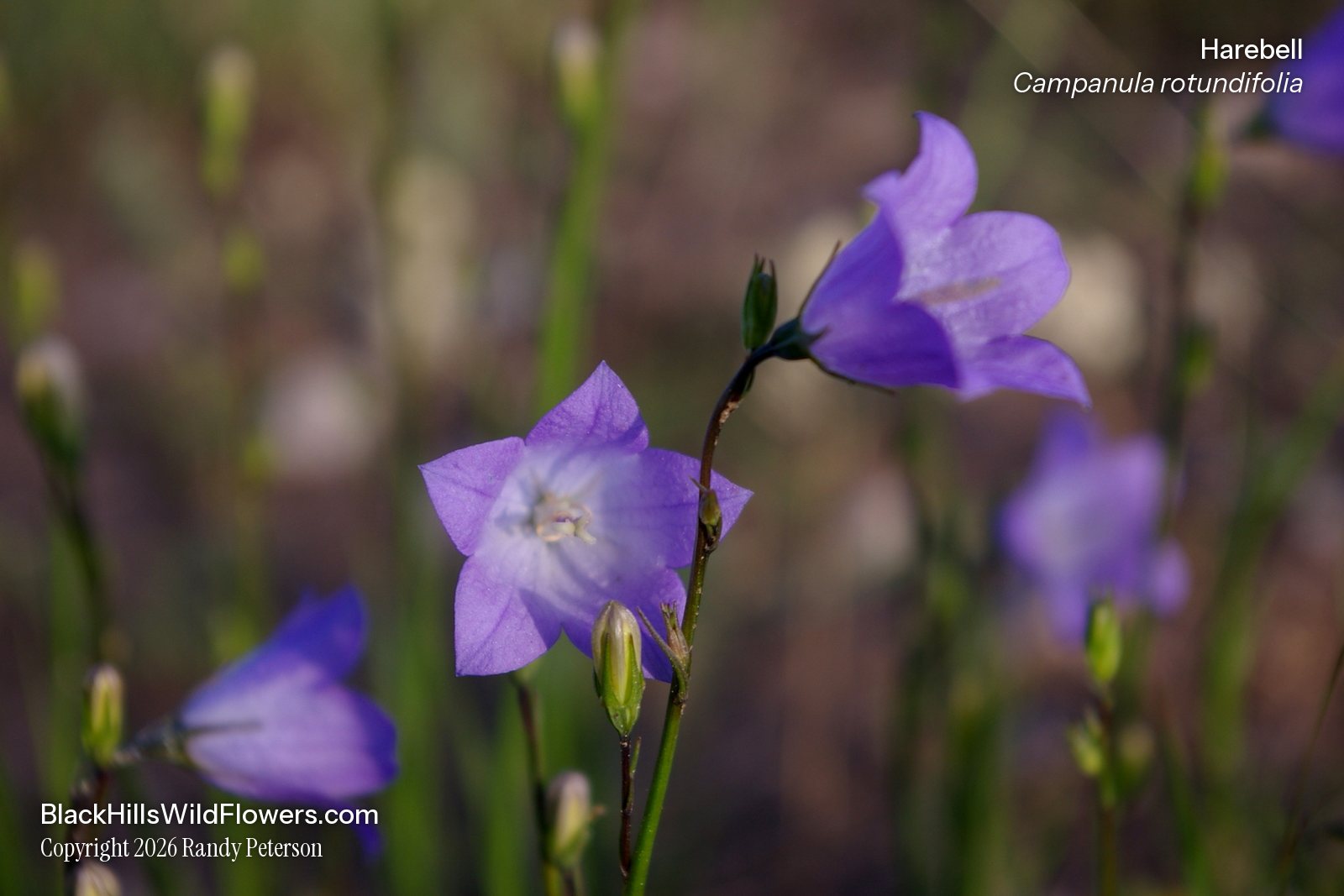
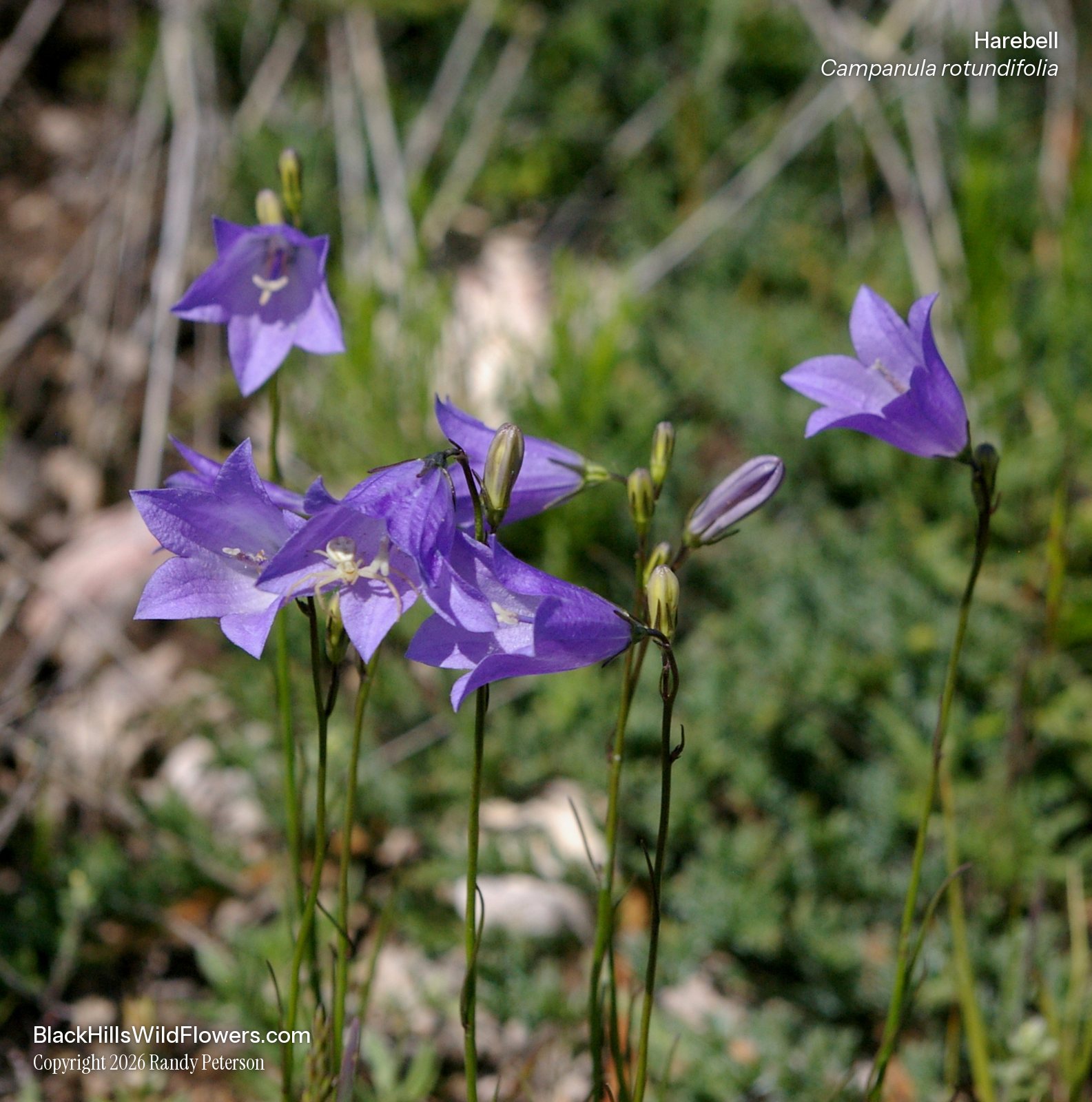
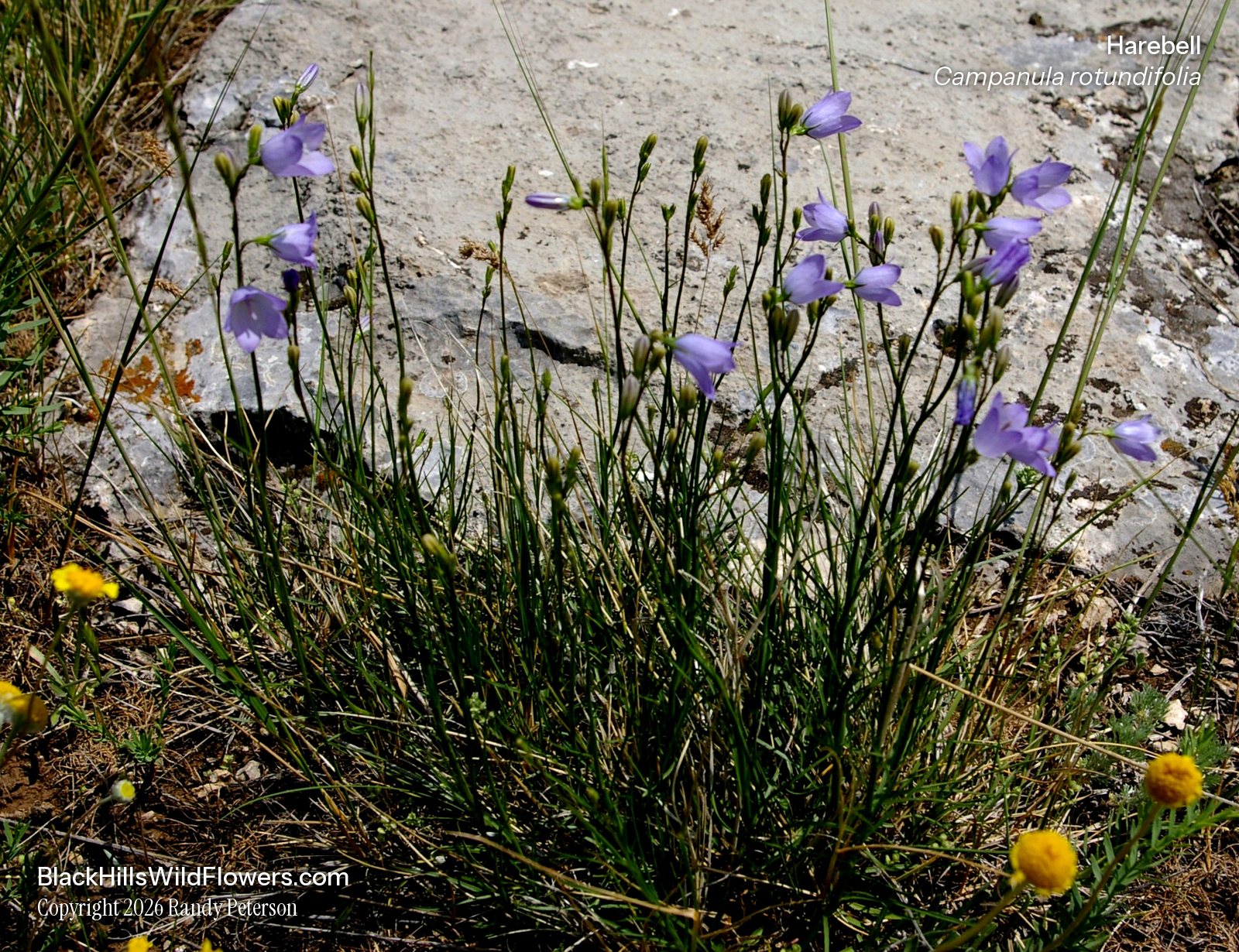
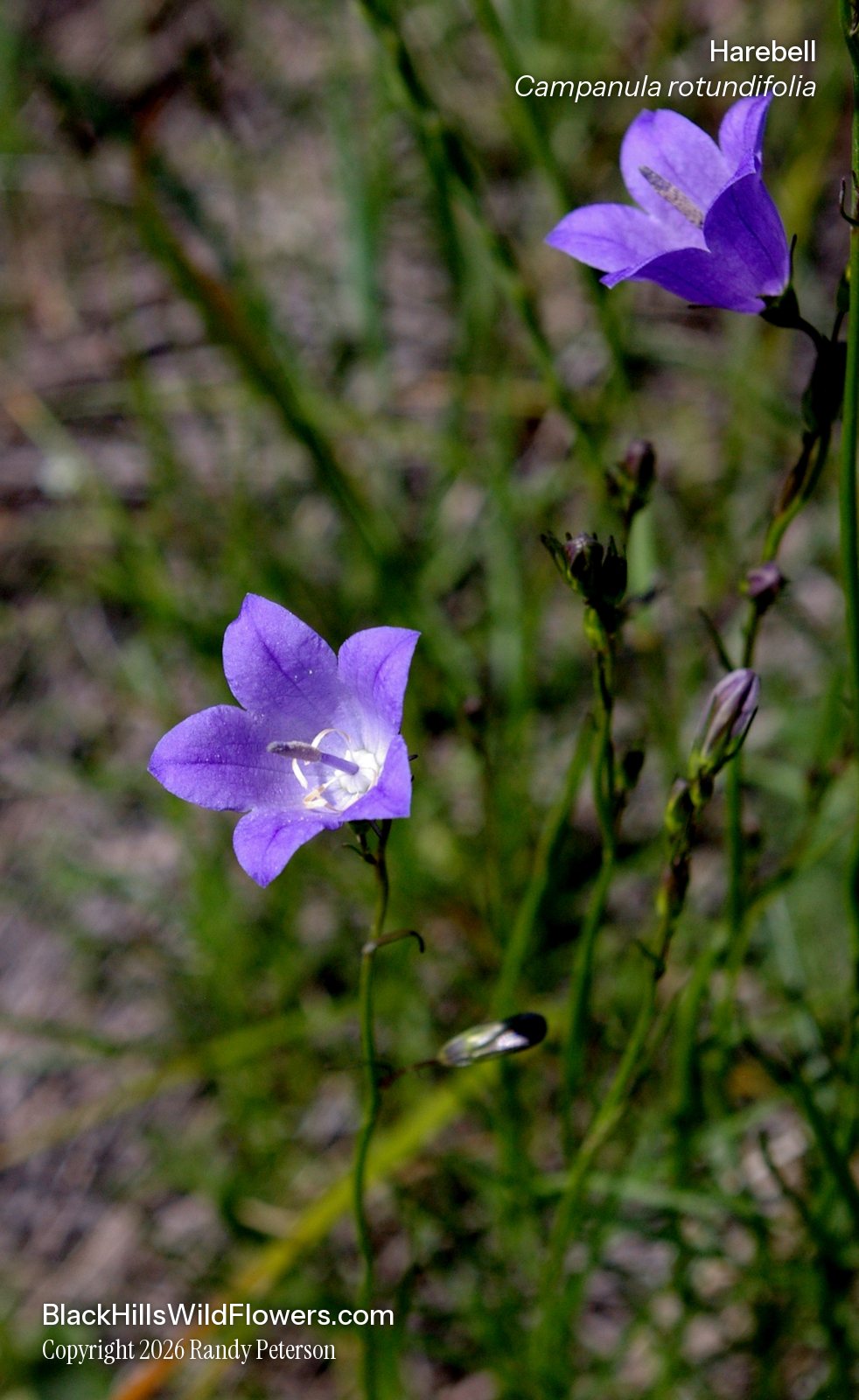
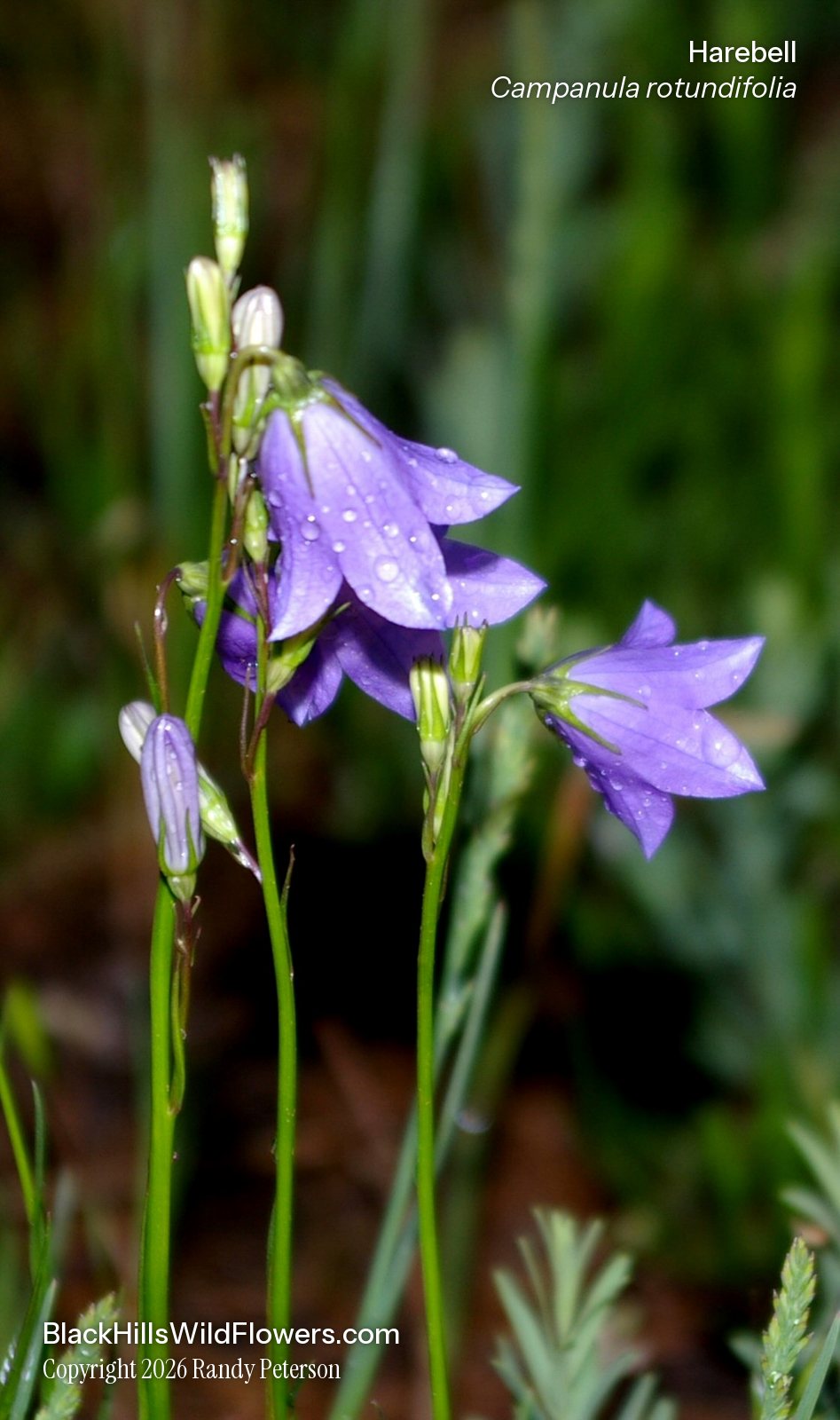
Harebell (Campanula rotundifolia) is a native perennial with nodding, blue to lavender bell-shaped flowers on very slender stems. It is common from low to high elevations in a variety of Black Hills habitats, and it blooms from about June into September. Photographed in the Black Hills.
| Family | Campanulaceae · Bellflower |
|---|---|
| Status | Native perennial |
| Blooms | June into September |
| Height | 15–70 cm (6–28 in) |
| Where | Meadows, open woods, stream banks, rocky slopes and rock crevices |
| Also called | Bluebell Bellflower, Bluebells of Scotland, waȟpé tȟó (Lakota) |
| Traditional use | A 1998 Sitting Bull College list of culturally important Lakota plants records an infusion of the root used for earaches. |
Roots, seeds & germination
Root: Slender branches of a caudex (a woody base at ground level). Plants often form clumps.
Seed: A nodding, top-shaped capsule 3–10 mm long holds many shiny brown seeds about 1 mm long.
Germination: Sow in late fall, or give seeds 30 days of cold, moist treatment before spring planting. Seeds need light, so sow them very shallowly.
How do you identify Harebell?
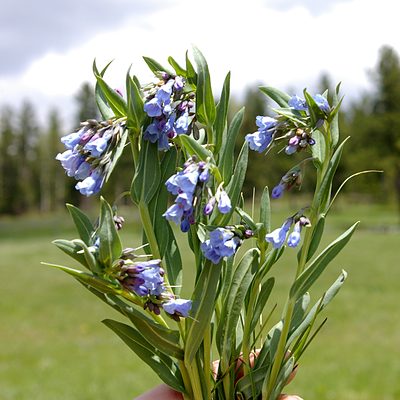
Look for several very slender stems with narrow, nearly linear stem leaves; the round basal leaves usually wither before the plant flowers. Each nodding bell is 10–25 mm (½–1 in) long, with a style about as long as the bell that splits into three at the tip. Lanceleaf Bluebells blooms in early spring, with clusters of drooping blue bells and bluish-green leaves.
When does it bloom?
June into September.
Where does it grow?
Common from low to high elevations in the Black Hills, in a variety of habitats. In South Dakota it is a plant of the west, in dry woods, meadows and along stream banks, and it grows well in rocky soils and crevices.
Other flowers to compare
Sources: Black Hills National Forest: Black Hills Native Plants; SDSU Open PRAIRIE: Campanula rotundifolia (R. Neil Reese); Minnesota Wildflowers: Campanula rotundifolia (Harebell); National Park Service, Devils Tower National Monument: Native Plants; National Park Service, Jewel Cave National Monument: Wildflowers; Culturally Important Plants of the Lakota (Black Elk and Flying By, Sitting Bull College, 1998), filed with the South Dakota PUC; A Survey of the Vegetation of Jewel Cave National Monument, with vascular plant checklist (Marriott and Hartman, 1986).