Wild Blue Flax
Linum lewisii
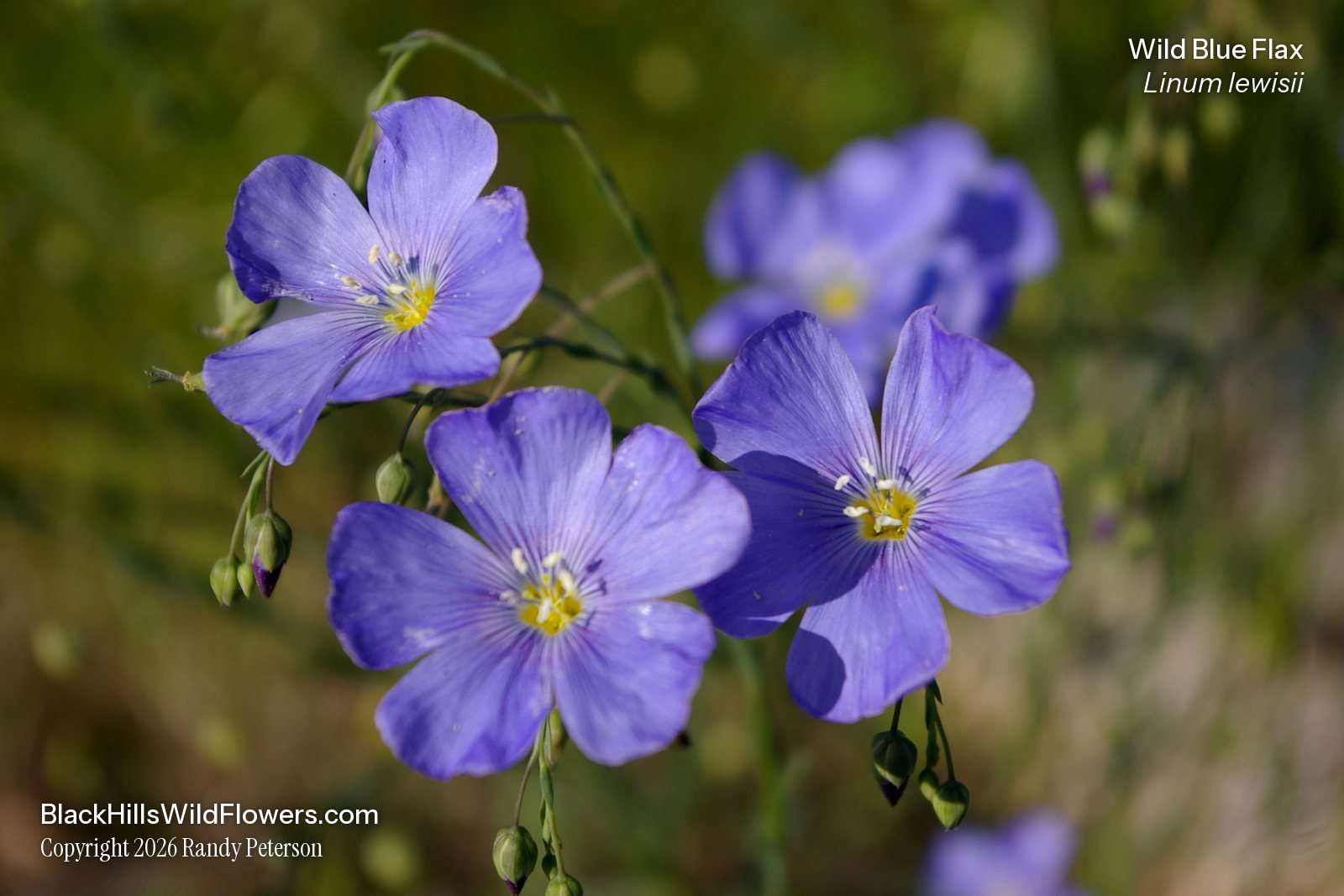
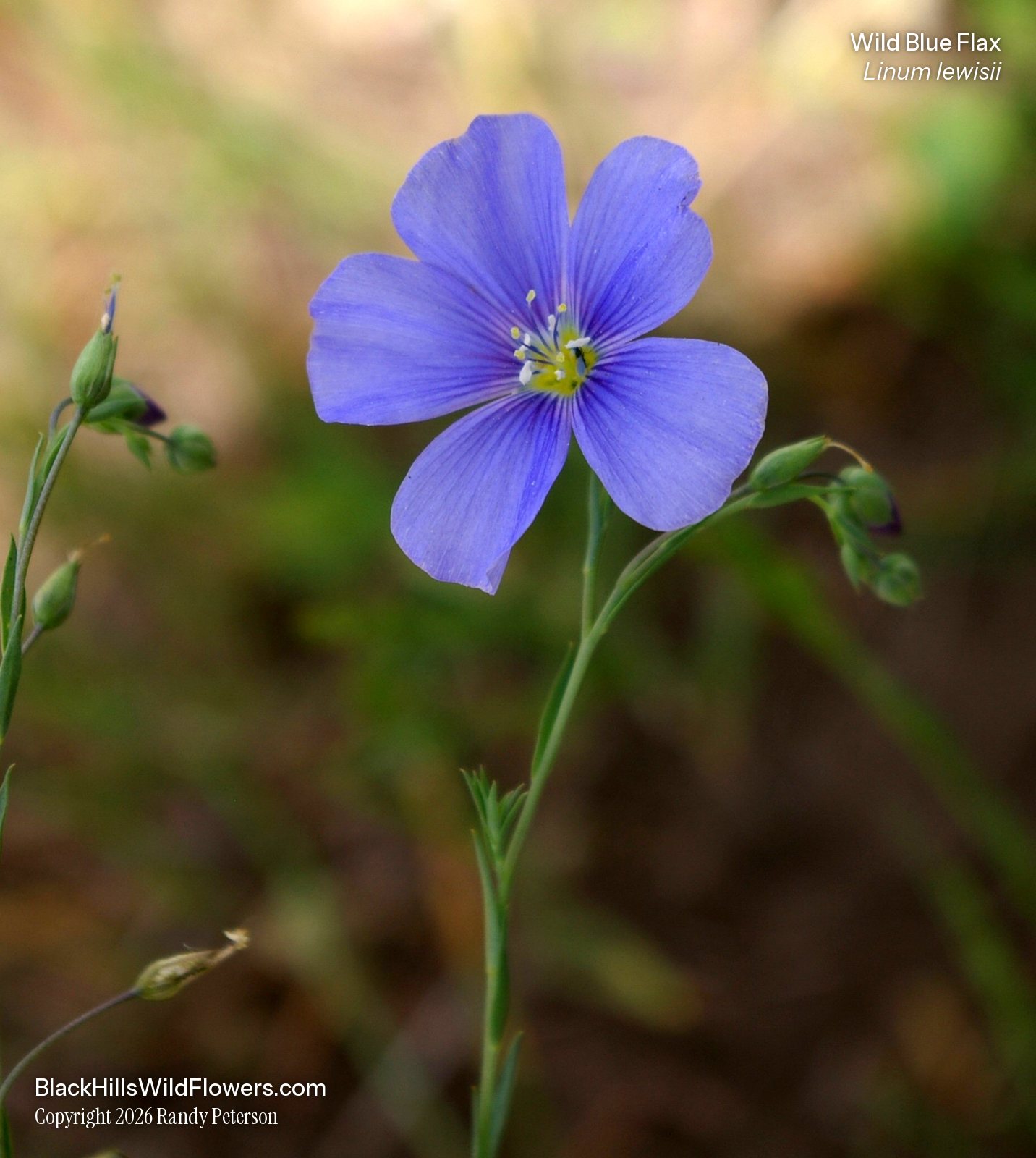
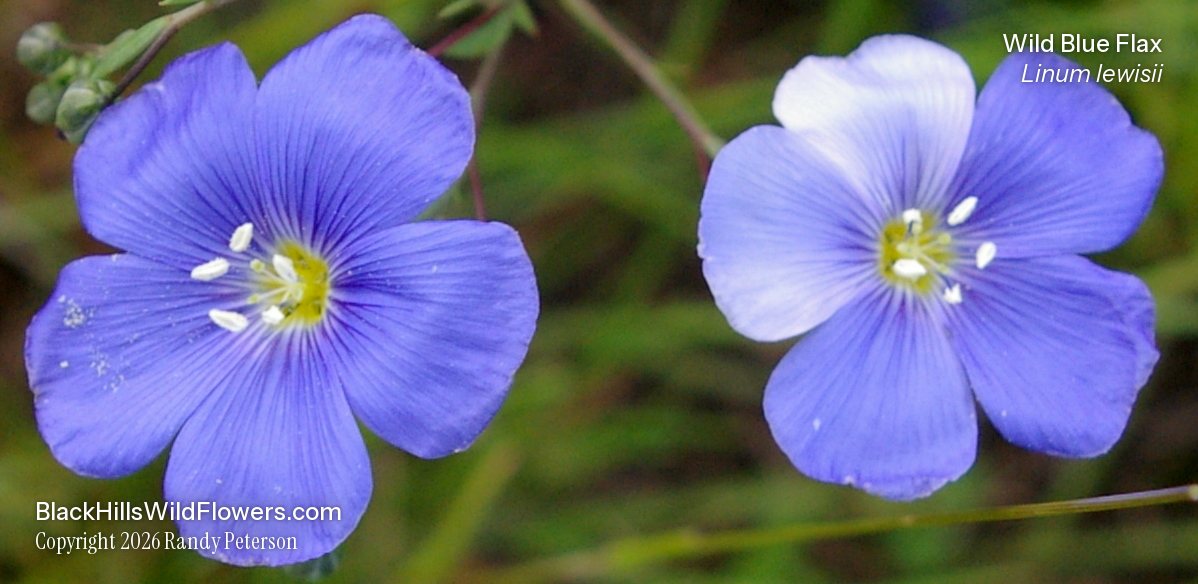
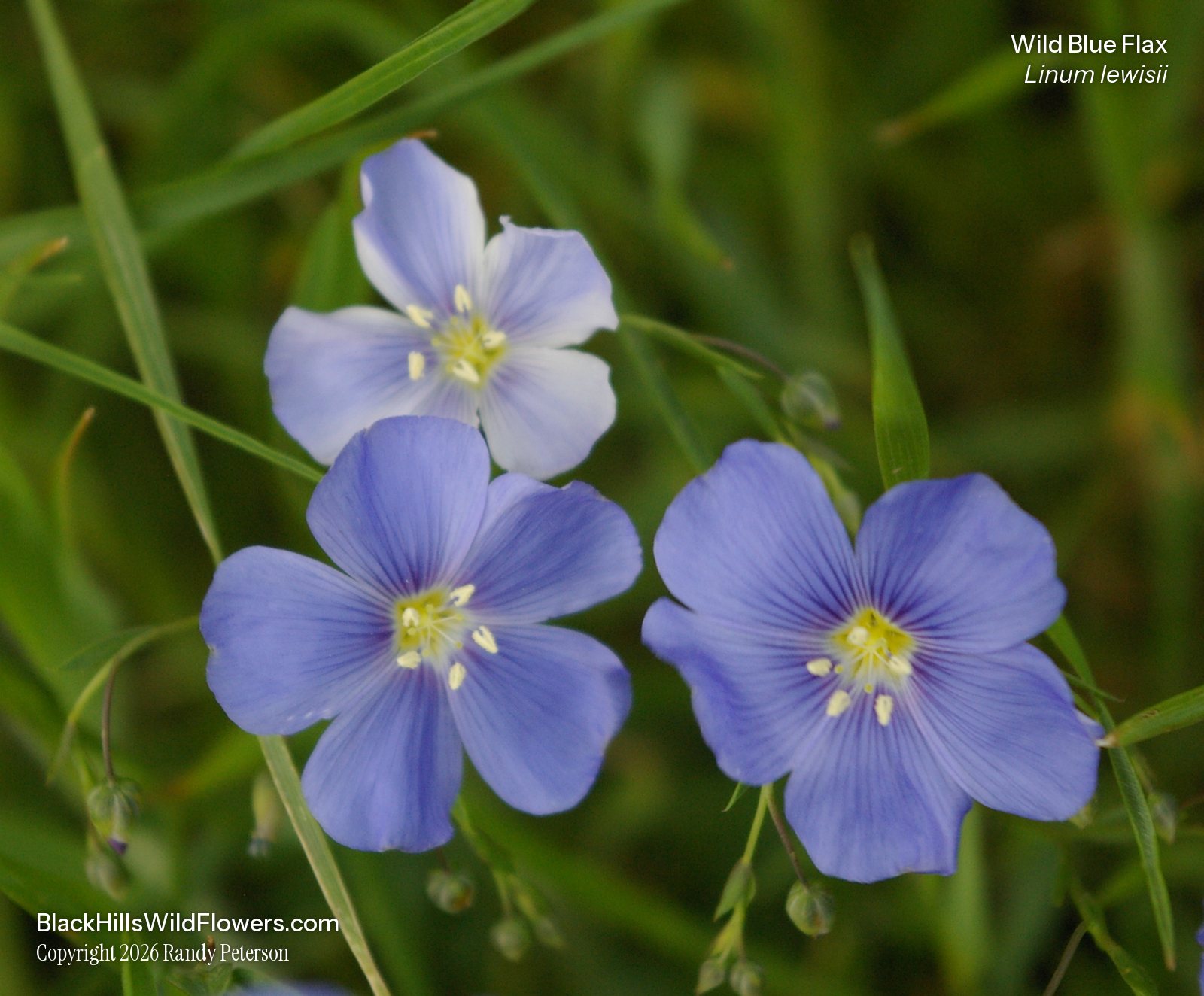
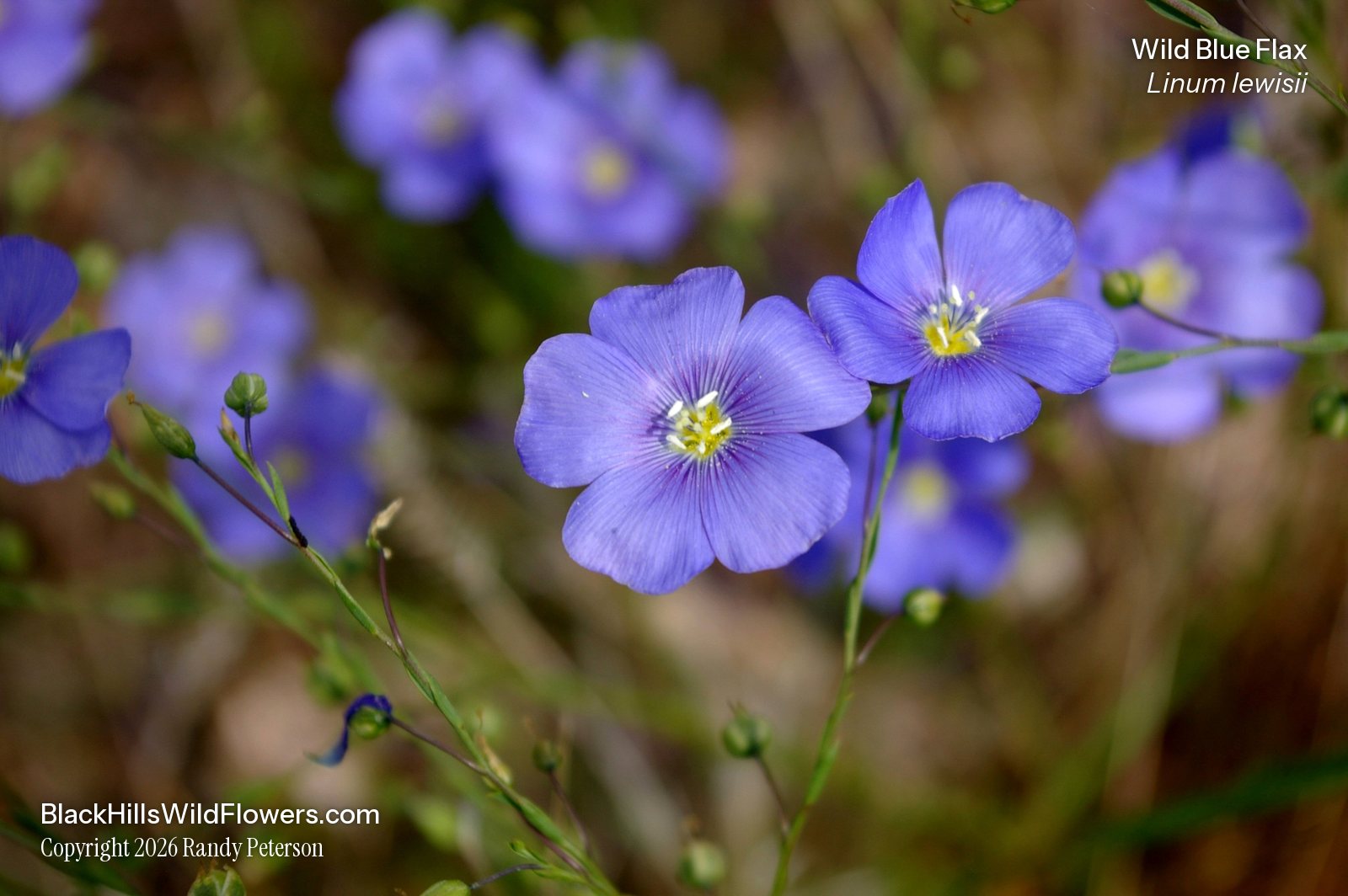
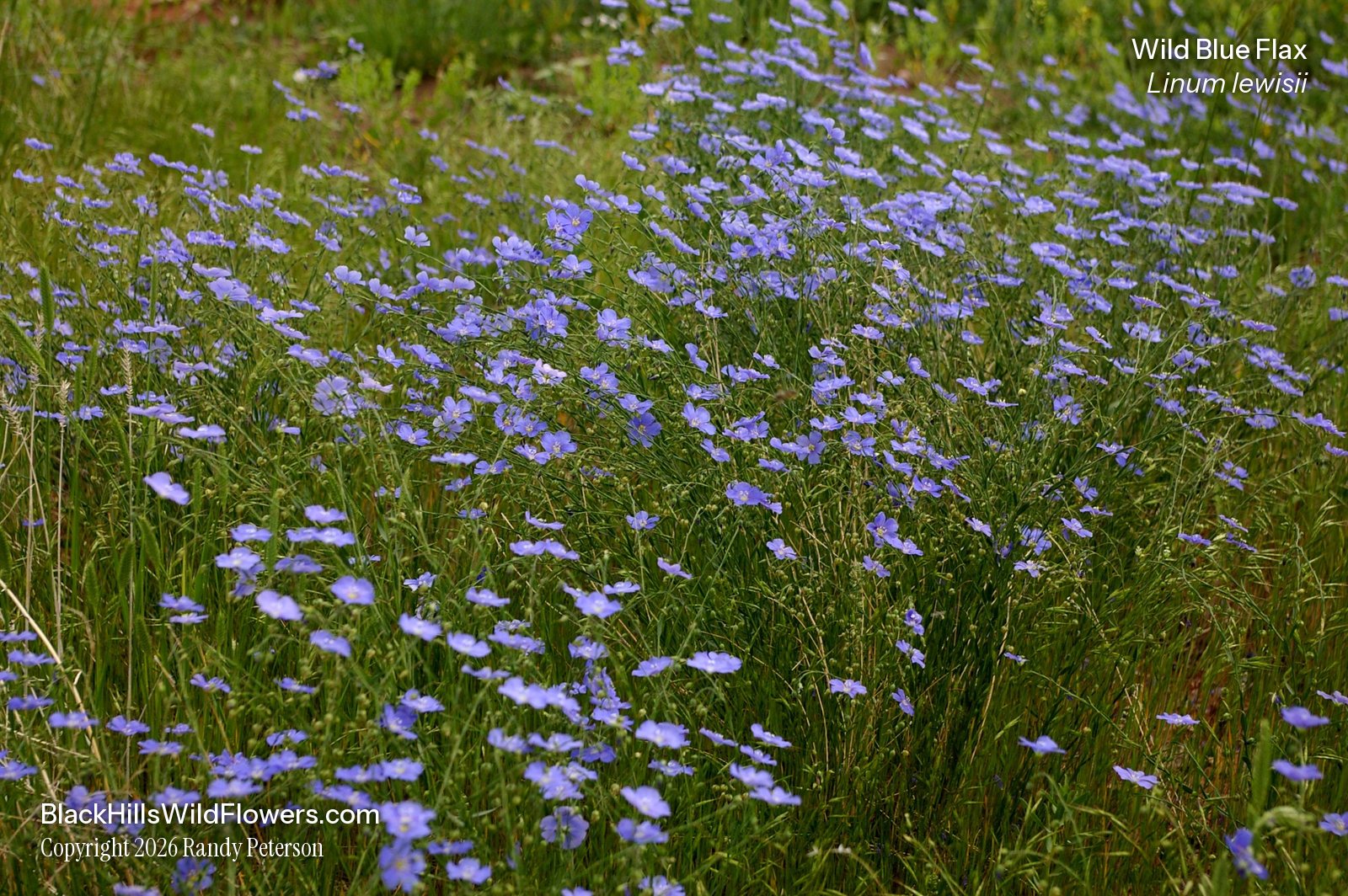
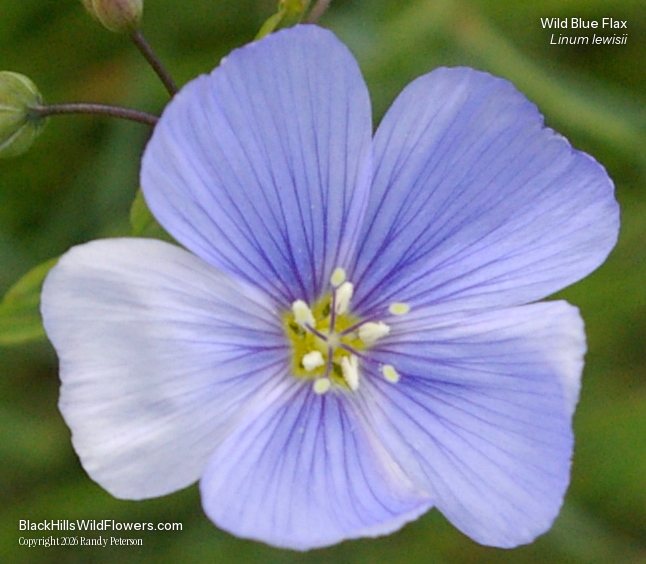
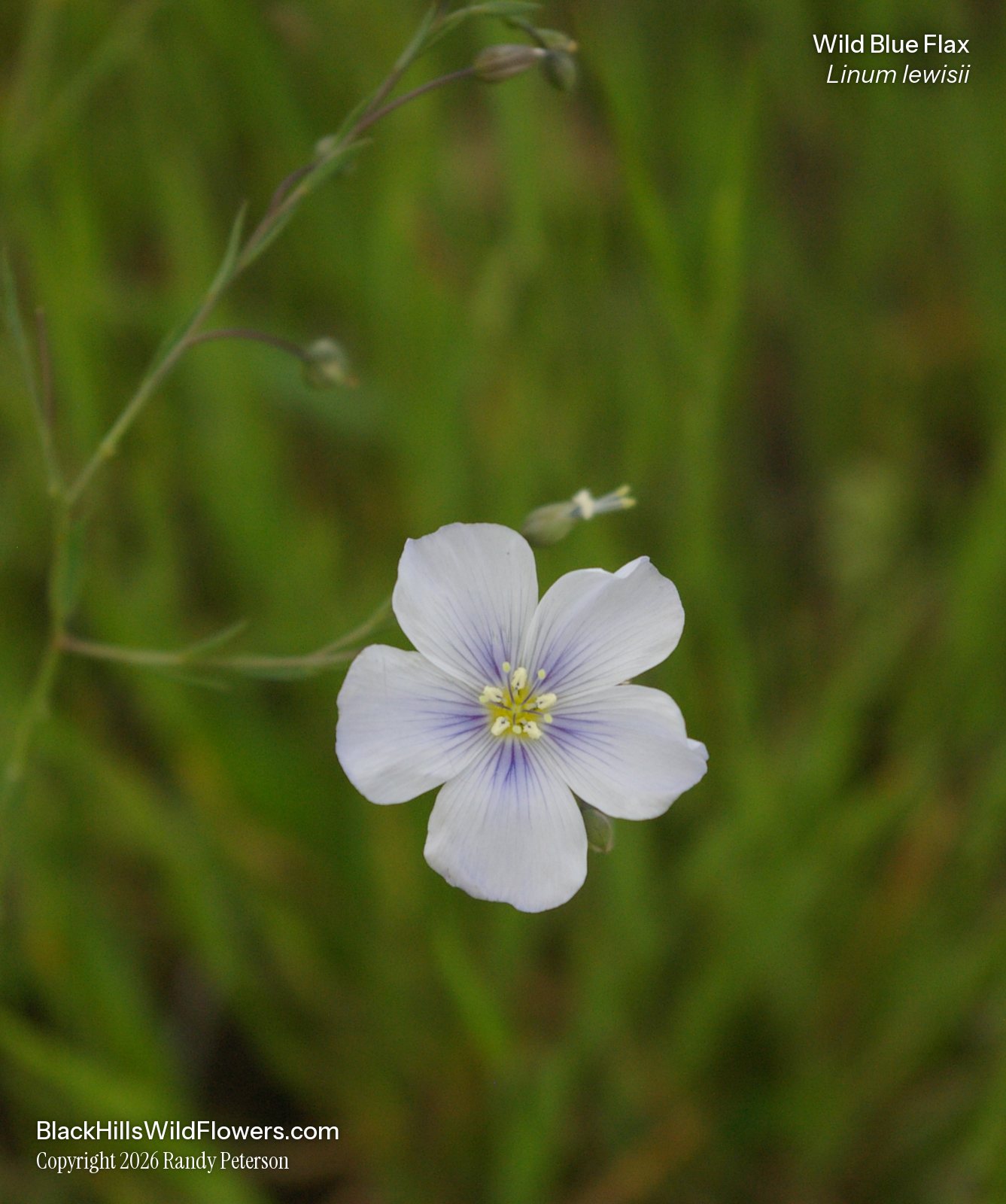
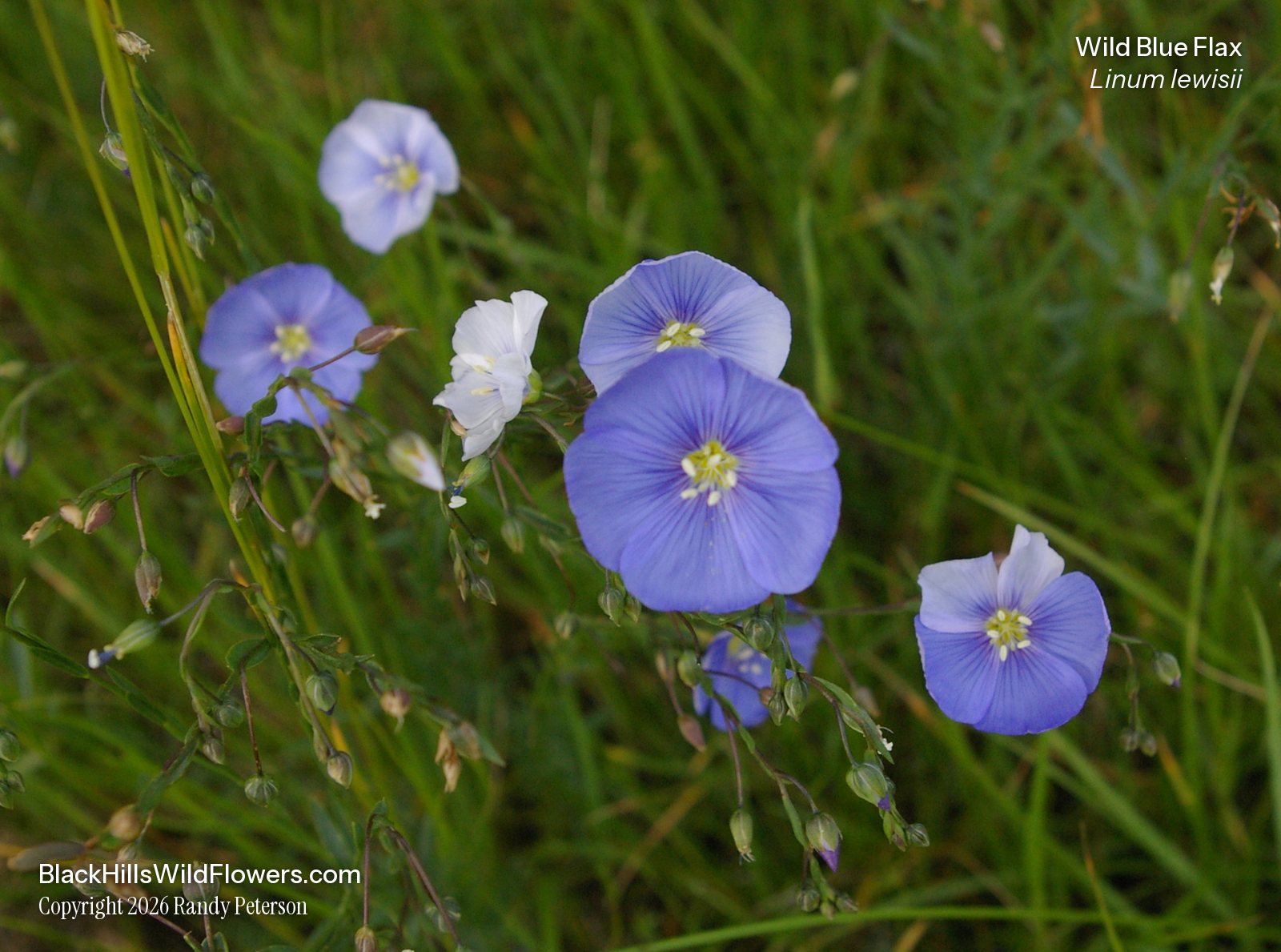
Wild Blue Flax (Linum lewisii) is a native perennial with slender, leafy stems and five-petaled blue flowers that open at sunrise and drop their petals by about noon. It grows on plains, hills and slopes in the Black Hills and blooms May into August. Photographed in the Black Hills.
| Family | Linaceae · Flax |
|---|---|
| Status | Native perennial |
| Blooms | May into August |
| Height | 20–80 cm (8–31 in) |
| Where | Prairies, plains, hills and open wooded hillsides in well-drained soil |
| Also called | Lewis Flax, Blue Flax, Prairie Flax, Western Blue Flax |
| Synonym | Linum perenne subsp. lewisii, Adenolinum lewisii |
| Toxicity | It contains a compound that can form cyanide, and sheep have been reported poisoned after grazing it. |
Roots, seeds & germination
Root: A persistent, branched caudex (a woody base at ground level) and taproot. Plants can resprout from the caudex.
Seed: Flat, brown, egg-shaped seeds 3–4 mm long, sticky when wet, mature in late July and August.
Germination: No pretreatment is needed. Fall sowing chills the seed naturally, and some seed may not sprout until the second growing season.
How do you identify Wild Blue Flax?
Look for wiry stems with many narrow, pointed leaves 1–3 cm long, and flowers with five blue petals, 10–15 mm long, on spreading stalks. The round capsule splits into ten sections. European Blue Flax (Linum perenne), not in this guide, is widely planted and nearly the same; a USDA guide says the only significant difference is that its flowers have styles of two lengths.
When does it bloom?
May into August.
Where does it grow?
Plains, hills and slopes in the Black Hills. In South Dakota it grows on prairies and open wooded hillsides. It does best in full sun and well-drained, porous soil, and it doesn't tolerate flooding.
Other flowers to compare
Sources: SDSU Open PRAIRIE: Linum lewisii var. lewisii (R. Neil Reese); Forest Service, Fire Effects Information System: Linum lewisii; USDA NRCS Plant Guide: Blue Flax and Lewis Flax; Utah State University Extension, Range Plants of Utah: Lewis Flax; National Park Service, Devils Tower National Monument: Native Plants; National Park Service, Jewel Cave National Monument: Wildflowers; A Survey of the Vegetation of Jewel Cave National Monument, with vascular plant checklist (Marriott and Hartman, 1986); USDA NRCS Plant Guide: Blue Flax and Lewis Flax (pg_lile3); Southwest Colorado Wildflowers: Linum lewisii.