Blue-eyed Grass
Sisyrinchium montanum
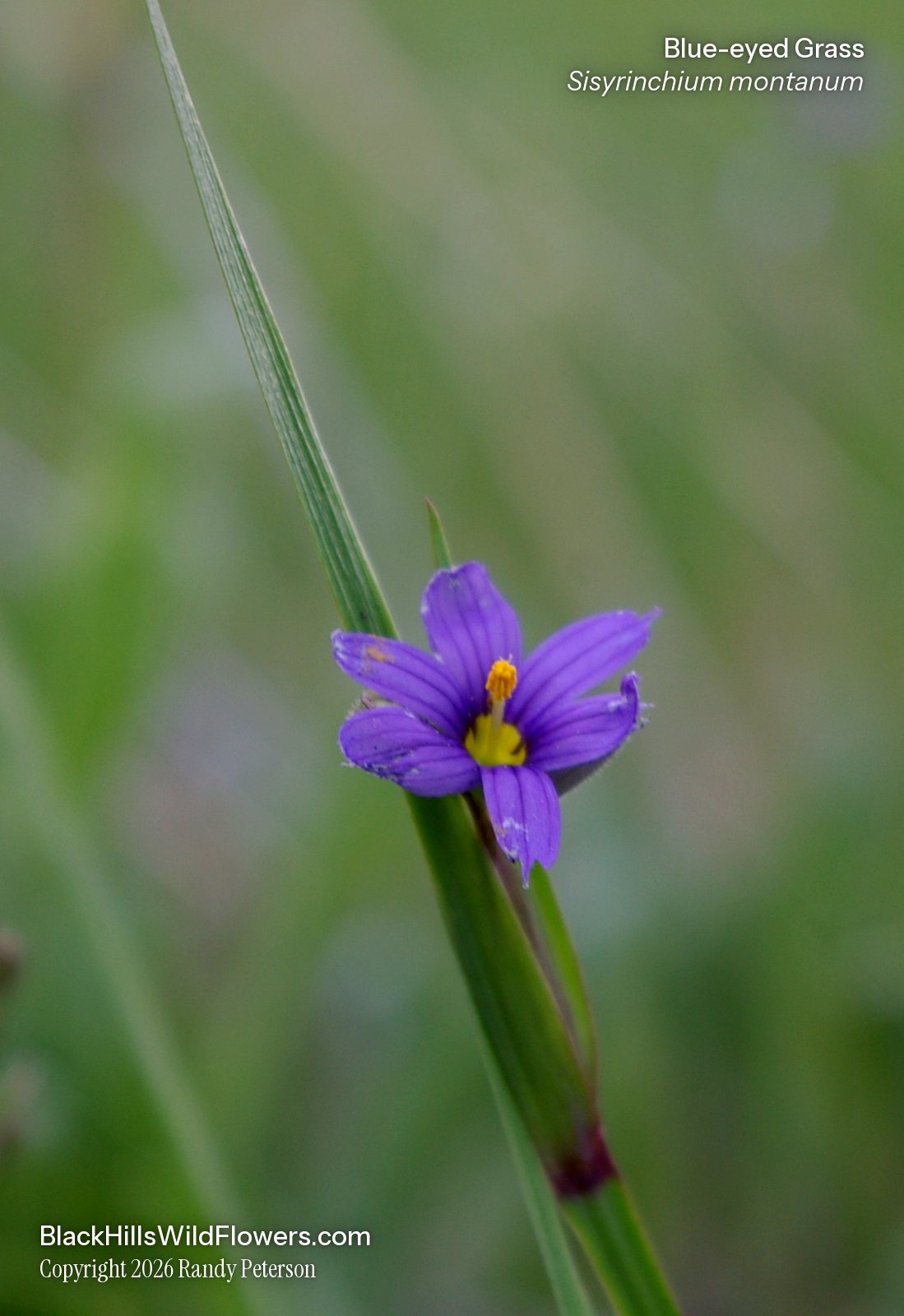
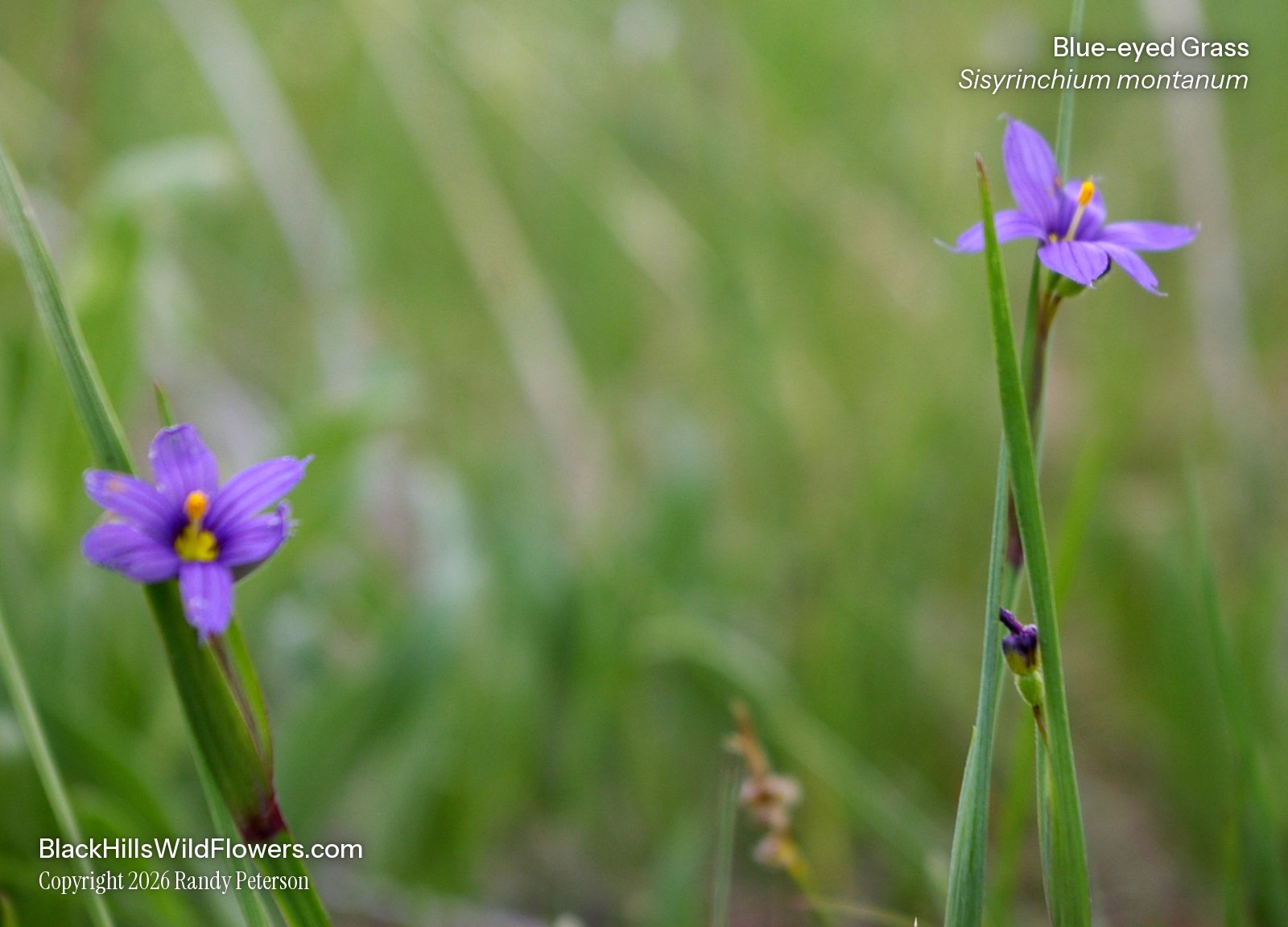
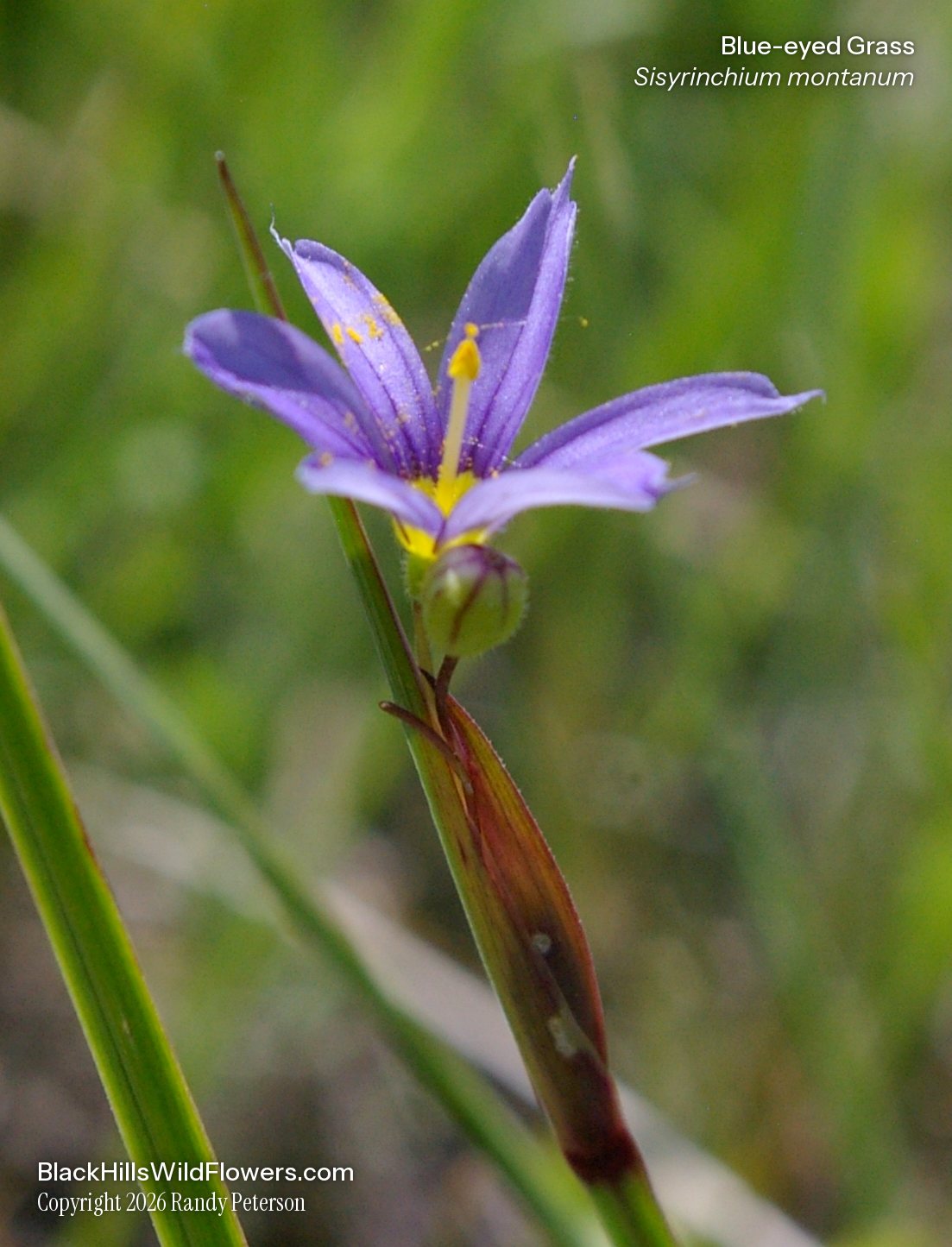
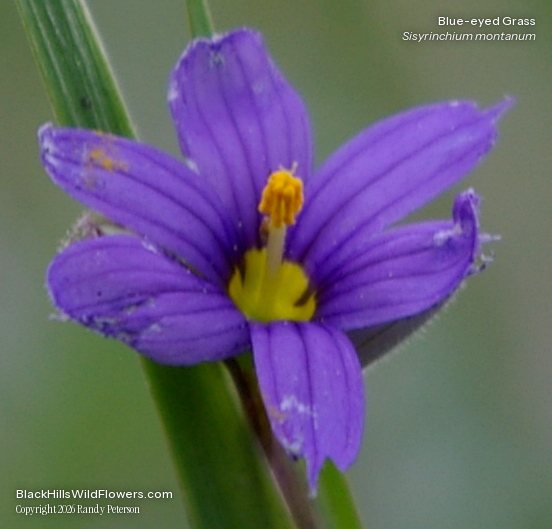
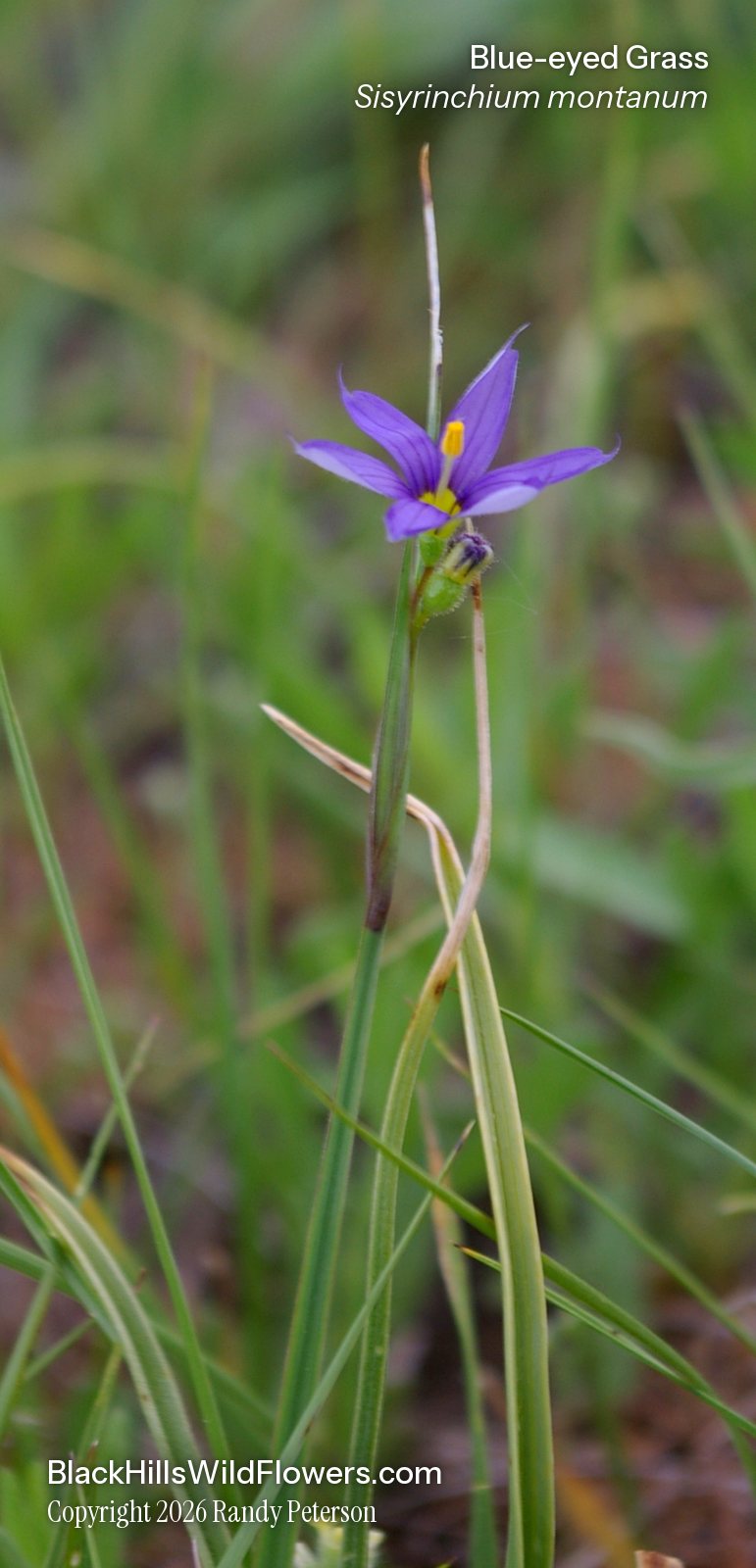
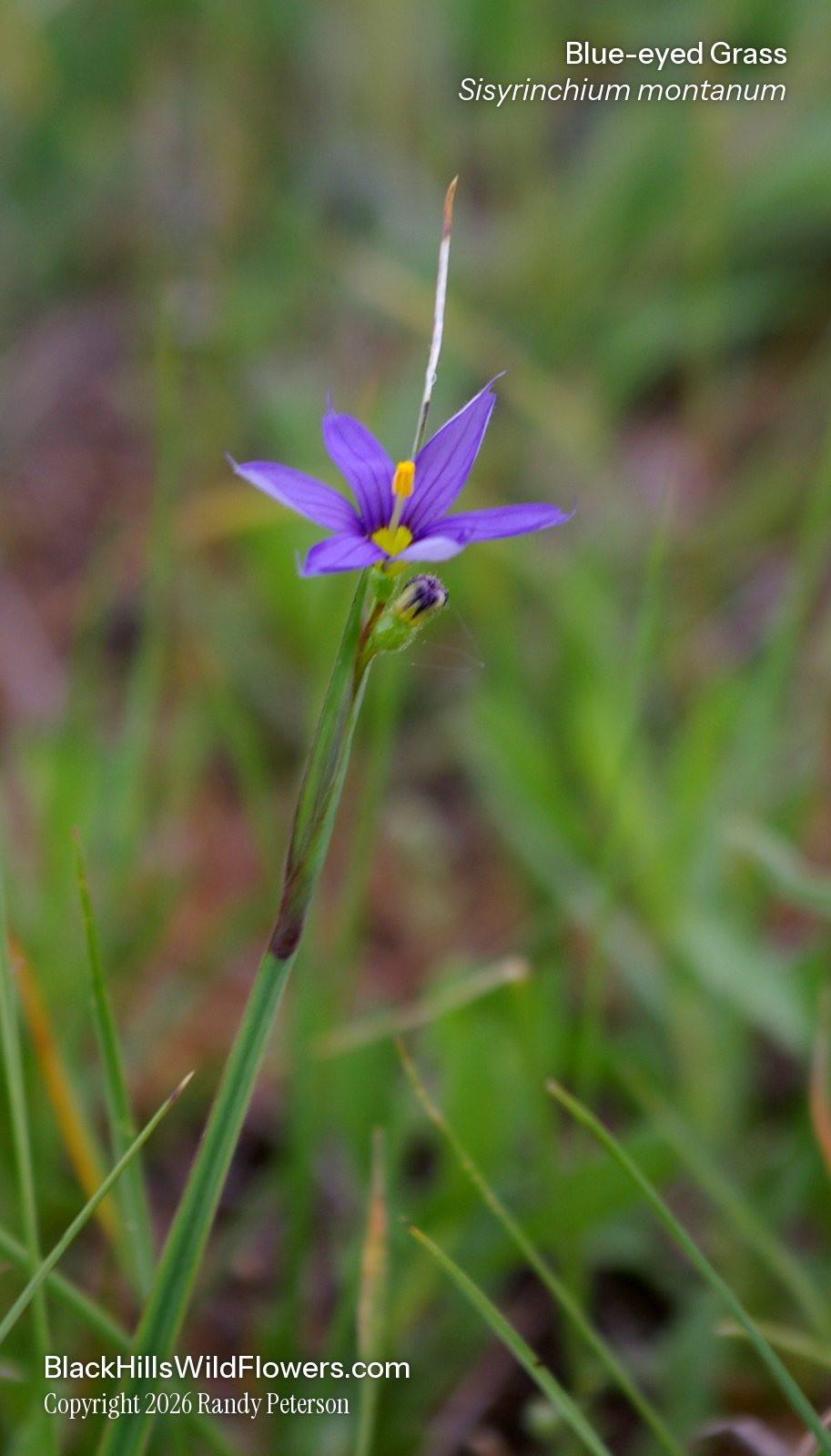
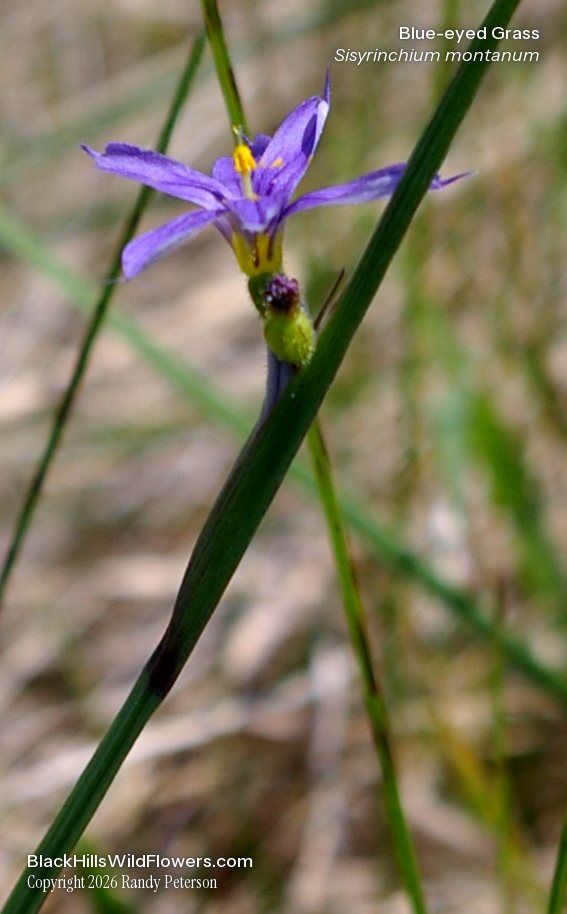
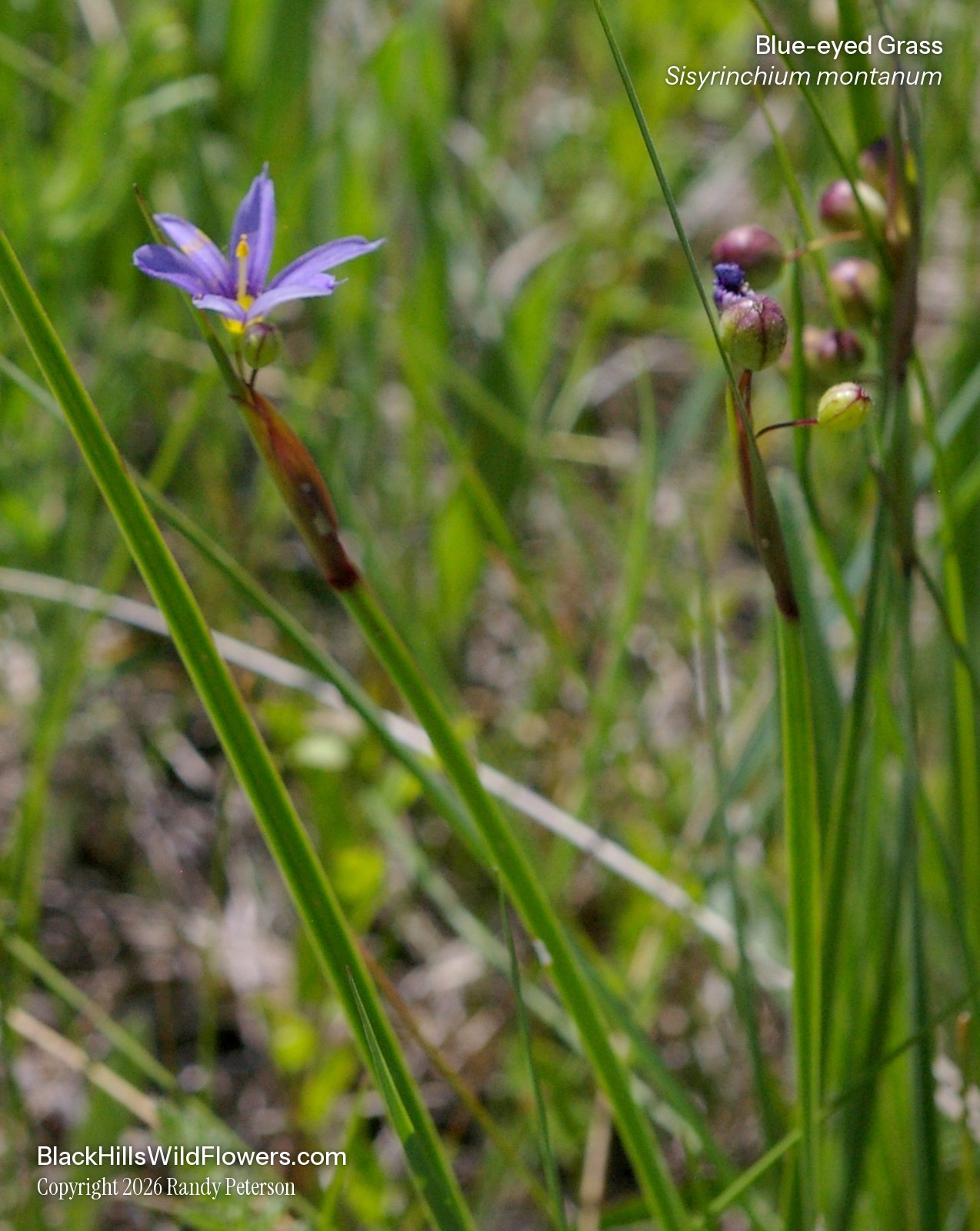
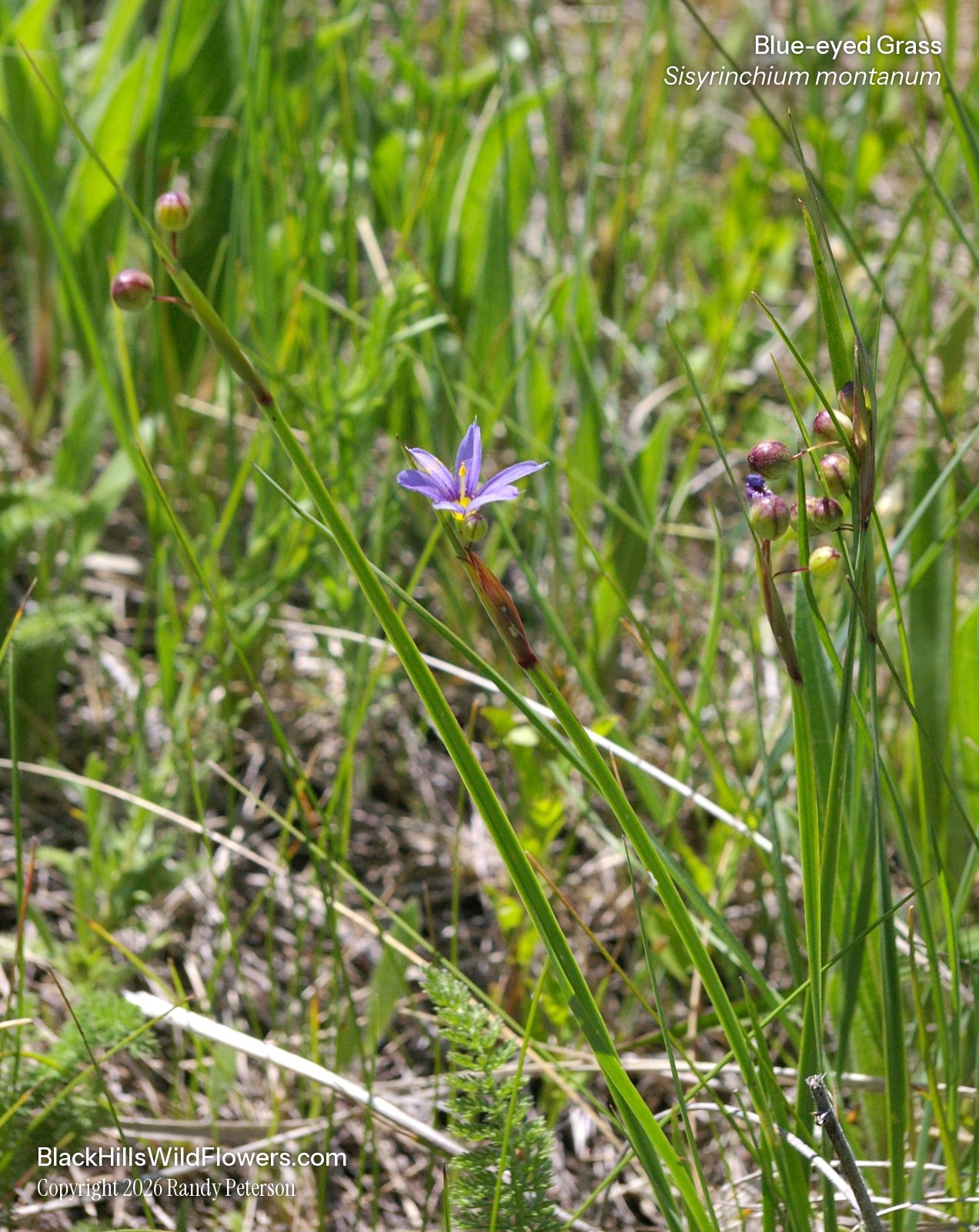
Blue-eyed Grass (Sisyrinchium montanum) is a native perennial in the iris family, not a true grass, with grass-like leaves and small star-shaped blue to violet flowers with a yellow center. It grows in meadows, grasslands and open forests throughout the Black Hills and blooms May into July. Photographed in the Black Hills.
| Family | Iridaceae · Iris |
|---|---|
| Status | Native perennial |
| Blooms | May into July |
| Height | 15–40 cm (6–16 in) |
| Where | Meadows, grasslands, open forests and stream banks |
| Also called | Mountain Blue-eyed Grass |
Roots, seeds & germination
Root: Fibrous roots with short rhizomes (underground stems).
Seed: A three-lobed capsule 6–8 mm long ripens July to August and releases many small seeds.
Germination: Seeds germinate best in well-drained soil with moderate moisture and light. Fall planting is recommended.
How do you identify Blue-eyed Grass?
Look for a flat stem with two thin wings, topped by two narrow bracts that hold 2 to 4 flowers, with only 1 or 2 open at a time. Each flower has six tepals, usually notched with a small needle-like point at the tip, around a greenish to yellow throat.
When does it bloom?
May into July.
Where does it grow?
Meadows, grasslands and open forests throughout the Black Hills. In South Dakota it favors moist meadows, open woods and stream banks, mostly in the northern and western parts of the state.
Other flowers to compare

Sources: Black Hills National Forest: Black Hills Native Plants; SDSU Open PRAIRIE: Sisyrinchium montanum (R. Neil Reese); Minnesota Wildflowers: Sisyrinchium montanum (Mountain Blue-eyed Grass); National Park Service, Devils Tower National Monument: Native Plants; U.S. Forest Service, Celebrating Wildflowers: Hell Canyon; A Survey of the Vegetation of Jewel Cave National Monument, with vascular plant checklist (Marriott and Hartman, 1986).