Prairie Spiderwort
Tradescantia occidentalis
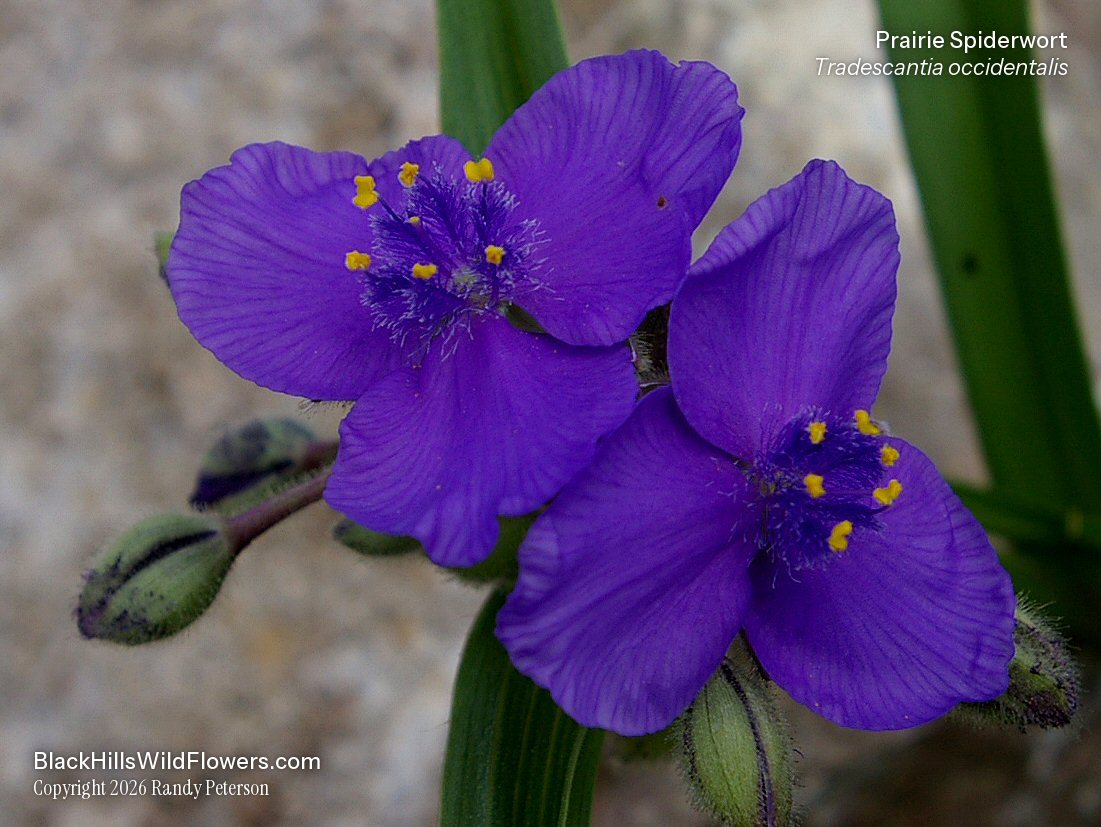
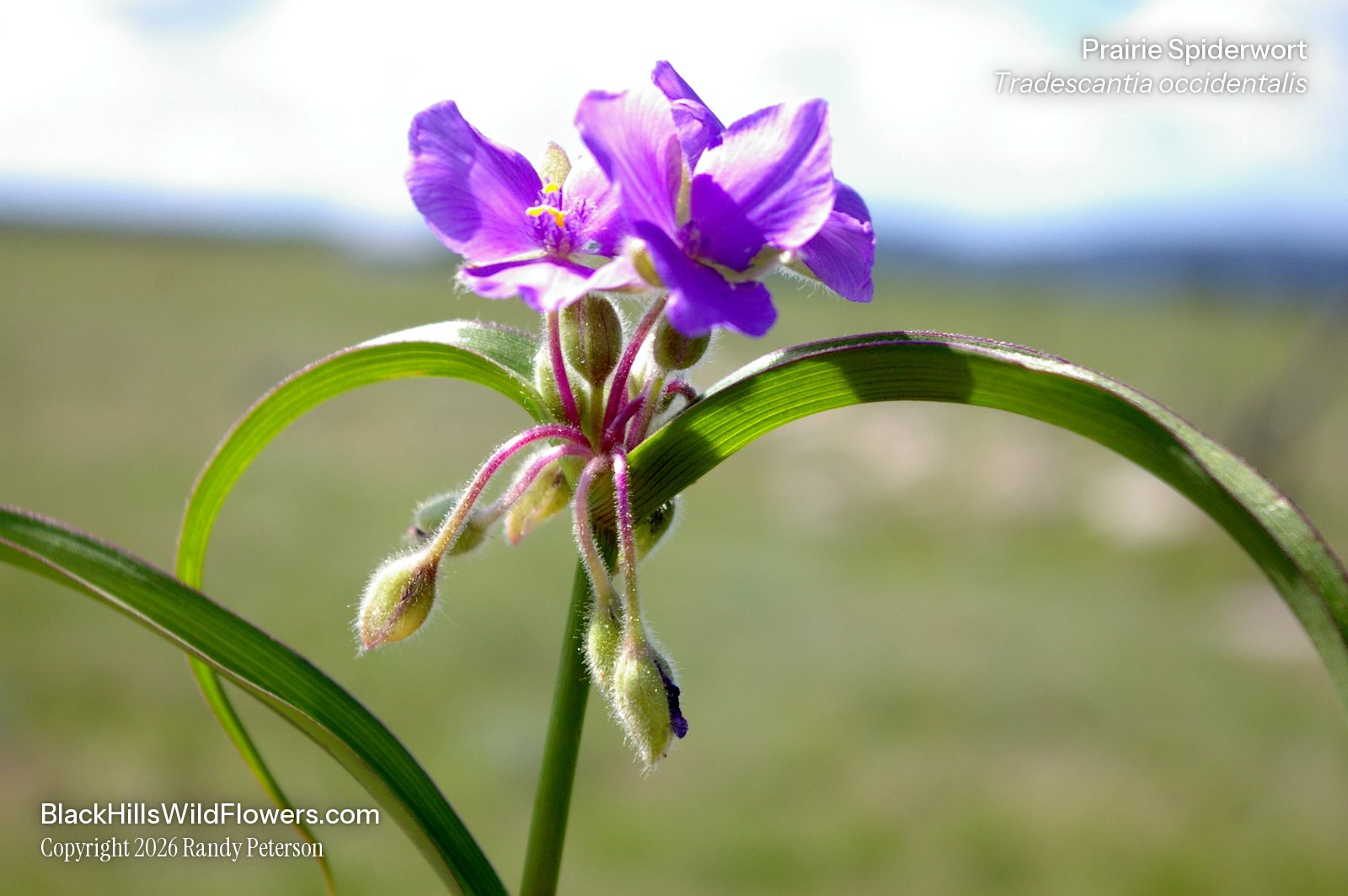
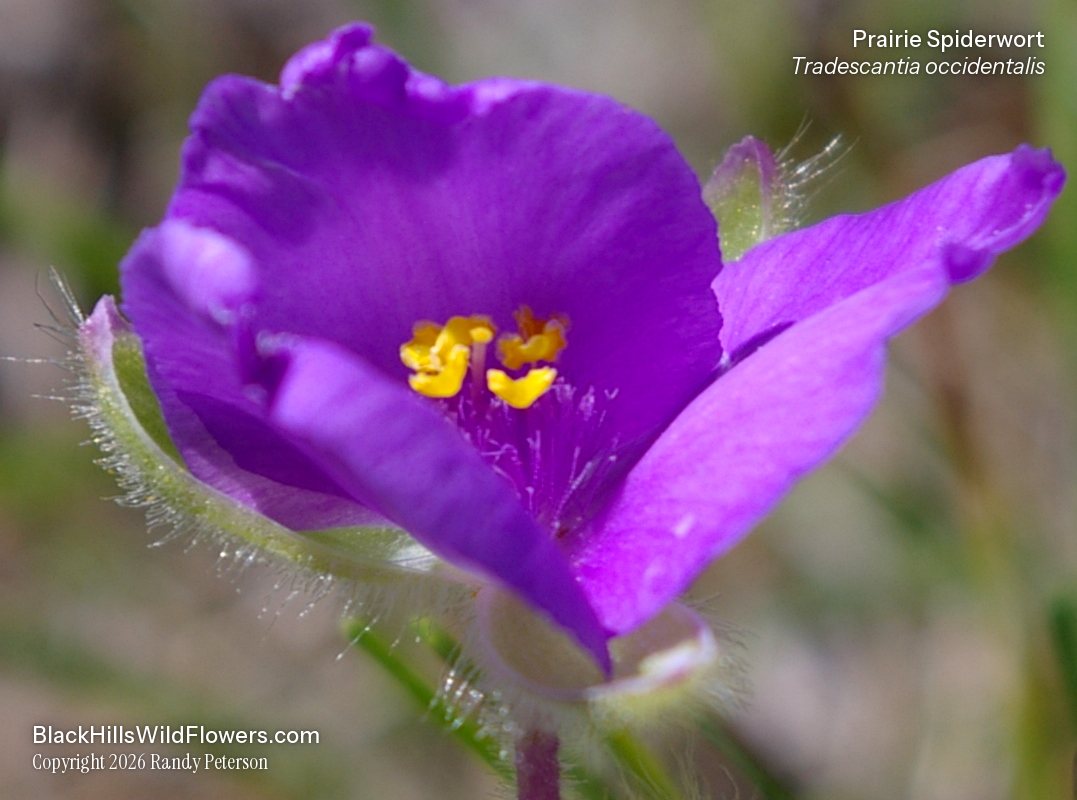
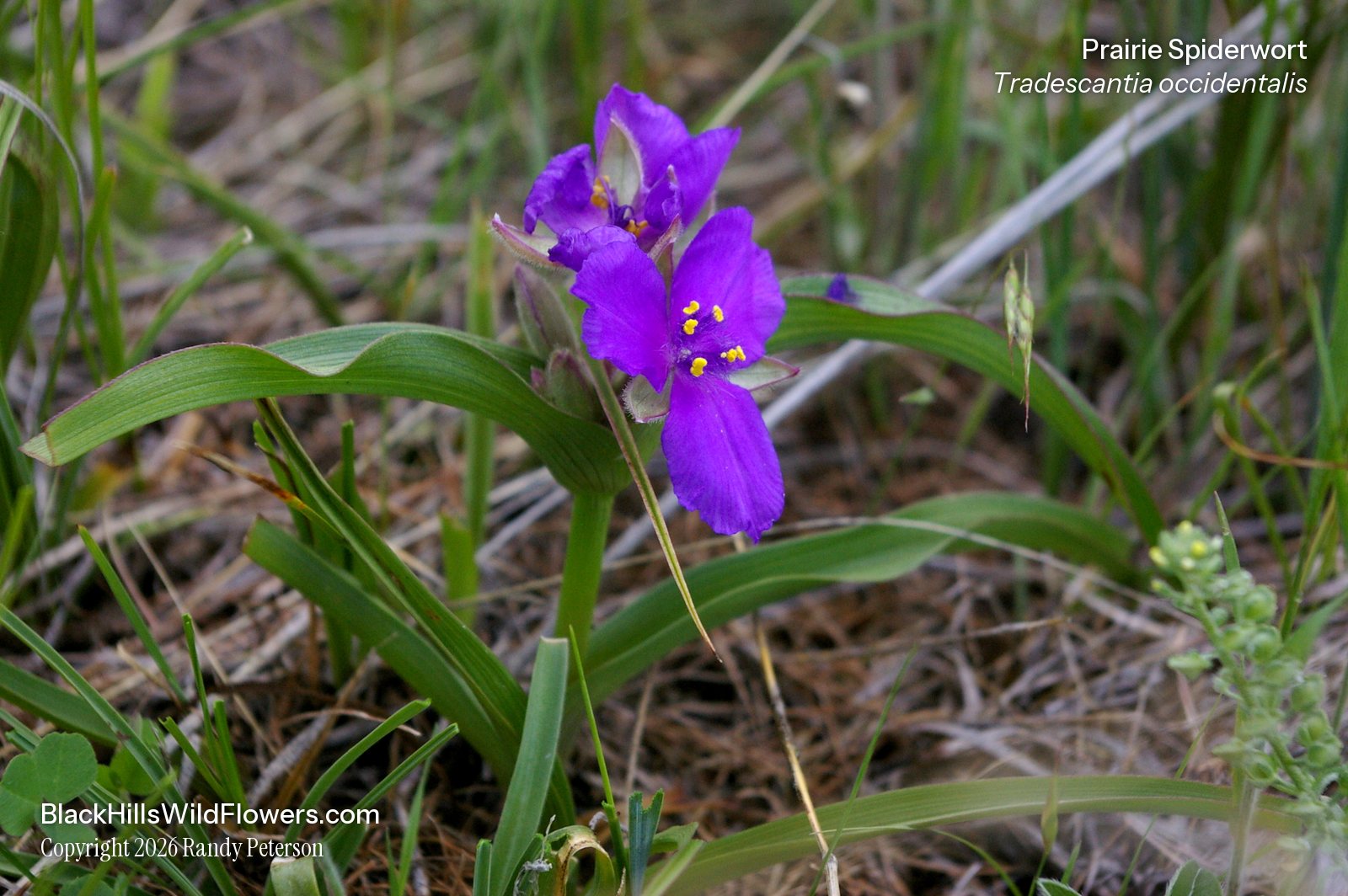
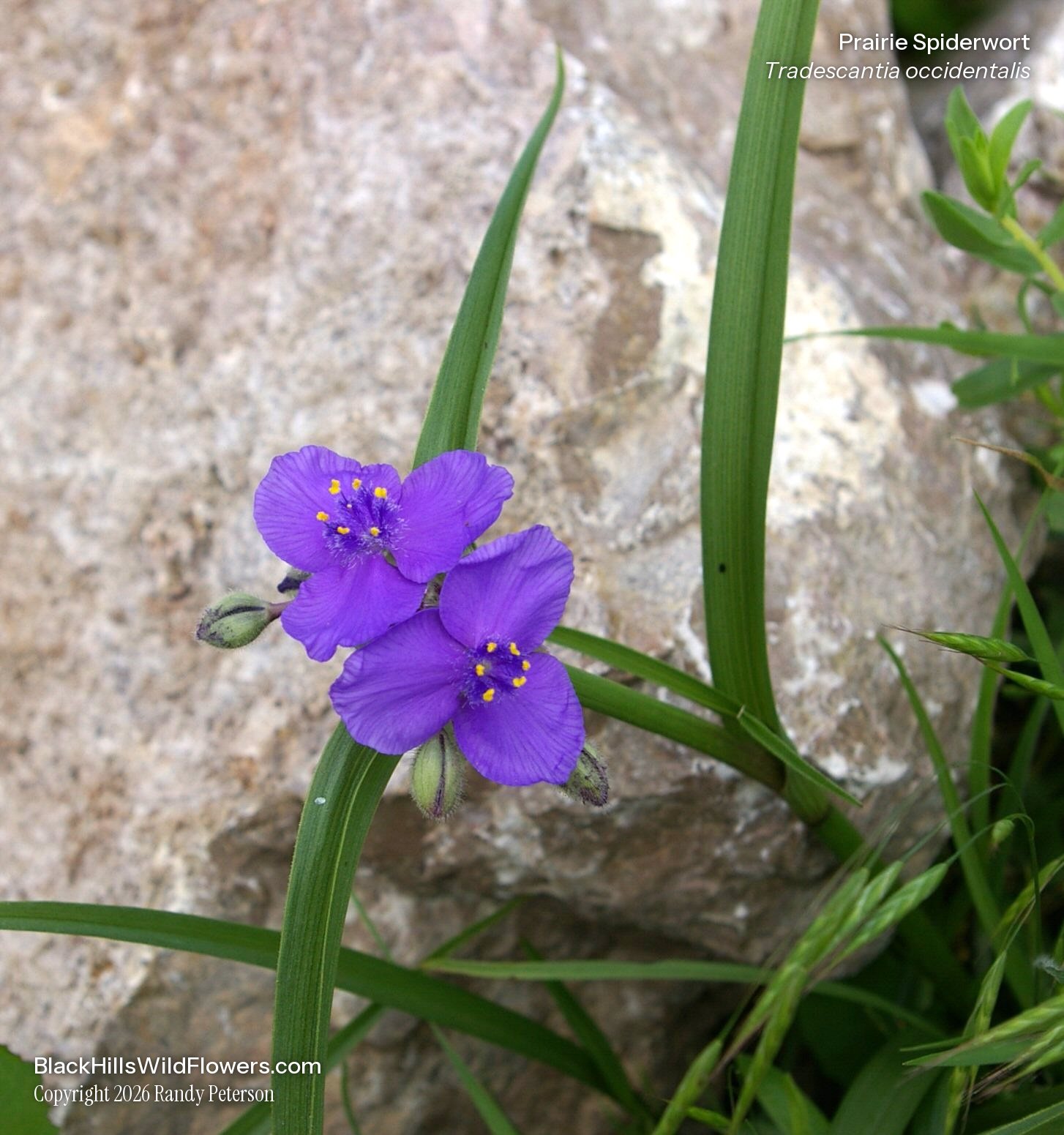
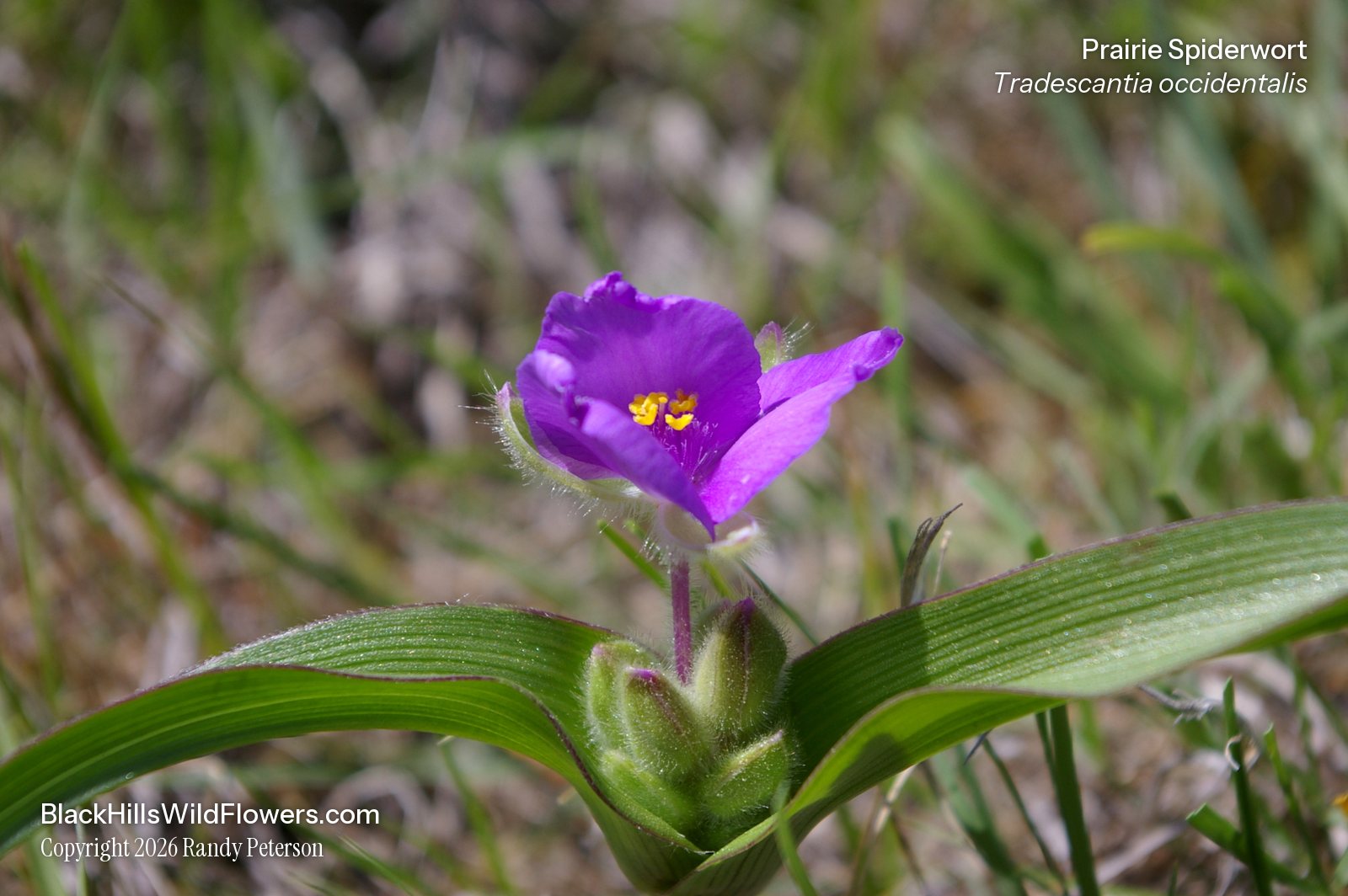
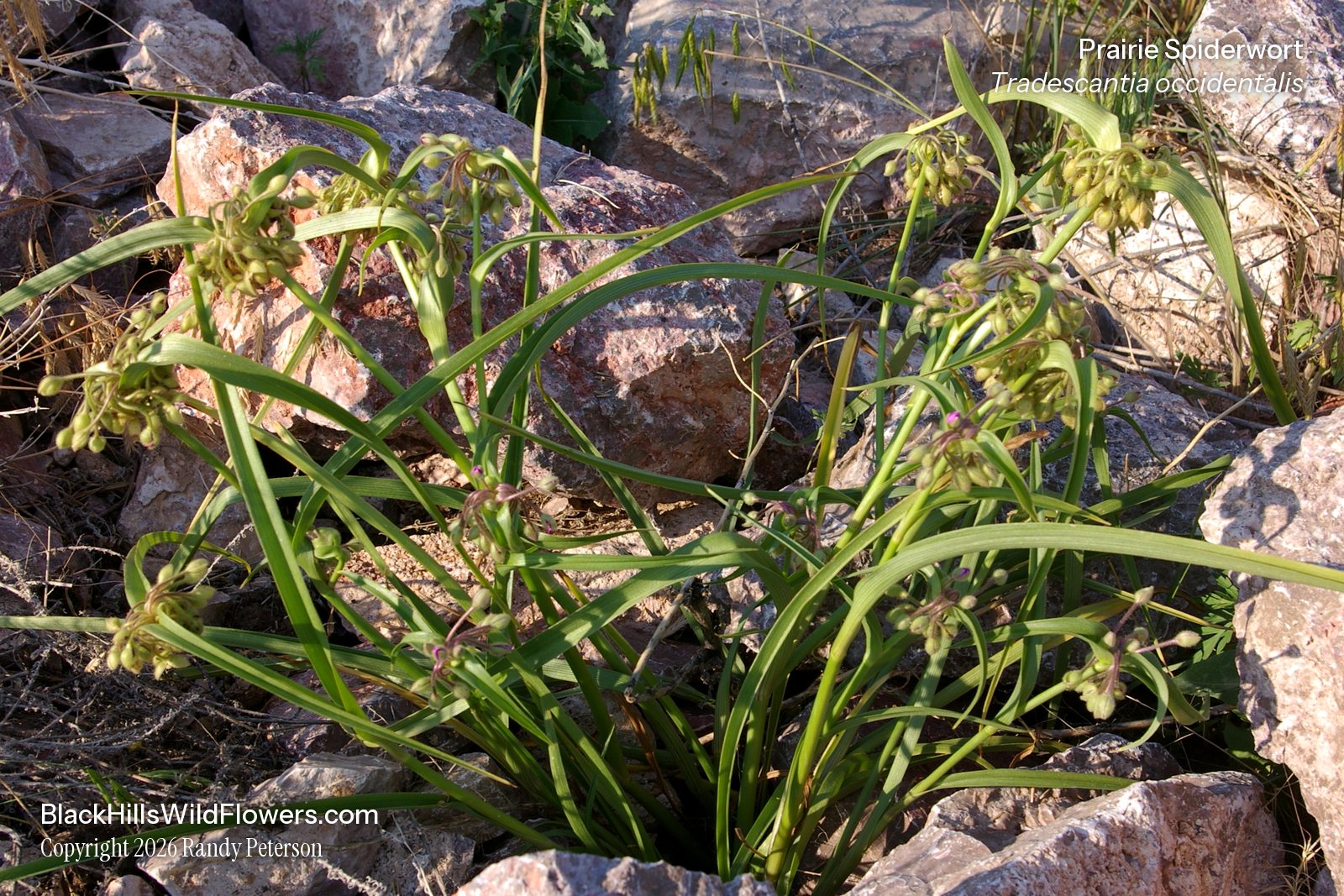
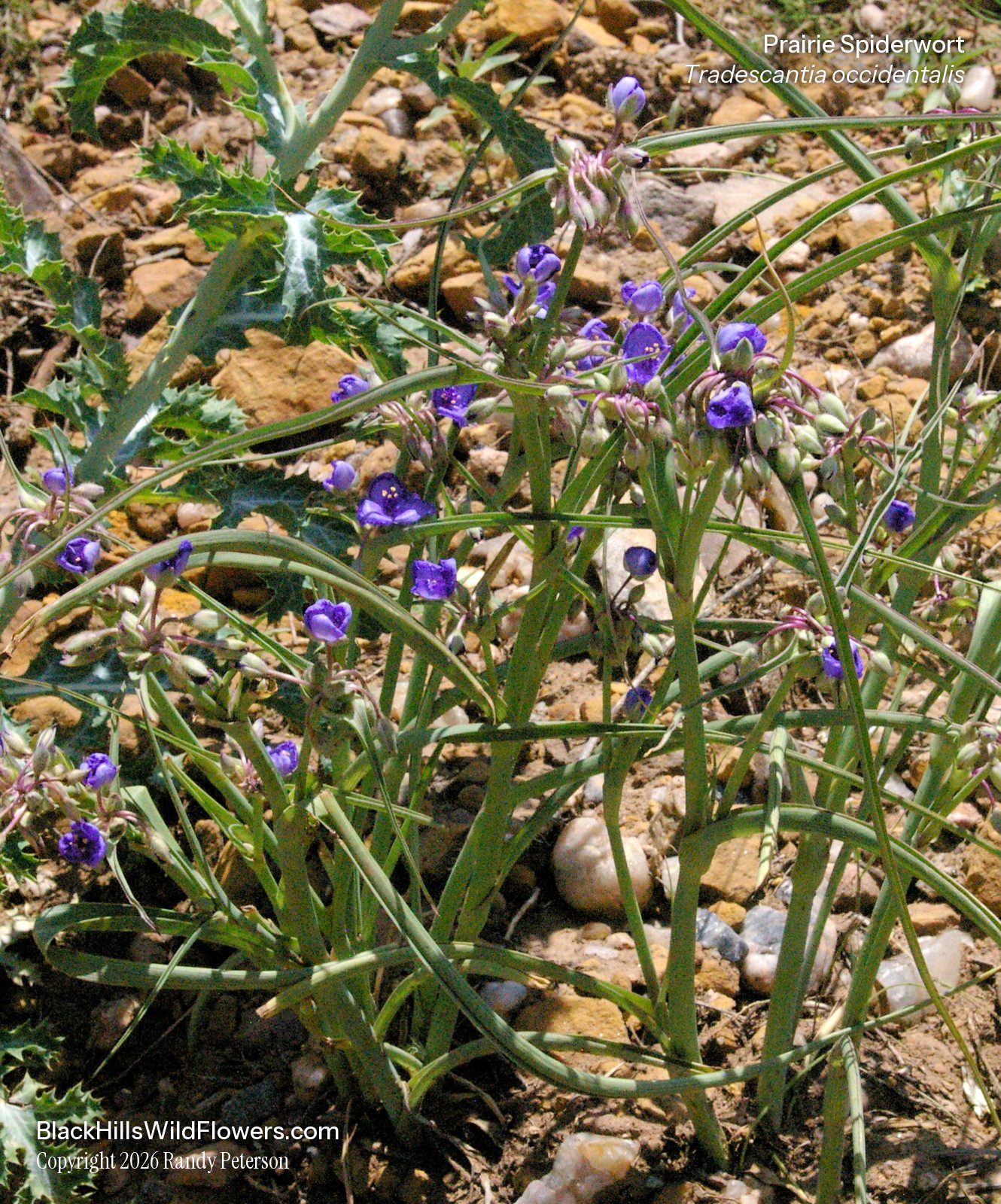
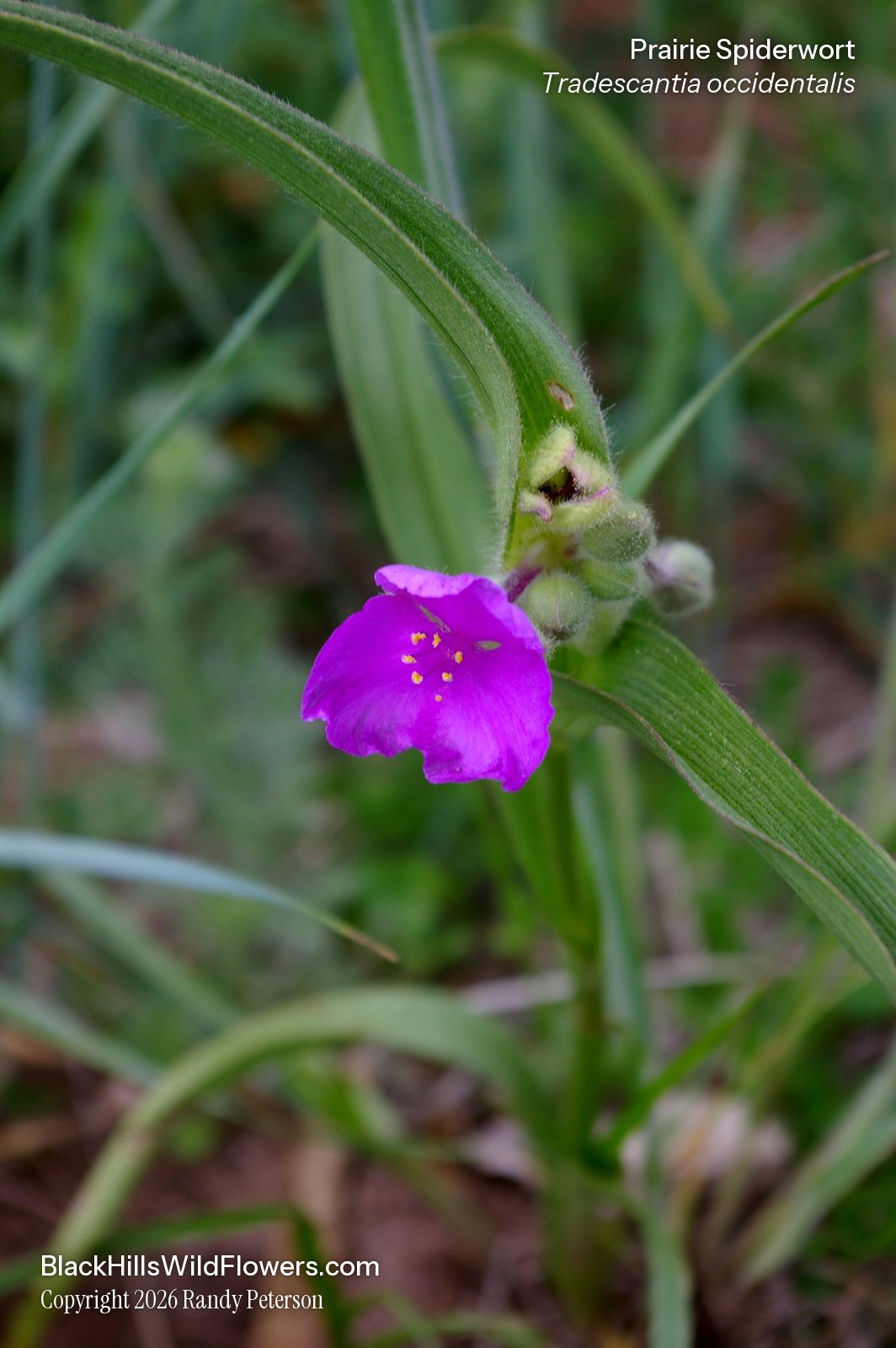
Prairie Spiderwort (Tradescantia occidentalis) is a native perennial with three-petaled blue to rose flowers, bright yellow stamens and narrow, folded leaves on a slender zigzag stem. It grows in sandy, disturbed soils in western and northeastern South Dakota and blooms May into August, each flower opening in the morning and usually wilting by noon. Photographed in the Black Hills.
| Family | Commelinaceae · Spiderwort |
|---|---|
| Status | Native perennial |
| Blooms | May into August |
| Height | 20–60 cm (8–24 in) |
| Where | Sandy, disturbed soils and dry prairies and plains |
| Also called | Western Spiderwort |
Roots, seeds & germination
Root: Fleshy, succulent roots.
Seed: A rounded three-part capsule holds up to 6 gray, oblong seeds about 2–4 mm long.
Germination: Sow outdoors in fall after the first frost. Seeds need a long cold treatment of about 120 days.
How do you identify Prairie Spiderwort?
Look for stiff, narrow, hairless leaves folded lengthwise, a smooth waxy stem, and leaf-like bracts under the flower cluster that are narrower than the leaves and also folded. Sepals and flower stalks have short glandular hairs. Bracted Spiderwort (Tradescantia bracteata), not in this guide, has longer, denser hairs and broad bracts often wider and longer than the leaves, and rarely branches. The two hybridize in South Dakota, so some plants fall in between.
When does it bloom?
May into August.
Where does it grow?
Sandy, disturbed soils and dry prairies and plains. It tolerates heat and drought and can also grow in rich, well-drained soils.
Other flowers to compare
Sources: SDSU Open PRAIRIE: Tradescantia occidentalis (R. Neil Reese); Minnesota Wildflowers: Tradescantia occidentalis (Spiderwort); Minnesota Wildflowers: Tradescantia bracteata (Long-bracted Spiderwort); Flora of North America: Tradescantia occidentalis; Montana Field Guide: Prairie Spiderwort; New York Botanical Garden, Gleason and Cronquist Manual treatment: Tradescantia occidentalis; Kansas Wildflowers and Grasses: Prairie spiderwort; National Park Service, Devils Tower National Monument: Native Plants.