Fringed Puccoon
Lithospermum incisum
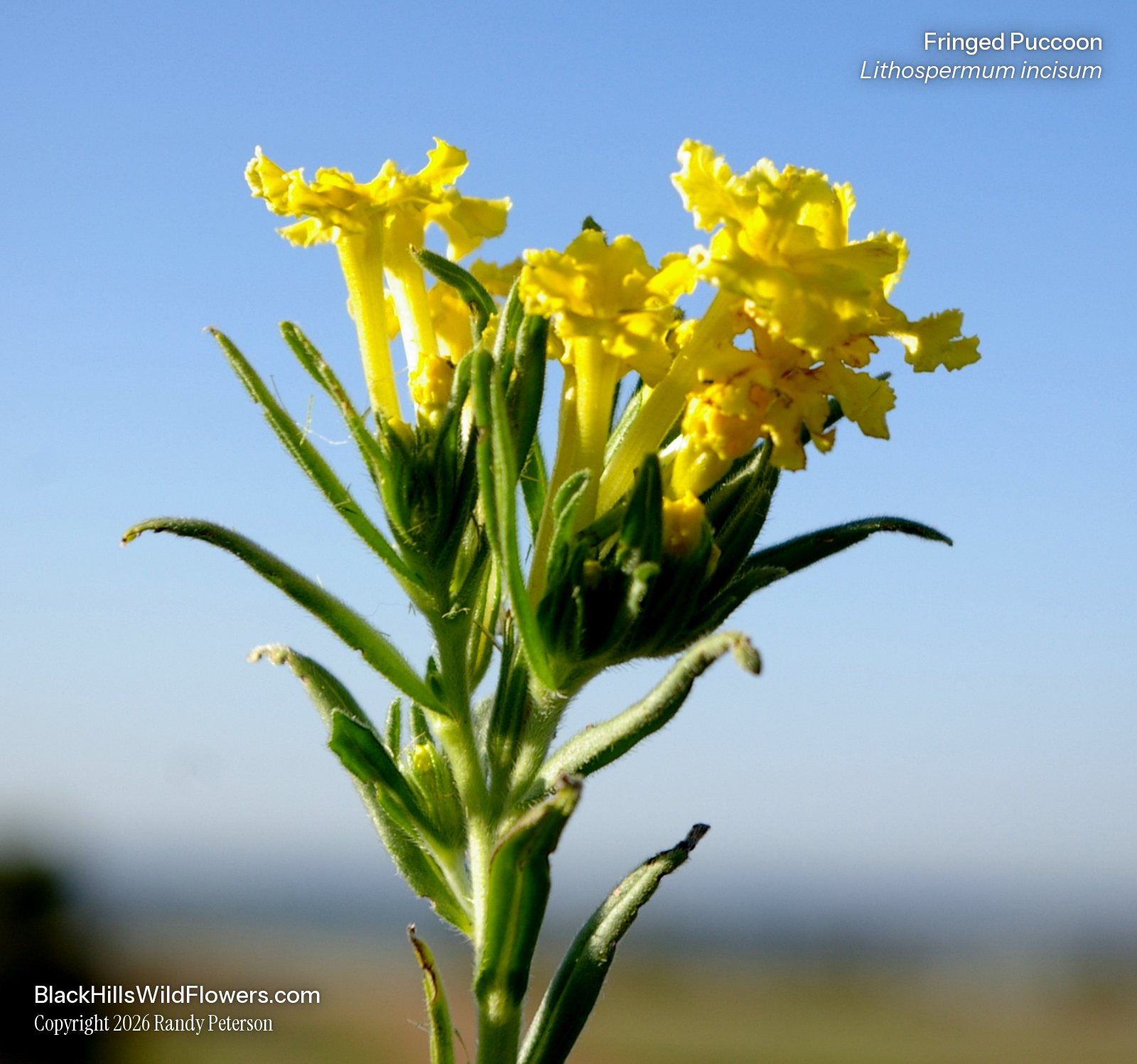
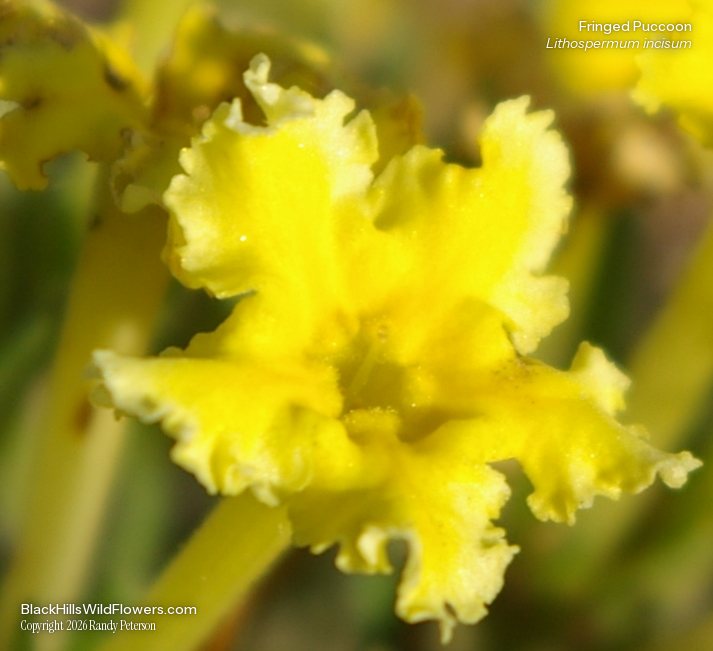
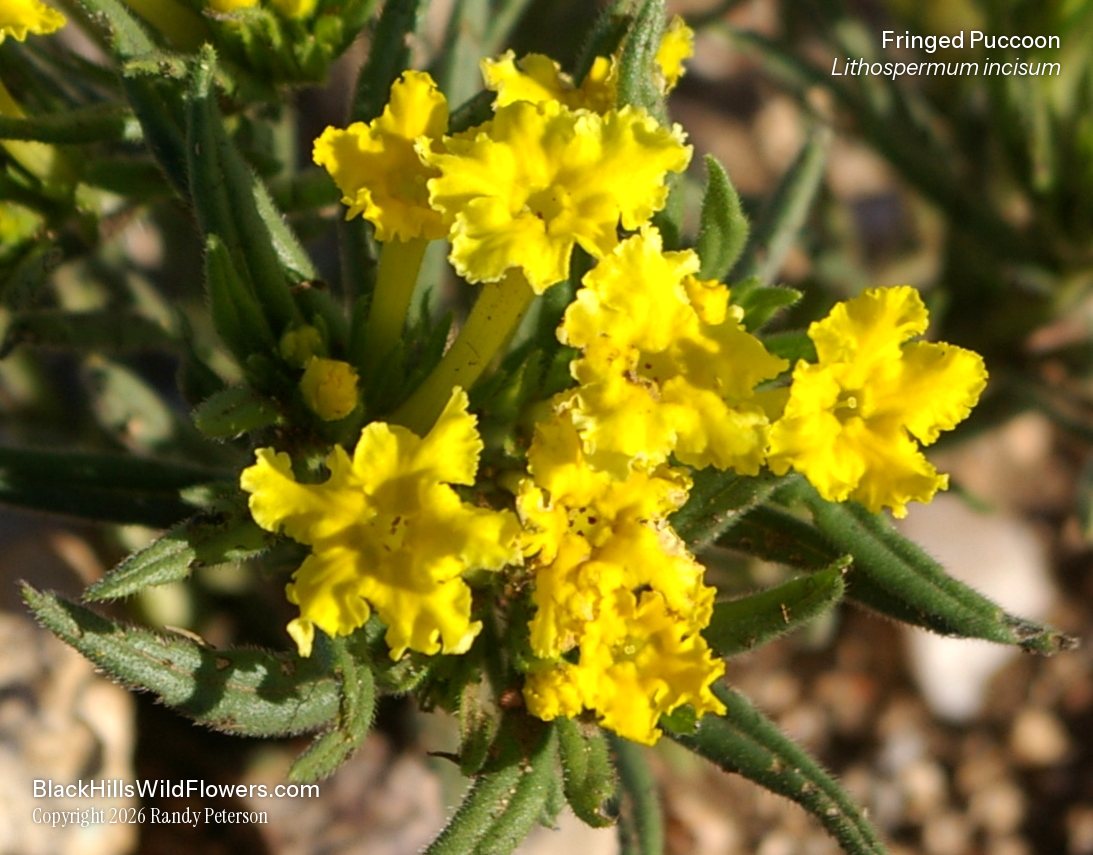
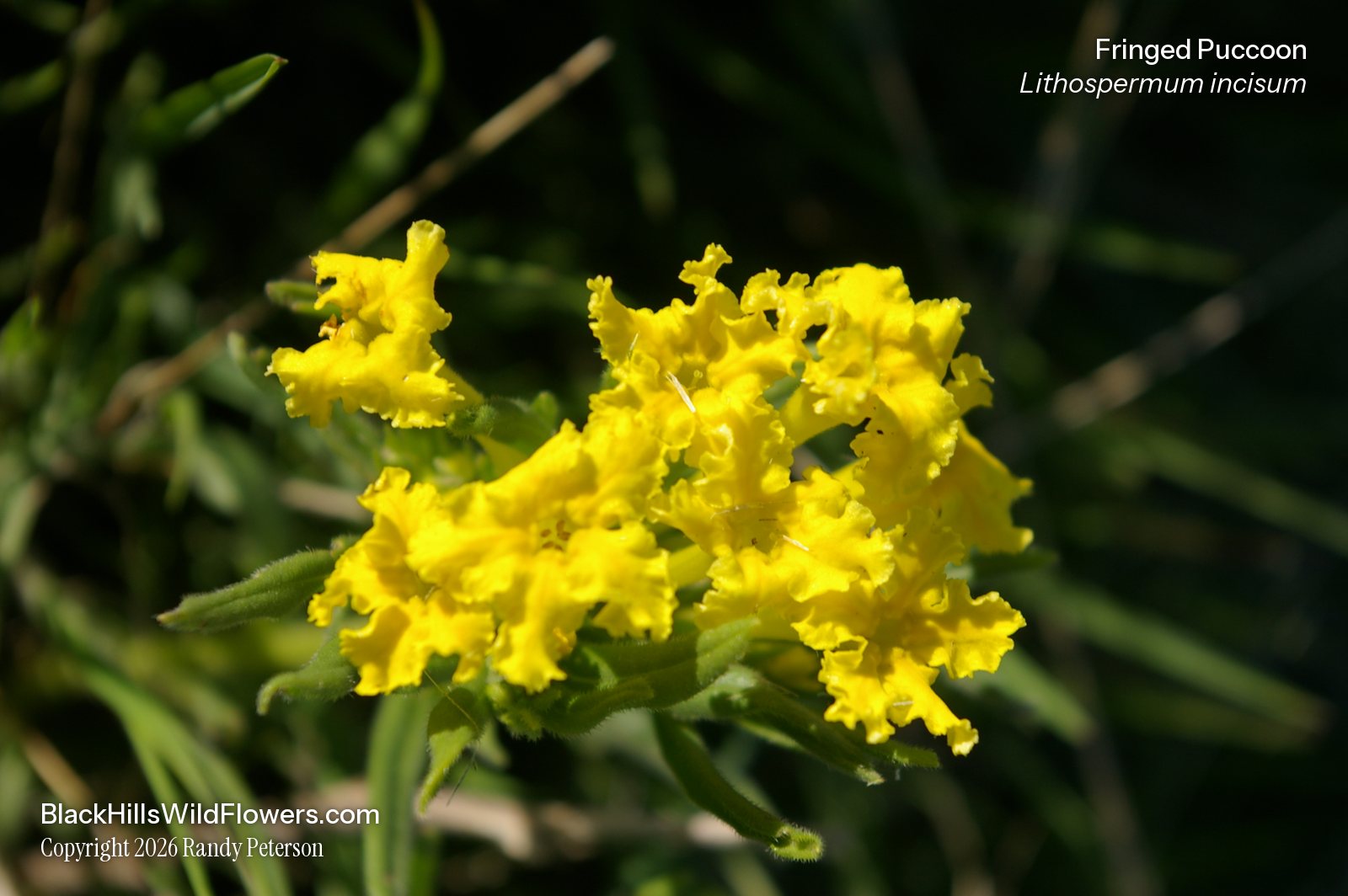
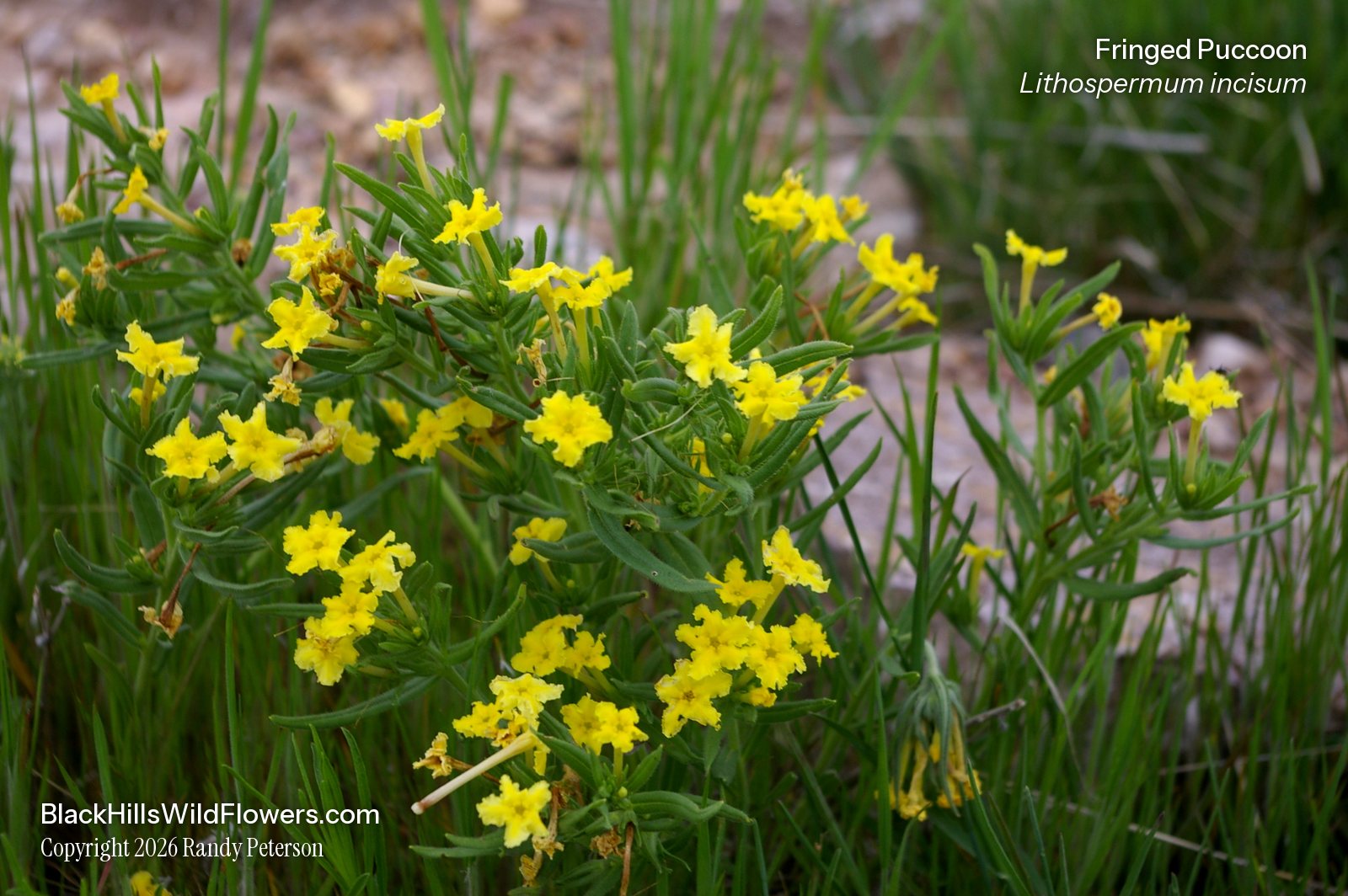
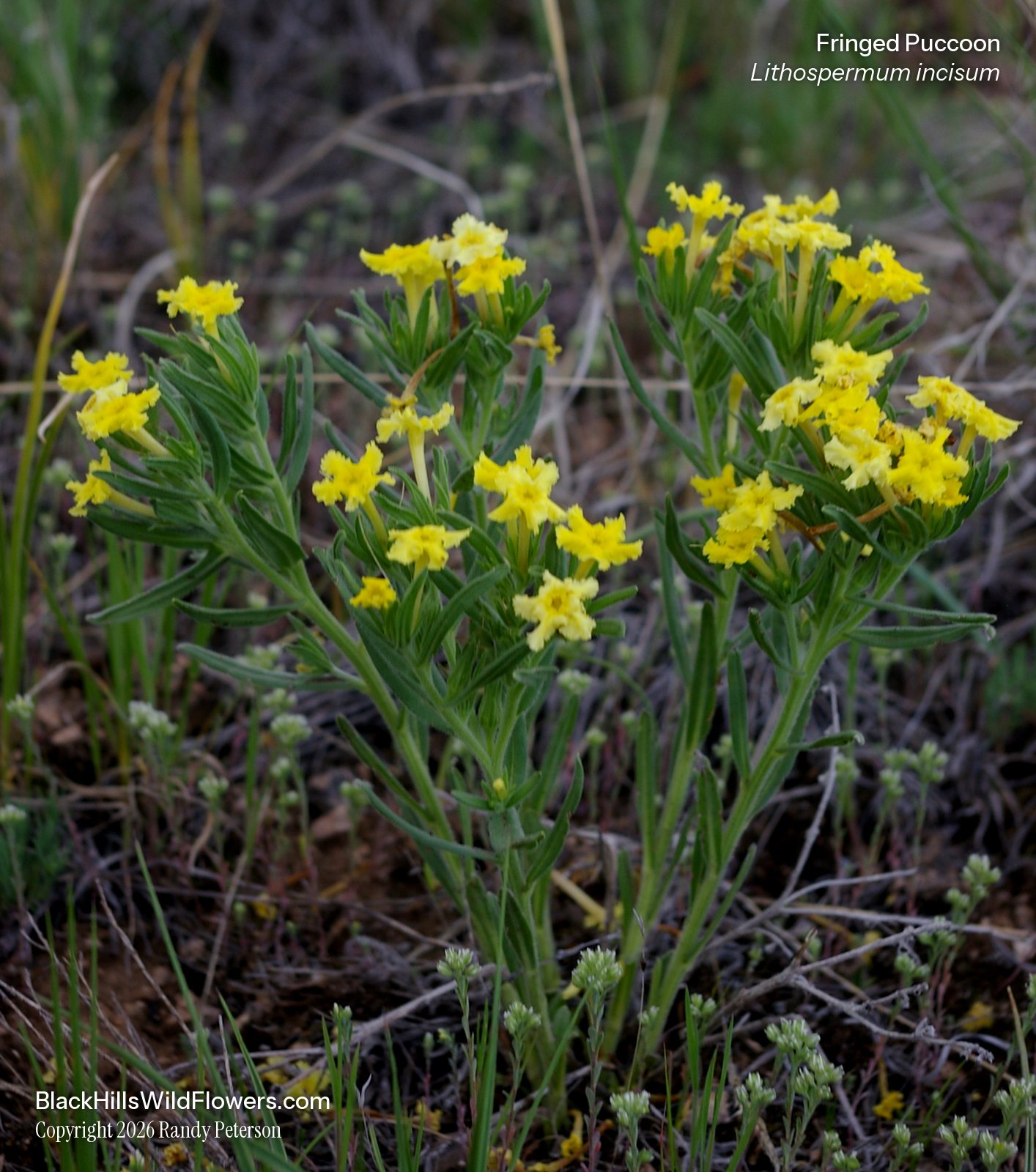
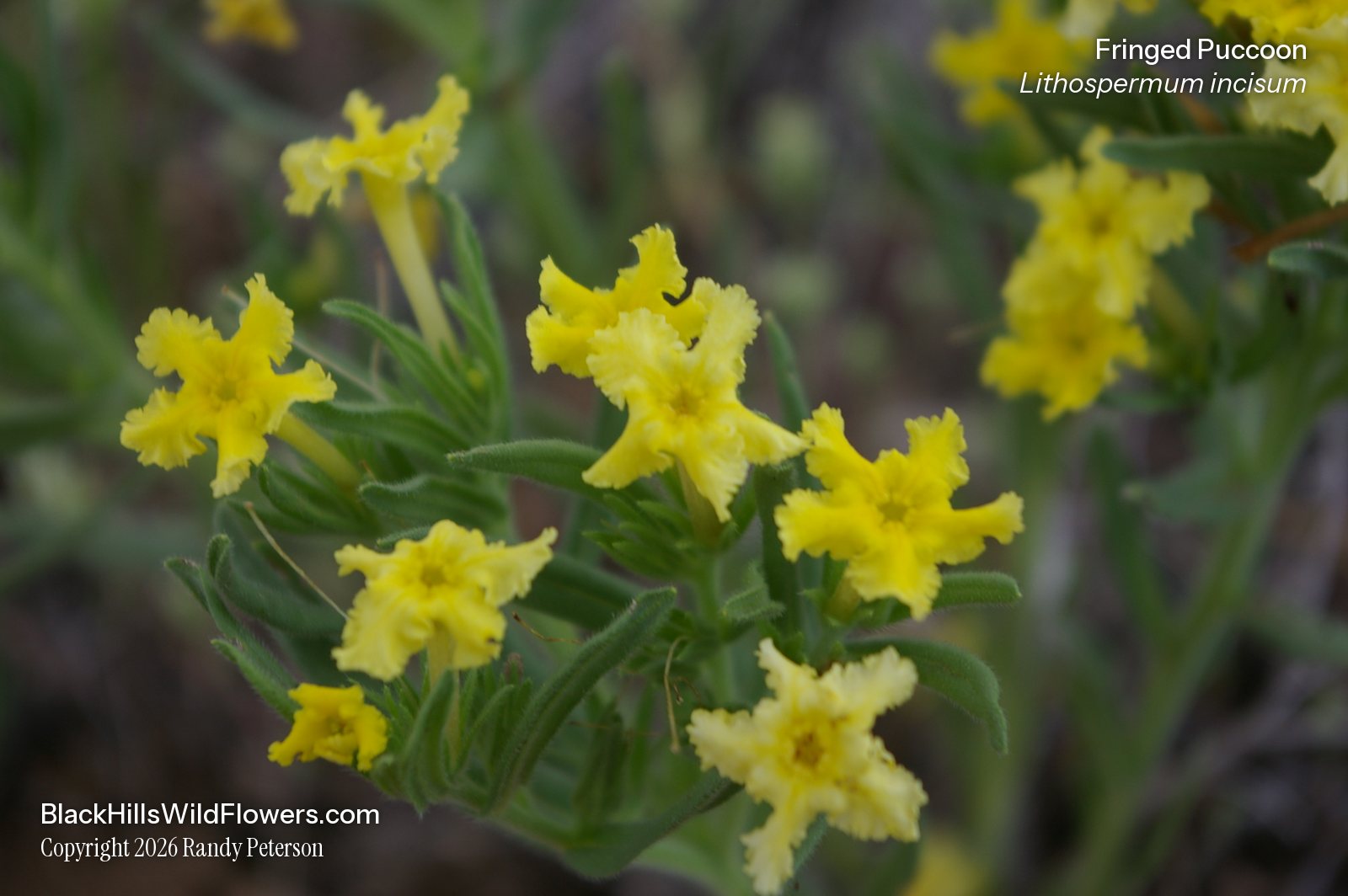
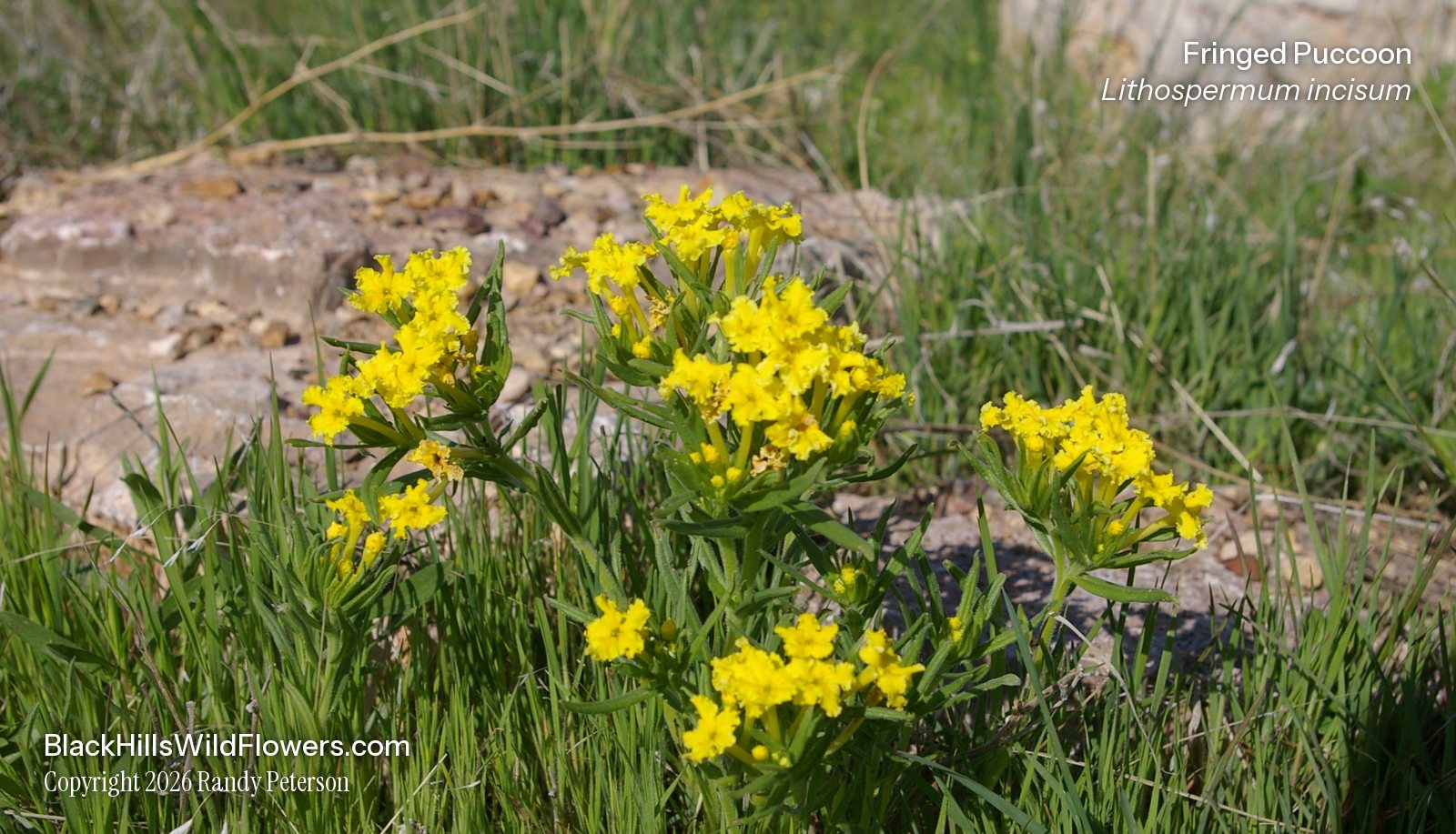
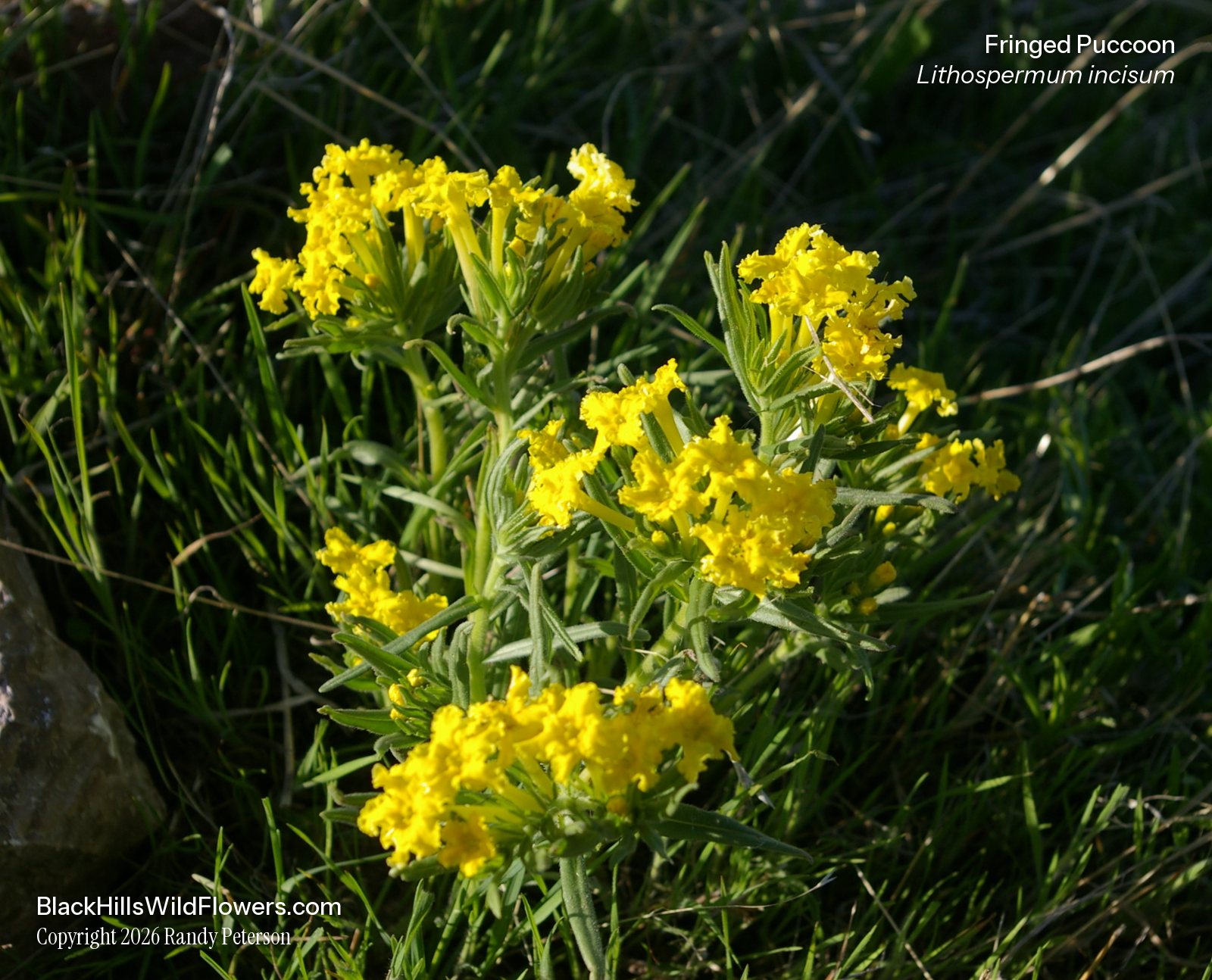
Fringed Puccoon (Lithospermum incisum) is a low native perennial with narrow leaves and trumpet-shaped yellow flowers whose lobes are fringed or ruffled. It blooms April to June over much of South Dakota in dry prairies, open woods and disturbed areas, and the 1986 plant survey of Jewel Cave National Monument lists it in the Black Hills. Photographed in the Black Hills.
| Family | Boraginaceae · Borage |
|---|---|
| Status | Native perennial |
| Blooms | April to June |
| Height | 5–25 cm (2–10 in) |
| Where | Dry prairies, open woods and disturbed areas |
| Also called | Narrowleaf Stoneseed, Narrow-leaf Puccoon, Yellow Puccoon, Narrowleaf Gromwell, Cleft Gromwell, pȟežúta sapsápa (Lakota) |
| Traditional use | Sitting Bull College's 1998 Culturally Important Plants of the Lakota records that the root was chewed for colds and coughs, and that a root infusion was used for stomach aches and kidney pain. |
Roots, seeds & germination
Root: A woody, branched caudex (the short, thick base of the stem).
Seed: An egg-shaped nutlet, 3–4 mm long, with a pitted surface that ripens to shiny white. Collect in June and July.
Germination: Fall planting generally works best. For spring planting, soak the seeds overnight in hot water first.
How do you identify Fringed Puccoon?
Look for frilly yellow to yellow-orange trumpets on a slender tube 2–4 cm long, crowded at the stem tips, with narrow, pointed, stalkless leaves. Stems carry stiff, straight hairs that lie flat. Later in the season it makes small, petal-less, self-fertilizing flowers that are easy to miss.
When does it bloom?
April to June.
Where does it grow?
Dry prairies, open woods and disturbed areas over much of South Dakota, usually in dry sandy or rocky soil and full sun. The 1986 Jewel Cave survey lists it.
Other flowers to compare
Sources: SDSU Open PRAIRIE: Lithospermum incisum; Minnesota Wildflowers: Narrow-leaf Puccoon; USGS Northern Prairie PlantID: Lithospermum incisum; Marriott and Hartman 1986, A Survey of the Vegetation of Jewel Cave National Monument; Culturally Important Plants of the Lakota (Black Elk and Flying By, Sitting Bull College, 1998), filed with the South Dakota PUC.