Yellow Monkeyflower
Erythranthe guttata
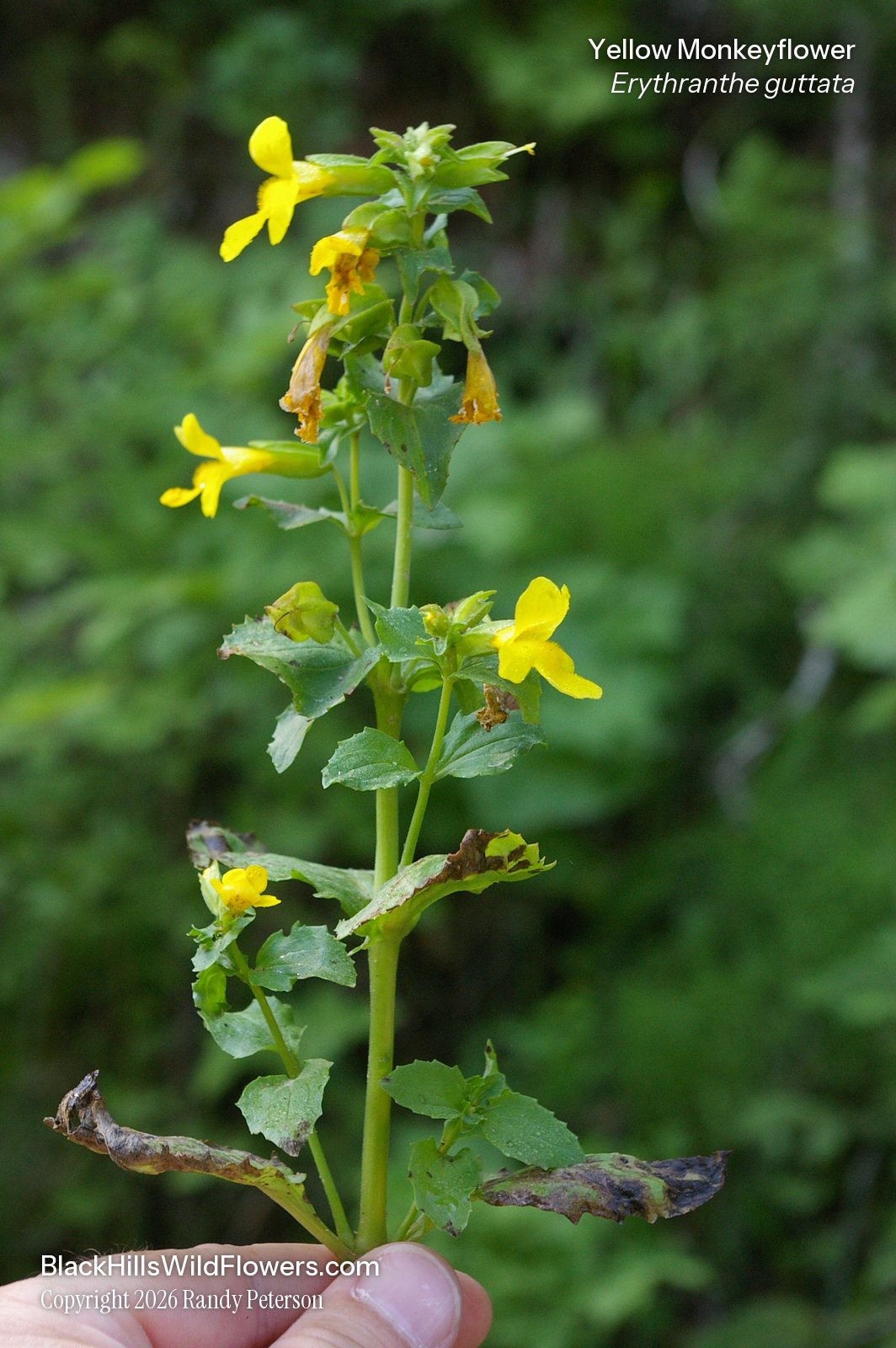
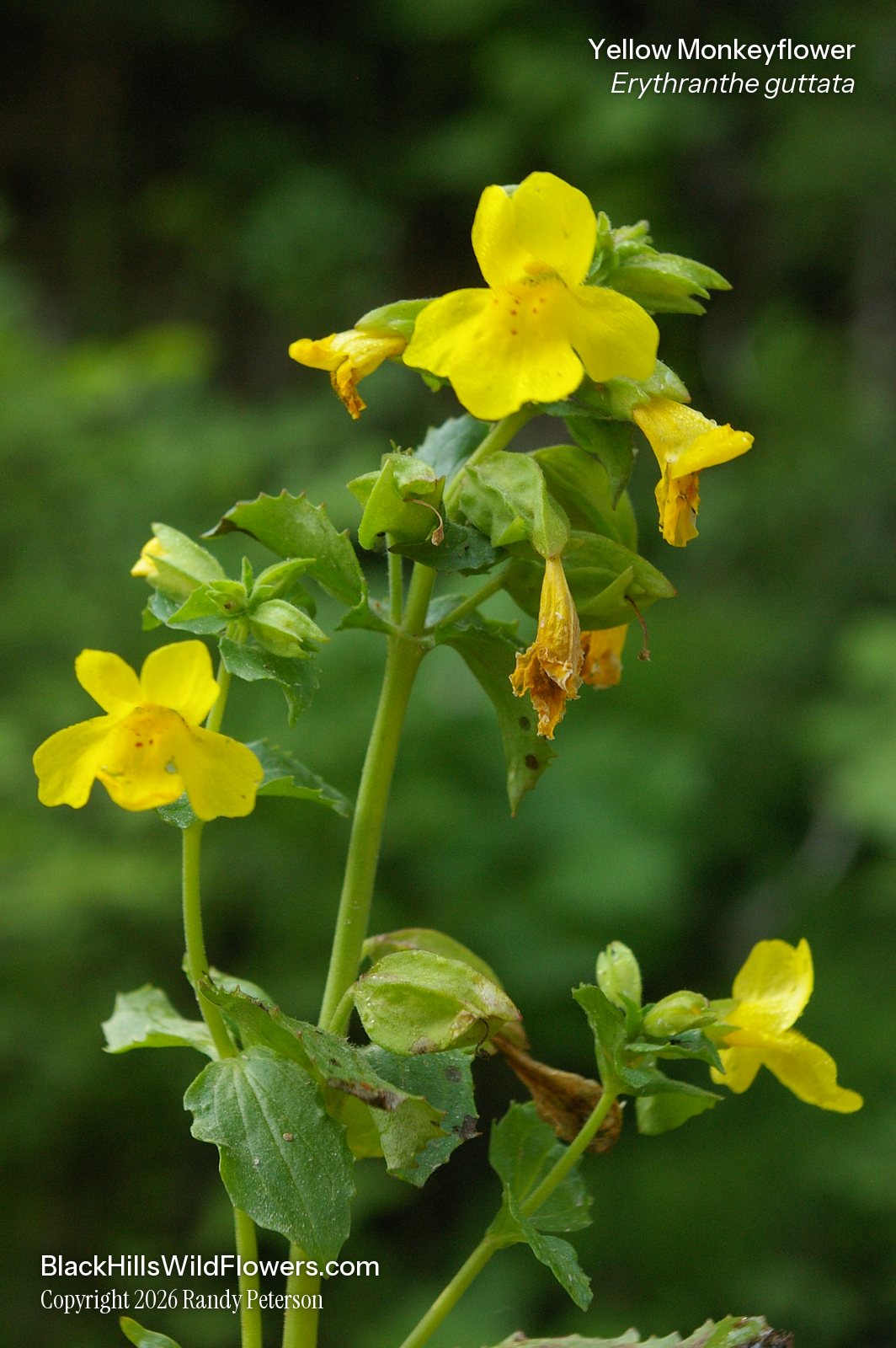
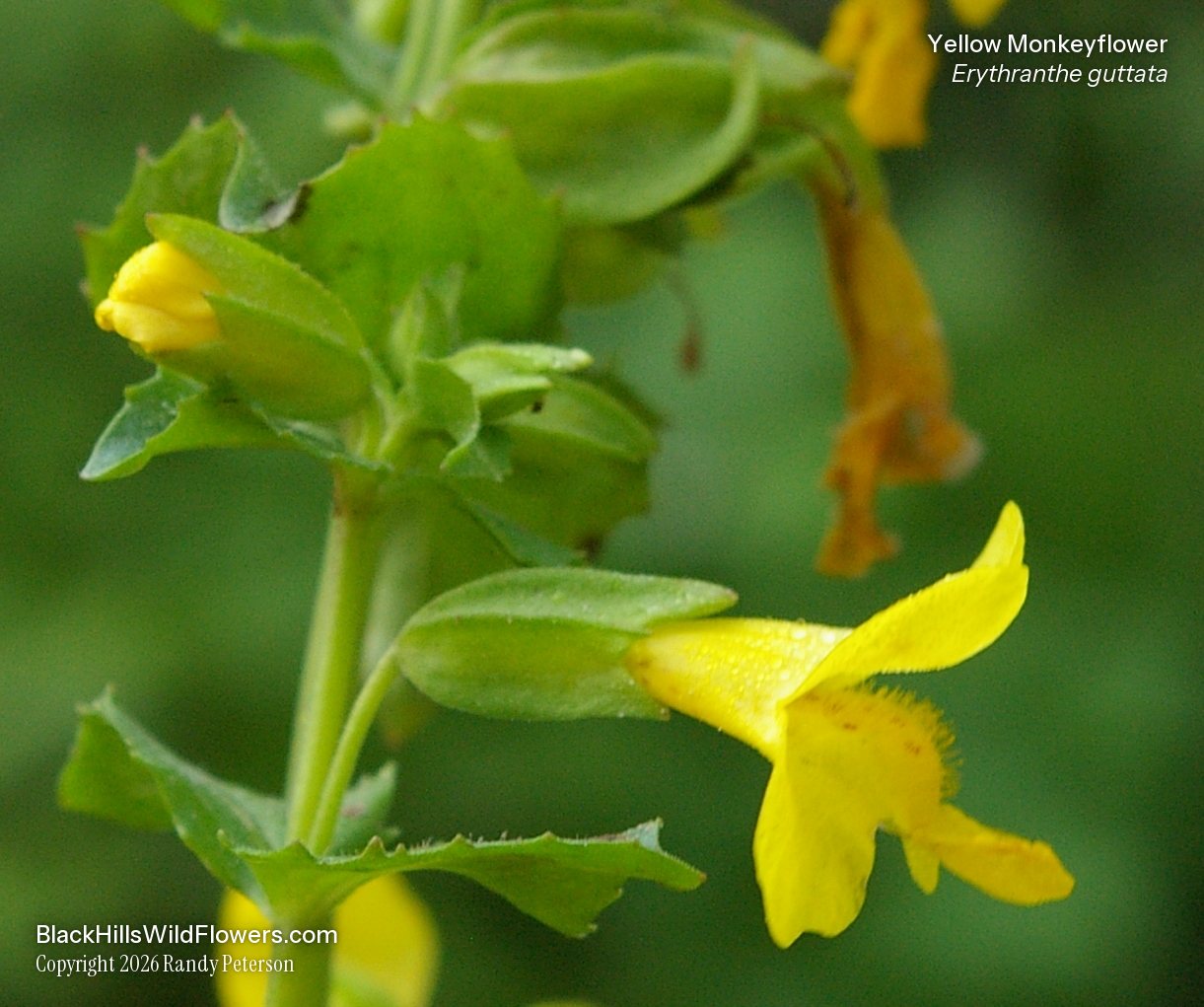
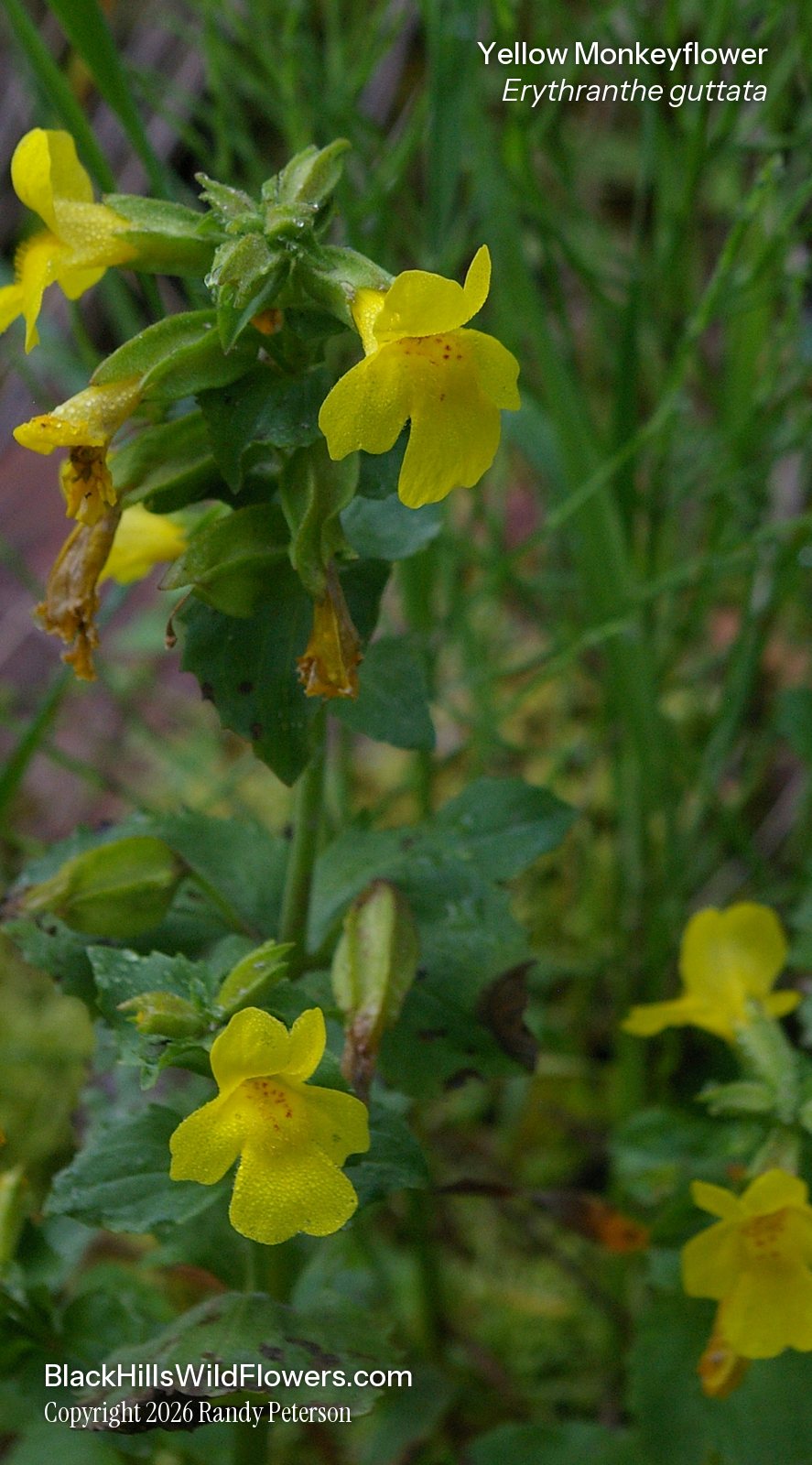
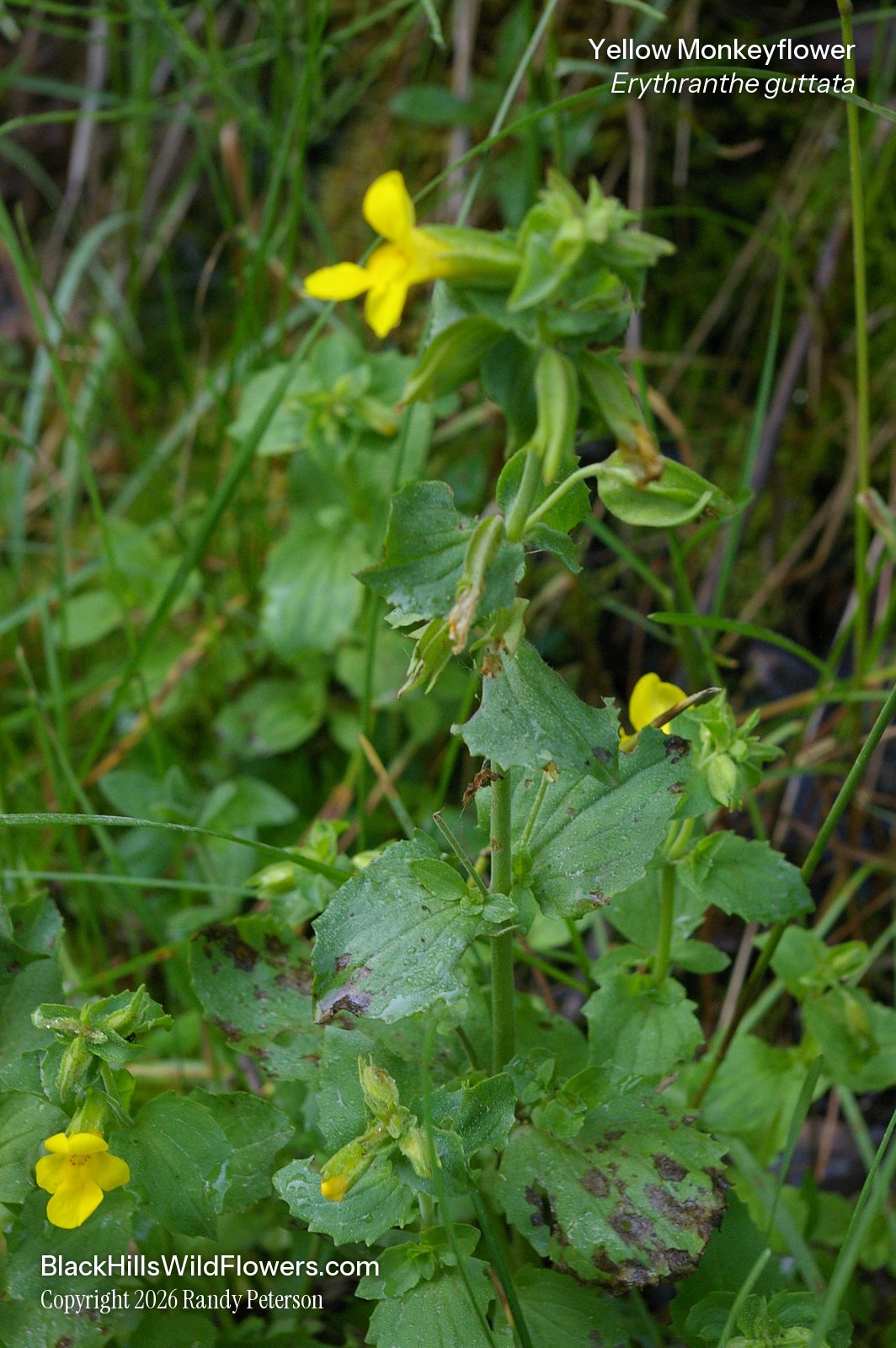
Yellow Monkeyflower (Erythranthe guttata) is a native wetland plant with opposite, toothed leaves and two-lipped, funnel-shaped yellow flowers with red spots in the throat. It blooms April into September in wet meadows, seeps, springs and stream banks, and in South Dakota it is found mainly in the western part of the state. Photographed in the Black Hills.
| Family | Phrymaceae · Lopseed |
|---|---|
| Status | Native perennial |
| Blooms | April into September |
| Height | 38–76 cm (15–30 in) |
| Where | Wet meadows, seeps, springs and stream banks |
| Also called | Seep Monkeyflower, Common Monkeyflower, Golden Monkeyflower, Common Yellow Monkeyflower |
| Synonym | Mimulus guttatus, Mimulus langsdorffii, Mimulus lyratus |
Roots, seeds & germination
Root: Fibrous roots. Plants often spread by creeping stolons or rhizomes (runners or underground stems).
Seed: A dry oval capsule 7–12 mm long that splits to release hundreds of tiny seeds, maturing from mid-summer into autumn.
Germination: Seed needs light, so sow it on the surface. Fall sowing works well, and cold treatment improves spring sowing outdoors.
How do you identify Yellow Monkeyflower?
Look for two-lipped yellow flowers 12–20 mm long with a bearded throat and red spots, on plants growing in wet ground. Leaves are opposite and toothed, and the upper ones have no stalk and clasp the stem.
When does it bloom?
April into September.
Where does it grow?
Wet meadows, seeps, springs and stream banks. In South Dakota it is found mainly in the western part of the state. It needs constantly wet soil.
Other flowers to compare
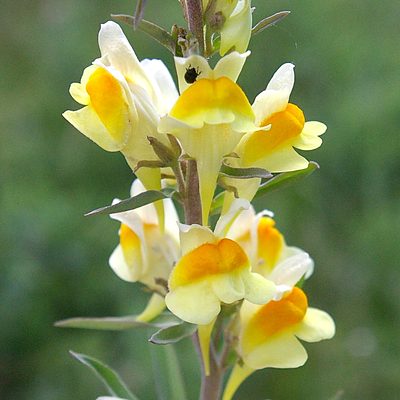
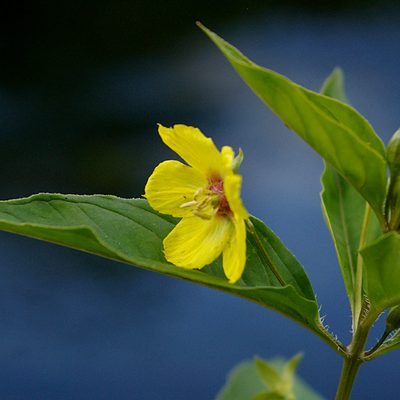
Sources: SDSU Open PRAIRIE: Mimulus guttatus; Lady Bird Johnson Wildflower Center: Erythranthe guttata; University of Washington ESRM 412 protocol: Mimulus guttatus.