Fringed Loosestrife
Lysimachia ciliata
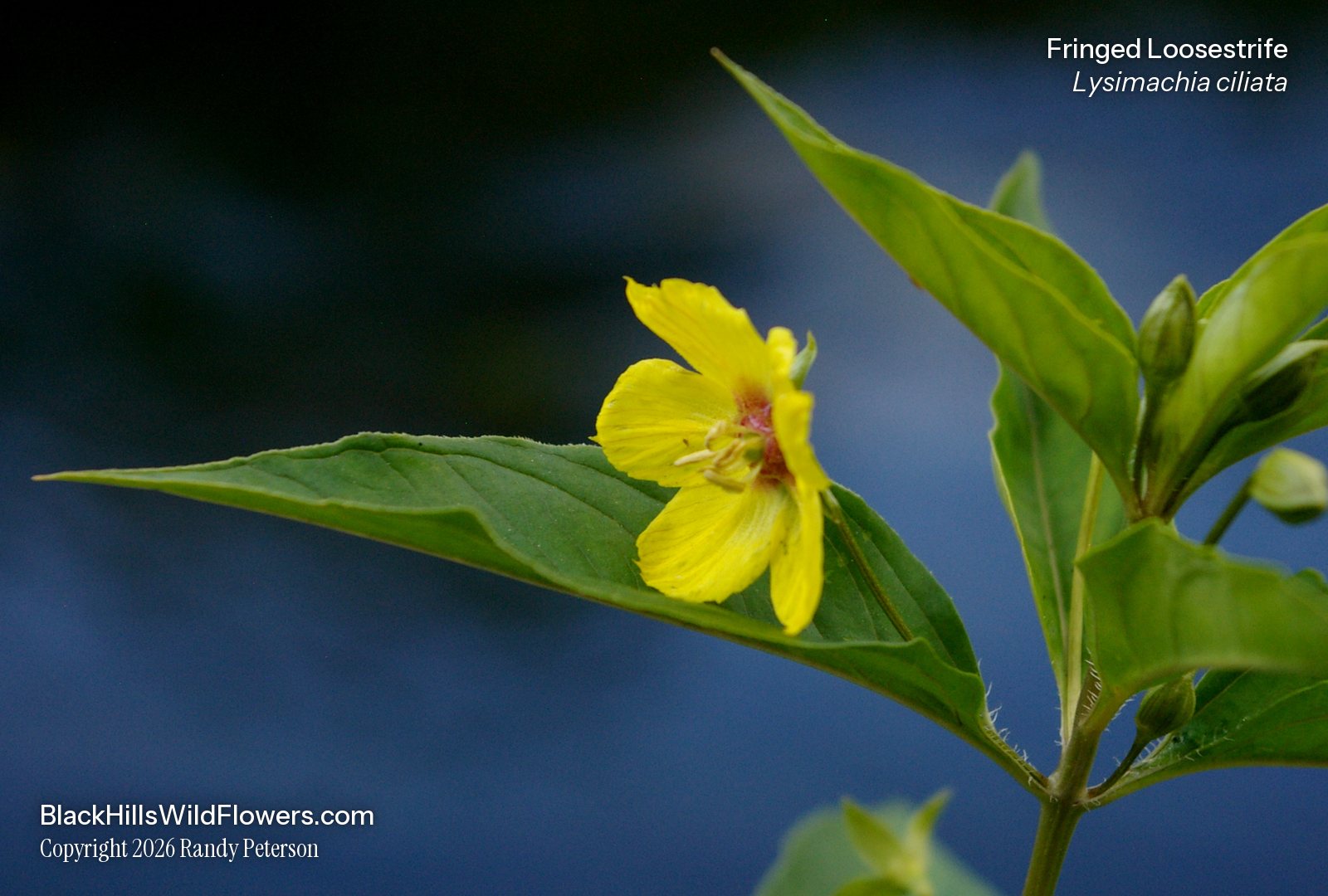
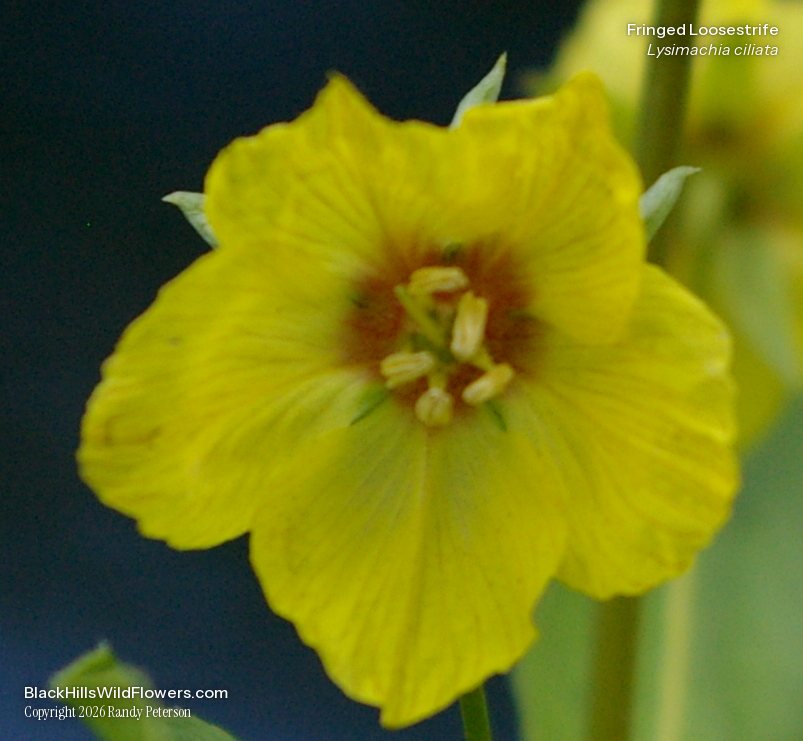
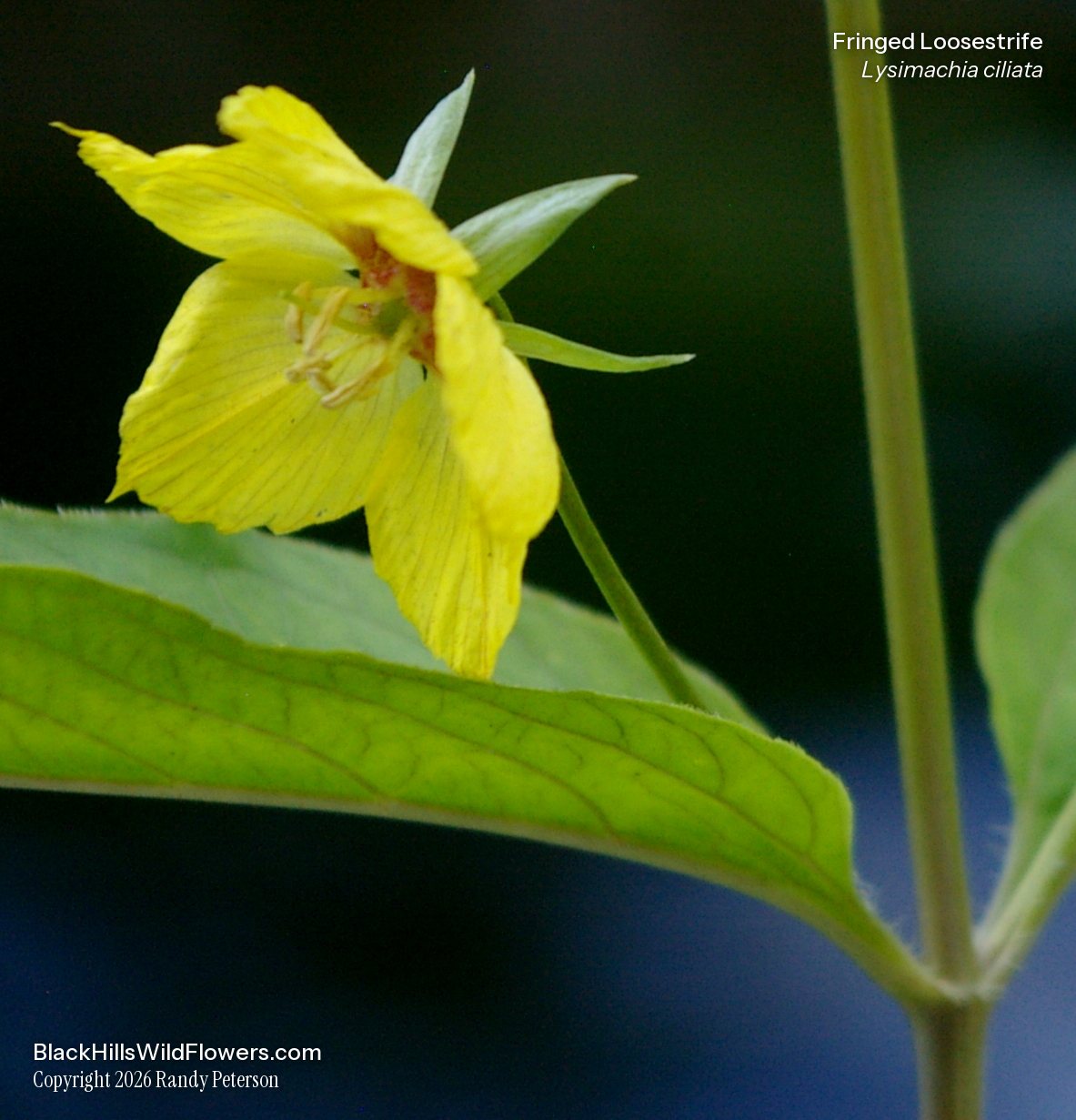
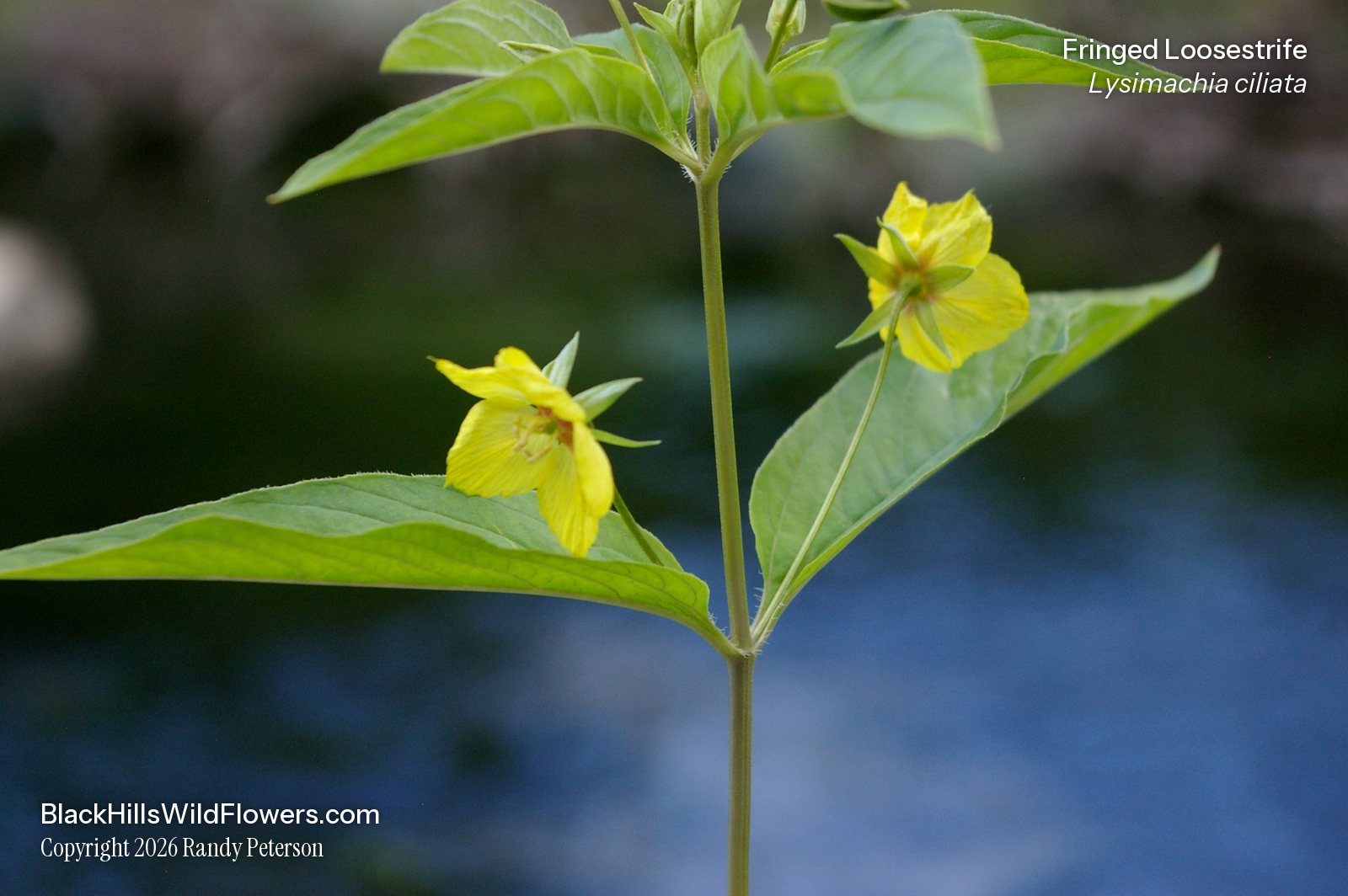
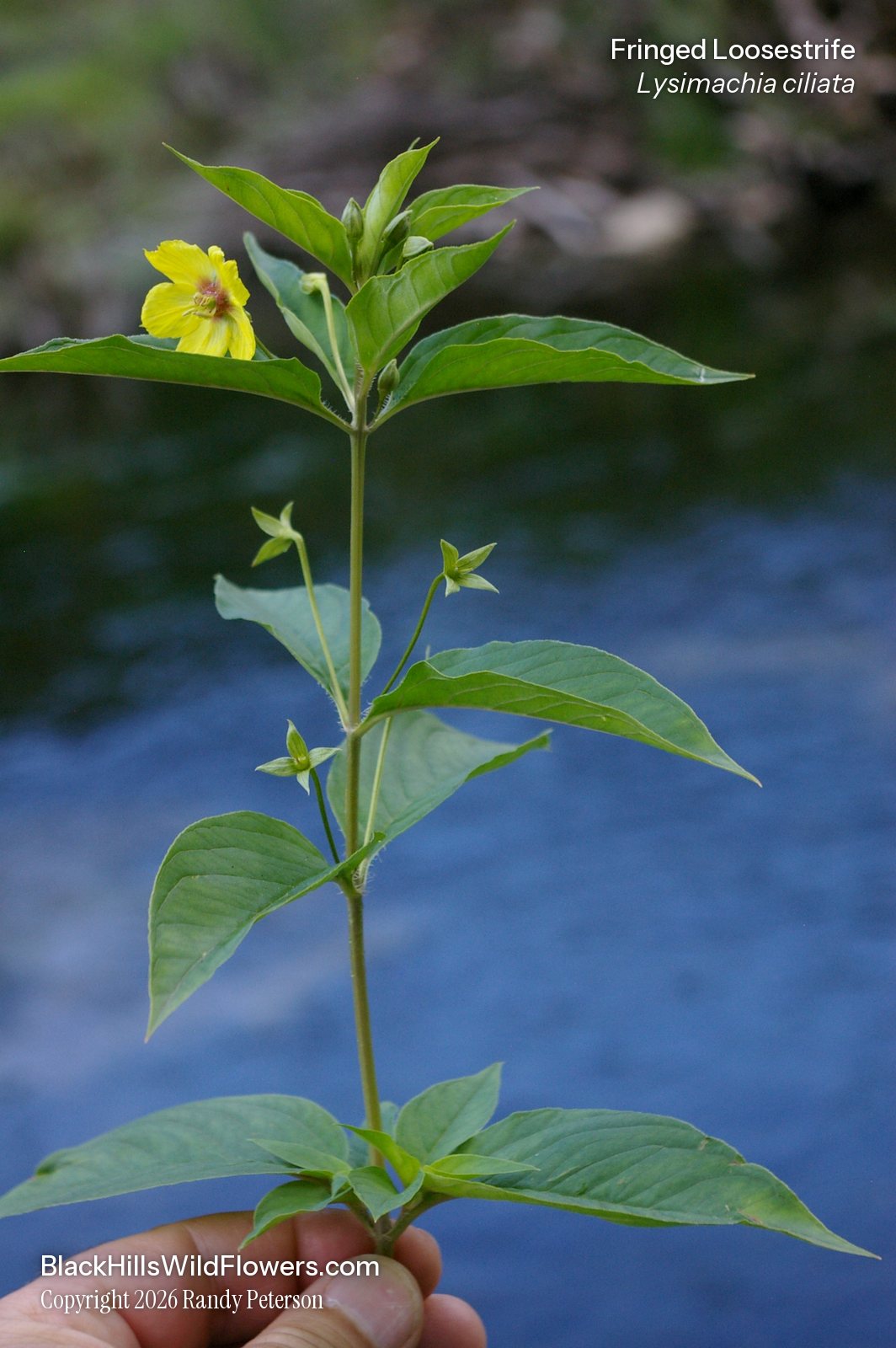
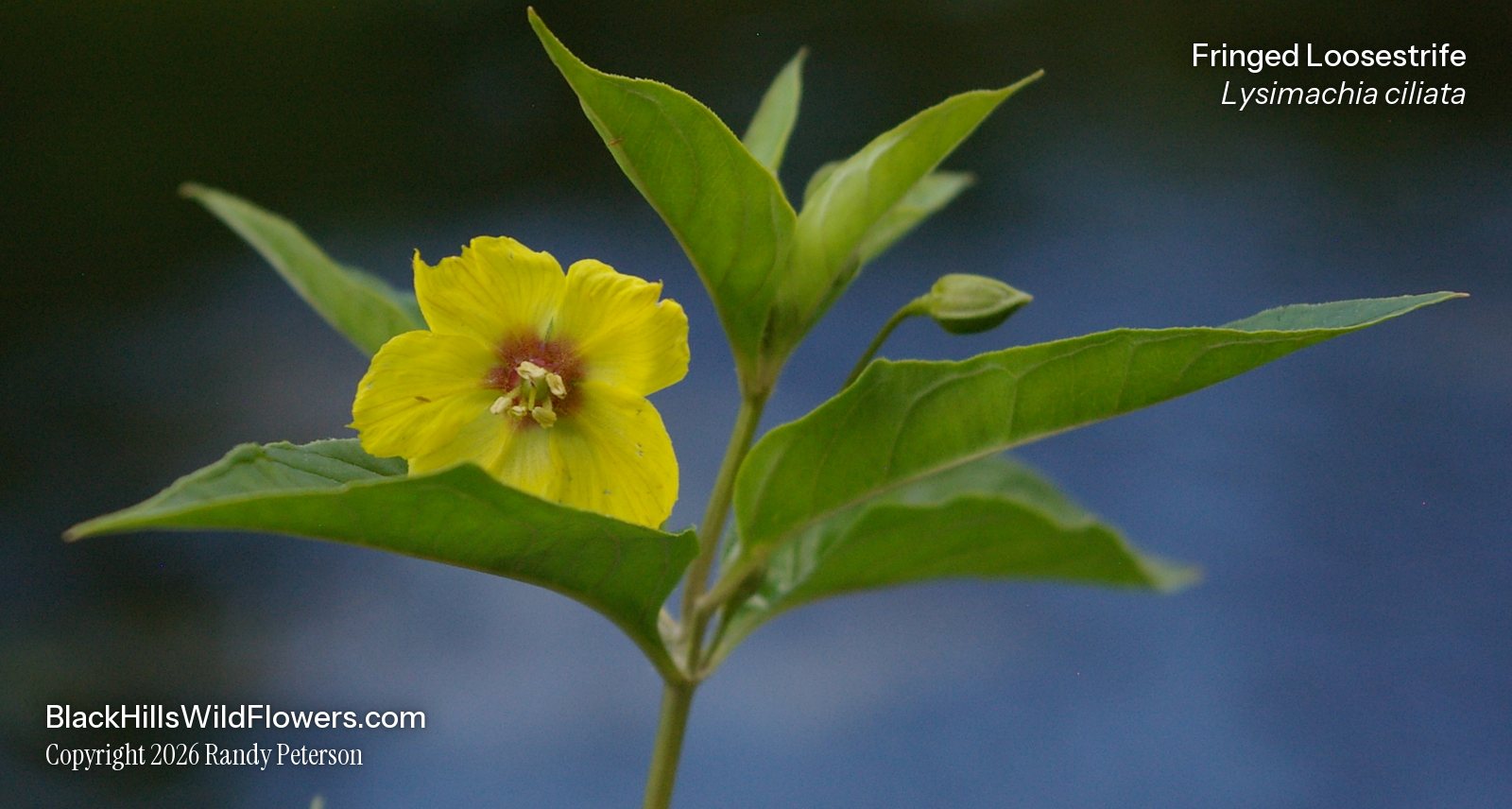
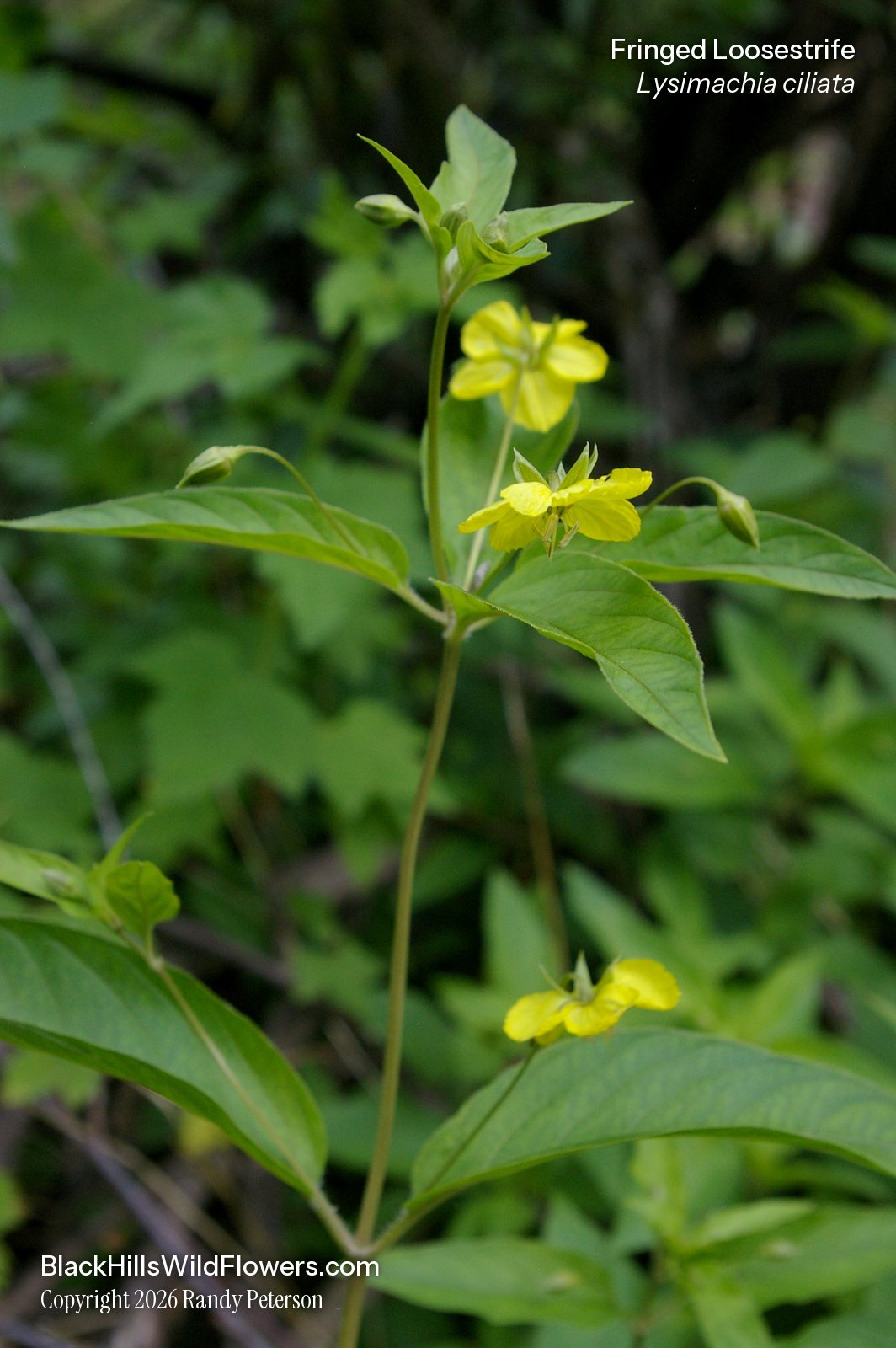
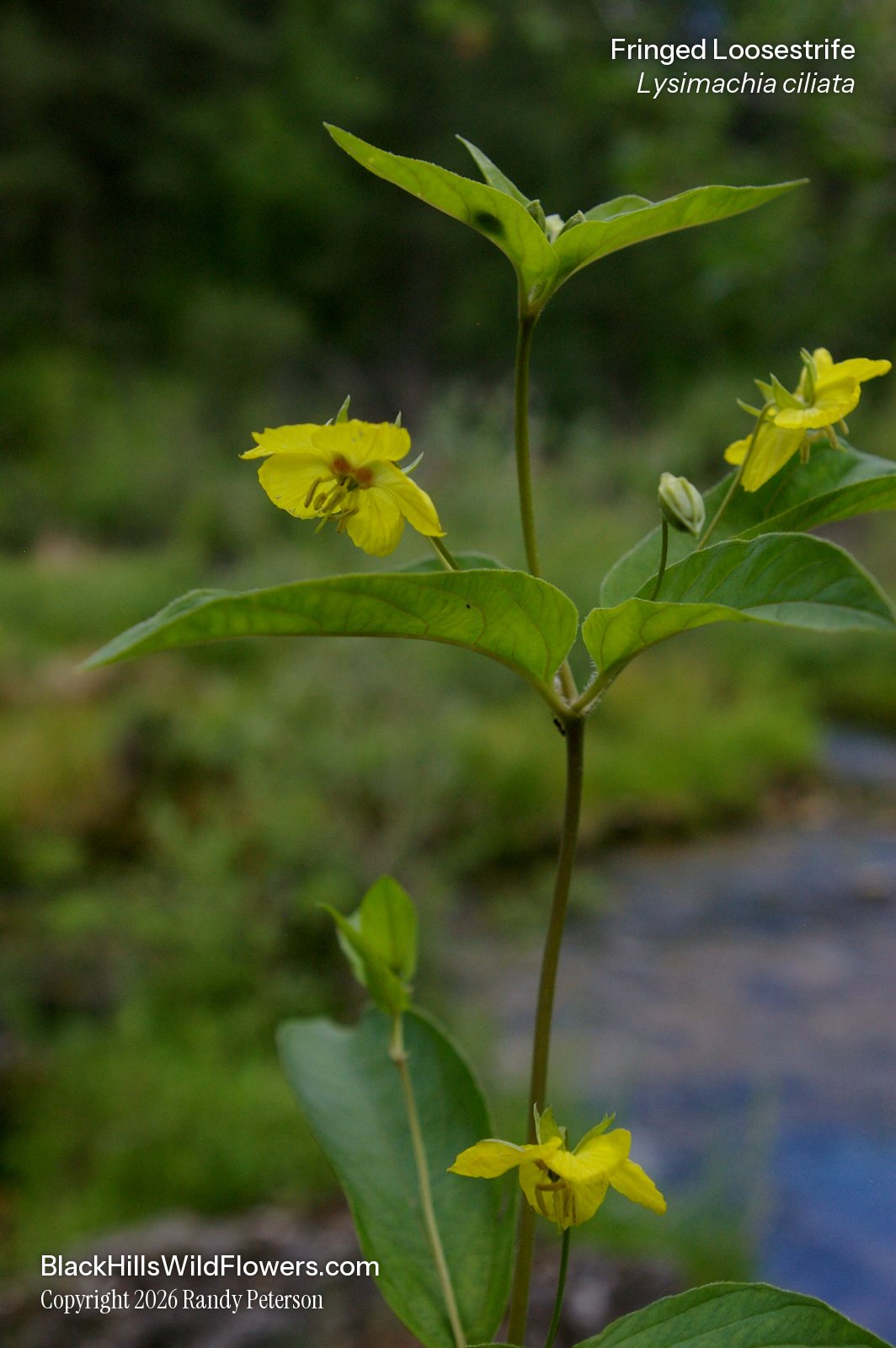
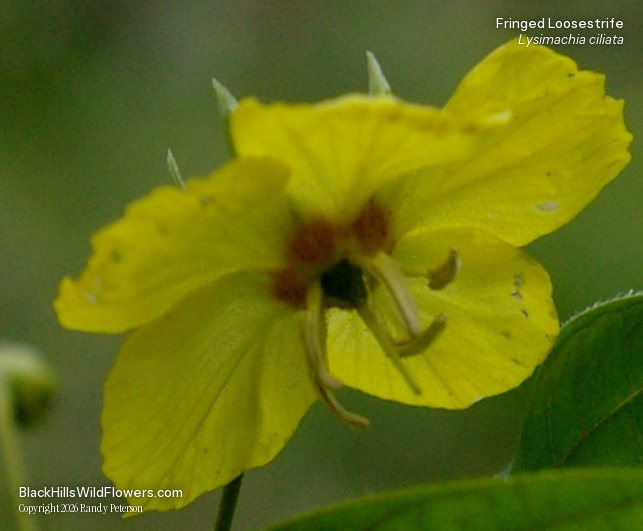
Fringed Loosestrife (Lysimachia ciliata) is a native perennial with paired leaves, hairs fringing the leaf stalks and nodding pale yellow flowers. In neighboring Minnesota it blooms June through August in moist thickets, shorelines and floodplains, and the 1986 plant survey of Jewel Cave National Monument lists it in the Black Hills. Photographed in the Black Hills.
| Family | Primulaceae · Primrose |
|---|---|
| Status | Native perennial |
| Blooms | June through August |
| Height | 30–120 cm (12–47 in) |
| Where | Moist thickets, stream banks, floodplains and wet meadows |
| Also called | Fringed Yellow Loosestrife |
| Synonym | Steironema ciliatum |
Roots, seeds & germination
Seed: The fruit is a nearly round to egg-shaped capsule.
How do you identify Fringed Loosestrife?
Look for the conspicuous hairs along the leaf stalks and fairly broad leaves in opposite pairs, up to 15 cm long. The flowers hang from the upper leaf axils, about 2.5 cm across, pale to medium yellow with five petals, often with a red spot at the base of each.
When does it bloom?
June through August.
Where does it grow?
Moist thickets, swamps, shorelines, floodplains, wet meadows and stream banks, in part shade or sun. The 1986 Jewel Cave survey lists it.
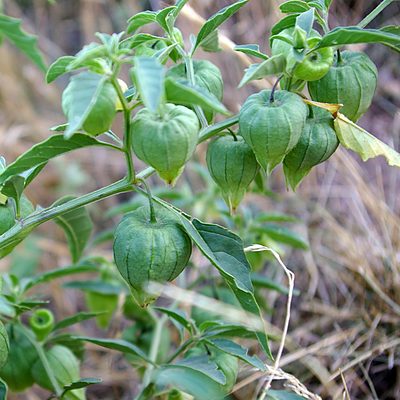
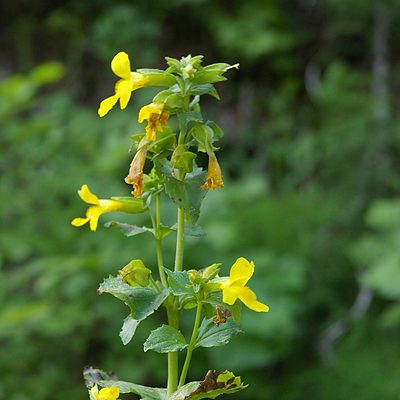
Other flowers to compare
Sources: Minnesota Wildflowers: Fringed Loosestrife; Kansas Wildflowers: Fringed Loosestrife; Thoreson 1988, A Comparative Study of Riparian Vegetation in Two Drainage Areas of the Black Hills (SDSU thesis); Lady Bird Johnson Wildflower Center: Lysimachia ciliata; Marriott and Hartman 1986, A Survey of the Vegetation of Jewel Cave National Monument.