Hound's Tongue
Cynoglossum officinale
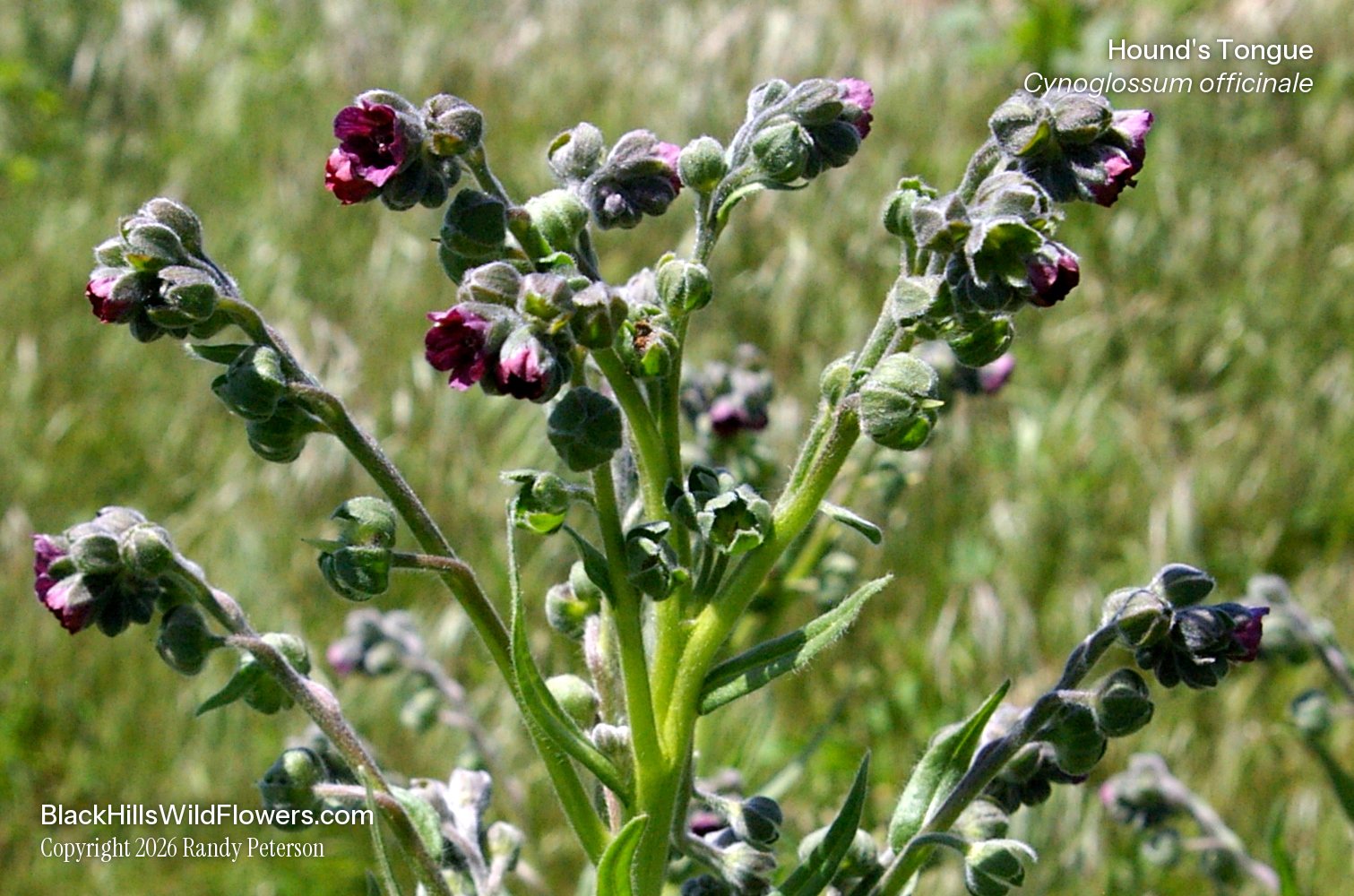
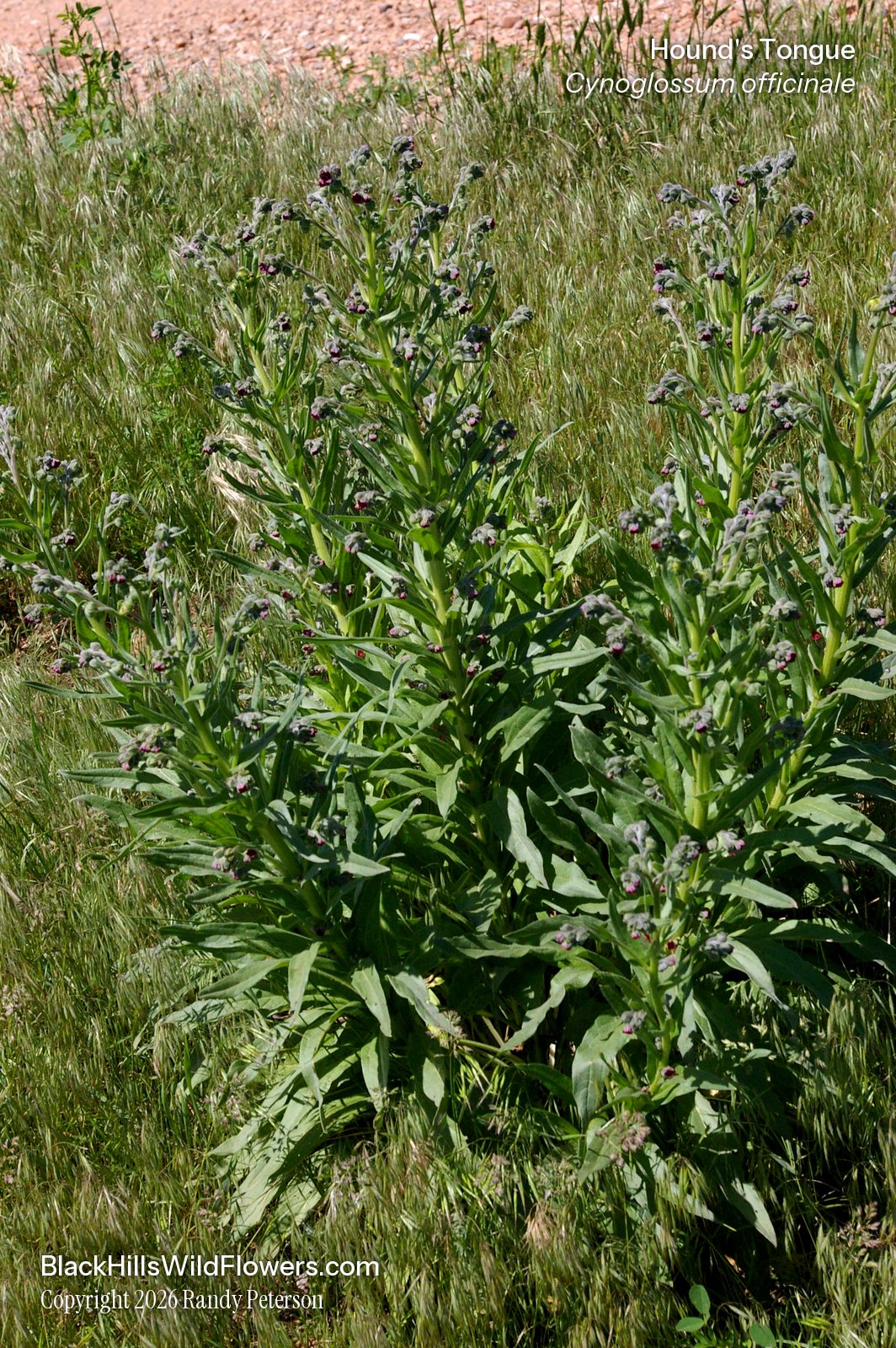
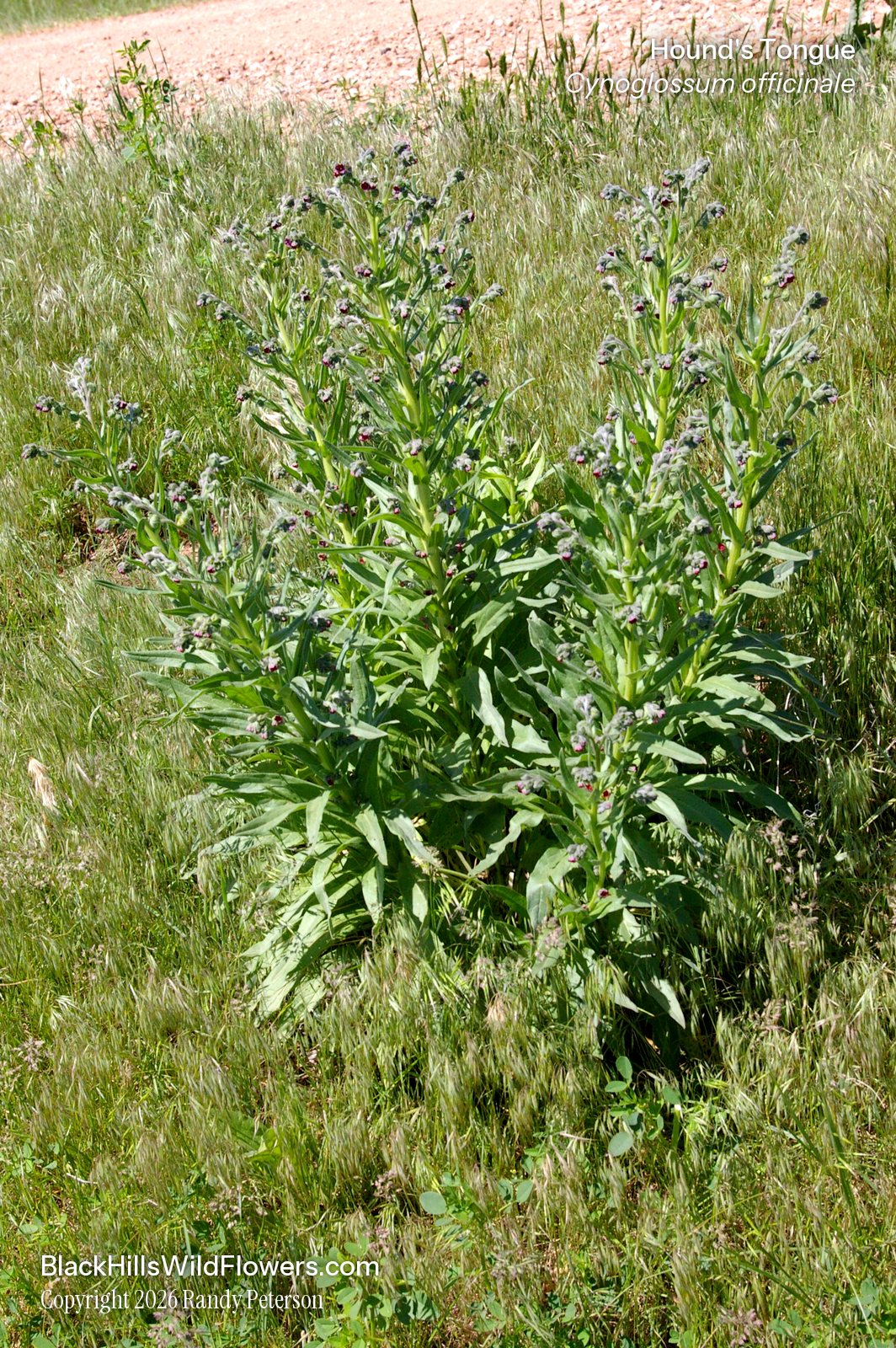
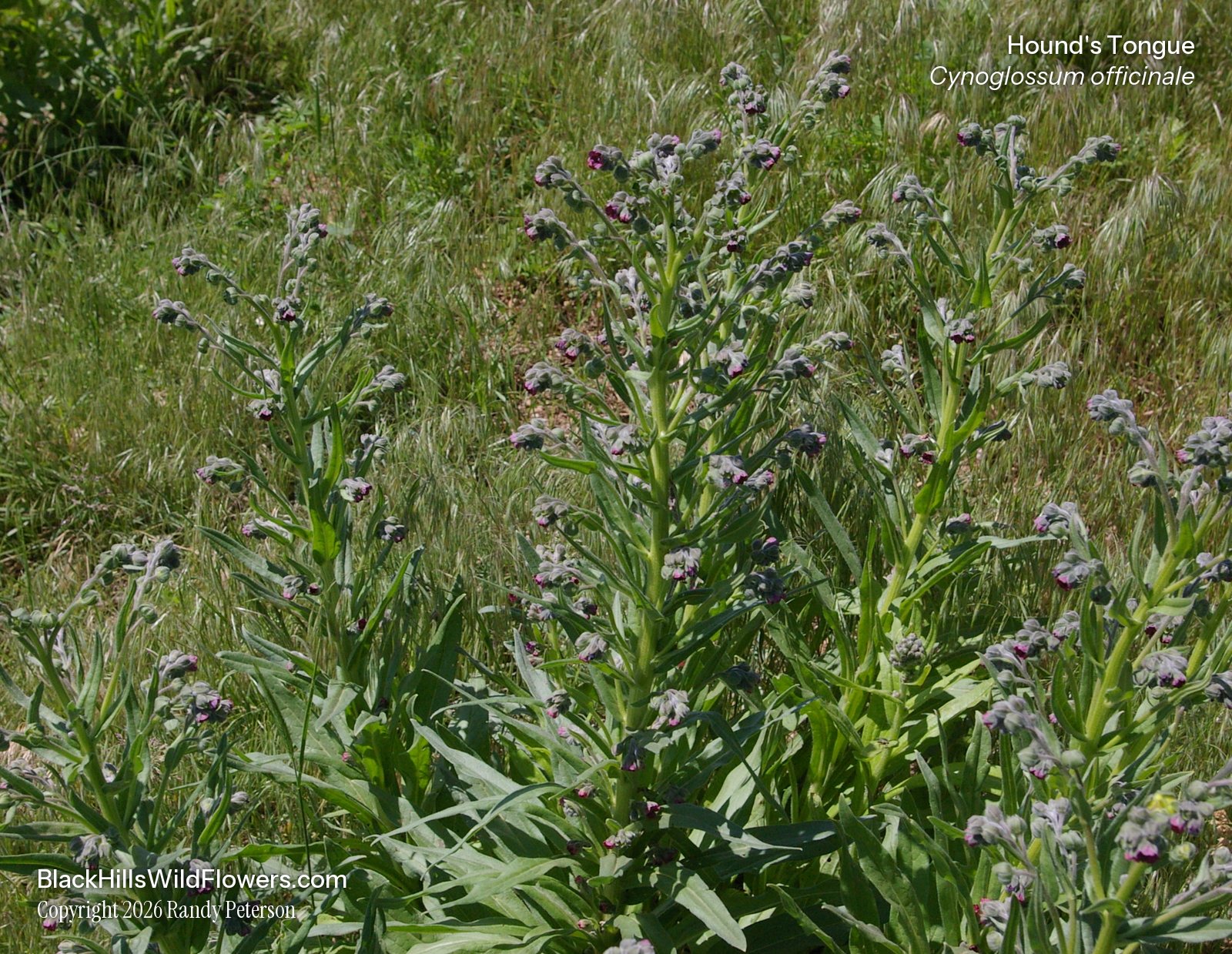
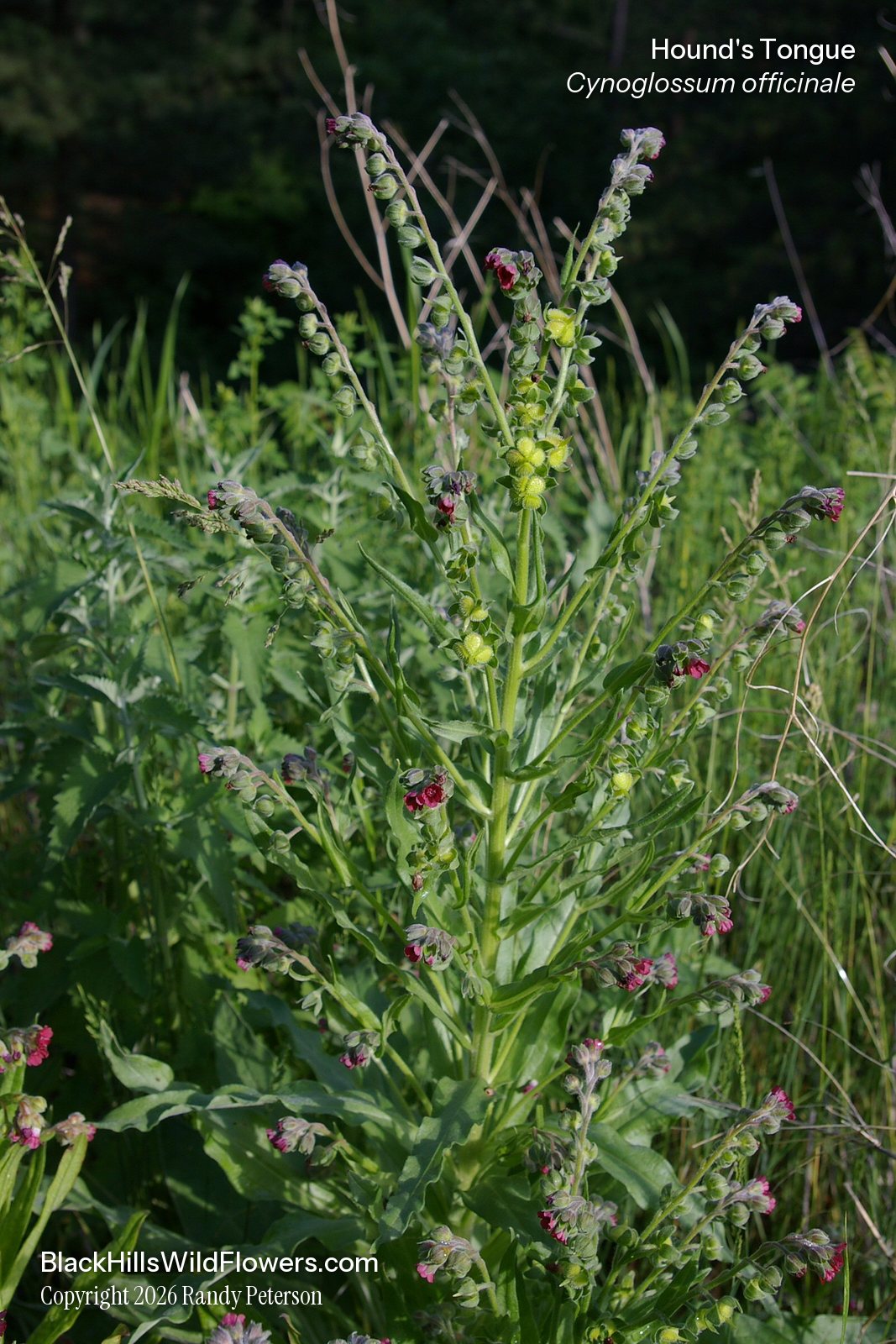
Hound's Tongue (Cynoglossum officinale) is an introduced biennial or short-lived perennial from Eurasia, 30–120 cm tall, with soft, velvety leaves, dull reddish-purple flowers and barbed nutlets that cling to fur and clothing. At Jewel Cave in the Black Hills it blooms June into July, and it is widespread on the Black Hills National Forest. Photographed in the Black Hills.
| Family | Boraginaceae · Borage |
|---|---|
| Status | Introduced biennial |
| Blooms | June into July |
| Height | 30–120 cm (12–48 in) |
| Where | Disturbed ground, roadsides, pastures and forest clearings |
| Also called | Houndstongue, Gypsy Flower, Beggar's Lice |
| Listed | Locally noxious weed in seven South Dakota counties, including Butte (through 2026), Custer, Fall River and Pennington, but not on the state noxious weed list. State designated noxious weed in Wyoming. |
| Toxicity | Contains pyrrolizidine alkaloids that can cause irreversible liver damage or death in cattle and horses that eat it. |
Roots, seeds & germination
Root: A thick, black, branching taproot that can reach deeper than 100 cm (40 in).
Seed: Each flower can make up to 4 nutlets. They ripen July to October, turn grayish brown or tan, and cling to fur and clothing. Seed usually stays viable no longer than 2 to 3 years.
Germination: Newly ripe seed is dormant. In lab tests germination was highest after 6 to 12 weeks of moist chilling at 0–10 °C (32–50 °F). Seeds buried about 1 cm (0.4 in) germinated almost completely, but under 4 percent germinated on the surface.
How do you identify Hound's Tongue?
First-year plants are a rosette of soft-hairy leaves, 10–30 cm long and 2–5 cm wide. Later, an erect, branched stem carries reddish-purple to maroon flowers, then flat-topped nutlets 5–8 mm long covered in short, barbed prickles. Crushed leaves smell like a wet dog.
When does it bloom?
June into July.
Where does it grow?
Rangelands, pastures, forest clearings, logging roads, roadsides and disturbed fields, most abundant where bare ground is over 10 percent. Infestations are especially severe in the Black Hills. At Jewel Cave it is seen mainly in the Historic Area.
Other flowers to compare
Sources: SDSU Open PRAIRIE: Cynoglossum officinale; Forest Service, Fire Effects Information System: Cynoglossum officinale; National Park Service, Jewel Cave National Monument: Wildflowers; Black Hills National Forest: Invasive plants species accounts; South Dakota DANR: Locally Noxious Weed Pest List; South Dakota DANR: State noxious weeds; Wyoming rule 010-63 Wyo. Code R. § 63-3: Prohibited Noxious Weeds (weed seed lists); Marriott and Hartman 1986, A Survey of the Vegetation of Jewel Cave National Monument; University of Wyoming CAPS, Plants as Pests: Cynoglossum officinale (houndstongue).