Butte Candle
Oreocarya celosioides
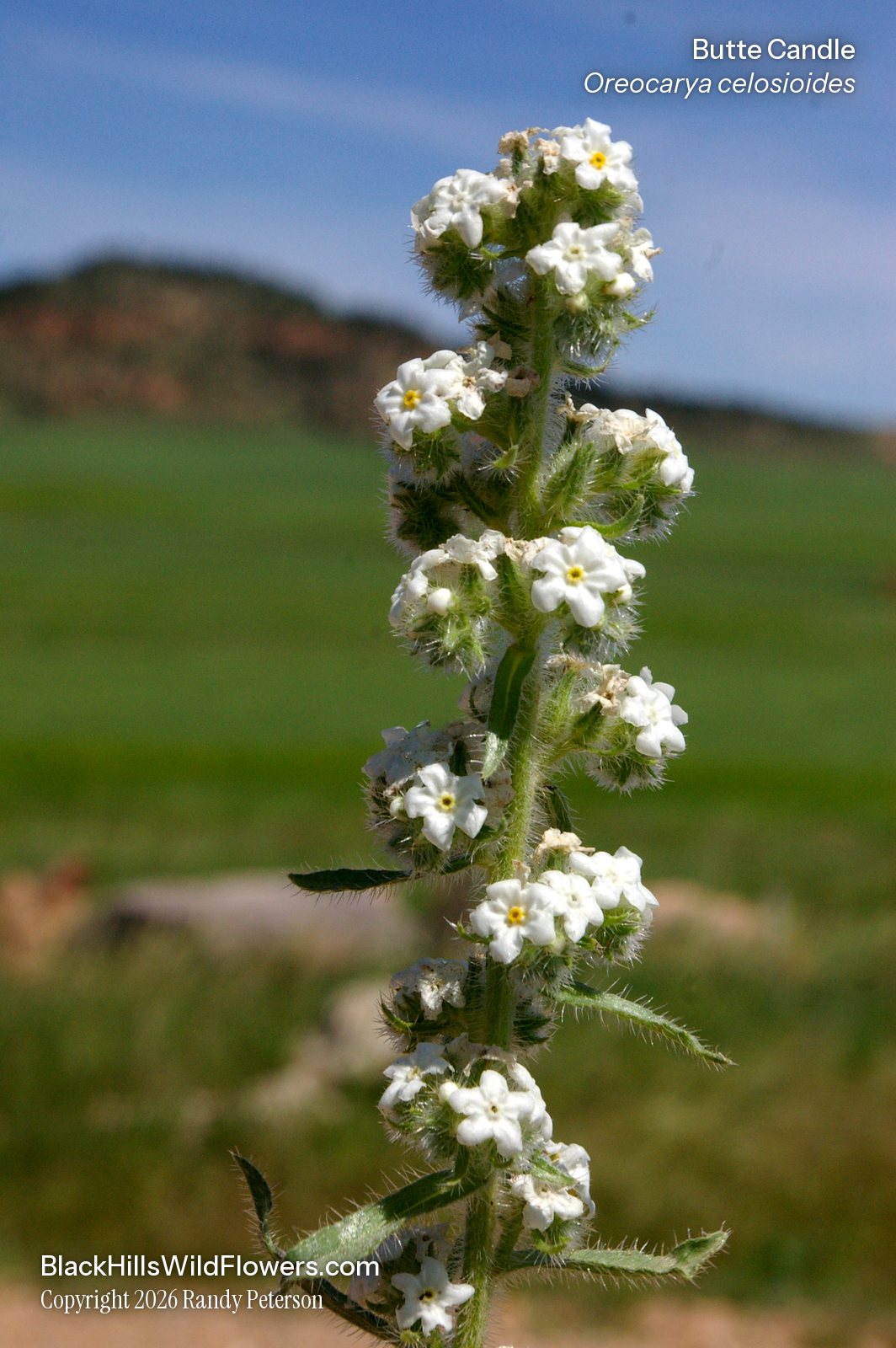
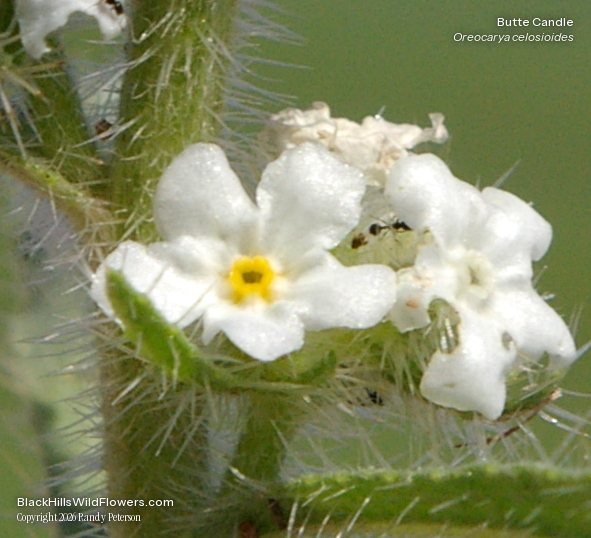
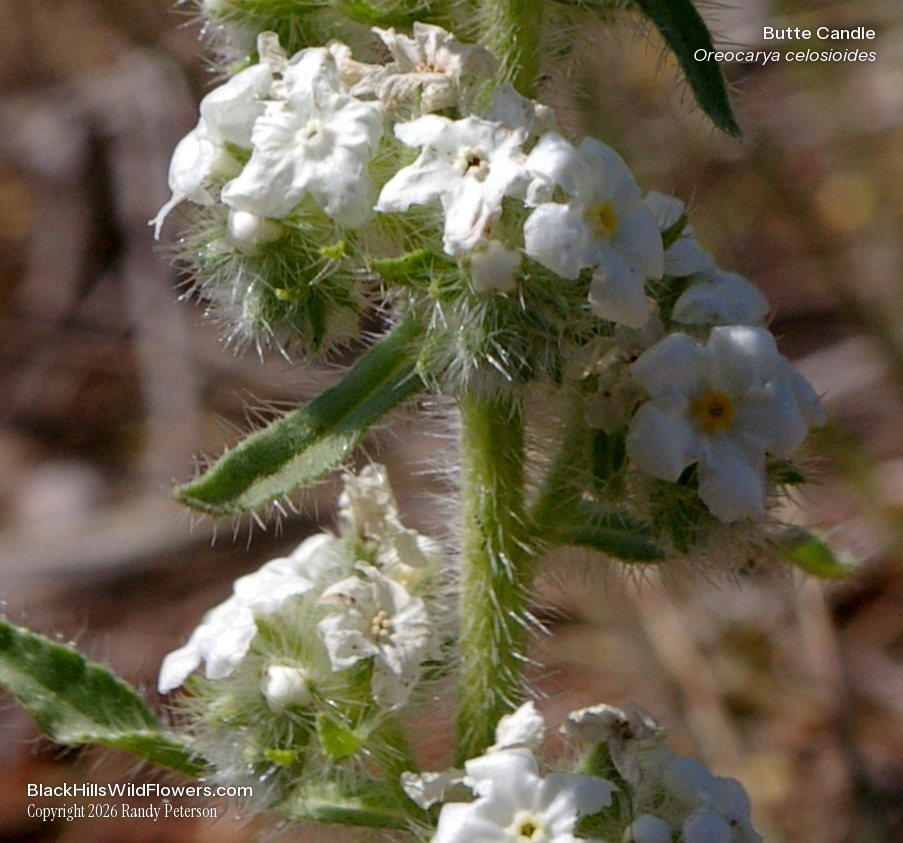
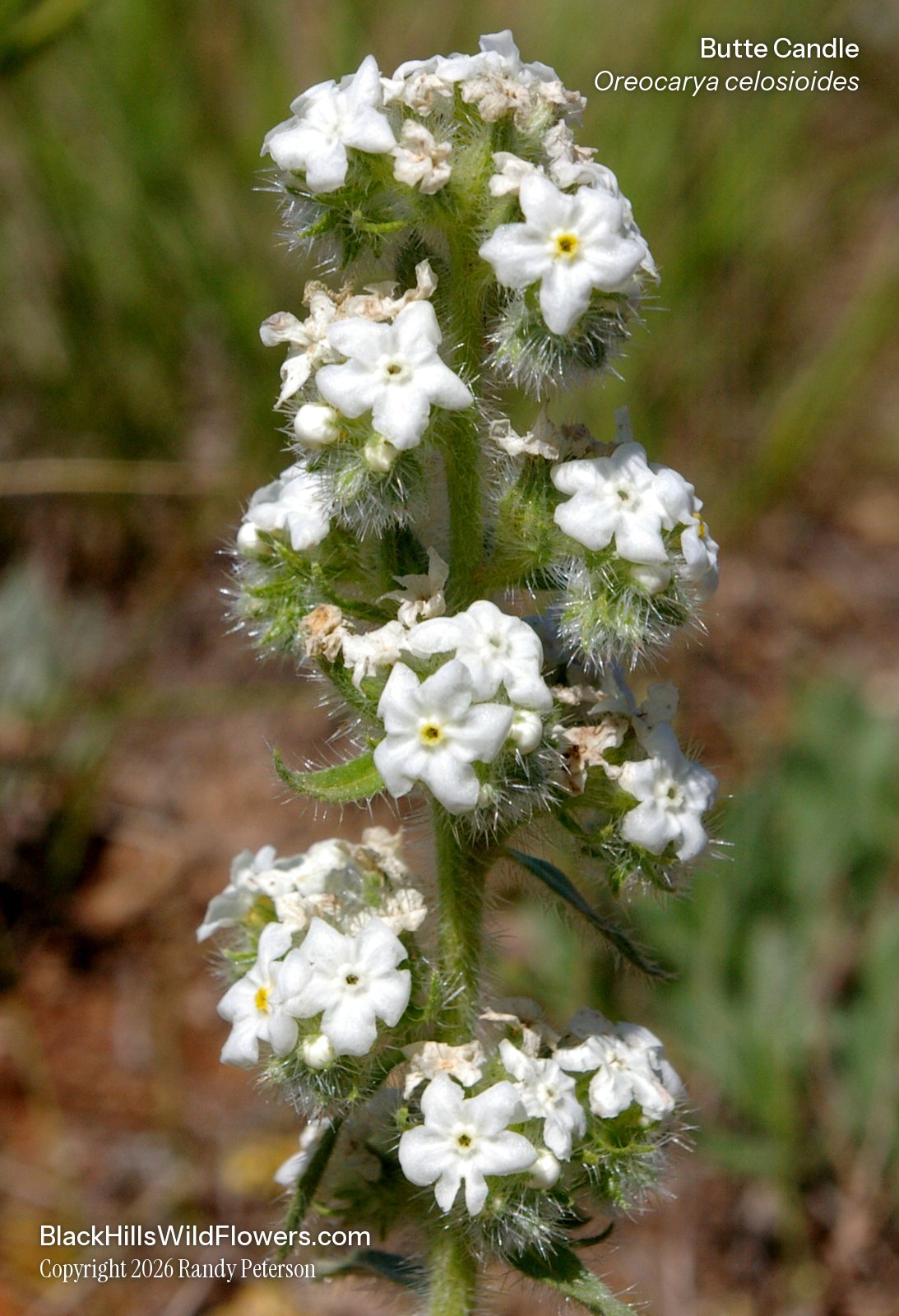
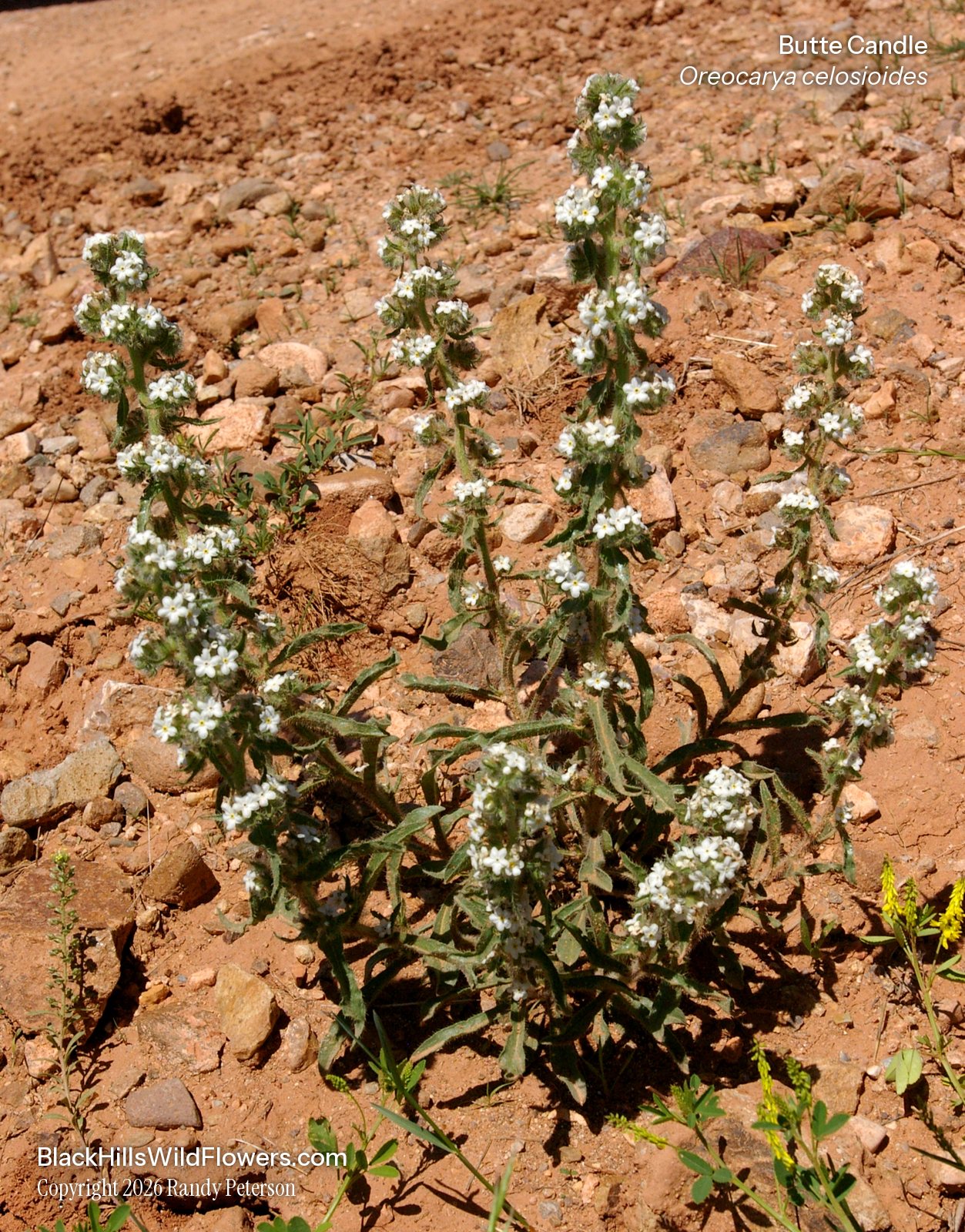
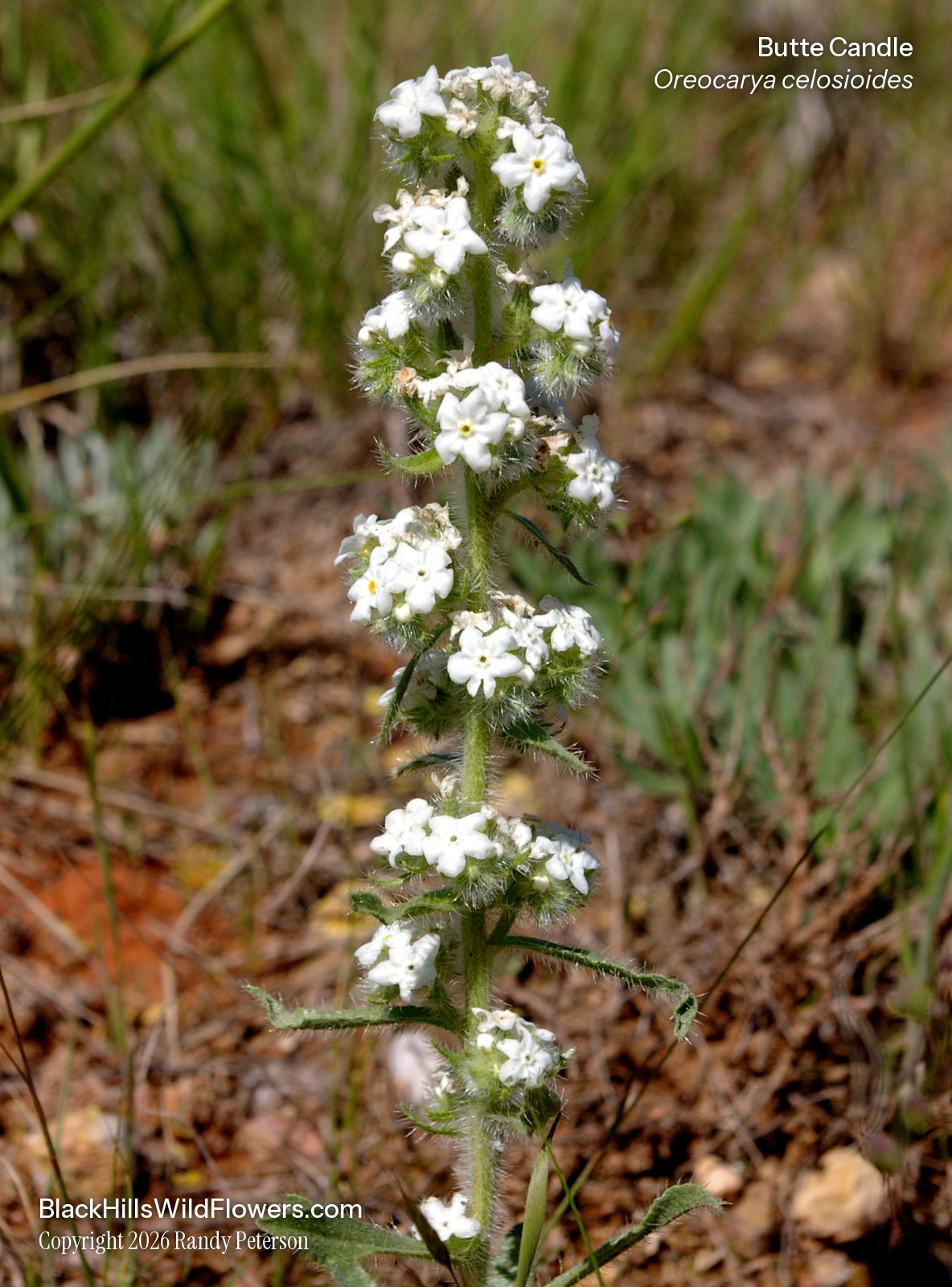
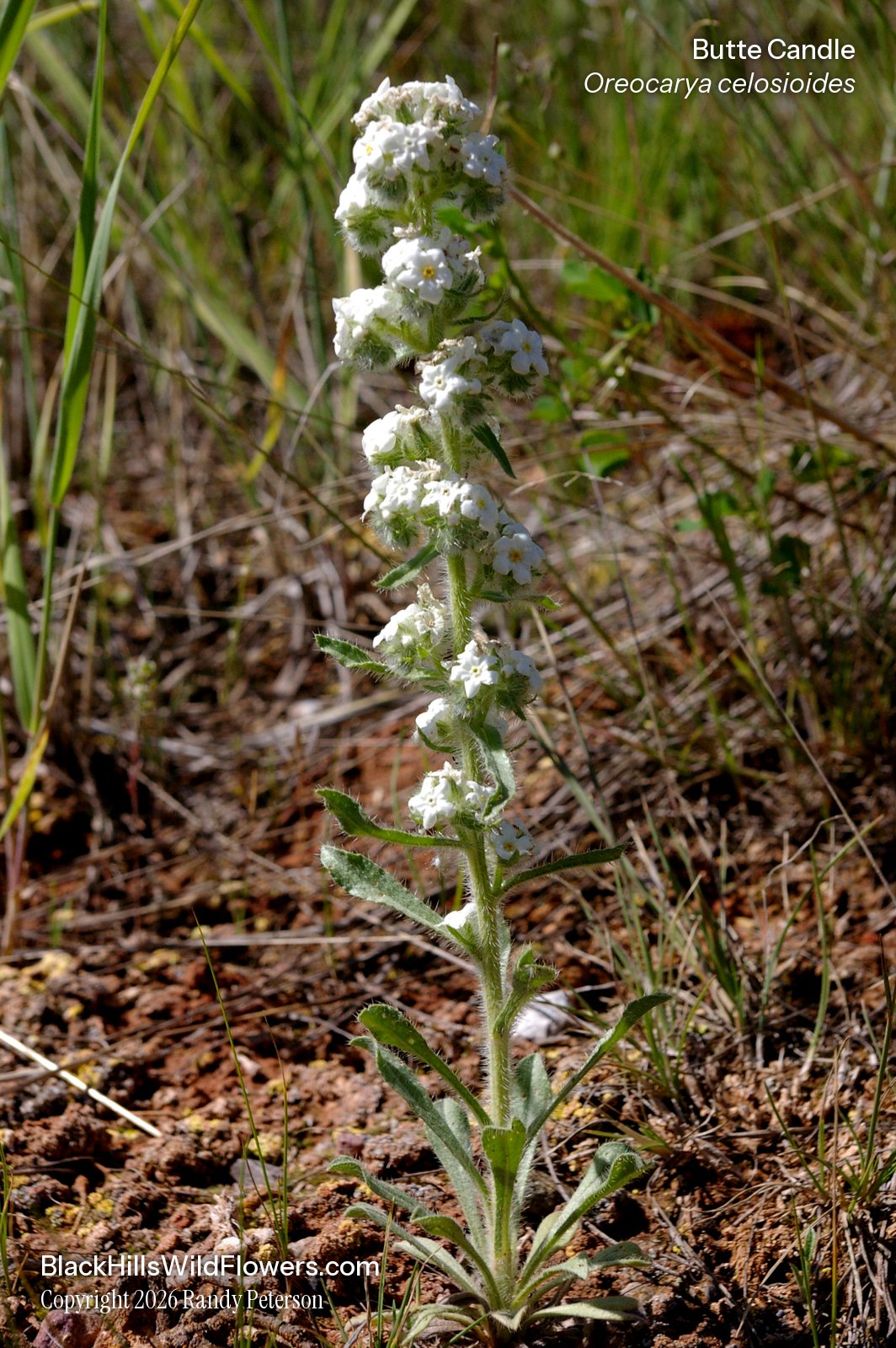
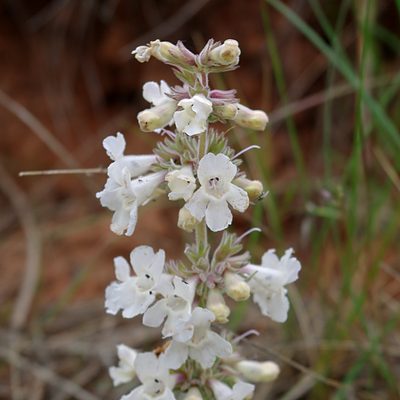
Butte Candle (Oreocarya celosioides) is a native biennial or short-lived perennial, 6 to 35 cm (2 to 14 inches) tall, covered in bristly hairs, with tight clusters of small white flowers that often have yellow throats. It blooms May into July in dry pastures and canyons in western South Dakota. Photographed in the Black Hills.
| Family | Boraginaceae · Borage |
|---|---|
| Status | Native biennial |
| Blooms | May into July |
| Height | 6–35 cm (2–14 in) |
| Where | Dry pastures and canyons; stony or sandy soil |
| Also called | Buttecandle, Cocks-comb Cat's-eye, Northern Cat's-eye |
| Synonym | Cryptantha celosioides, Cryptantha macounii, Oreocarya glomerata, Oreocarya macounii |
Roots, seeds & germination
Root: Grows from a caudex, a woody root crown.
Seed: Four ovate nutlets, 3–4 mm long, inside a hairy calyx 7–10 mm long. They ripen in mid to late summer.
Germination: Seeds are dormant, and fall sowing gives the best results.
How do you identify Butte Candle?
The whole plant is bristly. Basal leaves are spoon-shaped with rounded or blunt tips, 1–6 cm long; stem leaves are narrower and pointed. Small white flowers, 3–6 mm long and often yellow in the throat, sit in clusters at the stem tips that are tight when young and loosen with age.
When does it bloom?
May into July.
Where does it grow?
Dry pastures and canyons in western South Dakota. In Montana it grows on stony or sandy, often sparsely vegetated soil in grasslands and sagebrush steppe.
Other flowers to compare
Sources: SDSU Open PRAIRIE: Cryptantha celosioides; Montana Field Guide: Cocks-comb Cat's-eye; Lady Bird Johnson Wildflower Center: Cryptantha celosioides; Flora of the Pacific Northwest: Oreocarya, revised treatment; San Diego State University: Cryptantha full synonymy; San Diego State University: Oreocarya glomerata; Taxonomic Key to the Saskatchewan Cryptantha.