Low Larkspur
Delphinium bicolor
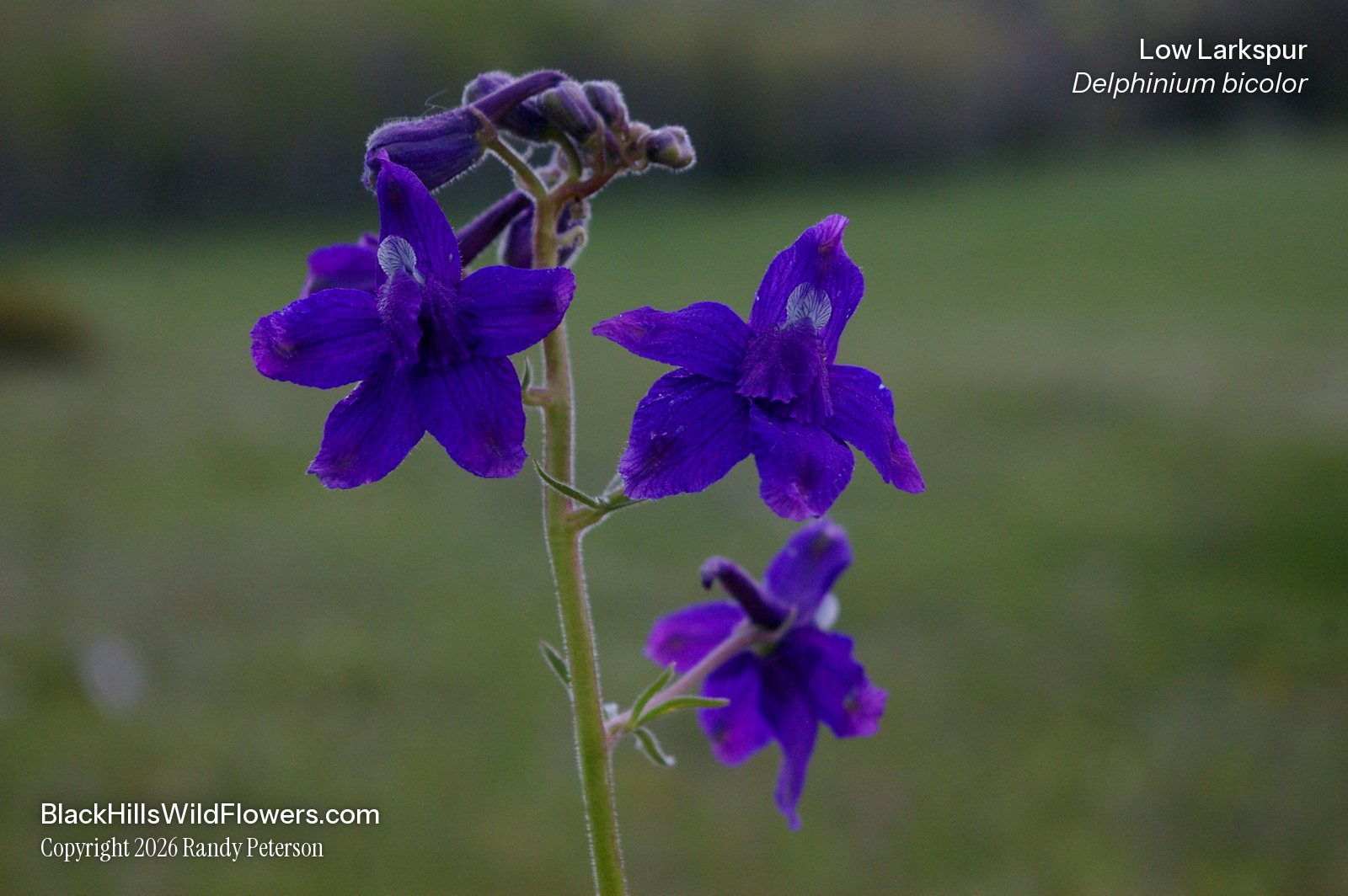
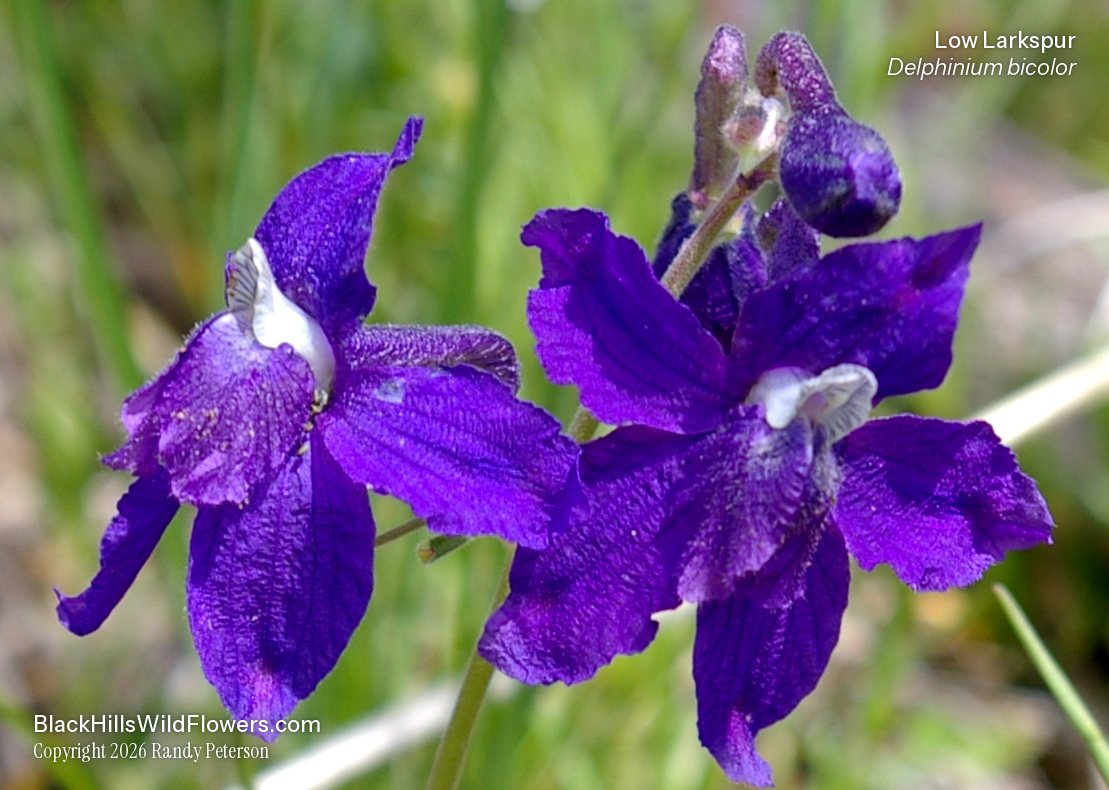
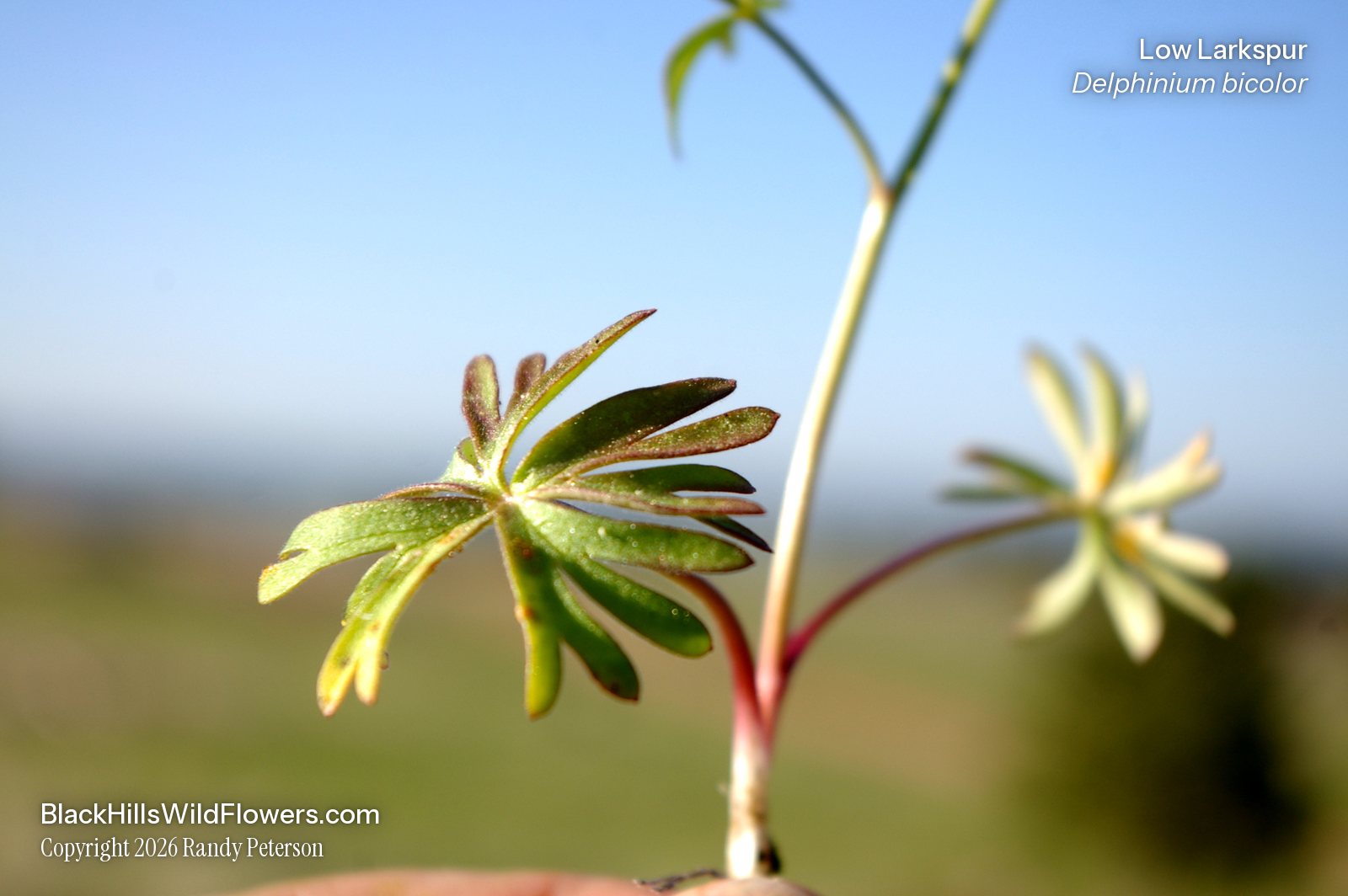
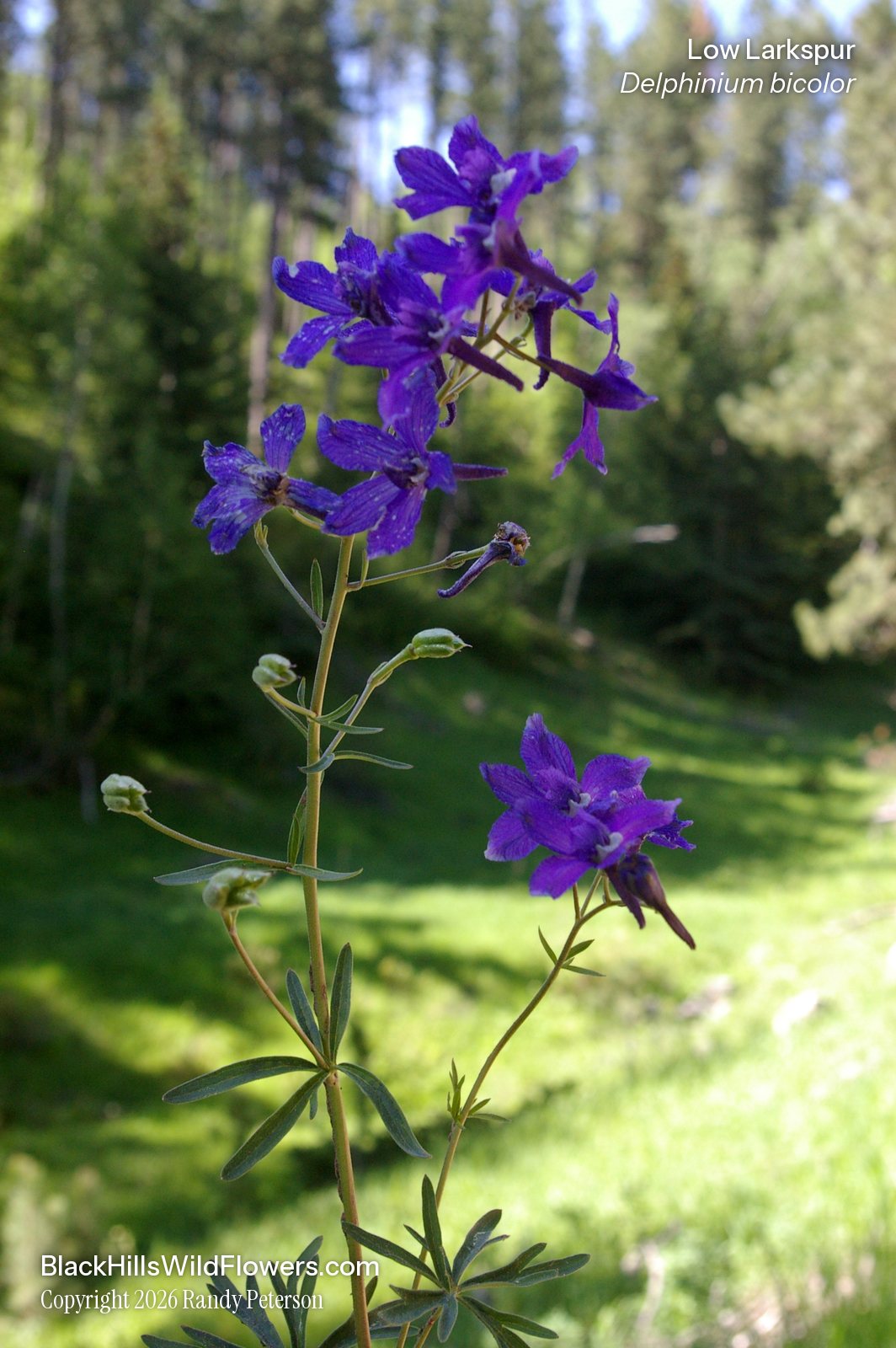
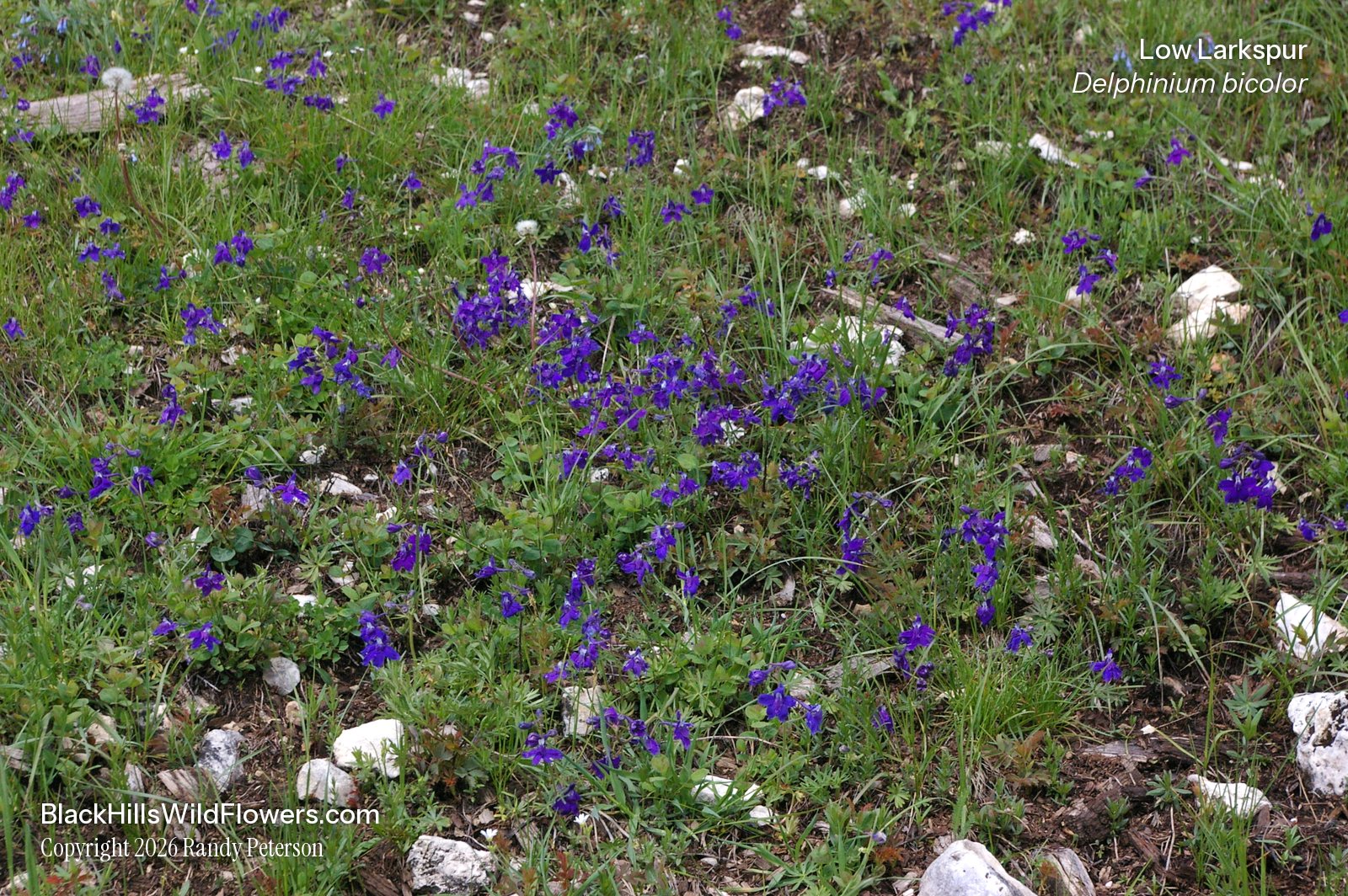
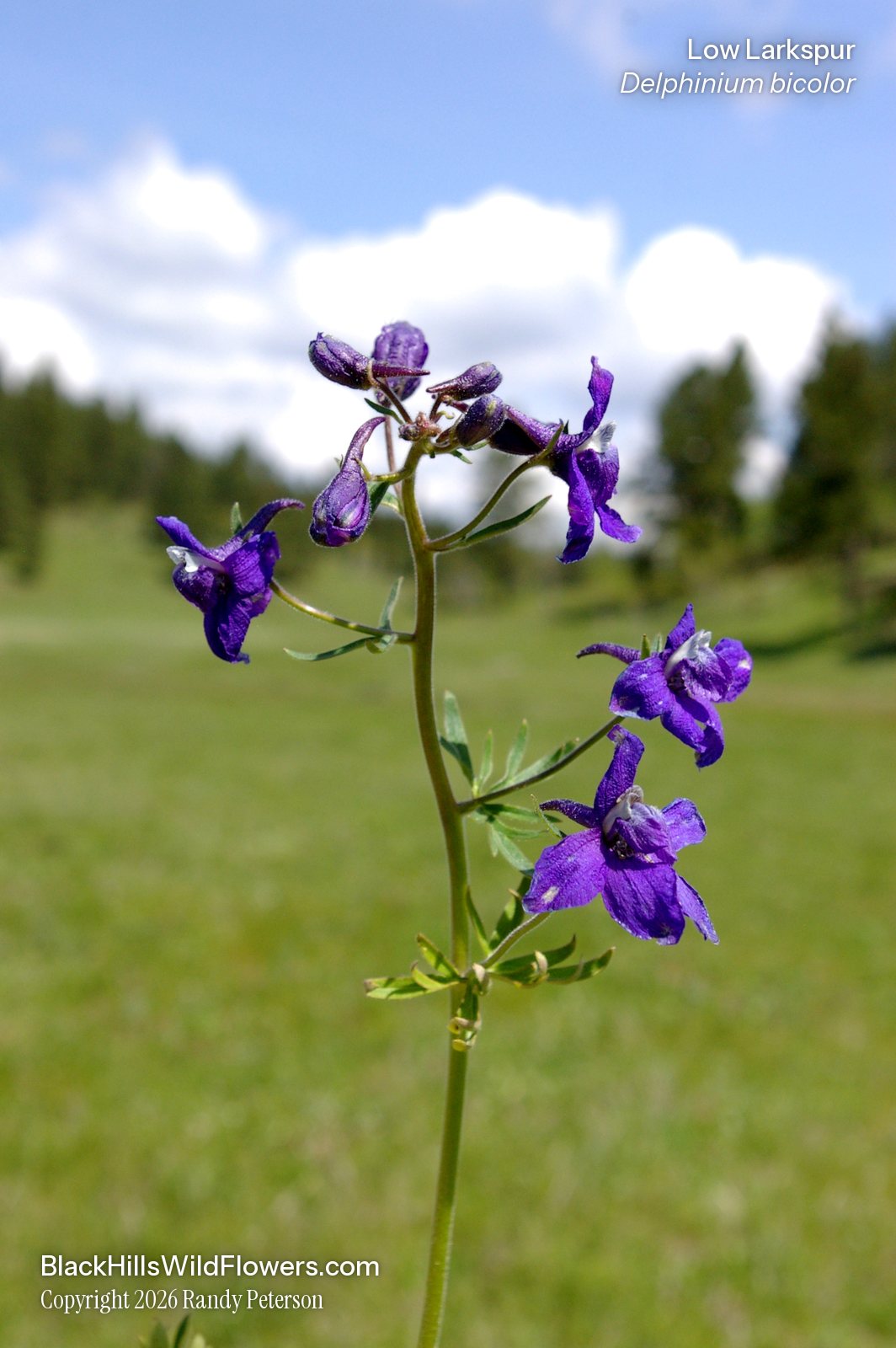
Low Larkspur (Delphinium bicolor) is a short native perennial with 3 to 12 deep blue, spurred flowers on a stem 10–40 cm tall, and round, deeply divided leaves low on the stem. It grows in open woods and grasslands in western South Dakota and Wyoming, blooms in spring and early summer, and is on a plant checklist from the Black Hills. Photographed in the Black Hills.
| Family | Ranunculaceae · Buttercup |
|---|---|
| Status | Native perennial |
| Blooms | April into July |
| Height | 10–40 cm (4–16 in) |
| Where | Open woods, grasslands and stony ridges |
| Also called | Little Larkspur, Flathead Larkspur, Two-color Larkspur, Montane Larkspur |
| Toxicity | All parts are poisonous, and it is very poisonous to cattle. |
Roots, seeds & germination
Root: An extensively branched, fibrous to slightly fleshy root system.
Seed: Dry pods (follicles) 12–22 mm long hold many irregularly winged seeds about 2 mm long.
Germination: Seeds need 30 to 60 days of cold treatment. Sow in fall or chill before spring sowing.
How do you identify Low Larkspur?
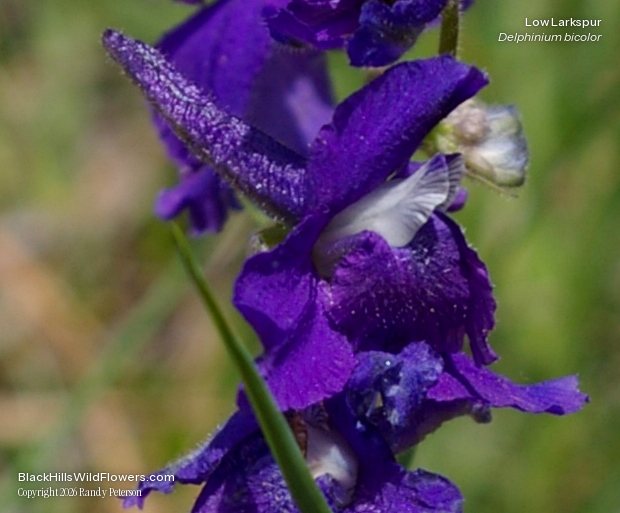
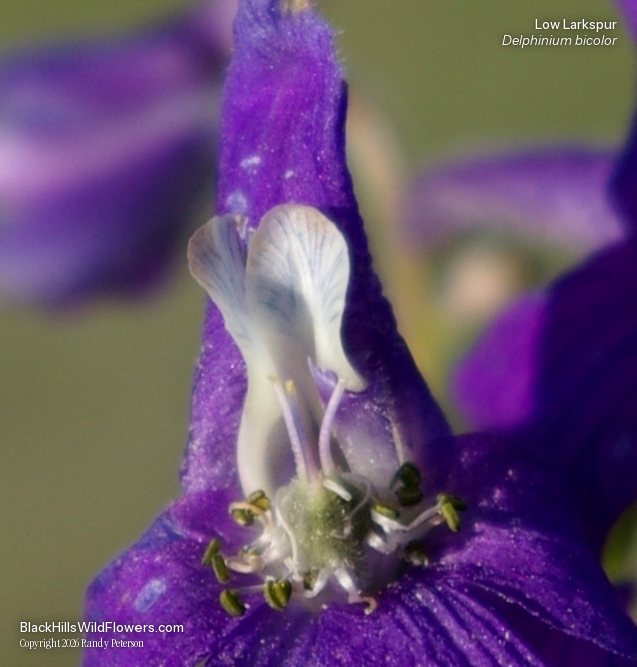
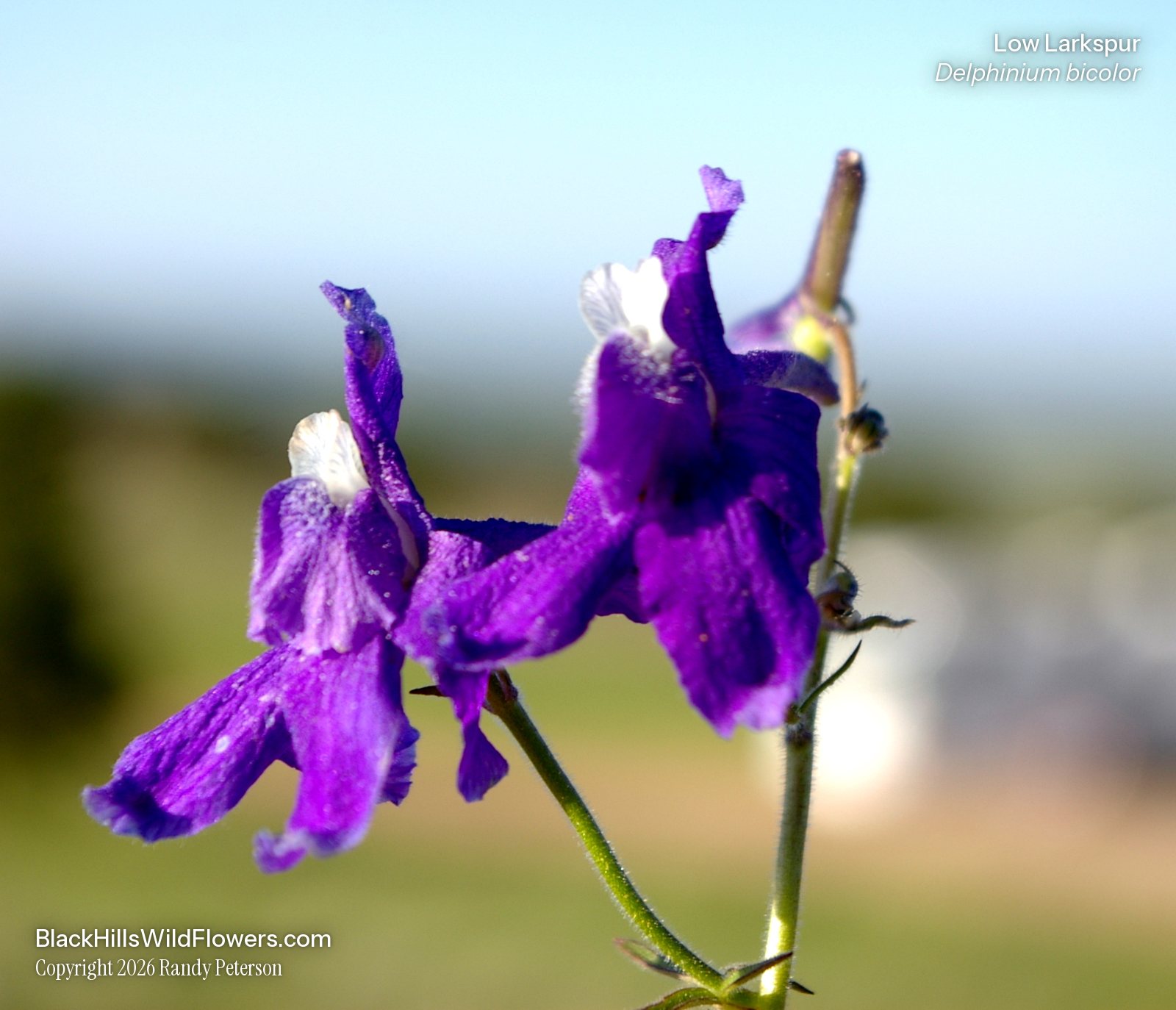
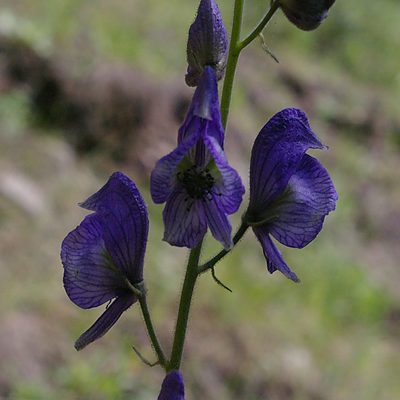
Look for dark blue sepals, white upper petals marked with blue, and a straight to gently curved spur 13–23 mm long pointing back from the flower. Leaves are mostly on the lower third of the stem, with round blades cut into narrow lobes. Western Monkshood has a hood on top instead of a spur, and it is taller and blooms later in moist, shady places.
When does it bloom?
April into July.
Where does it grow?
Open woods and grasslands up to high mountain scree, often at the edges of melting snowbanks, in full sun and fairly dry to moist soil. It also grows on gravel banks and road cuts.
Other flowers to compare
Sources: Flora of North America: Delphinium bicolor; Forest Service, Fire Effects Information System: Delphinium bicolor; SDSU Open PRAIRIE: Delphinium bicolor (R. Neil Reese); Montana Field Guide: Little Larkspur; National Park Service, Devils Tower National Monument: Native Plants; USDA Agricultural Research Service: Larkspur; A Survey of the Vegetation of Jewel Cave National Monument, with vascular plant checklist (Marriott and Hartman, 1986).