Western Monkshood
Aconitum columbianum
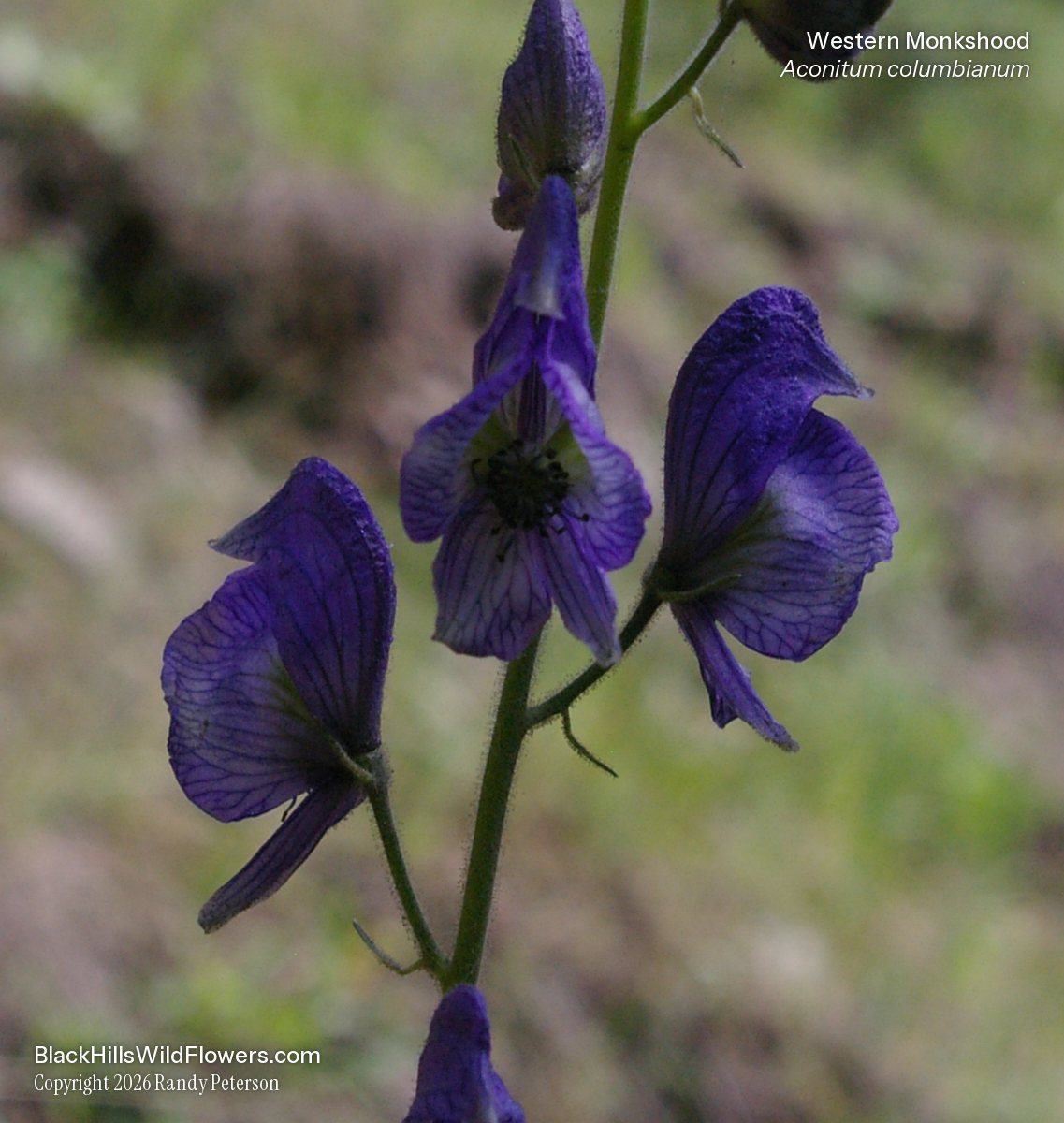
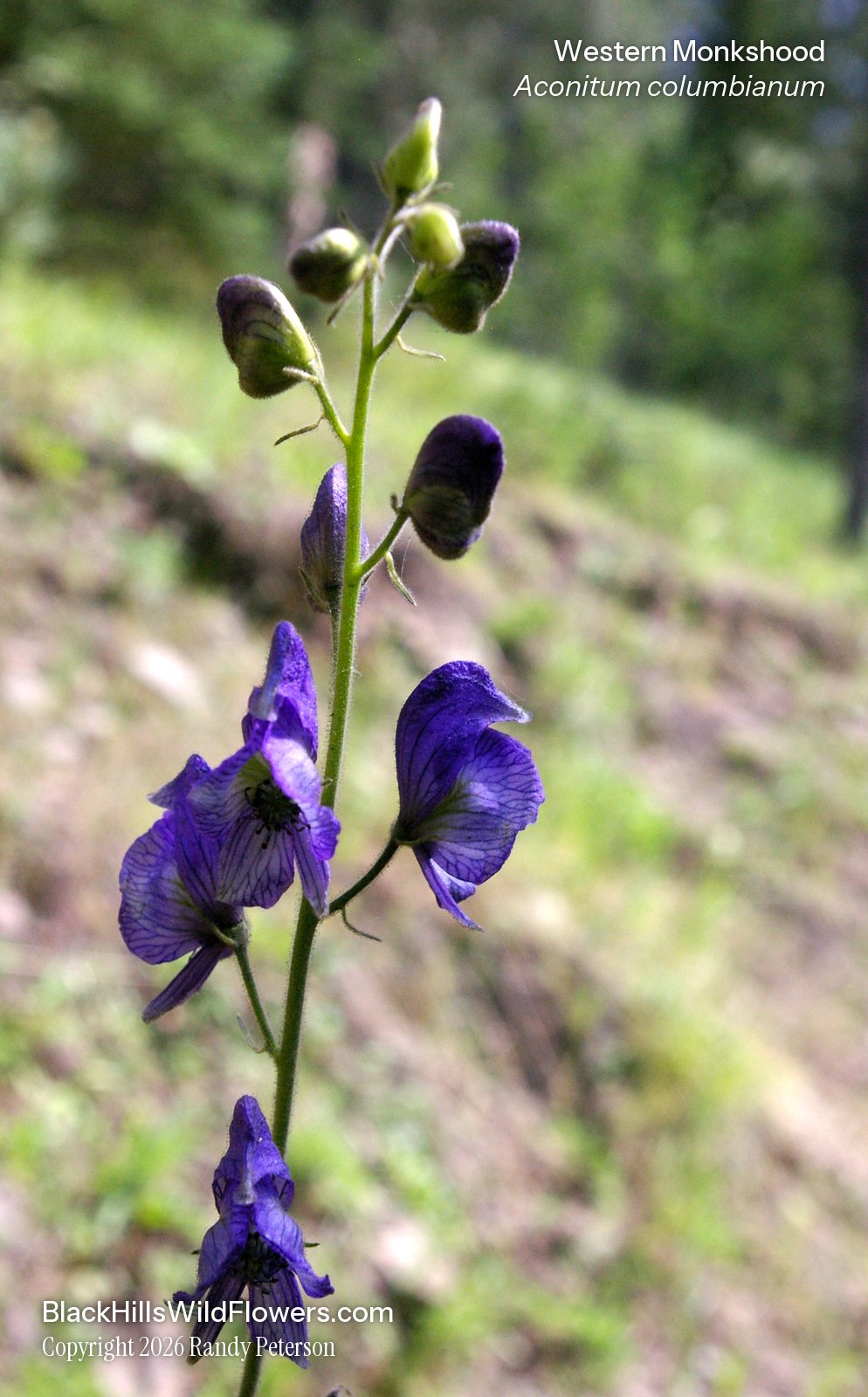
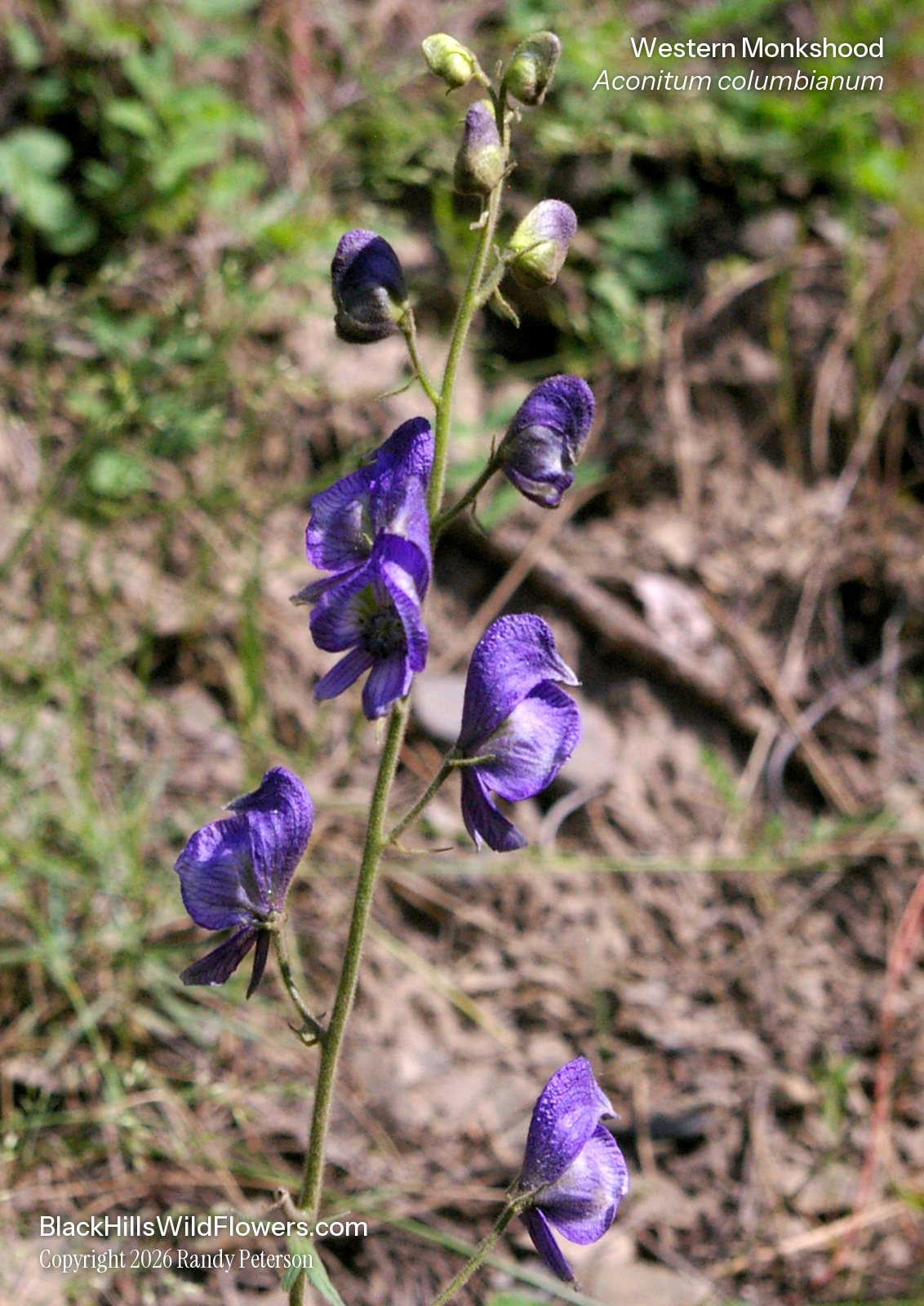
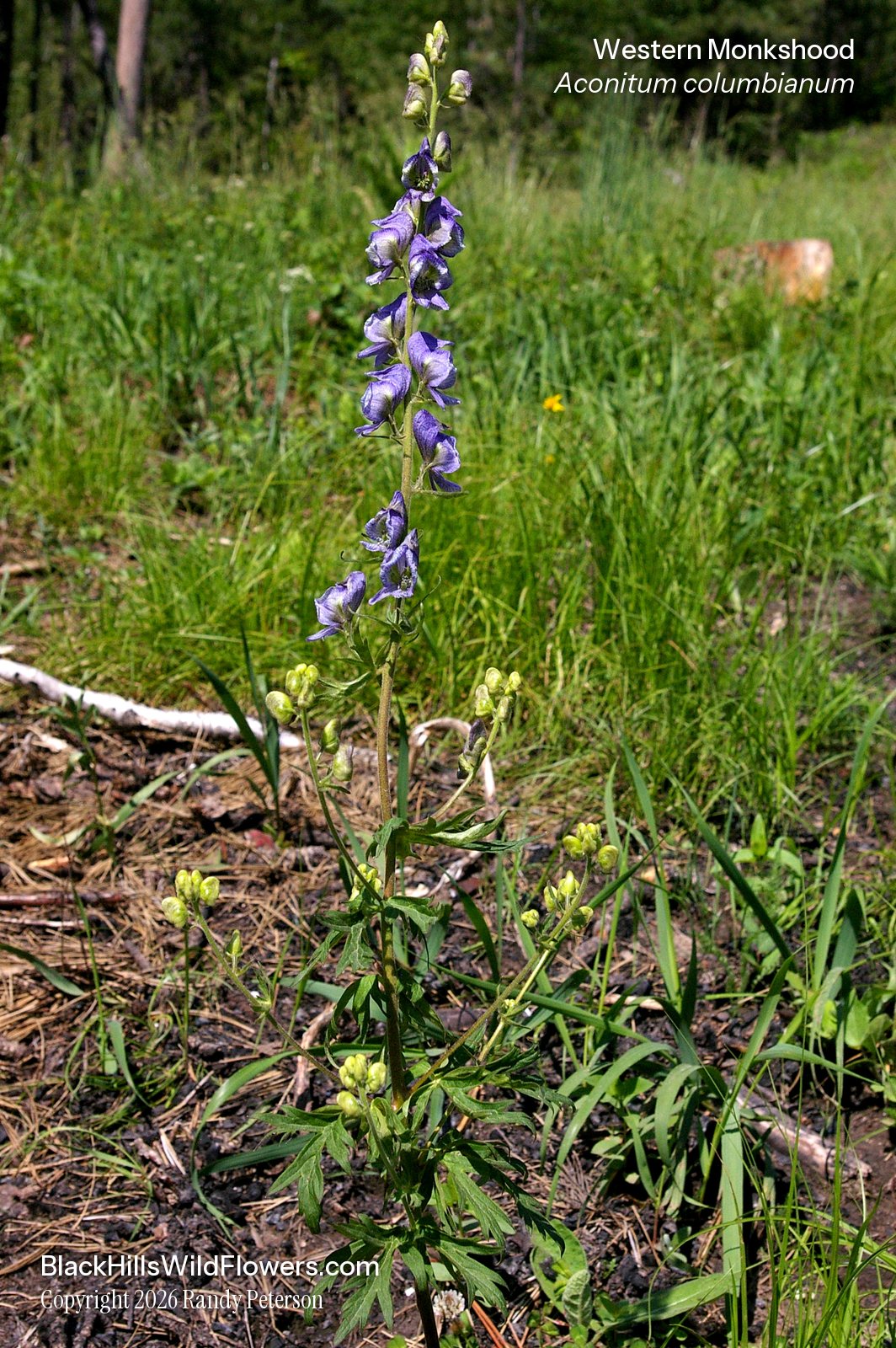
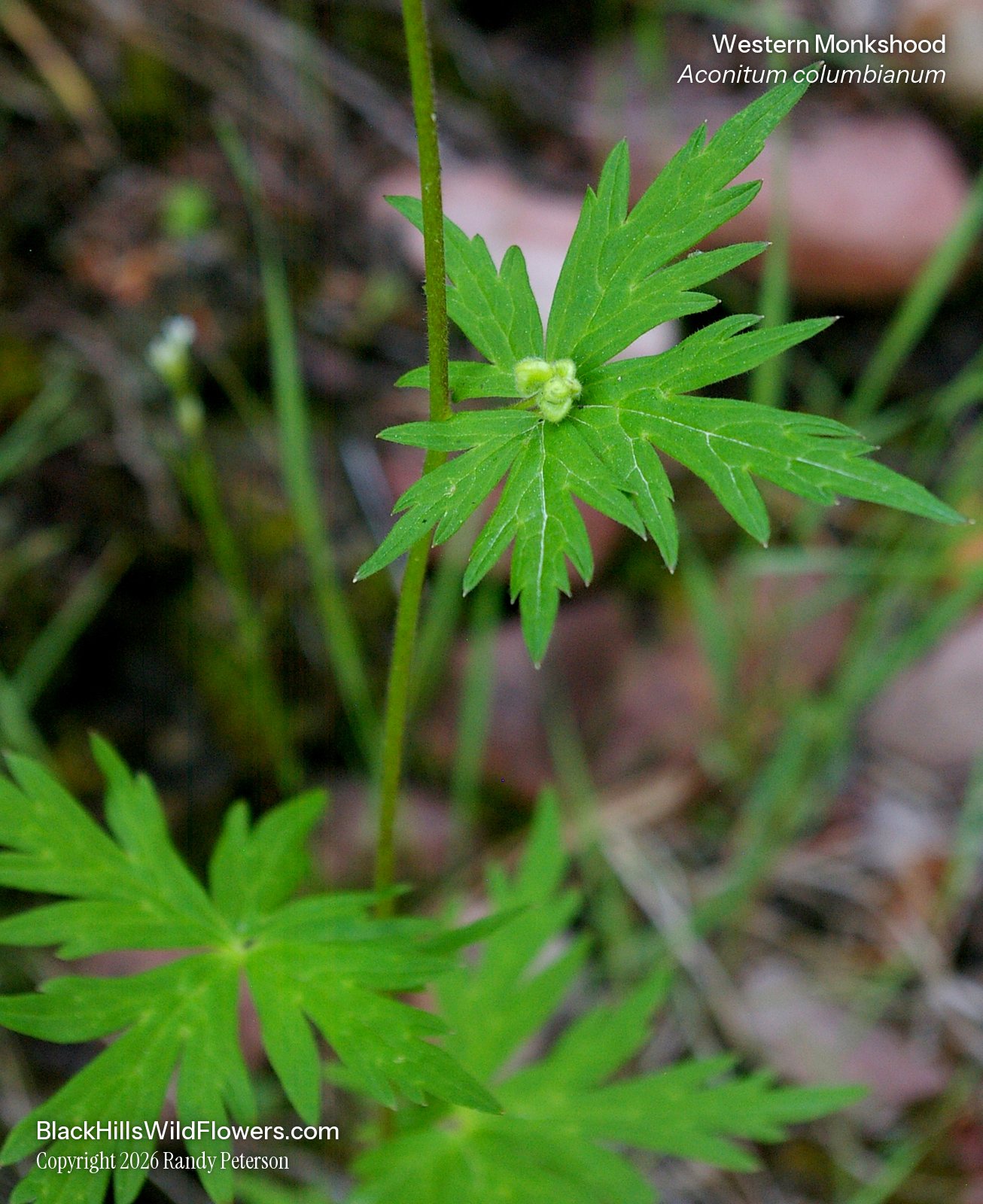
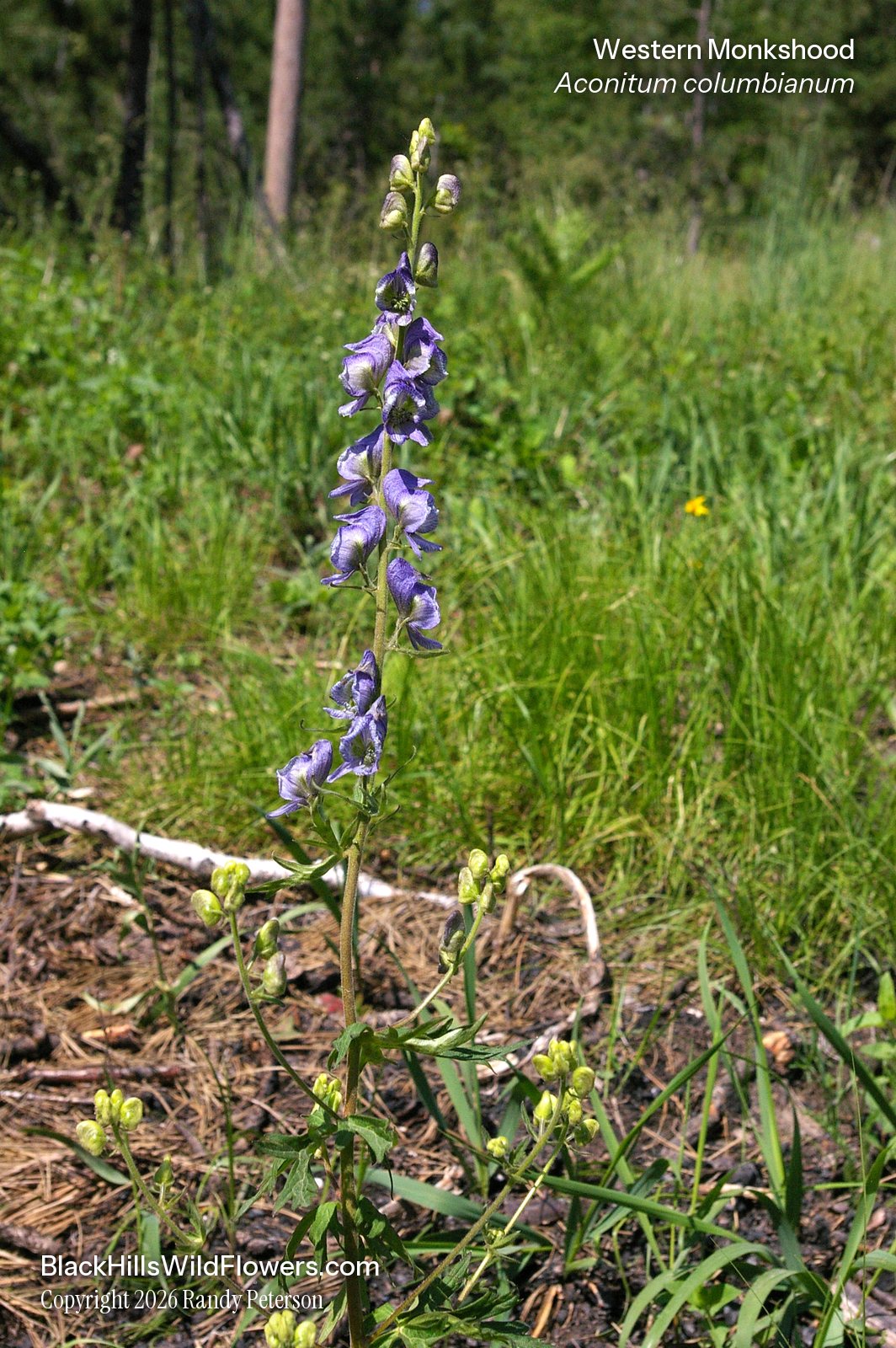
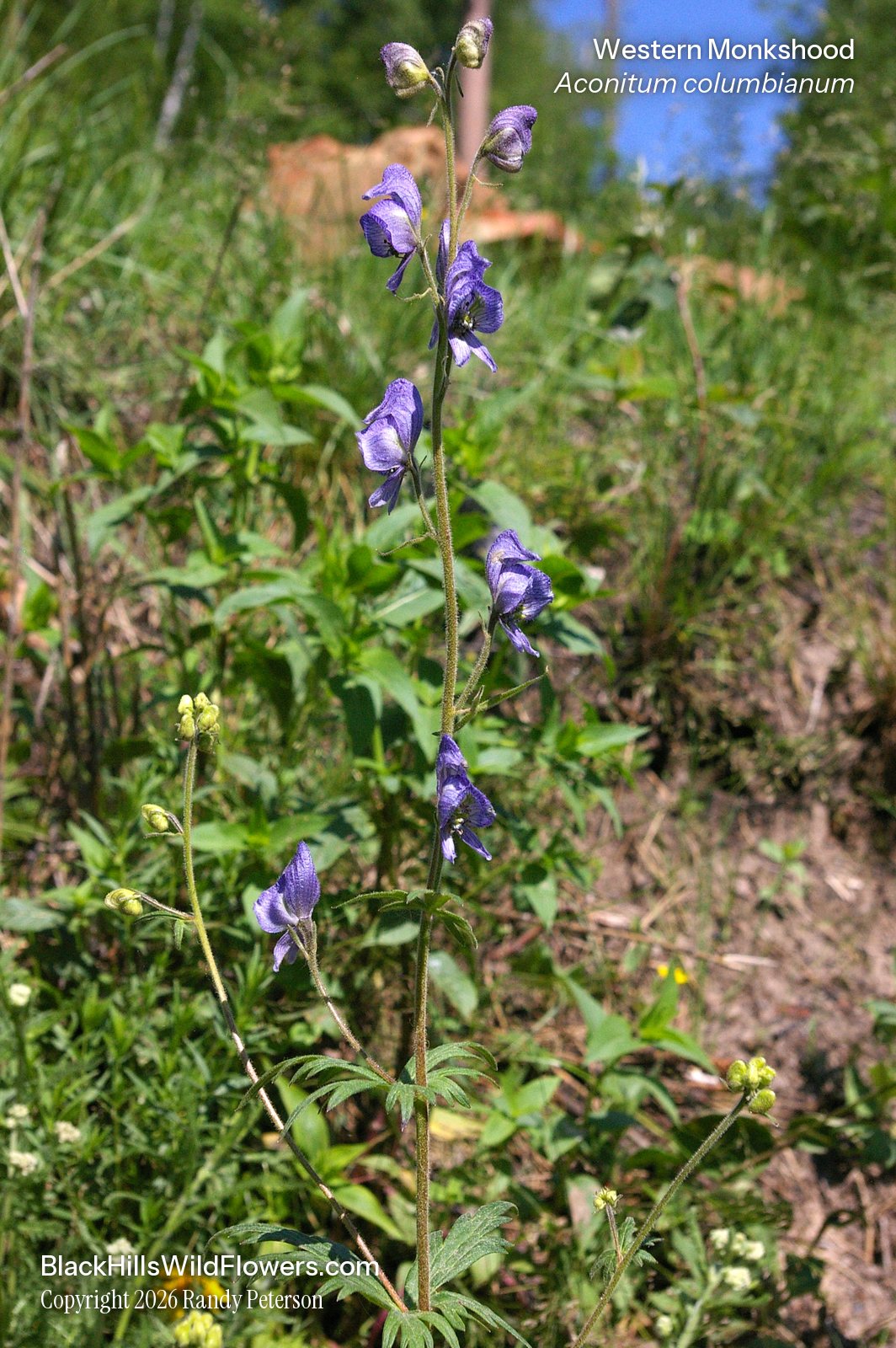
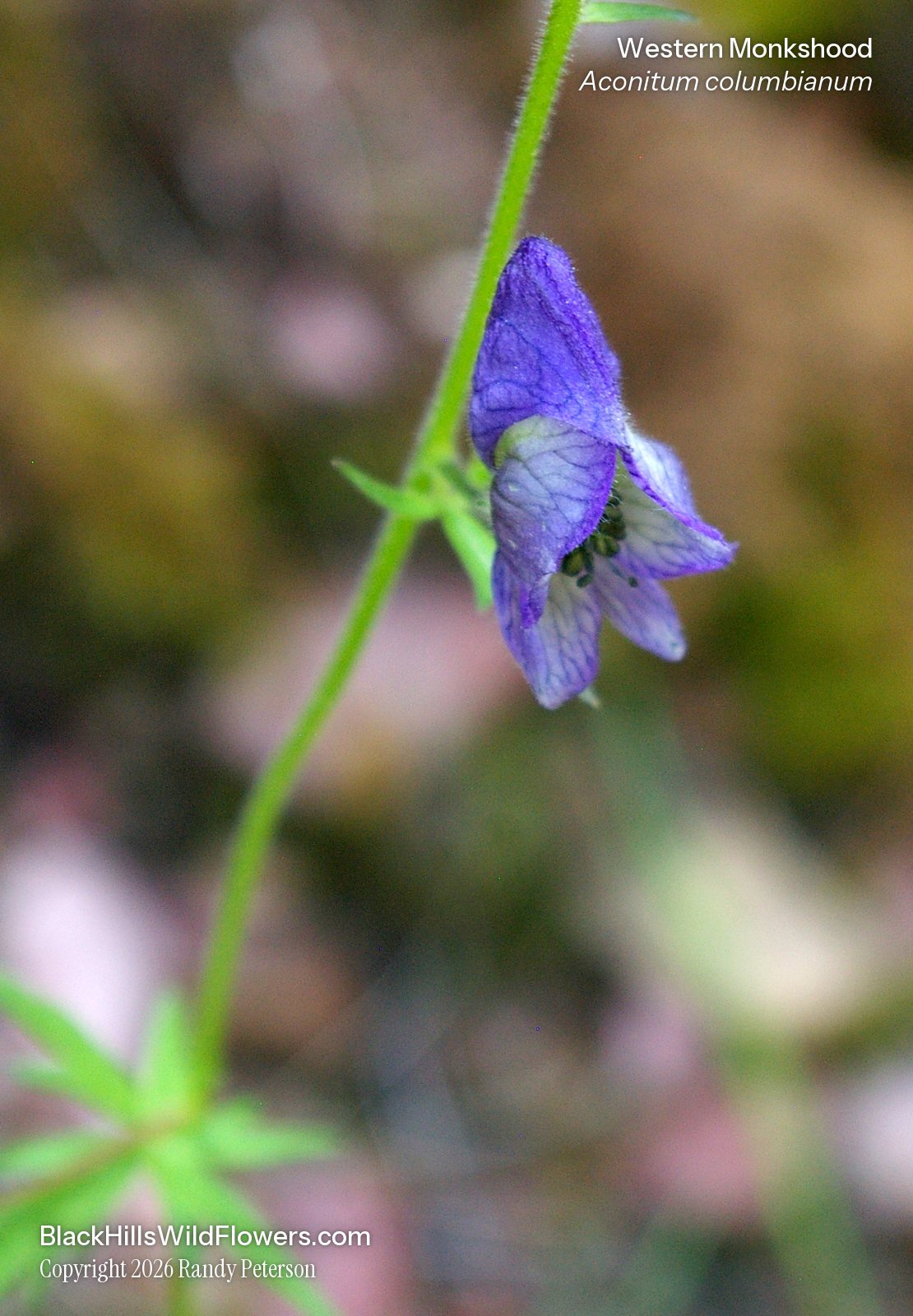
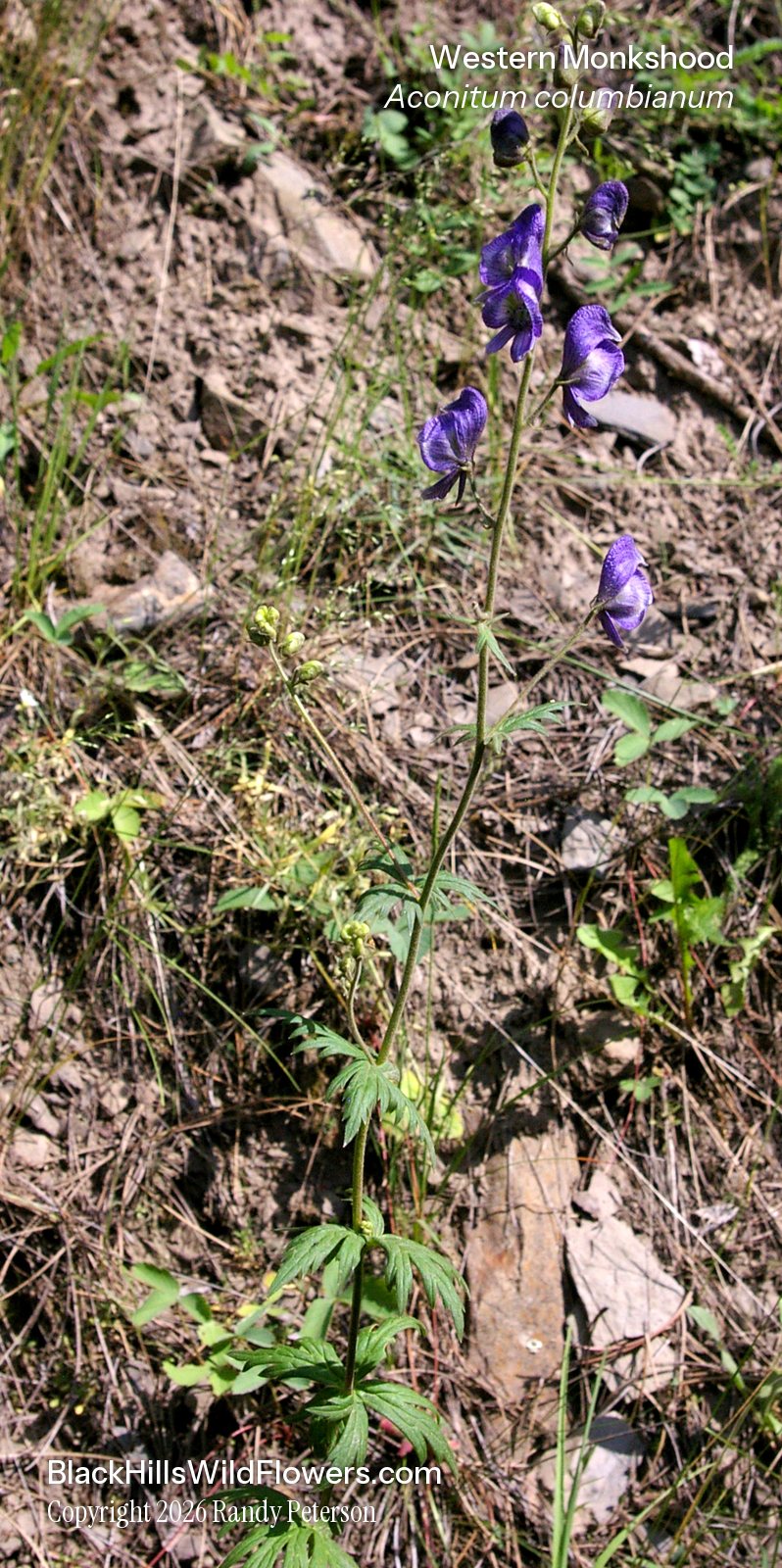
Western Monkshood (Aconitum columbianum) is a native perennial with hooded, dark blue to purple flowers on tall stems and deeply lobed leaves. It grows in moist, shady places such as stream banks, wet meadows and mountain forests, including in the Black Hills, and it blooms midsummer to early fall. Photographed in the Black Hills.
| Family | Ranunculaceae · Buttercup |
|---|---|
| Status | Native perennial |
| Blooms | Midsummer to early fall |
| Height | 30–100 cm (12–39 in) |
| Where | Moist, shady sites: stream banks, wet meadows and mountain forests |
| Also called | Columbian Monkshood, Wolfbane |
| Toxicity | All parts are poisonous, especially the roots and leaves, because of alkaloids such as aconitine. |
Roots, seeds & germination
Root: Tuberous, fleshy roots.
Seed: Clusters of narrow pods (follicles) 2–3 cm long open by late summer and release many shiny, black, three-sided seeds.
Germination: Seeds have a double dormancy. The best results come from warm treatment at 20°C for 2 to 4 weeks, then cold, moist treatment at 1–5°C for 2 to 3 months. Sow outdoors in fall, or treat and sow in spring.
How do you identify Western Monkshood?
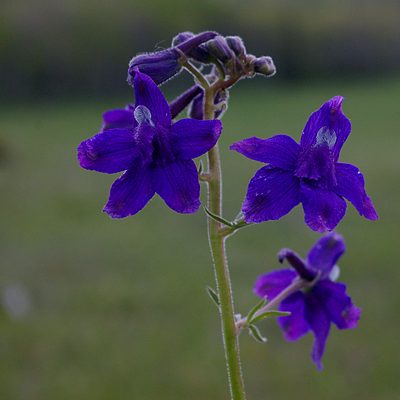
The top sepal forms a hood or helmet over the flower, which is the mark to look for. Flowers are dark blue to purple in tall spikes, and a white form also occurs. Leaves are deeply cut into 3 to 5 pointed lobes and get smaller toward the top of the plant. Larkspur has a spur instead of a hood.
When does it bloom?
Midsummer to early fall.
Where does it grow?
Stream banks, wet meadows and mountain forests at mid to high elevations across western North America, including the Black Hills. It prefers damp, shady places.
Other flowers to compare
Sources: SDSU Open PRAIRIE: Aconitum columbianum (R. Neil Reese); University of Utah Health Poison Control: Western Monkshood; National Park Service, Cedar Breaks National Monument: Monkshood; National Park Service, Rocky Mountain National Park: Blue and Purple Wildflowers; South Dakota Game, Fish and Parks: Rare Plants of South Dakota.