Wild Licorice
Glycyrrhiza lepidota
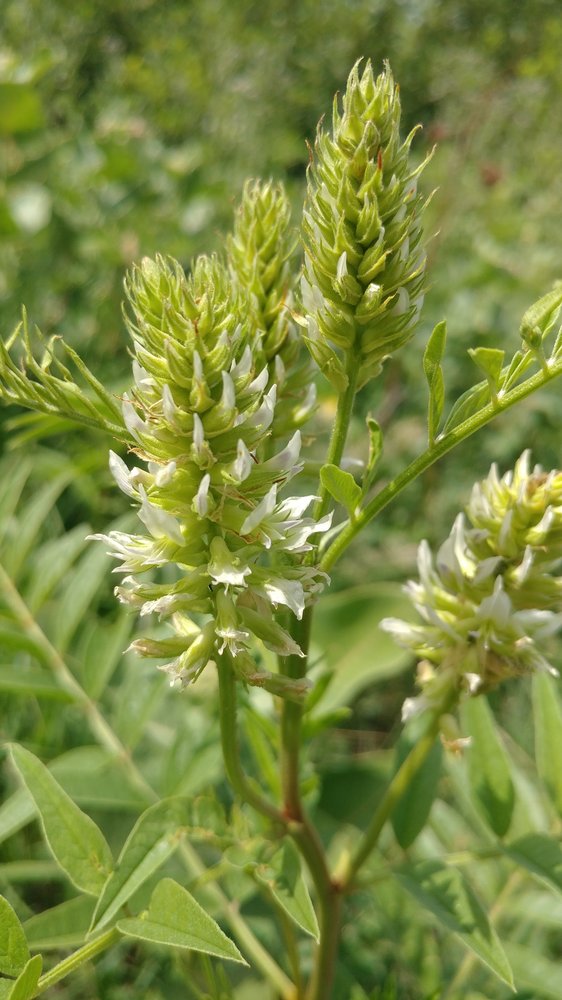
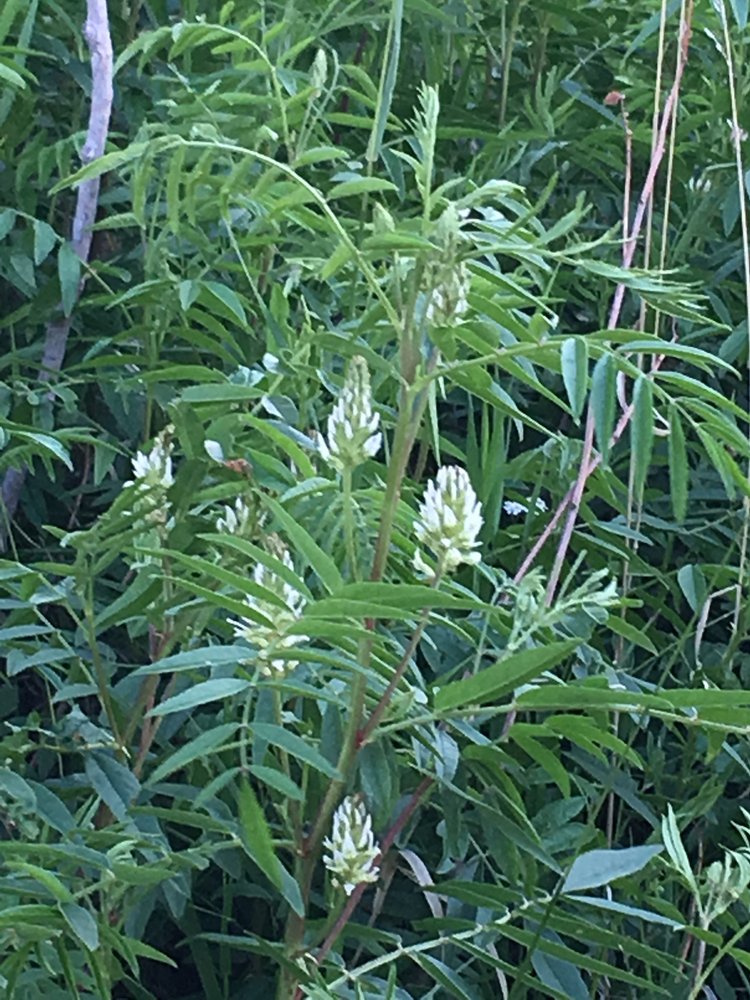
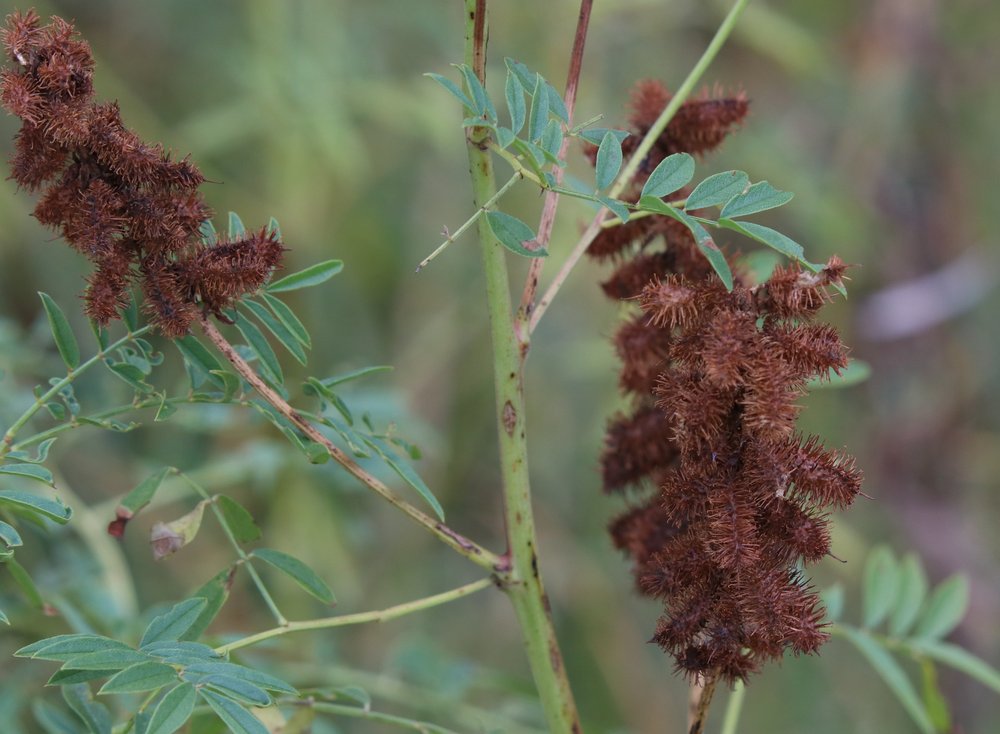
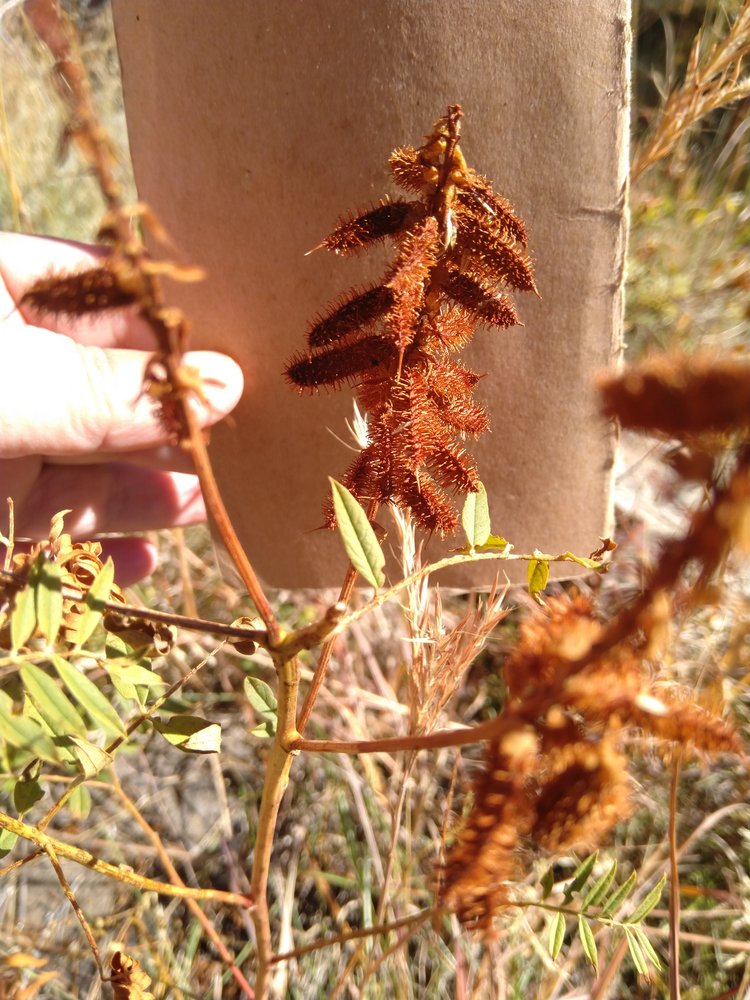
Wild Licorice (Glycyrrhiza lepidota) is a native perennial of the pea family with short spikes of cream-white flowers in June and July, followed by brown, burr-like pods covered in hooked prickles that cling to socks and dog fur. It is common in the Black Hills in creek bottoms, draws, meadows and roadsides, and the National Park Service lists it at Wind Cave, Jewel Cave, Mount Rushmore and Devils Tower.
Free photos from other sources
| Family | Fabaceae · Pea |
|---|---|
| Status | Native perennial |
| Blooms | June and July, a few into early August |
| Height | 30–100 cm (12–40 in) |
| Where | Creek bottoms, draws, meadows, roadsides and other open, moist to fairly dry ground |
| Also called | American Licorice, Licorice-root, Dessert Root, wináwizi čík’ala (Lakota) |
| Synonym | Glycyrrhiza glutinosa, Glycyrrhiza lepidota var. glutinosa |
| Traditional use | Black Elk and Flying By's 1998 Culturally Important Plants of the Lakota (Sitting Bull College) says the Lakota chewed the sweet root for toothache and flu, made a tea of the root or leaves for coughs, sore throat, fever and upset stomach, and put chewed leaves on the sore backs of horses. Gilmore (1919) recorded the toothache and horse uses among the Teton Dakota. |
Roots, seeds & germination
Root: Deep, fleshy roots plus branching rhizomes that let one plant spread into a patch; the USDA plant guide cites one root system traced about 3.6 m (12 ft) deep. The root tastes sweet from glycyrrhizin, the compound in commercial licorice, and like other legumes it carries nitrogen-fixing bacteria.
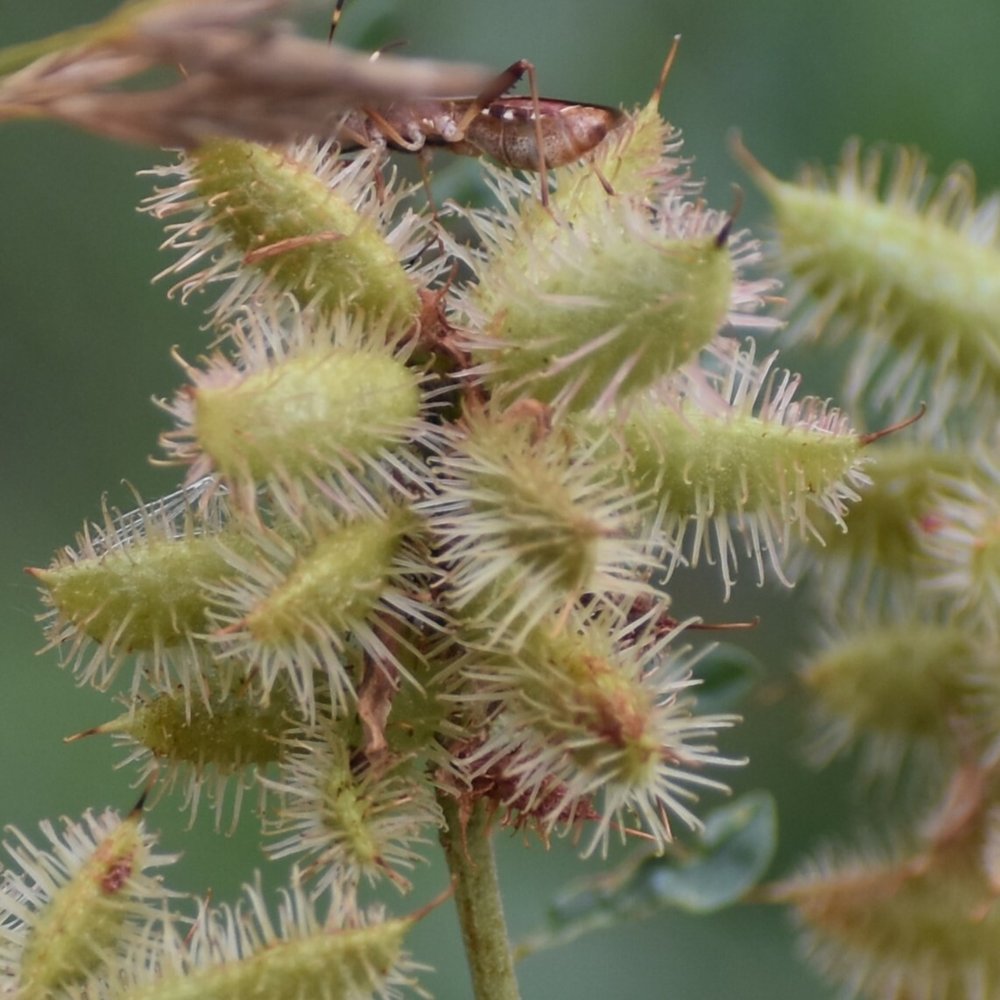
Seed: Each pod is an oblong burr about 1.2–1.5 cm (½ in) long, densely covered with hooked prickles, holding a few small, smooth, bean-shaped seeds about 2–3 mm long. The pods don't split open; they ride away on fur and clothing. Seeds ripen from July to October.
Germination: The seed has a hard coat. Prairie Moon Nursery advises scarifying it, rubbing it with sandpaper, for spring sowing and says a licorice-specific inoculant can help, while Wild Ones Front Range says not to scarify seed sown outdoors in fall. Plants also start easily from rhizome cuttings.
How do you identify Wild Licorice?
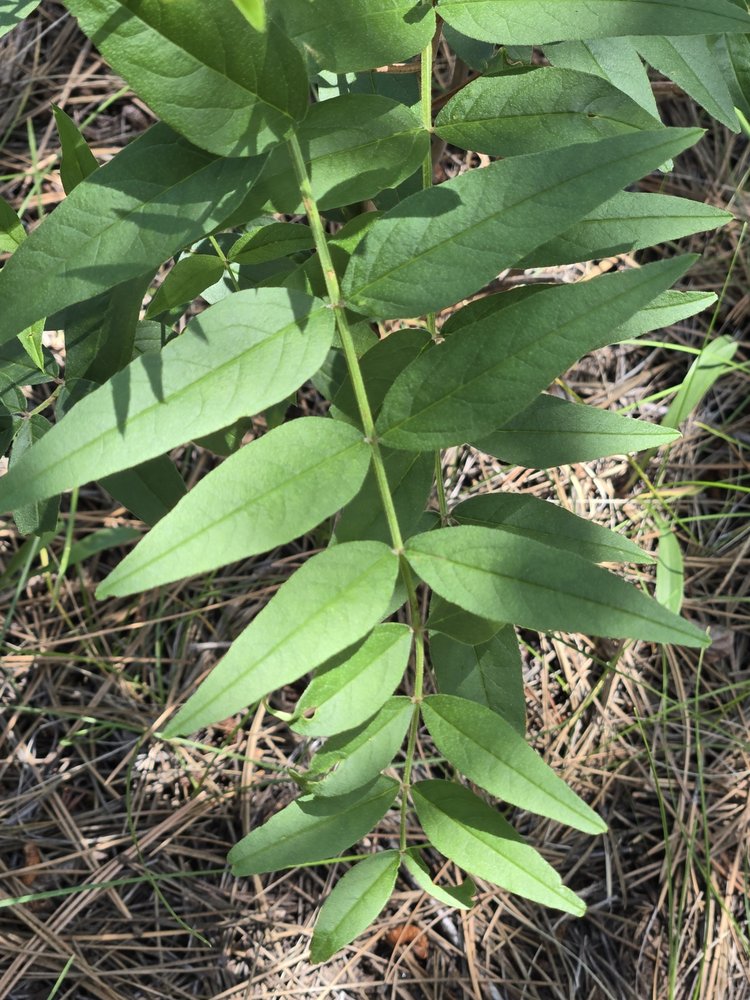
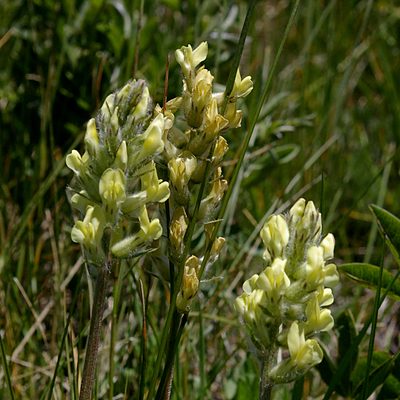
Look for an upright, bushy plant 30–100 cm (1–3 ft) tall with compound leaves of 11 to 19 narrow, pointed, untoothed leaflets, dotted with tiny glands that can feel a little sticky. In June and July, dense spikes 2.5–5 cm (1–2 in) long of cream-white to pale yellow pea flowers rise from the leaf joints on stalks shorter than the leaf below. From late July they turn into clusters of green, then reddish- to dark-brown burrs covered in hooked prickles, which stay on into winter. Canada Milkvetch has similar cream spikes, but more leaflets that are not gland-dotted, longer spikes on long stalks, and smooth pods with no hooked prickles.
When does it bloom?
June and July, a few into early August.
Where does it grow?
Full sun on moist to moderately dry, often rich or clayey soil: creek bottoms, draws, meadows, prairie swales, roadsides, ditches and other lightly disturbed ground, where its rhizomes can build sizable colonies. In the Black Hills it grows from the foothills and grasslands into the central Hills, and herbarium specimens from all seven Black Hills counties range from about 960 to 1,830 m (3,150–6,000 ft). The 1986 Jewel Cave survey lists it, the National Park Service records it at Wind Cave, Jewel Cave, Mount Rushmore and Devils Tower, and iNaturalist has many records from Wind Cave and Custer State Park.
Other flowers to compare
Sources: Black Elk, L.S. & W.D. Flying By, Sr. 1998. Culturally Important Plants of the Lakota. Sitting Bull College (entry 138, Glycyrrhiza lepidota); Gilmore, M.R. 1919. Uses of Plants by the Indians of the Missouri River Region. 33rd Annual Report, Bureau of American Ethnology (archive.org scan); USDA NRCS Plant Guide: American Licorice, Glycyrrhiza lepidota (Wynia, Manhattan KS Plant Materials Center); USDA PLANTS profile, Glycyrrhiza lepidota (GLLE3); USDA Forest Service, Fire Effects Information System: Glycyrrhiza lepidota; ITIS: Glycyrrhiza lepidota Pursh, TSN 26719 (synonyms); Minnesota Wildflowers: Wild Licorice; Minnesota Wildflowers: Canada Milkvetch (comparison with Wild Licorice); Kansas Wildflowers and Grasses: Wild licorice; NYBG World Flora monographs: Glycyrrhiza lepidota (Gleason & Cronquist 1991 text); Lady Bird Johnson Wildflower Center: Glycyrrhiza lepidota; Prairie Moon Nursery: Wild Licorice (germination code A, H, I); Prairie Moon Nursery: germination code key; Wild Ones Front Range: Glycyrrhiza lepidota plant sheet; Marriott, H. & R. Hartman. 1986. Vegetation of Jewel Cave National Monument (species list); NPSpecies checklist: Wind Cave National Park (WICA) vascular plants; NPSpecies checklist: Jewel Cave National Monument (JECA) vascular plants; NPSpecies checklist: Mount Rushmore National Memorial (MORU) vascular plants; NPSpecies checklist: Devils Tower National Monument (DETO) vascular plants; GBIF occurrence search: Glycyrrhiza lepidota, preserved specimens, South Dakota; GBIF occurrence search: Glycyrrhiza lepidota, preserved specimens, Wyoming; iNaturalist: Glycyrrhiza lepidota observations within 80 km of the central Black Hills; MSD Manual (Consumer): Licorice (glycyrrhizin side effects).