Prairie Turnip
Pediomelum esculentum
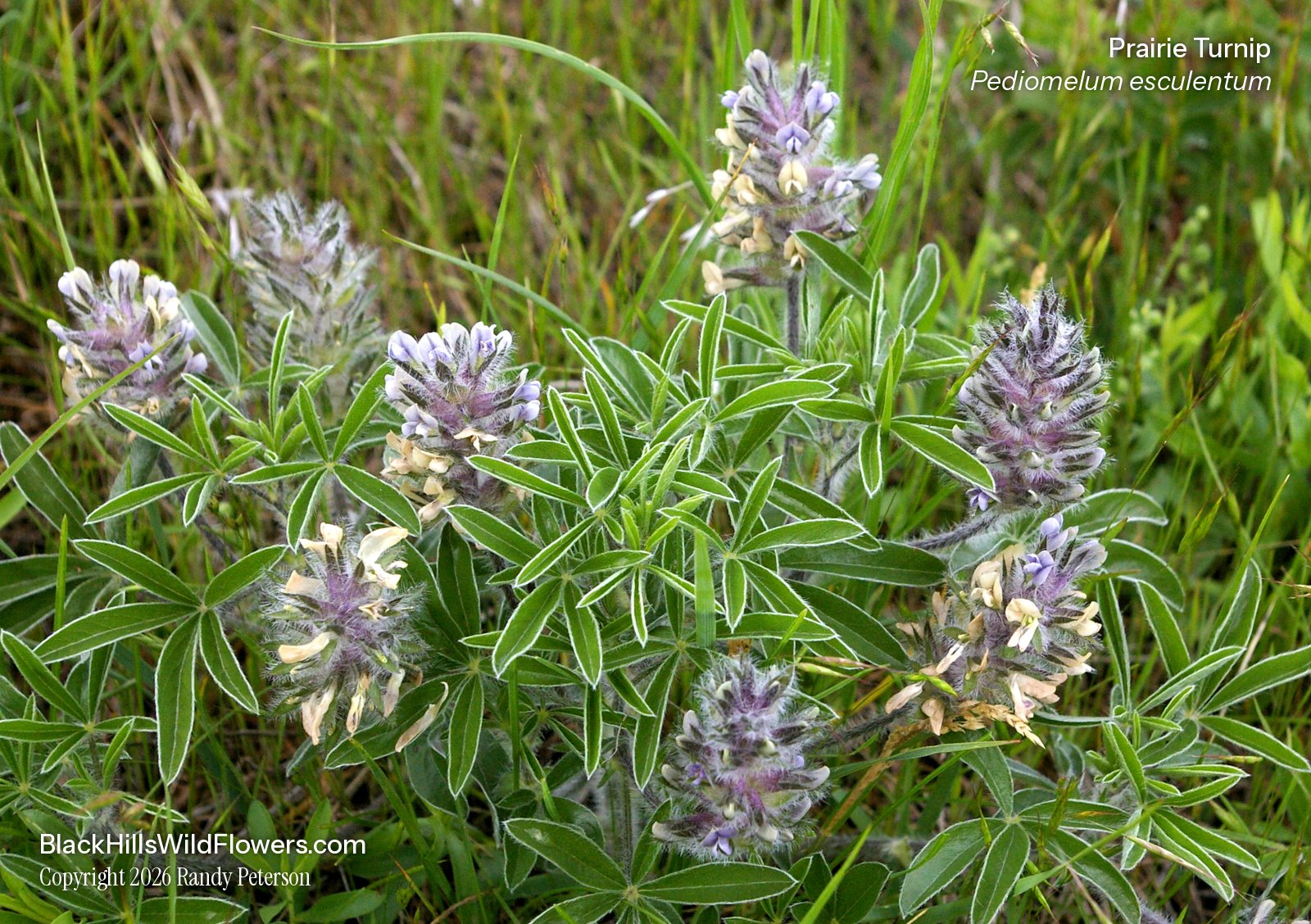
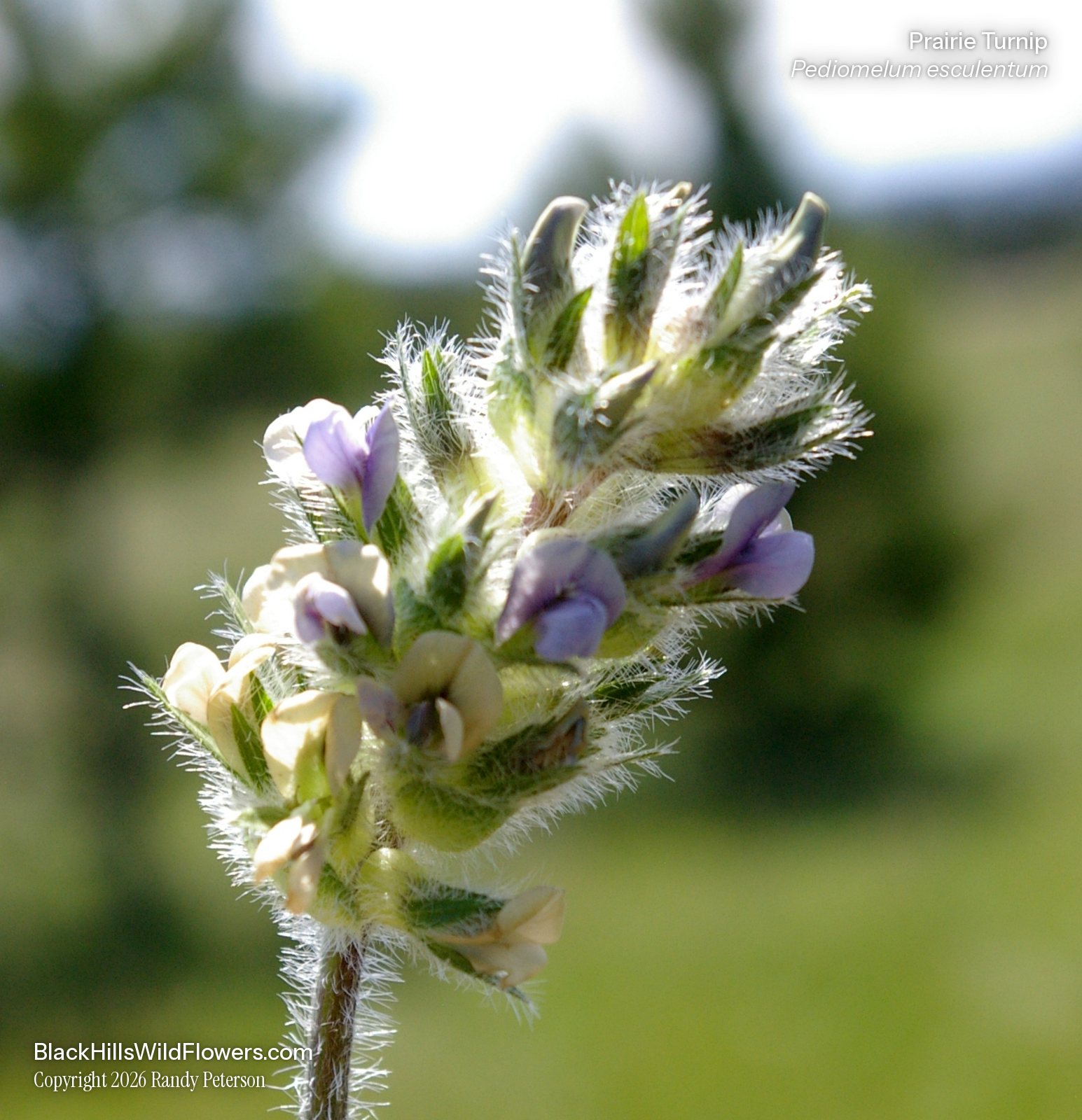
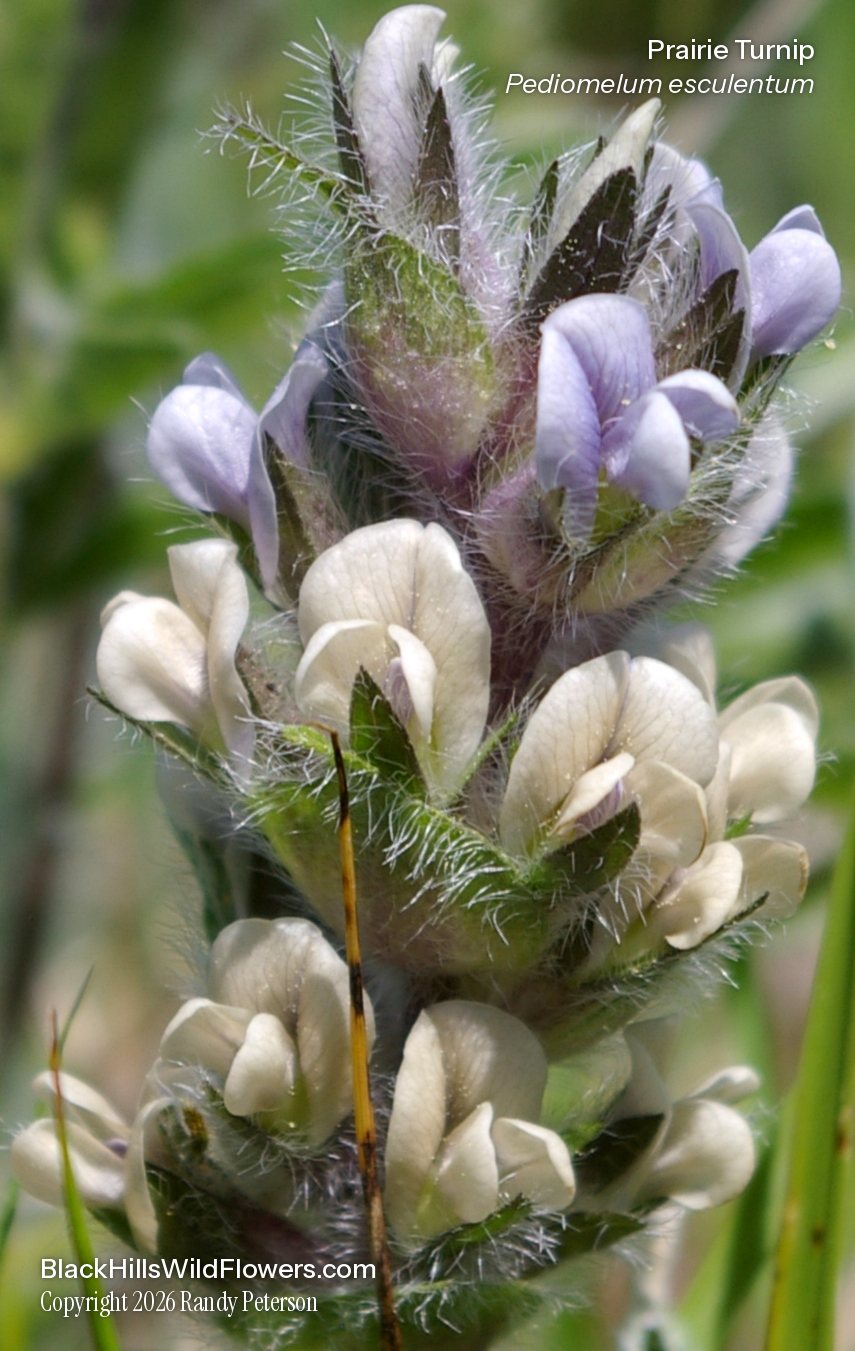
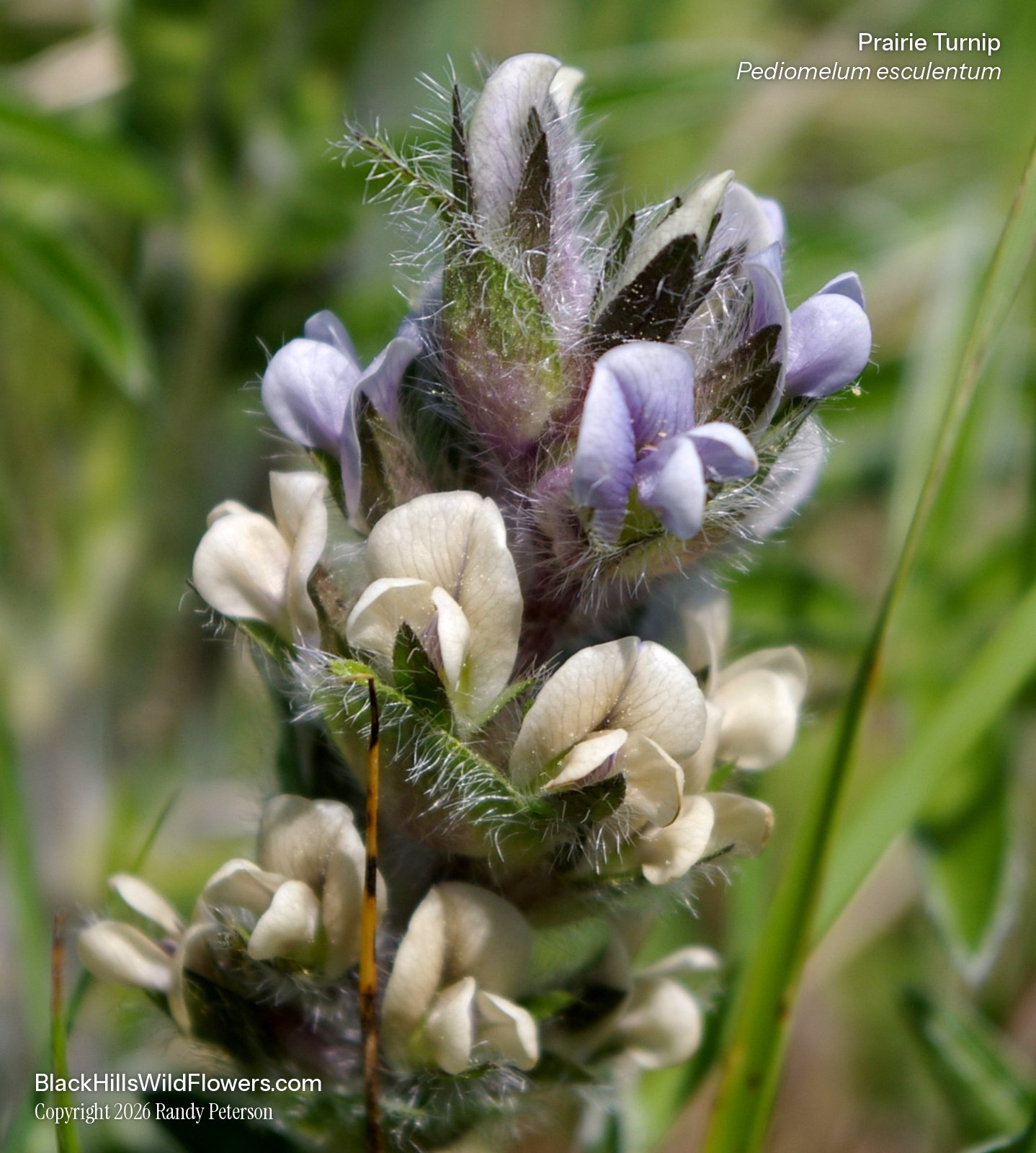
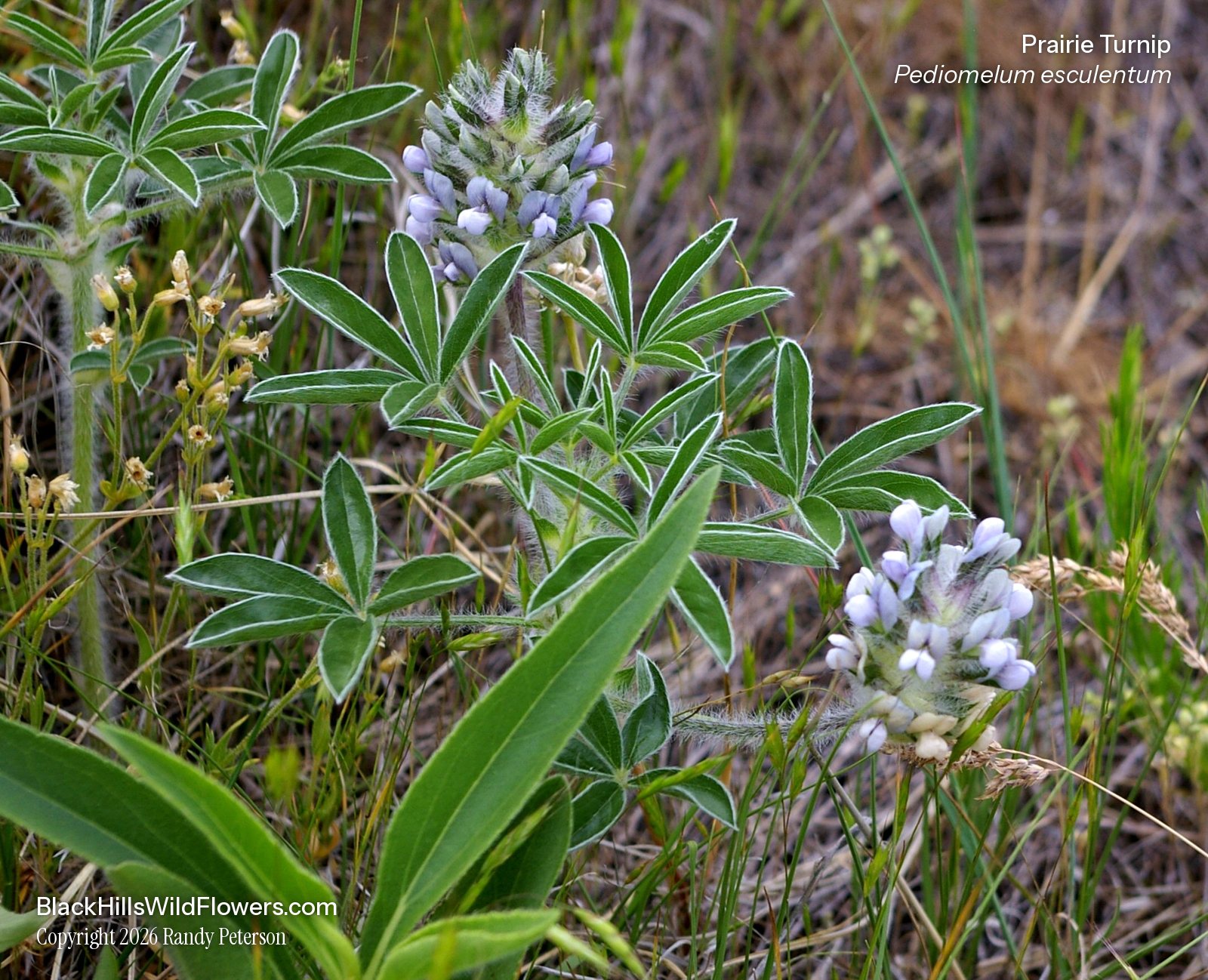
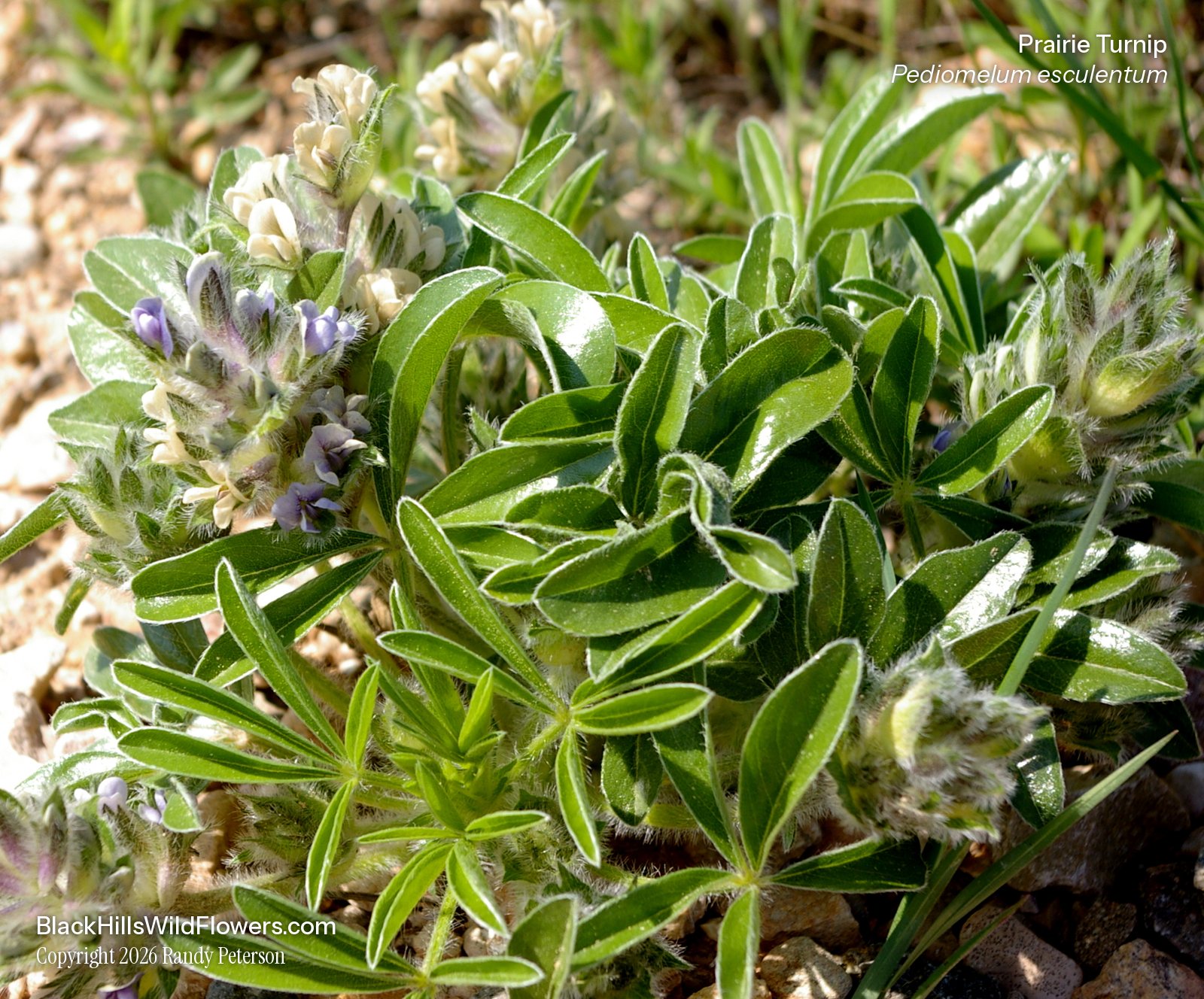
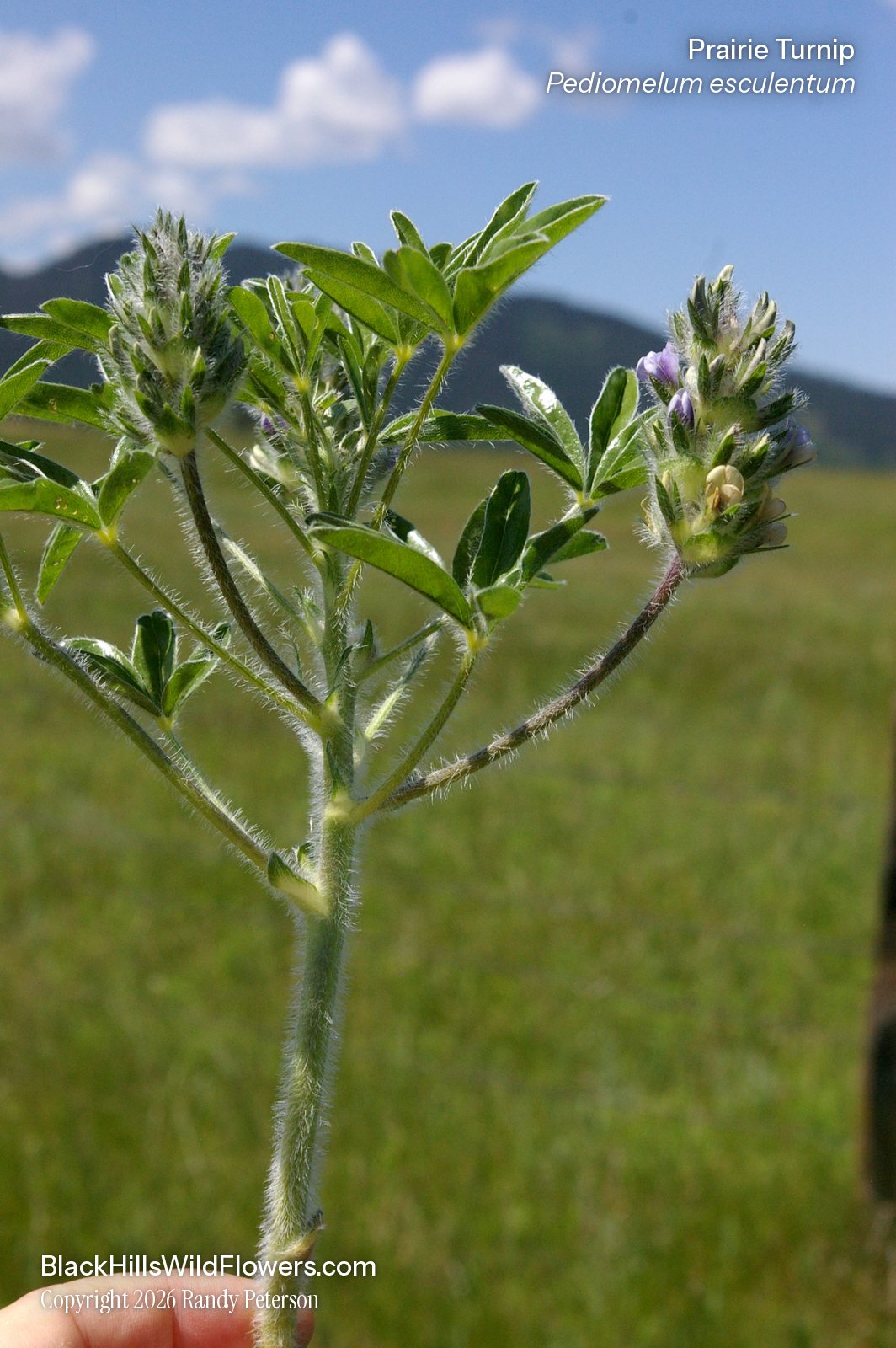
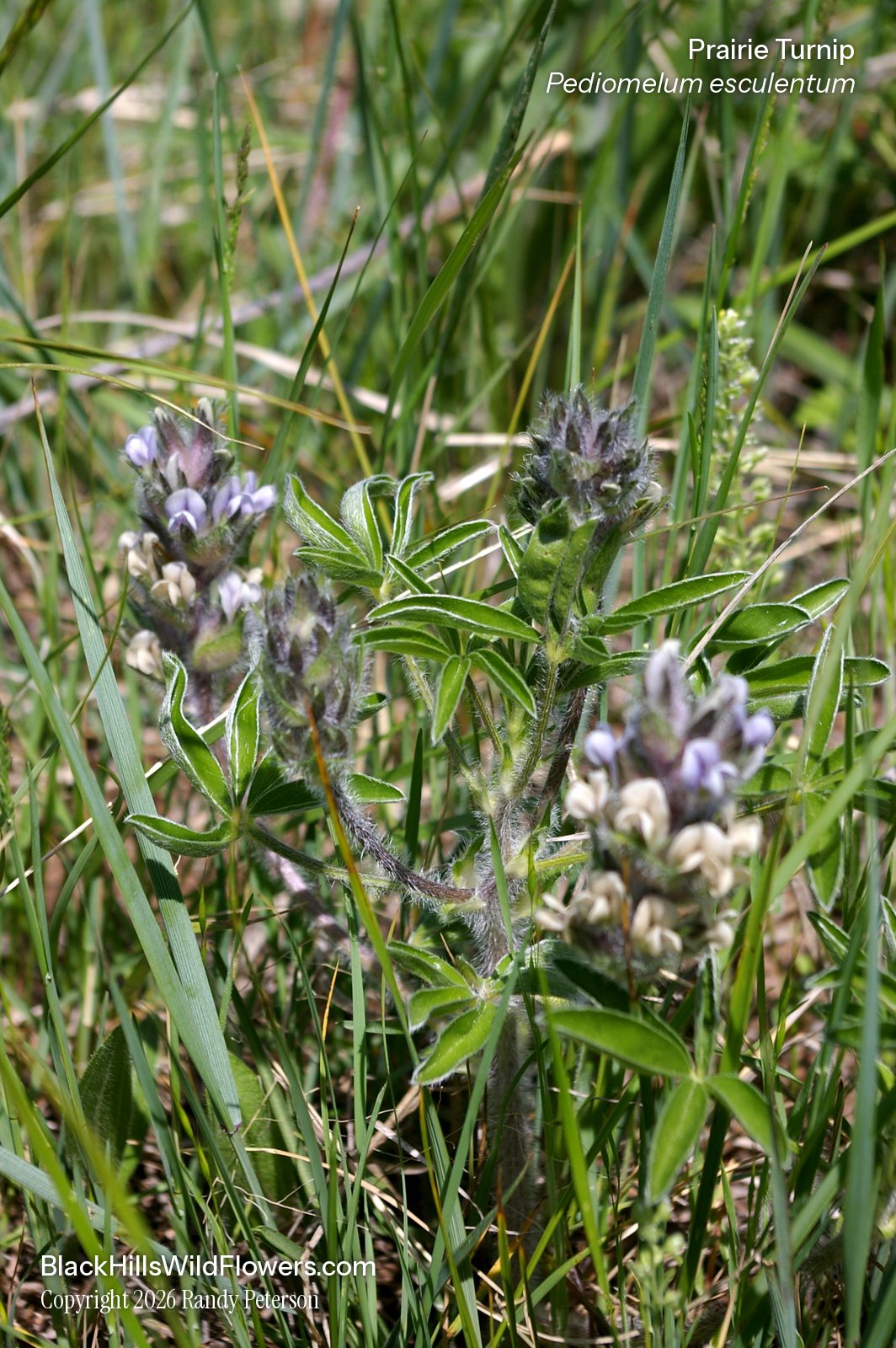
Prairie Turnip (Pediomelum esculentum) is a short native perennial in the pea family, with densely hairy stems, leaves of five leaflets and dense spikes of light blue to purple flowers, growing from a thick, tuberous root. It grows throughout South Dakota on prairies, hillsides and open woods, blooms May into July, and is on a plant checklist from the Black Hills. Photographed in the Black Hills.
| Family | Fabaceae · Pea |
|---|---|
| Status | Native perennial |
| Blooms | May into July |
| Height | 8–30 cm (3–12 in) |
| Where | Dry prairies, hillsides, open woods and stream valleys |
| Also called | Breadroot Scurfpea, Prairie Potato, thíŋpsila (Lakota) |
| Synonym | Psoralea esculenta |
| Traditional use | Lakota people ate the roots fresh or dried them for later use, and a 1998 Sitting Bull College list calls them still a staple of the Lakota diet at that time. |
Roots, seeds & germination
Root: A thick, tuberous root 4–10 cm underground. Plants take about 4 years to grow roots large enough to harvest.
Seed: A one-seeded pod 5–7 mm long, held in the calyx. When ripe, the plant's top breaks off and blows like a tumbleweed, spreading the seed.
Germination: The seed coat blocks water. Scratch it with sandpaper or nick it with a small sharp knife for good germination. Untreated seed planted in fall germinates a little at a time over a couple of years.
How do you identify Prairie Turnip?
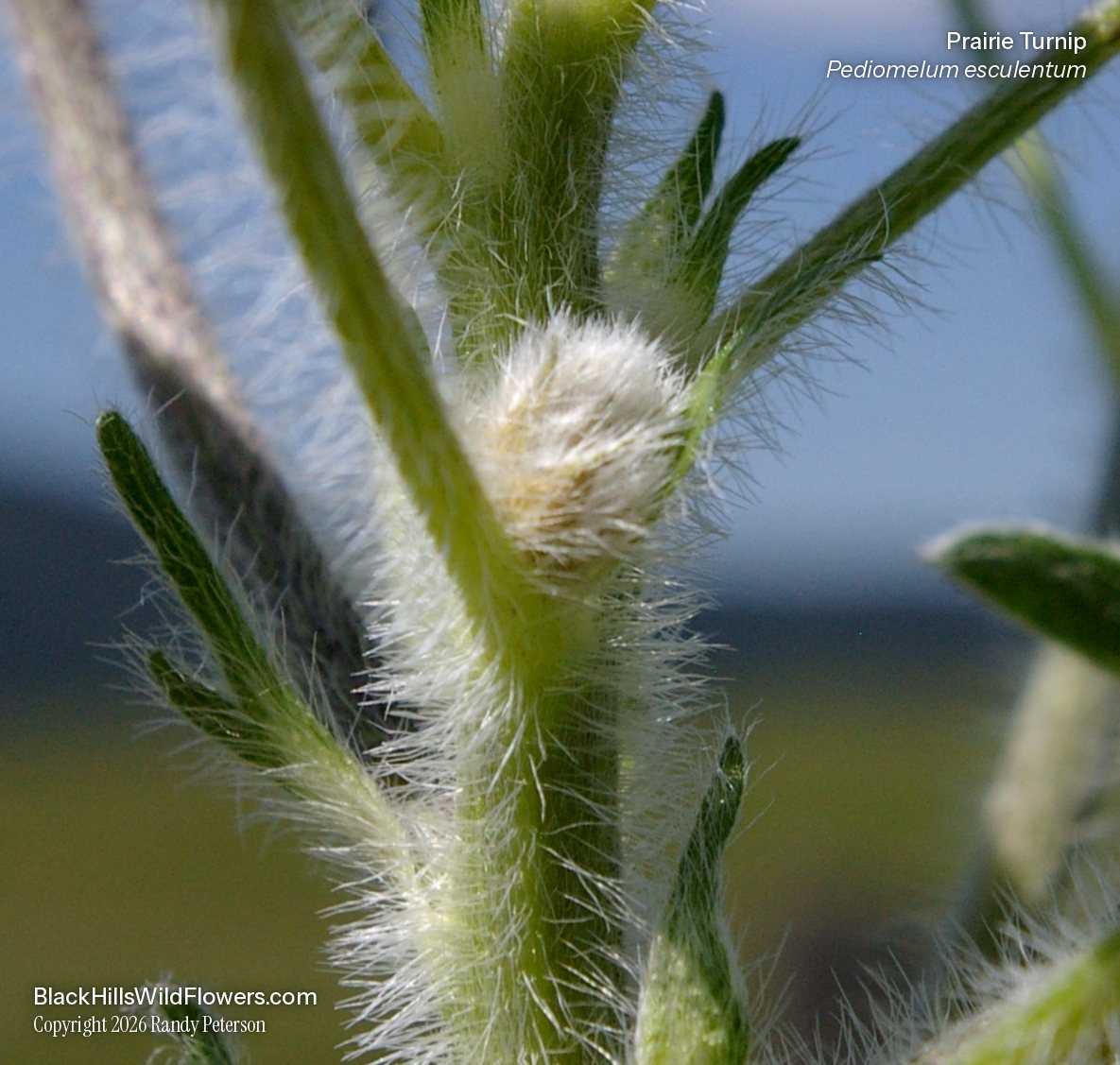
Look for a hairy, low plant with five leaflets spreading from one point, nearly smooth above and covered in flattened hairs beneath. The pea-shaped flowers sit in a short, cylindrical, densely hairy spike and fade to a creamy color with age. When the seeds are ripe, the top breaks off and blows away like a tumbleweed.
When does it bloom?
May into July.
Where does it grow?
Prairies, open woodlands, hillsides and stream valleys throughout South Dakota, in sun, often on dry, rocky ground.
Other flowers to compare
Sources: SDSU Open PRAIRIE: Pediomelum esculentum (R. Neil Reese); Minnesota Wildflowers: Pediomelum esculentum (Prairie Turnip); USDA NRCS Bismarck Plant Materials Center: Prairie Turnip Propagation (2025); Kansas Wildflowers and Grasses: Breadroot scurf-pea; National Park Service, Devils Tower National Monument: Native Plants; Culturally Important Plants of the Lakota (Black Elk and Flying By, Sitting Bull College, 1998), filed with the South Dakota PUC; Foods Indigenous to the Western Hemisphere: Prairie Turnip (University of Kansas); A Survey of the Vegetation of Jewel Cave National Monument, with vascular plant checklist (Marriott and Hartman, 1986).