Barr's Milkvetch Astragalus barrii
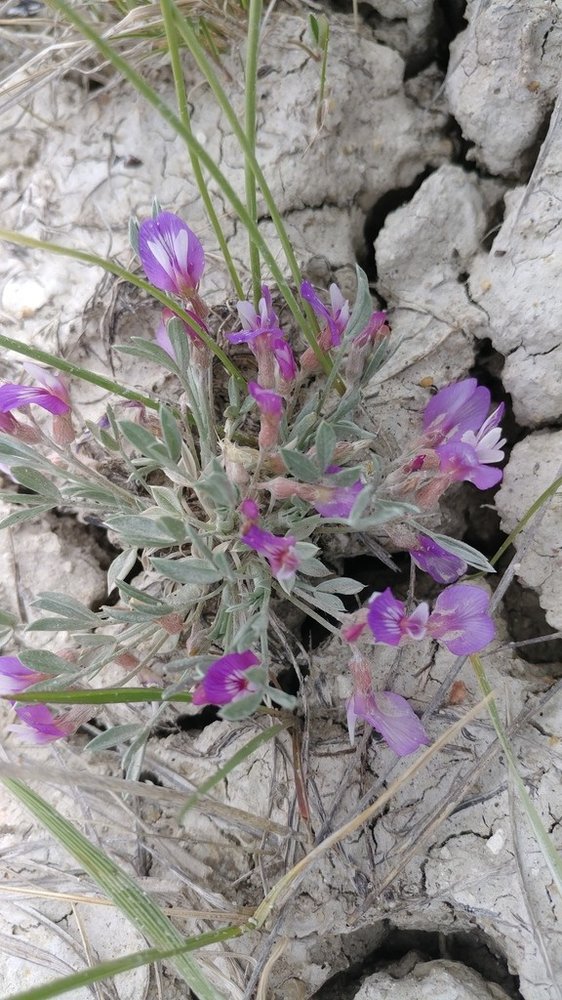
Barr's Milkvetch (Astragalus barrii) is a low, silvery cushion of three-leaflet leaves that carries small pink-purple pea flowers in May and June. It grows on barren clay buttes, badland slopes and gullied knolls on the plains of southwestern South Dakota and neighboring states, and herbarium labels put it on the plains around the Black Hills, not in them.
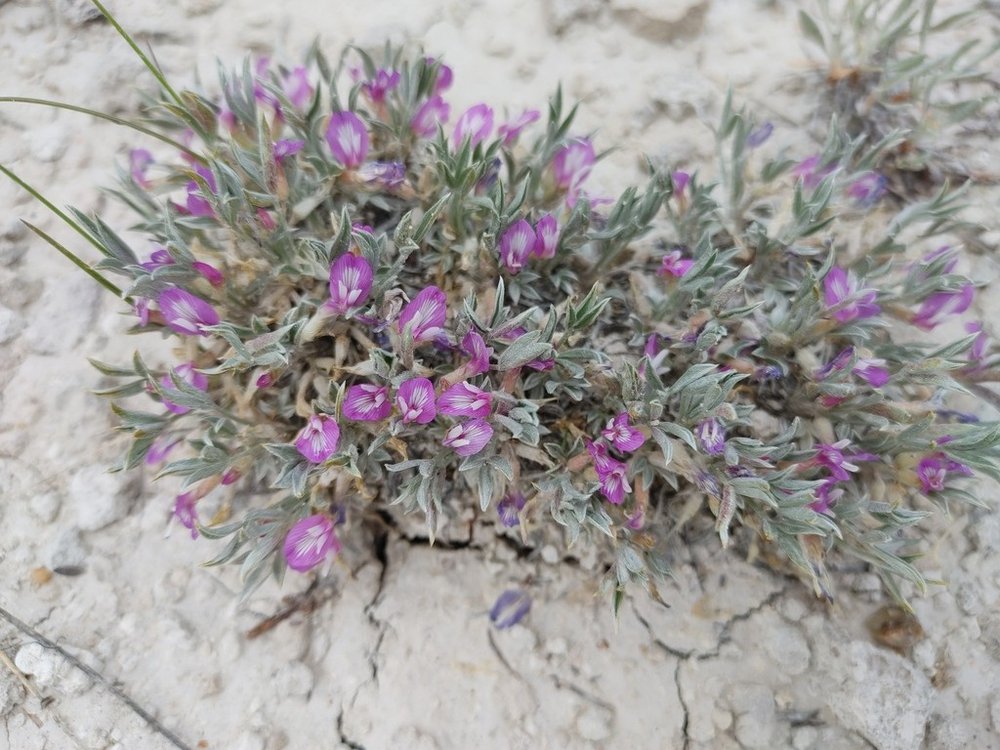
Free photos from other sources
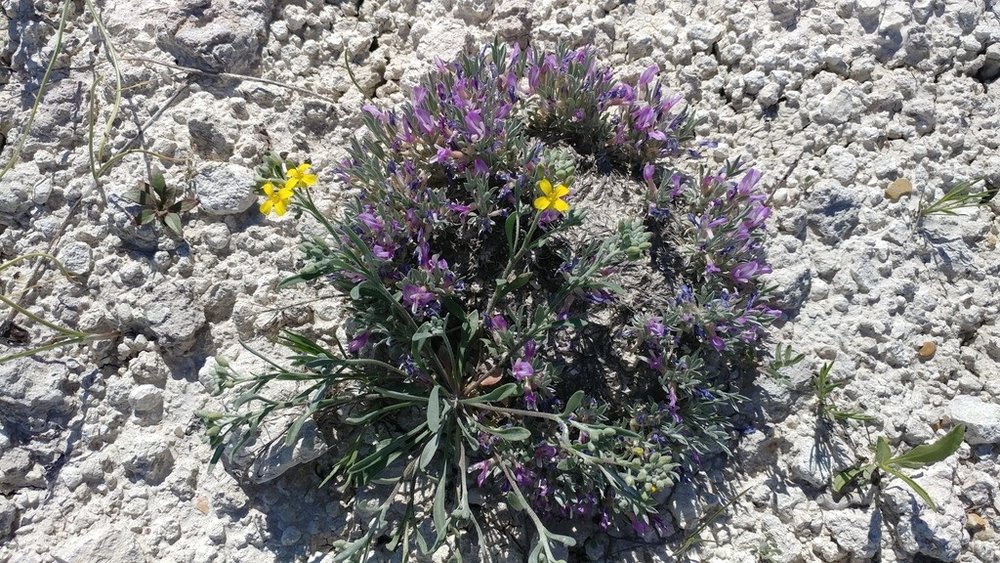
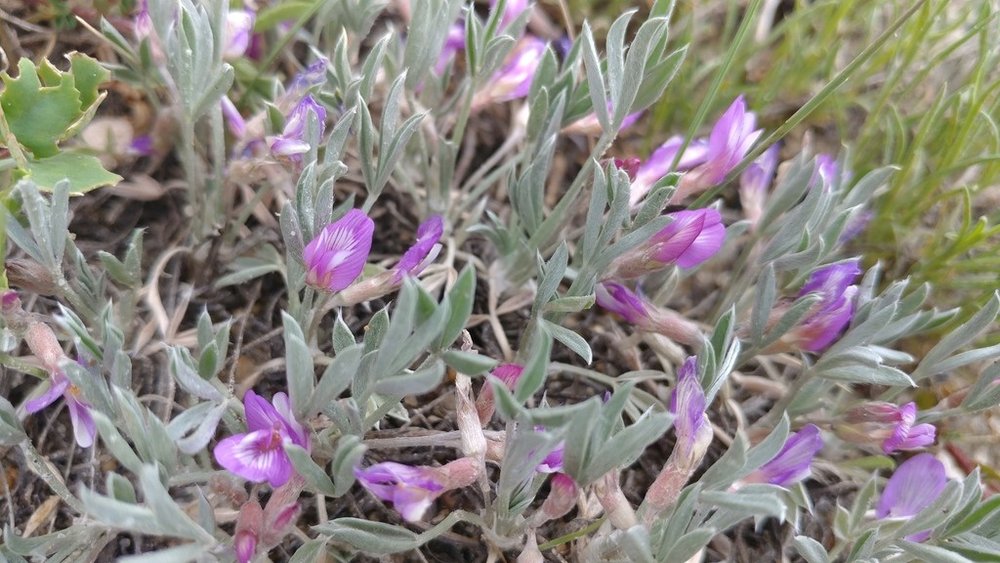
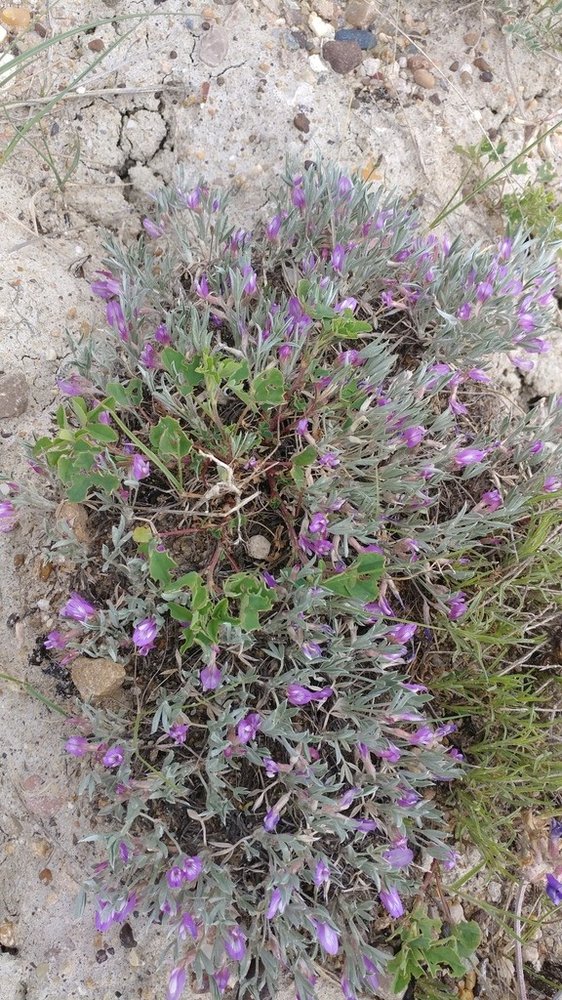
| Family | Fabaceae · Pea |
|---|---|
| Status | Native perennial |
| Blooms | May into June |
| Height | Low mat; leaves 1–4 cm (½–1½ in) long |
| Where | Barren clay, siltstone and sandstone buttes, gullied knolls and badland slopes, in limy soil |
| Synonym | Orophaca barrii |
| Note | South Dakota's Natural Heritage Program ranks Barr's Milkvetch S3, vulnerable in the state, and an older Wyoming Natural Diversity Database list marks it a Forest Service Region 2 sensitive plant. This page gives no locations. |
Roots, seeds & germination
Seed: Pods form in late May and June, after the flowers (USDA Forest Service; Montana Field Guide).
Germination: The Center for Plant Conservation reports that an arboretum grew it from seed after scarifying the seed (nicking the seed coat).
How do you identify Barr's Milkvetch?
Look for a low, dense mat or cushion of silvery leaves (Center for Plant Conservation). Each leaf is 1–4 cm (½–1½ in) long with 3 narrow, lance-shaped leaflets, densely covered with short white hairs, and has thin, papery stipules (small leaf-like flaps) at its base (USDA Forest Service; Montana Field Guide). The pea-shaped flowers are purple or pinkish purple, with petals 7–17 mm (¼–⅔ in) long, in a narrow, open cluster of a few flowers; the calyx (the cup behind the petals) is 3–5 mm (⅛–¼ in) long and thick with long white hairs. The pod is narrowly oval, 4–8 mm (⅙–⅓ in) long and only 1–2 mm wide, with a few white hairs (USDA Forest Service; Montana Field Guide). The Montana Field Guide calls the flowers small, iridescent and bluish purple to bluish pink, fading as they dry, sometimes to yellowish white, and says that on steep slopes the cushions often sit on small pedestals of soil they have kept from eroding. It says flowers are needed to tell it from four other mat-forming, three-leaflet milkvetches: two have flowers about half the size and denser mats, and two have larger, cream to whitish flowers and calyx tubes 6–16 mm long. None of those four is in this guide.
When does it bloom?
May into June.
Where does it grow?
Barr's Milkvetch grows on gullied knolls, buttes, barren hills and badlands, in shallow rocky soils from claystone, siltstone, sandstone, limestone or shale that hold little organic matter and are often limy (USDA Forest Service; Center for Plant Conservation). It favors open, bare, steep ground that sheds water fast (USDA Forest Service). In Montana the sites sit at about 900–1,220 m (2,940–4,000 ft) and in Wyoming at 1,130–1,740 m (3,700–5,700 ft) (USDA Forest Service), and the Montana Field Guide says they often have scattered ponderosa pine and juniper, or only sparse sagebrush. It is a regional endemic of southwestern South Dakota, northeastern Wyoming, southeastern Montana and Nebraska (Montana Field Guide). GBIF holds 56 preserved specimens from the western South Dakota and northeastern Wyoming areas that take in part of the Black Hills. The 39 with a locality or habitat line all describe buttes, badland or clay slopes, ridges, prairie pasture or grassland on the plains east, southeast and southwest of the Hills, and none says Black Hills or pine forest; the other 17 carry no place or habitat. The plant lists of the four Black Hills park units and the Forest Service's 2023 draft assessment of at-risk species for the Black Hills forest plan don't include it. South Dakota's rare plant table ranks it G3 (vulnerable across its whole range) and S3 in the state, and an older Wyoming Natural Diversity Database list of species of special concern ranks it S3 in Wyoming and marks it a Forest Service Region 2 sensitive plant.
Other milkvetches and locoweeds in this guide
Compare all 12 milkvetches and locoweeds side by side
Canada Milkvetch
Astragalus canadensis
Cream Milkvetch
Astragalus racemosus
Drummond's Milkvetch
Astragalus drummondii
Field Locoweed
Oxytropis campestris
Field Milkvetch
Astragalus agrestis
Groundplum Milkvetch
Astragalus crassicarpus
Indian Milkvetch
Astragalus australis
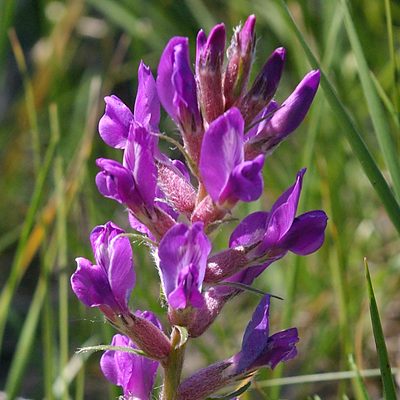
Lambert's Crazyweed
Oxytropis lambertii
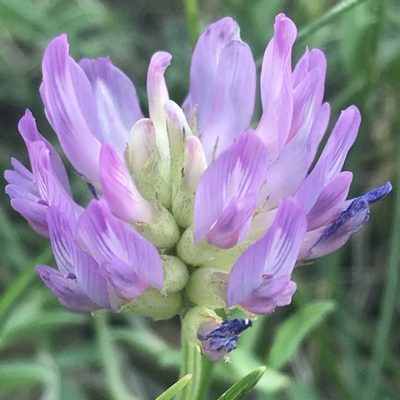
Laxmann's Milkvetch
Astragalus laxmannii var. robustior
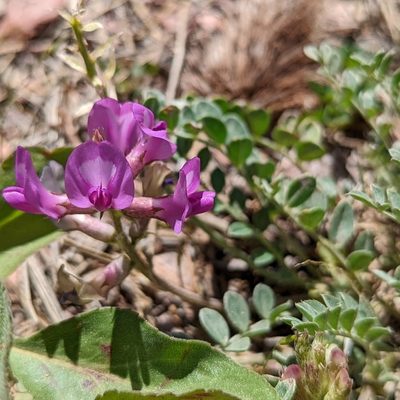
Missouri Milkvetch
Astragalus missouriensis
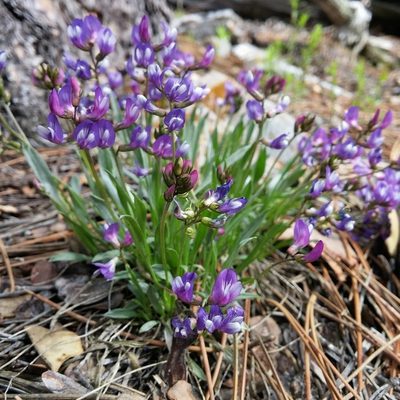
Tufted Milkvetch
Astragalus spatulatus
Pea family (Fabaceae): 31 other plants in this guide
- Alfalfa
- Alpine Sweetvetch
- American Vetch
- Black Medic
- Canada Milkvetch
- Canada Tickclover
- Cream Milkvetch
- Crown Vetch
- Drummond's Milkvetch
- Field Locoweed
- Field Milkvetch
- Golden Pea
- Groundplum Milkvetch
- Indian Milkvetch
- Lambert's Crazyweed
- Laxmann's Milkvetch
- Lead Plant
- Missouri Milkvetch
- Pale Vetchling
- Prairie Turnip
- Purple Prairie Clover
- Red Clover
- Silktop Dalea
- Silverleaf Scurfpea
- Silvery Lupine
- Slimflower Scurfpea
- Tufted Milkvetch
- White Clover
- White Prairie Clover
- Wild Licorice
- Yellow Sweetclover
Sources: South Dakota Game, Fish and Parks: Rare Plants of South Dakota (South Dakota Natural Heritage Program, 2018); USDA Forest Service: biological evaluation of sensitive plants, Appendix F (Dakota buckwheat and Barr's milkvetch); Montana Field Guide: Barr's Milkvetch (Astragalus barrii); Center for Plant Conservation: Barr's Milkvetch (Astragalus barrii); Wyoming Natural Diversity Database: Species of Special Concern (A), older list hosted by BLM Wyoming; USDA PLANTS Database: Astragalus barrii, Barr's milkvetch (ASBA); ITIS: Astragalus barrii Barneby (TSN 25432, accepted; Orophaca barrii is a synonym); GBIF occurrence search: Astragalus barrii, South Dakota (66 preserved specimens); GBIF occurrence search: Astragalus barrii, Wyoming (26 preserved specimens); USDA Forest Service Rocky Mountain Region, Revised Forest Assessment: At-Risk Species, draft, October 2023 (searched; Astragalus barrii not listed); National Park Service NPSpecies: vascular plant checklist for a Black Hills park unit, 1 of 4 (searched; not listed); National Park Service NPSpecies: vascular plant checklist for a Black Hills park unit, 2 of 4 (searched; not listed); National Park Service NPSpecies: vascular plant checklist for a Black Hills park unit, 3 of 4 (searched; not listed); National Park Service NPSpecies: vascular plant checklist for a Black Hills park unit, 4 of 4 (searched; not listed); Native American Ethnobotany Database (BRIT): search for Astragalus barrii (no uses listed).